Volnewmer and Thermage: Differences in Pain and Lifting Effect
By Dr. Kim7 min read

When skin starts to sag and lose elasticity, the first instinct is to find something non-surgical that firms things back up. Lately, a lot of clinics are talking about something called Volnewmer. It's a Korean-made radiofrequency device, and some places are calling it "K-Thermage," with the added claim that the effects of a single session last a full year. It's an easy pitch to be drawn in by, and just as easy to want to fact-check.
Here's the short version: Volnewmer sits in the same family as Thermage. The technology and frequency are nearly identical. The biggest practical difference is in how the device cools the skin during treatment, which does make it noticeably more comfortable. But "less painful" and "more effective" are two different things, and on Volnewmer specifically, the clinical record is thin: one study of 22 people is essentially everything we have. What follows walks through the mechanism, the evidence, and the real side-effect picture, so you can separate the marketing from the facts.
What Kind of Radiofrequency Device Is Volnewmer?
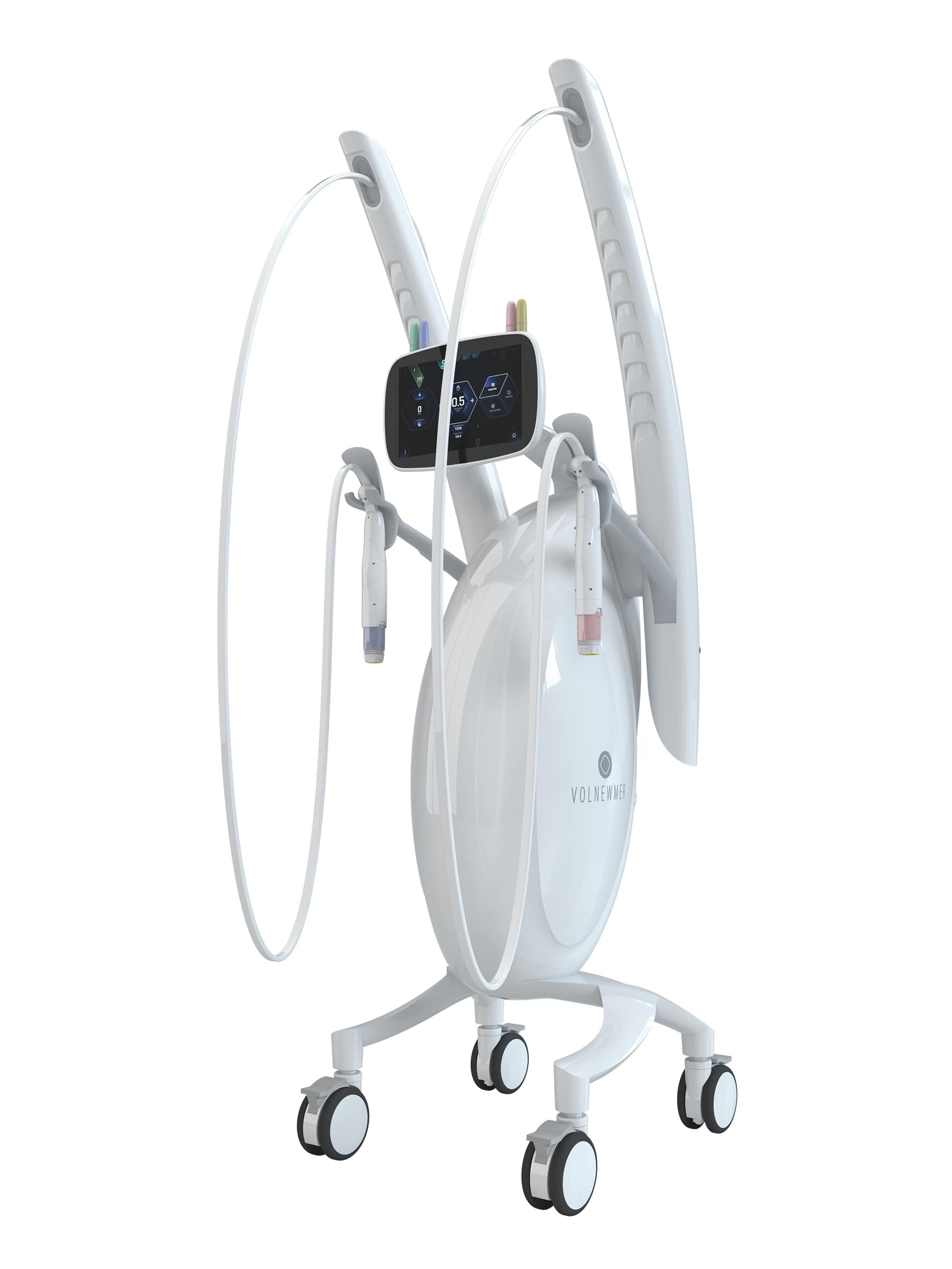
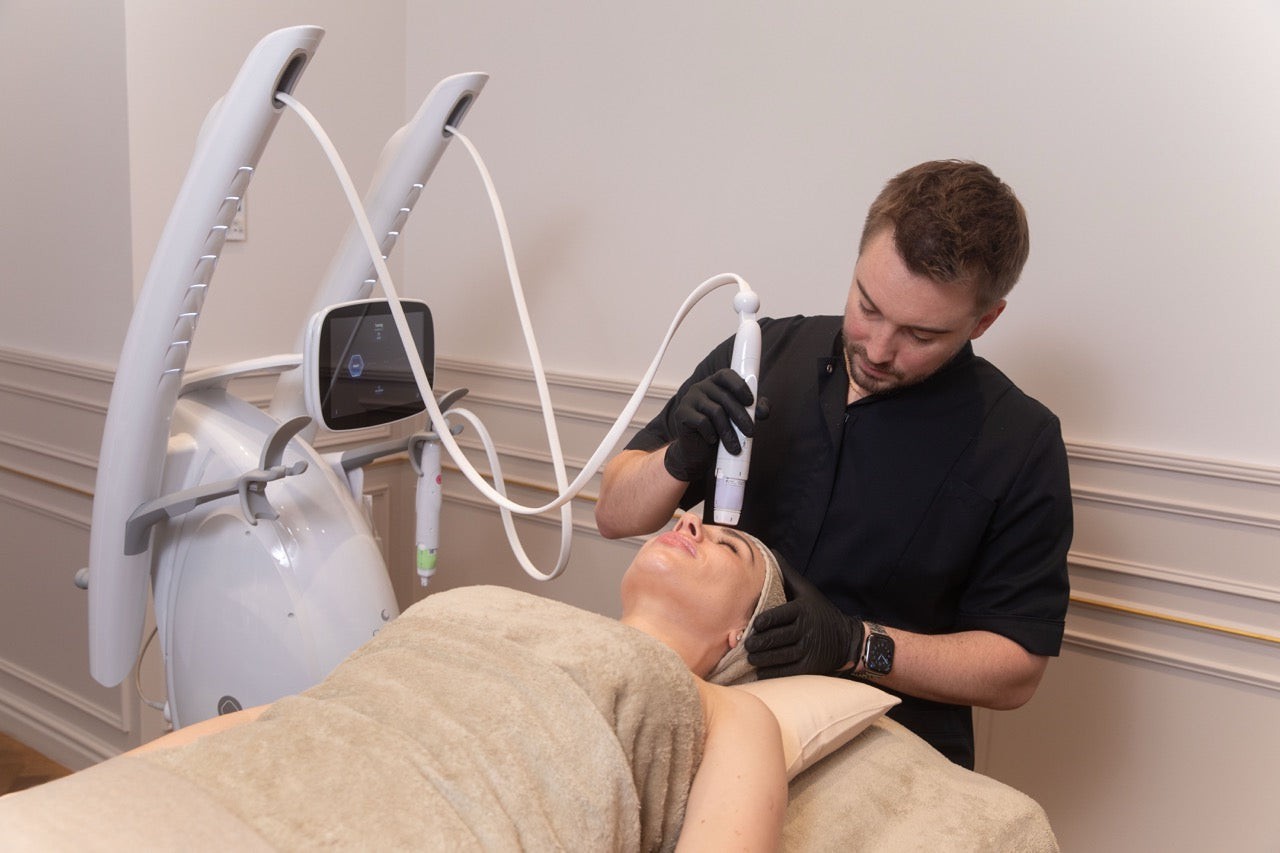
Volnewmer is a monopolar radiofrequency lifting device made by Classys, a South Korean company. Radiofrequency, or RF, is electrical energy that gets delivered into the deeper layers of the skin, generating heat and using that heat to stimulate collagen production.
Getting a bit more specific: Volnewmer uses a monopolar configuration at a frequency of 6.78 MHz. That's almost identical to Thermage in both mechanism and frequency, so think of them as close relatives. The most noticeable distinction is how each device protects the skin surface. Thermage sprays a cooling cryogen to shield the outer layer, while Volnewmer uses water cooling, which makes the session feel considerably gentler. The treatment is non-surgical, typically done in a single visit, and requires almost no downtime.
One thing worth knowing: Volnewmer holds MFDS (Korea's food and drug authority) clearance, but under the broad category of general electrosurgical equipment rather than as a dedicated cosmetic lifting device. It also passed US FDA review in 2024. Regulatory clearance means the device can be used safely. It does not mean lifting efficacy has been clinically proven to FDA standards.
How Does Heated Collagen Change?
The mechanism is more straightforward than it sounds. Collagen is a protein, and like most proteins, it contracts when it's heated, the way a rubber band shrinks near a flame. So the first thing you notice right after a treatment is a mild tightening sensation. That's the immediate collagen contraction.
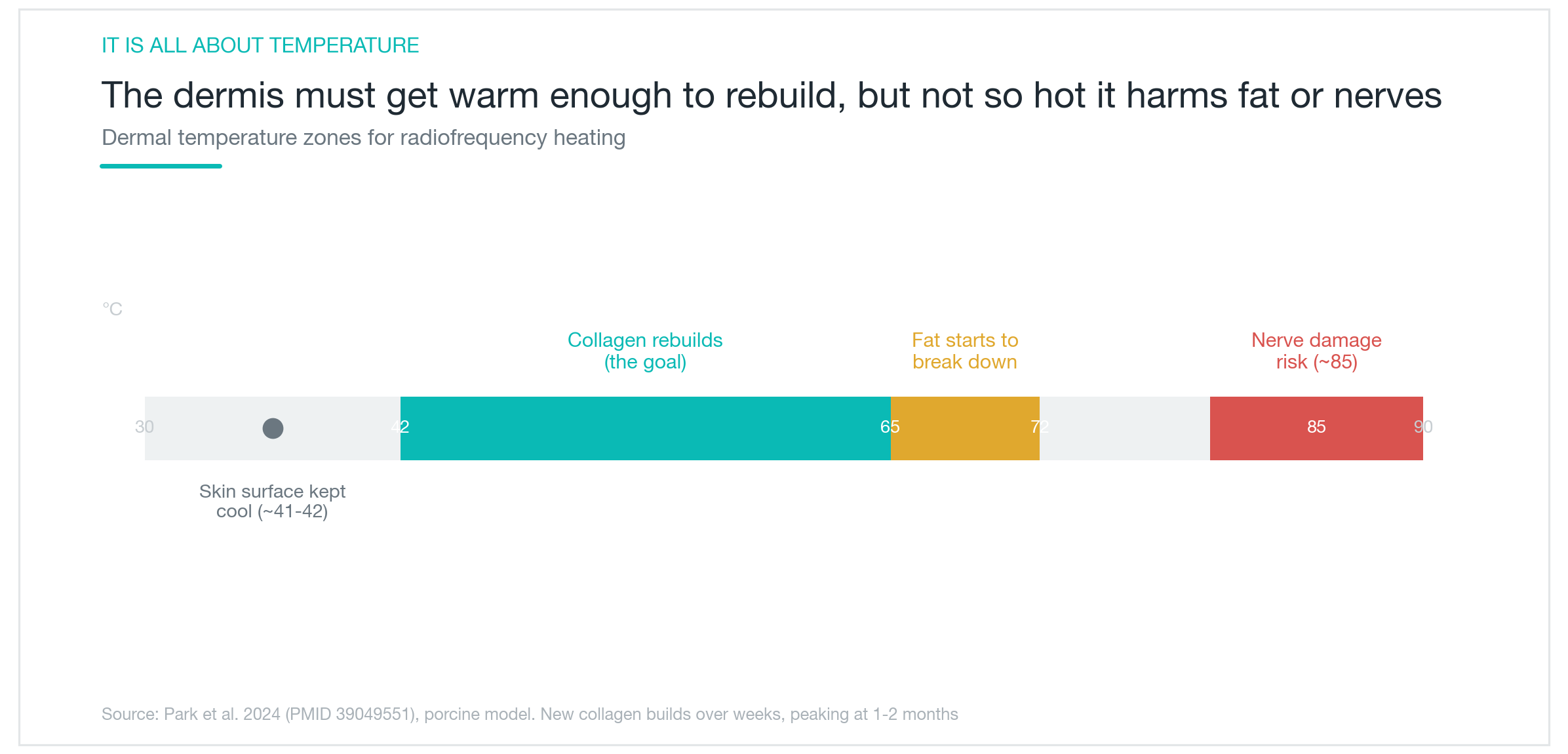
What happens next is the part that takes longer to show up. The controlled thermal stimulus triggers a wound-healing response, and over the following months the body lays down new collagen. As that collagen fills in, skin density increases and fine lines fade. Temperature control is the critical variable here. As shown in the chart above, the dermis needs to reach roughly 42 to 65°C for collagen remodeling to proceed. Go higher than that and you risk damaging the fat layer or nerves underneath. Heating the deep tissue enough while keeping the surface cool is the whole balancing act, and Volnewmer's water cooling exists specifically to manage that surface protection.
Because the mechanism depends on new collagen forming over time, expecting dramatic changes within a few days is a setup for disappointment. Most people see the clearest improvement at one to two months out, with effects extending up to around six months. That gradual timeline has an upside: the change isn't sudden, so there's no obvious "I just had something done" look. The results tend to look natural.
Results of a Volnewmer and Thermage Comparison Study
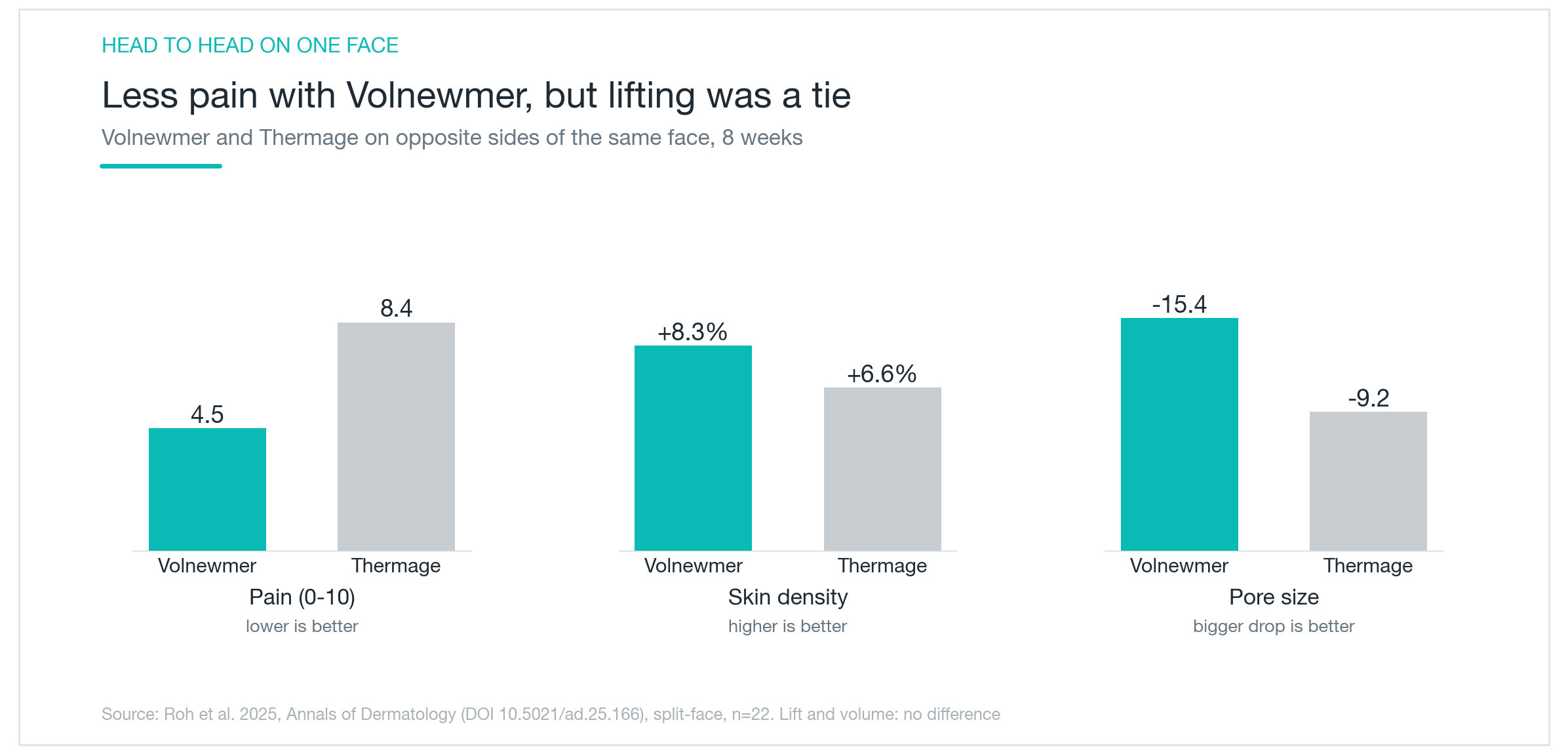
This is the question most people care about most, and there is a direct head-to-head study to point to. Researchers treated one side of each participant's face with Volnewmer and the other side with Thermage, then tracked outcomes over 8 weeks in 22 participants.
The most definitive finding was on pain. As shown in the chart, pain scores averaged 4.5 out of 10 on the Volnewmer side versus 8.4 on the Thermage side. This study clearly supports water cooling's role in reducing discomfort. Skin density improved about 8.3% on the Volnewmer side versus about 6.6% on the Thermage side, with pore reduction also slightly favoring Volnewmer.
Here's where the honest caveat comes in. The outcome most people actually want, visible lifting and reduction of sagging, showed no meaningful difference between the two devices. So yes, Volnewmer is less painful than Thermage in this study. But there's no evidence here that it lifts more effectively. Add to that the fact that this is a small, short study, just 22 participants followed for 8 weeks, and declaring a winner from these numbers alone isn't really warranted.
Is There Enough Clinical Evidence Specific to Volnewmer?
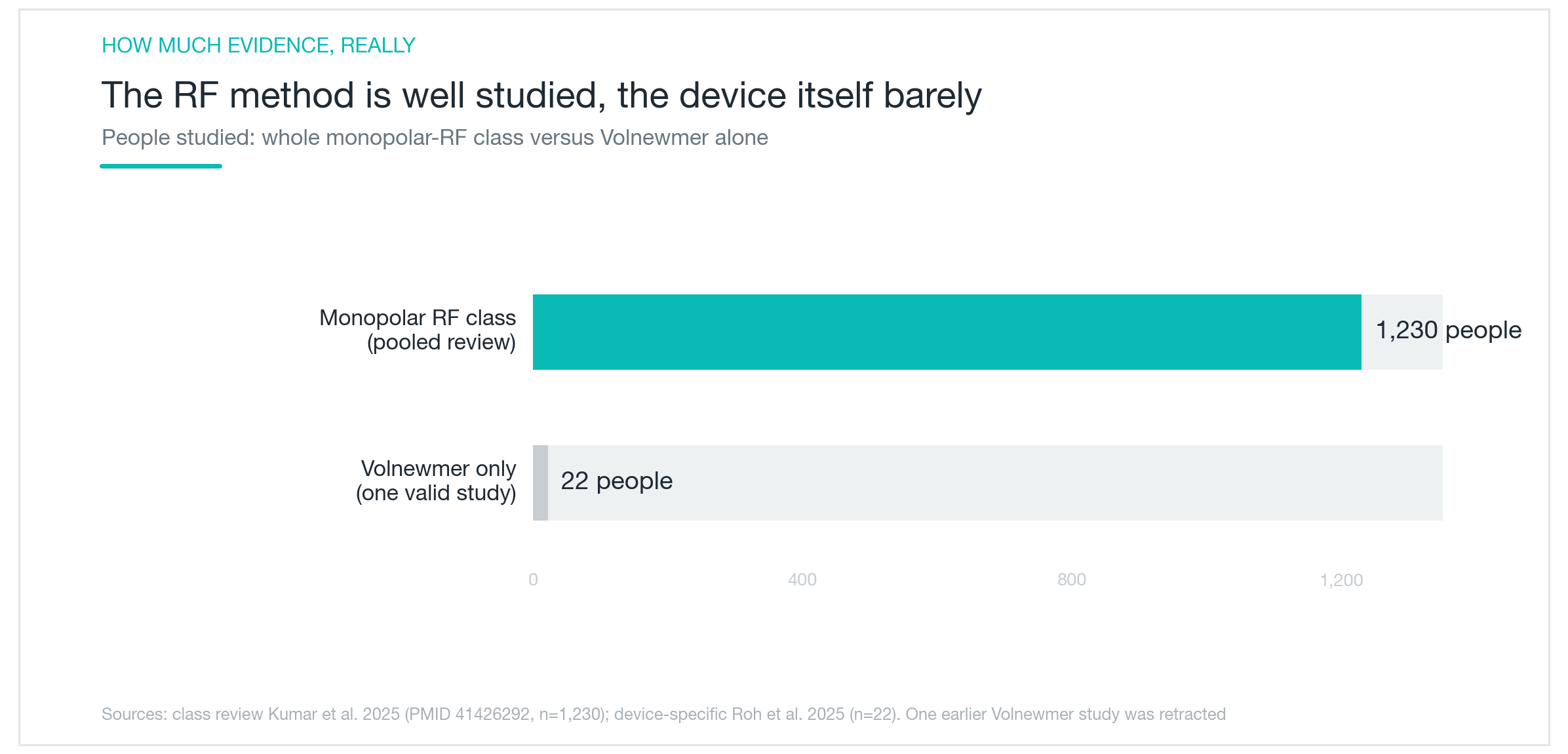
It's worth stepping back and taking stock. The 22-person study above is essentially the only dedicated clinical trial on Volnewmer that currently counts. A second study existed at one point, but it was formally retracted from its journal and can no longer be cited as evidence. That leaves Volnewmer-specific evidence small in scale and short in duration.
That's not the same as saying monopolar RF lifting lacks evidence. Broaden the lens to the full category, and the picture is more substantial. A meta-analysis pooling 1,230 patients across multiple monopolar RF studies found satisfaction rates ranging from 82 to 100%, with no serious adverse events reported. Separate smaller trials have documented wrinkle improvement rates above 90%. The broader conclusion: RF energy as a skin-tightening mechanism has real support. What hasn't been established is anything that makes Volnewmer specifically superior to other devices in its class.
That's why claims like "lasts a full year after one session" or "outperforms Thermage" deserve skepticism. Volnewmer's own official website doesn't publish a single clinical paper. And names like "K-Thermage" or "4th-generation RF" aren't manufacturer-designated technical terms. They're marketing language that circulates in clinics and ads.
Side Effects and Who It Suits
The side-effect profile is generally mild. The most common reactions after a session are redness, mild swelling, and a warm tingling sensation, all of which typically resolve within a few days. Serious complications are uncommon, but applying too much energy can cause burns, reduce fat volume in the cheeks to the point of looking hollowed out, or cause temporary numbness. For that reason, appropriate energy settings matter more than going as high as possible, and the skill of the provider ends up being a major factor in how satisfied you'll be.
There are clear contraindications. Anyone with an implanted electronic device such as a pacemaker, metal hardware in the treatment area, or active skin infections or inflammation in the target zone should avoid this treatment, as should anyone who is pregnant.
As for who tends to benefit most: Volnewmer suits mild to moderate laxity and fine lines. For people who have avoided RF treatments specifically because of pain concerns, the water cooling advantage is real and meaningful. On the other end of the spectrum, significant sagging or deeper structural descent won't respond adequately to RF alone. In those cases, insisting on Volnewmer isn't practical; the more useful conversation is about thread lifts, contouring procedures, or surgical options.
If you go ahead with a session, give yourself one to two months before judging the result. Comparing photos taken from the same angle in the same lighting gives a much clearer read than trying to assess changes in the mirror day to day.
Was this helpful?
About this article
Written by a practising aesthetic physician and intended for general education — not a substitute for individual medical advice.
Read next

Coolfase RF Lifting Effects: How Is It Different From Thermage?
What Coolfase is, whether the tip-cooling system really cuts down on pain, how it compares to Thermage and Volnewmer in actual research, and where the evidence honestly runs out: no Coolfase-specific clinical trial exists yet, and the pain-free claim deserves a closer look.
By Dr. Lee

10THERMA Lifting: Effect and Pain, and How It Differs From Thermage
A look at what 10THERMA actually is, how it compares to Thermage as a monopolar RF device, what dedicated clinical evidence shows, how much it hurts, and who it suits best.
By Dr. Kim
Thigh Fat Treatments: Types, How They Work, Effect Differences and Aftercare
Thighs are one of the areas that stay stubborn even with disciplined exercise and diet. Localized fat treatments that act directly on fat cells through cooling, injections, or heat energy have become a common way to address these areas. Here is how each method actually breaks down fat cells, and how they differ.
By Dr. Kim