Does Vitamin C Serum Work on Spots and Firmness?
By Dr. Lee8 min read
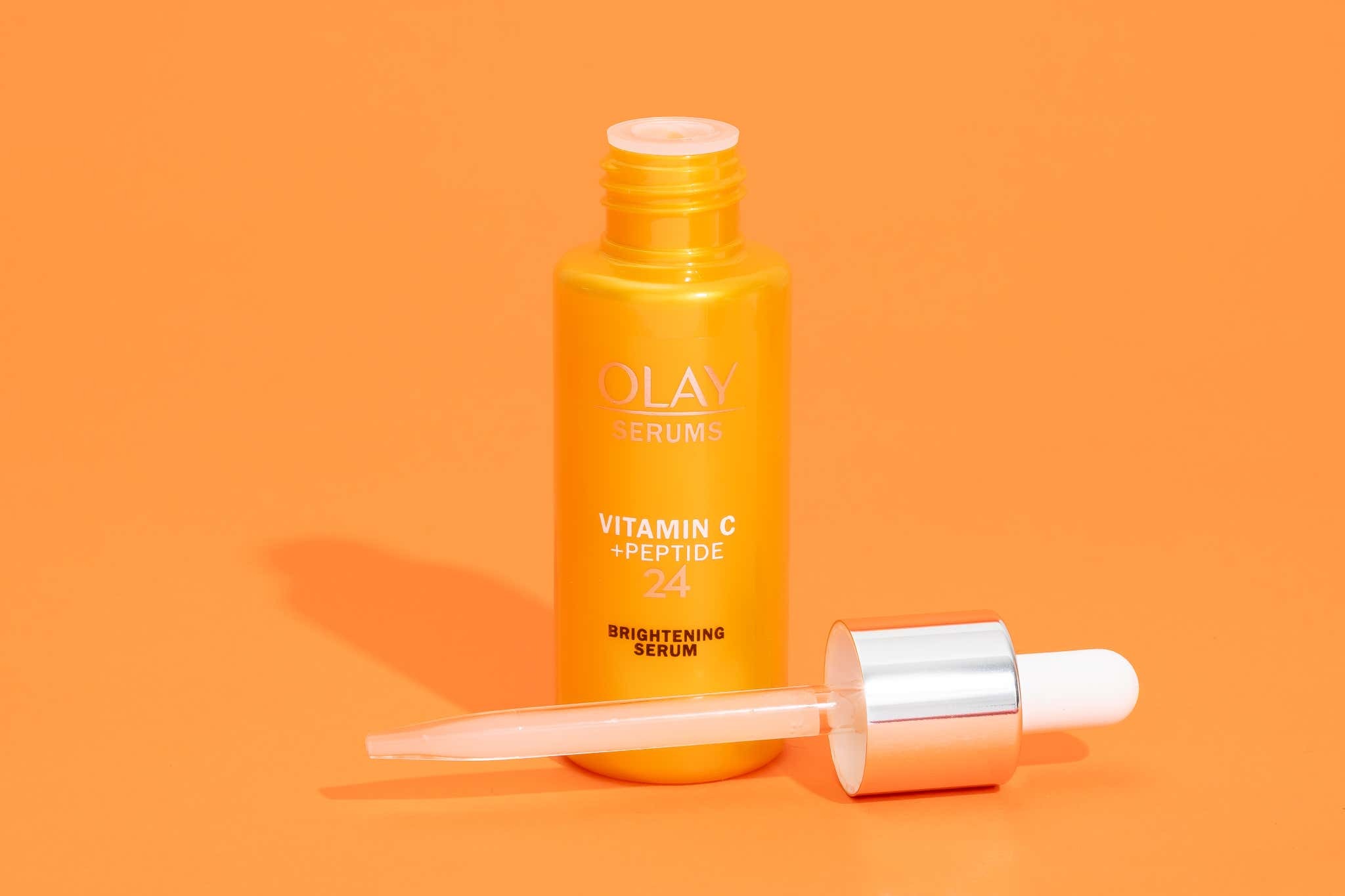
Vitamin C serum is one of those products almost everyone who pays attention to skincare has tried at some point. It has a steady reputation for lightening dark spots and giving skin a firmer feel.
At the same time, vitamin C has an equally steady reputation for turning color the moment it hits air, and losing effectiveness once that happens. So the two stories always travel together: a genuinely good ingredient that is also genuinely fussy to keep stable. That is why choosing a serum ends up being about more than reading the ingredient list. The bottle color and the packaging matter just as much. Below, we walk through why vitamin C is said to help with dark spots in the first place, and why it is such a tricky ingredient to work with.
Why Is Vitamin C Said to Be Good for Spots?
When skin takes on UV exposure, cells called melanocytes produce a pigment called melanin. Melanin is really a defense mechanism, the skin's way of shielding itself from UV light, but when that pigment collects in one spot, it shows up as a dark patch or freckle.
Vitamin C is thought to step into the process that builds melanin and slow down how much pigment forms in the first place. It is not erasing spots that already exist so much as slowing new ones from deepening. That is also why it is usually said to take 8 to 12 weeks of consistent use before you notice any real change.
Think of UV exposure building up in skin the way money builds up in a bank account. One day in the sun does not produce a dark spot on the spot. It is more that small amounts accumulate day after day until, at some point, the pigment finally becomes visible. Seen that way, vitamin C is not a one-time fix either. It works by quietly slowing the rate at which that balance builds up, a little each day.
In What Order Is Melanin Made?
Stripped down to its basics, melanin production works like this: an amino acid called tyrosine passes through several steps involving an enzyme called tyrosinase and comes out the other end as dark pigment. Tyrosinase acts like the key that starts the whole sequence.
The more active this enzyme is, the more melanin gets made, and faster. UV exposure signals skin to ramp up tyrosinase activity, which is why pigment tends to deepen during summer or after time spent outdoors.
Plenty of people have noticed this firsthand: spend 3 to 4 days at the beach on summer vacation, and the skin does not darken right away. It is only 3 to 7 days later that the color gradually deepens. That delay is tyrosinase catching the UV signal and then getting to work, a little late. Which is also why skincare applied after sun exposure still matters. It can keep pigment from deepening further, even after the exposure has already happened.
How Does Vitamin C Slow Pigment Production?
Vitamin C, or ascorbic acid, is reported to interfere with how tyrosinase functions. Picture it as reaching into the pigment factory and nudging the switch to slow the line down.
Vitamin C is also known for a reduction effect: it can pull melanin intermediates that have already started oxidizing and darkening back toward a lighter state. It catches a reaction that is heading toward darker pigment and steers it back the other way. Together, these two effects are why consistent use is linked to a gradually more even skin tone and lighter-looking spots over time.
Antioxidant Action That Stops Free Radicals First
When skin is exposed to UV rays, fine particles, or stress, it produces more of an unstable molecule called free radicals. A free radical is missing an electron, so it goes looking for one, tearing it away from healthy tissue nearby, like cell membranes or collagen, and causing damage in the process. It helps to picture it as a chain reaction, like dominoes, tipping over one piece of tissue after another.
Vitamin C is an antioxidant, meaning it hands over an electron to a free radical before it can do that damage, stopping the chain reaction in its tracks. It essentially sacrifices itself as a shield so the dominoes stop falling. Catching free radicals early like this means less damage to collagen and cell membranes, and that is thought to be part of why it can slow down the skin aging caused by UV exposure.
Most people know the feeling of skin that stings or feels unusually sensitive after spending 2 to 3 hours or more outdoors in one stretch. That is largely free radicals spiking quickly and irritating skin cells. Which is why applying vitamin C before sun exposure, rather than after, is said to make more of a difference: it is already in place to intercept free radicals the moment they form.
How It Helps Collagen Synthesis and Reduces Breakdown
Collagen is the protein that acts like scaffolding underneath skin. The tighter and sturdier that scaffolding is, the less skin sags and the more firmness it holds onto. But collagen is not something the body just assembles on its own. It needs help from specific enzymes to come together properly.
Vitamin C works as a cofactor for the enzymes that finish building collagen, meaning those enzymes cannot function normally without it. Think of it like a key that has to fit the lock before the door opens. Without enough vitamin C, collagen production stalls. With enough of it, the process runs the way it is supposed to.
There is a well-known historical example here: sailors on voyages lasting more than 3 months, who went without fresh fruit or vegetables the whole time, developed scurvy, with bleeding gums and wounds that would not heal. That happened because a lack of vitamin C meant their bodies could not build collagen properly. Vitamin C and collagen are essentially inseparable, and applying serum to skin is just putting that same relationship to work on the surface.
The antioxidant effect described earlier also helps protect collagen. Free radicals ramp up the activity of enzymes called MMPs, which act like scissors that break collagen down. By reducing free radicals, vitamin C also reduces that cutting activity. So it supports collagen from two directions at once: helping build new collagen and cutting down on how much gets broken down.
Why Does Vitamin C Oxidize So Easily?
Everything above makes vitamin C sound like an excellent ingredient, and it is, but the catch is that it is chemically unstable. Vitamin C, or more precisely L-ascorbic acid, loses electrons and converts into a different compound the moment it meets oxygen, light, or heat.
That conversion is oxidation. A serum that starts out clear and slowly turns yellow, then eventually brown, is showing a visible sign that oxidation is underway. There is a kind of irony to it: the very property that lets vitamin C hand off electrons to free radicals is the same property that makes it react so readily with oxygen in the air. The trait that makes it a good shield is also the trait that burns it out fast.
It is the same phenomenon behind a sliced apple or lemon turning brown after sitting out. The vitamin C inside the fruit oxidizes on contact with air and the color shifts. The same thing happens inside a serum bottle, just more slowly. Opening and closing the cap frequently, or leaving the bottle somewhere sunny like a vanity table, can noticeably speed that process up.
What to Do With a Discolored Serum and How to Prevent Oxidation
Once vitamin C has oxidized, it is reported to lose most of its original antioxidant power and brightening effect, essentially becoming little more than water with no real benefit. There are also reports that byproducts formed during oxidation can irritate skin, which is why it is generally recommended to stop using a product once its color has visibly changed.
That is exactly why manufacturers go to such lengths to slow oxidation down, and they typically rely on three approaches.
- Dark glass or airtight packaging: minimizing light and air exposure delays the point at which oxidation starts.
- Stabilized derivative forms: derivatives like ascorbyl glucoside or magnesium ascorbyl phosphate are structurally modified to react with oxygen less readily.
- Small, single-use packaging: reducing how often the product is exposed to air, and for how long, keeps oxidation from progressing too far before the bottle is finished.
How to Choose Concentration and Formula
Pure L-ascorbic acid is reported to absorb well and act quickly, but that same potency comes with faster oxidation and relatively more potential for irritation. A concentration between 10 and 20% is often cited as the sweet spot between effectiveness and irritation, and higher concentrations are not necessarily better.
For sensitive skin, the derivative forms mentioned earlier can be a good alternative. Derivatives get absorbed into skin and then gradually convert into pure vitamin C through enzymes in the body, so the effect shows up more slowly, but they tend to be gentler and more stable. Someone with sensitive skin who jumps straight into a 20% pure vitamin C serum, for instance, may end up with stinging or redness. In that case, starting with a lower concentration or a derivative form, watching how skin reacts, and working up gradually is the safer route.
Whichever form you use, applying sunscreen on top in the morning is considered essential to actually getting the antioxidant benefit. Since vitamin C works by intercepting free radicals before they cause damage, pairing it with sun protection during the hours UV exposure is most likely makes practical sense. Skip the sunscreen and use only vitamin C, on the other hand, and it is a bit like holding a shield but never showing up to the fight. You end up with less than half the benefit.
References
Korean Dermatological Association, Ministry of Food and Drug Safety (MFDS), American Academy of Dermatology (AAD), and U.S. Food and Drug Administration (FDA).
Was this helpful?
About this article
Written by a practising aesthetic physician and intended for general education — not a substitute for individual medical advice.
Read next
Milk Peel and Lactic Acid: Results, Irritation, Suitable Skin Types, and Precautions
Milk peel is a peel that clears old buildup using lactic acid, an AHA. Because lactic acid has a larger molecule, it does not rush deep into the skin, and it also holds onto moisture in the skin, so it stays gentle while smoothing texture. Here is how that mild action actually works.
By Dr. Kim

Vitamin C Serum: When to Apply and What Concentration, How Many Percent Is Best?
The three things vitamin C serum actually does for your skin (antioxidant protection, collagen synthesis, and brightening), which form to choose, how to read concentration and pH, why it pairs so well with sunscreen, and the right way to layer it, backed by real study numbers.
By Dr. Lee
Cafe-au-Lait Spots Returning After Laser: Causes, Number of Sessions and Expectations
A café au lait spot forms because the pigment-making cells in that one patch of skin are locally overactive. Laser treatment breaks up the pigment that has already built up, but it doesn't switch off those cells, which is why the color so often returns. Here's the biology behind it, why results differ so much from person to person, and what a realistic treatment timeline actually looks like.
By Dr. Kim