Milk Peel and Lactic Acid: Results, Irritation, Suitable Skin Types, and Precautions
By Dr. Kim6 min read
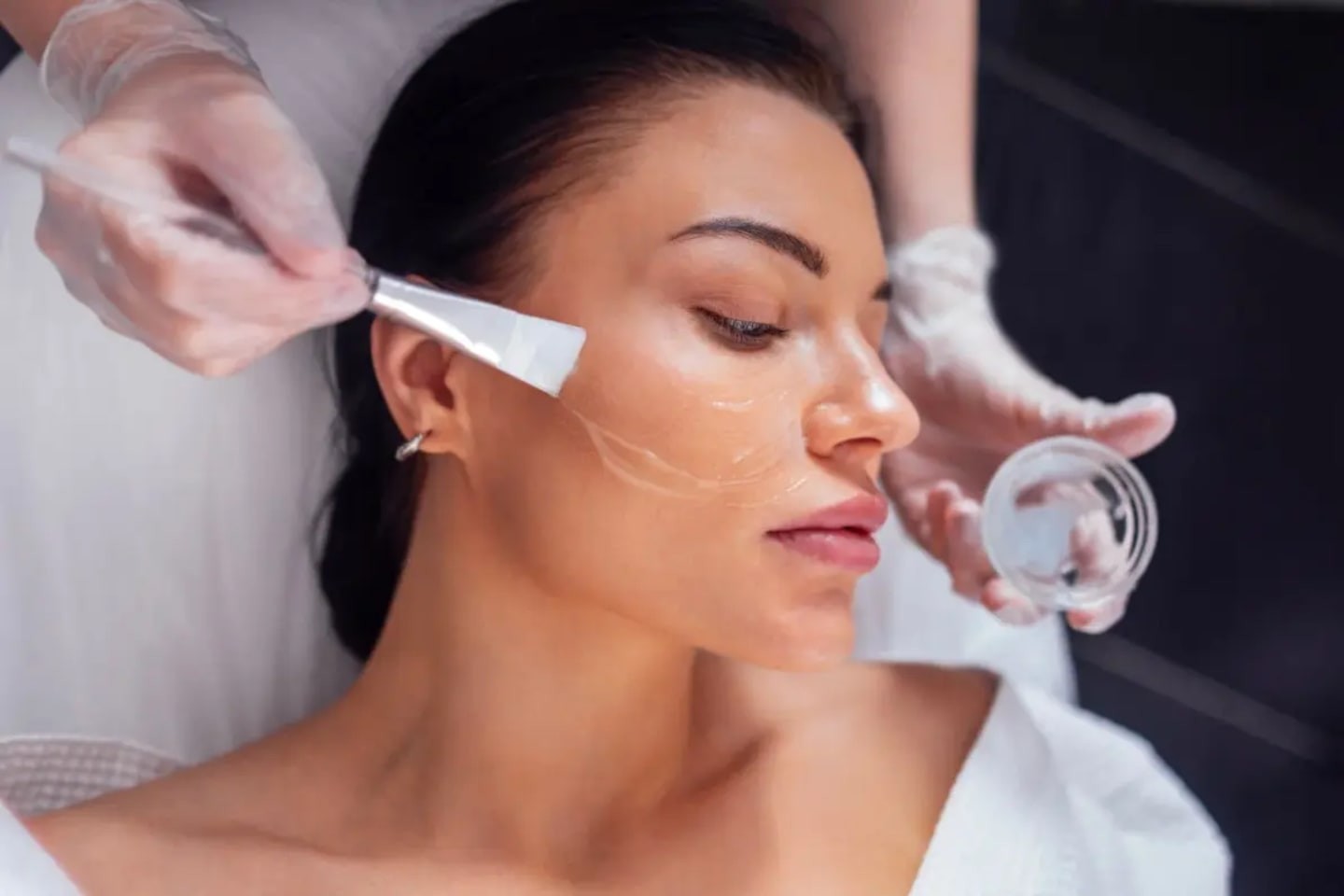
When people hear the word peel, many picture stinging skin turning red and flaking. Milk peel is often introduced as the peel that eases that worry. The name makes some people assume milk is applied to the skin, but the real active ingredient is lactic acid. Here is a step-by-step look at how lactic acid clears away buildup while keeping irritation low.
Is there really milk in a milk peel?
Hearing the name milk peel, it is easy to assume milk is being applied to the skin. In reality, the star ingredient in this peeling solution is not milk but lactic acid. The name lactic acid itself comes from the Latin word for milk. It is called that because this acid forms naturally when milk or yogurt ferments.
The milk peel products used in clinics today are, for the most part, not extracted from actual milk. They are made from lactic acid synthesized in a lab and refined to a set concentration. The name traces back to milk, but the substance that actually does the work is a purified acid.
How does lactic acid remove dead skin?
Lactic acid belongs to the AHA family, short for alpha hydroxy acid, a group of acids typically drawn from fruit or fermented sources. The stratum corneum, the outermost layer of skin, is made of dead skin cells that are held tightly together. The glue holding those cells to each other is a mix of lipids and binding proteins between the cells.
Lactic acid chemically loosens that bond. When an acidic ingredient weakens the grip between dead skin cells, old buildup that would normally shed on its own comes off more easily. It works something like old mortar between bricks crumbling with age, letting individual bricks come loose more easily.
In young skin, dead skin cells are naturally created and shed on roughly a monthly cycle. As skin ages or grows drier, though, that cycle slows down and old buildup keeps piling up on the surface. Lactic acid is described as working by nudging that slowed cycle back toward its original pace.
Why is its large molecule less irritating?
One reason irritation levels differ from one peeling ingredient to another is molecule size. Within the same AHA family, glycolic acid has a small molecule that moves fast and deep into the skin. Lactic acid, by contrast, has an extra branch on its molecular structure, which makes it relatively larger.
A larger molecule passes through the skin barrier more slowly. Think of a fine mesh screen door. Small gnats slip through easily, but bigger insects get caught and cannot get in as easily. Lactic acid passes through that screen slowly and only to a shallow depth, so it acts mainly on the surface of the stratum corneum rather than rushing irritation into deeper layers.
That is why, even at the same concentration, lactic acid peels are generally known to cause less redness, flaking, or stinging than glycolic acid peels.
How it exfoliates while keeping skin hydrated
Another reason lactic acid is often listed as a low irritation peel is its hydrating action. The stratum corneum naturally contains a substance called NMF, or natural moisturizing factor, and lactic acid happens to be one of the components that makes up NMF.
In other words, because lactic acid is the same type of substance already present in skin, it clears away buildup while also holding onto moisture in the skin at the same time. The very ingredient that exfoliates is also pulling in moisture, which is why the tightness or dryness that often follows a peel tends to be milder than with other acids. Picture stripping old wallpaper while applying a moisturizing cream to that same spot at the same time, and the idea becomes easy to follow.
People often assume that exfoliating and hydrating pull in opposite directions when it comes to peels. But because a single lactic acid molecule handles both jobs at once, it helps hold off the skin drying out sharply while buildup is being cleared.
How is it different from glycolic and salicylic acid?
Among AHAs, glycolic acid is the most widely known, and for oilier skin, a BHA, short for beta hydroxy acid, such as salicylic acid is also common. Glycolic acid has a small molecule and strong penetration, so it clears buildup fast, but irritation tends to grow along with that speed.
Salicylic acid dissolves well in oil, which lets it reach deep into sebum inside pores. That is an advantage for skin that is prone to acne or blackheads, but for people whose skin is naturally thin or dry, it can end up being more irritating.
Compared with these ingredients, lactic acid penetrates slowly and carries hydrating action on top of that, so its exfoliating effect is clear while recovery tends to be quick. That is why it is often recommended as a starting point for people with thin or sensitive skin, or for anyone trying a peel for the first time.
Which skin types suit a milk peel?
Skin types that tend to do relatively well with milk peel are summarized below.
- Thin, sensitive skin: Because the larger molecule only reaches a shallow depth, sudden irritation reactions are less likely even on skin with a weaker barrier.
- Dry skin prone to tightness: Since lactic acid itself is a natural moisturizing factor component, it works to hold onto moisture even while clearing buildup.
- First time trying a peel: Because irritation is relatively mild, it is often considered a comfortable choice for checking how skin responds to a peel in general.
- Shallow pigmentation: Since it acts mainly on the stratum corneum, it is said to help shallow pigmentation shed along with stagnant buildup.
On the other hand, skin with heavy oil production and clogged pores may suit a salicylic acid type peel better, since it dissolves in oil and can reach deeper into pores.
Sun protection and aftercare
Being low irritation does not mean no aftercare is needed at all. Since this is still a treatment that applies an acid, some minimum recovery time is required.
- On the day of treatment and the day after, sunscreen should be applied more carefully than usual. Skin where buildup has been thinned reacts more easily to UV exposure.
- For a few days, it is best to avoid scrubs or other acid based products at the same time. Layering exfoliating actions can make irritation larger than expected.
- Redness or a mild tight feeling after treatment is often described as settling within a day or two, though recovery speed varies from person to person.
Keeping these few points in mind lets milk peel serve as a low burden, ongoing way to manage buildup. It is also worth not spacing sessions too closely together. The stratum corneum needs time to rebuild and settle back into place, and respecting that cycle is what keeps results steady without added irritation.
References
Korean Dermatological Association, American Academy of Dermatology (AAD), and Ministry of Food and Drug Safety (MFDS).
Was this helpful?
About this article
Written by a practising aesthetic physician and intended for general education — not a substitute for individual medical advice.
Read next

Pink Peel: Results, How It Works, Aftercare, and Number of Sessions
Pink Peel is a low-irritation peel that uses isoflavones from fermented kudzu extract to refine texture while encouraging collagen renewal deep in the skin. Because it relies on mild plant-based compounds rather than harsh acids, even sensitive skin can generally tolerate it. Here is how the ingredient actually works, how it differs from a typical peel, and how to care for skin afterward.
By Dr. Kim
Lara Peel Effects and Irritation, Including Treatment Interval and Suitable Skin
Lara Peel was developed for sensitive skin that finds stinging, peeling treatments too harsh. It combines LHA with an alkaline ingredient to gently smooth away dead skin cells. Using real research on LHA and other gentle peel ingredients, here is a look at how it works on texture and pores.
By Dr. Lee
Cafe-au-Lait Spots Returning After Laser: Causes, Number of Sessions and Expectations
A café au lait spot forms because the pigment-making cells in that one patch of skin are locally overactive. Laser treatment breaks up the pigment that has already built up, but it doesn't switch off those cells, which is why the color so often returns. Here's the biology behind it, why results differ so much from person to person, and what a realistic treatment timeline actually looks like.
By Dr. Kim