Lara Peel Effects and Irritation, Including Treatment Interval and Suitable Skin
By Dr. Lee7 min read
Many people avoid peels altogether because of days of stinging and visible peeling afterward. Lara Peel was designed to ease that burden. Instead of stripping away dead skin cells aggressively, it gently dissolves them while replenishing what the skin barrier needs. Its key ingredient, LHA (lipohydroxy acid), has shown both effectiveness and low irritation across several clinical studies. Because it works cell by cell rather than peeling everything off at once, you can go straight back to your day without redness or visible flaking, which is especially welcome for sensitive skin. Here is a look at the ingredients and mechanism behind Lara Peel, and why it feels comfortable even on sensitive skin.
How is Lara Peel different from conventional peels?
Lara Peel is often described as a fourth-generation peel. It was created by adding an alkaline ingredient to LHA, which was originally developed by a cosmetics company. Traditional clinic peels like glycolic acid, salicylic acid, and TCA work mainly by using acid to loosen the bonds between dead skin cells and strip away the surface layer. The more that gets stripped away, the stronger the effect, but redness, stinging, and downtime tend to increase along with it.
Rather than removing a large layer of dead skin at once, Lara Peel dissolves cells one by one, gently and gradually. The added alkaline ingredient is also known to thicken the epidermis and stimulate fibroblasts, helping replenish collagen and elastin. This is why the developer and clinics describe Lara Peel as a peel that rebuilds rather than strips.
The table below and the sections that follow are based on real research findings for LHA, the key ingredient in Lara Peel, as well as related gentle peel ingredients like PHA and mandelic acid.
| Category | Traditional AHA/BHA/TCA peel | Lara Peel (LHA type) |
|---|---|---|
| Method | Strips the outer layer | Dissolves cell by cell |
| Molecule size | Relatively small | Relatively large |
| Sensation | Often stings | Generally low irritation |
| Recovery | Can involve redness, flaking | Usually back to routine right away |
What does the LHA ingredient do?
LHA stands for lipohydroxy acid, made by attaching a fatty acid chain to salicylic acid. It is a close chemical relative of salicylic acid, but its molecule is larger, so it penetrates the skin much more slowly. Because it seeps in gradually rather than all at once, it does not strip away a wide area in one go. Instead, it works by loosening dead skin cells one at a time.
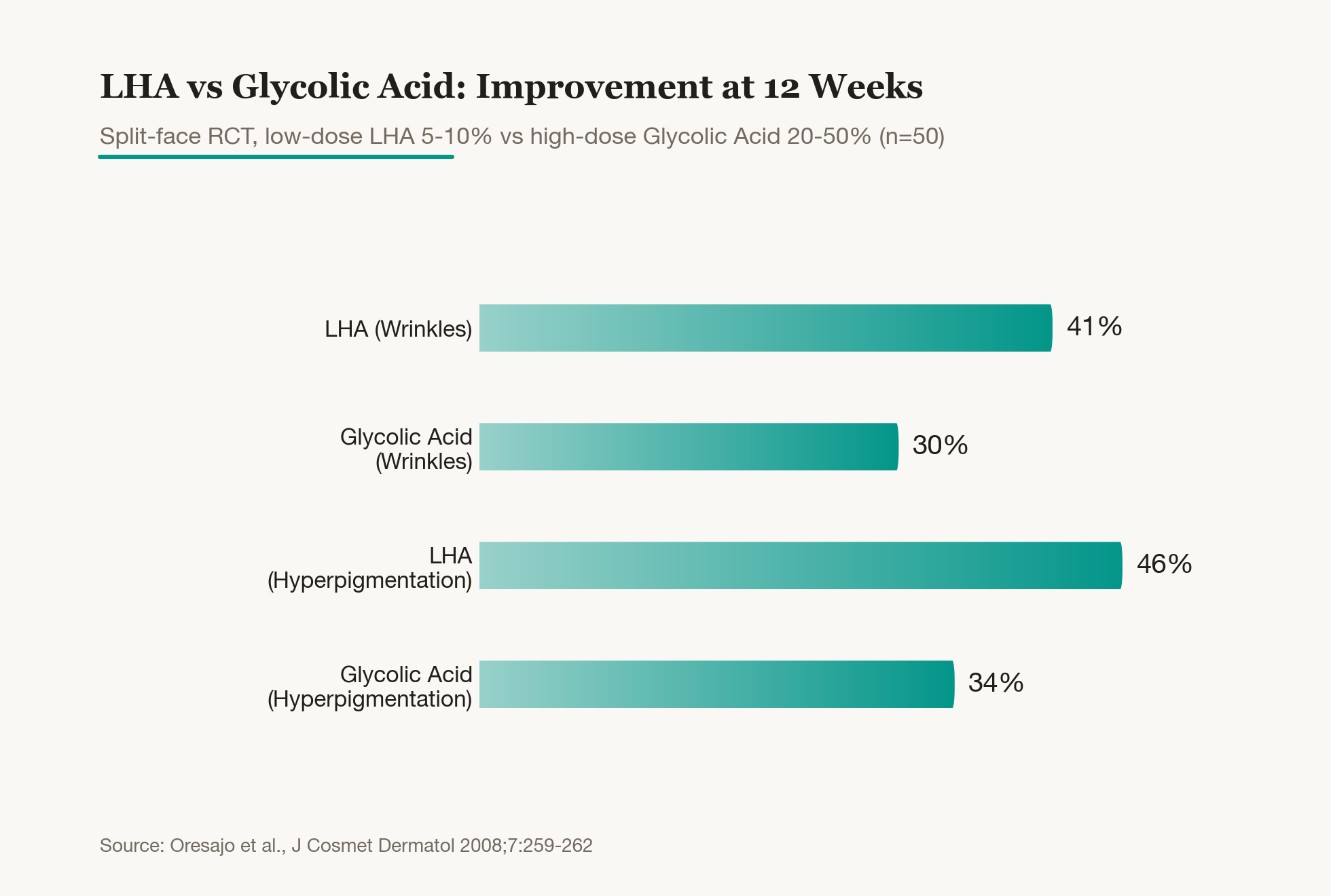
Because of this, research shows LHA can match or even outperform traditional acid peels at a lower concentration. In a study of 50 women aged 35 to 60, one side of the face received 5 to 10% LHA while the other side received a much higher concentration of glycolic acid, 20 to 50%, applied every 2 weeks for 12 weeks. As a result, 41% of the LHA side showed clear improvement in fine lines, compared to 30% on the glycolic acid side. Pigmentation improvement was also higher on the LHA side at 46%, compared to 34% for glycolic acid.
The fact that a much lower concentration produced a higher improvement rate says a lot about what makes LHA different. Results vary somewhat depending on formulation and concentration, but the overall pattern is clear: a low concentration can still deliver strong results.
How irritation is reduced
There are two main reasons Lara Peel is considered relatively gentle. The first is the nature of LHA itself, described above. Because its larger molecule cannot rush into the skin all at once and instead spreads slowly near the surface, it tends to cause less irritation from stimulating nerve endings.
The second reason is that an alkaline ingredient is added to the acidic LHA solution. Mixing acid and alkali softens the overall acidity of the solution, which reduces stinging during application. Balancing out acidity this way to lower irritation has become a practical approach in peels designed for sensitive skin.
Along the same lines, it is worth looking at other ingredients known for being gentle. Gluconolactone, a PHA, has a molecule more than twice the size of glycolic acid, so it absorbs slowly, and studies show it tends to be well tolerated by sensitive skin conditions like rosacea or atopic dermatitis. Mandelic acid also has a larger molecule and is a well-known alternative to glycolic acid for sensitive skin.
Does it work on pores and small bumps?
LHA peels are also used on skin prone to enlarged pores and comedonal acne. Like salicylic acid, LHA dissolves well in oil, allowing it to reach deep into pores clogged with sebum. On top of that, its gradual exfoliating action helps gently loosen the dead skin cell plugs that clog those pores.
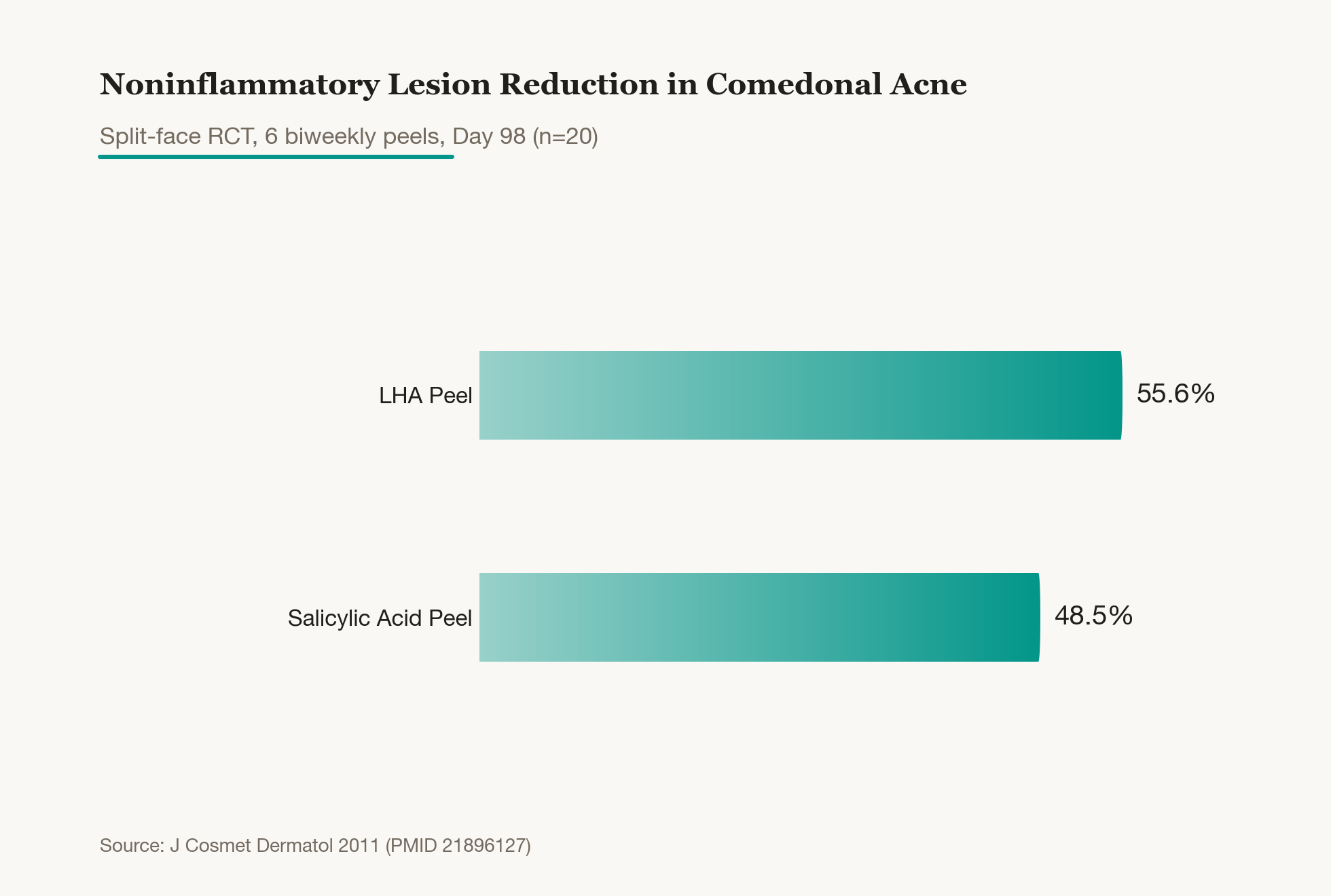
In a study of 20 people with comedonal acne, one side of the face received LHA peels and the other received salicylic acid peels, both 6 times at 2-week intervals. After 98 days, comedonal lesions dropped by 55.6% on the LHA side and 48.5% on the salicylic acid side, a difference that was not statistically significant. In other words, LHA reduces acne lesions about as well as the salicylic acid that clinics have long relied on, while causing relatively less irritation.
What interval between sessions is appropriate?
Clinics that offer Lara Peel generally recommend sessions about once a week. This shorter interval is possible because it is gentle enough that you don't need a long recovery window.
A study on PHA peels, from the same gentle family, tested two concentrations, 10% and 30%, over 4 weeks. Both concentrations reduced water loss from the skin and helped regulate oil, with no major difference between them. This suggests that even a lower concentration can produce a meaningful change.
If you have sensitive skin, it is safer to start with a session every 2 weeks rather than weekly, then shorten the interval once you see how your skin adapts. On treatment days, apply sunscreen more carefully than usual, and if you are using retinoids or other acid-based products, let the clinic know beforehand.
| Category | Recommendation |
|---|---|
| Recommended interval | Weekly to every 2 weeks |
| Sun protection | Careful sunscreen on treatment day |
| Combining products | Disclose retinoids, acid products beforehand |
| Noticeable results | Clear after several sessions |
Skin concerns Lara Peel suits
Lara Peel aims to refine texture and manage pores without stripping the skin aggressively. It is a particularly good fit for people with sensitive skin who have avoided peels due to post-treatment flaking or redness, for busy professionals who cannot spare much recovery time, and for anyone dealing with mild dullness and clogged pores at the same time.
Rather than tackling dead skin and pores aggressively in one session, it is easier to think of this as a treatment that gently refines skin texture and the barrier over several sessions. That makes it especially approachable for people trying a peel for the first time, or anyone who has been irritated by a stronger peel before.
Research on LHA and related ingredients backs up both its low irritation and its effectiveness. Even so, it helps to check the concentration and method your clinic actually uses beforehand, and to work out a schedule that fits your skin through a consultation, so you end up with a result you are happy with.
Was this helpful?
About this article
Written by a practising aesthetic physician and intended for general education — not a substitute for individual medical advice.
Read next

Pink Peel: Results, How It Works, Aftercare, and Number of Sessions
Pink Peel is a low-irritation peel that uses isoflavones from fermented kudzu extract to refine texture while encouraging collagen renewal deep in the skin. Because it relies on mild plant-based compounds rather than harsh acids, even sensitive skin can generally tolerate it. Here is how the ingredient actually works, how it differs from a typical peel, and how to care for skin afterward.
By Dr. Kim

Black Carbon Peel: How It Works and Precautions After Treatment
Carbon peel (black peel) works by letting microscopic carbon particles bind to sebum and dead skin cells deep in the pores, then using a laser to selectively burn away that carbon, carrying the buildup out with it. Here's how carbon absorbs laser energy, and why the heat that reaches the dermis in the process ends up smoothing skin texture.
By Dr. Lee
Hollywood Spectra Toning Effects and Side Effects, Including Carbon Peel
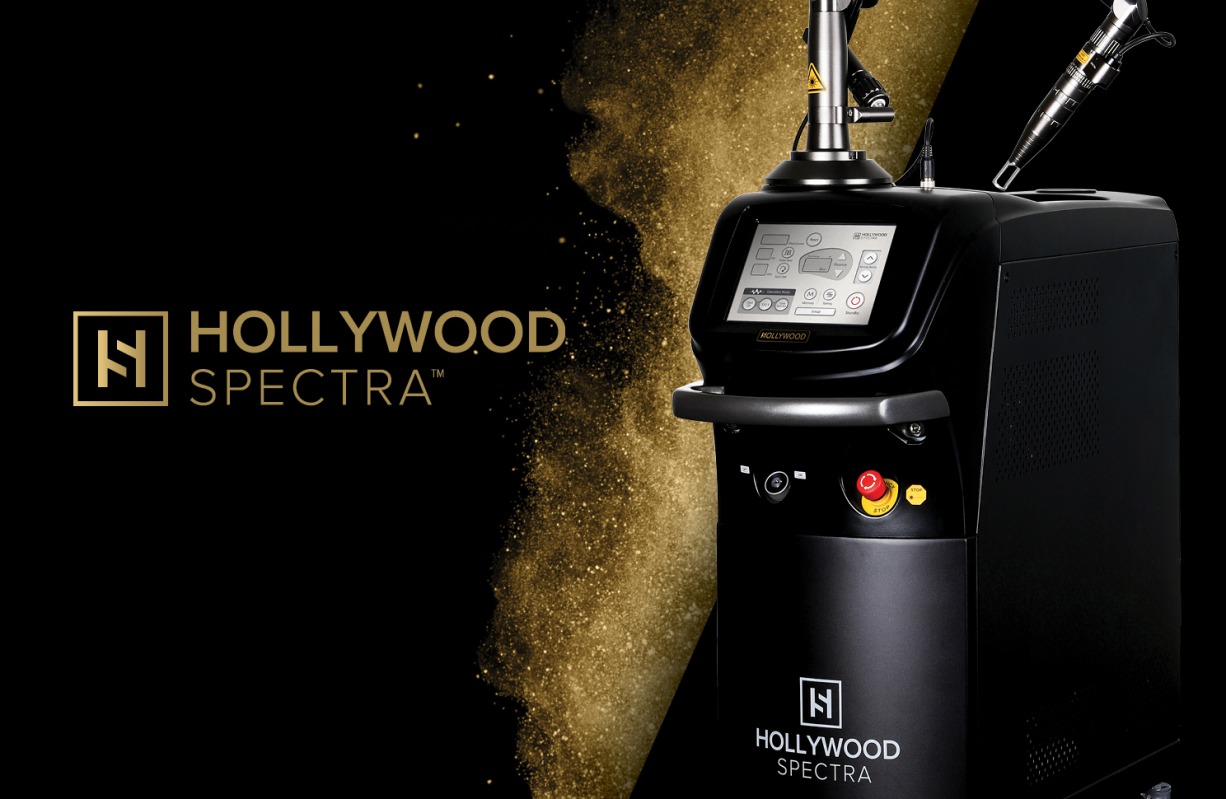
Hollywood Spectra is a Q-switched Nd:YAG laser using 1064nm and 532nm wavelengths, most commonly known for carbon peel toning, where a carbon lotion is applied and the laser is passed over the skin repeatedly at low power. Here is how it works on melasma pigment, pores, and skin tone, along with what the actual research shows about its effects and limits.
By Dr. Lee