Cafe-au-Lait Spots Returning After Laser: Causes, Number of Sessions and Expectations
By Dr. Kim8 min read
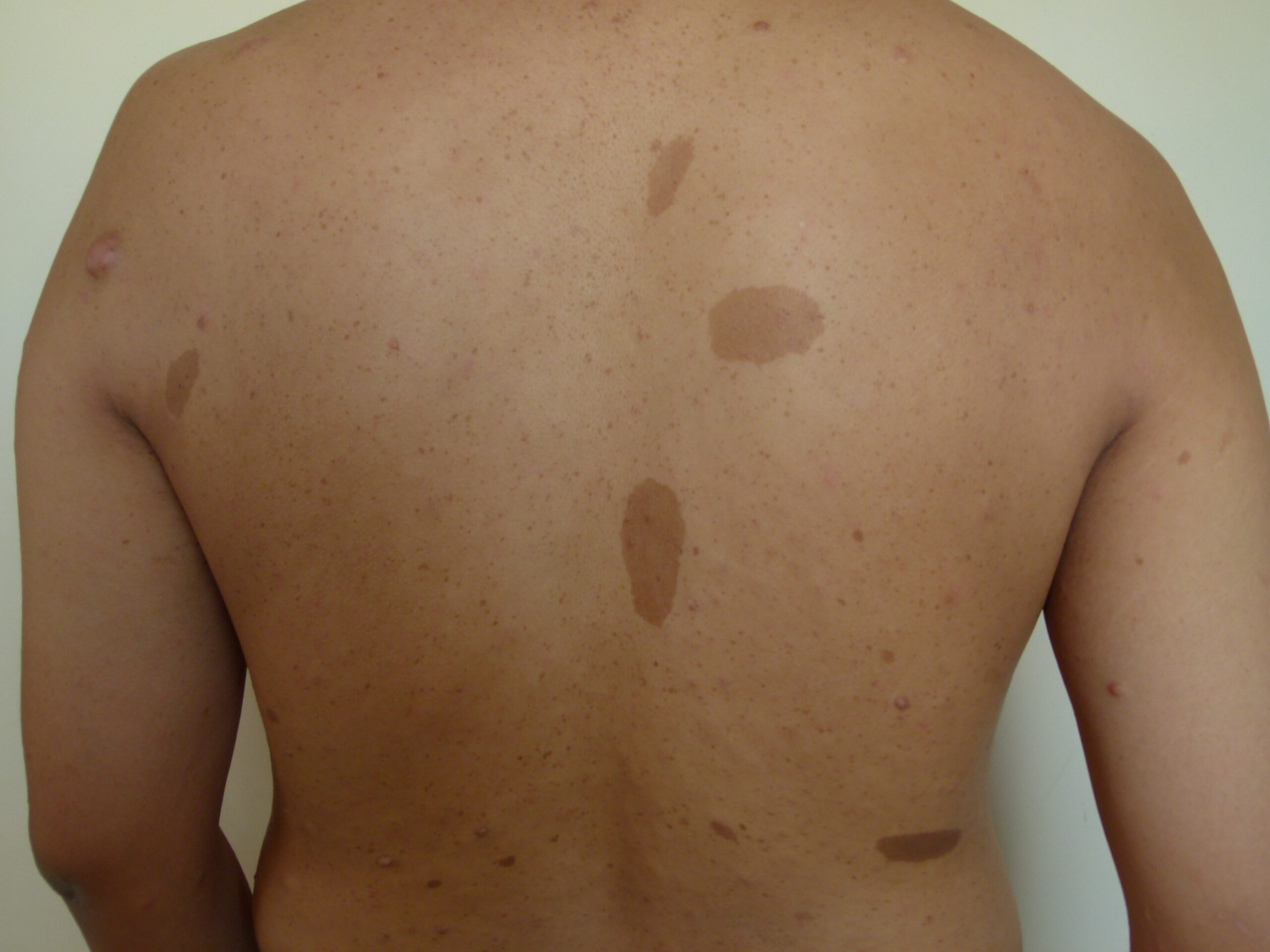
A café au lait spot gets its name from its color, a light tan patch that looks like coffee with milk stirred into it. Most people are born with one or notice it appearing in early childhood, usually as a round or oval patch of skin.
Laser treatment can fade it noticeably, but plenty of patients notice the color creeping back months later. Once you understand why this particular spot tends to relapse more than other pigmented marks, it changes how you plan treatment from the start.
Why do cafe-au-lait spots form?
Skin color comes down to melanin, the brown pigment made by cells called melanocytes. Think of each melanocyte as a tiny factory that manufactures pigment and pumps it out into the surrounding skin.
In a café au lait spot, a cluster of these factories is simply working harder than the ones nearby, churning out more pigment than the surrounding skin does. That extra pigment collects at the junction where the epidermis, the skin's outer layer, meets the dermis underneath, and that buildup is what shows up as a light brown patch.
The size and shade vary from person to person, but the underlying mechanism is the same everywhere: a local group of pigment cells simply runs hotter than the rest.
One curious detail is that the melanin granules in these spots are often physically larger than the granules in normal skin. These oversized granules are called giant melanosomes, and it helps to picture the pigment factory stamping out bigger, denser blobs of color than usual. That's part of why the spot can look strikingly distinct even on someone with fair skin.
The leading explanation for why pigment concentrates in exactly that one spot traces back to fetal development. Melanocytes are cells that normally migrate outward and settle across the entire body. If the genetic signaling that guides this migration and division goes slightly off course in one localized area, the cells that end up there simply lock in a more active setting than their neighbors.
That's also why the borders of these spots tend to look so clearly defined: the location and boundaries were essentially set before birth. When a spot appears to grow later in life, it isn't forming fresh tissue, it's the original patch simply expanding along with the rest of the growing body.
Why does it come back even after laser removal?
Laser treatment works by shattering the pigment granules that have already accumulated, letting the body clean up the fragments on its own. It targets the melanosomes, the tiny pigment-filled sacs, using heat or a pressure wave, but it doesn't touch the melanocytes, the factories that actually produce the pigment in the first place.
That means the melanocytes in the treated area survive the procedure intact, and they carry on overproducing pigment just as they did before. It's a bit like mopping up a puddle on the floor without ever fixing the leaking pipe above it.
Given enough time, those cells refill the pigment supply, and the spot that had faded gradually becomes visible again. This is one reason café au lait spots are reported to relapse more often than many other pigmented conditions.
The contrast becomes clearer when you compare them with a dermal pigment condition like nevus of Ota. Because the pigment there sits deep in the dermis, a single round of laser treatment tends to hold up for a longer stretch. Café au lait spots, by contrast, involve cells near the epidermis that stay active, so even with the same laser, the results typically don't last as long.
Why do results differ with the same laser?
Treating the same area with the same device can still produce very different outcomes from one person to the next. That's largely because how deep the pigment sits, confined to the epidermis versus mixed into the dermis, changes how much laser energy actually gets absorbed and where.
If someone's baseline skin tone runs darker, the normal melanin in the surrounding skin absorbs laser energy too. That can make the border between the spot and the surrounding skin more obvious, or even temporarily darken the area.
The size of the spot and how long it's been there matter as well. Larger, older spots tend to have simply accumulated more pigment-producing cells, so a single session or two often isn't enough to clear them fully.
How much sun exposure the area has seen is another factor. A spot that's been exposed to the sun frequently tends to have a pigment factory that's already running at full speed, so even if it fades right after treatment, it tends to refill faster than a less sun-exposed spot would.
Treatment location quietly matters too. Areas with rich blood flow, like the face and neck, tend to clear away damaged pigment more efficiently. Areas with comparatively less circulation, like the back or thighs, often clear pigment more slowly even with the exact same laser settings.
Can whitening creams and peels work instead?
Many people reach for a brightening cream before ever considering laser treatment, but most report seeing little real change.
Standard brightening creams work by helping pigment near the very top of the epidermis shed naturally along with dead skin cells. The problem is that the pigment in a café au lait spot sits at the junction between the epidermis and dermis, a layer deeper than most cream ingredients can reach. It's a bit like trying to wipe a stain off a roof from a window down below.
Peels run into a similar limit. A peel exfoliates the outer skin layer, so it simply can't reach pigment sitting that deep at the junction. That's part of why laser-based treatments, which can deliver energy further into the skin, tend to be reported as the more effective option for these spots.
Which lasers are used and how do they work?
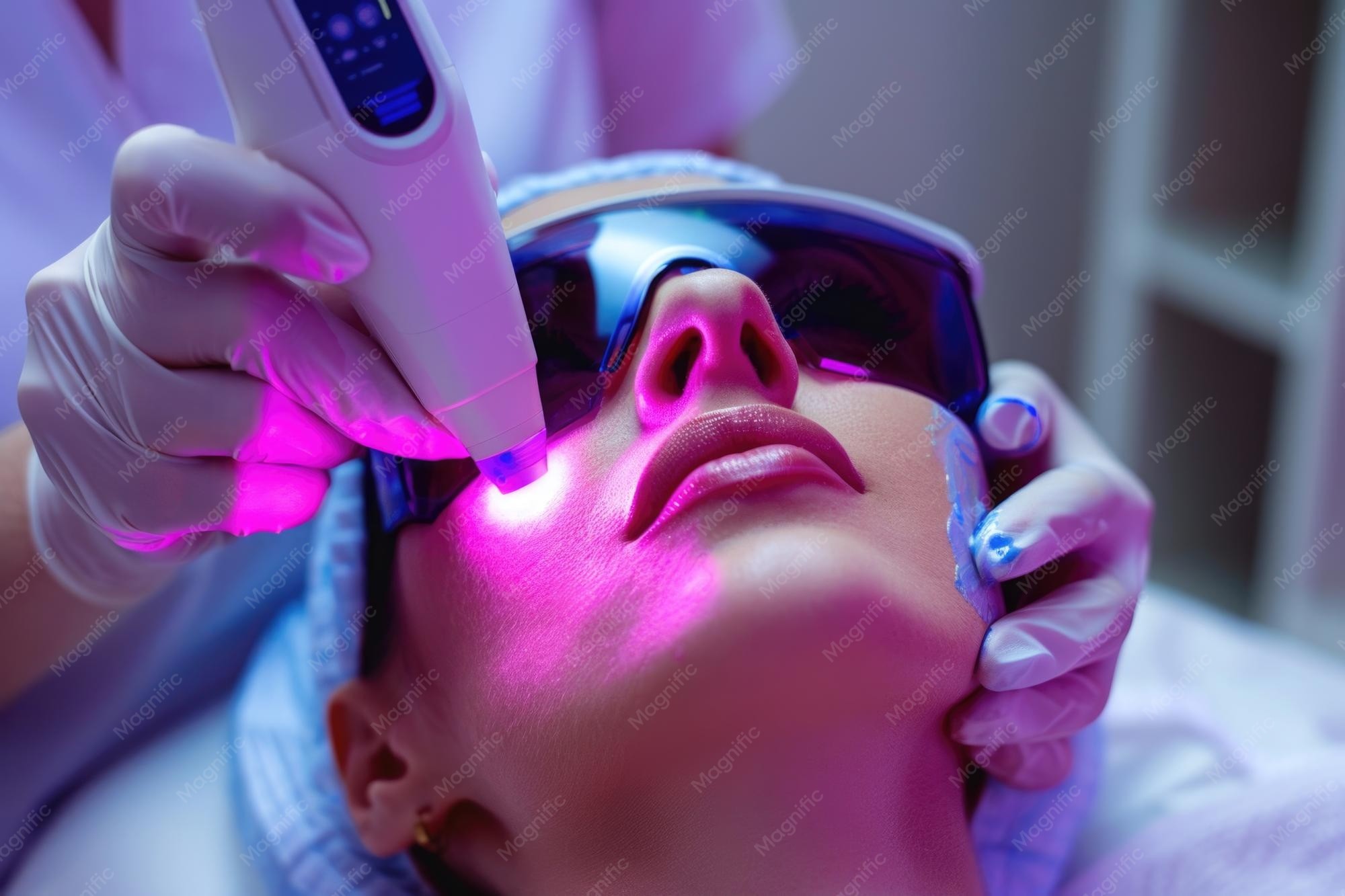
The devices most commonly used are the Q-switched laser, which fires an intense burst of energy in an extremely short pulse and targets pigment selectively, or the picosecond laser, which fires an even shorter pulse.
Both rely on the fact that melanin absorbs certain wavelengths of light particularly well. Energy concentrates on the melanin itself while the surrounding normal tissue is relatively spared, a principle known as selective photothermolysis. In simple terms, it works something like precision targeting that only reacts to dark pigment.
Picosecond lasers are reported to break pigment apart using a mechanical pressure wave rather than heat, shattering it into finer fragments. That's said to help clear pigment while reducing thermal damage to the surrounding skin.
Number of sessions and realistic expectations
Results for café au lait spots are harder to predict than for many other pigmented conditions. Keeping the following three points in mind ahead of time tends to soften the disappointment afterward.
- Fading usually happens gradually over roughly 5 to 10 sessions rather than disappearing in one go: the pigment-producing cells don't get fully cleared in a single session, they only respond to however much pigment is present at that time.
- The color can return again even after treatment: as explained above, the melanocytes acting as the pigment factory remain in place and can simply start working again.
- Results vary considerably from person to person: depth, size, location of the spot, and a person's baseline skin tone all differ, so the same procedure can fade one person's spot much more than another's.
- Spacing sessions too close together can actually stress the skin: damaged tissue needs time to recover, so sessions are usually spaced 6 weeks to 3 months apart.
Is there a way to prevent recurrence?
At this point, there's no known way to reliably prevent a café au lait spot from coming back. What is known is that UV exposure stimulates melanocytes and pushes them to produce even more pigment.
That's why consistent sunscreen use after treatment is reported to help slow the rate of recurrence and keep the contrast between the spot and surrounding skin less noticeable. Reapplying sunscreen frequently is especially recommended during high sun-exposure seasons like summer.
Spacing out sessions, watching how the spot behaves over time, and returning for additional treatment only when needed is currently presented as the most realistic way to manage it. If the spot starts looking faintly visible again, it's safer to wait, let enough time pass since the last session, and check the skin's condition before deciding on another round rather than rushing straight into retreatment.
Do large or multiple patches need a medical exam?
Most café au lait spots are simply a localized area of concentrated pigment and don't pose any health concern on their own. That said, if a spot is unusually large, or if there are several noticeably scattered across the body, it's recommended to have a dermatologist take a broader look.
That's because, beyond the purely cosmetic pigment spot, there can occasionally be another underlying cause involved. If you notice the number or size of spots increasing in a way that feels unusual, it's safer to get it checked by a doctor before mapping out any treatment plan. This applies especially when several new spots appear on a child's body, in which case getting an accurate evaluation first, rather than rushing into cosmetic treatment, is the right order to follow.
References
Korean Dermatological Association, Ministry of Food and Drug Safety (MFDS), American Academy of Dermatology (AAD), and U.S. Food and Drug Administration (FDA).
Was this helpful?
About this article
Written by a practising aesthetic physician and intended for general education — not a substitute for individual medical advice.
Read next
Cafe-au-Lait Spots: Laser Effect, Recurrence and Telling Them From Moles and Melasma
A cafe-au-lait spot is a light milk-coffee brown patch on the cheek or arm, and because its pigment sits in the shallow epidermis, laser light reaches it easily, though it also tends to come back. Here's how to tell it apart from moles and melasma, why multiple spots call for a check-up, how much laser treatment can fade it, and how to manage recurrence.
By Dr. Kim

Freckles Versus Melasma: How Do Their Laser Treatments Differ?
At a glance, freckles and melasma both look like brown spots, which makes them easy to mix up. But where the pigment actually sits in the skin, and why it shows up in the first place, are completely different. That difference decides whether you need a strong laser or a gentle toning session, and why one of the two keeps coming back.
By Dr. Lee

Exosome Treatment Effects: How Are They Different From Stem Cells?
Exosomes are tiny signal packets that cells release into their surroundings, delivering only the messages a stem cell creates rather than the stem cell itself to the skin. Here is a plain look at how exosomes carry regeneration and calming signals, why clinics so often pair them with laser treatments, and how much evidence has actually built up so far.
By Dr. Kim