Cafe-au-Lait Spots: Laser Effect, Recurrence and Telling Them From Moles and Melasma
By Dr. Kim9 min read
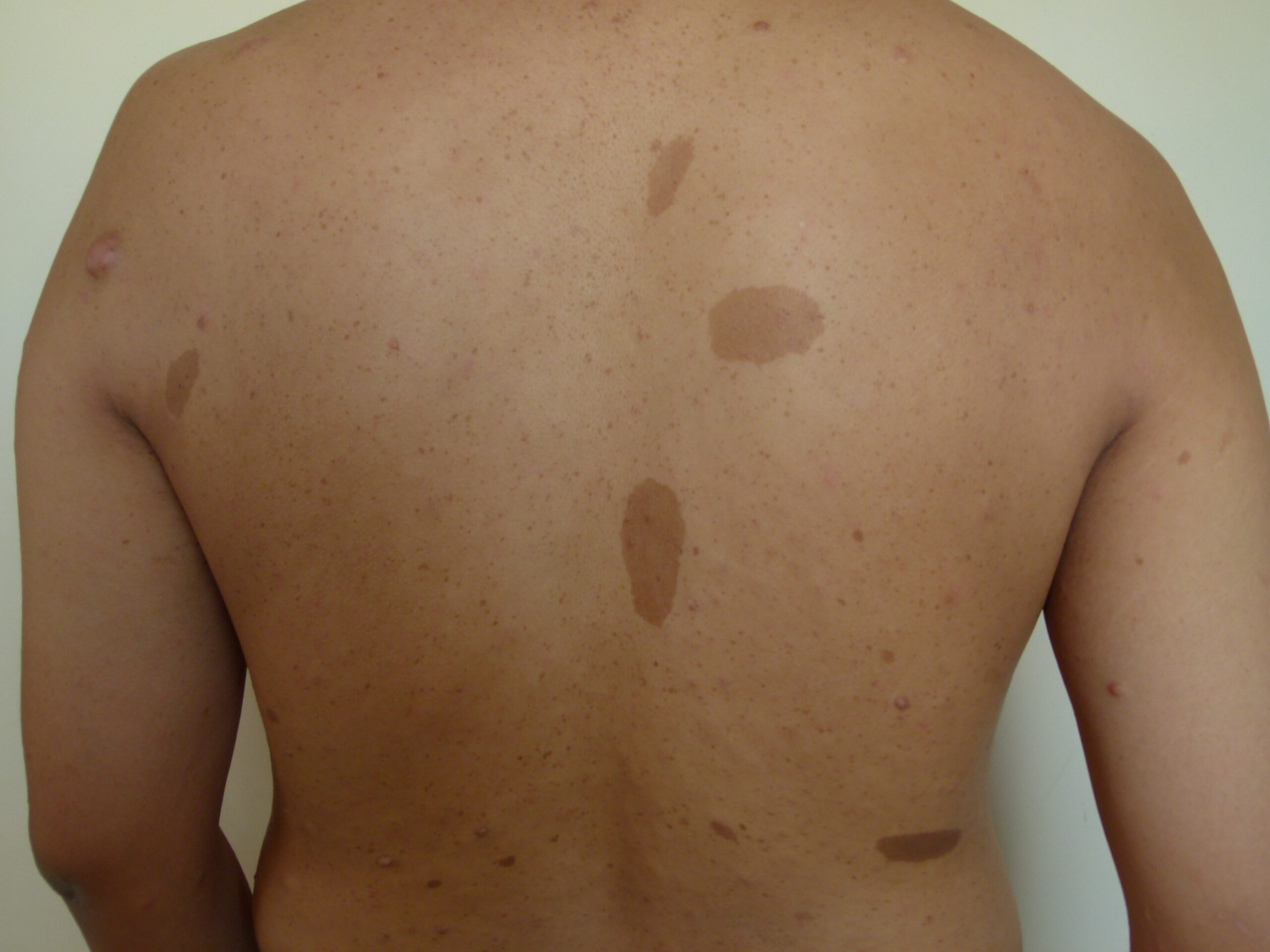
If you have a light brown patch on one cheek or arm, colored like coffee with a splash of milk and with a clearly defined edge, it may not be melasma or a mole at all. It could be a cafe-au-lait spot. The name comes from French for coffee with milk, and that's exactly the shade it takes on. Most of the time, it's been there since birth or shows up very early in childhood.
A cafe-au-lait spot forms when the pigment sits shallow in the epidermis, so at first glance it can look like a common blemish. But this particular pigment reacts to laser very differently from one person to the next, and it comes back often even after it clears. On top of that, having several spots can be a sign to check for other issues in the body, so there's something worth confirming before treatment ever comes into the picture.
So this article walks through what kind of pigment a cafe-au-lait spot is, how to tell it apart from moles and melasma, and how much laser treatment can fade it along with how to manage recurrence.
What kind of pigment is a cafe-au-lait spot?
A cafe-au-lait spot forms when melanin, the pigment your skin cells produce, builds up in the epidermis, the shallow outer layer of skin. Because the pigment sits evenly close to the surface, it reads as a light, uniform tan, almost exactly the color of milky coffee. The border tends to be fairly well defined, and the surface stays flat like the surrounding skin, so you can barely feel it under your fingertips.
| Feature | Cafe-au-Lait Spot |
|---|---|
| Color | Light milk-coffee brown |
| Border | Well defined |
| Surface | Flat, uniform |
| Onset | Birth or early childhood |
| Seasonal change | Minimal |
Timing is one of its hallmarks. It's usually present at birth or appears in infancy, then grows gradually along with the child's body. Size ranges anywhere from a few millimeters to something the size of a palm, and it can show up on the arms, torso, hips, really anywhere.
It's easy to confuse with freckles, but the two behave differently. Freckles darken in summer sun and fade in winter, while a cafe-au-lait spot holds its base color pretty much year round regardless of season. The fact that the pigment sits shallow in the epidermis means laser light reaches it easily, but that same shallow position also makes it quick to react to UV exposure again, which is part of why it tends to come back.
How is it different from a mole or melasma?
Because it's a brown pigmented patch, a cafe-au-lait spot is often mistaken for a mole, melasma, or Ota's nevus. But the four differ in color, shape, when they appear, and how deep the pigment sits, so they can be told apart. Getting the diagnosis right is what sets the treatment plan in the right direction.
| Type | Color | Surface | Onset | Depth |
|---|---|---|---|---|
| Cafe-au-lait spot | Light brown | Flat, uniform | Birth or early childhood | Epidermis |
| Mole | Dark brown to black | Raised | Varies | Epidermis and dermis |
| Melasma | Pale brown | Flat | After the 30s | Epidermis and dermis |
| Ota's nevus | Bluish gray | Flat | Birth or puberty | Dermis |
A mole is usually raised and noticeably darker, which sets it apart from the flat, light patch of a cafe-au-lait spot. Melasma tends to spread as a hazy patch across the cheekbones or forehead after your 30s, often symmetrically on both sides. Ota's nevus sits deep in the dermis, so it reads as a bluish gray rather than brown, and it typically shows up around one eye and cheekbone. Because color and depth differ this much across the four, an experienced doctor can usually tell them apart on sight.
A faint cafe-au-lait spot and early melasma can look similar enough to trip up the naked eye. In that situation, doctors weigh how shallow or deep the pigment sits along with how long it's been there. Guessing at the diagnosis yourself and jumping straight to laser treatment can send you down the wrong path, so it's safer to get a proper read on what you're dealing with first.
What to check if you have several spots
One or two cafe-au-lait spots are generally fine to treat as a cosmetic concern. But once the number climbs higher, the picture changes. Six or more spots that also exceed a certain size threshold can be a sign of neurofibromatosis type 1, a genetic condition, so that's worth checking into.
The threshold depends on age. In children before puberty, it's six or more spots larger than 5mm across; after puberty, it's six or more larger than 15mm. That satisfies one of several diagnostic criteria, though, not a diagnosis by itself, so doctors weigh it alongside other findings.
| What to Check | Sign of NF1 |
|---|---|
| Count | 6 or more |
| Size before puberty | Over 5mm across |
| Size after puberty | Over 15mm across |
| Accompanying sign | Freckling in the armpits |
| Recommendation | Dermatology genetic consult |
Neurofibromatosis sounds unfamiliar, but it's a genetic condition where cafe-au-lait spots appear on the skin alongside soft bumps. Most cases can be diagnosed by around age 6, and the odds go up the more spots there are and the more typical they look.
So if you notice several spots, especially on a child, the first move is a doctor visit to count and measure them and check for other symptoms, not booking a laser session. If a single large spot has an unusually jagged border, that points doctors toward other possibilities like McCune-Albright syndrome. Most of the time it turns out to be nothing serious, but checking first brings real peace of mind.
How much can laser fade it?
Because the pigment in a cafe-au-lait spot sits in the epidermis, it's in a good position for laser light to reach it. The principle at work is selective photothermolysis. Melanin absorbs specific wavelengths of light, and firing that light in short, intense pulses shatters just the pigment granules in an instant while leaving the surrounding skin relatively untouched.
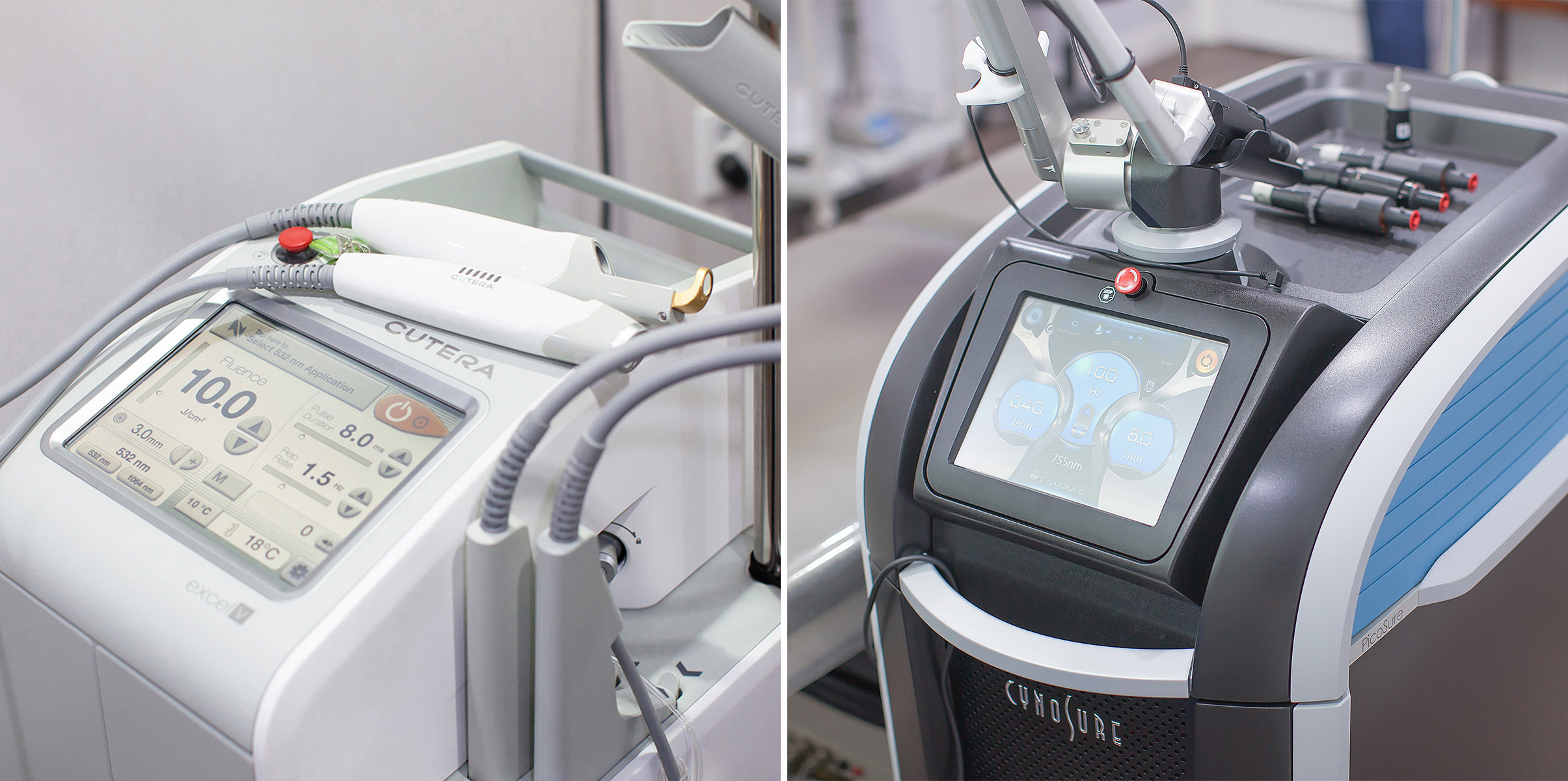
The Q-switched Nd:YAG at 1064nm has the strongest evidence behind it. With this wavelength, about half of patients saw more than 75% fading, and side effects like post-treatment pigmentation stayed relatively low. For pigment sitting closer to the surface, 532nm tends to work well, and picosecond lasers, which fire even shorter pulses, are another option. Even with the same type of pigment, the ideal wavelength shifts a bit depending on exactly where and how densely it's distributed.
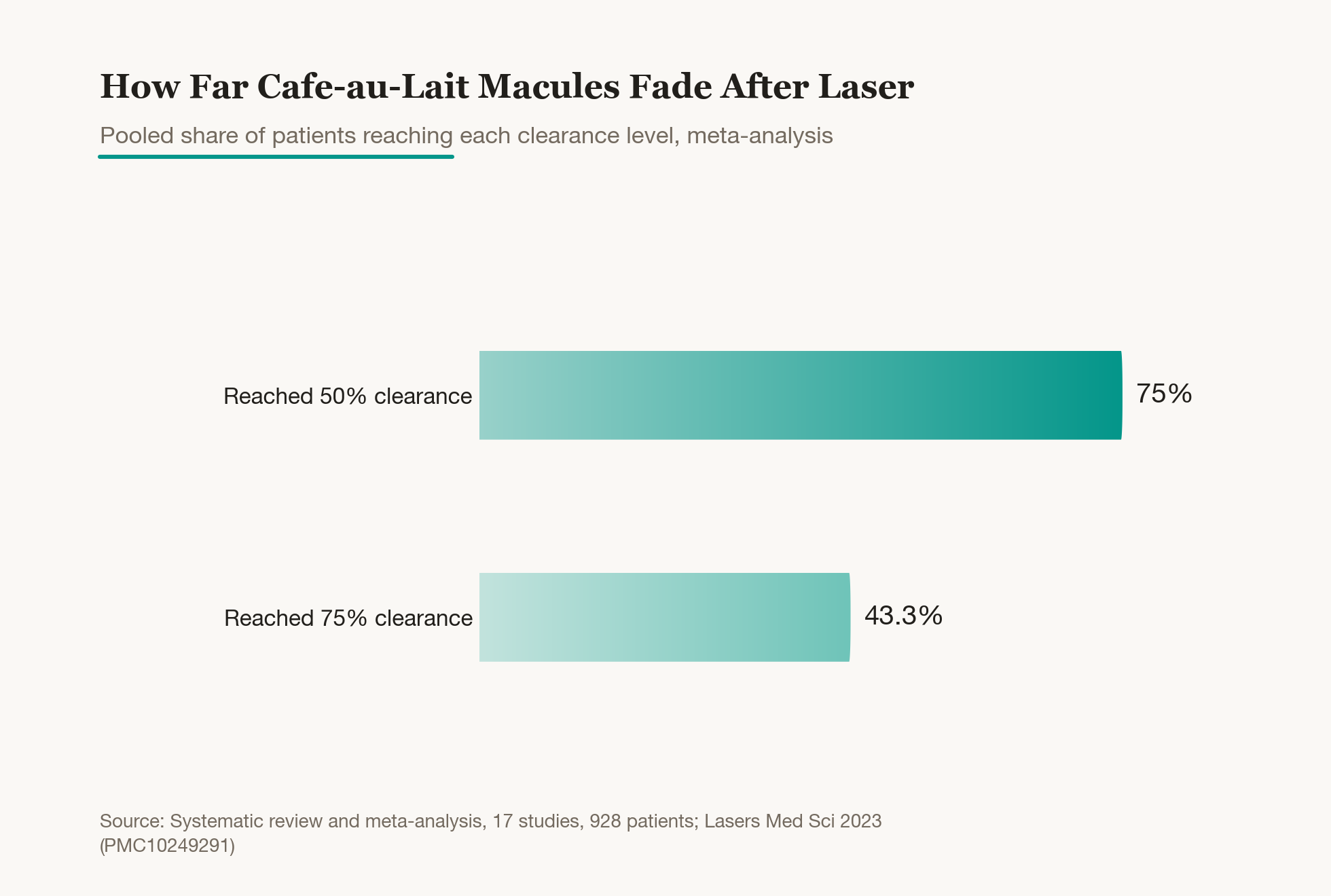
There's an honest caveat, though. Response varies a lot from person to person. Pooling the larger studies, 75% of people saw more than half the pigment fade, but fewer than half got it to nearly disappear. Spots with jagged borders also tend to respond better than ones with smooth edges, so the shape of your particular spot factors into the outcome. It's more realistic to think of this as a gradual fading process spread across several sessions, rather than something one treatment wipes away completely.
Expectations and precautions before treatment
There are a few things worth checking before you start. If you have several spots, screening for the genetic condition mentioned above comes first. Cosmetic laser treatment is a question for after that.
Testing the response ahead of time matters too. It's hard to predict exactly how a cafe-au-lait spot will react to laser, and in rare cases the color actually deepens instead of fading. That's why treating a small test patch first, waiting a few weeks to watch how it responds, and only then moving on to the full area is the safer approach rather than firing across the whole spot at once.
It helps to keep expectations realistic. Rather than clearing up in one or two visits, the spot fades gradually across several sessions spaced weeks to months apart. And if you have a deeper skin tone, the risk of post-treatment pigmentation runs higher, so the energy setting is kept conservative and sun protection needs to be strict.
For a few days afterward, the area can look a bit red or develop fine crusting, similar to a light scrape or windburn mark. Picking at the crust before it's ready to fall off can lead to pigmentation, so it's best to leave it alone and keep the area well moisturized until it clears naturally. In the end, laser treatment for a cafe-au-lait spot is less about erasing it completely and more about safely fading and keeping it managed over time.
Why it returns and how to manage it
The one thing worth being completely honest about when treating a cafe-au-lait spot is recurrence. Even after laser breaks up the pigment and fades the spot, it's not uncommon for color to creep back over time. Cases have even been reported where a spot nearly vanished only to darken again months later.
The reason lies in the pigment-producing cells themselves. Melanocytes that remain in the epidermis start producing pigment again once they're stimulated, and UV exposure is a particularly common trigger. That's why simply breaking up the existing pigment doesn't fully close the book on the problem.
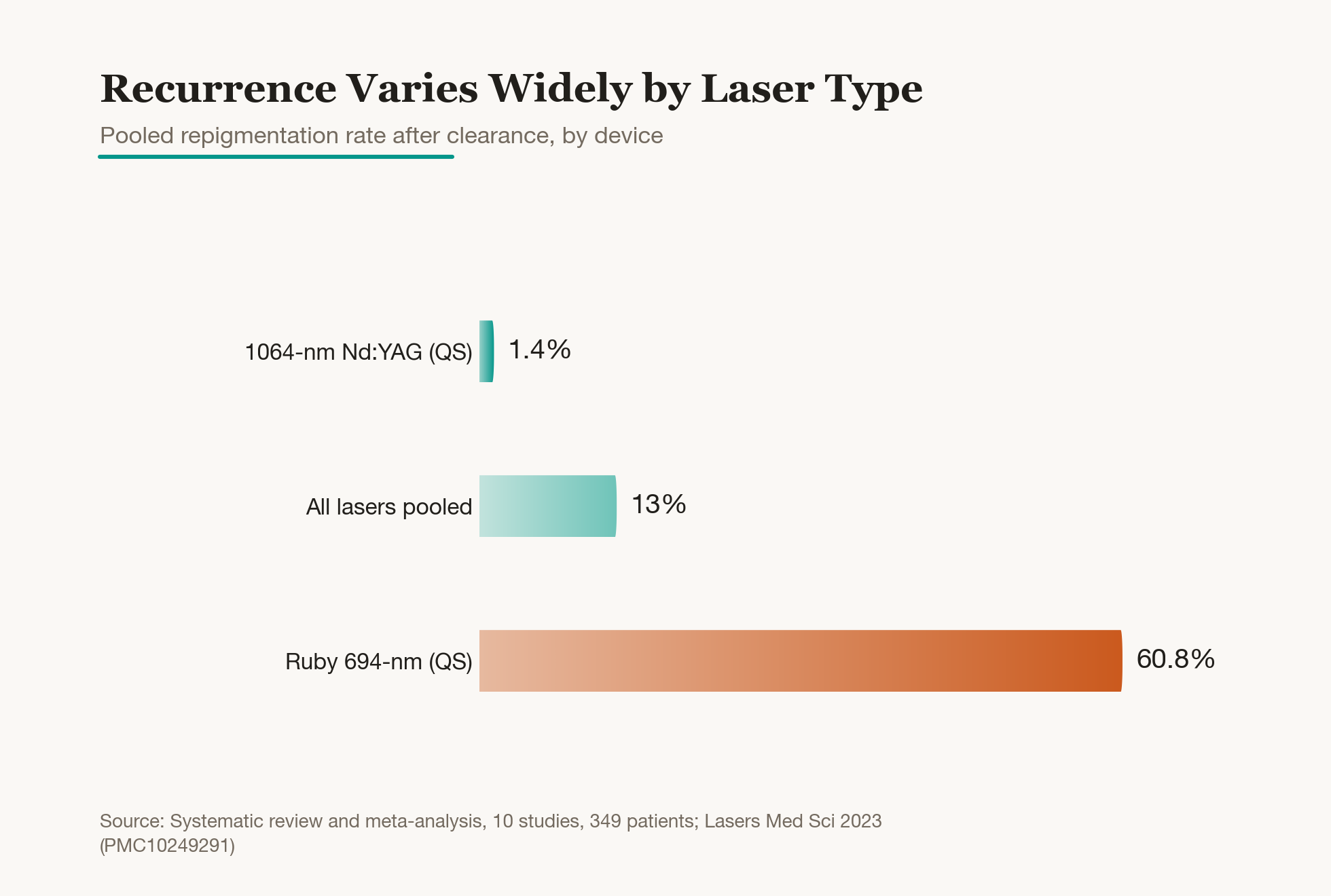
How much a spot recurs depends heavily on the device used. The Q-switched Nd:YAG commonly used today has a comparatively low recurrence rate, while with the older ruby laser, recurrence happens in more than half of cases. That makes choosing the right device and dialing in the intensity genuinely important.
Sun protection is the core of aftercare. Applying sunscreen generously every day, and reapplying it, slows how quickly the pigment returns. If some color does come back, a light touch-up session at the turn of a season is enough to keep it in check. It's easier on the mind to think of a cafe-au-lait spot not as something you erase in one shot, but as pigment you diagnose correctly and manage steadily to keep faded over the long run.
Was this helpful?
About this article
Written by a practising aesthetic physician and intended for general education — not a substitute for individual medical advice.
Read next
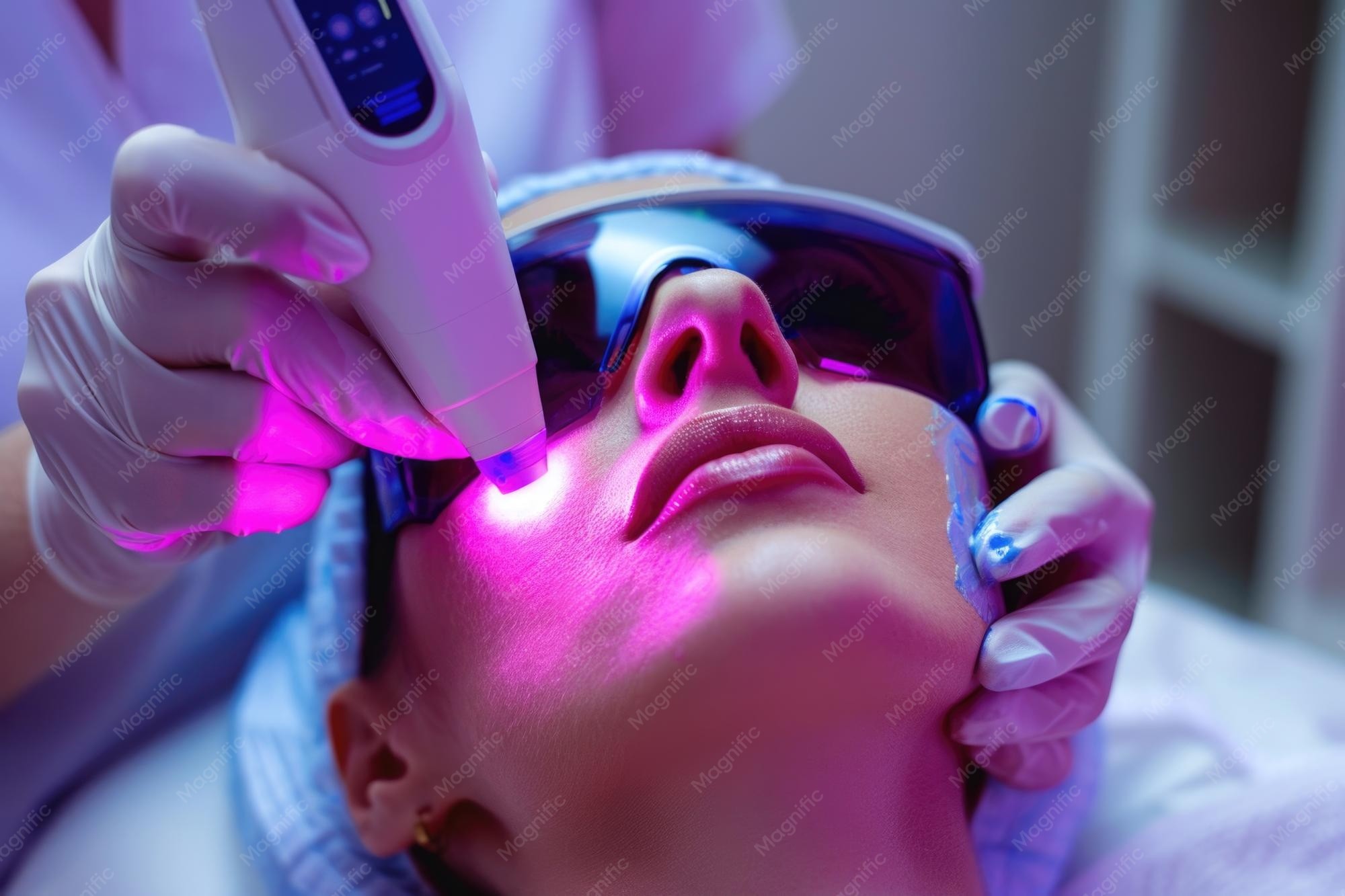
Cafe-au-Lait Spots Returning After Laser: Causes, Number of Sessions and Expectations
A café au lait spot forms because the pigment-making cells in that one patch of skin are locally overactive. Laser treatment breaks up the pigment that has already built up, but it doesn't switch off those cells, which is why the color so often returns. Here's the biology behind it, why results differ so much from person to person, and what a realistic treatment timeline actually looks like.
By Dr. Kim
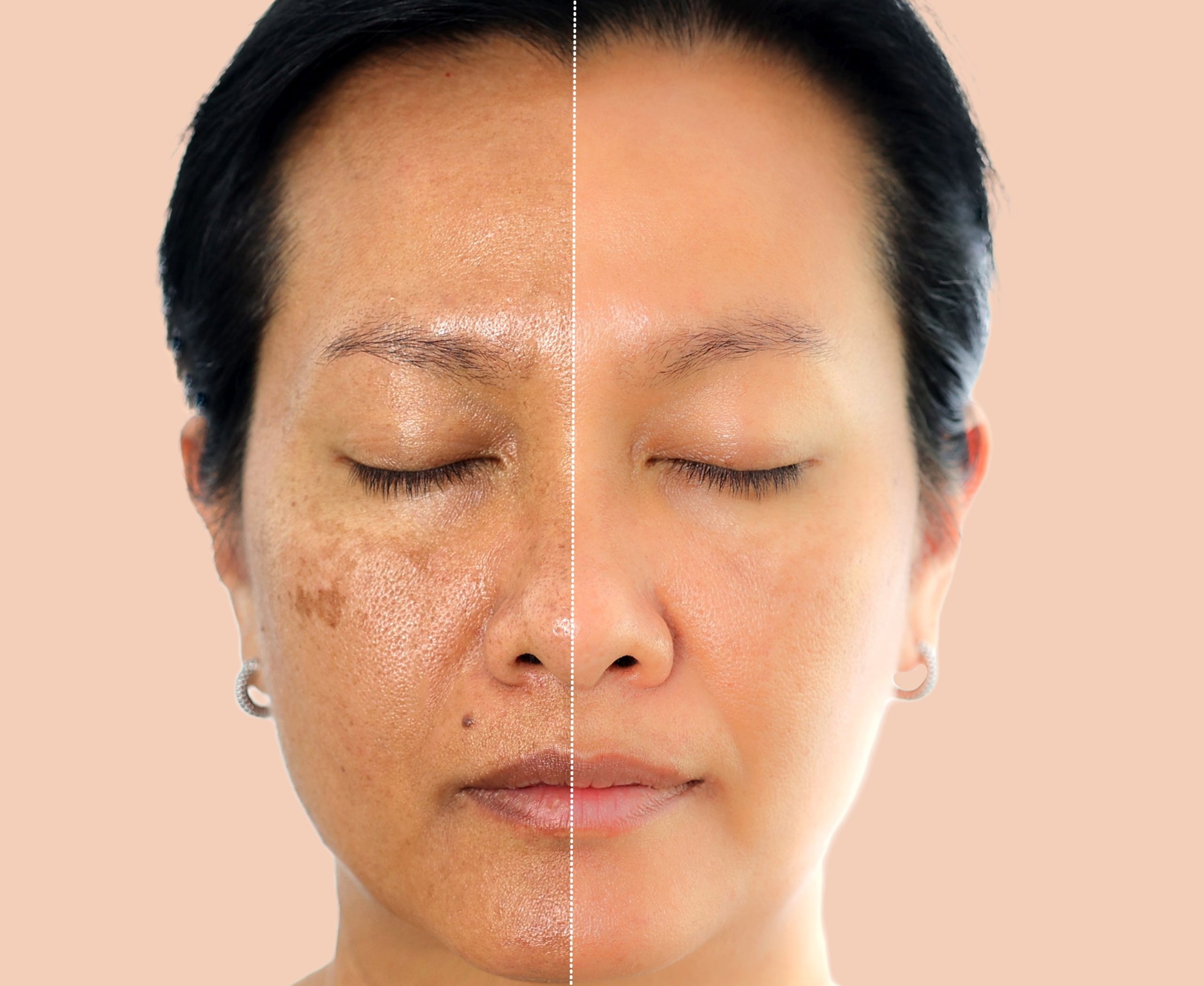
Laser for Melasma and Sun Spots: Epidermal Versus Dermal Pigment
Melasma and sunspots can look like the exact same shade of brown, yet how deep that pigment sits changes everything about how it responds to treatment. Here is why epidermal and dermal pigment are handled with completely different principles, and why that distinction matters so much for planning care.
By Dr. Lee
Flat Wart Causes and Spreading, CO2 Laser Treatment, and Recurrence
Flat warts show up as small, flat bumps on the face or back of the hands. Here is why HPV causes them, why scratching makes them spread and become contagious, how to tell them apart from milia and skin tags, how the CO2 laser removes them along with scarring and pigmentation risks, and how to manage recurrence, explained simply with real study data.
By Dr. Lee