Flat Wart Causes and Spreading, CO2 Laser Treatment, and Recurrence
By Dr. Lee9 min read
Sometimes small, flat, skin colored or light brown bumps show up in clusters on the face or the back of the hands. They feel smooth to the touch and do not stand out much, but the number keeps growing, and it starts to bother you. In many cases, these are flat warts.
Flat warts, also called verruca plana, are a type of wart caused by human papillomavirus, or HPV. Since a virus is behind them, scratching or shaving can spread them sideways and even pass them to someone else. They can look similar to milia or skin tags at first glance, which makes them easy to confuse, but the cause and the treatment are completely different. Fortunately, a CO2 laser can remove the lesions with precision. Here is a closer look at why flat warts form, why they keep spreading, how to tell them apart from milia and skin tags, how the CO2 laser removes them along with scarring and pigmentation concerns, and how to manage recurrence, all backed by real studies.
Why do flat warts form?
Flat warts form when HPV infects the epidermis, the outer layer of skin. Among the many HPV types, types 3 and 10 are the main culprits, and types 28 or 41 are sometimes involved as well. As the virus multiplies inside epidermal cells, it disrupts the normal process of keratin formation, which results in a flat papule with a slightly thickened surface.
As the name suggests, the shape is flat. They are skin colored or light brown and typically small, ranging from 1 to 4mm. The surface is smooth or only very slightly bumpy, and the defining feature is that they appear in clusters rather than as a single spot. They mostly show up on the face, forehead, back of the hands, and arms. There is usually no pain or itching, so many people do not notice them until they become cosmetically visible.
Flat warts are especially common in children and young adults. Because the virus enters through tiny breaks in the skin, they tend to develop in areas that get shaved or scratched often. If immunity is lowered, the number of lesions tends to grow and they become harder to clear. They are benign and do not harm your health, but since it takes time for them to resolve on their own and they have a tendency to spread, some management is needed.
| Item | Details |
|---|---|
| Cause | HPV type 3 and 10 infection |
| Size | 1 to 4mm flat papules |
| Common sites | Face, forehead, back of hands, arms |
| Age group | Children and young adults |
Does scratching really spread them?
What sets flat warts apart from other small bumps is that they spread. Because the cause is a virus, scratching or picking at a lesion can carry the virus on your fingertips to nearby skin. This self spreading is called autoinoculation. New lesions can even line up in a row along a scratch mark, a pattern known as linear arrangement, which is one of the telltale signs of flat warts.
Shaving or hair removal is another common route of spread. A blade skims across the surface of a lesion and plants the virus into a fresh nick. This is why flat warts often line up along a man's beard area or a woman's legs. Sharing towels or razors can also pass them to someone else, so it is best not to share personal items.
This is why picking at or shaving over flat warts just because they are annoying to look at can actually increase their number. Touching one can bring on several new ones nearby. Once you understand how they spread, it becomes clear that simply avoiding irritation is already an important part of managing them.
| Spread route | Why |
|---|---|
| Autoinoculation | Scratching or picking carries the virus sideways on your hands |
| Shaving and hair removal | Blade skims over lesions, new ones appear in a line |
| Sharing items | Sharing towels or razors passes it to others |
How do they differ from milia and skin tags?
Flat warts can look similar to milia or skin tags, which makes them easy to confuse. But the causes are completely different, so figuring out which one you have determines the right treatment approach.
Milia are tiny cysts that form when keratin gets trapped just under the epidermis. They are white or pale yellow, smooth little grains, and squeezing one releases a solid white keratin plug. They have nothing to do with a virus, so they are not contagious and do not spread. Skin tags, also known as acrochordons, are soft growths that form when skin becomes loose from friction and aging. They tend to appear on areas that fold or rub, like the neck, armpits, and eyelids, and they are not contagious either.
Unlike these two, flat warts are caused by a virus, so they are contagious and they spread. The key giveaway is multiple flat, skin colored or light brown papules that cluster together and line up along scratch marks. As a rule of thumb, a white keratin plug points to milia, a soft, dangling bump points to a skin tag, and a flat, spreading lesion points to a flat wart. When it is hard to tell from appearance alone, examination under magnification or, if needed, a biopsy can confirm it. Since the causes differ, figuring out which one you're dealing with first helps avoid unnecessary procedures.
| Feature | Flat Wart | Milia | Skin Tag (Acrochordon) |
|---|---|---|---|
| Cause | HPV infection | Trapped keratin cyst | Loose skin from friction and aging |
| Contagious | Yes, spreads | No | No |
| Shape | Skin colored or light brown flat papule | White grain | Soft bump |
| Common sites | Face and back of hands | Around eyes and cheeks | Neck and armpits |
| Tell | Lines up along scratch marks | White plug when squeezed | Dangles when touched |
Why is CO2 laser used for spread lesions?
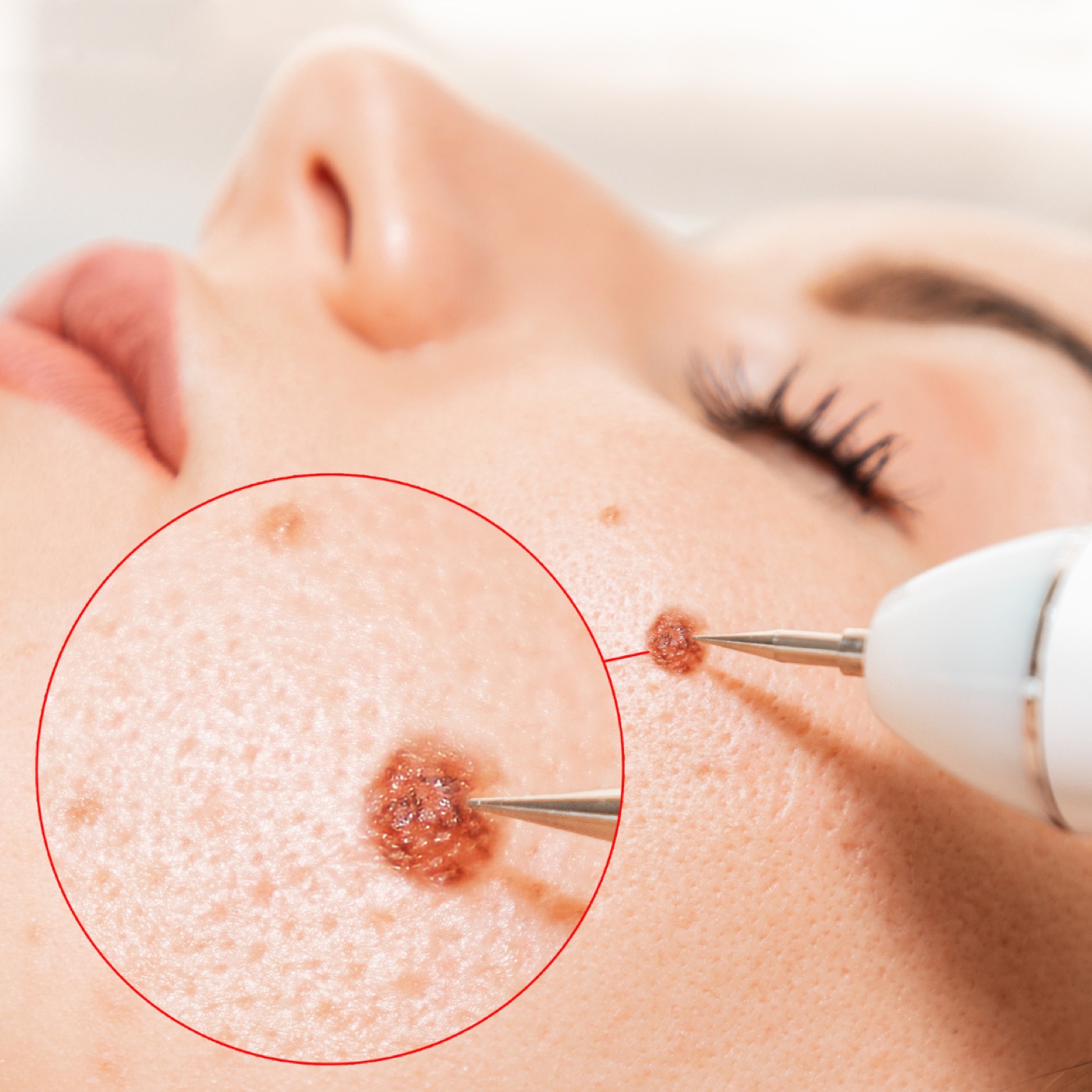
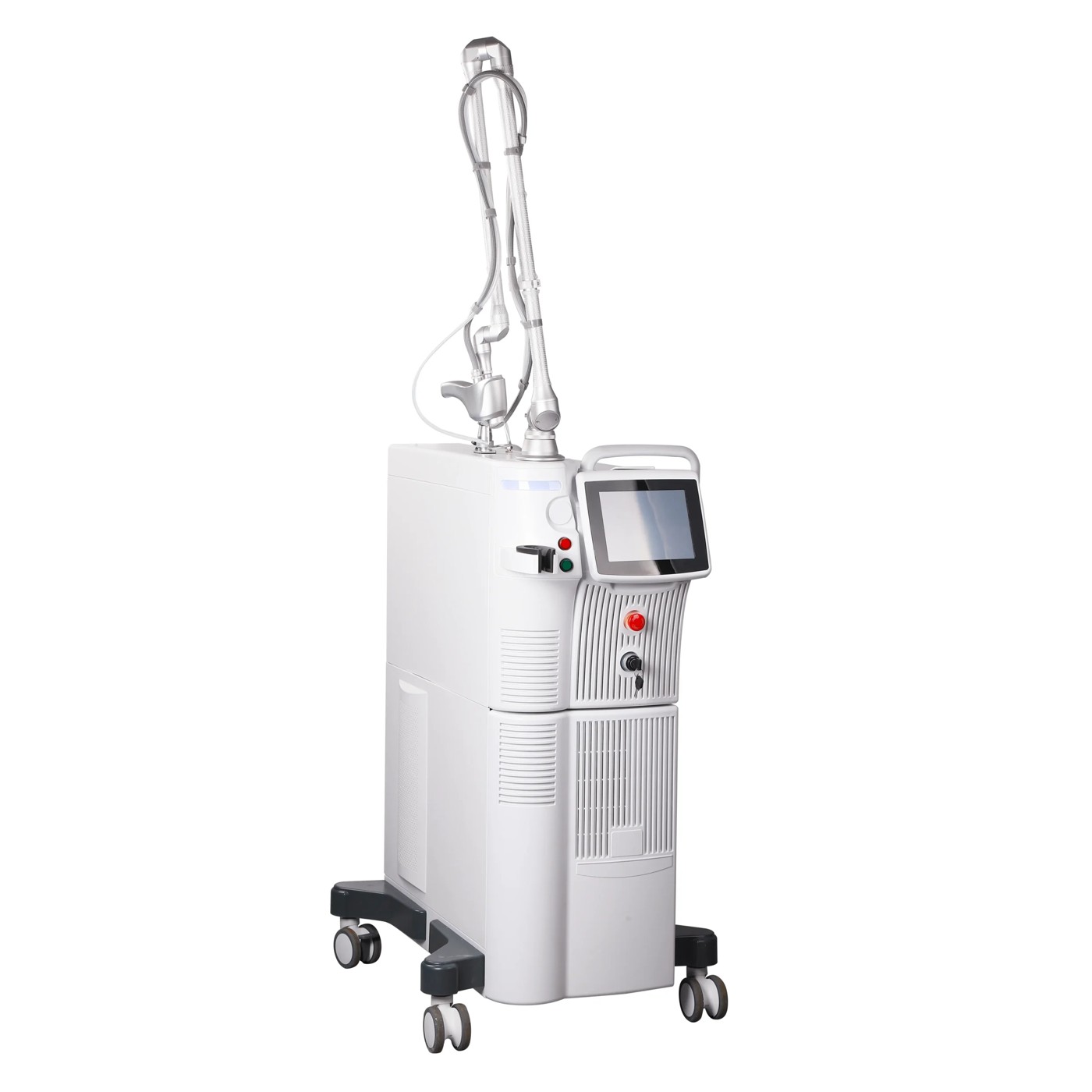
There are several ways to treat flat warts, including topical medication, cryotherapy, and laser therapy, and a CO2 laser becomes an option when there are many lesions or they are not clearing up. The CO2 laser emits a wavelength that is readily absorbed by water, so it vaporizes the water-rich lesion tissue shallowly and precisely. Flat warts are usually treated at a low output of around 3 to 4 watts, applied thinly over the surface.
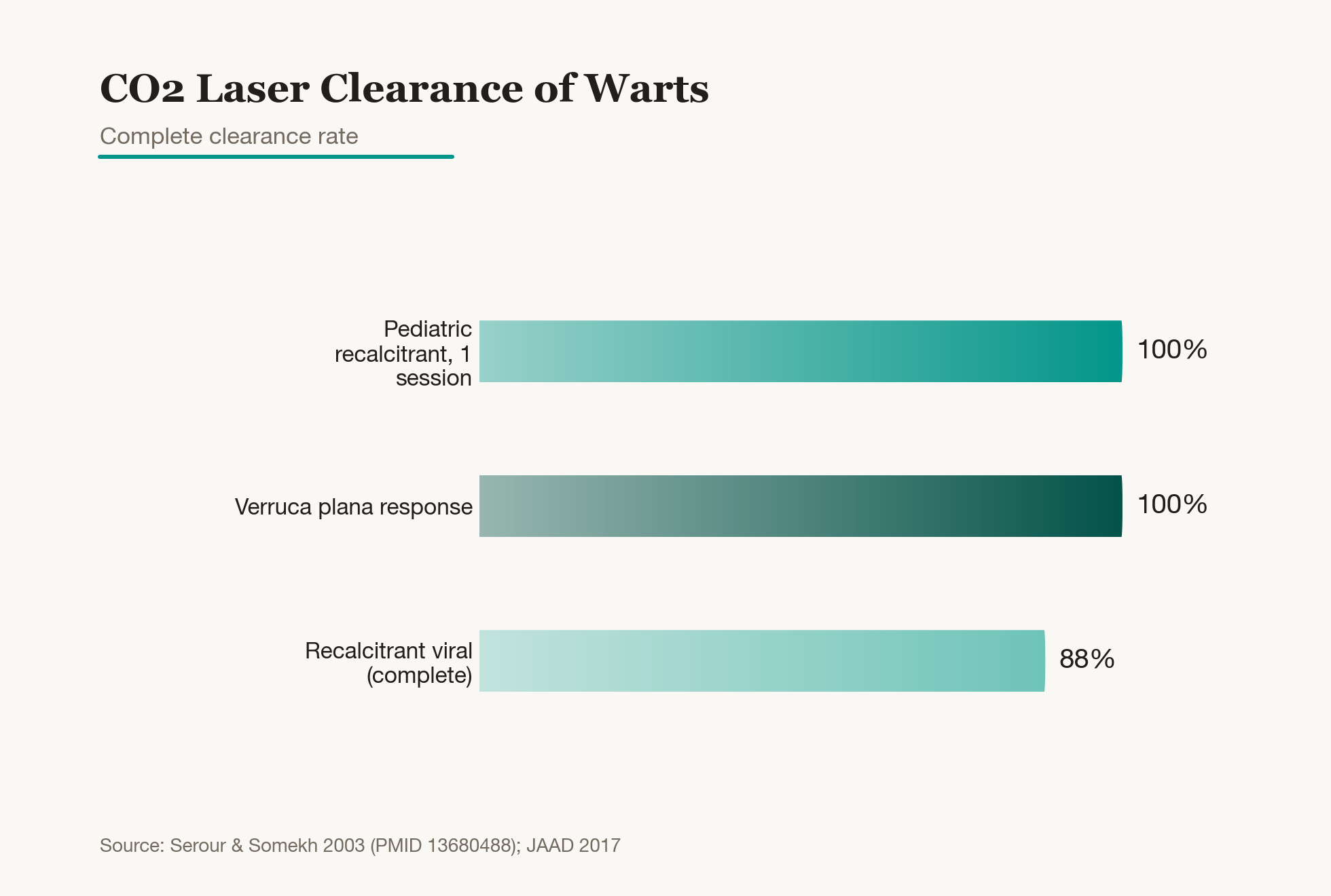
Several studies have looked at how well it works. In one study of 40 children with 54 recalcitrant warts that had not responded to other treatments, a single CO2 laser session cleared all of them, with no recurrence over 12 months of follow-up. Another study using a CO2 laser on recalcitrant viral warts in adults found complete clearance in 88% of patients, with about half resolved after a single session and the rest cleared with one more session within 3 months.
Because the CO2 laser removes the lesion directly, the response tends to be good, and it is especially useful for cases that did not respond well to topical medication or cryotherapy. If there are many lesions, though, treatment may take several sessions rather than finishing in one. Given their tendency to spread, treating any new lesions as they appear helps improve the overall outcome.
Can pigment remain after CO2 laser?
The CO2 laser is an ablative laser that vaporizes tissue, so scarring and pigmentation are always factors to keep in mind. In the pediatric study mentioned earlier, even though all the lesions cleared, 27.5% showed temporary hypopigmentation, and recovery took 4 to 5 weeks. If the treated area is somewhere visible like the face, it helps to know about this recovery period and the possibility of marks ahead of time.
In darker skin especially, post-treatment pigmentation is more likely to linger. This is why keeping the power low, treating only the lesion shallowly, and touching as little normal skin as possible all matter. Working shallowly over several sessions rather than burning deep in one go is better for reducing scarring. A scab forms after treatment and eventually falls off on its own. Picking at it too soon can leave a mark, so it should be left to come off naturally.
Above all, sun protection after treatment is essential, since skin that is still healing tends to darken further with sun exposure. Consistent sunscreen use, along with pigment care if needed, makes a big difference. Flat warts tend to be shallow lesions, so recovery is relatively easy, but since the face is often involved and lesions tend to spread, it is safest to adjust treatment intensity accordingly.
Recurrence after treatment and spontaneous clearing
Since flat warts are caused by a virus, they can come back even after the visible lesions are removed. That is because the virus can remain in the surrounding skin even after the visible lesions are gone, and new ones can appear. So rather than expecting one treatment to be the end of it, it is more realistic to think of this as ongoing management, preventing spread while treating new lesions as they appear.
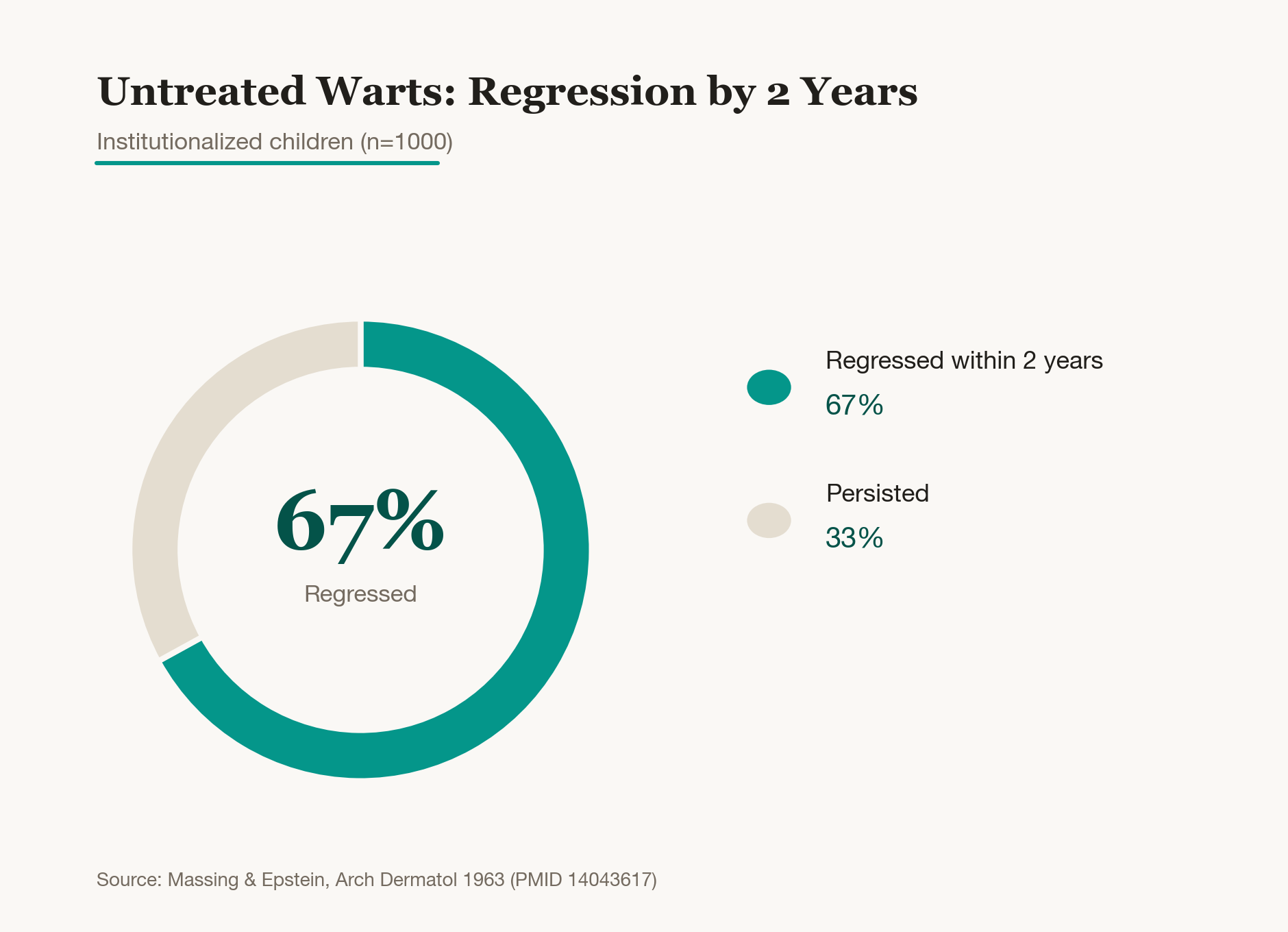
One thing worth knowing is that flat warts can also disappear on their own. In an older study that followed untreated warts over a long period, about two thirds cleared spontaneously within 2 years. This happens because the body's immune system eventually recognizes and fights off the virus, which is also why multiple lesions sometimes vanish all at once. That said, it is hard to predict when this will happen, and the lesions can keep spreading in the meantime, so if they are noticeable or spreading, treating them tends to be the better choice.
The key to reducing recurrence is minimizing irritation. Avoid scratching or picking, reduce shaving-related irritation, and protect the skin from sun exposure after treatment. If new lesions appear, treating them early while there are still only a few keeps things manageable. In the end, flat warts are not something to worry too much about, but understanding how they spread and staying consistent with care is the cleanest way to handle them.
| Care | Why |
|---|---|
| Avoid scratching or picking | Prevents spread through autoinoculation |
| Reduce shaving irritation | Blade irritation can trigger new lesions |
| Sun protection | Reduces post-treatment pigmentation |
| Treat new lesions early | Easier to manage while few |
Was this helpful?
About this article
Written by a practising aesthetic physician and intended for general education — not a substitute for individual medical advice.
Read next

Tiny Facial Bumps: How to Tell Flat Warts, Milia and Skin Tags Apart, and How to Treat Them
The small bumps that show up on the face can look alike, but flat warts, milia, and skin tags have different causes and different treatments. Here is how to tell the three apart at a glance, the right CO2 and Er:YAG laser or electrocautery approach for each, how common they are, how they tend to recur, and real evidence on why removing them at home is risky.
By Dr. Lee
Skin Tag Removal Methods: Types of Laser and Pigmentation Care
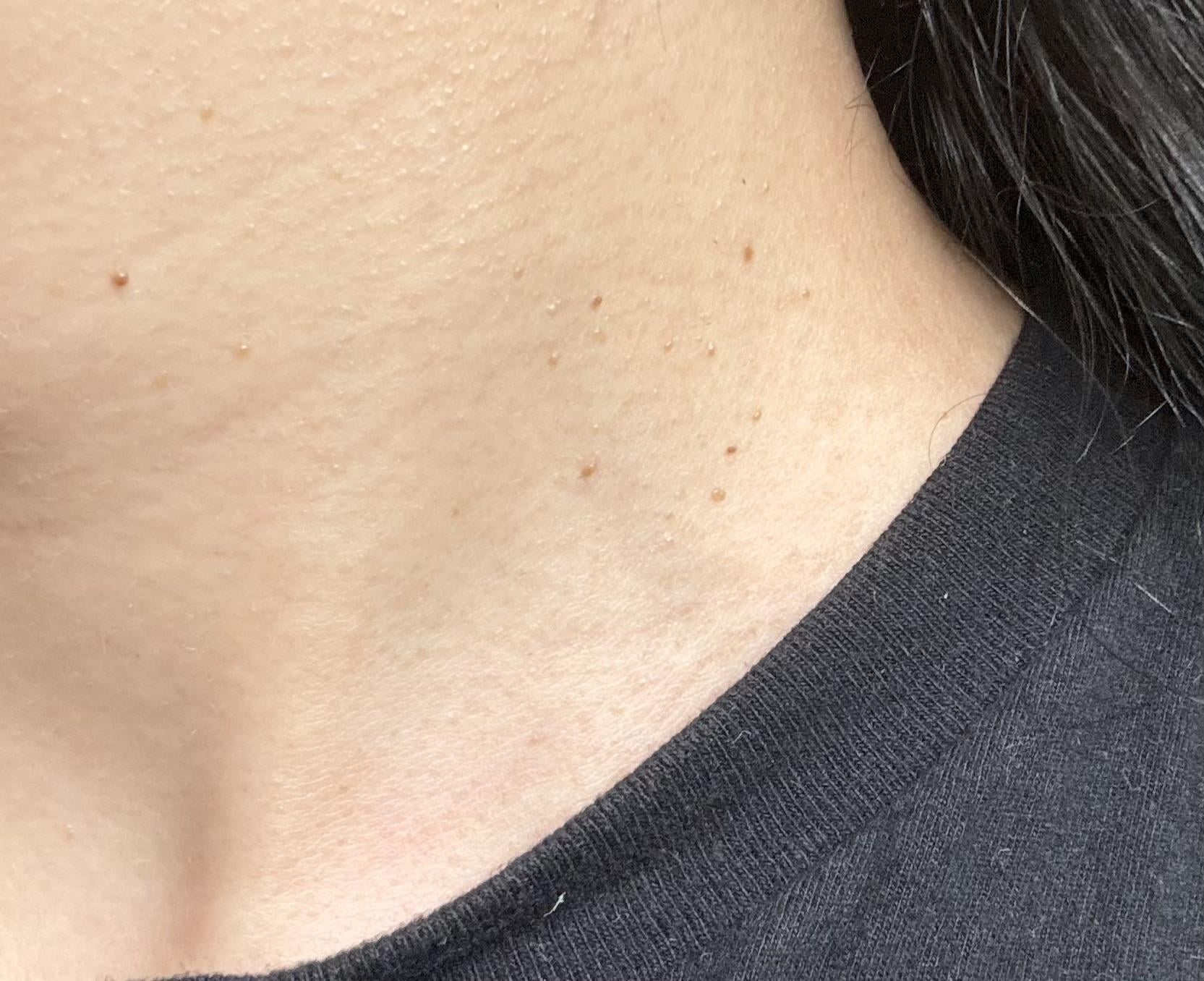
What those small soft bumps on your neck, underarms, or eyelids actually are, how to tell them apart from milia and warts, how to choose between Er:YAG, CO2 laser, electrocautery, and cryotherapy based on size and location, how to keep pigmentation down, and what the research says about their link to diabetes and metabolic syndrome, all explained simply with real study numbers.
By Dr. Lee

Flat Wart Causes and Symptoms: Why They Spread When Squeezed, and Treatment
Flat warts are a viral skin condition, so picking or scratching at them doesn't clear them up, it spreads them further. Here's why that happens, how to tell them apart from moles or acne, and the logic behind removal and preventing recurrence.
By Dr. Kim