Skin Tag Removal Methods: Types of Laser and Pigmentation Care
By Dr. Lee10 min read
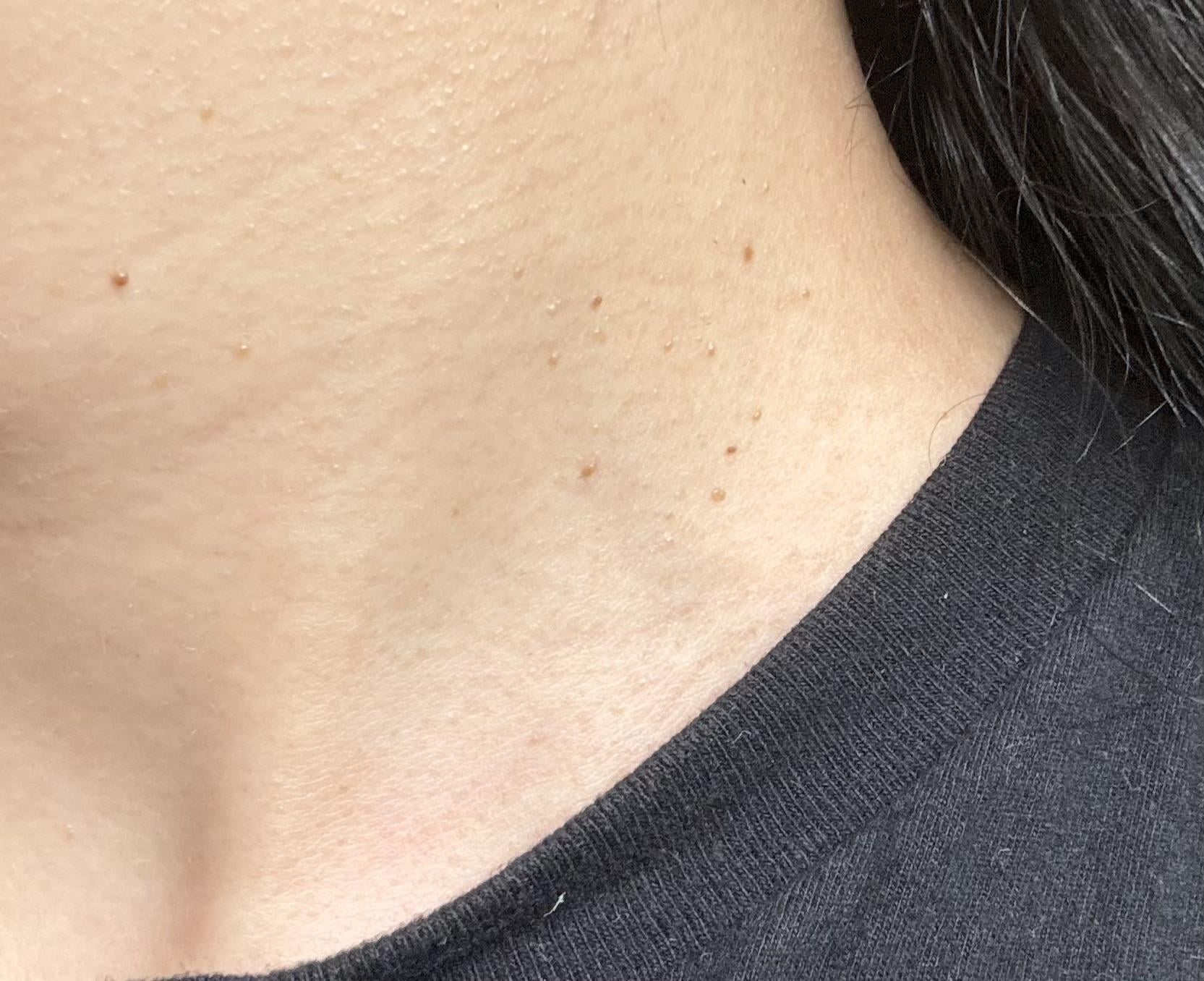
Small, skin-colored, soft bumps sometimes start showing up on the neck, underarms, or eyelids, one or two at a time. What starts as something the size of a grain of rice can end up dangling from a thin stalk. They catch on necklaces and collars, and get snagged every time you brush past them with your hand. Most of the time, what you're looking at is a skin tag.
Skin tags, also called soft fibromas or acrochordons, are benign growths that form when skin loosens from friction and age. The good news is they're harmless, and removing them properly usually leaves a clean result. The problem is that a lot of people try tying them off with thread or picking at them with a nail, which just causes bleeding and leaves a mark. It helps to understand what they are before deciding how to deal with them. So here's a full rundown, backed by research, on what skin tags are and why they form, how to tell them apart from milia and warts, how to choose between Er:YAG, CO2 laser, electrocautery, and cryotherapy, how to manage pigmentation afterward, and what connection they might have to diabetes or metabolic syndrome.
What Kind of Skin Lesion Is a Skin Tag?
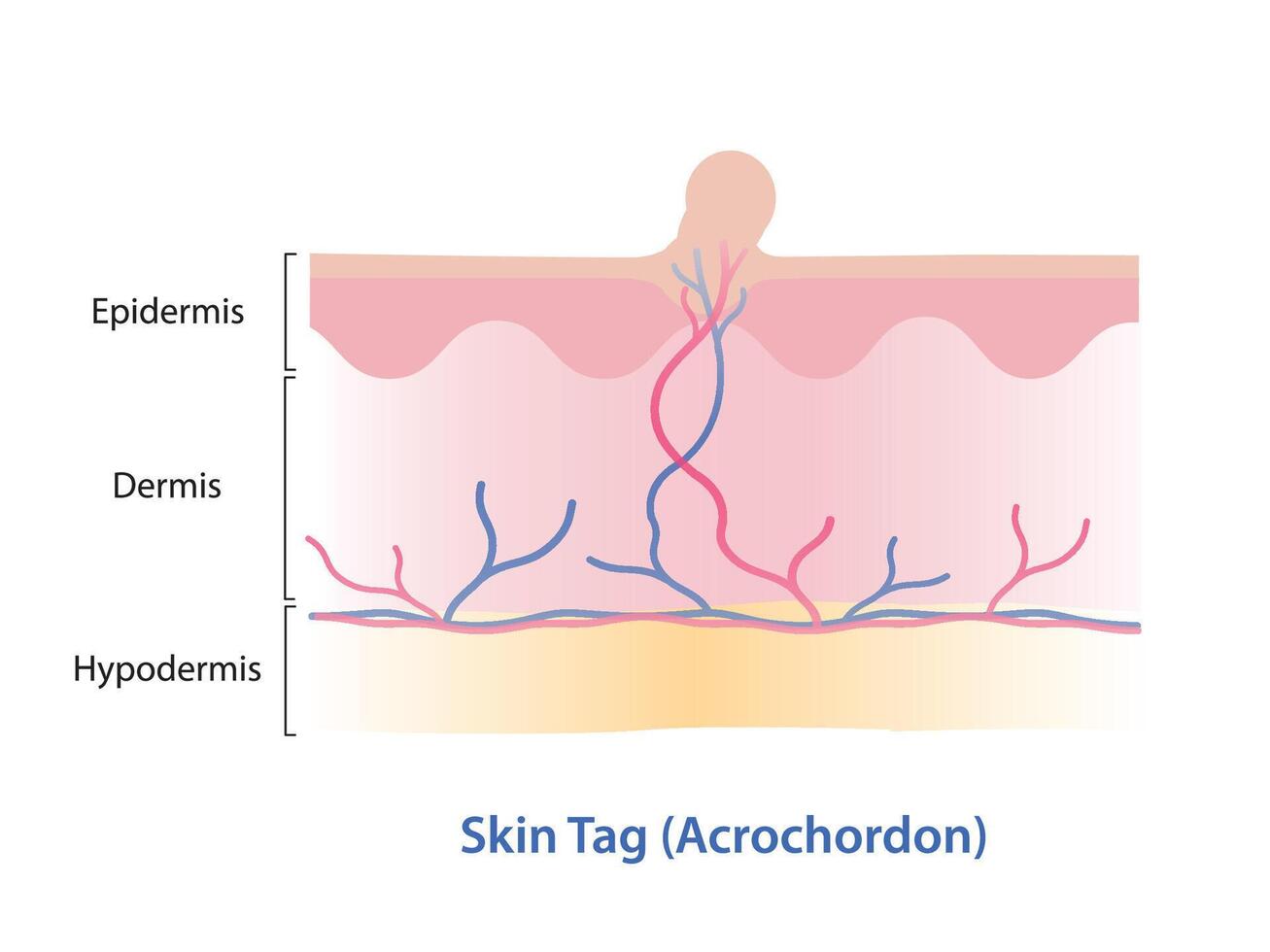
A skin tag is a benign growth where the skin stretches out and hangs from a thin stalk. It's usually skin-colored or light brown on the surface, and soft to the touch. Most are small, somewhere between 1 and 5mm, though older ones can grow larger. Unlike warts, which build up a thick, rough surface, a skin tag is filled with soft fibrous tissue and tiny blood vessels underneath, so it wobbles a bit if you nudge it.
They tend to show up in the same spots every time: the neck, underarms, eyelids, groin, and under the breasts, wherever skin folds and rubs against itself. Repeated friction is really the common thread. That's why they cluster where a necklace or bra strap sits, or wherever skin overlaps.
Skin tags are extremely common. More than half of adults will get at least one at some point in their life, and the number tends to climb after age 40. They show up in both men and women, and naturally increase with age. One reassuring fact is that they're entirely benign. They don't affect your health and they never turn cancerous. So the real question isn't whether they're dangerous, it's how cleanly you can get rid of the ones that bother you.
Differences Between Skin Tags, Milia and Warts
Milia and warts are also common on the neck and face, and they get mistaken for skin tags fairly often. But they're completely different in nature, so figuring out which one you're dealing with matters for choosing the right treatment.
Milia are tiny cysts that form when keratin gets trapped just under the epidermis. They look like small, smooth, white or pale yellow beads, and if you nick one open, a bit of white keratin comes out. Warts, on the other hand, are caused by human papillomavirus, or HPV. Their surface is rough and bumpy, and because a virus is behind them, scratching can spread them to nearby skin or even pass them to someone else. Flat warts, one type of wart, are flatter in shape and tend to appear in clusters, skin-colored or light brown.
Skin tags are different from both. They have nothing to do with a virus, so they don't spread and they don't pass to others, and they never release keratin. The telltale sign is a soft little bump that dangles from a stalk and wobbles when you move it. If white keratin comes out, it's milia. If it's rough and spreading, it's a wart. If it's soft and wobbles on a stalk, it's a skin tag. When the appearance alone isn't clear enough, magnification or, if needed, a biopsy can confirm it. Figuring out which one it is first cuts down on unnecessary procedures.
| Category | Skin tag | Milia | Wart |
|---|---|---|---|
| Cause | Friction and aging | Trapped keratin cyst | HPV infection |
| Contagious | No | No | Yes, spreads |
| Appearance | Soft stalk | White bead | Rough bump |
| Common sites | Neck, underarms | Under-eye, cheeks | Hands, feet, face |
| Tell-tale sign | Wobbles on a stalk | White keratin when squeezed | Spreads when scratched |

What Methods Can Remove Skin Tags?
There are several ways to remove a skin tag, but laser has become the standard choice these days. Er:YAG and CO2 lasers are the two most common. Both use a very fine beam to vaporize just the growth itself, sparing the surrounding healthy skin and leaving a clean result. Er:YAG in particular spreads less heat sideways, which makes it a good fit for delicate areas like the eyelid or for small growths that need precise handling. CO2 laser works on a similar principle, but its heat reaches a bit deeper, so it does well on tags with a thicker base.
Electrocautery uses a fine electrical current to burn off the growth. Because it seals the wound at the same time it removes the tag, it works well on spots that bleed easily or on growths with a wide base. Cryotherapy freezes the growth off with liquid nitrogen, and it's a fast way to handle several tags in one visit, so it's often used when there are many to treat at once. That said, the intensity of freezing can affect the surrounding skin too, and on darker skin tones, it's worth watching for pigmentation that turns lighter or darker afterward.
Whatever method you use, skin tags themselves are shallow, soft growths, so recovery tends to be easier than with deeper lesions. What matters most is that each method suits different situations. Choose based on the size, location, number, and skin tone of the growth.
| Method | Best suited for | Key trait |
|---|---|---|
| Er:YAG laser | Eyelids, small growths | Shallow and precise, minimal heat spread |
| CO2 laser | Thick-based growths | Works a bit deeper |
| Electrocautery | Wide-based or bleeding-prone spots | Seals as it removes |
| Cryotherapy | Multiple growths at once | Watch for pigment change |
Choosing a Removal Method by Size and Location
The main things to weigh are size, location, number, and skin tone. For thin, delicate areas like the eyelid, or for very small growths, Er:YAG laser is the better fit, since it works shallow and precise. Its heat doesn't spread sideways much, so there's less strain on nearby skin. For growths with a thick base or larger size, CO2 laser or electrocautery does a more thorough job of clearing the base. Electrocautery is especially convenient for spots that bleed easily, since it seals the wound as it goes.
When there are a lot of small tags clustered on the neck or underarms, cryotherapy can clear several at once. But because freezing intensity can shift pigmentation, it's safer to keep the setting lighter and shallower on darker skin. There's no single right answer here. It really comes down to matching the method to where the growth is and what it looks like. Small and delicate calls for Er:YAG, large and thick calls for CO2 or electrocautery, and a high count calls for cryotherapy.
One more thing worth keeping in mind is not to overdo the intensity. Rather than trying to clear everything in one strong pass and risking a mark, treating it gently over a couple of sessions is easier on the skin. This matters even more in spots that are easy to notice.
| Situation | Recommended method |
|---|---|
| Eyelids, thin skin, small growths | Er:YAG laser |
| Large growths with a thick base | CO2 laser, electrocautery |
| Bleeding-prone spots | Electrocautery |
| Multiple growths | Cryotherapy |
| Darker skin tones | Lower intensity, shallower pass |

How to Reduce Pigmentation After Removal
Pigmentation is what most people worry about most when it comes to skin tag removal. It shows up as a brown mark left where the growth used to be, and Asian skin tends to be more prone to this kind of mark, so it's worth planning ahead. The stronger the treatment intensity, the higher the risk of a mark being left behind. That's why keeping the intensity light, treating only the growth itself, is the first step.
There are two keys to keeping pigmentation down. One is not overdoing the intensity and treating the growth shallowly. The other is aftercare. A small scab forms after treatment and eventually falls off on its own, and picking at it early leaves a mark, so it's best to let it fall off naturally. Sun exposure is also the biggest factor that darkens pigmentation, so consistent sun protection during recovery really matters.
Most pigmentation marks fade over time, though how long that takes varies from person to person. If there are several tags to remove, treating them gently over multiple sessions works out better for pigmentation than trying to clear everything in one strong pass. There's no need to worry too much about it. Controlling the intensity and taking care of the area afterward goes a long way. This matters even more around the eyes or neck, where the result is easy to see, so pairing a gentle approach with steady sun protection tends to give the cleanest outcome.
Are Many Skin Tags Linked to Diabetes?
On its own, a skin tag is a harmless, benign growth. But when someone has a lot of them scattered across the body, it might be more than just a skin issue, it could be a signal the body is sending. Research keeps pointing to a link between having many skin tags and blood sugar or metabolic health. The key player is insulin. Insulin is the hormone that lowers blood sugar after a meal, and when the body becomes less responsive to it, more insulin ends up being released. Insulin also sends signals that tell cells to grow, and when that signal runs strong for a long time, it's thought to loosen and stretch the skin, making skin tags more likely to form.
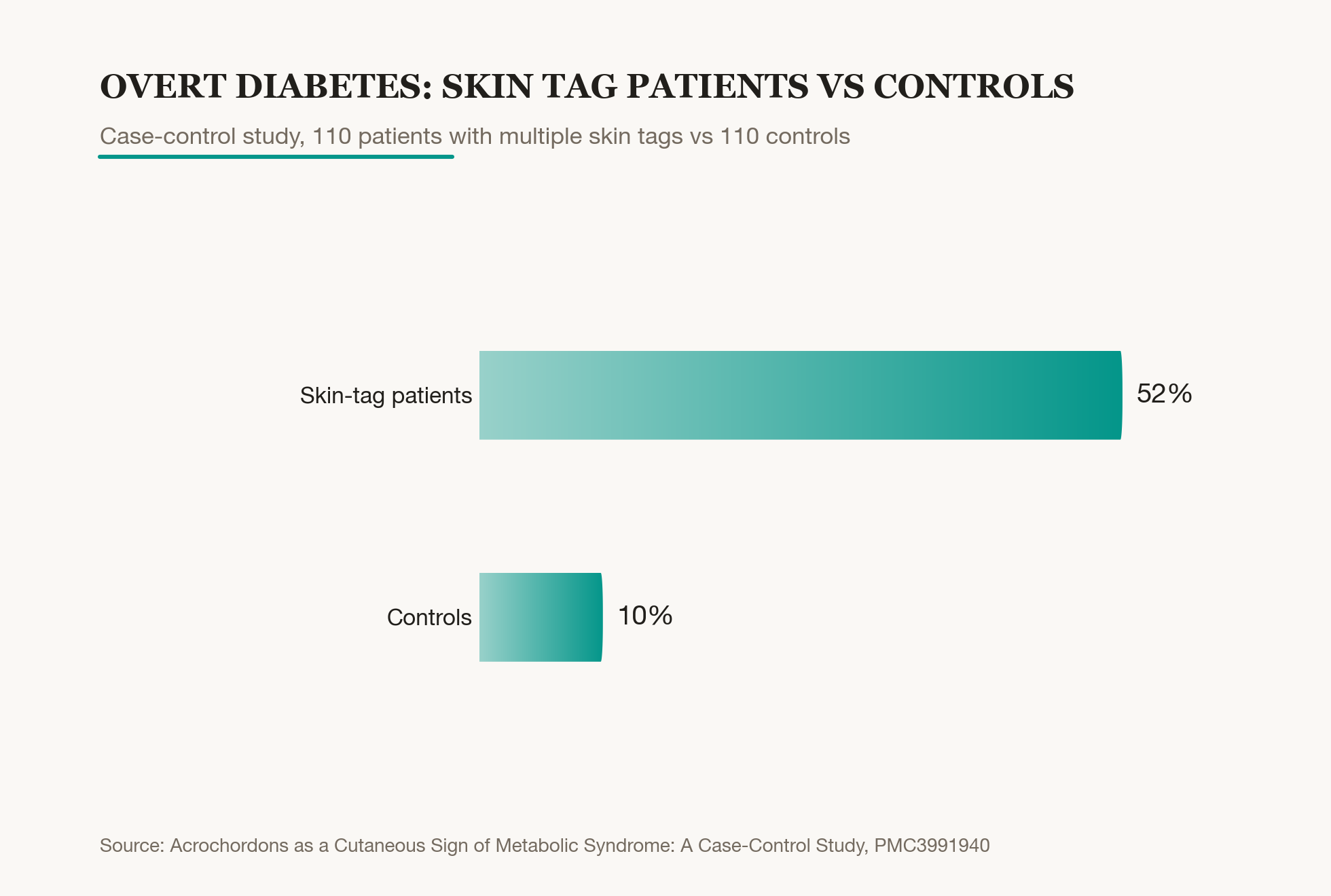
There's actual research comparing people with many skin tags to people with almost none. Among those with multiple skin tags, about half, 52%, had diabetes. Among those with few or none, it was closer to one in ten, 10%. That's a sizable gap. High blood pressure was also more common in the group with many skin tags, and fasting blood sugar, cholesterol, and triglyceride levels tended to run higher too.
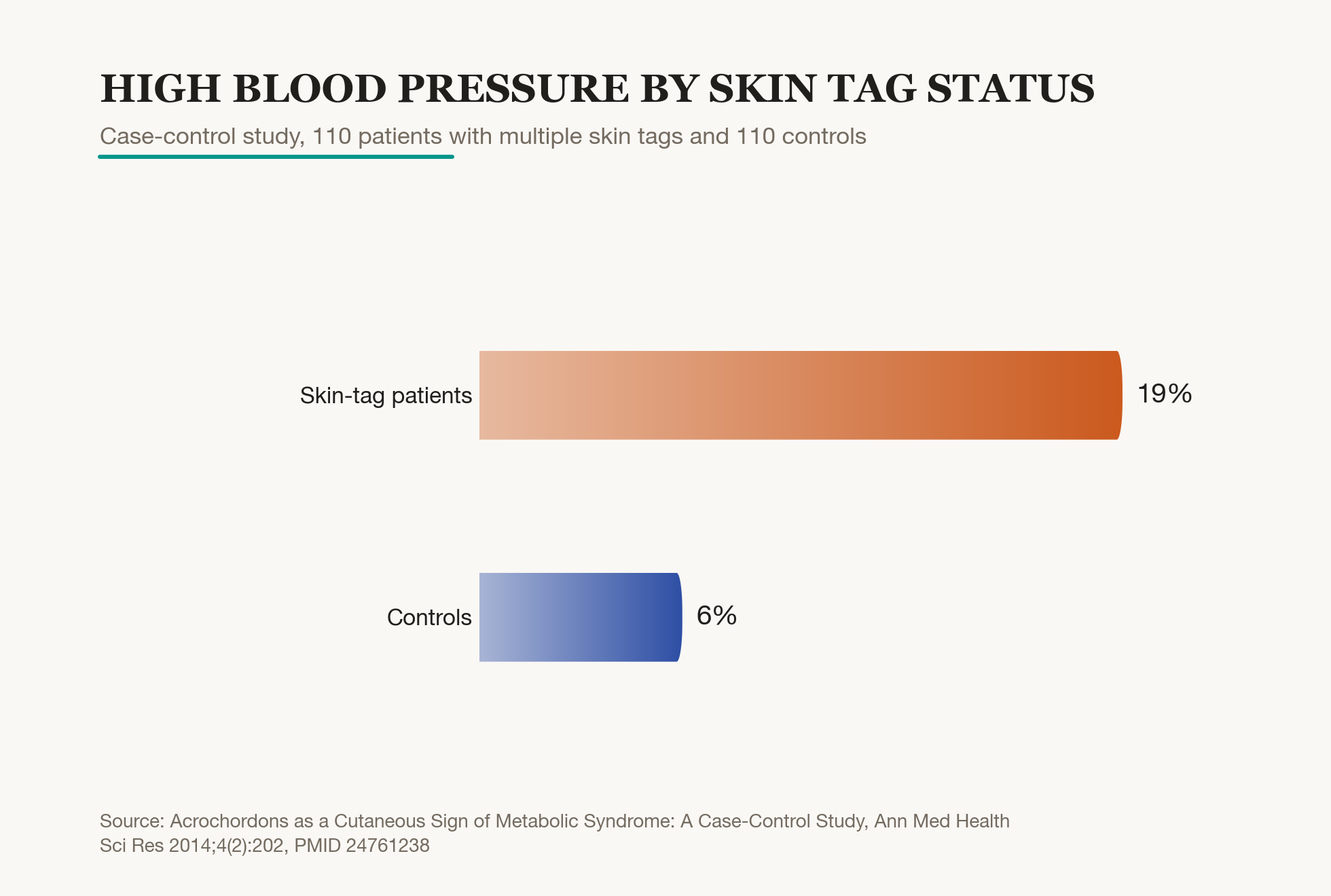
In the same study, the rate of high blood pressure was 19% in the group with many skin tags, more than three times higher than the 6% seen in the group with none. Several studies also report more skin tags showing up with significant weight gain, type 2 diabetes, or pregnancy, times when the body's metabolism shifts substantially. That doesn't mean having a skin tag is something to worry about. They're an extremely common growth that naturally shows up with age wherever skin experiences repeated friction. But if several appear suddenly and quickly, it's worth getting blood sugar or cholesterol checked, separate from any cosmetic removal. Think of it as a small signal worth paying attention to.
Was this helpful?
About this article
Written by a practising aesthetic physician and intended for general education — not a substitute for individual medical advice.
Read next

Flat Wart Causes and Spreading, CO2 Laser Treatment, and Recurrence
Flat warts show up as small, flat bumps on the face or back of the hands. Here is why HPV causes them, why scratching makes them spread and become contagious, how to tell them apart from milia and skin tags, how the CO2 laser removes them along with scarring and pigmentation risks, and how to manage recurrence, explained simply with real study data.
By Dr. Lee

Tiny Facial Bumps: How to Tell Flat Warts, Milia and Skin Tags Apart, and How to Treat Them
The small bumps that show up on the face can look alike, but flat warts, milia, and skin tags have different causes and different treatments. Here is how to tell the three apart at a glance, the right CO2 and Er:YAG laser or electrocautery approach for each, how common they are, how they tend to recur, and real evidence on why removing them at home is risky.
By Dr. Lee
Skin Tag Causes and Removal: Will They Come Back After Laser?
Skin tags tend to crop up again and again in spots where skin rubs constantly against clothing, like the neck and underarms. We break down the two real causes, friction and aging, show how to tell them apart from moles, and explain how laser and electrocautery removal work along with the aftercare that helps keep them from coming back.
By Dr. Lee