Skin Tag Causes and Removal: Will They Come Back After Laser?
By Dr. Lee9 min read
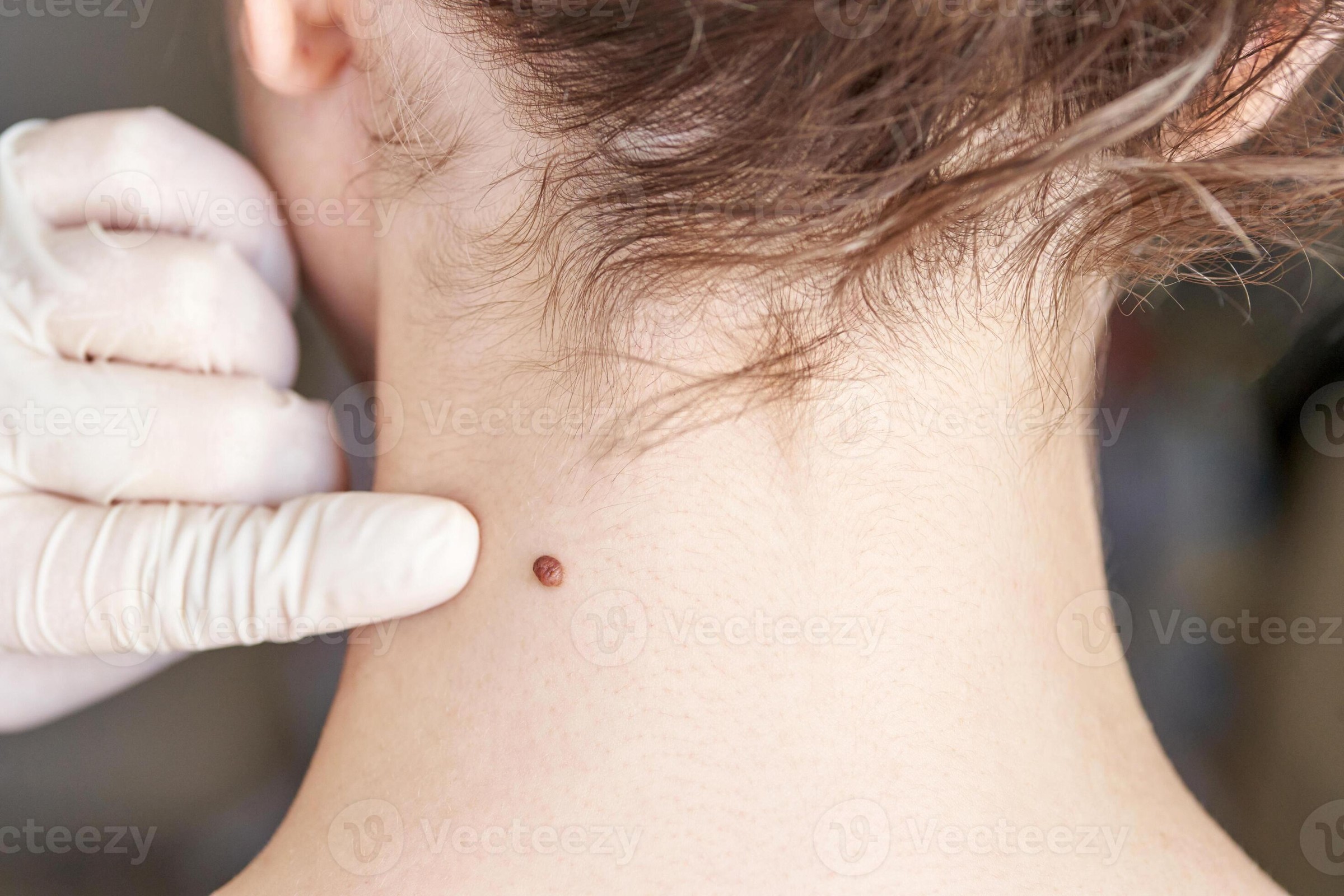
You put on a necklace, or you're shaving your underarms, and your fingertip catches on a tiny scrap of skin that wasn't there before. It doesn't hurt, and it's the same color as the surrounding skin, so it's easy to brush off. But give it a few months, and that one bump has often turned into two or three.
These small growths are skin tags, known medically as acrochordons, which literally translates to soft, dangling bundles of fibrous tissue. There's a real reason they cluster on the neck and underarms, and there's an equally clear explanation for why lasering them off actually makes them disappear.
Why Do Skin Tags Form on the Neck and Underarms?
A skin tag is a small piece of skin that sticks out slightly from the surface. Sizes range from smaller than a grain of rice to about the size of a bean, and most cause no pain at all.
They tend to appear in predictable places: the neck, underarms, groin, and eyelids, essentially anywhere skin folds against itself or rubs continuously against a collar or an accessory. What these spots share is repeated friction, happening several times a day.
A necklace chain brushes the same single line at the front of the neck all day long, and every time you move your arm, skin presses against skin in the underarm. Even on the same body, a spot that gets pressed and rubbed in one fixed place every single day takes on a completely different amount of stress than a spot tucked under loose clothing that barely moves.
By contrast, flat areas like the back or calves, which don't rub much against clothing, rarely develop skin tags. So the fact that they cluster in specific spots isn't random. It comes down directly to how much physical friction that particular spot receives.
How Does Friction Create Skin Tags?
Skin has a built in tendency to thicken itself in response to repeated stress, as a kind of self defense. When a necklace, a bra strap, or a collar rubs the same spot over and over, the outer layer of skin, the epidermis, keeps receiving that irritation signal.
That signal reaches down into the dermis, the deeper layer of skin. The dermis contains fibroblasts, cells that produce collagen (the protein fibers that act like the skin's structural pillars). Repeated stimulation makes these fibroblasts more active, and they start pulling together small blood vessels and collagen fibers in that one localized spot. The result is a small bump rising up right there, which is exactly what a skin tag is. It helps to think of it like pressing a magnifying glass down on one point again and again: only that one spot starts to swell.
It's a similar process to how calluses form on the palm. The difference is that the palm is flat, so the thickened layer of skin just piles up flat. On the neck or underarm, though, the skin is already folded, so the thickened tissue has nowhere to spread sideways and pushes upward instead. Same underlying reaction, different outcome, purely because of whether the spot is flat or folded: a flat callus in one case, a raised bump in the other.
The key isn't one strong impact, it's a weak stimulus repeated daily. A single hard press heals quickly. But when a mild irritation builds up in the same spot over six months to two years, the tissue there starts responding by continuously regenerating itself, and that response eventually hardens into a small permanent bump.
Why Do Skin Tags Increase With Age?
When skin is young, it's firm and has fewer folds, and abundant collagen means it doesn't easily hold onto marks from stimulation. As collagen production declines and skin loses elasticity with age, though, the picture changes.
As skin sags, areas that fold, like the neck and underarms, actually increase in surface area, which means more skin rubbing against skin, or against clothing. More friction opportunities are understood to raise the odds of new skin tags forming. Pregnancy and weight gain are reported to work the same way, since both create more folded skin surface.
Skin tags are also reported to appear more often in people who've gained weight or who have insulin resistance (a state where the hormone that lowers blood sugar doesn't work as effectively as it used to). When fat accumulates around the neck, the folds there deepen too, so changes in body shape become yet another pathway that increases friction opportunities.
For these reasons, skin tags are known to become noticeably more common after middle age compared with your twenties. The one or two tags that showed up on the neck when you were young spreading to the underarms and around the eyes later on comes down to two changes overlapping: less collagen, and more folded skin.
How Do You Tell a Skin Tag From a Mole?
They can look similar at first glance, but a closer touch and look usually makes the difference clear. Check for these features.
- Smooth surface in an apricot to skin tone shade: skin tags are made up of fibrous tissue and blood vessels rather than pigment producing cells, so it's rare for one to be dark brown or black the way a mole can be.
- A slight side to side wobble when pinched: a skin tag hangs off the skin by a thin, neck like stalk, so it moves when you grasp it, while a mole sits flat against the skin and doesn't move.
- Size and shape that stay the same for a long time: skin tags tend to stay small once they form, while a mole with an irregular border or one that grows quickly is a sign worth paying attention to for other reasons.
These differences exist because the two growths are made of completely different material. A mole is a cluster of pigment producing cells sitting under the skin, while a skin tag is fibrous tissue and blood vessels pushed up toward the surface, which is why they look and feel different from the start.
If a bump suddenly darkens or changes size quickly, it's worth getting it checked at a clinic rather than assuming it's just a skin tag.
Can a CO2 Laser Remove Skin Tags?
The most common method clinics use to remove skin tags is the carbon dioxide (CO2) laser. Its light is absorbed very efficiently by water in the body, so when it's aimed at a skin tag, the water inside the tissue instantly boils and vaporizes. It works on the same principle as using a magnifying glass to focus sunlight onto one point of paper and burn it: energy is concentrated on a small area to precisely vaporize only the unwanted tissue.
An erbium YAG (Er:YAG) laser works on a similar principle but uses a wavelength that shaves tissue more shallowly and precisely. That leaves less residual heat damage in the surrounding normal tissue, which is why recovery time tends to run shorter, about five to seven days. That said, its ability to seal blood vessels through heat, which controls bleeding, is weaker than the CO2 laser's, so bleeding during the procedure can actually be more noticeable with the erbium YAG than with CO2. That's why it's safer to have it done by a clinician who can manage bleeding control alongside the procedure. Both lasers typically wrap up in five to fifteen minutes after a numbing cream is applied.
Skin tags tend to grow in areas where the underlying tissue is thin, like the neck, so if the laser goes even slightly too deep, there's a risk of burning the healthy skin underneath. That's why it matters that an experienced clinician fine tunes the power and exposure time to match the size of each skin tag.
Electrocautery for Multiple Skin Tags
Electrocautery uses electricity instead of light. A high frequency current runs through a fine needle tip, generating heat right at that point, and that heat coagulates the proteins in the skin tag tissue, essentially burning it off. Where a laser converts light energy into heat, electrocautery uses heat generated directly from electrical resistance.
When there are several small, shallow skin tags clustered together, electrocautery is often chosen because it can handle multiple tags quickly in one session.
For example, if the underarm has more than ten poppy seed sized skin tags crowded together, working through them one by one with an electrocautery needle is often faster and less uncomfortable overall than treating each one individually with a laser.
Do Skin Tags Come Back After Removal?
Laser and electrocautery both eliminate the skin tag tissue that's currently visible. What they don't do is address the underlying cause that created it in the first place: ongoing friction and the loss of skin elasticity that comes with age.
So if the same daily habit, a necklace or collar rubbing the same spot, continues after the procedure, new skin tags can form again in the same area or nearby. If five or six skin tags on the neck are cleared out in one session, for instance, but a shirt collar keeps brushing that exact spot, it's common to feel a new small bump nearby again six to twelve months later. This isn't really the original spot relapsing, it's more accurate to think of it as a brand new skin tag forming because the underlying friction never changed.
Aftercare Following Skin Tag Removal
Cutting down on the friction that caused the problem in the first place is just as important as the removal itself.
- Loose clothing, and swapping tight necklaces or straps for looser ones, helps reduce friction. Less repeated rubbing in the same spot means fewer opportunities for new skin tags to form. Letting a necklace hang a bit looser instead of cinching it tight, or choosing a wider, softer bra band instead of one that digs in at the underarm, can noticeably cut down the stress on that spot.
- Sun protection over the treated area is worth keeping up. Freshly treated skin is more prone to hyperpigmentation (dark marks that can linger for a long time), and sun exposure can make that discoloration last even longer.
- Avoid trying to pull off a skin tag by hand or tie it off with thread. Removing it yourself with unsterilized methods can lead to bleeding or infection, so even a tiny skin tag is safer left to a clinic.
References
Korean Dermatological Association, Ministry of Food and Drug Safety (MFDS), American Academy of Dermatology (AAD), and U.S. Food and Drug Administration (FDA).
Was this helpful?
About this article
Written by a practising aesthetic physician and intended for general education — not a substitute for individual medical advice.
Read next
Cherry Angioma: Causes, Symptoms, Laser Treatment and When to See a Doctor
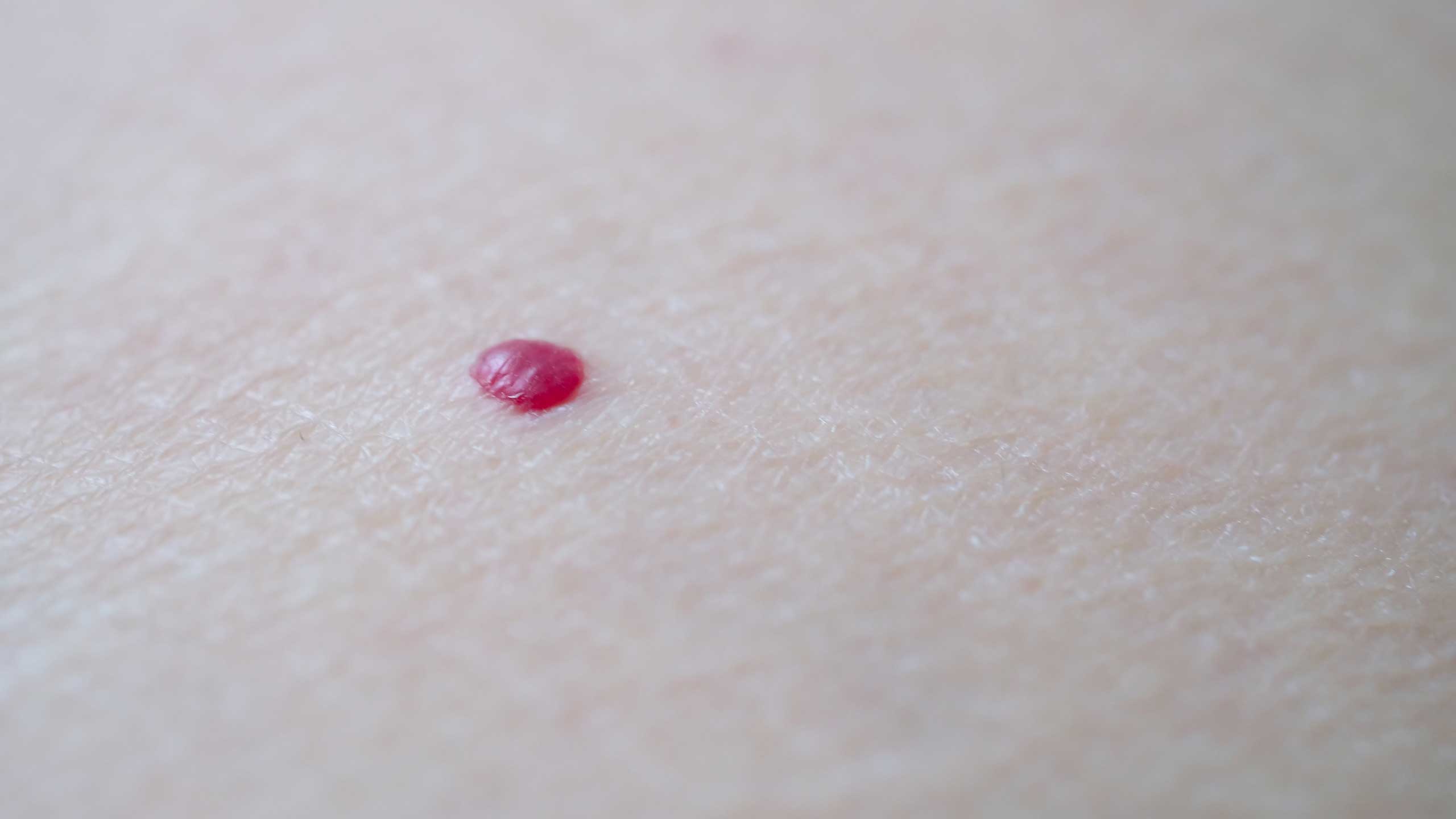
What are those bright red spots called cherry angiomas that show up on the chest or back? A clear, research-backed guide to why they increase with age, how to tell them apart from moles, warts, and purpura, whether pulsed dye, KTP, or long-pulsed Nd:YAG laser or electrocautery works best for removal, how to minimize scarring and dark marks, and when it's time to see a doctor.
By Dr. Kim

Flat Wart Causes and Symptoms: Why They Spread When Squeezed, and Treatment
Flat warts are a viral skin condition, so picking or scratching at them doesn't clear them up, it spreads them further. Here's why that happens, how to tell them apart from moles or acne, and the logic behind removal and preventing recurrence.
By Dr. Kim

Tiny Facial Bumps: How to Tell Flat Warts, Milia and Skin Tags Apart, and How to Treat Them
The small bumps that show up on the face can look alike, but flat warts, milia, and skin tags have different causes and different treatments. Here is how to tell the three apart at a glance, the right CO2 and Er:YAG laser or electrocautery approach for each, how common they are, how they tend to recur, and real evidence on why removing them at home is risky.
By Dr. Lee