Tiny Facial Bumps: How to Tell Flat Warts, Milia and Skin Tags Apart, and How to Treat Them
By Dr. Lee8 min read

When small bumps show up on the face, they can all look alike, but the underlying cause is often different. The most common examples are flat warts, milia, and skin tags. Because they look so similar, it is easy to mix them up, but the three have completely different causes and completely different treatments.
Figuring out which one you actually have comes first, because that is what determines the right treatment. A flat wart, caused by a virus, is treated with a CO2 laser. Milia, trapped keratin, are extracted or lasered away. A skin tag, loose stretched skin, is removed with electrocautery or scissor excision. Here is how to tell the three apart at a glance, the right treatment for each, how common they are, how they tend to recur, and real evidence on why removing them at home is risky.
How Are Flat Warts, Milia and Skin Tags Different?
All three show up as small bumps on the face, but the way they form is entirely different. Here is how they differ.
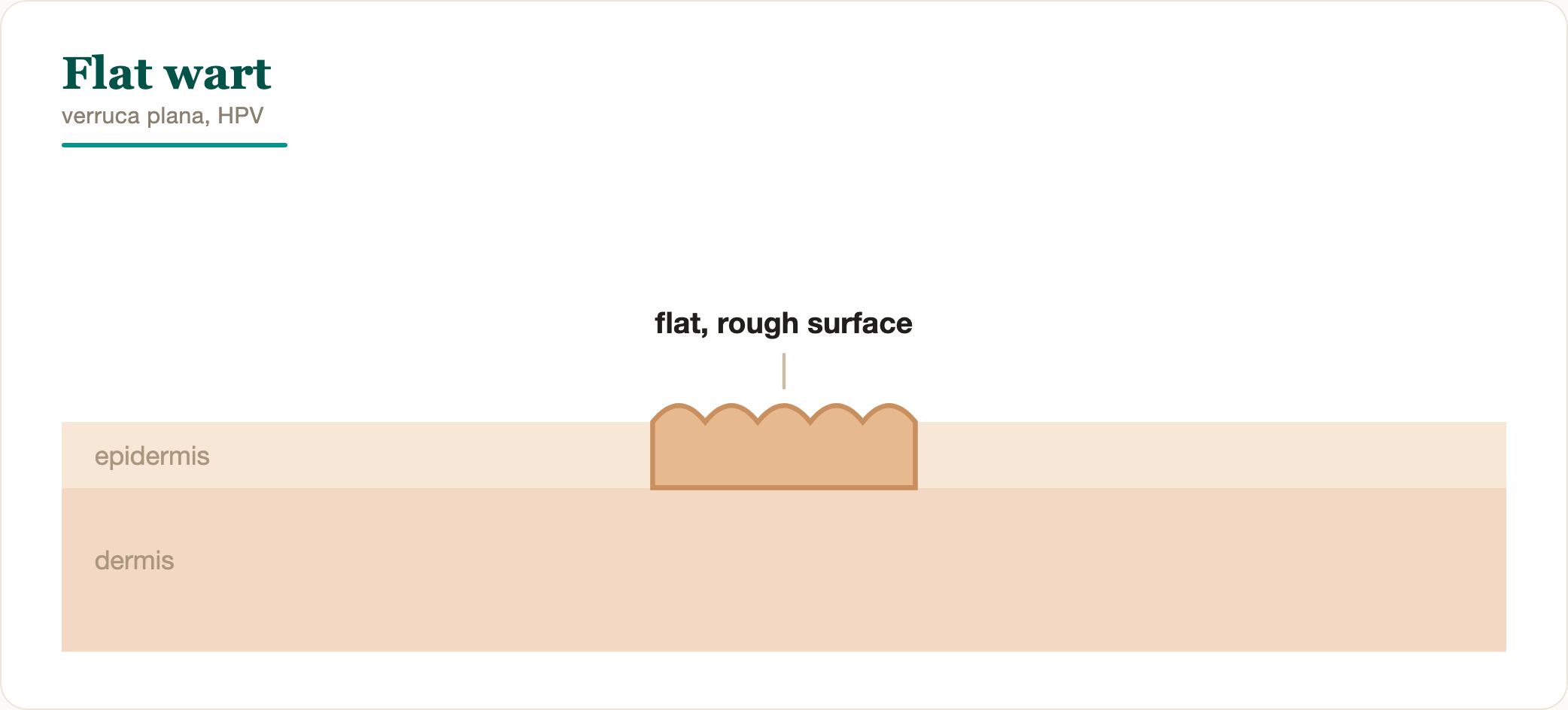
A flat wart, also known as verruca plana, forms when the human papillomavirus, or HPV, infects the epidermis. It appears as multiple flat, flesh-colored or light brown papules clustered together, and tends to show up on the face and the backs of the hands.
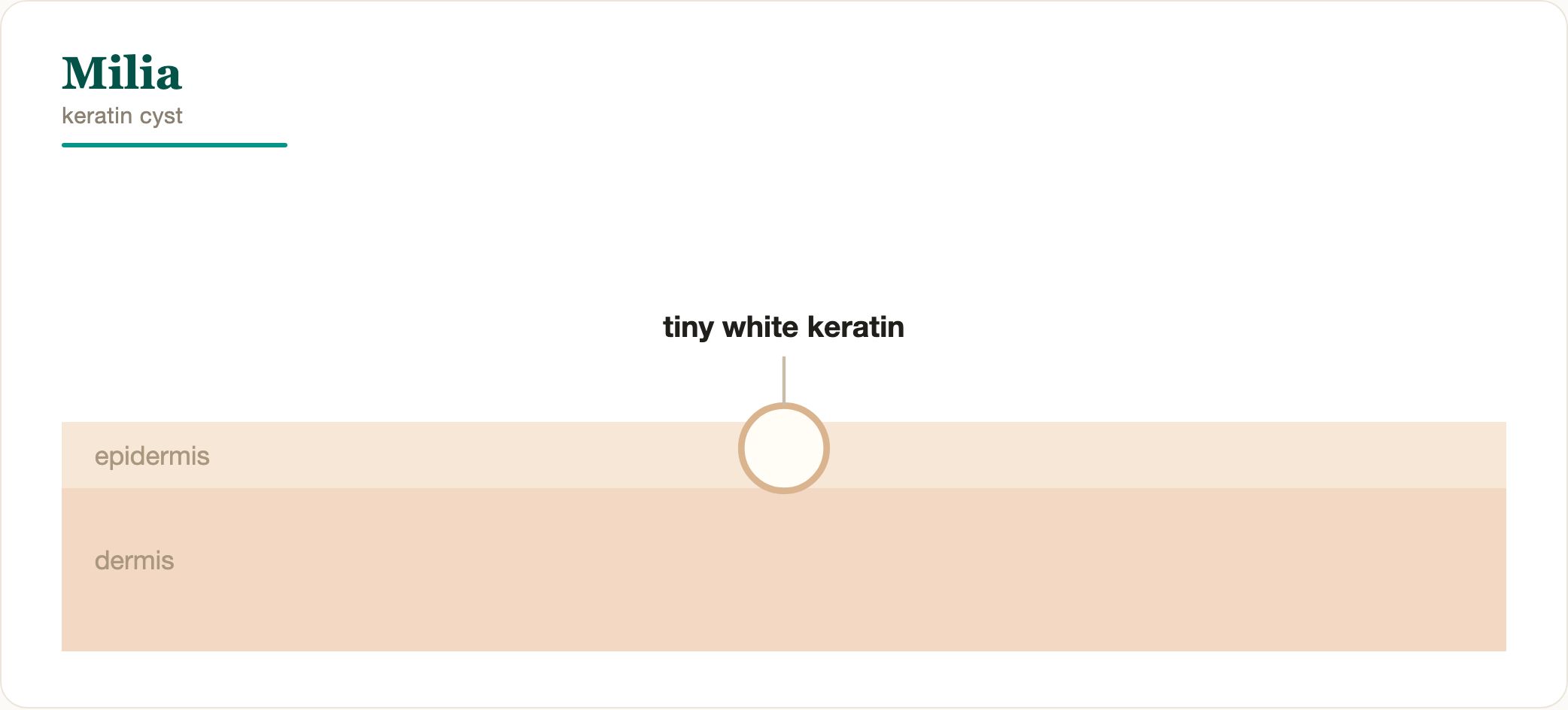
Milia are small cysts formed when keratin becomes trapped beneath the epidermis. They appear as smooth, white or pale yellow bumps and are common around the eyes and on the cheeks.
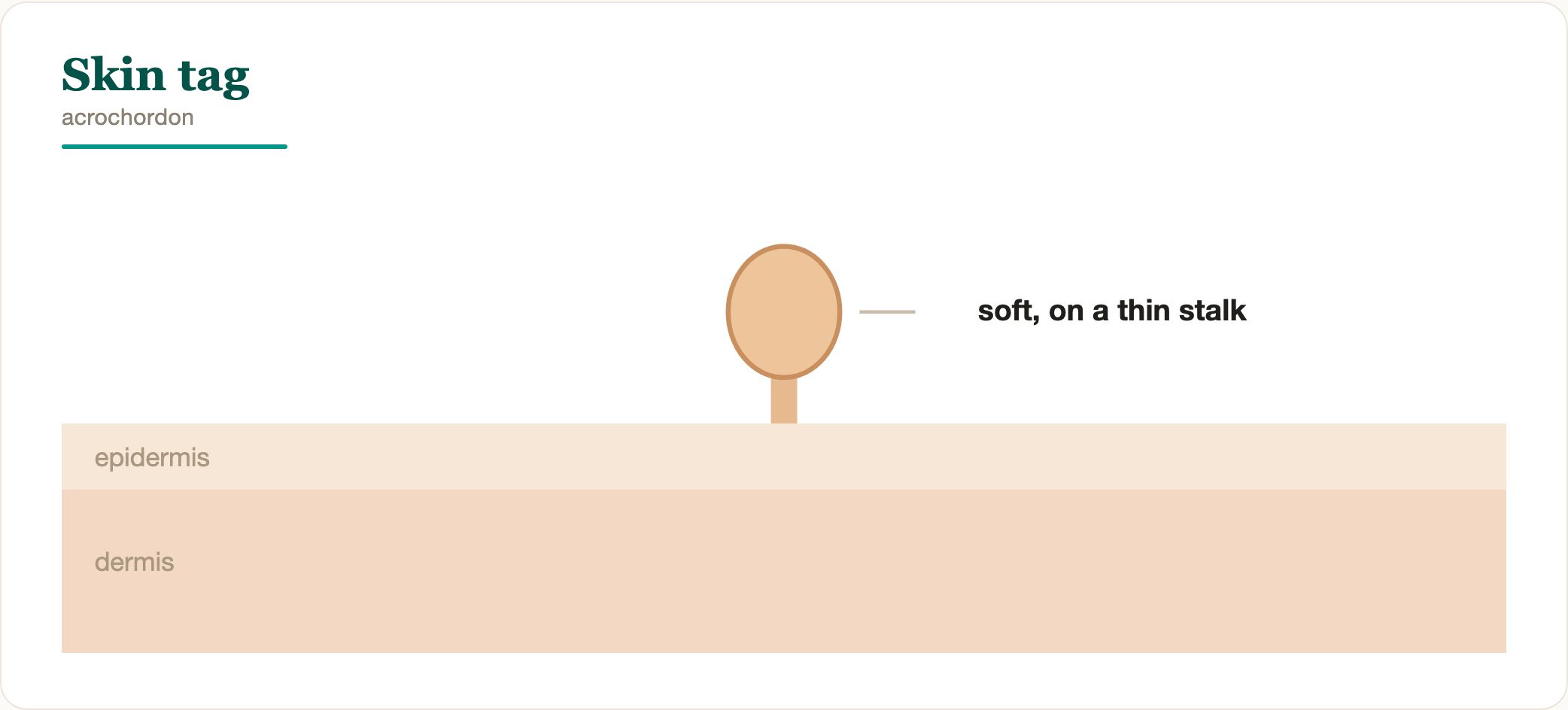
A skin tag, also called an acrochordon or soft fibroma, is a soft outgrowth that forms when skin stretches out from friction and aging. It tends to appear in areas that fold and rub, such as the neck, armpits, and eyelids.
Here are the key clues for telling them apart. If a white plug pops out when you press on it, it is milia. If you can feel a wobbly stalk when you push it with your fingertip, it is a skin tag. If the surface is flat but the bumps are increasing in number and spreading in a line, it is a flat wart. Among the three, only flat warts, caused by a virus, are contagious and spread, so contagiousness alone tells you a lot.
| Category | Flat wart | Milia | Skin tag |
|---|---|---|---|
| Cause | HPV infection | Trapped keratin | Loose, stretched skin |
| Feel | Flat papule | White plug | Soft, stalked bump |
| Site | Face, hands | Around eyes, cheeks | Neck, armpits |
| Contagious | Spreads | No | No |
| Clue | Linear spread | White keratin | Wobbly stalk |
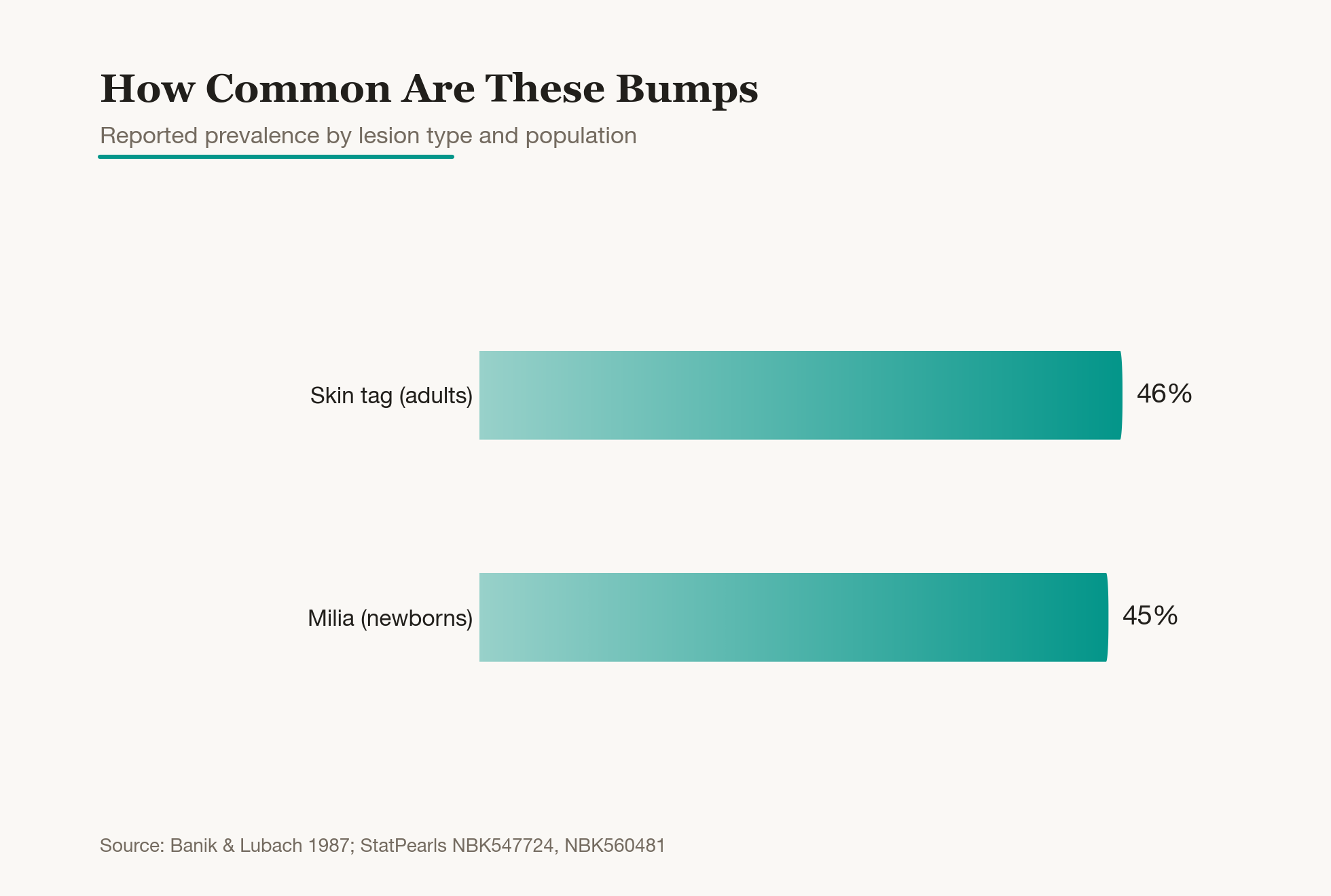
Which of the Three Is Most Common?
How common each condition is also differs. Skin tags are very common in adults, showing up in about 46% of adults in one survey. They become more frequent with age and peak around age 50. They are linked to frequent friction at the neck or armpits, and to metabolic factors such as insulin resistance, obesity, and type 2 diabetes.
Milia are especially common in newborns, appearing in about 40 to 50% of healthy newborns, and in most cases the bumps disappear on their own within a few weeks, without scarring. Milia in adults may not go away on their own, so if they are bothersome, they can be removed.
There is not enough data to state a clear population-wide prevalence for flat warts. They are known to be common in children and young adults, though, and to make up a relatively small share of warts overall. Even just looking at how common each one is shows how different these three conditions are in nature.

Treatment Methods by Type
Once you know what you are dealing with, the treatment is chosen to match. Different causes call for different approaches.
Because flat warts are caused by a virus, direct removal of the lesion works well. Treatment usually starts with a topical medication or cryotherapy, and if there are many lesions or they are not clearing up, a CO2 laser is used to treat them at a shallow depth. Since they can spread, it helps to clear any remaining lesions as they appear.
Because milia are shallow keratin cysts, manual extraction is the first choice. Opening the surface with a sterile needle and pressing out the keratin usually leaves a clean result. If there are many, or if they are in a delicate area like around the eyes, a CO2 or Er:YAG laser is used instead.
Electrocautery is commonly used for skin tags, since the same heat that removes them also stops the bleeding, which makes it convenient. If a tag is large, scissor excision works well, and if there are several scattered ones, cryotherapy has an advantage. In delicate spots like the eyelid, an Er:YAG laser allows for more precise treatment.
| Type | First-line | Alternative | Notes |
|---|---|---|---|
| Flat wart | CO2, Er:YAG laser | Cryotherapy, topical medication | Shallow, repeated sessions |
| Milia | CO2, Er:YAG laser | Manual extraction | Shallow, fast recovery |
| Skin tag | CO2, Er:YAG laser | Electrocautery, scissor excision | Bleeding controlled at once |
What Studies Found on Treatment Results
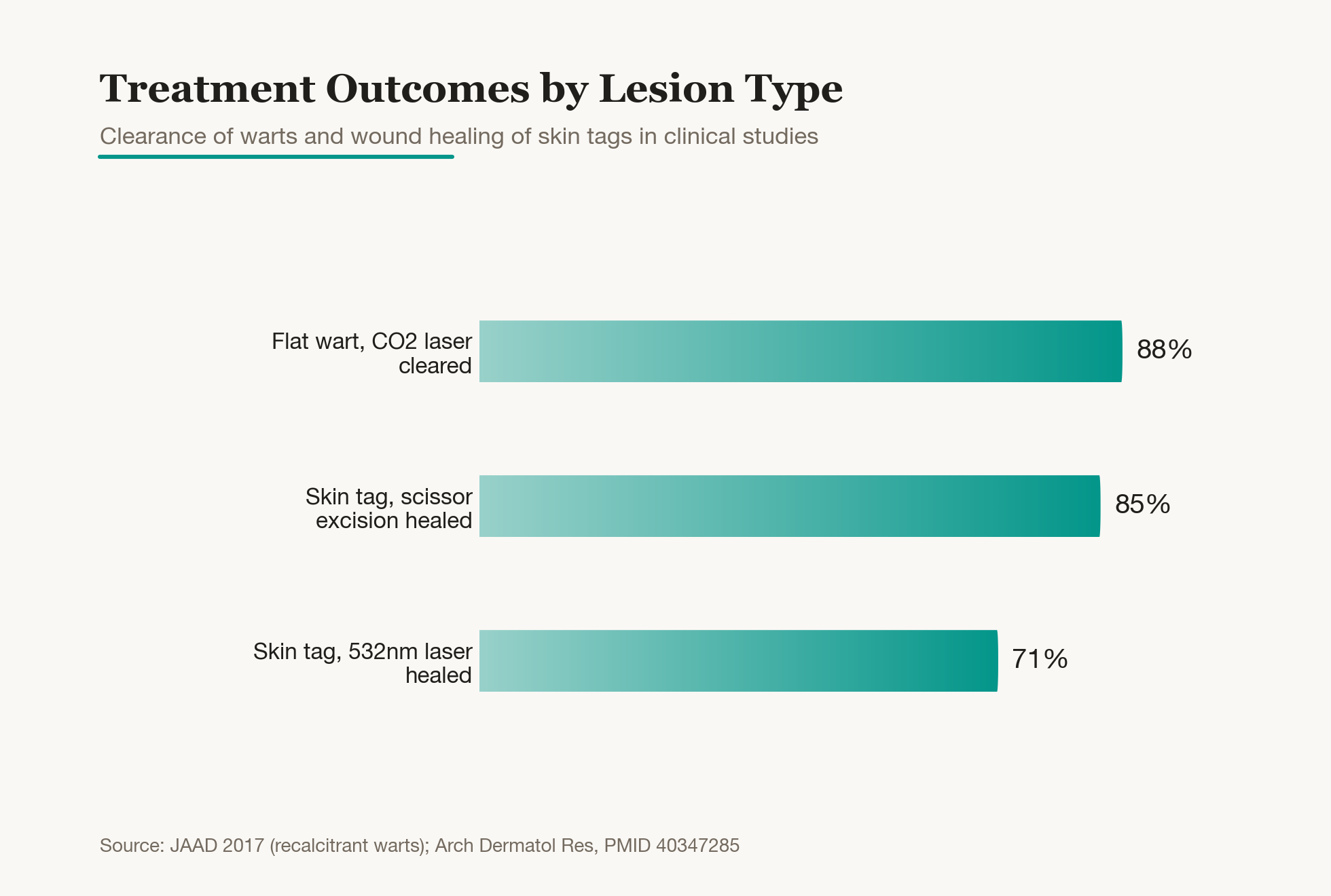
Clinical studies back this up. In a study that used a CO2 laser to treat adults with stubborn viral warts that had not responded to standard treatment, 88% cleared completely. About half cleared in a single session, and the rest cleared with one more treatment within 3 months.
For skin tags, recovery speed varied by method. In a study that compared scissor excision on one side against a 532nm laser on the other side in the same patients, the wound healing rate at 12 weeks was 85% for scissor excision versus 71% for the laser. Pain was also lower with scissor excision. This suggests that simple excision can sometimes work better.
Because milia sit so close to the surface, results are generally good. In a case series treating multiple milia with a CO2 laser, patients showed clear improvement, and there was no recurrence at 12 to 36 month follow-up. The shallower the lesion, the smoother the recovery and the better the outcome.

Why Is Removing Them at Home Risky?
It is tempting to remove a bothersome bump yourself at home. However, self-removal is not recommended for any of the three conditions, and the reasons differ slightly for each.
The biggest problem is misdiagnosis. Something that looks like a small bump could actually be a different condition, so treating it without knowing what it really is often means treating it the wrong way. If a flat wart is picked at, the virus can spread along the fingertips to nearby skin, which can actually increase the number of lesions.
An unsterilized needle or fingernail invites infection and scarring. The skin around the eyelids is especially thin, so a mark can easily be left behind. On darker skin, irritation can leave lingering pigmentation. With milia, forcing an extraction can even trigger new lesions from the irritation itself.
That is why it is safer to have a professional handle it with sterile tools. Confirming what it is first and treating it according to type gives a much cleaner result with far less risk than handling it yourself at home.
Can They Come Back After Removal?
Whether a lesion comes back after removal depends on the type. Understanding the nature of each kind of recurrence makes management easier.
Skin tags rarely come back at the exact spot that was treated, but if you are prone to them, new tags tend to keep appearing in other places. Reducing friction and managing weight and metabolic health can help reduce how often new ones show up.
Primary milia, the kind that form spontaneously, tend to have a low recurrence rate after removal. If skin-irritating factors continue, though, such as peeling, blistering, or overuse of steroids, they can come back, so it helps to reduce those triggers as well.
Because flat warts are caused by a virus, new ones can appear from virus that lingers nearby even after the visible lesions are removed. There is also an older observation, though, that about two thirds of untreated warts clear on their own within 2 years. Avoiding scratching, reducing irritation, and treating new lesions early while there are still only a few tends to be the easiest approach.
| Type | Recurrence pattern | Management |
|---|---|---|
| Flat wart | Recurs from remaining virus | Reduce irritation |
| Milia | Low if primary | Manage triggers |
| Skin tag | New ones keep appearing | Manage friction, weight |
Was this helpful?
About this article
Written by a practising aesthetic physician and intended for general education — not a substitute for individual medical advice.
Read next
Flat Wart Causes and Spreading, CO2 Laser Treatment, and Recurrence
Flat warts show up as small, flat bumps on the face or back of the hands. Here is why HPV causes them, why scratching makes them spread and become contagious, how to tell them apart from milia and skin tags, how the CO2 laser removes them along with scarring and pigmentation risks, and how to manage recurrence, explained simply with real study data.
By Dr. Lee

Milia Around the Eyes: Is It Really Safe to Pick Them Out With a Needle at Home?
Why those little white bumps around the eyes show up, how milia differ from syringoma, when extraction versus CO2 or erbium YAG laser makes sense, whether you can pick them out at home with a needle, and how likely they are to return, explained simply with real studies.
By Dr. Lee

Flat Wart Causes and Symptoms: Why They Spread When Squeezed, and Treatment
Flat warts are a viral skin condition, so picking or scratching at them doesn't clear them up, it spreads them further. Here's why that happens, how to tell them apart from moles or acne, and the logic behind removal and preventing recurrence.
By Dr. Kim