Exosome Treatment Effects: How Are They Different From Stem Cells?
By Dr. Kim7 min read

Walk into almost any dermatology or plastic surgery clinic these days, get a laser treatment, and there is a good chance they will follow it up with an exosome ampoule or a sheet mask soaked in the stuff. The name alone makes it sound like a stem cell procedure, but here is the twist: there is not a single living cell inside an exosome.
So how does something with zero cells in it claim to help skin regenerate? Think of an exosome as a letter passed between cells. The message tucked inside tells skin cells to start repairing themselves, and that is really where the whole idea comes from.
What are exosomes?
Cells are constantly shedding bits of themselves into their surroundings. When a small piece of the cell membrane pinches off, it forms a tiny bubble known as an extracellular vesicle. Exosomes are the smallest members of that family, running about 30 to 150 nanometers across, which is not even a few hundredth of the width of a single strand of hair.
"Bubble" might conjure up an empty balloon, but these are packed tight with growth factors, cytokines, and microRNA. Growth factors are proteins that tell cells to grow, while cytokines are signaling molecules that steer inflammation and recovery. Moving all of that safely out of the cell takes proper packaging, and that is essentially the job an exosome does.
How are they different from stem cell culture fluid?
Treatment brochures tend to mention "stem cell culture medium" and "exosomes" in the same breath, which trips a lot of people up. They are not the same thing. A stem cell is a living cell that can divide and turn into other cell types. An exosome, on the other hand, is a byproduct that stem cell releases while it is being cultured.
In other words, exosome products used in clinics contain no living cells at all. What gets collected is only the packet of messages a cell left behind while it was doing its work. That makes them noticeably easier to handle than treatments involving live cell transplants, and they are considered relatively free of the risks that come with injecting living cells into the body.
How signals pass between cells
To understand what exosomes do, you first need to picture how cells talk to each other. Cells do not need to be touching to communicate; they trade signaling molecules across distances. In that conversation, an exosome plays the part of a sealed envelope. It wraps its cargo, whether growth factors or microRNA, in a protective membrane so nothing gets damaged on the trip, and carries it safely to the target cell.
Once it reaches its destination, an exosome either docks onto the cell membrane or gets absorbed whole into the cell. The envelope opens, the message inside reaches the cell, and the cell reads it and responds. Fibroblasts, the cells deep in the skin that manufacture collagen, are reported to ramp up collagen production once they receive a "repair" message like this.
How do exosomes find their target cells?
The body has an almost uncountable number of cells, so how does an exosome avoid latching onto the wrong one? The trick lies in small protein fragments studded across its surface, which function much like an address label on a shipping box.
The target cell carries a matching receptor on its own surface, sitting there like a lock waiting for the right key. Just as a key only opens the door it was cut for, the signal only gets through when the exosome's surface protein fits the cell's receptor. That is why exosomes are described as somewhat selective rather than sticking indiscriminately to whatever cell happens to be nearby.
Effects on collagen production and soothing inflammation
Some of the growth factors packed into exosomes carry instructions to produce collagen and elastin, the two proteins responsible for skin's firmness. Collagen works like the support beams holding skin up, while elastin acts more like the rubber bands stretching between those beams. When fibroblasts receive this instruction and get to work, the structure inside the skin is said to respond by rebuilding itself.
At the same time, exosomes carry cytokines that send a calming, anti-inflammatory signal. When skin gets irritated, immune cells rush in and trigger redness and heat, and a calming signal is reported to speed up how quickly that reaction settles down. The fact that regeneration signals and calming signals travel together is exactly why exosomes are described as supporting recovery and soothing at the same time.
Why are they used right after laser treatment?
Laser and microneedling treatments leave tiny wounds or microchannels on the skin's surface. Under normal circumstances, the stratum corneum, the outermost layer of skin, blocks large molecules like a tightly sealed wall. Right after a treatment, though, small gaps briefly open up in that wall for about 30 minutes to 1 hour, creating a window when absorption runs unusually high.
Applying exosomes during that window is thought to let the signaling molecules reach deeper into the skin's upper layers than they otherwise could. On top of that, laser-treated skin is already in the middle of an active repair response. Layering regeneration and calming signals on top of that is reported to help redness and stinging settle faster and support the overall recovery process. That is the main reason clinics apply exosome ampoules or masks right after a laser session rather than at some other point.
This absorption window does not stay open long. The skin barrier starts repairing itself on its own within 2 to 4 hours, so applying exosomes within 30 minutes to 1 hour of finishing the treatment is said to matter for getting any real absorption benefit. That is also why clinics tend to put the ampoule or mask on immediately, before a patient even leaves the treatment chair.
Why did exosome treatments only appear recently?
Exosomes themselves have been a known part of cell biology for decades. So why did they only show up as an aesthetic treatment in just the last 5 to 10 years? The answer turns out to be fairly simple. Exosomes are so small that isolating pure ones, without mixing in cellular debris or other unwanted material, used to be beyond what the available technology could reliably do.
Recent advances in separation methods like ultracentrifugation and precision filtration have finally made it possible to obtain exosomes at consistently high purity. Better cold-storage technology arrived around the same time, which made it practical for clinics to stock and distribute them in ampoule form. In short, the science had to catch up before the treatment could become a real option.
How much evidence supports the effects?
The basic idea that exosomes carry signals between cells has been well established in cell biology for a long time. Research on applying them to skin for cosmetic purposes, though, is still at an early stage. Cell-culture experiments and small clinical observations have reported benefits for collagen production and recovery speed, but studies that track patients for 1 year or more on a large scale are still few and far between.
It also matters that exosome products differ from one another depending on which cells they were extracted from and how they were purified. The source cells and purification method can change what ends up inside the packet, which makes it hard to compare results across different products in any direct way. For that reason, this treatment is best understood not as a finished therapy but as a supportive recovery tool that research is still catching up on.
What to check before treatment
- Ask which cells the exosomes were derived from, since the source cells can change the mix of signaling molecules inside.
- Confirm the product is registered as a proper cosmetic or medical device with the Ministry of Food and Drug Safety (or the equivalent regulator in your country). Products outside that oversight may not have standardized purification or ingredients.
- If you are planning to combine it with a laser or microneedling session, ask whether it is meant to be applied right after the procedure for absorption purposes, since the benefit is expected only in the 30-minute to 1-hour window right after treatment, while the damaged skin barrier is still open.
An exosome is not a cell itself but a small packet carrying the signals a cell chose to send out. Because that cargo supports both regeneration and calming at once, it has become a frequent add-on in recent treatments. Since the research base is still building, though, it is worth looking closely at both the product and the clinic before signing up.
References
Korean Dermatological Association, Ministry of Food and Drug Safety (MFDS), American Academy of Dermatology (AAD), and U.S. Food and Drug Administration (FDA).
Was this helpful?
About this article
Written by a practising aesthetic physician and intended for general education — not a substitute for individual medical advice.
Read next

Tiny Facial Bumps: How to Tell Flat Warts, Milia and Skin Tags Apart, and How to Treat Them
The small bumps that show up on the face can look alike, but flat warts, milia, and skin tags have different causes and different treatments. Here is how to tell the three apart at a glance, the right CO2 and Er:YAG laser or electrocautery approach for each, how common they are, how they tend to recur, and real evidence on why removing them at home is risky.
By Dr. Lee
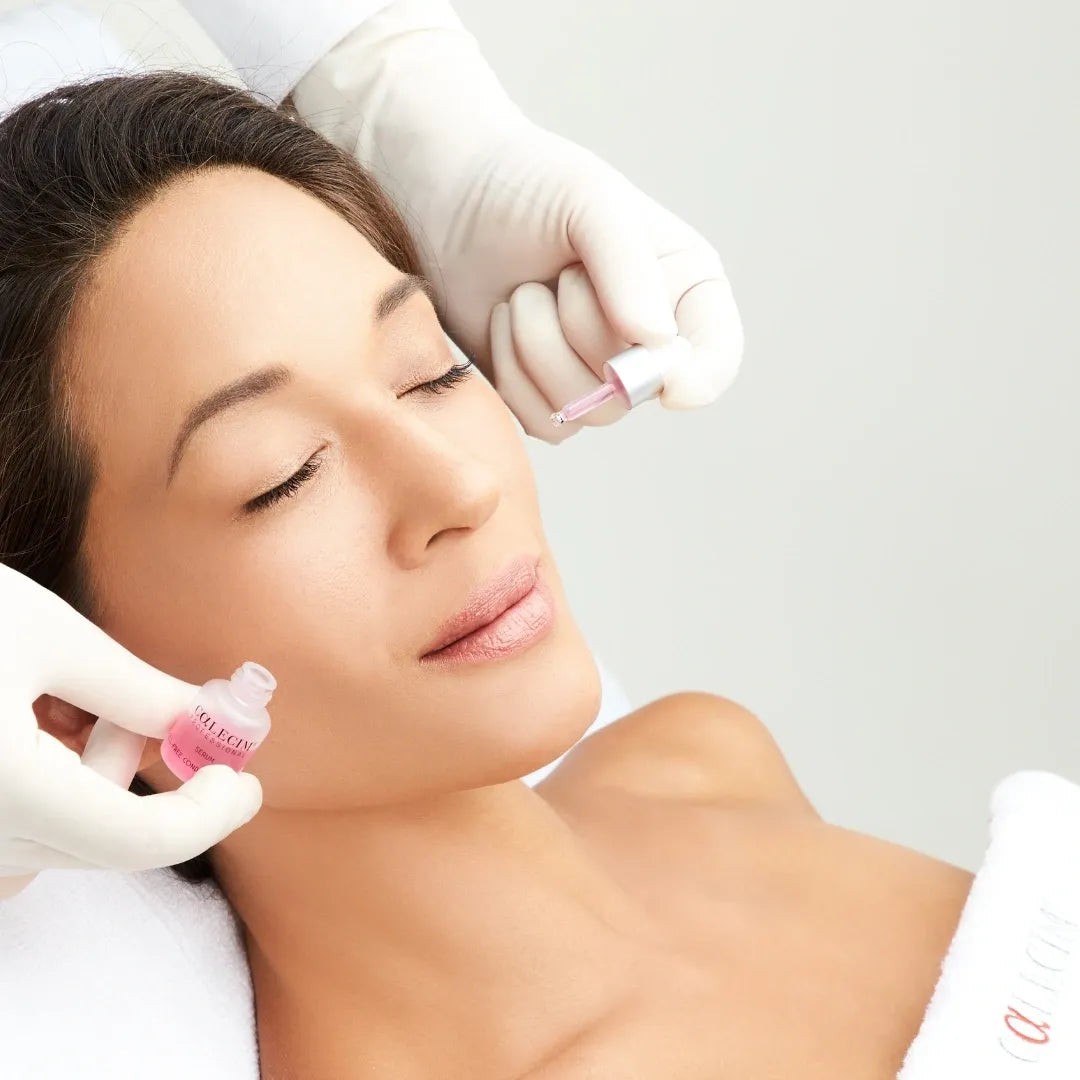
NovaStem Stem Cell Culture Media: Growth Factors and the Limits of Its Effects
NovaStem stem cell culture media boosters are not made of living cells. They are a concentrate of the growth factors and signaling molecules that cells release into their surrounding fluid as they grow. Here is how these components send renewal signals to skin cells, and how the approach differs from transplanting living stem cells.
By Dr. Kim
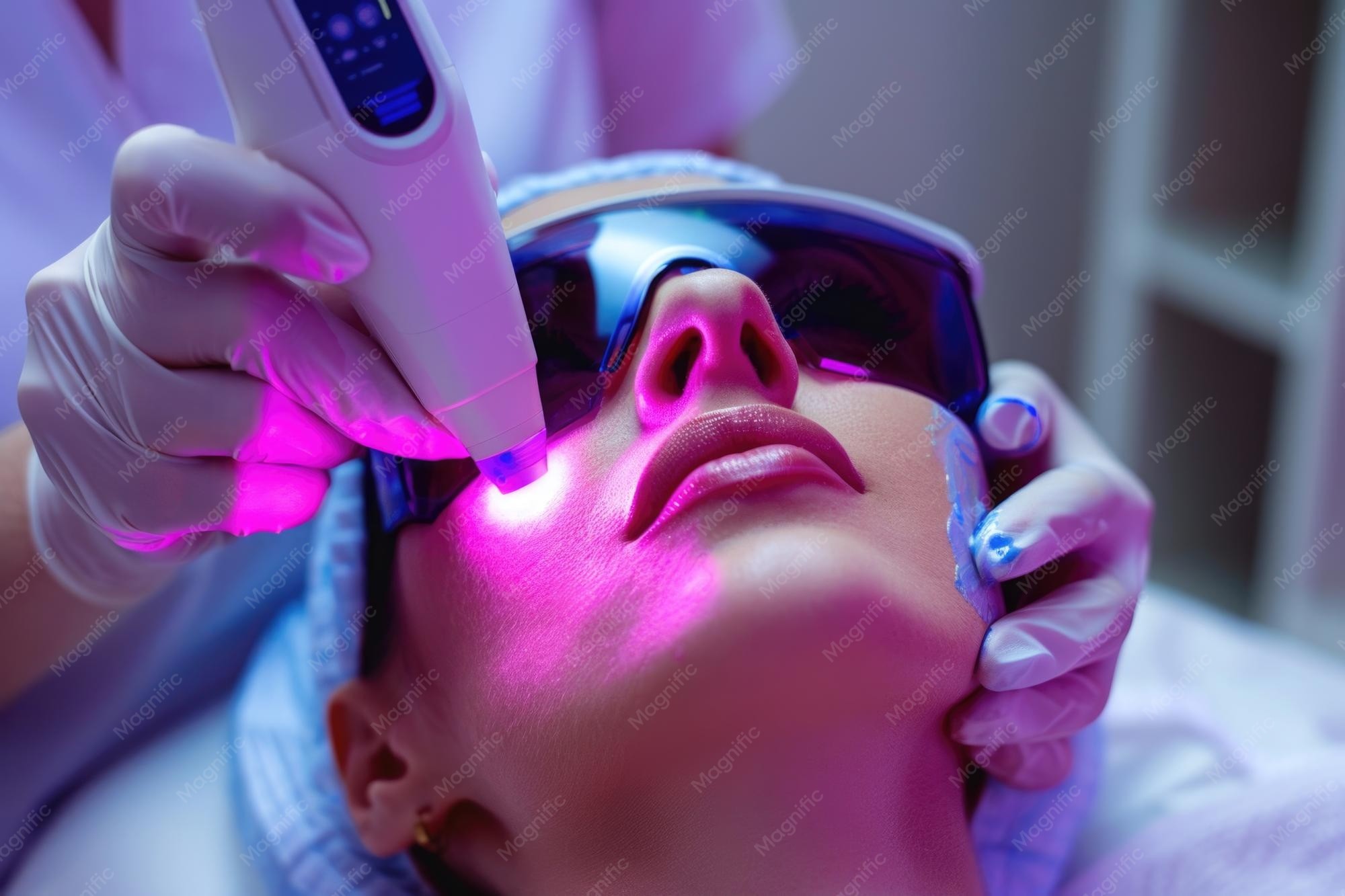
Cafe-au-Lait Spots Returning After Laser: Causes, Number of Sessions and Expectations
A café au lait spot forms because the pigment-making cells in that one patch of skin are locally overactive. Laser treatment breaks up the pigment that has already built up, but it doesn't switch off those cells, which is why the color so often returns. Here's the biology behind it, why results differ so much from person to person, and what a realistic treatment timeline actually looks like.
By Dr. Kim