Freckles Versus Melasma: How Do Their Laser Treatments Differ?
By Dr. Lee6 min read

Check your reflection closely and you might spot small brown marks scattered across your cheeks or the bridge of your nose, and wonder whether you are looking at freckles or melasma. Both are brown. Both tend to cluster in the center of the face. And plenty of people have some of each, which makes telling them apart by eye harder than it sounds.
Dermatologists, though, treat the two in almost opposite ways. One kind of spot gets hit with a strong laser right away. The other gets a much gentler treatment, spread across five to ten sessions, one week apart. Fire the same strong laser at the wrong spot, and the pigment can actually come back darker than before. Understanding why the approaches diverge so sharply also makes it easier to guess which one is showing up on your own face.
Where freckles form and why
Freckles live in the epidermis, the outermost layer of skin, and specifically in its bottom layer, the basal layer. Think of the epidermis as the thin visible surface you actually see when you look in the mirror. Down in that basal layer are melanocytes, tiny cells that act like little pigment factories.
Freckles tend to show up in people whose melanocytes are genetically wired to react strongly to sun exposure. Catch some sun, and those melanocytes pump out an unusually large amount of pigment right on the spot, leaving small, poppy-seed-sized brown dots packed into that one shallow layer. Shallow depth and a location confined to a single layer of skin are freckles' defining traits.
Why does melasma darken from small irritations?
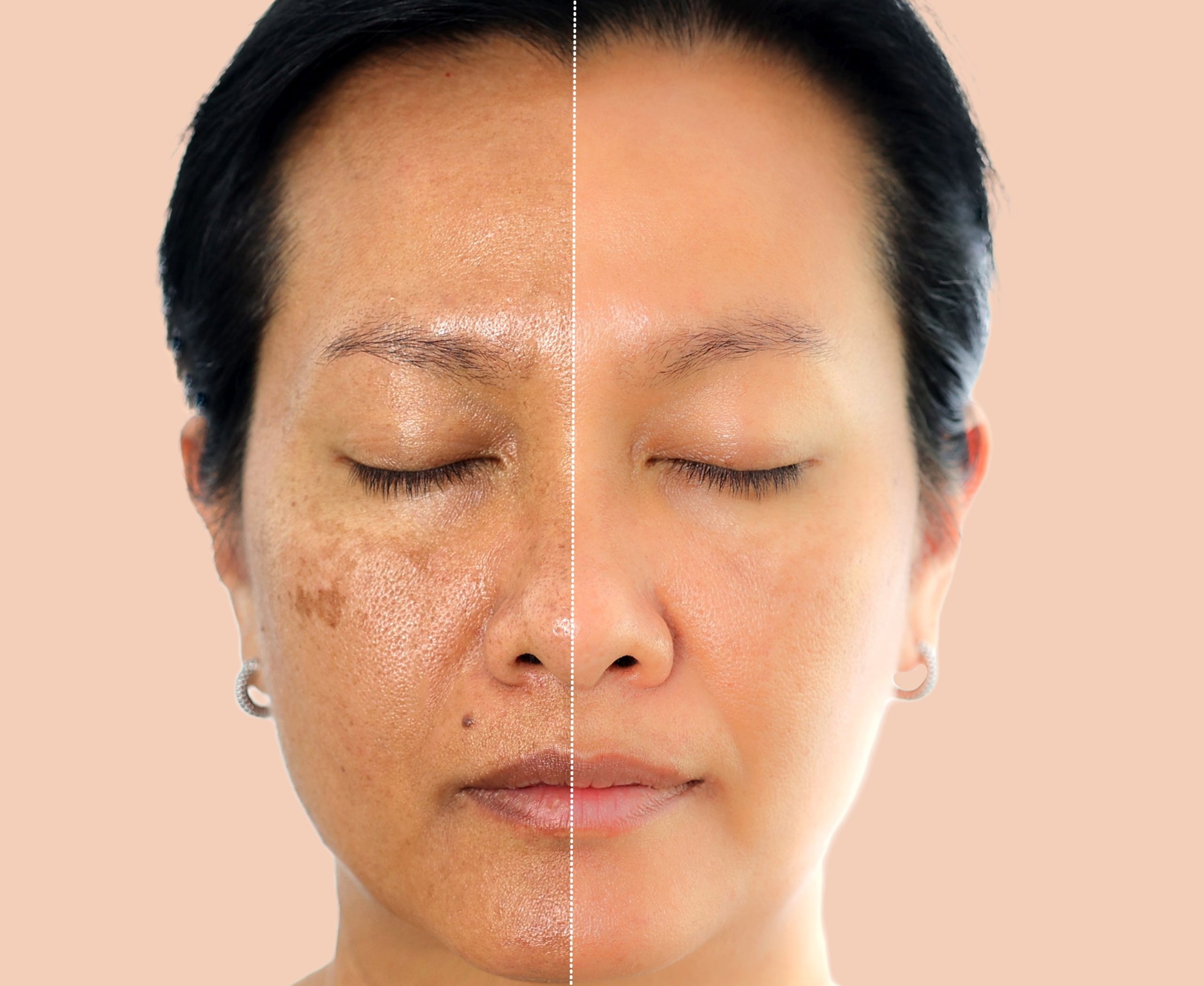
Melasma sits at a murkier depth than freckles and tends to spread out as a broader, hazier patch rather than distinct dots. The pigment is often found not just in the epidermis but bleeding down into the shallow part of the dermis just beneath it. The dermis is the layer right under the epidermis, where blood vessels and nerves run.
Melasma reacts so sharply to irritation because the melanocytes producing that pigment are already sitting in an easily agitated state. Reports suggest they overreact not only to UV light but to heat, friction, even a minor inflammatory response, cranking out extra pigment each time. That is why hitting melasma-prone skin with an aggressive treatment can backfire, with the irritation itself acting as the trigger that darkens the pigment further.
How hormones and sun affect melasma
Melasma is known to appear or deepen alongside pregnancy, oral contraceptive use, and the hormonal shifts around menopause. The widely accepted explanation is that estrogen and progesterone act as signals that stimulate melanocytes directly.
UV exposure is just as much of a trigger. Sunlight sends melanocytes a stronger signal to produce pigment, and melasma-prone melanocytes, already primed to overreact, tend to respond far more intensely than freckle-prone ones do to the exact same amount of sun. That is exactly why sun protection is considered just as important as any in-office treatment when it comes to melasma.
Why does laser strength differ?
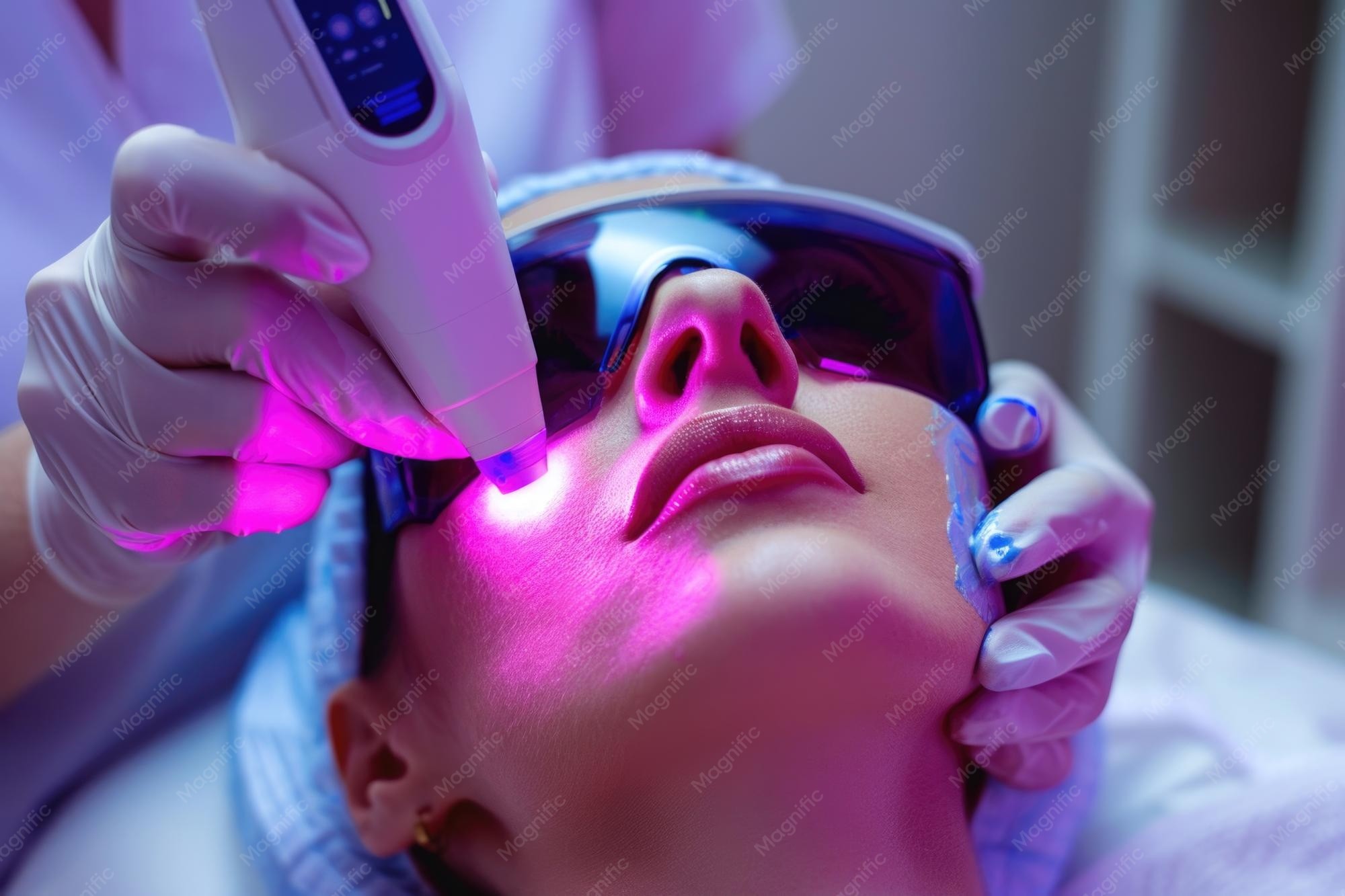
Because freckles sit shallow and confined to a single layer, targeting that exact spot and destroying it in one strong pass tends to work well. The go-to device is the Q-switched laser, which fires a burst of intense energy in an extremely short pulse, shattering just the pigment in an instant. Since the target is shallow and well defined, spacing sessions four to eight weeks apart, just one to three sessions often shows a clear response.
Melasma calls for the opposite strategy. Blast it with a strong laser in a single pass, and the heat itself can agitate those touchy melanocytes and end up darkening the pigment instead of clearing it. So the same family of laser gets dialed down to a much lower energy and repeated five to ten times, one week apart, a method known as laser toning. Rather than destroying pigment in one hard hit, toning applies gentle stimulation over several rounds like this, gradually fading the pigment without setting the melanocytes off. In short, how much irritation the skin can tolerate is what decides the entire approach.
What happens if a strong laser is used on melasma?
This is the exact point where doctors tread most carefully with melasma. Push the laser harder than necessary, or space out sessions too closely together, and that extra irritation can trigger an inflammatory response. The inflammation then stirs up the melanocytes again, producing even more pigment in a cycle that feeds itself. This is called post-inflammatory hyperpigmentation, essentially the skin going into defense mode and pumping out extra pigment while it heals.
That is why melasma treatment is generally recommended to start at a low energy level and adjust gradually based on how the skin responds, rather than going full strength right out of the gate. Spacing sessions at least a week apart, giving the skin enough time to fully calm down, matters just as much. Freckles, on the other hand, do not carry that same sensitivity, so they can generally be treated more aggressively without the same worry.
Which one comes back after treatment?
Once a freckle is treated, the spot tends to stay clear. The melanocytes were already sun-sensitive to begin with, so new freckles can form elsewhere if sun exposure continues unchecked, but the treated spot itself rarely darkens again on its own.
Melasma is different. The underlying causes, sensitized melanocytes, hormones, and ongoing sun exposure, are all still there even after treatment; only the visible pigment has been cleared away. So if sun protection slips or hormones shift again, pigment often returns to the very same spot. Everyday UV exposure reaches the skin even on cloudy days, which means protecting only on sunny days is not enough. That is why melasma is treated less as a one-time fix and more as an ongoing process, pairing any procedure with consistent sun protection and maintenance.
How to tell freckles and melasma apart
A few clues can help tell the two apart.
- If the spots are small, like poppy seeds, with sharp, well-defined edges, that leans toward freckles, since pigment confined to a single layer of skin naturally produces a crisp border.
- If the marks spread out as a broader, blurry patch with soft edges, melasma is worth suspecting, since pigment bleeding across the epidermis and shallow dermis tends to fade gradually at the margins.
- A clear pattern of darkening in summer and fading in winter points toward sun-sensitive freckles, since pigment production there responds almost immediately to UV exposure.
- New spots or darkening that lines up with pregnancy or starting the pill points toward melasma, since that timing overlaps with hormonal shifts that stimulate melanocytes.
Of course, plenty of cases are hard to tell apart by eye alone, and no small number of faces have both at once. Since what looks similar on the surface can be driven by very different processes underneath, choosing a laser strength based on a guess can end up darkening the pigment instead of clearing it. That is why getting an accurate diagnosis, and matching it to the right treatment intensity, is safest left to a dermatologist.
References
Korean Dermatological Association, Ministry of Food and Drug Safety (MFDS), American Academy of Dermatology (AAD), and U.S. Food and Drug Administration (FDA).
Was this helpful?
About this article
Written by a practising aesthetic physician and intended for general education — not a substitute for individual medical advice.
Read next
Cafe-au-Lait Spots Returning After Laser: Causes, Number of Sessions and Expectations
A café au lait spot forms because the pigment-making cells in that one patch of skin are locally overactive. Laser treatment breaks up the pigment that has already built up, but it doesn't switch off those cells, which is why the color so often returns. Here's the biology behind it, why results differ so much from person to person, and what a realistic treatment timeline actually looks like.
By Dr. Kim
Laser for Melasma and Sun Spots: Epidermal Versus Dermal Pigment
Melasma and sunspots can look like the exact same shade of brown, yet how deep that pigment sits changes everything about how it responds to treatment. Here is why epidermal and dermal pigment are handled with completely different principles, and why that distinction matters so much for planning care.
By Dr. Lee

Tiny Facial Bumps: How to Tell Flat Warts, Milia and Skin Tags Apart, and How to Treat Them
The small bumps that show up on the face can look alike, but flat warts, milia, and skin tags have different causes and different treatments. Here is how to tell the three apart at a glance, the right CO2 and Er:YAG laser or electrocautery approach for each, how common they are, how they tend to recur, and real evidence on why removing them at home is risky.
By Dr. Lee