Vitamin C Serum: When to Apply and What Concentration, How Many Percent Is Best?
By Dr. Lee7 min read

Vitamin C serum has about as solid an evidence base as any topical antioxidant gets. You won't see a dramatic overnight change, but used consistently, it brightens skin tone, smooths texture, and makes a genuine dent in visible aging. Here's why so many people keep it in their routine, and how to pick one and apply it so you're actually getting the results.
What makes vitamin C compelling isn't one effect, it's three happening at the same time. It neutralizes the free radicals generated by UV light and pollution, it supplies an essential cofactor for collagen production, and it suppresses melanin synthesis to even out tone. Used in the morning alongside sunscreen, the synergy is real, which is why this ingredient has stayed popular as a smart, budget-friendly way to prevent visible aging. Let's go through the evidence on each effect, the different forms available, concentration and pH, and how to fit it into a routine.
What Does Vitamin C Do for Skin?
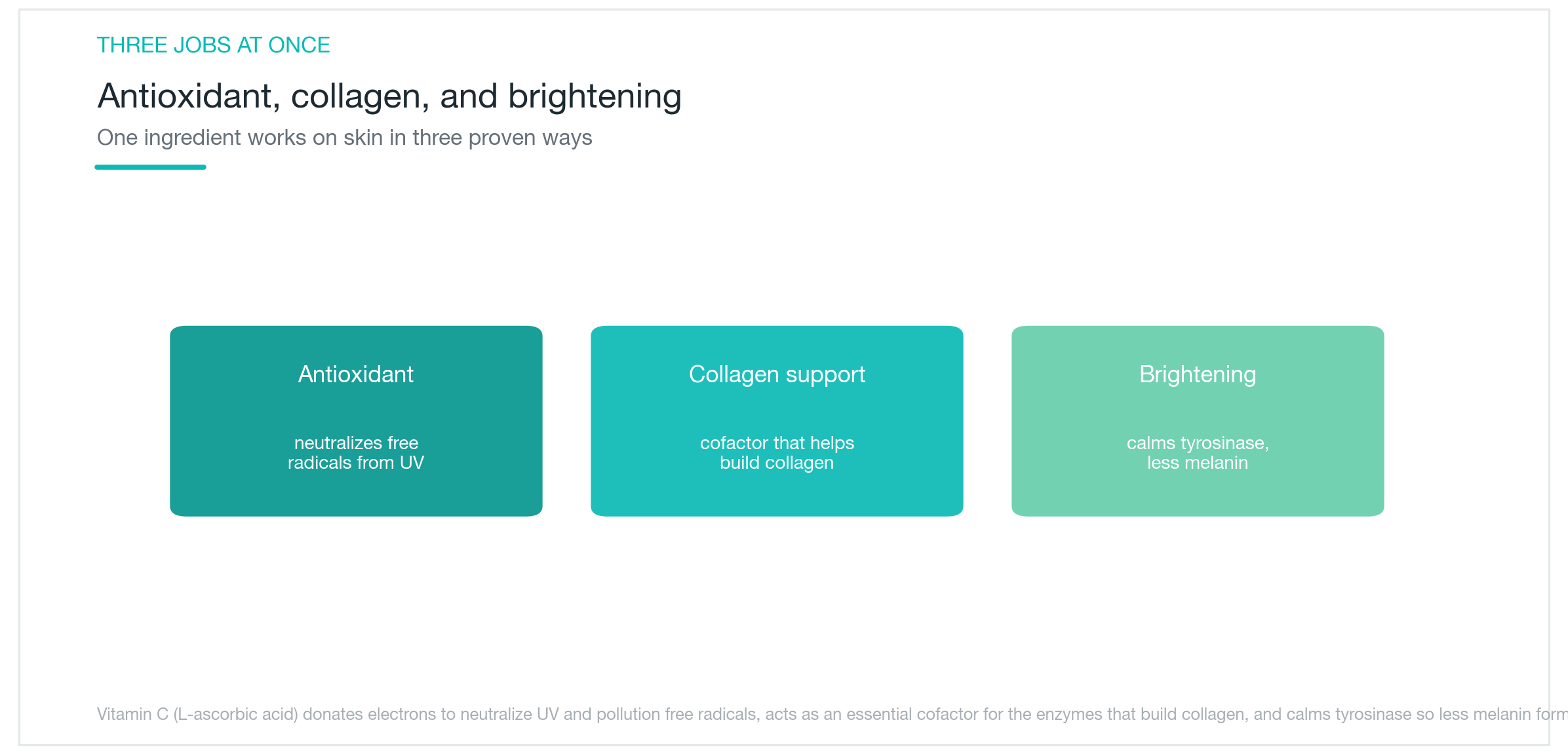
Three effects, one ingredient. First, antioxidant protection. UV light and airborne particulates generate free radicals that break down collagen and accelerate aging. Vitamin C donates electrons to neutralize those free radicals before the damage sets in. Think of it as a shield that intercepts the threat early.
Second, collagen synthesis. Two key enzymes involved in collagen production depend on vitamin C to function properly. Research shows that vitamin C upregulates the genes controlling collagen formation in skin cells while simultaneously suppressing the enzymes that degrade it. You're building and protecting at the same time, which makes this a genuinely useful ingredient for maintaining firmness.
Third, brightening. Vitamin C binds to the active site of tyrosinase, the enzyme central to melanin production, and inhibits its activity. This helps fade existing hyperpigmentation from sun exposure, hormonal triggers, and post-acne marks. Getting all three of those from one ingredient in a single step is unusual, and it's the main reason vitamin C has had such lasting appeal. Once you understand the mechanism, the case for consistency makes a lot more sense.
Pure Vitamin C or a Derivative: Which to Choose?
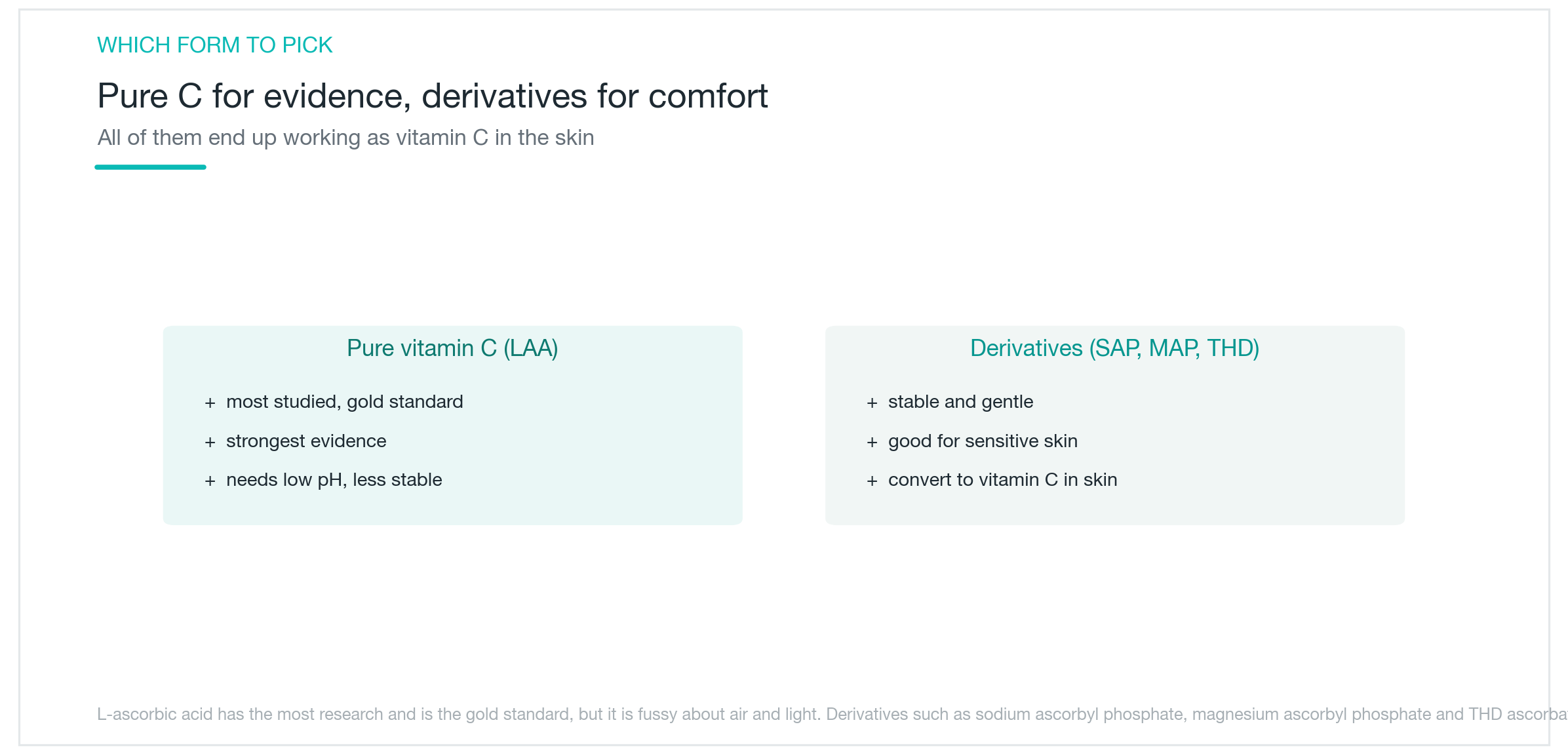
The form matters because each behaves differently. The most studied option is pure vitamin C, L-ascorbic acid. It's the gold standard with the deepest clinical record, but it degrades quickly when exposed to air and light, which means storage and formulation quality count.
Derivatives were developed to address those stability issues. SAP (sodium ascorbyl phosphate), MAP (magnesium ascorbyl phosphate), and THD (tetrahexyldecyl ascorbate) are all considerably more stable and gentler on skin. They convert to the active form once absorbed. SAP in particular tends to work well for acne-prone skin, while THD, being oil-soluble, absorbs easily and suits people who find water-based acids irritating.
The short version: if you want the most extensively validated form, L-ascorbic acid. If stability and tolerability matter more, a derivative is a strong choice. Sensitive skin or any concern about acidic formulas? Start with a derivative. There's no single right answer here, just the form that fits your skin's needs.
Vitamin C Serum Concentration and Acidity Guidelines
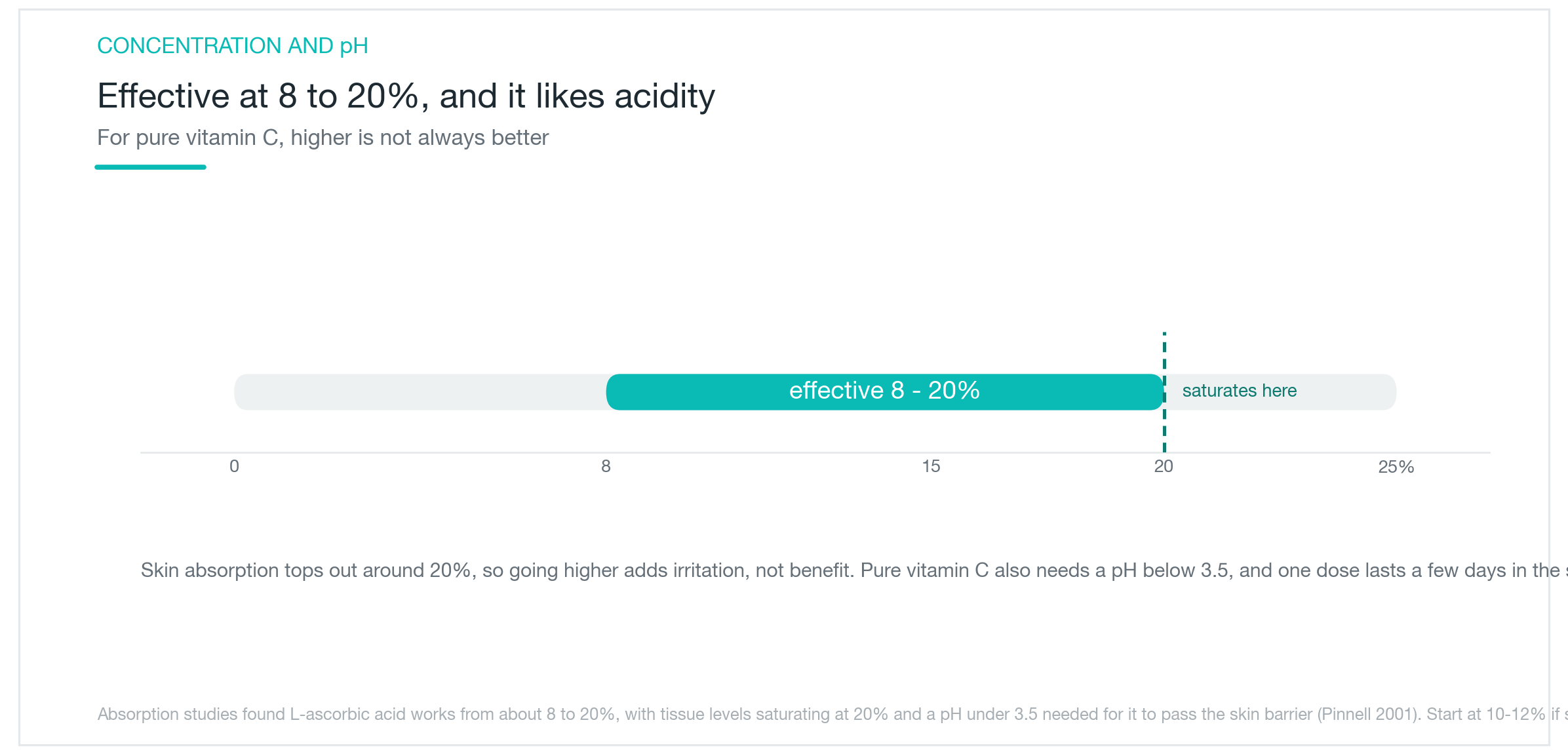
For pure L-ascorbic acid, these two numbers matter. Studies put the effective concentration range at 8-20%, with skin saturation occurring around 20%. Going above that doesn't add more benefit, it just raises the chance of irritation. A higher number isn't always better.
pH also affects how much gets absorbed. Pure vitamin C penetrates the skin barrier most effectively at pH below 3.5. That slight acidity is why a well-formulated L-ascorbic acid serum may cause a mild tingling sensation when you first apply it. That's generally normal.
Practically speaking, starting at 10-12% makes sense if you're new to vitamin C or have reactive skin. Once your skin adjusts, stepping up to 15-20% is fine. Derivatives work at a more neutral pH, so there's no need to think about acidity with those. Since one application keeps working in the skin for several days, using a moderate concentration every day beats reaching for a very high concentration once in a while. The goal is finding a strength you can use daily without irritation, not chasing the biggest number on the label.
Does Using It With Sunscreen Work Better?
This is where vitamin C really pulls its weight. Sunscreen physically blocks UV rays. Vitamin C handles what slips through, neutralizing the free radicals that sunscreen can't stop. The two mechanisms don't overlap, they complement each other.
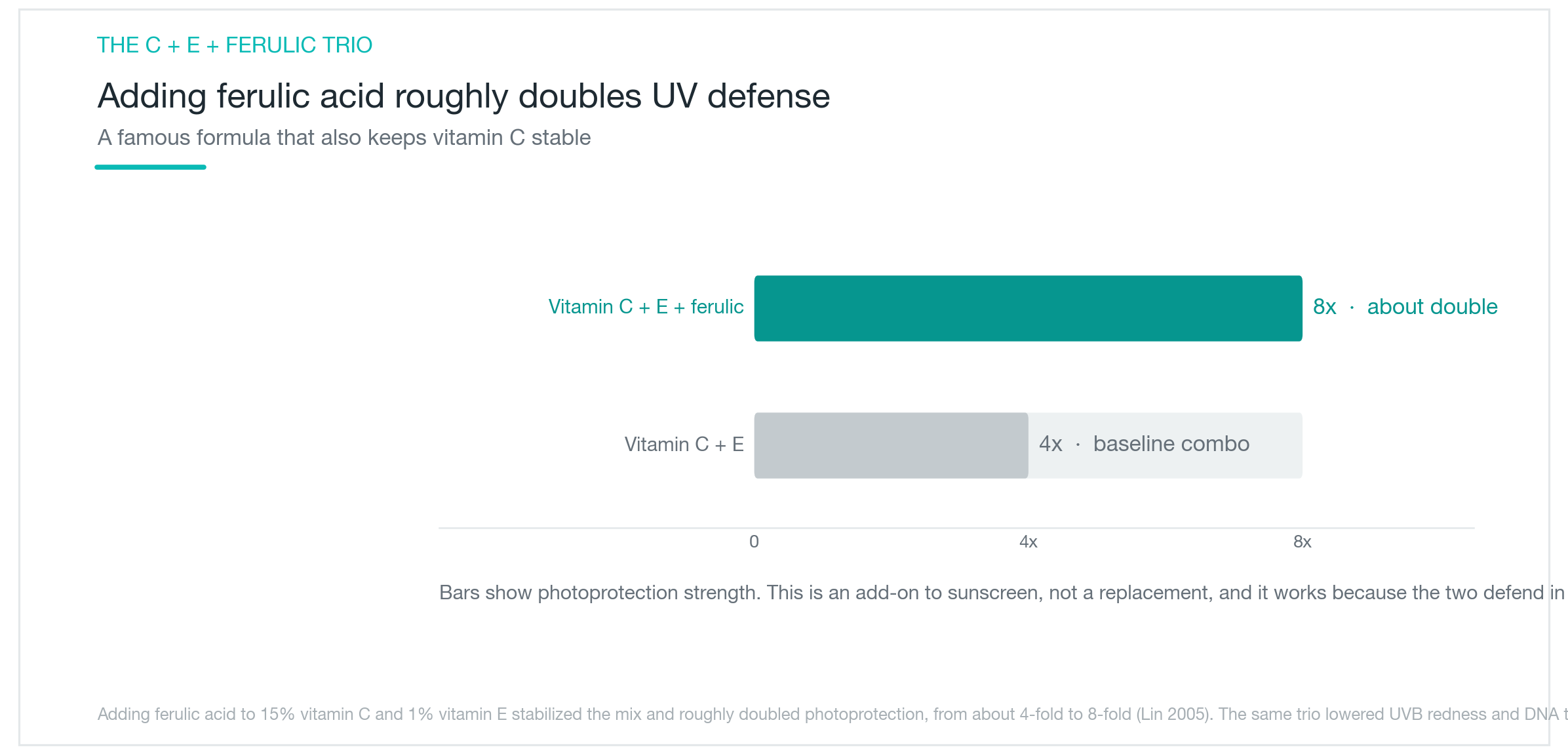
Add vitamin E and ferulic acid to the mix and the effect gets stronger. A well-known study from Duke University found that combining L-ascorbic acid with vitamin E and ferulic acid meaningfully improved ingredient stability and roughly doubled photoprotective efficacy. Other research confirmed this combination reduces UV-induced erythema and DNA damage markers. That's why serums combining all three have become the category standard.
One thing worth being clear about: vitamin C serum isn't a sunscreen replacement. It's a second line of defense layered on top. The two together give you the best coverage for aging prevention. A morning routine with vitamin C followed by SPF means antioxidant protection running all day, and the vitamin C catches any photodamage that sunscreen alone might miss.
Visible Changes Show From About 12 Weeks
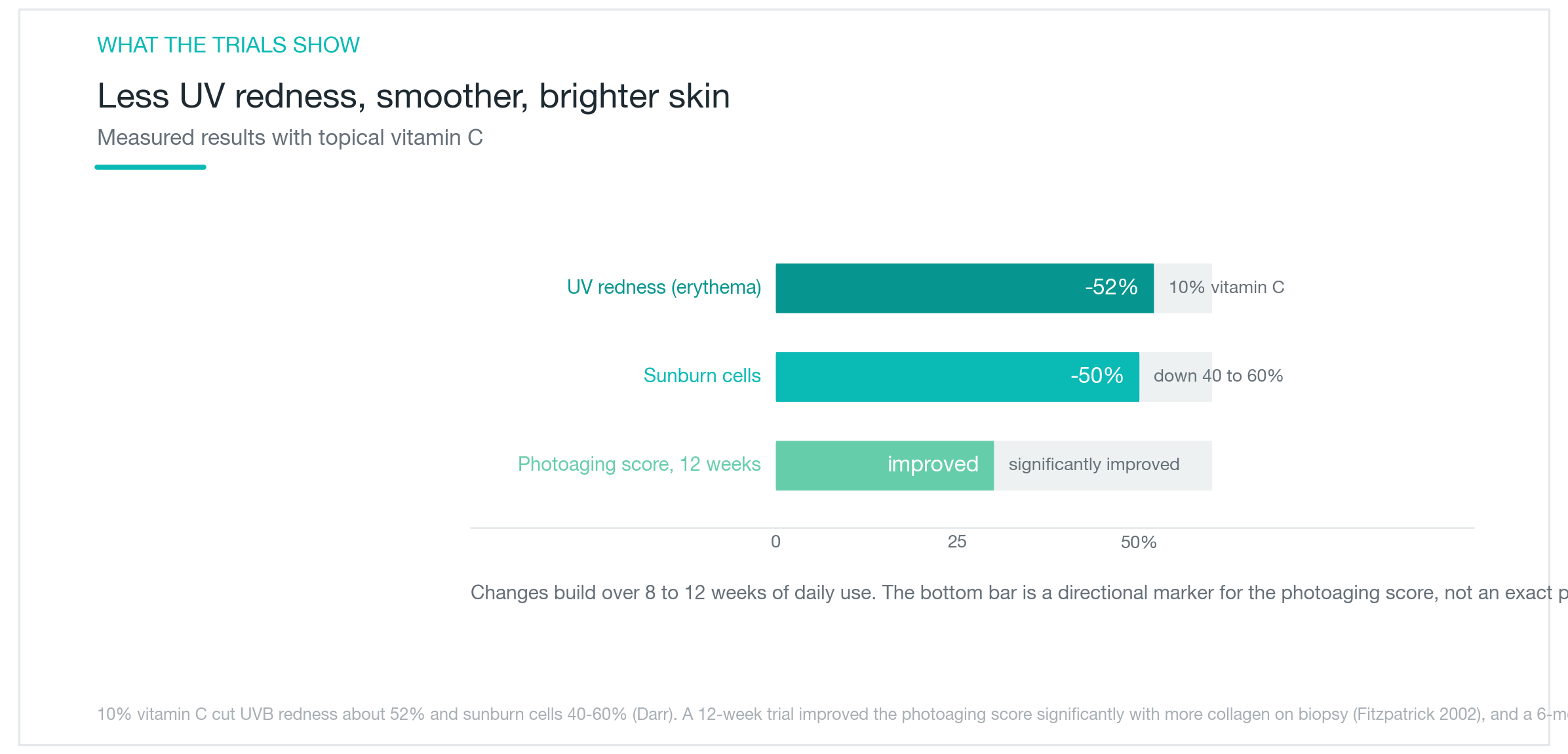
The numbers are encouraging. One study on photoaging showed that a pure vitamin C complex formula used for 12 weeks produced statistically significant improvements in photoaging scores, with biopsies confirming increased collagen levels. A double-blind trial using 5% vitamin C cream over 6 months showed a reduction in deep lines and a visible improvement in skin texture.
The UV-protective effects show up in the numbers, too. Skin treated with 10% vitamin C reduced UV-induced erythema by roughly half and saw substantial decreases in damaged cells. On the brightening side, trials in melasma patients using vitamin C consistently show measurable pigment reduction, which is good news for anyone dealing with uneven tone.
These results don't appear overnight. Most studies see visible changes after 8-12 weeks of consistent use. But the direction is clear: brighter tone, smoother texture, and slower visible aging. What adds credibility is that these findings come from placebo-controlled trials, not marketing claims. Small daily habits compound into real results over time.

Order of Application and How to Store Vitamin C Serum
Order and storage both affect how much benefit you get. Morning is the best time to apply vitamin C. Since it's working against UV damage and environmental oxidative stress throughout the day, applying it before you're exposed to those things makes the most sense. After cleansing and drying your face, apply a thin layer, then follow with moisturizer and sunscreen.
If you're also using retinol, splitting them between morning and evening works well. Vitamin C in the morning, retinol at night. You get the antioxidant benefit during daylight hours and the cell renewal work overnight, without the two competing.
Storage makes a difference with L-ascorbic acid in particular. It degrades with light and air exposure. If your serum has shifted from pale yellow to orange or brown, that's a sign efficacy has dropped. It won't harm your skin, but you won't be getting much from it. Opaque packaging or airless pump bottles help extend shelf life, and keeping the bottle somewhere cool and dark helps too. Morning application, SPF finish, and good storage: get those three basics right, and you'll get noticeably more out of whatever formula you're using. None of it is complicated, and the results justify the habit.
Was this helpful?
About this article
Written by a practising aesthetic physician and intended for general education — not a substitute for individual medical advice.
Read next
Does Vitamin C Serum Work on Spots and Firmness?
Vitamin C serum has a reputation for fading dark spots and firming skin, but it also carries a warning label: it oxidizes fast and loses potency once it does. This piece walks through how vitamin C actually curbs melanin and protects collagen, why the molecule is so unstable to begin with, and how to pick a formula that gets around the problem.
By Dr. Lee

Sunscreen SPF and PA Differences: How Much Should You Apply?
Summer sunlight splits into UVB, which burns the skin red, and UVA, which quietly breaks down collagen deep inside. Here is what SPF and PA actually block, how to apply sunscreen the right way, and how antioxidants round out summer skin care.
By Dr. Kim

Nasolabial Fold Treatment: Which Is Right for You, Filler or Thread Lift?
Whether your nasolabial folds come from sagging, lost volume, or aging skin decides whether filler, thread lifting, or a collagen stimulator is the right call. Here is what actually works for each cause, how long the results hold, and how to stay safe around the vessels beside the nose, all explained simply with real study numbers.
By Dr. Lee