Oral Collagen: Results, How Long to Take It, and Eye Wrinkle Improvement
By Dr. Lee7 min read

Oral collagen supplements are consistently among the best-selling beauty wellness products on the market. Search for reviews and you'll find two camps: "It all just gets digested, there's no way it reaches your skin" and "I've been taking it for months and my skin genuinely looks better." So which is it?
The honest answer sits somewhere in the middle. Collagen you swallow doesn't travel to your skin intact. But during digestion, specific small fragments are absorbed into the bloodstream and send measurable signals to skin cells. Pooled across clinical trials, the evidence shows a modest, real improvement in hydration and elasticity. Here's how the mechanism works, what the numbers actually say, how much to take and for how long, and what to pair it with.
Does the collagen you eat reach the skin?
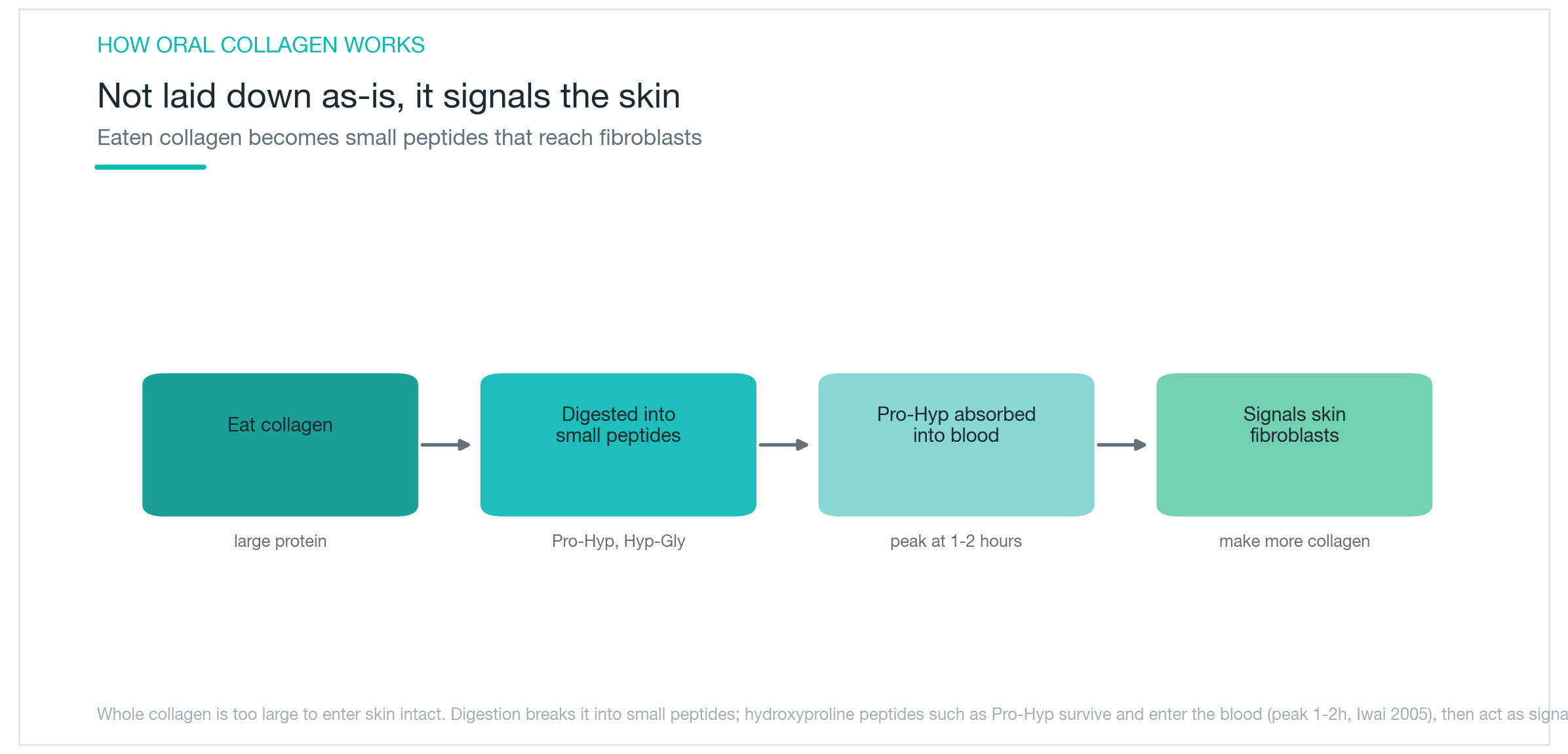
This is where the misconception starts. Collagen is a large protein molecule, and like any protein, it's broken down in the stomach and intestines. The idea that intact collagen fibers travel through your bloodstream to your skin is not how digestion works.
But here's the key piece. When collagen is broken down, it produces very small fragments (dipeptides like Pro-Hyp, or proline-hydroxyproline) that resist further digestion and get absorbed into the bloodstream. In healthy adults, these fragments have been detected in circulation within 1-2 hours of ingestion.
What makes this interesting is that Pro-Hyp isn't just raw material. Cell studies show it stimulates dermal fibroblasts, the collagen-producing factories in your skin, promoting their migration and proliferation. So oral collagen doesn't directly build new collagen. It sends a biological signal to skin cells to produce more of their own. Once you understand the mechanism, it becomes clear why results take time: the cells need weeks to act on that signal, which is why you're looking at a minimum of two months, not two weeks.
How much do hydration and elasticity improve?
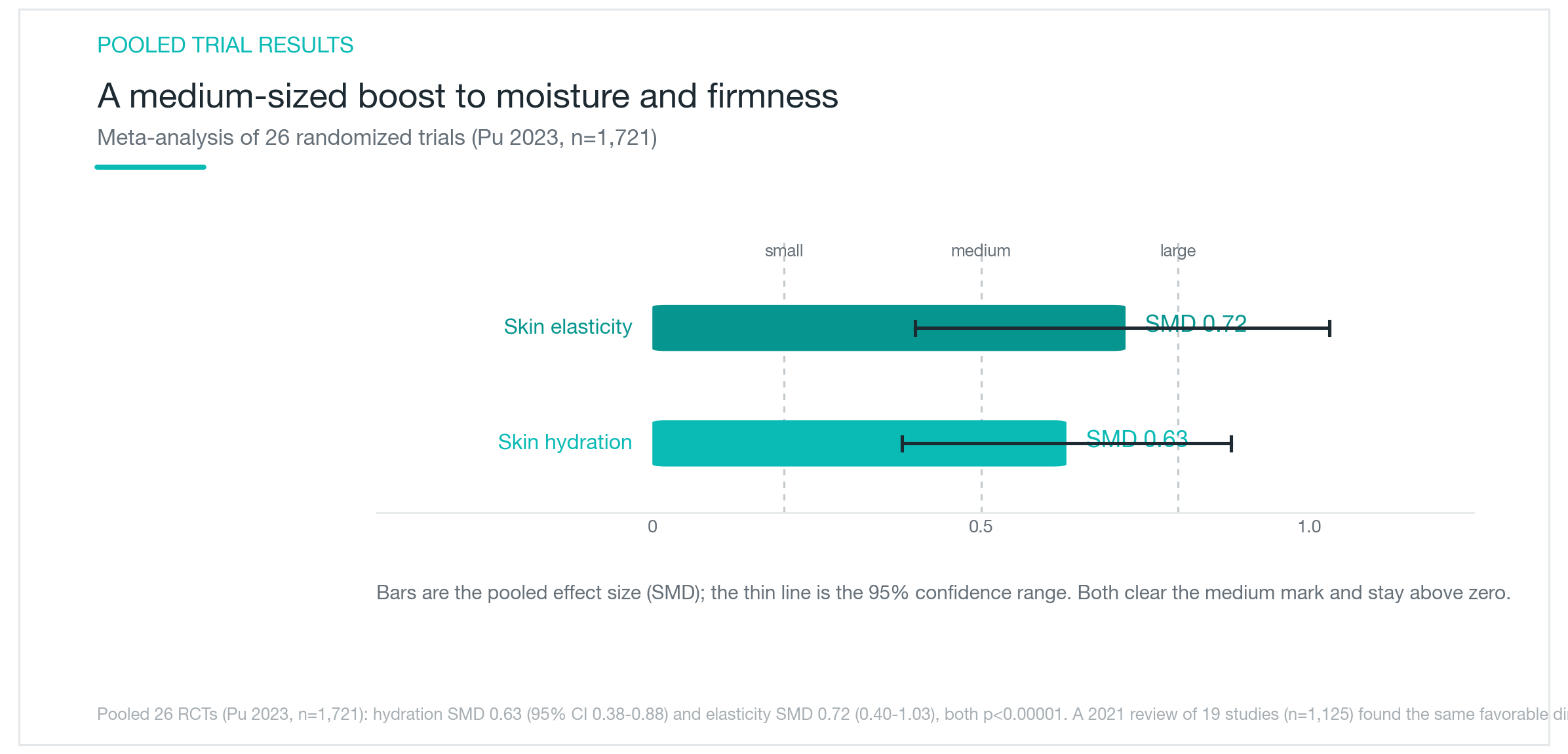
The evidence base is more substantial than you might expect. A 2023 meta-analysis pooled 26 randomized controlled trials with 1,721 participants and found that oral collagen supplements significantly outperformed placebo for both skin hydration and elasticity. The effect size, measured as standardized mean difference (SMD), landed in the moderate range for both outcomes. Not trivial.
A separate large-scale analysis from 2021, covering 19 studies and 1,125 participants, pointed in the same direction: collagen outperformed placebo across hydration, elasticity, and wrinkle scores. When independent analyses consistently point in the same direction, the evidence carries more weight.
Individual studies show varying effect sizes, partly because collagen sources, molecular weights, and measurement methods differ. But when you look across all the trials, the overall picture consistently supports a modest, measurable benefit for hydration and elasticity. A moderate SMD means changes you can detect with instruments, even if the mirror doesn't reveal an overnight transformation. Think steady, gradual improvement rather than dramatic overnight change.
Study results on eye wrinkle improvement
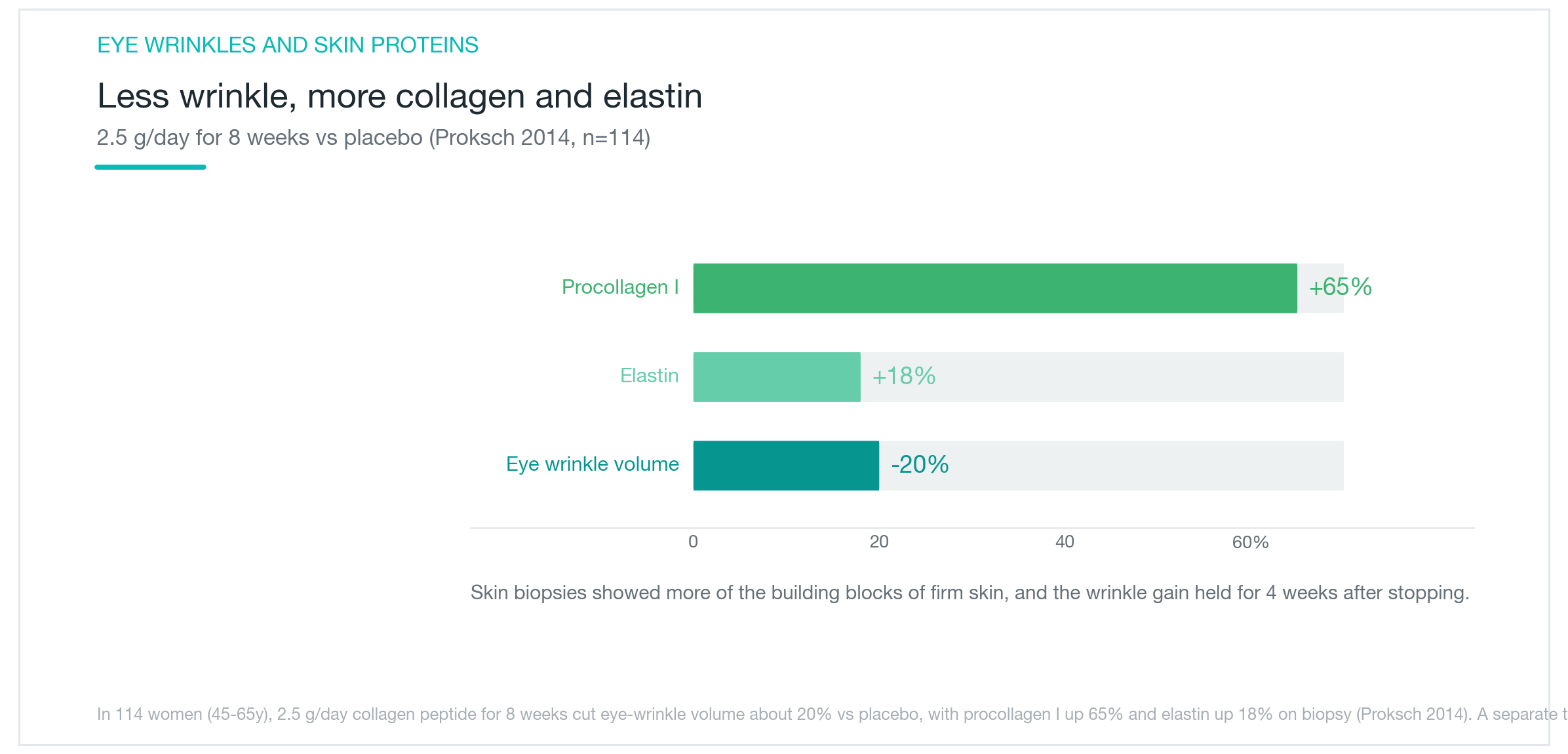
One well-cited study looked directly at wrinkles. In 114 women aged 45-65, taking 2.5 g of collagen peptides daily for 8 weeks reduced eye wrinkle volume by approximately 20% compared to placebo. The measurement was instrument-based, not subjective, which adds credibility.
The tissue analysis behind that result is particularly compelling. Procollagen, the precursor to mature collagen, increased by 65%, and elastin by 18%. Those numbers align closely with the signaling mechanism described above: oral collagen prompts fibroblasts to build more structural proteins. And notably, some of that effect persisted four weeks after supplementation ended.
A separate study using low-molecular-weight collagen found that 1 g daily for 12 weeks significantly improved hydration, wrinkle scores, and elasticity compared to placebo. Consistent findings across different formulations strengthen the case. The picture for wrinkles is the same as for hydration: real but gradual. Think subtle improvement over months, not the kind of visible lift you'd get from a clinical treatment.
How much should you take each day, and in what form?
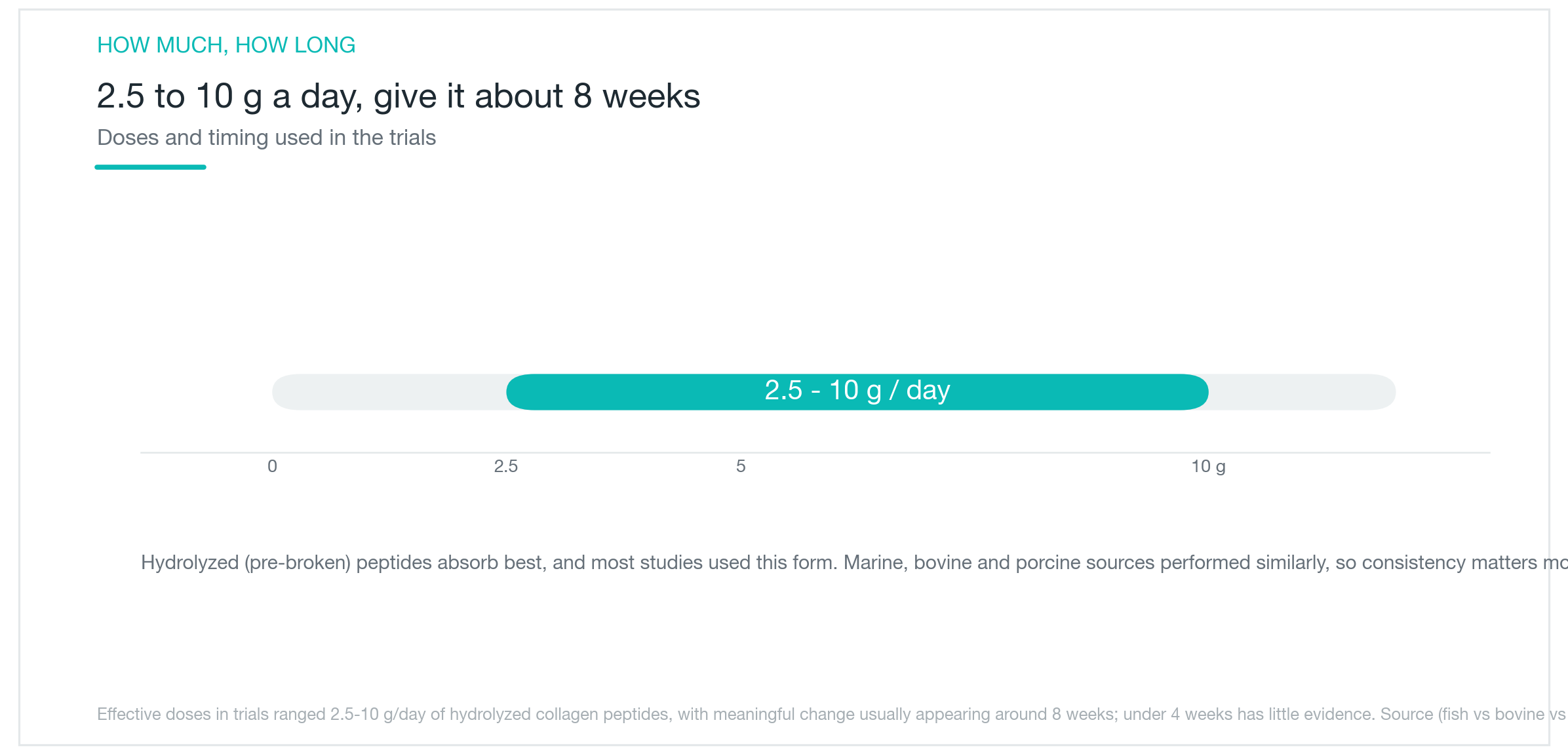
Studies that produced positive results generally used 2.5-10 g daily. Most products on the market fall within this range per serving, so following the label dose once a day is a reasonable approach. There's no clear evidence that doubling the dose delivers proportionally greater results.
Duration matters more than most people realize. In the majority of trials, meaningful changes emerged around the 8-week mark. Studies shorter than 4 weeks don't give you enough data to judge. The practical takeaway: plan for at least two months of consistent daily use before evaluating whether it's working. Taking it at the same time each day makes the habit easier to stick to.
The form matters, too. Hydrolyzed collagen peptides, collagen that's already been broken into smaller fragments, are better absorbed than intact collagen protein, and most clinical trials used this form. Marine collagen is often marketed as superior to bovine or porcine, but pooled meta-analyses haven't found a clear difference in outcomes by source. Consistency over time matters more than which animal the collagen came from. Bone broth and gelatin contain collagen, but their peptide content and molecular weight vary too much to match what's been tested in standardized clinical trials.
Can you trust studies funded by manufacturers?
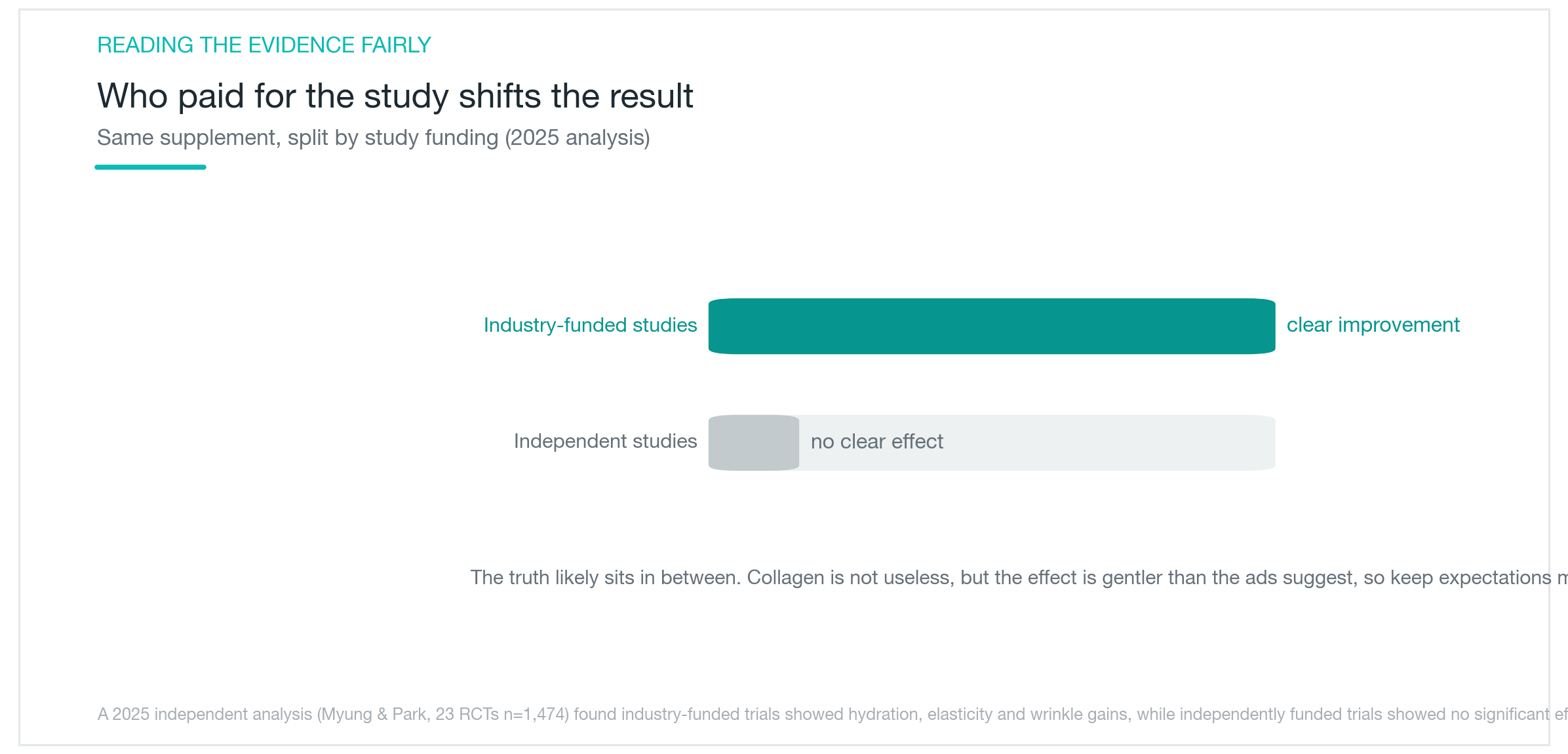
One thing worth knowing: a significant portion of collagen research has been funded by companies that sell the product. A 2025 analysis broke down results by funding source, and the pattern was clear. Industry-sponsored trials consistently reported improvements in hydration, elasticity, and wrinkles, while independent studies with no financial ties showed weaker effects.
This isn't unique to collagen; it's a recurring pattern across supplement research. The practical read: the truth probably lands somewhere between the two. Oral collagen is unlikely to be useless, but it's also unlikely to be as dramatic as sponsored study headlines suggest.
A reasonable frame: oral collagen is a supplement to your routine, not a replacement for dermatology. The evidence supports a modest, gradual improvement in hydration and elasticity. Side effects are minimal, it's easy to take, and the investment isn't dramatic. With calibrated expectations, it's a sensible daily habit.
What to take alongside it and for how long
A couple of pairings make a genuine difference. First, vitamin C. Your body cannot synthesize collagen without it; vitamin C acts as an essential cofactor in the process. Without adequate vitamin C, even well-absorbed collagen peptides can't be fully utilized by fibroblasts to build new structural proteins. Taking vitamin C alongside your collagen is a simple upgrade with a solid biological rationale.
Second, it helps to know what collagen isn't. It's not a complete protein because one essential amino acid is missing, so it's not a substitute for protein from whole foods like meat or eggs. The skin benefits come from signaling pathways rather than raw nutritional supply. Get your protein from regular food as usual, and think of collagen as something separate.
Oral collagen suits people who want to support skin hydration and elasticity as part of a consistent daily routine. It won't reverse aging on its own. It does its best work layered on top of fundamentals: broad-spectrum SPF to prevent photoaging, adequate water intake, and a reasonably balanced diet. Give it at least two months, pair it with vitamin C, and track changes gradually rather than expecting a dramatic shift.
Was this helpful?
About this article
Written by a practising aesthetic physician and intended for general education — not a substitute for individual medical advice.
Read next

Restylane Vital Water-Glow Injection: Results, Number of Sessions, and How Long It Lasts
What Restylane Vital actually is, how NASHA hyaluronic acid differs from a standard filler, what the clinical data shows for hydration and skin texture, how many sessions you need and how often, how long results last, and which skin concerns it's best suited for, with no exaggeration.
By Dr. Kim
Belotero Revive and SkinVive: Differences and Results Compared
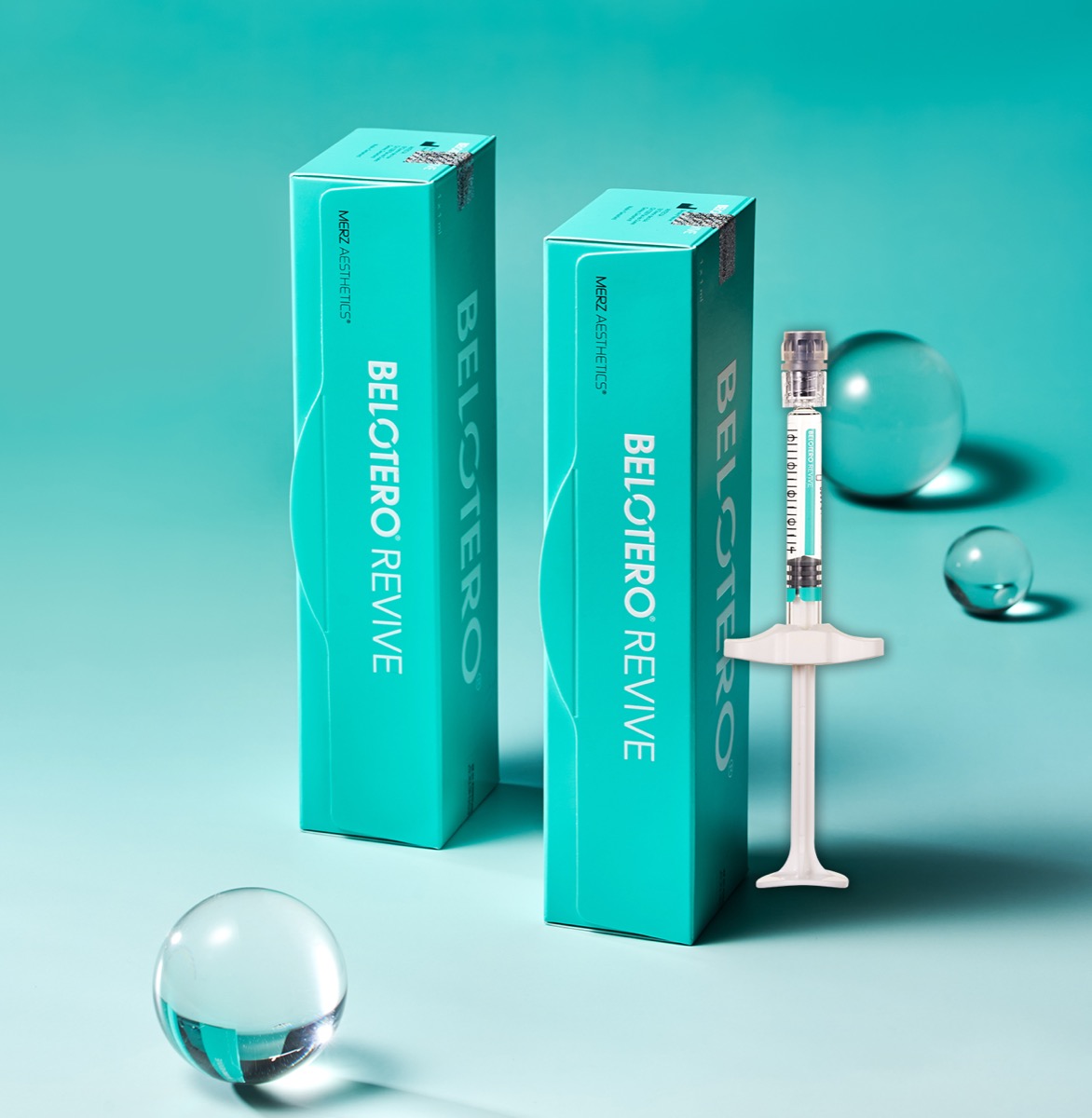
Belotero Revive combines hyaluronic acid with glycerol in a CPM formulation to improve skin hydration and elasticity, not volume. Here's what the clinical data actually shows about how long results last and how it compares to SkinVive.
By Dr. Kim
Thermage RF Effect and Duration, Including How It Differs From Ultherapy
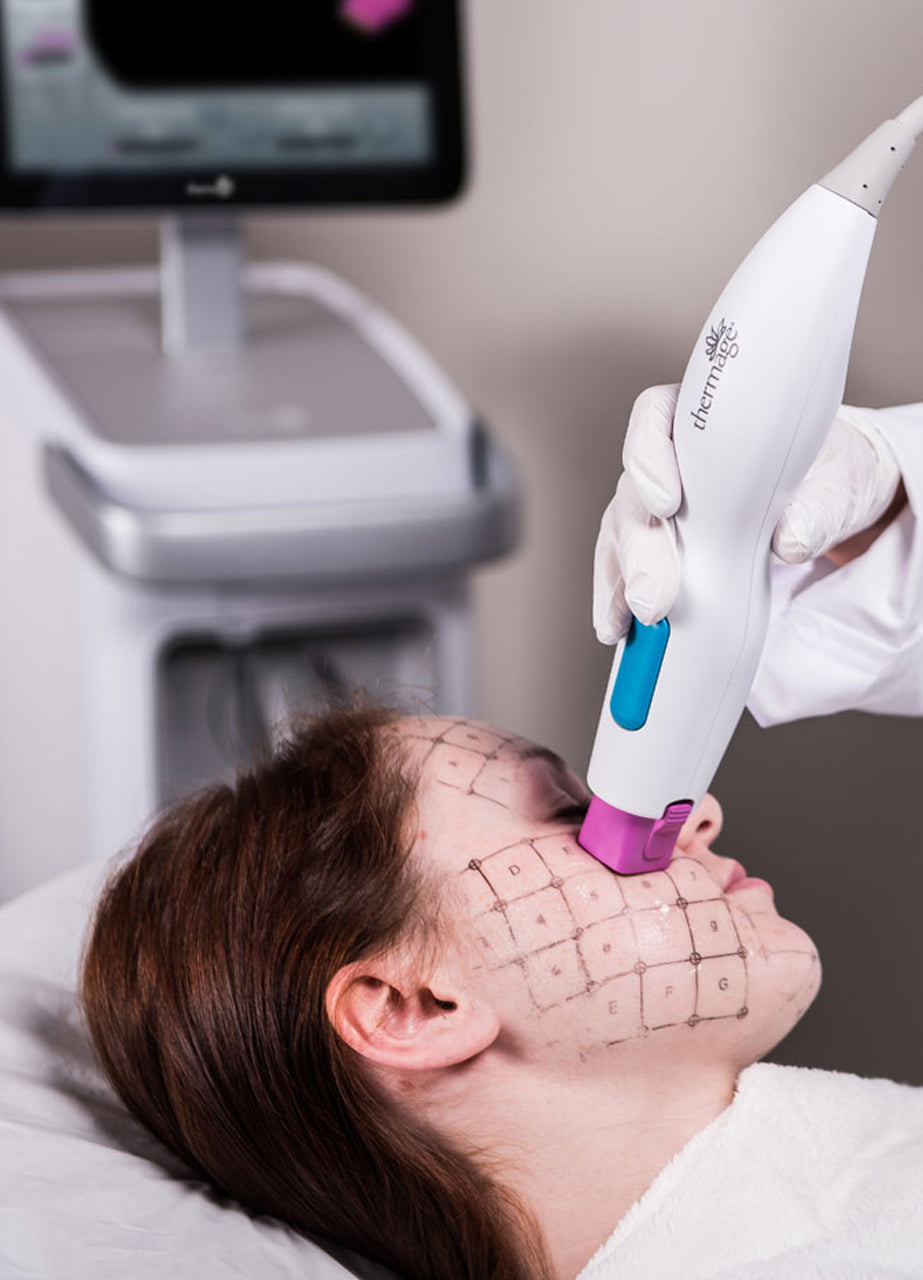
A clinical look at how Thermage's monopolar RF energy triggers collagen contraction and neocollagenesis to tighten skin, what biopsy studies confirm, how results compare to Ultherapy, how long they realistically last, and the side effects worth knowing about.
By Dr. Kim