Profhilo Versus Filler and Rejuran: Differences and Results Compared
By Dr. Lee7 min read
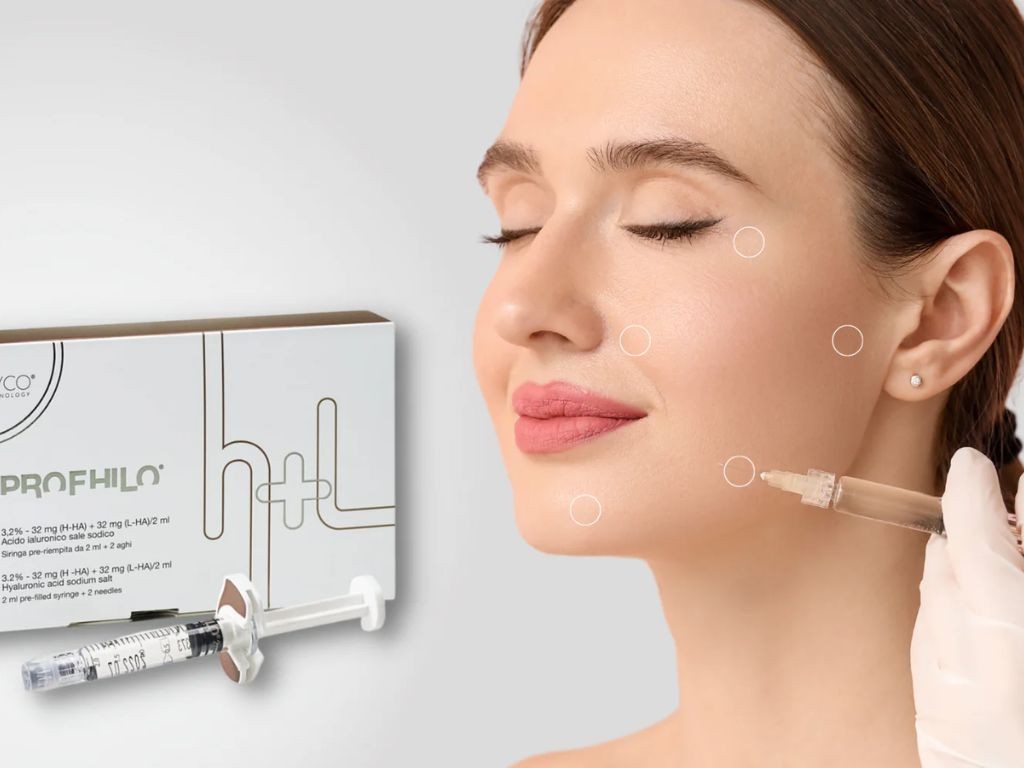
When skin starts looking dull, feeling rough, and collecting fine lines that weren't there a few years ago, Profhilo tends to come up in conversation. The promise, that a single injectable can firm and hydrate the whole face, sounds appealing but also raises obvious questions: is this a filler? Is it like Rejuran? And does it actually do what it claims?
The short answer: Profhilo is a hyaluronic acid injectable, but it's neither a filler that replaces lost volume nor a salmon-derived regenerative like Rejuran. It belongs to a category called bio-remodeling, designed to improve overall skin quality, hydration, and resilience rather than sculpt or lift specific areas. Results come on gradually and subtly. What makes Profhilo stand out from comparable products is the depth of its safety and efficacy data. Below is everything that matters, starting with how it actually works.
What kind of injection is Profhilo?
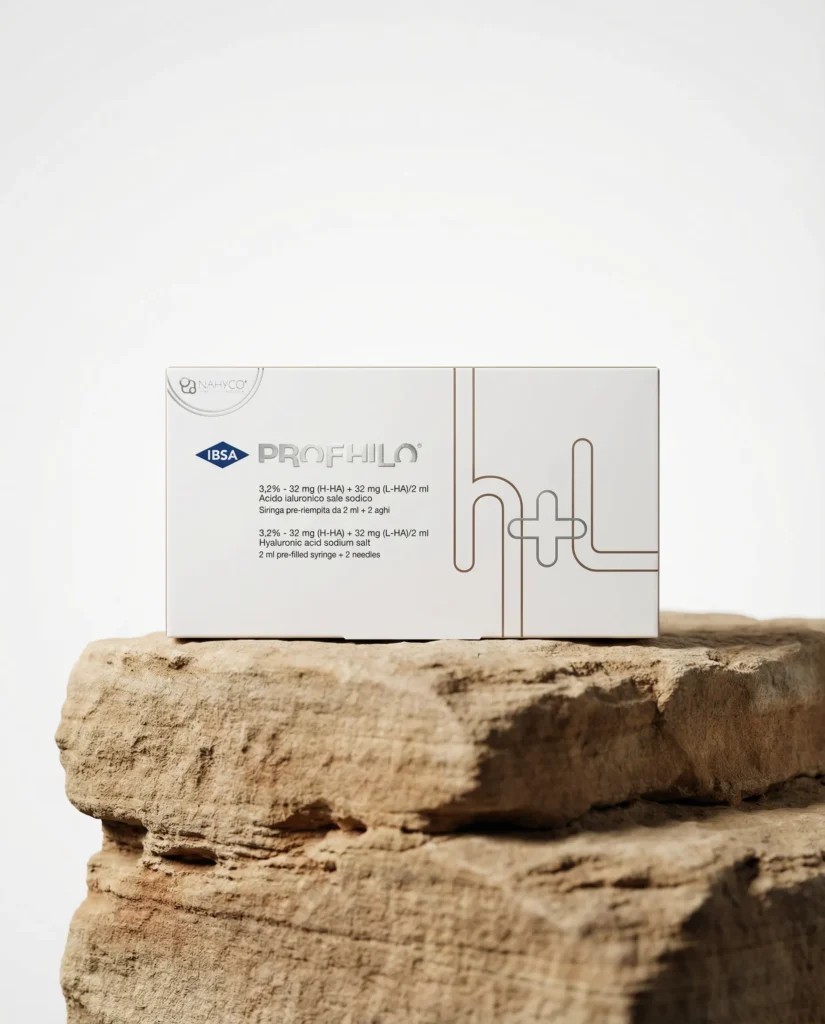
Profhilo is made by IBSA, an Italian pharmaceutical company. Its active ingredient is hyaluronic acid, or HA, the same molecule your dermis naturally produces to bind water and maintain skin's suppleness. But the way Profhilo is formulated sets it apart from conventional HA products.
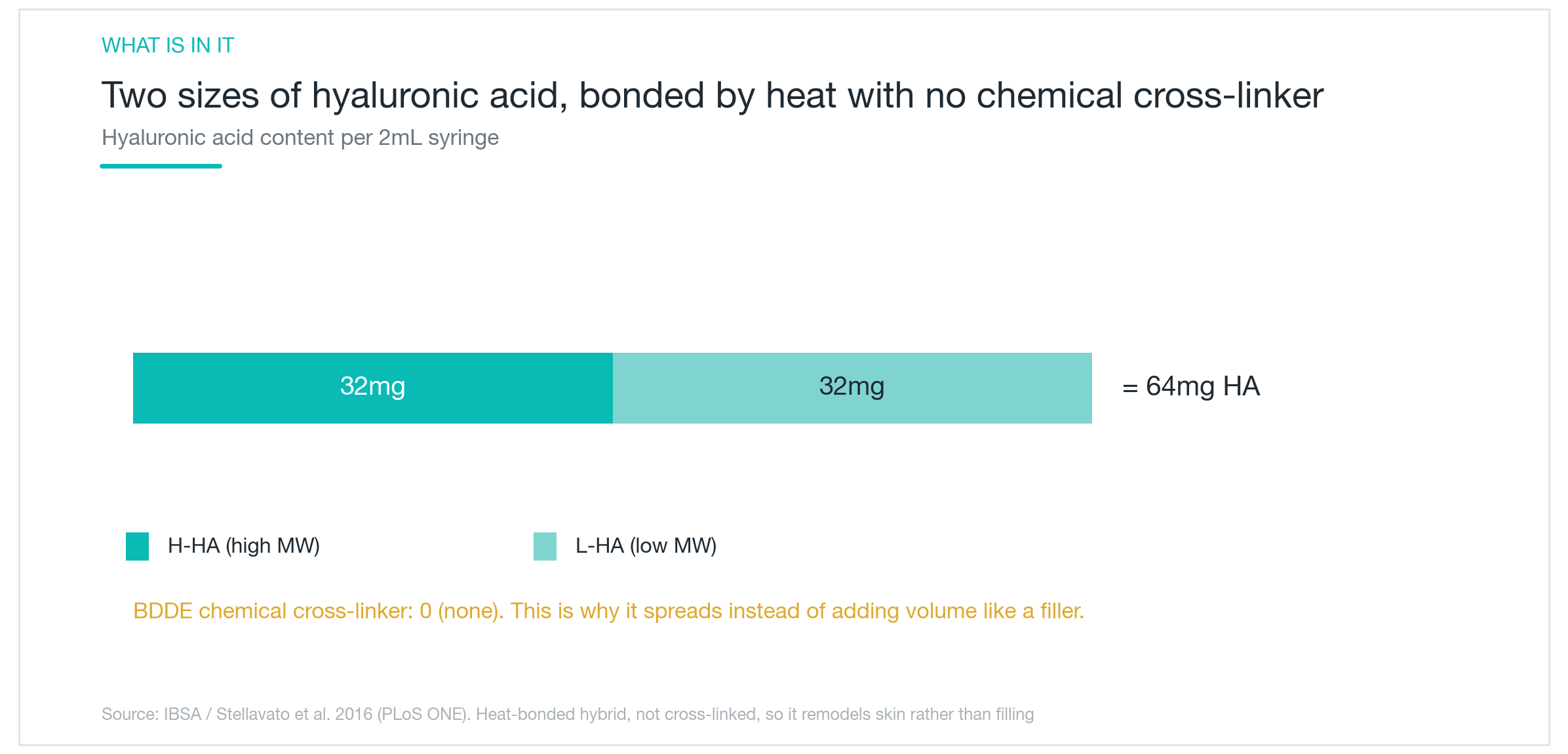
Standard dermal fillers combine HA with BDDE, a chemical crosslinker that bonds the molecules into a firm, stable gel designed to stay in one place and add volume. Profhilo takes a different approach entirely. It uses 32 mg of high-molecular-weight HA (H-HA) and 32 mg of low-molecular-weight HA (L-HA) combined into 64 mg total, with no chemical crosslinker at all. The two molecular fractions are bound using heat alone, through a patented process called NAHYCO technology. The result is a low-viscosity product that spreads readily through tissue instead of staying fixed.
Once injected, each fraction plays a distinct role. The H-HA settles into the deeper dermis, releasing slowly and providing structural support and water retention over time. The L-HA disperses upward toward the surface, improving hydration closer to the skin's exterior. Because the formulation flows well, it can be placed at just 5 points on each side of the face (10 total), each receiving 0.2 mL. These standardized injection sites are called BAP (Bio Aesthetic Points). The standard course is 2 sessions spaced 4 weeks apart, followed by maintenance every 6 months or so.
How is it different from filler and Rejuran?
The shared ingredient can be misleading. Profhilo contains 64 mg of HA, the same molecule used in fillers, but the absence of BDDE crosslinking is the defining difference. Crosslinked fillers are engineered to hold position and restore volume in specific areas: sunken cheeks, deep nasolabial folds, lips. Profhilo, lacking that crosslinked structure, spreads widely through the dermis instead, working on overall skin quality rather than targeted volume.
Rejuran is a different story altogether. It's derived from salmon PDRN (polynucleotide) and works primarily through tissue repair and barrier restoration, whereas Profhilo's mechanism centers on HA-driven hydration and structural support. Both aim to improve skin quality, and their indications overlap, but they start from entirely different ingredients and biological mechanisms. Some patients receive both. Deciding which is appropriate depends on what the skin actually needs.
To put it plainly: for volume loss in specific areas, a volumizing filler is the right conversation. For significant laxity or sagging, lifting procedures are more appropriate. Profhilo sits in a different lane, best suited for skin that's lost overall vitality, looks dull, feels rough, and shows early elasticity loss without dramatic structural change. One important caveat: no head-to-head clinical trial has directly compared Profhilo against Rejuran under controlled conditions, so claiming one is clearly superior to the other isn't supported by the data.
Research data confirming its effects
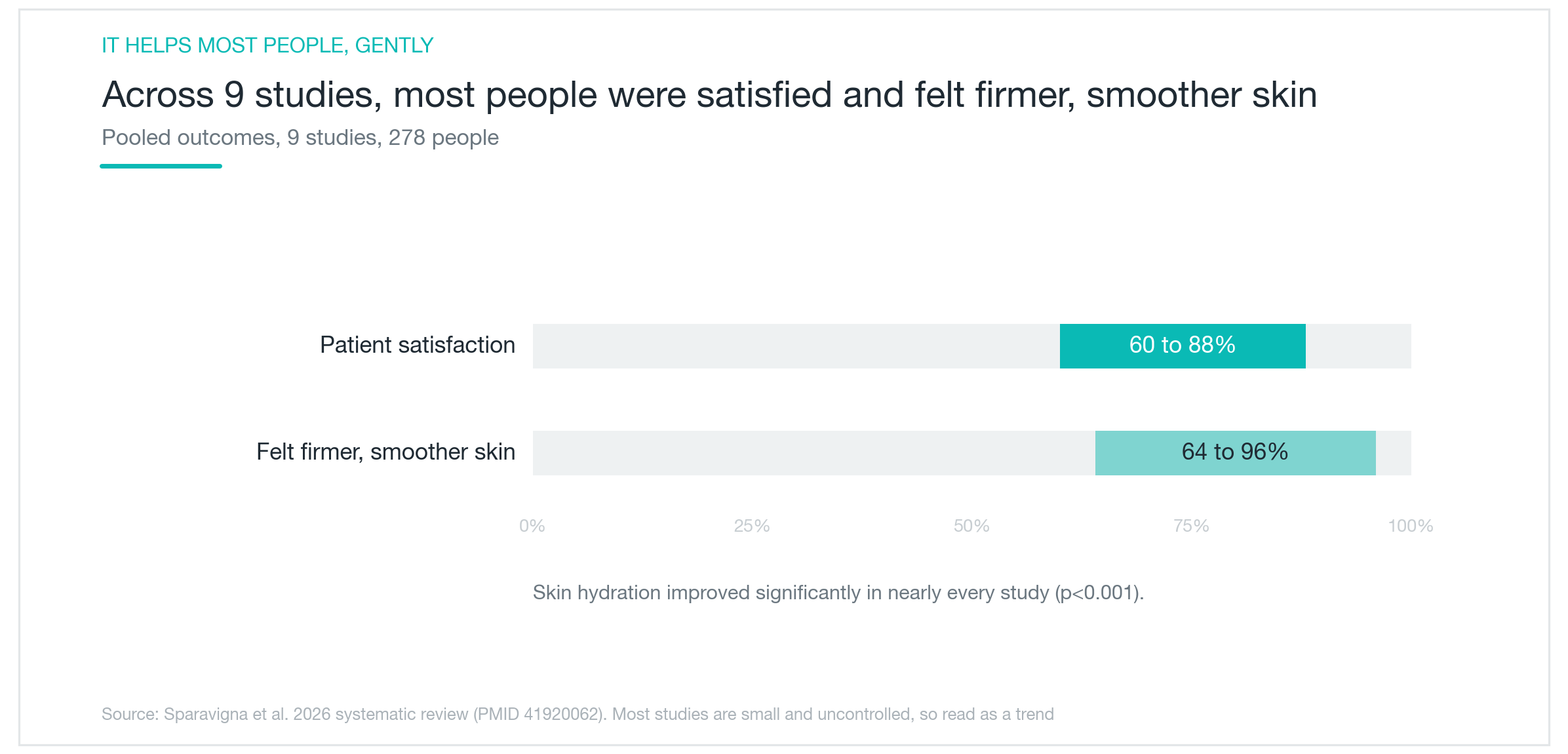
One genuine advantage Profhilo has over many skin boosters is the volume of published data behind it. The chart above reflects a pooled analysis of 9 studies covering n=278 patients (Sparavigna 2026). Patient satisfaction ranged from 60 to 88%. Perceived improvement in lifting and skin texture fell between 64 and 96%. Skin hydration showed statistically significant improvement in nearly every study reviewed.
Two things deserve honest acknowledgment. First, the collagen and elastin figures sometimes quoted in marketing materials, showing dramatic increases in these structural proteins, come from in-vitro cell culture experiments, not from human skin. Whether the same magnitude of change occurs in living dermis hasn't been confirmed at equivalent scale. Second, most of the clinical studies behind Profhilo involve relatively small cohorts and lack placebo controls. The evidence is meaningful and accumulating, but it doesn't carry the weight of large randomized trials.
The sequence and timeline of effects are worth understanding before starting treatment. Hydration typically improves first, becoming noticeable 4 to 8 weeks after the initial session. Skin texture and elasticity changes become clearer over the following month or two after the second session at the 4-week mark. Effects generally persist for about 6 months before gradually fading, which means ongoing maintenance is necessary to sustain the improvement. Profhilo is not a single-session transformation. It works across 2 sessions over a period of months, building a foundation rather than delivering an immediate visible change.
Side effects and who should be cautious
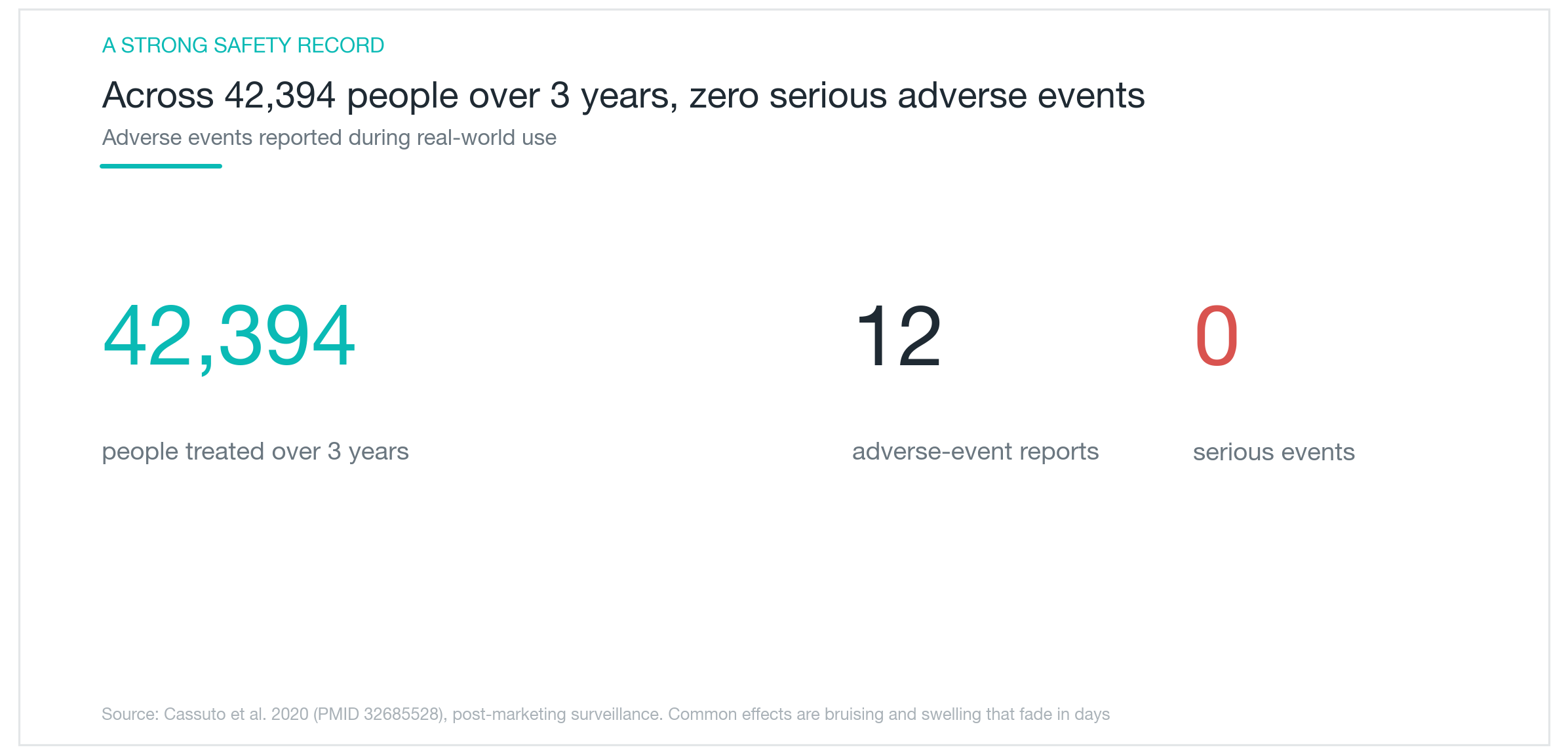
Profhilo's safety profile is one of its most reassuring features. The largest published dataset, from Cassuto 2020, tracked 42,394 patients treated over 3 years and recorded only 12 adverse event reports in that entire cohort, with 0 serious adverse events. That's an exceptionally low signal for any injectable product at that scale.
Common side effects are mild and short-lived: redness, swelling, bruising, and tenderness at the injection sites, all typically resolving within a few days. Because Profhilo contains no BDDE crosslinker, the risk of forming firm palpable nodules is lower than with conventional crosslinked fillers. That said, the same rare vascular risk that applies to any HA injectable applies here: if product inadvertently enters a blood vessel, it can cause occlusion. This is uncommon but serious, which is why receiving treatment at a facility equipped with hyaluronidase, the enzyme that rapidly dissolves HA in an emergency, is important. The reversibility of Profhilo with hyaluronidase is also a safety advantage compared to non-HA injectables.
Certain patients should not receive Profhilo. Contraindications include pregnancy and breastfeeding, active infection or inflammation at the planned injection site, known bleeding disorders, and current use of anticoagulants. If any of these apply, treatment should be postponed or avoided.

Who is it right for?
Profhilo tends to perform best in patients whose skin has lost overall quality without major structural change: dullness, surface roughness, loss of plumpness, shallow elasticity decline. The 40s and 50s are the most common range, when skin texture is clearly declining but significant sagging hasn't set in yet. Beyond the face, it's also used on the neck and the backs of the hands, where fine lines and crepey texture develop early.
It's equally important to be specific about where Profhilo won't deliver. If the goal is filling sunken cheeks or deep folds, a volumizing filler is the right tool. For meaningful skin laxity, lifting treatments are more appropriate. Profhilo doesn't add volume and it doesn't lift. Patients who come in expecting a dramatic before-and-after change from a single session tend to be disappointed. Those who approach it as a gradual two-session investment in underlying skin quality, visible over 2 to 3 months, tend to find it worthwhile.
In short, Profhilo occupies a specific space: improving overall skin condition when the problem isn't structural volume loss or sagging but a general decline in quality and vitality. The clearer your sense of what's actually bothering you about your skin, whether it's volume, laxity, or texture and hydration, the easier it is to judge whether Profhilo is the right fit.
Was this helpful?
About this article
Written by a practising aesthetic physician and intended for general education — not a substitute for individual medical advice.
Read next

Restylane Vital Water-Glow Injection: Results, Number of Sessions, and How Long It Lasts
What Restylane Vital actually is, how NASHA hyaluronic acid differs from a standard filler, what the clinical data shows for hydration and skin texture, how many sessions you need and how often, how long results last, and which skin concerns it's best suited for, with no exaggeration.
By Dr. Kim
Belotero Revive and SkinVive: Differences and Results Compared
Belotero Revive combines hyaluronic acid with glycerol in a CPM formulation to improve skin hydration and elasticity, not volume. Here's what the clinical data actually shows about how long results last and how it compares to SkinVive.
By Dr. Kim

Acrief Acne Cream: Effects, Early Irritation and Back Acne Use
A clear look at what Acrief is, how trifarotene 0.005% cream differs from Differin, whether it genuinely works on trunk acne as well as the face, what the clinical trials show about timeline and irritation, and how to apply it correctly.
By Dr. Lee