Hives: Causes, Care and Why They Keep Coming Back
By Dr. Kim7 min read

Hives, or urticaria, show up as red, swollen welts that itch. Press on one and it usually doesn't fade the way a normal rash would, and within a few hours it might disappear from one spot only to pop up somewhere else. A lot of people wonder why they appear and vanish for no obvious reason, and why some people deal with them on and off for months.
Hives aren't just a surface irritation. They're the result of an immune reaction happening underneath the skin, and the cell driving it all is the mast cell, an immune cell found throughout the skin and mucous membranes. Let's break down why and how these cells react in the first place.
Why Do Hives Form and Itch?
Mast cells sit scattered throughout the skin, and each one stores tiny granules packed with histamine, a compound that widens blood vessels and triggers itch.
When something sets them off, mast cells burst those granules open all at once and release histamine into the surrounding tissue. This process is called degranulation. It works a bit like popping a balloon, with everything packed inside spilling out almost instantly. Once histamine spreads, nearby blood vessels widen and the gaps between vessel walls open up slightly, letting fluid leak into the skin tissue. That's what causes the swelling and redness.
The itch comes from the same mechanism. Histamine directly stimulates nerve endings in the skin, which is why the swelling and itching tend to show up together.
What Triggers Mast Cells?
Mast cells don't burst for no reason. The most common culprit is an antibody called IgE, which the body creates in advance as a kind of tag for a substance it plans to react to.
If the body mistakenly flags a substance as dangerous, it manufactures IgE against it. The next time that substance shows up, IgE sitting on the mast cell's surface picks up on it and sends a signal inward. Think of it like a key fitting into a lock: once the substance binds precisely to IgE, that signal reaches inside the mast cell and flips the switch that bursts the granules.
Mast cells can also react without any IgE involved. Physical triggers like sudden temperature changes or pressure can shake the cell membrane directly and set off the same granule burst. That's why hives can't be explained through a single pathway.
Causes of Acute Hives Within 6 Weeks
Hives are classified as acute when symptoms have been going on for less than six weeks. During this window, the cause can usually be identified. The most common triggers include:
- Food: Proteins in shellfish, nuts, or eggs can trigger IgE and set off mast cells, because the body has mistakenly filed those proteins away as a threat.
- Medication: Antibiotics and NSAIDs (anti-inflammatory painkillers) can stimulate mast cells not just through the IgE pathway, but also by acting directly on the enzymes that regulate inflammation.
- Infections: A viral infection, like a common cold, can put the whole immune system on edge, making mast cells more reactive to stimuli than usual.
- Insect stings or bites: Insect venom contains compounds that stimulate mast cells directly, which is why a sting often produces a strong, localized reaction fairly quickly.
Most of these triggers cause symptoms within minutes, or at most a day or two, of exposure, which makes the cause relatively easy to pinpoint.
Why Is the Cause of Chronic Hives Hard to See?
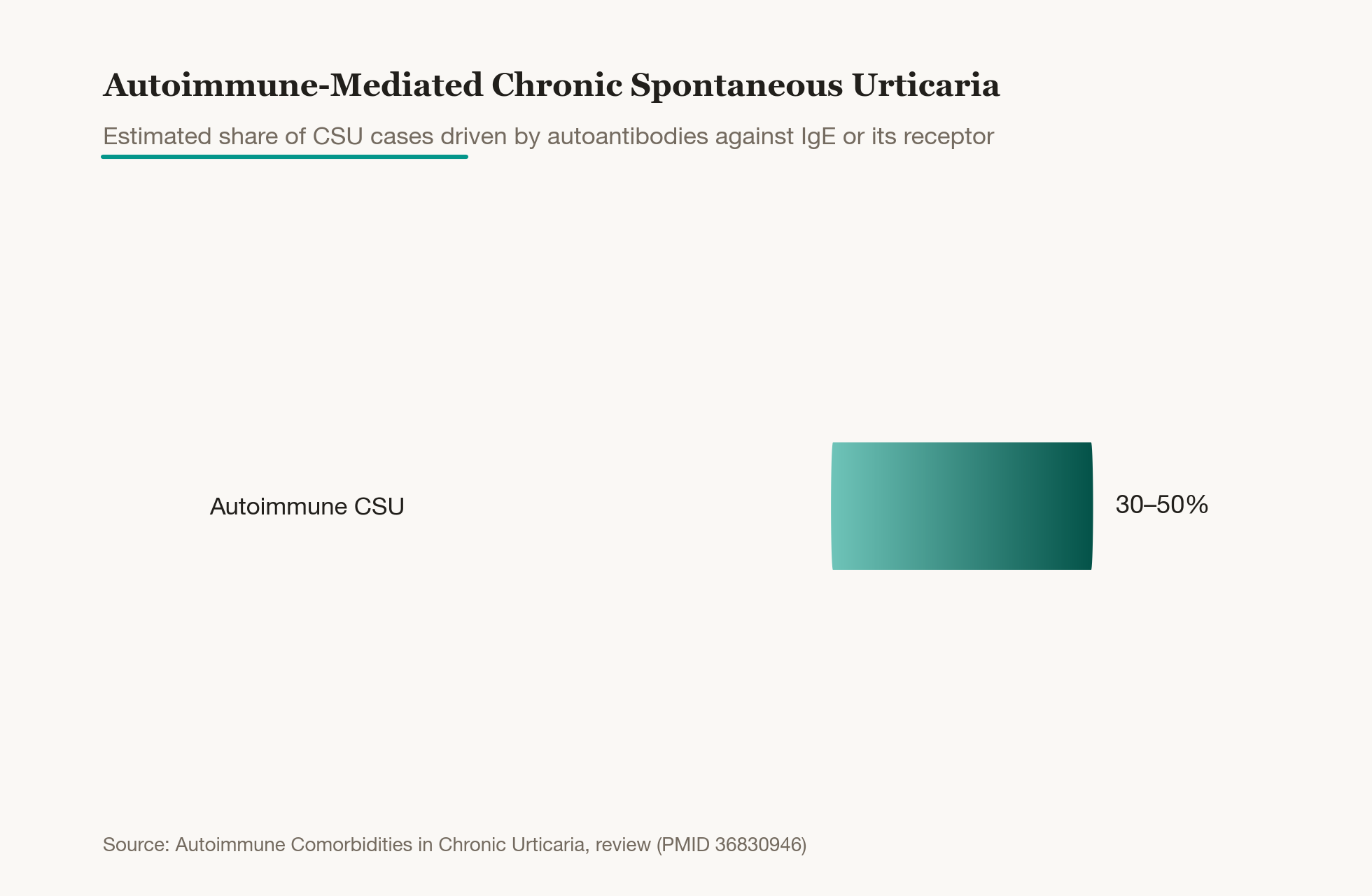
When hives keep recurring for more than six weeks, they're classified as chronic. More than half of chronic cases have no clear external cause.
The reason the cause is so hard to find is that the switch triggering mast cells sits inside the body itself. Recent research points to autoantibodies, antibodies that should normally target outside substances but instead mistakenly recognize receptors on the body's own mast cells and keep stimulating them. In other words, the switch gets pressed over and over from the inside, without any new substance entering from outside. That's why food allergy testing so often turns up nothing in these cases.
What Triggers Physical Hives?
Some hives appear in direct response to a specific trigger, flaring up right when it happens. This type is known as physical urticaria, and the link between the trigger and the symptom tends to be pretty clear.
- Cold air or cold water: A sudden drop in skin temperature makes mast cells in that area read the cold itself as a trigger.
- Tight clothing or pressure: Pressure on the skin physically shakes the mast cell membrane and bursts the granules.
- A rise in body temperature from exercise or a hot shower: Known as cholinergic urticaria, this is thought to happen when nerves around the sweat glands activate and pass that signal on to nearby mast cells.
- Sun exposure: UV light is believed to alter certain substances in the skin into a form mast cells recognize, which is what sets off the reaction.
This type of hives usually settles down within one to three hours once the trigger is removed, so once you identify the specific stimulus, it tends to be fairly manageable.
How Does Stress Affect Hives?
Stress on its own doesn't create hives out of nowhere. What it does, as far as research shows, is lower the threshold at which already-sensitive mast cells react.
When you're stressed, the body releases various neurotransmitters and hormones, and some of these act on receptors on the mast cell surface, making it easier for the granules to burst even with a smaller trigger than usual. That's why a lot of people notice their hives flaring up more during exam season or a busy stretch at work. It's less that stress is creating a new problem and more that it's turning up the sensitivity, so triggers that were already there end up causing a reaction more easily.
How to Manage Hives, and Recovery Time
The key to managing hives is keeping mast cells from releasing histamine in the first place. Antihistamines work by blocking the receptor sites on nerves and blood vessels where histamine would normally bind, so even when histamine is released, its effect ends up muted.
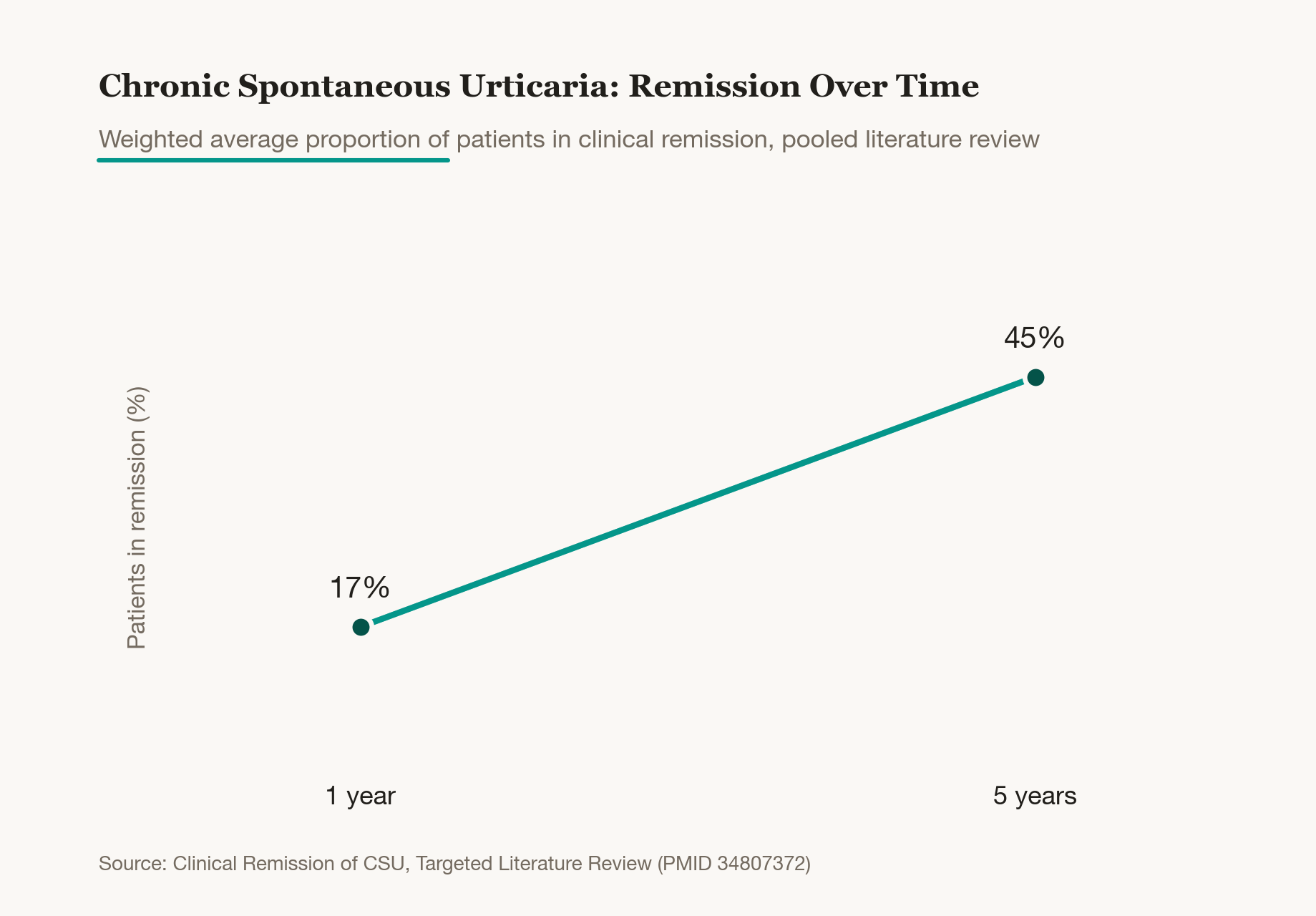
Acute hives typically clear up within a few days to four weeks once the trigger is gone. Chronic hives are a different story, with recovery time varying a lot from person to person. It's common for chronic cases to resolve on their own somewhere between six and twelve months, though some cases run longer or come back, which is why ongoing observation and management matter.
Even when the cause of chronic hives is hard to pin down, gradually cutting back on possible aggravating factors, tight clothing, excess stress, certain medications, is known to help lower how often symptoms show up. Rather than rushing to identify one single cause, it's often more useful to keep track of the signals your body is sending over time.
When symptoms flare up badly, a brief ice pack on the area can narrow the blood vessels and temporarily ease the itching and swelling. That said, for cold urticaria, where cold itself is the trigger, ice can actually make the reaction worse, so it's worth figuring out which type you're dealing with first. Even a quick note of when and under what circumstances the hives showed up can be genuinely useful later on, when narrowing down the cause with a doctor.
References
Korean Dermatological Association, American Academy of Dermatology (AAD), and Ministry of Food and Drug Safety (MFDS).
Was this helpful?
About this article
Written by a practising aesthetic physician and intended for general education — not a substitute for individual medical advice.
Read next

Exosome Treatment Effects: How Are They Different From Stem Cells?
Exosomes are tiny signal packets that cells release into their surroundings, delivering only the messages a stem cell creates rather than the stem cell itself to the skin. Here is a plain look at how exosomes carry regeneration and calming signals, why clinics so often pair them with laser treatments, and how much evidence has actually built up so far.
By Dr. Kim
Pore Scaling: How It Works and How It Differs From Home Care
Pore scaling clears out the sebum and dead skin packed inside pores using a combination of chemical and physical steps. Here is why pores look enlarged in the first place, and how the process brings them back to looking tighter.
By Dr. Lee
Blackheads: Causes, Care and Is It Okay to Squeeze Them by Hand?
Blackheads aren't trapped dirt. They're a plug of sebum and dead skin cells inside the pore that turns dark through oxidation. Here's why extracting them often leaves marks, and which ingredients actually help, explained through the science behind it.
By Dr. Kim