Pore Scaling: How It Works and How It Differs From Home Care
By Dr. Lee7 min read
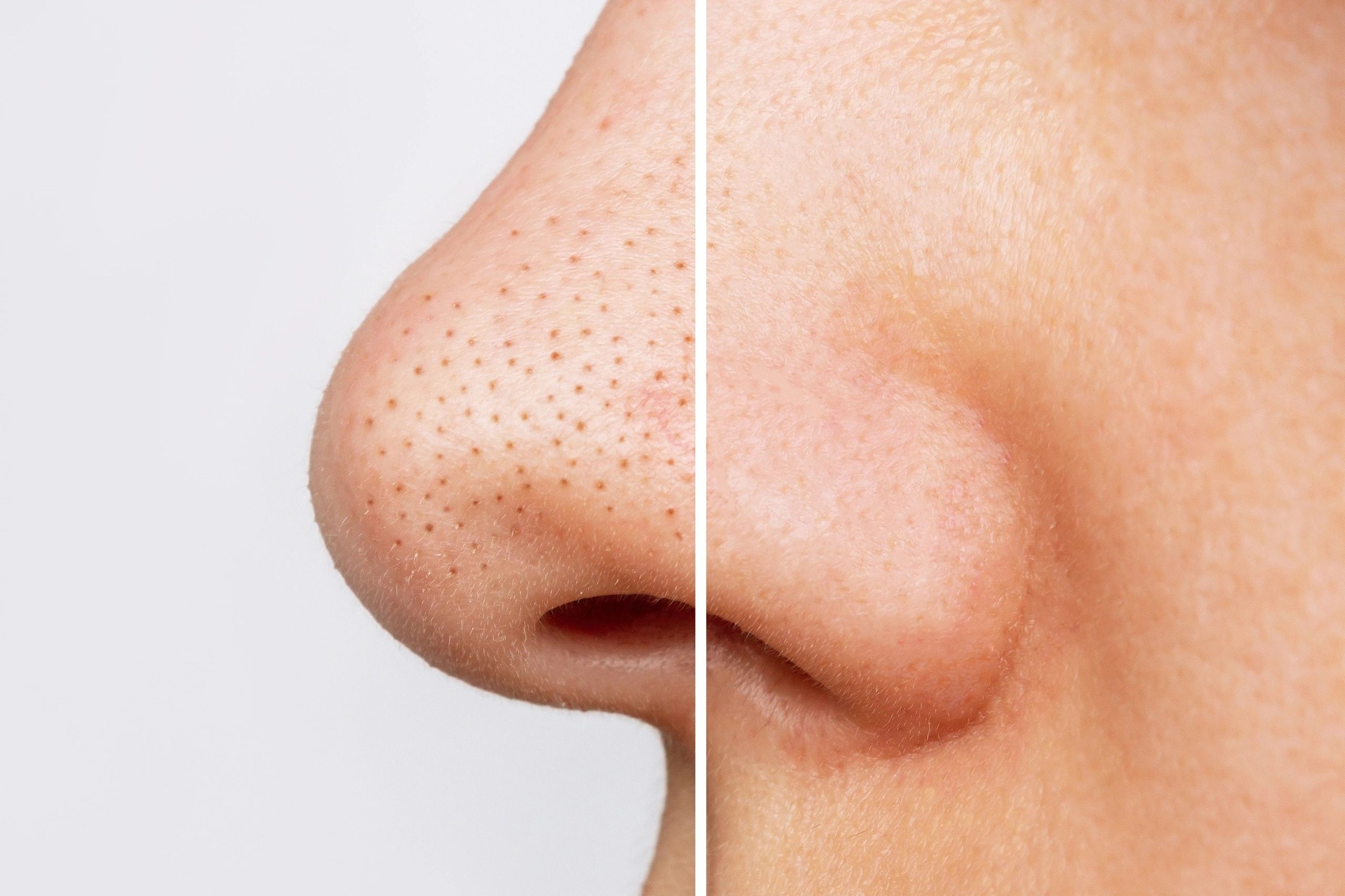
Lean in close to a mirror and the pores around your nose and cheeks can suddenly look much bigger than you remembered. In areas where sebum production runs high, sebum and dead skin cells tend to pack together inside the pore, and the opening stretches to make room for them. This is usually where pore scaling comes in, a treatment offered at dermatology clinics and skin care studios. It clears out the buildup sitting inside the pore, though a lot of people go through the procedure without ever learning what it actually removes or how. Here is the process, step by step, of how sebum and dead skin get broken down and cleared out.
Why do pores look wide?
Sebaceous glands work around the clock, producing sebum nonstop. Around the nose, forehead, and chin, these glands sit especially close together, so output runs higher than in other areas. That is why people call this stretch of the face the T-zone. It simply produces more sebum than the rest of the skin does.
When that sebum mixes with old dead skin cells, it thickens into a paste that plugs the pore opening. Picture a drain clogged with hair and grease, where the buildup makes the opening bulge outward. The same thing happens here: the plug pushes against the pore wall from the inside, so the opening looks wider, and once it oxidizes on contact with air, it darkens and stands out even more. Add in the natural decline in collagen and elastic fibers that support the skin as we age, and the pore wall itself sags a little, which layers an extra sense of enlargement on top. That said, this treatment only addresses the sebum and dead skin buildup. Enlargement caused by lost elasticity calls for a different approach.
What does pore scaling remove?
Pore scaling is not a procedure that pulls plugs out from deep inside the pore. It is closer to a gentle cleanup of the sebum and dead skin sitting at the pore opening and just beneath it.
Two methods are typically used together. One applies an acidic ingredient that chemically loosens the bond between sebum and dead skin. The other uses an ultrasonic vibration tool to physically lift away material that has already been loosened. Chemical treatment first, then physical action, working in sequence to clear the pore.
That makes it a different approach entirely from manual extraction, where a hardened plug gets pressed and squeezed out by hand. Extraction can irritate the surrounding tissue since it forces out material that is still firmly set. Pore scaling loosens the plug first and lifts it out with vibration afterward, so the pressure applied to the skin is comparatively gentler.
How does salicylic acid dissolve sebum?
The ingredient most often used here is salicylic acid, commonly known as a BHA, or a fat-soluble exfoliating acid. Because it dissolves well in oil, salicylic acid can travel deeper into a sebum-packed pore than water-soluble ingredients ever could.
Dead skin cells sit stacked together like bricks, held tightly in place by a kind of cellular glue. Salicylic acid loosens that bond between cells, so the dead skin that would otherwise be blocking the pore lets go naturally. Water-soluble ingredients like glycolic acid, an AHA, are strong at clearing dead skin from the surface, but they cannot reach as deep into an oily pore as salicylic acid does.
That is why BHA tends to get mentioned before AHA whenever a sebum plug deep inside a pore is the concern. An ingredient needs an affinity for oil to reach into a pore that is filled with it. No matter how strong a water-soluble ingredient is, it stalls at the oily barrier and only clears the surface.
How an ultrasonic scaler lifts out plugs
Loosening a plug chemically does not mean it clears out on its own. That is where the ultrasonic scaler comes in. This tool sweeps across the skin surface while vibrating at very high speed, in tiny increments.
Think of a rusted screw. Oiling it alone rarely does the job, but oil it and give it a gentle shake, and it comes loose far more easily. The same logic applies here: the chemical ingredient weakens the bond first, and the vibration adds physical force on top of that, pushing the sebum and dead skin plug out of the pore. Reports suggest chemical treatment and vibration combined clear out more material than either one used alone.
Many of these tools also spray a fine mist of water while vibrating. The moisture helps the vibration transfer evenly across the skin, and it rinses away the loosened debris right away, which also cuts down on material settling back into the pore.
How it differs from home care
Toners and serums with salicylic acid can produce a similar effect to some degree. But most at-home products are formulated with a lower concentration to keep irritation in check. It is more of a slow, steady approach, a little bit each day.
Professional pore scaling works differently. A trained provider adjusts the ingredient concentration and vibration intensity on the spot, based on how the skin looks that day. It clears more material in a shorter window, but that also means more irritation lands on the skin all at once. Providers typically lower the intensity on sensitive areas and spend a little more time on spots with heavy sebum buildup, adjusting region by region.
Do pores really get smaller after treatment?
Once the plug that had been pushing the pore wall outward is cleared, the wall settles back into its resting position. It is a bit like letting the air out of a balloon and watching it shrink back down.
That said, the pore itself does not physically shrink in size or number. Pore size comes down largely to sebaceous gland size and genetics, neither of which this treatment changes. What does change is that the debris pushing from the inside is gone and the surface turns smooth again, so light reflects more evenly across it. That is what creates the visual effect: the opening looks tighter, and the skin tone looks brighter too.
Which skin sees the biggest results?
The faster sebum and dead skin build up on your skin, the more noticeable the results of pore scaling tend to be.
- Oily or combination skin: Higher sebum output means the pore plug builds back up faster too, which makes the difference from regular treatment sessions more obvious.
- Skin prone to blackheads around the nose and chin: These areas carry dense clusters of sebaceous glands, so oxidized sebum plugs tend to build up again and again. Combining chemical and physical treatment clears out more in a single session.
- Skin where makeup lifts or breaks down easily: A pore plug creates an uneven surface, and makeup applied over it will not sit evenly either. Once the surface smooths out, makeup tends to hold better too.
Dry or sensitive skin can react to the acidic ingredient with stinging or redness, so a lower intensity and less frequent sessions are the safer route.
Precautions after treatment
Right after pore scaling, part of the outer dead skin layer has just been cleared away, so the skin runs more sensitive than usual for a stretch.
- Apply sunscreen more carefully than you normally would. With the outer layer thinner, UV exposure can irritate the skin more easily.
- Hold off on other exfoliating products and high-concentration retinol for a few days. Adding more irritation on top of skin that has just been treated can compound redness.
- Reach for a hydrating, barrier-supporting moisturizer. The spots where sebum and dead skin were cleared out tend to lose moisture more easily too.
Keeping up with this routine for just a few days goes a long way toward holding onto smooth, irritation-free results.
References
Korean Dermatological Association, American Academy of Dermatology (AAD), and Ministry of Food and Drug Safety (MFDS).
Was this helpful?
About this article
Written by a practising aesthetic physician and intended for general education — not a substitute for individual medical advice.
Read next

Black Carbon Peel: How It Works and Precautions After Treatment
Carbon peel (black peel) works by letting microscopic carbon particles bind to sebum and dead skin cells deep in the pores, then using a laser to selectively burn away that carbon, carrying the buildup out with it. Here's how carbon absorbs laser energy, and why the heat that reaches the dermis in the process ends up smoothing skin texture.
By Dr. Lee
FCR Peeling Effects: Is It Okay for Sensitive Skin?
FCR peeling is a physical peel that works by massaging tiny needle-shaped crystals from coral into the skin to clear away dead skin and sebum together. Because it stimulates the skin differently than acid-based chemical peels, it tends to be more comfortable to try even on sensitive or acne-prone skin. Here's how it works and how to care for your skin afterward.
By Dr. Kim
Why Pores Get Larger: Causes, Care, and Treatment Results
Pores widen when oil and dead skin push out from inside while the elastic tissue around them loses its grip. Here is why a stretched pore rarely bounces back by itself, and what treatment actually targets.
By Dr. Kim