FCR Peeling Effects: Is It Okay for Sensitive Skin?
By Dr. Kim7 min read
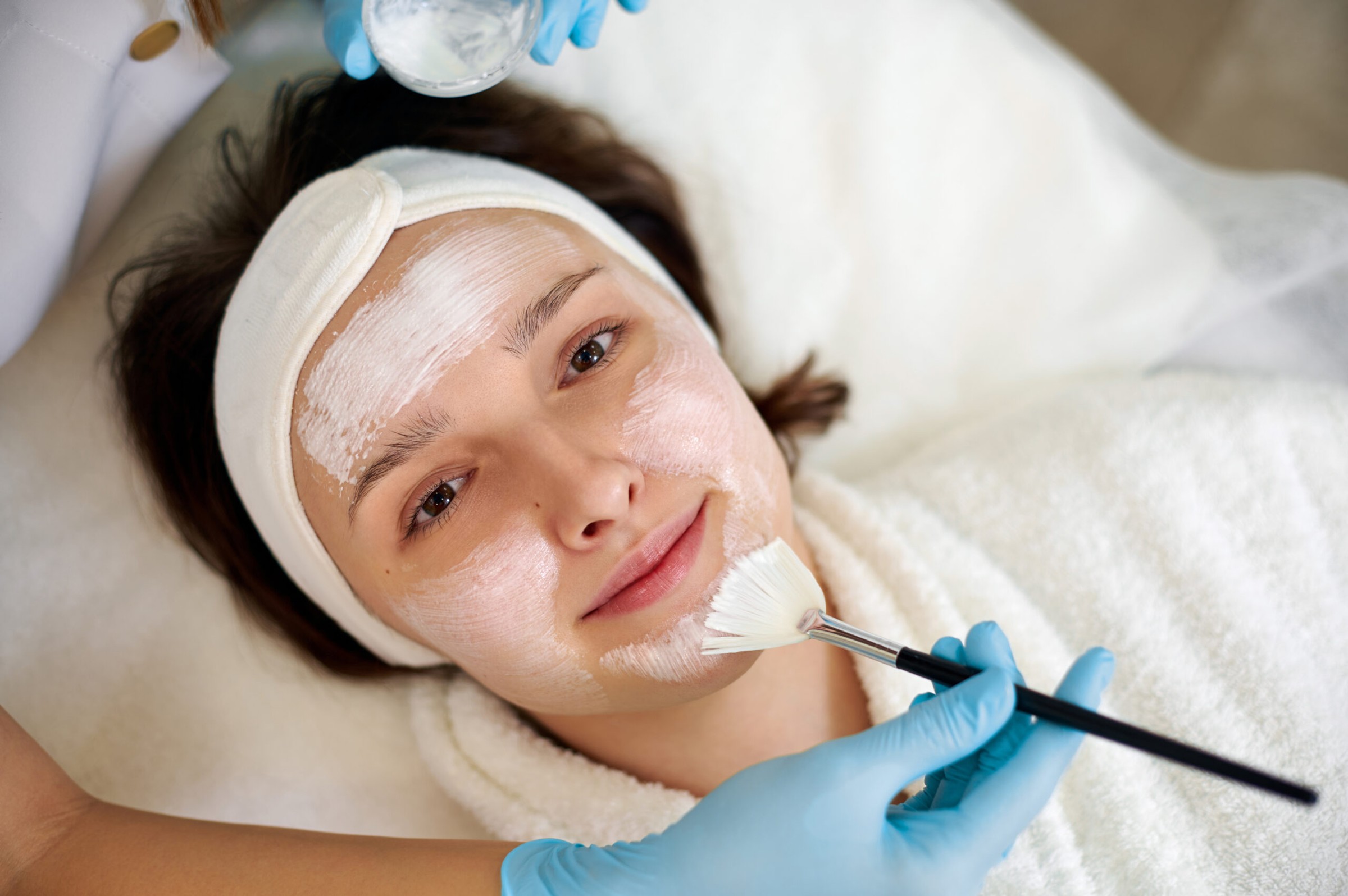
If you've been looking into peels at a skin clinic or dermatology office that promise to clear away both dead skin and excess sebum, you've probably come across the name FCR peeling. Because the active ingredient comes from coral, it's also known as coral peeling. It works on a completely different principle from the AHA and BHA treatments most people already know (AHA is a water-soluble acid drawn from fruit, and BHA is an oil-soluble acid that blends well with sebum, both chemical peeling agents that dissolve the bonds between dead skin cells).
Instead of dissolving dead skin with acid, tiny needle-shaped crystals are mixed into a cream and massaged into the skin. Let's go through exactly why this physical approach helps clear both dead skin and sebum at the same time.
Microspicule crystals from coral
The key ingredient in FCR peeling is calcium carbonate crystals harvested from coral and other marine organisms. Under a microscope, they look like tiny needles with sharp, pointed tips.
The principle is similar to microneedling (a treatment that stimulates the skin with tiny needles), but instead of pricking the skin point by point, the practitioner massages a crystal-infused cream by hand to push the crystals into the stratum corneum. Once the crystals settle into the dead skin layer, the remaining cream is washed off that same day. After that, the crystals stay lodged in the skin and keep delivering very mild physical stimulation over the following days.
The word "needle" tends to sound intimidating, but in reality these are particles too small to even see, gently massaged in with the fingertips. The treatment itself, massaging the cream in and then washing off the leftover residue that same day, doesn't cause much pain. You may still feel some roughness or a mild stinging sensation on the skin while it's being massaged in, though.
How is it different from a chemical peel?
Chemical peels work by using acid to dissolve the bonds that hold dead skin cells together. They're effective, but the moment the acid touches the skin, you can get burning or redness. That's because the acid temporarily shifts the skin's pH balance.
FCR peeling, on the other hand, works through the physical action of the crystals rather than a chemical reaction. That means there's almost none of the burning sensation acid causes, and the skin's pH doesn't suddenly shift. That said, you may still feel some tingling or tightness while the crystals are being massaged in, and for a few days afterward. The type of stimulation is different, but it isn't stimulation-free.
Chemical peels also require careful control over acid concentration and contact time, since even a little too long on the skin ramps up the irritation. FCR peeling works differently: the crystals act gradually and at a steady intensity, so the stimulation isn't delivered all at once but spread out over several days. That gentler, more gradual spread of stimulation is the biggest difference from acid peels.
How are dead skin and sebum cleared together?
When you look at how pores actually get clogged, dead skin cells and sebum don't act independently. When old dead skin cells build up instead of shedding on schedule, sebum tends to mix in and clump together with them. When that clump blocks the pore opening, it turns into a blackhead or a small comedonal breakout.
The micro-spicules stay lodged in the dead skin layer and continuously nudge the surface dead skin to shed. As the surface dead skin clears, the clogged pore opening beneath it tends to open up along with it. Unlike a scrub that only works while you're rubbing it in, the crystals keep stimulating the skin for days while embedded, so you can expect the dead skin and the sebum tangled inside it to come away together.
It's worth noting how different this is from a scrub you keep physically rubbing on the skin. A scrub only works as hard as the pressure you apply by hand, and that's it. FCR peeling keeps stimulating the skin for as long as the crystals stay embedded, with no extra force required. So think of it as an effect that builds up gradually over several days, without needing to scrub hard at all.
How does the skin change in the days after treatment?
The FCR peeling session itself ends once the leftover cream is washed off that day, but the micro-crystals lodged in the dead skin layer stay put for several more days. During that stretch, the ongoing physical stimulation from the crystals gently switches on the skin's own repair response, similar to how the body naturally kicks in to heal a small wound.
While that response continues, skin cell turnover (the cycle in which new skin cells are made and old dead skin sheds) is said to speed up slightly. That's why, over the following days, the dead skin naturally lifts and sheds along with the crystals, revealing smoother, more refined skin underneath.
During this time your skin may feel slightly rough or bumpy, but it's best not to pick at it with your fingers or scrub it away. The crystals need to shed naturally along with the dead skin at their own pace for the stimulation to be delivered evenly. Forcing them off can actually leave micro-tears in the skin.
Is it okay for sensitive skin?
FCR peeling tends to be well tolerated even on sensitive or dry skin because there's no strong acid soaking into the skin. Unlike chemical peels, where the stimulation can reach down toward the dermis, the deeper skin layer beneath the epidermis, this is physical stimulation that stays on the surface, so it puts relatively less strain on the skin.
That doesn't mean it's stimulation-free, though. The tightness or tingling felt while the crystals are being massaged in varies from person to person, and if your skin barrier is already significantly compromised, even this level of stimulation can feel like too much. That's why the intensity and duration need to be adjusted based on your skin's current condition.
For example, if your skin is currently red or flaking, it's safer to shorten the massage time or postpone the treatment to a later session, since even mild physical stimulation can feel more intense than usual when the barrier is weakened. On the other hand, if your skin has thick dead skin buildup and isn't very reactive to stimulation, the treatment time may be extended somewhat.
Skin types FCR peeling suits
FCR peeling is generally described as helpful for the following conditions in particular.
- Keratosis pilaris (chicken skin bumps): dead skin builds up around the hair follicle openings, creating a bumpy texture, and the micro-spicules physically help clear that buildup.
- Oily skin with thick dead skin buildup: the more surface dead skin resists shedding on its own and clumps together with sebum, the more the ongoing physical stimulation helps loosen it.
- Acne-prone skin that reacts strongly to acid peels: when there's inflammatory acne, acid can actually make the irritation worse, whereas FCR involves no chemical reaction, so it can be combined relatively comfortably.
- Blackheads and whiteheads around the nose and cheeks: since these form when dead skin and sebum clog the pore opening together, an approach that clears both at once addresses the root cause more directly.
Aftercare
Your skin is still in recovery mode even after the peeling session ends. Keeping the following points in mind will help the results last longer.
- Be more diligent with sunscreen than usual: with the dead skin layer thinned out, your skin can react more sensitively to UV exposure.
- Moisturize generously: recovering skin tends to lose water quickly, so keep up with moisturizer until the barrier settles back into place.
- Avoid rubbing or washing your face too hard: the freshly revealed surface is still delicate, and strong friction can trigger irritation all over again.
- Leave 2 to 4 weeks between sessions: repeating the treatment in line with your skin's turnover cycle is what lets the effects build up without strain, whereas going too often can cause irritation to accumulate instead.
References
Korean Dermatological Association, American Academy of Dermatology (AAD), and Ministry of Food and Drug Safety (MFDS).
Was this helpful?
About this article
Written by a practising aesthetic physician and intended for general education — not a substitute for individual medical advice.
Read next

Pink Peel: Results, How It Works, Aftercare, and Number of Sessions
Pink Peel is a low-irritation peel that uses isoflavones from fermented kudzu extract to refine texture while encouraging collagen renewal deep in the skin. Because it relies on mild plant-based compounds rather than harsh acids, even sensitive skin can generally tolerate it. Here is how the ingredient actually works, how it differs from a typical peel, and how to care for skin afterward.
By Dr. Kim

AHA and BHA Differences: Choosing by Skin Type and Comparing Effects
AHA and BHA are both acids that clear away dead skin cells, but where they actually work depends on one simple thing, whether they dissolve in water or in oil. AHA breaks down the bonds holding surface buildup together, while BHA rides through oil to reach the sebum sitting deep inside your pores. Here is how each one works, and which fits which skin type.
By Dr. Kim
APL Slim Injection: How It Works, Treatment Areas and Reactions Afterward
APL slim injections deliver a special solution that is more diluted than body fluid directly into the fat layer, using an osmotic pressure difference to burst fat cells. It stands apart from other fat dissolving injections by containing no PPC or steroid ingredients. Here is how the mechanism works, where it is typically used, and what to expect afterward.
By Dr. Lee