AHA and BHA Differences: Choosing by Skin Type and Comparing Effects
By Dr. Kim7 min read

When you spot AHA or BHA on an ingredient list, it is tempting to lump them together as just another exfoliant. They sound similar, and they usually sit side by side on the same shelf, which does not help. But these two acids are almost opposites once you look at how they actually behave, starting with the most basic thing about them: one dissolves in water, the other in oil.
AHA (alpha hydroxy acid) is water soluble, so it mostly works right at the skin's surface. BHA (beta hydroxy acid) is oil soluble, so it can travel down into pores that are already filled with sebum. Think of it like this: a water based cleaner only wipes the top of a surface, while an oil based one can slip inside greasy cracks. That single difference in solubility explains almost everything else about how these two acids behave, so let's walk through it.
How does AHA work on the skin surface?
The two AHAs you see most often are glycolic acid (extracted from sugar cane) and lactic acid (derived from milk). Both dissolve easily in water, which means that once applied, they do not travel much past the stratum corneum, the skin's outermost layer, and instead work close to the surface.
That outer layer is built like a brick wall: dead skin cells stacked like bricks, held together by lipids acting as mortar. AHA lowers the pH slightly at this layer, which loosens the desmosomes, the protein bridges that link one skin cell to the next. Weaken the mortar and the bricks start to let go one by one; that is essentially how AHA clears away buildup, cell by cell, rather than scrubbing it off.
Molecule size decides how strong each AHA feels on skin. Glycolic acid has the smallest molecule of the AHA family, so it penetrates fast and tends to feel stronger. Lactic acid has a larger molecule, so it works more gently, and it also happens to draw in moisture, which is why it tends to hydrate while it exfoliates.
How does BHA get inside pores?
The BHA you will run into most is salicylic acid, which is structurally related to aspirin, a detail that also explains the calming effect covered further down. Its defining trait is that it is oil soluble.
Picture a greasy pan. Wipe it with a wet cloth and you only clean the surface, the grease underneath stays put. Use a degreasing dish soap instead, and it seeps into the oil itself to break it down from within. BHA behaves the same way inside a pore: it follows the oily channel that runs down toward the sebaceous gland. Water soluble AHA simply cannot make that trip, but oil soluble BHA slides right down it.
Once salicylic acid reaches deep enough into the pore, it loosens the plug of hardened sebum and dead skin cells clogging the opening, clearing the blocked channel from the inside. On top of that, as a salicylate compound related to aspirin, it also calms local inflammation, which is why it is often recommended for skin that is red or bumpy from breakouts.
AHA and BHA: where each one works
The gap between the two ultimately comes down to two different addresses on the body: the stratum corneum and the pore. The stratum corneum is packed tightly enough that only water soluble ingredients can get a grip near the surface, while the pore channel is filled with oil, so only oil soluble ingredients can travel deep inside it.
That is why AHA is the first thing that comes to mind for surface level concerns like rough texture, dullness, and fine lines, while BHA is the one people reach for when the problem starts inside the pore, blackheads, whiteheads, and small bumps. Both clear away buildup in the broad sense, but because they work in different spots, they end up suited to different concerns.
Choosing by skin type
If your skin runs dry or sensitive, an AHA like lactic acid, which is gentle and also hydrating, tends to be the easier one to tolerate. Glycolic acid, with its small molecule and stronger punch, can irritate that kind of skin, so starting at a low concentration is the safer move.
If you deal with oily skin, frequent breakouts, or blackheads, BHA is often the better match. Its oil solubility lets it slip naturally into skin that already has plenty of sebum, and the calming effect mentioned earlier adds a second benefit on top of that.
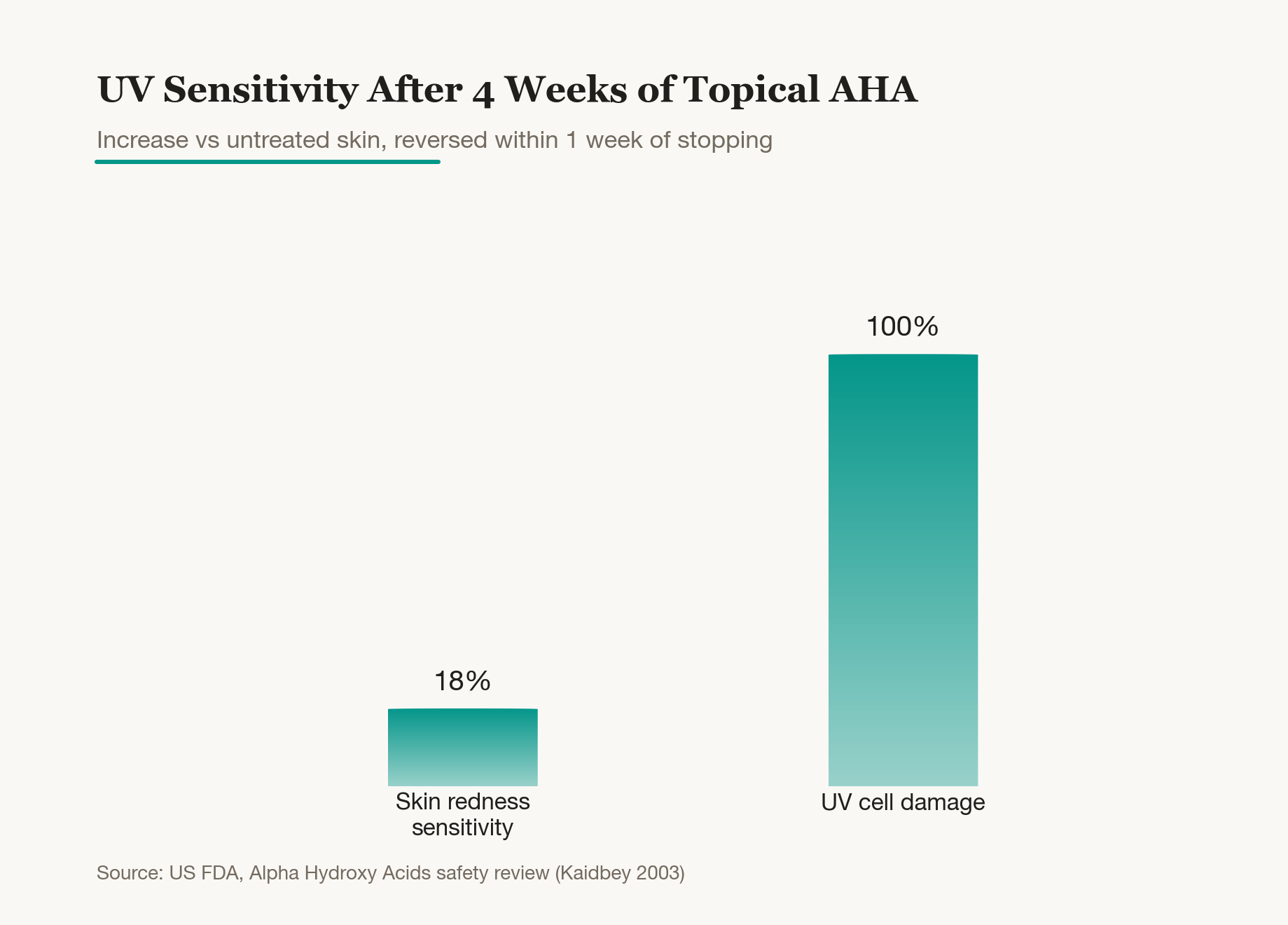
One thing worth remembering is that AHA can make skin more sensitive to sunlight while you are using it. Since it thins the stratum corneum somewhat, UV rays can reach a bit deeper during that period, so wearing sunscreen during the day is strongly recommended. BHA's tendency toward this kind of photosensitivity is less well documented, but no matter which acid you use, pairing it with daily sunscreen is the safe habit to build.
Can you use AHA and BHA on the same day?
Using AHA and BHA on the same day is not forbidden, but since both clear away buildup, their irritation can stack. Strip away too much of the lipids and natural moisturizing factors holding the barrier together, and skin can end up red or stinging before it gets a chance to recover.
So if you want to try combining the two for the first time, it is easier to split them between morning and evening, or alternate them day by day, and watch how your skin responds rather than layering both at once at night. Once your skin has adjusted to each one individually, you can gradually use them together more often.
Care to follow before and after use
Exfoliating acids reward you in proportion to how carefully you use them, so a few habits go a long way toward avoiding side effects over the long run. Here is what is generally recommended.
- Sunscreen: This matters especially while using AHA, since UV rays can reach deeper while the stratum corneum is thinner.
- Start low and slow: Begin with two to three uses a week. Jumping straight to daily use does not give the skin barrier time to adjust, and irritation can build quickly.
- Avoid stacking with other exfoliants: Skip pairing it on the same night with other turnover boosting ingredients like retinol. Overlapping irritation leaves the barrier no time to recover.
- Avoid broken or inflamed skin: Applying an acid to already damaged skin can sting more than expected, since the barrier there is already compromised.
- Check before using high concentrations: Low concentration topical products are generally safe, but since salicylic acid belongs to the same family as aspirin, checking first is recommended if you are pregnant or taking other medications before using a high concentration product.
When do results start to show?
Skin naturally cycles through turnover, making new skin cells and shedding old ones on a set schedule. In younger skin, that cycle runs about four weeks, but it tends to stretch out longer as we age.
AHA and BHA simply give this turnover process a gentle nudge, so results follow that same rhythm rather than showing up overnight. With consistent use, most people start noticing smoother texture and a brighter tone somewhere between four and eight weeks, while deeper concerns like pigmentation or enlarged pores often need around twelve weeks of steady use before the change becomes clear.
Rather than expecting a dramatic shift in a day or two, working with the skin's own turnover cycle, and sticking with it consistently, is both gentler on the skin and far more reliable in the end.
References
Korean Dermatological Association, American Academy of Dermatology (AAD), and Ministry of Food and Drug Safety (MFDS).
Was this helpful?
About this article
Written by a practising aesthetic physician and intended for general education — not a substitute for individual medical advice.
Read next

Exfoliation Methods: Physical Versus Chemical Exfoliation Compared
Exfoliation falls into two broad camps: physically buffing away dead skin and chemically dissolving it. Scrubs and brushes lift flakes off through friction, while acid ingredients loosen the bonds between skin cells so they release on their own. Here is how each method actually works on the skin, and which one fits which skin type.
By Dr. Kim
Why Skin Peels After a Chemical Peel: Does It Work on Acne and Pigment Too?
A chemical peel isn't about acid burning your skin. It works by loosening the bonds holding dead cells that are already due to shed, speeding up turnover that was happening anyway. Here's the difference between AHA and BHA, and how recovery time changes with strength.
By Dr. Lee
Eye Shurink, Eye Thermage and Eye Oligio: Differences and Effects Compared
Eye Shurink, Eye Thermage and Eye Oligio are the three names that come up most often for eye area lifting, and they work through two different kinds of energy: ultrasound and radiofrequency. Here is how each one actually works on the delicate skin around the eyes, and which one fits which concern.
By Dr. Lee