Exfoliation Methods: Physical Versus Chemical Exfoliation Compared
By Dr. Kim7 min read

If your face feels noticeably rough in certain spots after cleansing, that is usually a sign of buildup on the surface. Exfoliating products fall into two broad camps. Physical exfoliants use granules or brushes to buff dead cells away, while chemical exfoliants work by seeping in and dissolving the glue holding those cells together. Both end with the same result, old skin cells shed, but the way each one acts on the skin from the first moment of contact is completely different. So the real question is not which method wins, but understanding why each one works the way it does, and matching that to your own skin.
Why does dead skin build up?
Skin constantly produces new cells at its deepest layer and pushes them upward. By the time those cells reach the surface, they have flattened out and died, forming what is called the stratum corneum, the outermost dead-cell layer. Under normal conditions, these cells shed on their own roughly every two to four weeks.
The problem is that this cycle is rarely constant. As we age, and the longer skin is exposed to UV, the rate at which cells shed slows down, while the rate at which new cells push up from below barely changes. Cells then pile up on the surface, the stratum corneum thickens, and skin starts to look dull and rough. Exfoliation is essentially the process of clearing out that stalled buildup so the natural turnover becomes visible again.
How does physical exfoliation work?
Physical exfoliation does exactly what the name suggests: it removes dead skin through mechanical force, friction. When scrub granules or an exfoliating brush move across the skin, cells that are already dead and loosely attached get knocked off by that friction.
The defining feature of this method is that results show up the moment you apply the force. There is no waiting for an ingredient to absorb and react, the rough patches smooth out as soon as you rub. The catch is that friction does not selectively target only the dead-skin layer. If the granules are large or sharply edged, they can scrape off cells that were not ready to shed yet, leaving behind tiny, often invisible injuries.
The shape and size of the granules also determine how much irritation they cause. Round, fine granules glide across the surface, while angular, coarse ones tend to catch and dig in, concentrating force at a single point. That is why two scrubs used with the same amount of pressure can put very different levels of stress on the skin, depending on the shape of the granules inside.
How AHA and BHA chemical exfoliation work
Chemical exfoliation works by using acid ingredients to dissolve the glue-like bonds holding skin cells together, so the cells release on their own. The two main players are AHA (alpha hydroxy acid, water-soluble acids like glycolic acid and lactic acid) and BHA (beta hydroxy acid, an oil-soluble acid best represented by salicylic acid).
Because these two dissolve differently, they also reach different depths. AHA is water-soluble, so it spreads across the surface layer of skin, while BHA mixes readily with oil, letting it travel down into pores clogged with sebum. That is why AHA is generally considered a better fit for rough, dull surface texture, while BHA tends to suit pores packed with sebum and trapped dead skin. There is no need to rub, because once the bonds are loosened, the cells simply lift away during cleansing or the skin's own natural shedding process.
More recently, PHA (polyhydroxy acid, similar to AHA but with a larger molecule that penetrates the skin more slowly) has also entered the conversation. Because its larger molecules cannot sink in deeply all at once, PHA acts more gradually near the surface, which makes it gentler than AHA or BHA, though the tradeoff is a slower pace of results.
Which one is less irritating?
Irritation from physical exfoliation mostly comes down to pressure and the shape of the granules. Rubbing too hard, or using coarser granules, tends to create tiny cracks in the surface of the stratum corneum, and those cracks weaken the skin barrier's ability to hold onto moisture. The weak point of physical exfoliation is that how much force gets applied is entirely up to the hand doing the rubbing.
Irritation from chemical exfoliation is driven mainly by concentration and pH (a measure of how acidic a solution is). The higher the concentration or the lower the pH, the stronger the bond-dissolving power, which also means a greater chance of irritation. Still, because chemical exfoliants list their concentration right on the label, it is generally easier to gauge and control the intensity ahead of time, compared with physical exfoliation, which depends entirely on how much pressure a person applies by hand.
The best exfoliation method for each skin type
How much each method taxes the skin depends heavily on the skin's baseline condition. The guide below is a useful starting point for figuring out which direction to lean.
- Oily skin, prone to clogged pores: An oil-soluble chemical exfoliant like BHA tends to work better here. Since sebum itself is an oil, an oil-soluble ingredient can follow it all the way down into the pore.
- Dry skin, prone to tightness: A gentle, low-concentration AHA is usually easier on the skin than physical friction. Rubbing can further irritate a barrier that is already thin, whereas chemical exfoliation clears away dead skin without applying any mechanical force at all.
- Sensitive skin, prone to redness: Starting with a low intensity is recommended regardless of which method you choose. When the barrier is already compromised, both friction and acid ingredients can act as irritants, so the safer sequence is to test with a low concentration and low frequency first, then watch how the skin responds.
- Combination skin: A zone-by-zone approach is common here. Since oily areas and dry areas sit side by side on the same face, applying one single method uniformly across the whole face tends to overdo it in one zone while underdoing it in another.
What happens if you exfoliate too often?
Exfoliation works when it clears out only the cells that were already stalled and ready to go. But increase the frequency, and cells that were not ready to shed start getting pushed off along with them, thinning out the very stratum corneum that is supposed to protect the skin.
The stratum corneum is often compared to a brick wall. If the cells are the bricks, the lipids filling the gaps between them, the fatty substances that fill the space between skin cells, act as the mortar. Exfoliate too often and you wash away not just the bricks but the lipid mortar holding them together, leaving the whole wall looser and more porous. Moisture then escapes more easily, outside irritants get in more easily, and reactions like redness or stinging can actually increase as a result.
Care after exfoliating
Right after exfoliating, the older layer that used to cover the skin's surface has just been thinned out. How you follow up in this window has a real effect on how the results play out.
Following up immediately with a moisturizer that replenishes both water and oil is recommended, since moisture escapes faster than usual through a surface that has just been thinned. Sunscreen also deserves extra attention right after exfoliating, since a thinner stratum corneum makes it easier for UV rays to reach deeper into the skin.
It is safer to increase frequency gradually, watching how the skin responds along the way, and it is best to avoid combining physical and chemical exfoliation aggressively from the start. Layering both methods on the same day adds their effects together rather than letting the skin handle just one, so a more cautious approach is to let one method settle in first, then slowly add the other with some spacing in between.
References
Korean Dermatological Association, American Academy of Dermatology (AAD), and Ministry of Food and Drug Safety (MFDS).
Was this helpful?
About this article
Written by a practising aesthetic physician and intended for general education — not a substitute for individual medical advice.
Read next

AHA and BHA Differences: Choosing by Skin Type and Comparing Effects
AHA and BHA are both acids that clear away dead skin cells, but where they actually work depends on one simple thing, whether they dissolve in water or in oil. AHA breaks down the bonds holding surface buildup together, while BHA rides through oil to reach the sebum sitting deep inside your pores. Here is how each one works, and which fits which skin type.
By Dr. Kim
FCR Peeling Effects: Is It Okay for Sensitive Skin?
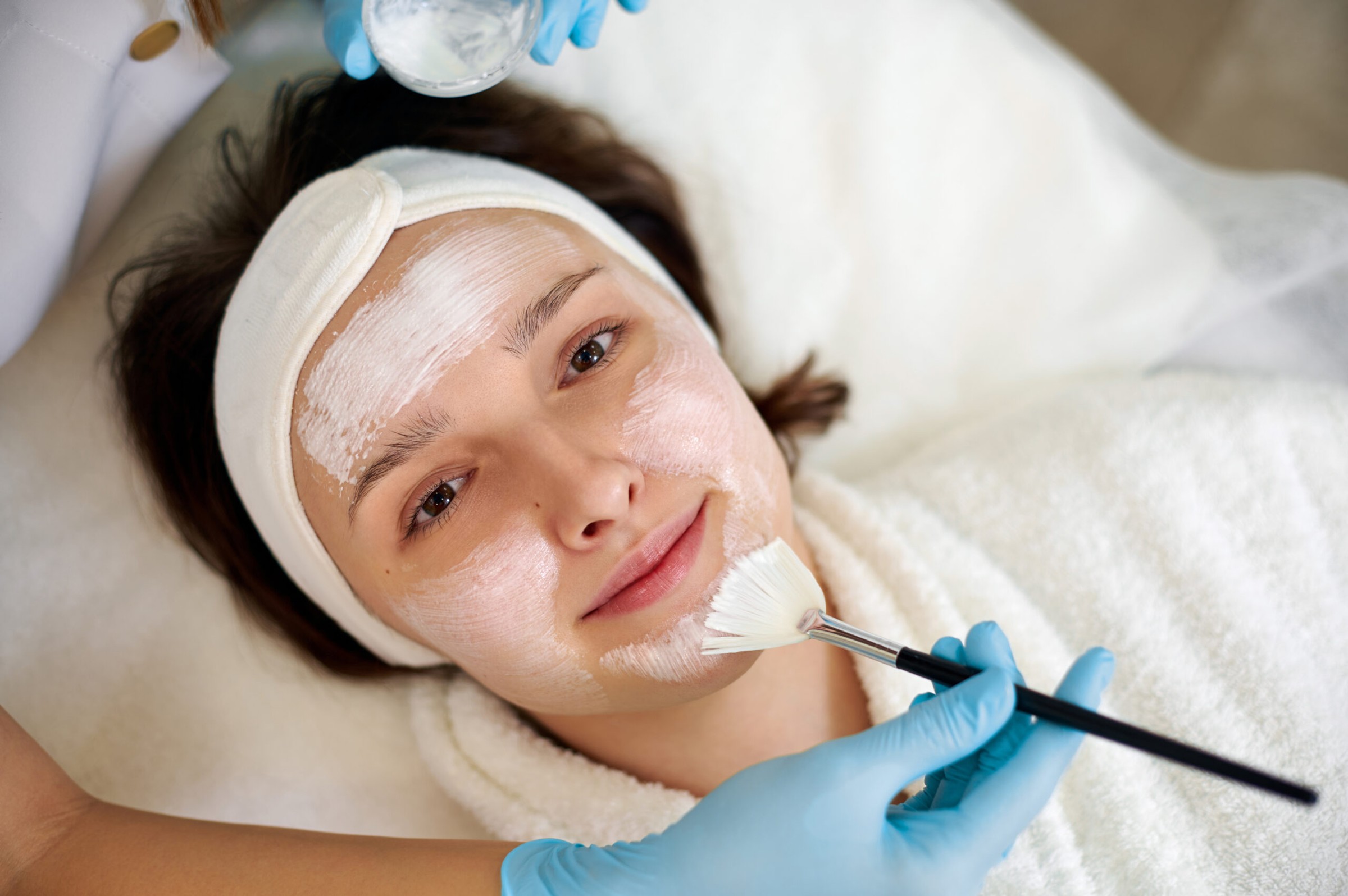
FCR peeling is a physical peel that works by massaging tiny needle-shaped crystals from coral into the skin to clear away dead skin and sebum together. Because it stimulates the skin differently than acid-based chemical peels, it tends to be more comfortable to try even on sensitive or acne-prone skin. Here's how it works and how to care for your skin afterward.
By Dr. Kim
Eye Shurink, Eye Thermage and Eye Oligio: Differences and Effects Compared
Eye Shurink, Eye Thermage and Eye Oligio are the three names that come up most often for eye area lifting, and they work through two different kinds of energy: ultrasound and radiofrequency. Here is how each one actually works on the delicate skin around the eyes, and which one fits which concern.
By Dr. Lee