Ultherapy Prime and Original Ultherapy: Differences and Effect Compared
By Dr. Kim11 min read

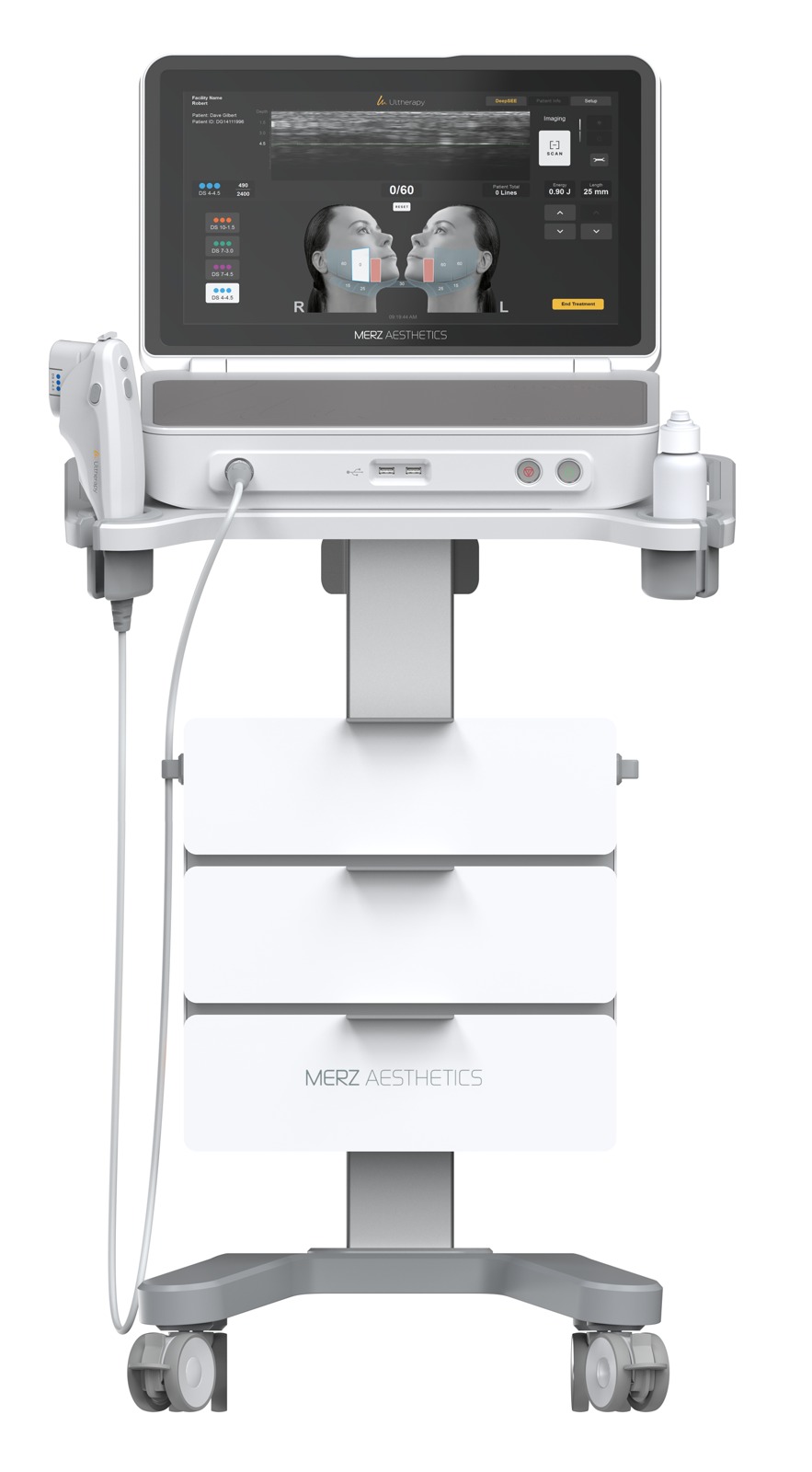
Ultherapy Prime is the new generation focused ultrasound (HIFU) device that succeeds the original Ultherapy; it was first unveiled in the second half of 2024. A new name does not mean the underlying treatment principle has changed. Like a magnifying glass focusing sunlight onto a single point, the device still concentrates ultrasound energy at a precise depth beneath the skin, using a burst of heat at that focal point to contract tissue, then letting collagen rebuild over the following months. The deepest focal point still reaches the SMAS layer, the fascia that supports facial expression and contour, the same layer that plastic surgeons pull with a scalpel during a surgical facelift. What has changed is how that energy is visualized and how fast it is delivered. The imaging is reportedly sharper, the treatment faster, and the discomfort during the procedure lower. Marketing copy alone can make it sound like an entirely new treatment, but in practice, it is closer to a device that keeps a proven principle intact while refining how that energy is delivered. Here is a clinical look at what has changed, what has stayed the same, and how much evidence backs it up.
Is Ultherapy Prime's Principle the Same as the Original?
The core technology stays the same. Prime is still a focused ultrasound treatment that concentrates energy at a precise depth to stimulate the SMAS layer, and the principle of confirming the layer through real-time imaging before firing is unchanged from before. So rather than a new effect unique to Prime, it is more accurate to think of it as a device that carries forward the clinical evidence Ultherapy has already built up.
What has changed is the performance of the device itself. According to the manufacturer, processing speed is roughly 10 times faster than before, which cuts the length of a single session by about 20%. The imaging display is 35% larger and refreshes faster, so the layers beneath the skin appear brighter and clearer. Because the provider can see the layers more clearly while delivering energy, targeting becomes more accurate, which in turn reduces energy delivered off target.
For patients, the changes that are actually noticeable are pain and treatment time. The manufacturer and early user reports describe less pain during the procedure and less redness and swelling afterward compared to the previous model, attributed to improved energy control and more precise imaging guidance. That said, this is based on user experience and manufacturer materials rather than a large head to head comparative trial between the two devices, so individual results may vary.
In short, the change with Prime lies in the quality of delivery, not the magnitude of the effect. What gets lifted stays the same; what has been refined is how accurately, quickly, and comfortably that energy is delivered.
Prime's Three Treatment Depths
The part that actually delivers energy in Prime is the transducer, often called the cartridge. Each transducer is set to focus ultrasound at a fixed depth, so which one is attached determines which layer beneath the skin the energy converges on. Just like the original Ultherapy, Prime uses three depths: 1.5mm, 3.0mm, and 4.5mm.
Each of the three depths does a different job. The shallow focus targets the dermis close to the surface, while the deep focus targets the fascia that supports the face. Providers mix these depths depending on the area and degree of sagging, using more of the shallow depth around the thin skin of the eye area and more of the deep depth on a jawline with noticeable sagging. In other words, no single depth treats the whole face the same way.
| Treatment Depth | Layer Targeted | Main Concern Addressed |
|---|---|---|
| 1.5mm | Superficial dermis | Skin texture and fine lines |
| 3.0mm | Deep dermis and superficial fat layer | Contour and elasticity |
| 4.5mm | SMAS fascia | Lifting sagging contours |
The reason the depths need to be divided this way is that sagging does not come from a single layer. Surface texture issues and looseness in the deep fascia originate in different layers, so treating multiple depths together is what makes the whole face look naturally refreshed. Using only the shallow focus cannot reach deep sagging, and using only the deep focus leaves surface texture unaddressed. Prime's three depth design exists to treat these different layers within a single session.
What Does the Sharper Imaging Do?
Among focused ultrasound devices, real-time imaging is what sets the Ultherapy line apart from other HIFU systems. The provider watches the layers beneath the skin directly on a screen and delivers energy to that exact spot, and in Prime, this screen is larger and sharper. Because skin, fat, and fascia thickness vary from person to person, treating while watching the layers versus treating by feel alone makes a real difference in both safety and results.
Sharper imaging translates directly into more accurate targeting. Going shallower than the target layer reduces the effect, while going too deep raises the risk of pain or nerve irritation, and the more clearly the boundaries between layers can be seen, the smaller this margin of error becomes. This is especially true in sensitive areas like the neck or around the eyes, where the skin is thin and nerves and blood vessels run close to the surface. There, seeing the layers clearly is directly tied to safety.
A faster refresh rate also matters in actual practice. When the screen keeps up without lag as the provider moves the handpiece, they can treat densely without missing the point where a layer changes, reducing the chance of firing into the wrong depth. In the end, the precision Prime offers comes not from new energy, but from a screen that simply shows more.
Better imaging alone does not guarantee better results, though. Reading the screen accurately and designing the right depth for each area is still up to the provider, so results on the same device can vary with a provider's skill. Good imaging is a tool that supports a skilled hand, not a replacement for it.
| Category | Treating While Watching the Screen | Treating by Feel |
|---|---|---|
| Depth accuracy | Targets by viewing layer boundaries | Margin of error grows more easily |
| Safety in sensitive areas | Avoids nerves and blood vessels | Relatively riskier |
| Variation in results | Can be corrected through planning | Depends on the provider's feel |
How Much Have Session Time and Pain Changed?
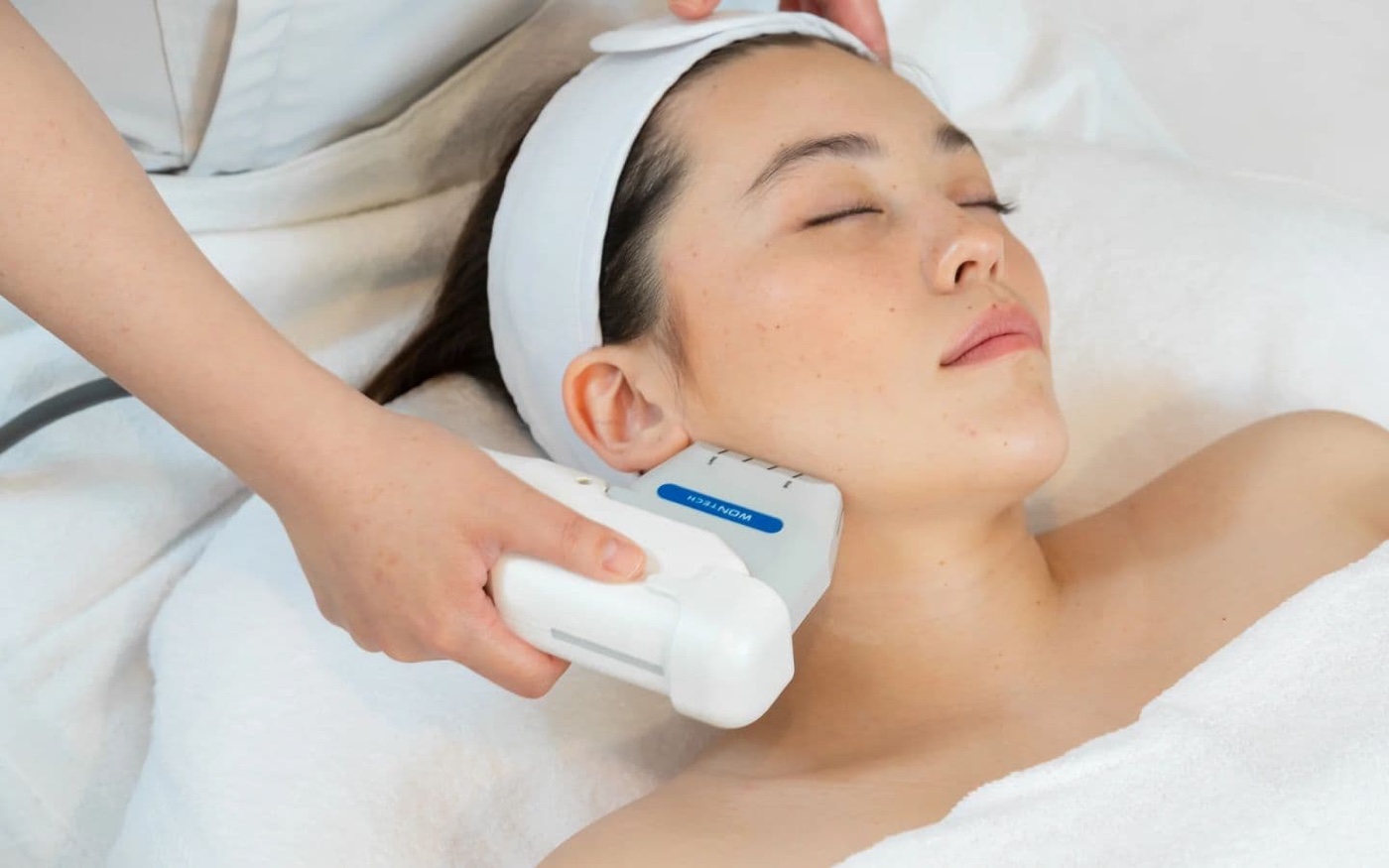
The Ultherapy line has always started with a single session, then allows several months for collagen to build up before considering a follow-up if needed. Prime follows the same structure. What has changed is that a single session is faster, with treatment time reportedly cut by about 20% thanks to improved processing speed. It is less a change that reduces the number of sessions and more a refinement that makes a single session less tiring to sit through.
Pain deserves a closer look, since it is the biggest reason people hesitate about this treatment. Because focused ultrasound stimulates deep layers, each pulse brings a brief, sharp sting, and that sensation is also a sign that the energy has actually reached the target layer. Pain levels reported across various clinical studies generally cluster around 3 to 4 out of 10.
| Clinical Study | Participants | Pain Score (0 to 10) |
|---|---|---|
| MFU systematic review (2023) | 565 | Mean 3.8 |
| Upper face randomized study (Chen et al., 2024) | 40 | Mean 2.4 |
| New imaging device study (2023) | 20 | Mean 3.0 |
Prime is thought to feel less painful than before because of improved energy control and imaging guidance. The logic is that targeting the intended layer more precisely means less unnecessary firing and therefore less stimulation, though large scale head to head trials directly comparing pain between the two devices are still limited, so it is worth keeping individual variation in mind. Areas closer to bone tend to feel the stimulation more sharply, so if you are sensitive to pain, discussing pain management with your provider beforehand can make the session much more comfortable.
Figures for Brow, Neck and Jawline Effect
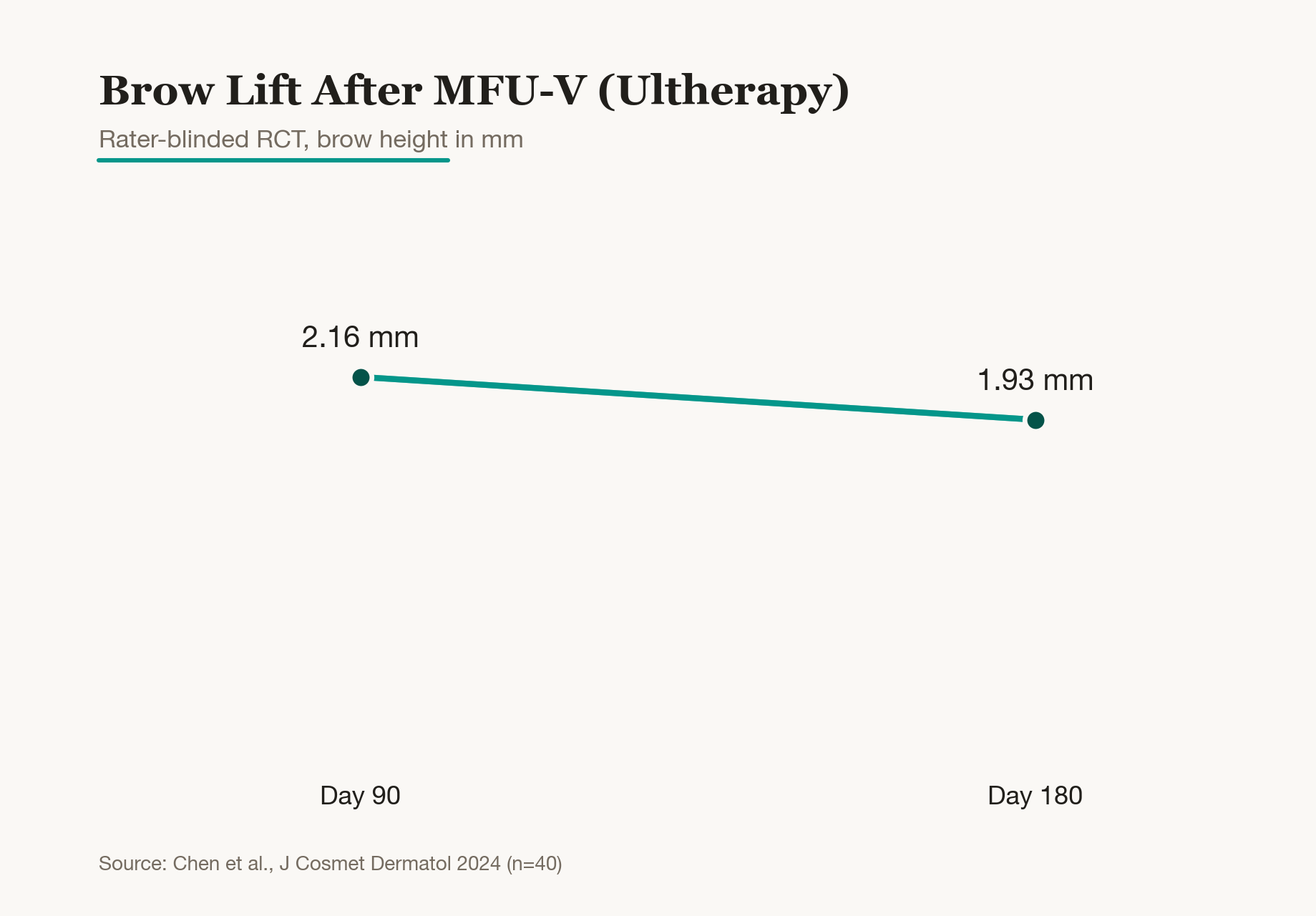
Since Prime uses the same focused ultrasound principle as the original Ultherapy, it is reasonable to view the existing clinical evidence as still applicable. Start with the brow. In a randomized, blinded study that measured brow height after treating the upper face, the brow was lifted an average of 2.16mm at 90 days, and still held at 1.93mm at 180 days, with 87.5% of participants maintaining a meaningful lift at the 180 day mark in the same study. It sounds small in millimeters, but a roughly 2mm brow lift is enough to make the eyes look more defined and the overall expression more refreshed.
Changes beneath the skin have also been confirmed in actual human tissue. In a study that biopsied skin before and after treatment, average dermal thickness increased about 24%, from 1.32mm to 1.63mm, and dermal collagen in the same study increased by about 23.7% compared to before treatment. Underneath the visible lift, the tissue itself is thickening and new collagen is being formed.
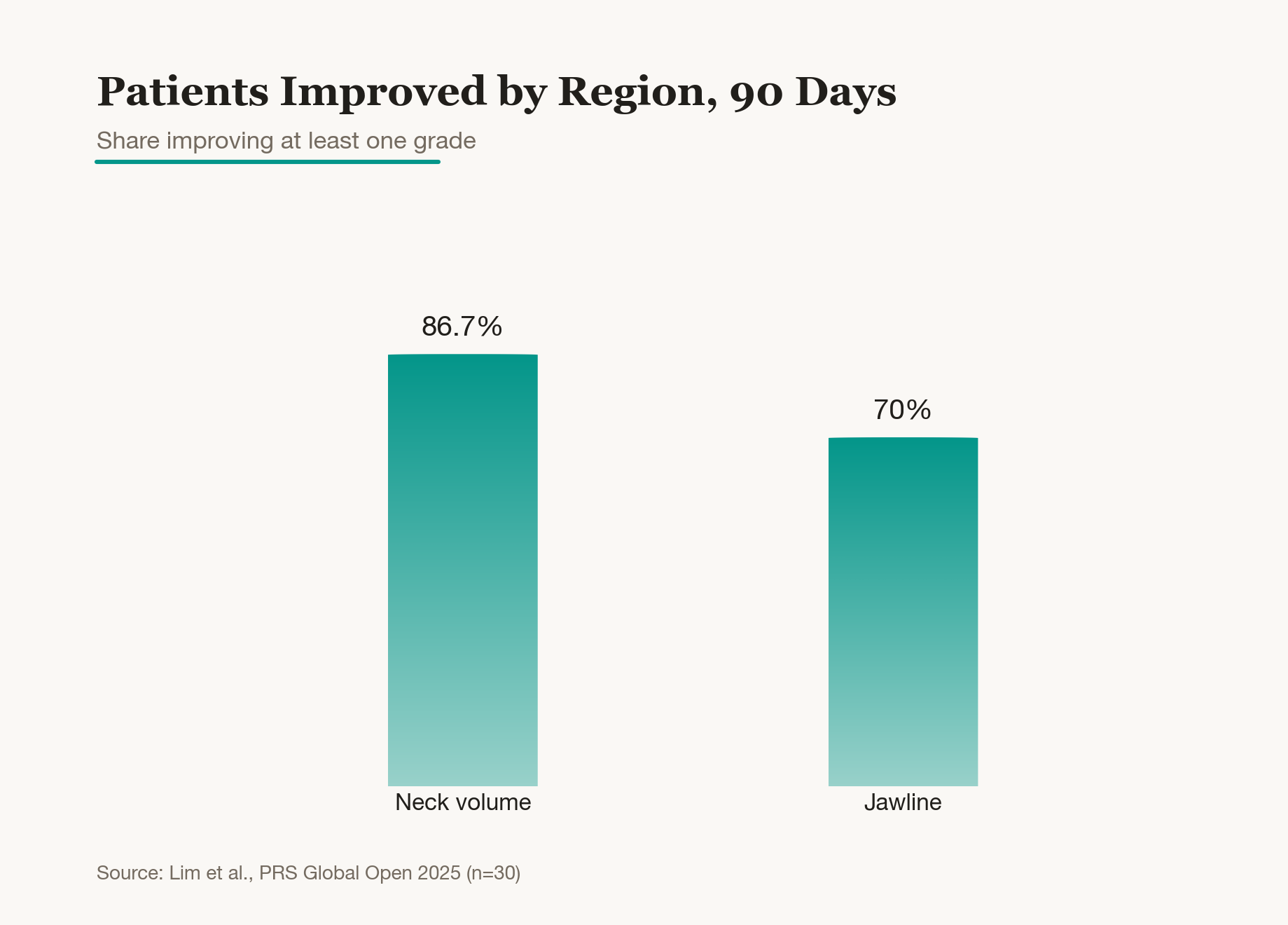
There is also data on the neck and jawline, the two areas patients ask about most. In a study looking at outcomes 90 days after treatment, neck fullness improved by at least 1 grade in 86.7% of patients, and jawline in 70%. A systematic review pooling multiple studies found that about 92% of patients showed improved skin tightening or wrinkles at the 90 day mark, with serious adverse events reported at around 2%.
Studies looking specifically at newer devices with improved imaging, like Prime, are also starting to appear. In a small randomized study treating the mid and lower face, 70% of participants showed meaningful tightening at the 3 month mark, with pain measured without anesthesia averaging 3.0. The sample size is still too small to draw firm conclusions, but it is a sign that evidence keeps accumulating on top of an already proven principle.
Who Ultherapy Prime Suits and Who It Doesn't
Prime is a good fit for people whose jawline, neck, or brow has started to sag, but who are not ready to consider surgery. Its strengths stand out for early to moderate sagging, where the contour has just started to lose definition, and for anyone who wants to lift the deeper layers without going under the knife. Because there is almost no downtime, you can also return to your normal routine right after treatment. Starting in your late 30s through early 50s, while the skin and fascia still have some elasticity, tends to leave enough room to lift and generally leads to higher satisfaction.
It also helps to know when the results actually show up. Prime is not a treatment that produces a dramatic change the moment it is over. Some tightening can be felt right away as the deep layer contracts, but the real change unfolds gradually over the 2 to 3 months it takes collagen to rebuild. Rather than expecting a different face in the mirror immediately, it is more accurate to think of the contour gradually refining itself over the following months.
There are also cases where Prime is clearly not the right fit. If the skin and tissue have already loosened enough to fold on themselves, a non-surgical lift alone has its limits, and considering a surgical option alongside it tends to give better results. If the goal is to fill in hollow cheeks, a filler is the better choice. If you have active inflammation or infection in the skin, or an implant in the treatment area, you must inform your provider before treatment, and it is not recommended during pregnancy, since safety data is not yet sufficient.
A better device does not automatically guarantee a better result. Prime is a device that helps the provider through refined imaging and speed, but it does not replace the judgment needed to read the degree of sagging and skin condition and design the right depth. The result comes down to which depth is treated and how densely, so it is worth starting with a provider who takes the time to carefully assess your condition and talk it through with you.
Was this helpful?
About this article
Written by a practising aesthetic physician and intended for general education — not a substitute for individual medical advice.
Read next
Emface Lifting Effect and Wrinkle Improvement, Including Number of Sessions
Here is what EMFACE actually does, how HIFES and synchronized RF work on facial muscles and skin at the same time, and how far the wrinkle and lifting results hold up under real research. We also look at how it differs from surgical facelifts and who tends to suit it best.
By Dr. Kim
Ultherapy Effect and Differences From Thermage, Including Timing and Side Effects
Ultherapy's focused ultrasound reaches the SMAS, the same deep musculoaponeurotic layer a facelift targets, without surgery. This clinical breakdown covers how it compares to Thermage RF, published data on brow elevation and dermal remodeling, realistic timelines, neck and jawline outcomes, who the best candidates are, and side effects from a practitioner's perspective.
By Dr. Lee

Stretch Mark Treatment: Effect and Number of Sessions, Including Laser and Radiofrequency Differences
A clear look at why stretch marks form and what sets red stretch marks apart from white ones. We break down, with real study numbers, how much fractional laser, radiofrequency microneedling, and pulsed dye laser for red marks actually fade them, plus what topical tretinoin can and cannot do at home.
By Dr. Lee