Stretch Mark Treatment: Effect and Number of Sessions, Including Laser and Radiofrequency Differences
By Dr. Lee8 min read

Stretch marks that form when the belly expands or weight changes quickly tend to stick around once they set in, and that makes them frustrating. Red or white lines show up on areas that stretch easily, like the arms, thighs, belly, and chest, and topical products alone have limited power to fade them.
Stretch marks are not a surface problem. They form when collagen and elastic fibers deep in the dermis tear apart. That is why lasers, radiofrequency, and microneedling that stimulate the dermis and rebuild collagen are so widely used now. Here is a full rundown, backed by real study numbers, of why stretch marks form, how red and white stretch marks differ, how much each treatment actually fades them, how many sessions they take, and what helps at home.
Why Do Stretch Marks Form?
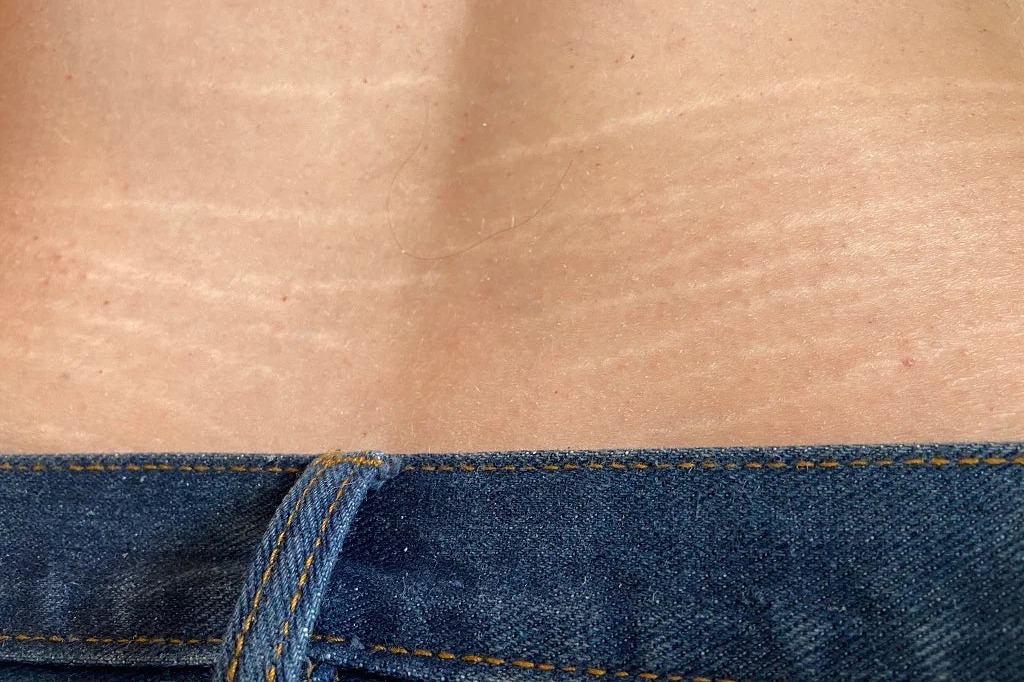
Stretch marks are closer to a scar that forms beneath the skin than a surface issue. Inside the dermis, collagen and elastic fibers are woven into a mesh that keeps skin firm and springy. But when skin has to stretch faster than it can handle, such as during pregnancy, rapid weight change, or a growth spurt, that mesh cannot keep up and tears.
Think of it like pulling too hard on a sweater until the knit stretches and gaps open. Once a spot tears, it never weaves back together as tightly as before, and the gap lets the tissue underneath show through as a streak.
Hormones play a part too. During periods when cortisol rises, such as pregnancy, puberty, or steroid use, the skin's ability to produce collagen weakens, making the fibers tear more easily. So stretch marks are not a sign of neglect. They are a natural occurrence that can appear on anyone whenever skin stretches quickly.
The problem is that once a gap forms in the dermis, it does not close on its own. Moisturizers that only work on the outer skin layer cannot reach that deep. To truly fade stretch marks, you need an approach that stimulates the dermis and rebuilds the torn collagen. Laser, radiofrequency, and microneedling all target exactly that point.
How Do Red and White Stretch Marks Differ?
Stretch marks change color as they age. When they first appear, they look red or purplish, known as striae rubra. Months to years later, the color fades and they settle into striae alba, or white stretch marks.
Red stretch marks look red because inflammation and blood vessels are still active at that spot, much the same way a fresh wound looks pink while it heals. Skin at this stage is still reactive, so it still has the capacity to rebuild collagen when stimulated.
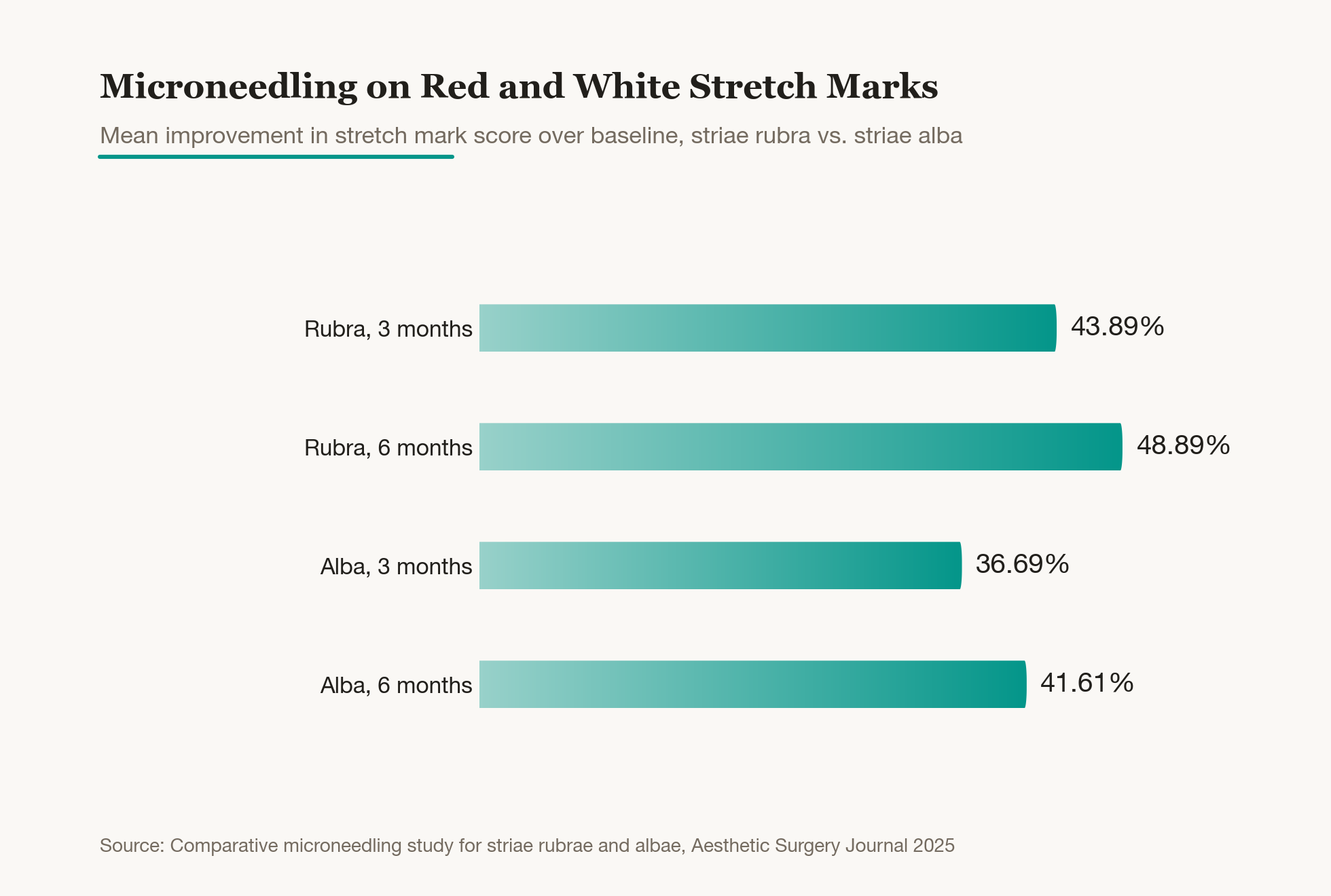
White stretch marks, on the other hand, are older, with fewer blood vessels and thinner tissue. They are essentially a scar that has already settled into a pale, quiet state, which makes them harder to reverse. That is why the same treatment tends to work better on red stretch marks than white ones. In one study, six months after microneedling, red stretch marks improved by about 48.89% while white stretch marks improved by about 41.61%, a clearly bigger gain for the red ones.
Timing is the key factor. Stretch marks respond best while they are still red, so it pays to act a bit sooner if redness is still present. That does not mean white stretch marks are hopeless, but getting the same result usually takes more sessions and more time.
How Much Can Lasers Reduce Stretch Marks?
Laser treatment creates a dense grid of tiny heat channels in the dermis, prompting skin to rebuild its own collagen. It generally falls into two categories.
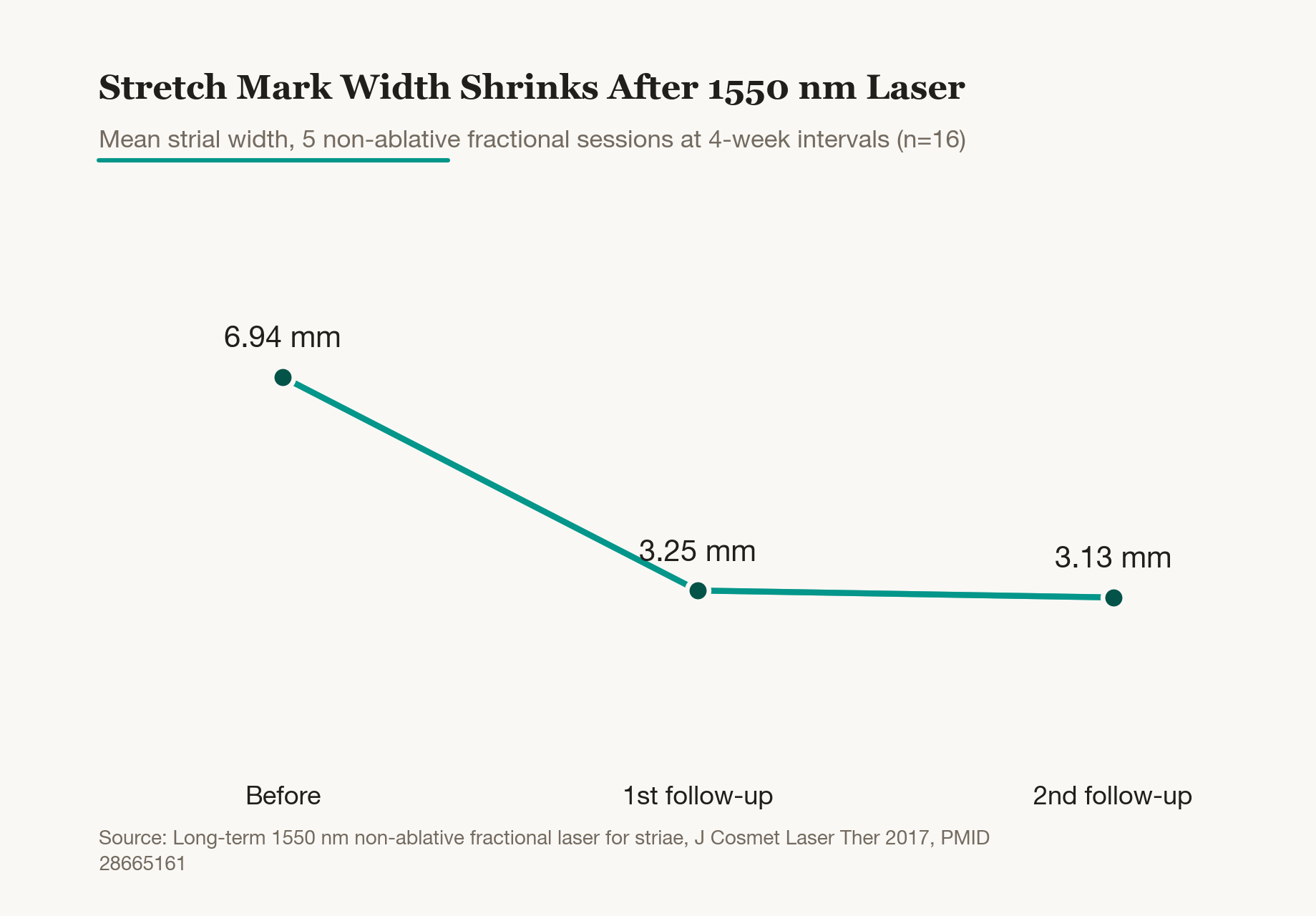
The first is non-ablative fractional laser. It stimulates the tissue beneath without breaking the surface, so recovery is quick. In one study, five sessions of 1550nm non-ablative fractional laser spaced four weeks apart narrowed stretch mark width from an average of 6.94mm to 3.13mm, less than half the original. That is a noticeable change with an easy recovery.
The second is ablative CO2 fractional laser. It also resurfaces the very top layer, so the stimulation is stronger, but on long-standing white stretch marks, results were mostly mild to moderate fading. In a study that included Korean patients, both non-ablative and CO2 lasers improved stretch marks, though the non-ablative option had fewer side effects.
For red stretch marks, pulsed dye laser (PDL, 585nm) is a strong option. It targets blood vessels directly, quickly calming redness and helping fade the color of red stretch marks in particular. But once a stretch mark has already turned white and lost its color, this laser has less to work with, so fractional laser or radiofrequency is the better direction.
How Much Does Radiofrequency Microneedling Improve Them?
Needle- and radiofrequency-based methods are used just as widely as laser.
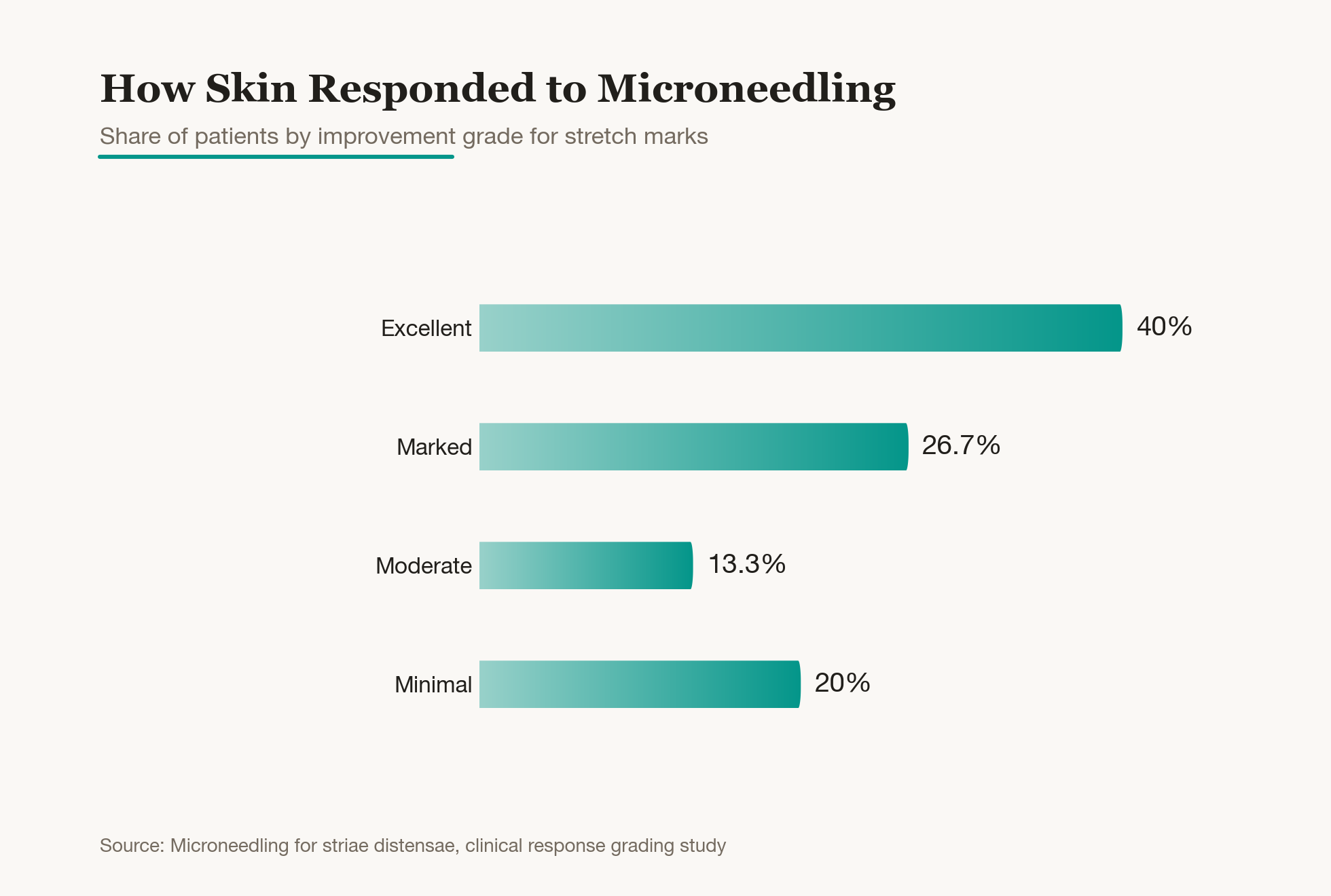
Microneedling uses very fine needles to create tiny punctures in the dermis, prompting skin to build new collagen as it heals those micro-wounds. In one study, stretch marks treated with microneedling all faded by 50% or more after an average of just 1.8 sessions, and 28% improved by more than 75%.
Radiofrequency microneedling adds heat to that process. Radiofrequency energy flows through the needle tips deep into the dermis, amplifying the collagen stimulation. In a study of 17 patients who had four radiofrequency sessions spaced four weeks apart, stretch mark volume, color, pigmentation, and redness all improved noticeably.
A pooled analysis of several studies found that radiofrequency microneedling produced slightly greater improvement than laser overall. Since it combines needles with heat, though, it tends to be more uncomfortable during treatment, so applying numbing cream generously beforehand helps. Either way, both work on the same principle of rebuilding collagen in the dermis, so the choice comes down to skin condition and how much discomfort you are comfortable with. Downtime is usually just a few days of redness, without much disruption to daily life.

How Many Sessions Do You Need?
Stretch mark treatment is not a one-time fix. Since it takes time for new collagen to build up in the dermis, treatment is usually split into three to five sessions spaced about four weeks apart. Results build gradually with each session, and collagen keeps forming for months after the last treatment, continuing to fade the marks further.
It helps to keep expectations realistic. The goal is not to erase stretch marks completely but to make them far less noticeable. Red stretch marks lose their color and blend closer to the surrounding skin, while white stretch marks narrow and their texture smooths out. As shown earlier, width can shrink by more than half, which is a genuinely satisfying result.
One thing to keep in mind is that older marks respond more slowly. Starting while redness is still present means fewer sessions for a better outcome. If the stretch marks are old and already white, it takes more patience and more sessions to get there. The exact device and number of sessions should be decided based on the color, thickness, and location of the marks. Response also varies by area, with the belly and flanks tending to fade relatively well. Once results improve, avoiding sudden weight changes helps prevent new stretch marks from forming.
What Role Does Tretinoin Play at Home?
Pairing treatment with a home care routine helps results last longer. Tretinoin is the standout option. It is a vitamin A derivative that encourages skin to rebuild collagen.
In one study, applying 0.1% tretinoin nightly for six months to early red stretch marks reduced their length by about 14% and width by about 8%, along with an increase in collagen. That effect was clearest on red stretch marks and much smaller on marks that had already turned white, once again confirming how much timing matters.
| Home care | When | Key point |
|---|---|---|
| Tretinoin | Early, red stretch marks | Stimulates collagen production, avoid during pregnancy |
| Moisturizer | Always | Eases itching and dryness |
| Sunscreen | Daytime | Prevents color mismatch and discoloration |
Tretinoin can be irritating and should not be used during pregnancy, so it is safest to start under a professional's guidance. Starting while stretch marks are still red gives you the best odds. Pairing treatment that rebuilds dermal collagen with tretinoin and moisturizer at home fades marks noticeably more. Erasing them completely is difficult, but making them much less noticeable is a very achievable goal.
Was this helpful?
About this article
Written by a practising aesthetic physician and intended for general education — not a substitute for individual medical advice.
Read next
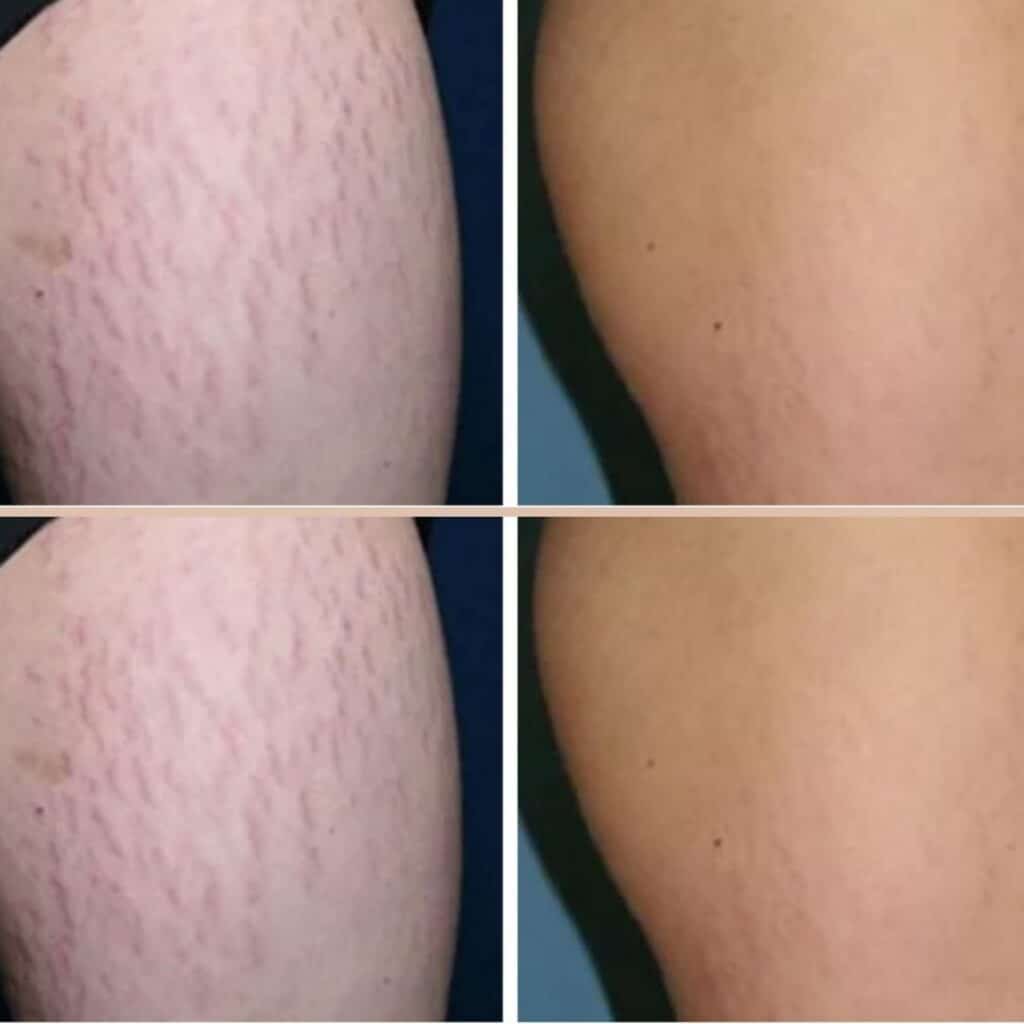
Stretch Mark Laser Treatment: Are Red and White Stretch Marks Treated Differently?
Stretch mark lasers don't work the same way on every mark. Pulsed dye lasers target blood vessels in fresh red marks, while fractional lasers rebuild collagen in older white ones. Here's how each stage is treated and how long the results actually hold up.
By Dr. Kim
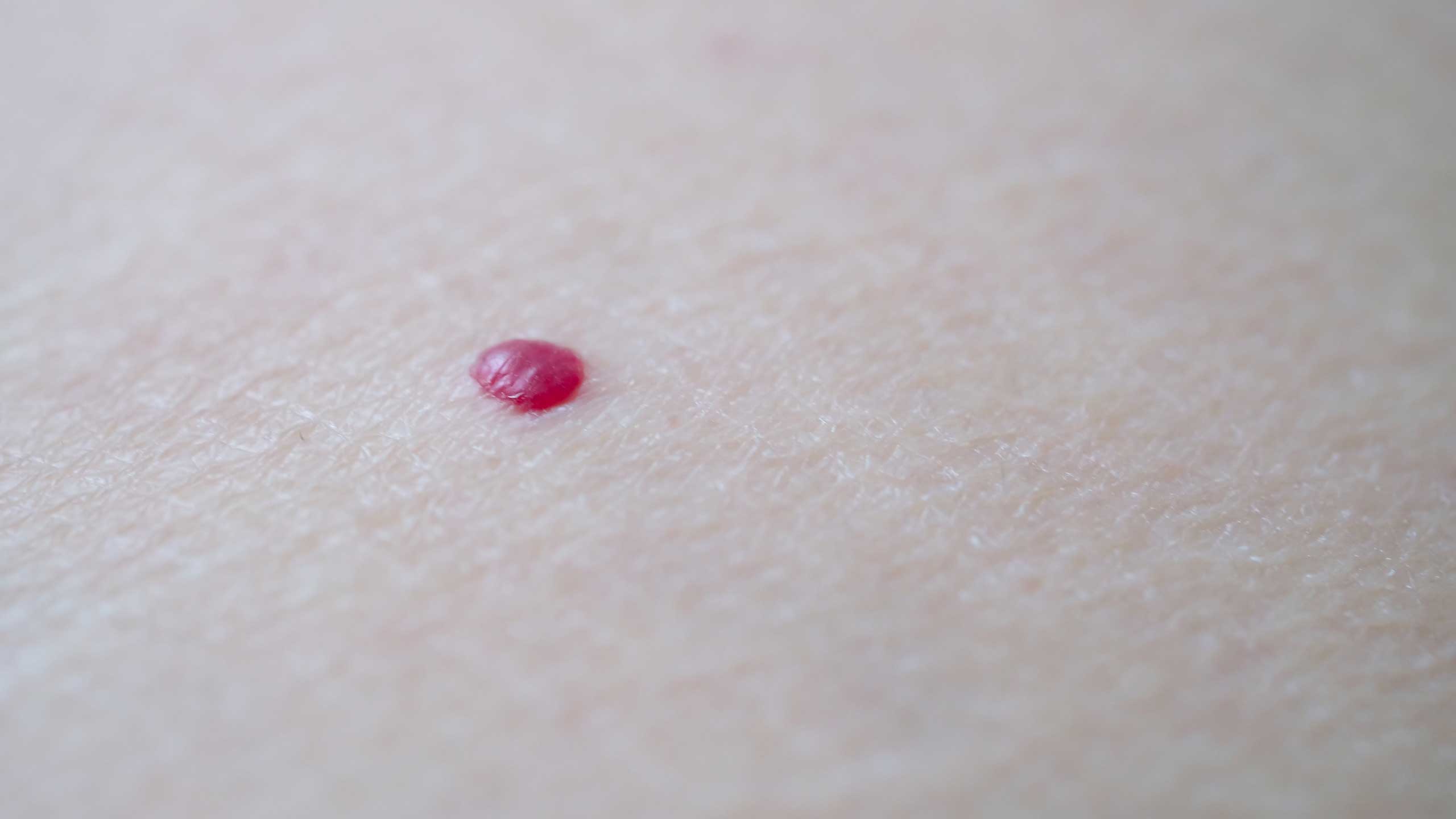
Cherry Angioma: Causes, Symptoms, Laser Treatment and When to See a Doctor
What are those bright red spots called cherry angiomas that show up on the chest or back? A clear, research-backed guide to why they increase with age, how to tell them apart from moles, warts, and purpura, whether pulsed dye, KTP, or long-pulsed Nd:YAG laser or electrocautery works best for removal, how to minimize scarring and dark marks, and when it's time to see a doctor.
By Dr. Kim
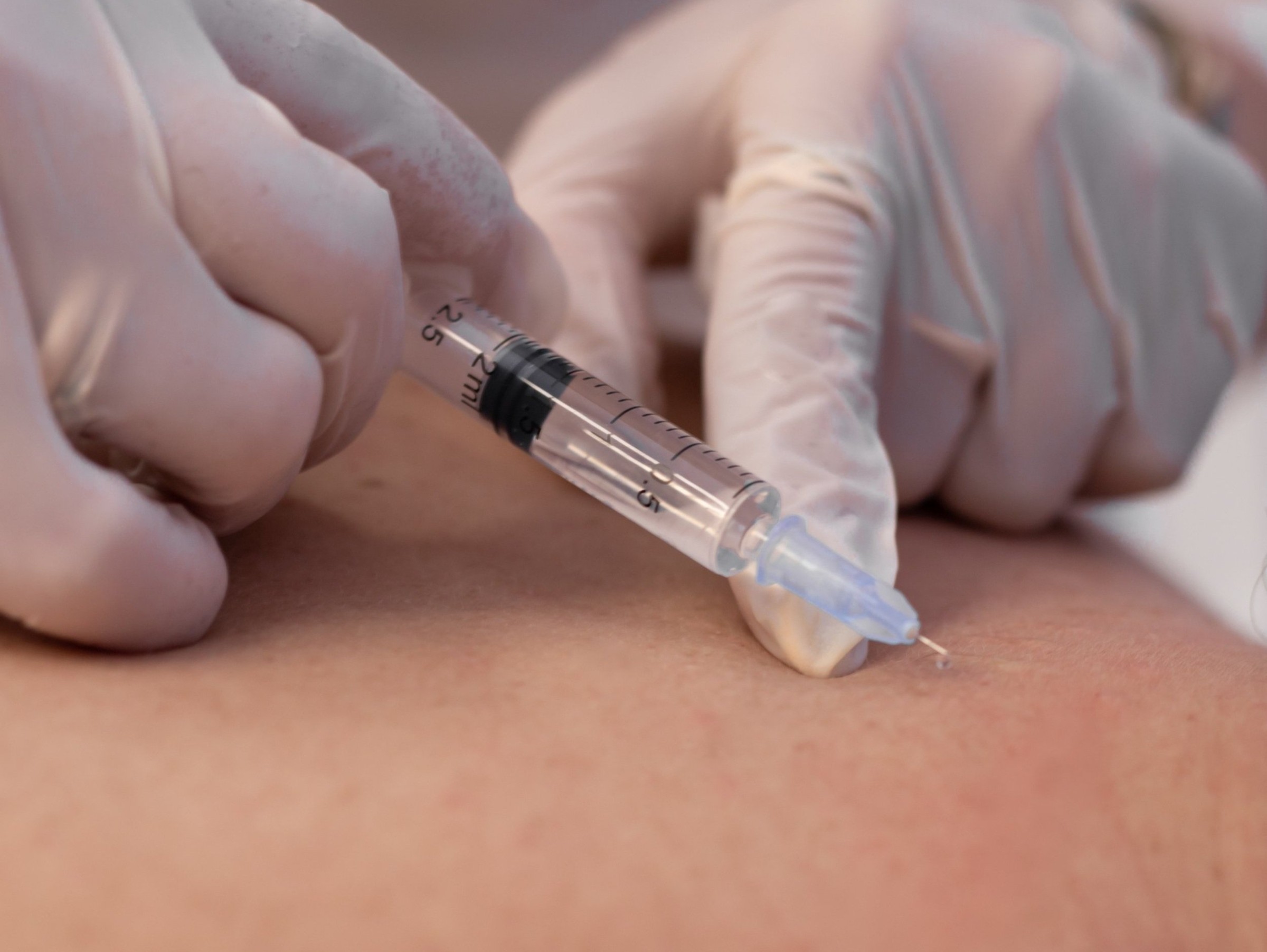
HPL Fat-Dissolving Injection: How It Works, Number of Sessions, and Swelling
A principle-first look at how HPL fat dissolving injections break down fat cell membranes and how the broken-down fat actually leaves the body. We also cover why dosing and session counts differ by treatment area, and how much swelling and downtime to expect.
By Dr. Lee