Titanium Lifting Effect and Limits, and How It Differs From Ultherapy and Thermage
By Dr. Lee11 min read
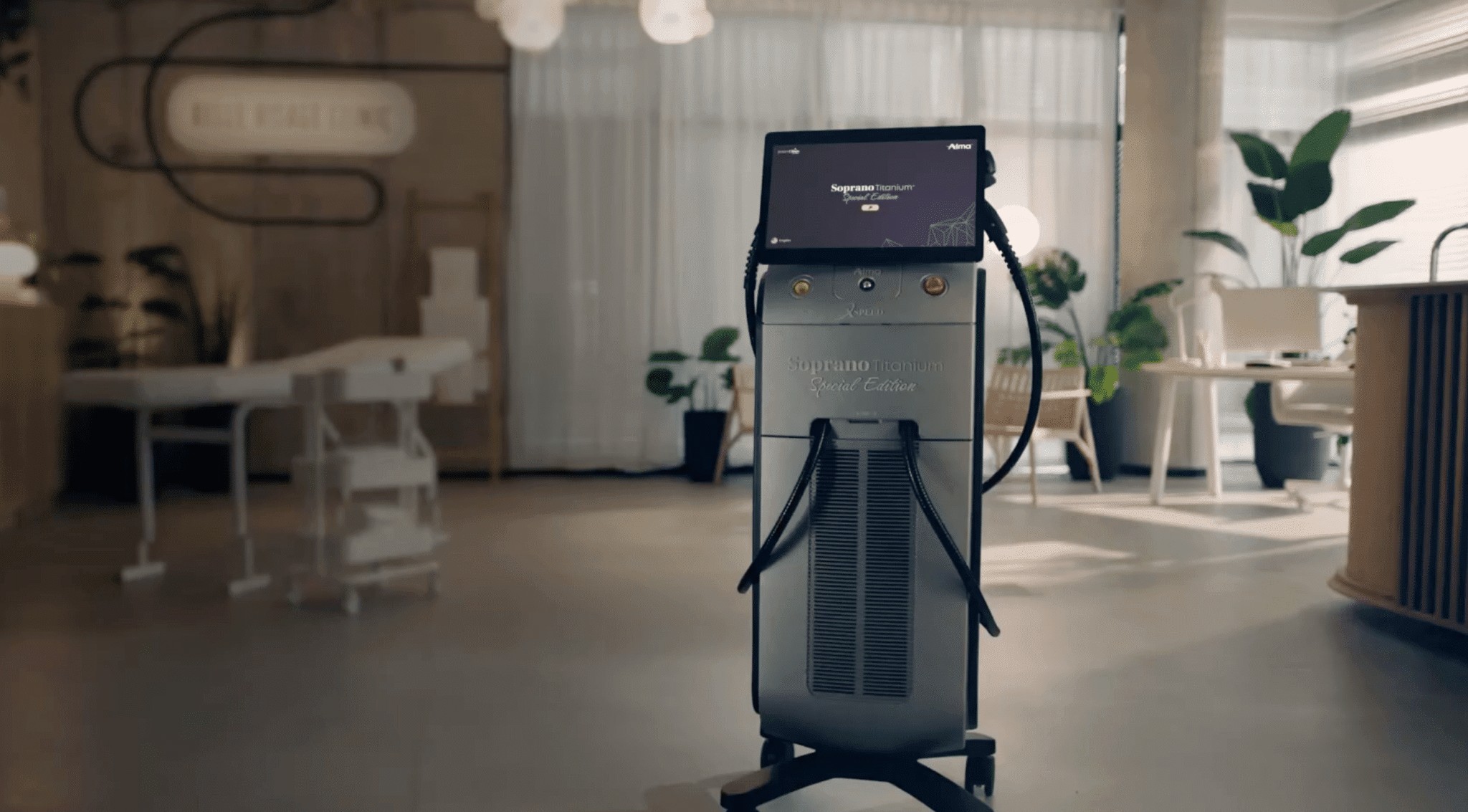
If you've been researching non-invasive skin tightening, chances are Soprano Titanium has come up. It's marketed as a laser lifting treatment with no numbing cream, no recovery time, and a price that undercuts Ultherapy or Thermage by a meaningful margin. The appeal is real. What's less clear, and what tends to get buried under the marketing, is what this device actually does, and how solid the evidence behind it is.
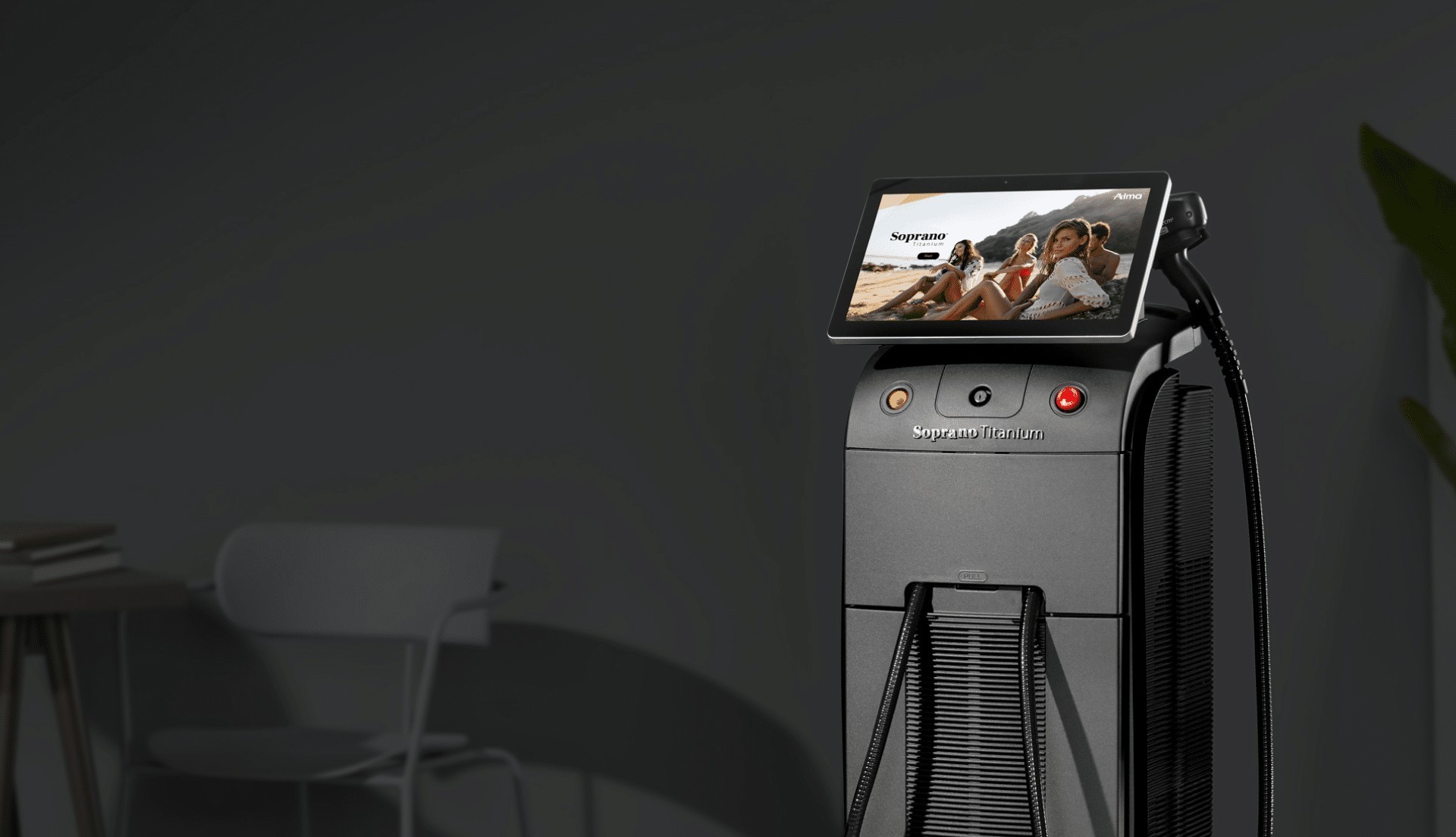
Soprano Titanium is made by Alma Lasers, an Israeli medical device company with a large US footprint. The device fires three wavelengths simultaneously, 755 nm, 810 nm, and 1064 nm, a combination Alma originally engineered for laser hair removal. The skin-tightening application emerged later, when clinicians noticed that the thermal energy delivered during hair removal sessions was producing visible improvements in skin firmness and texture. That history matters. Soprano Titanium isn't a device built from scratch to lift tissue; it's a hair removal laser whose thermal effects have been adapted for skin rejuvenation. Knowing that going in makes it considerably easier to calibrate expectations.
What Kind of Laser Is Titanium Lifting?
The three wavelengths aren't arbitrary; each penetrates to a different depth in the skin.
At 755 nm, the laser targets the epidermis and superficial dermis, the zone that influences skin tone, texture, and pore appearance. The 810 nm wavelength reaches the mid-dermis, where the bulk of collagen fibers sit. At 1064 nm, the deepest of the three, the energy reaches the lower dermis and structural support layer. Firing all three simultaneously means the device heats skin across a range of depths in a single pass.
Soprano Titanium is non-ablative, which is the core reason for the clean recovery profile. It doesn't resurface or wound the skin surface. Instead, light converts to heat inside the dermis without breaking the skin barrier, which is why there's no peeling, crusting, or meaningful downtime. A built-in contact cooling system chills the skin surface while heat accumulates in the deeper layers, keeping the treatment tolerable without topical anesthetic for most patients. Sessions typically run 20 to 30 minutes, and most people walk out and go straight back to their day.
In practice, providers use different delivery modes: a multi-pass sweeping approach that spreads energy broadly and keeps the surface safe, or a more concentrated mode that focuses heat in a targeted zone. The treatment is cumulative by design; it warms the dermis repeatedly rather than delivering a single high-intensity pulse to each point.
One distinction worth holding onto: this is not a focused thermal injury device the way Ultherapy or Thermage are. Those technologies create defined injury zones specifically designed to trigger wound-healing collagen remodeling. Soprano Titanium's thermal stimulus is milder and more diffuse, which is both why it's comfortable and why the tissue response tends to be more gradual.
How Does Titanium Lifting Tighten Skin?
The mechanism is thermal collagen remodeling, the same biology underlying every energy-based skin tightening device, delivered here in a gentler form.
When laser energy hits water and chromophores in the dermis, it converts to heat. Collagen responds in two distinct phases. The first is immediate contraction: research has shown that collagen's triple-helix structure begins to denature around 54°C, causing existing fibers to shrink rapidly. This is what accounts for the slight firmness some patients notice right after treatment; it's real collagen contraction, not just transient swelling.
The second phase drives the lasting effect. Thermal stimulus activates fibroblasts, which begin producing new collagen and elastin in a process that unfolds over four to eight weeks. Results from Soprano Titanium are not immediate the way surgical outcomes are. The skin continues improving for one to two months after each session, and the full benefit from a series usually isn't apparent until six to eight weeks after the final treatment.
Standard protocols call for three to five sessions spaced two to four weeks apart, precisely because the benefit is cumulative. One session does something; the series builds on itself; the collagen matures afterward. Assessing Soprano Titanium after a single visit consistently leads to underestimation; the biology simply doesn't operate on a same-day timeline.
The comfort follows naturally from the physics. Heating the dermis while cooling the surface reduces the sharp, stinging quality associated with more aggressive thermal treatments. Most patients describe the experience as warm pressure with occasional mild heat spikes. Rarely more than that.
How Far Does the Evidence for Lifting Go?
The honest answer: the direct evidence is promising, but thin.
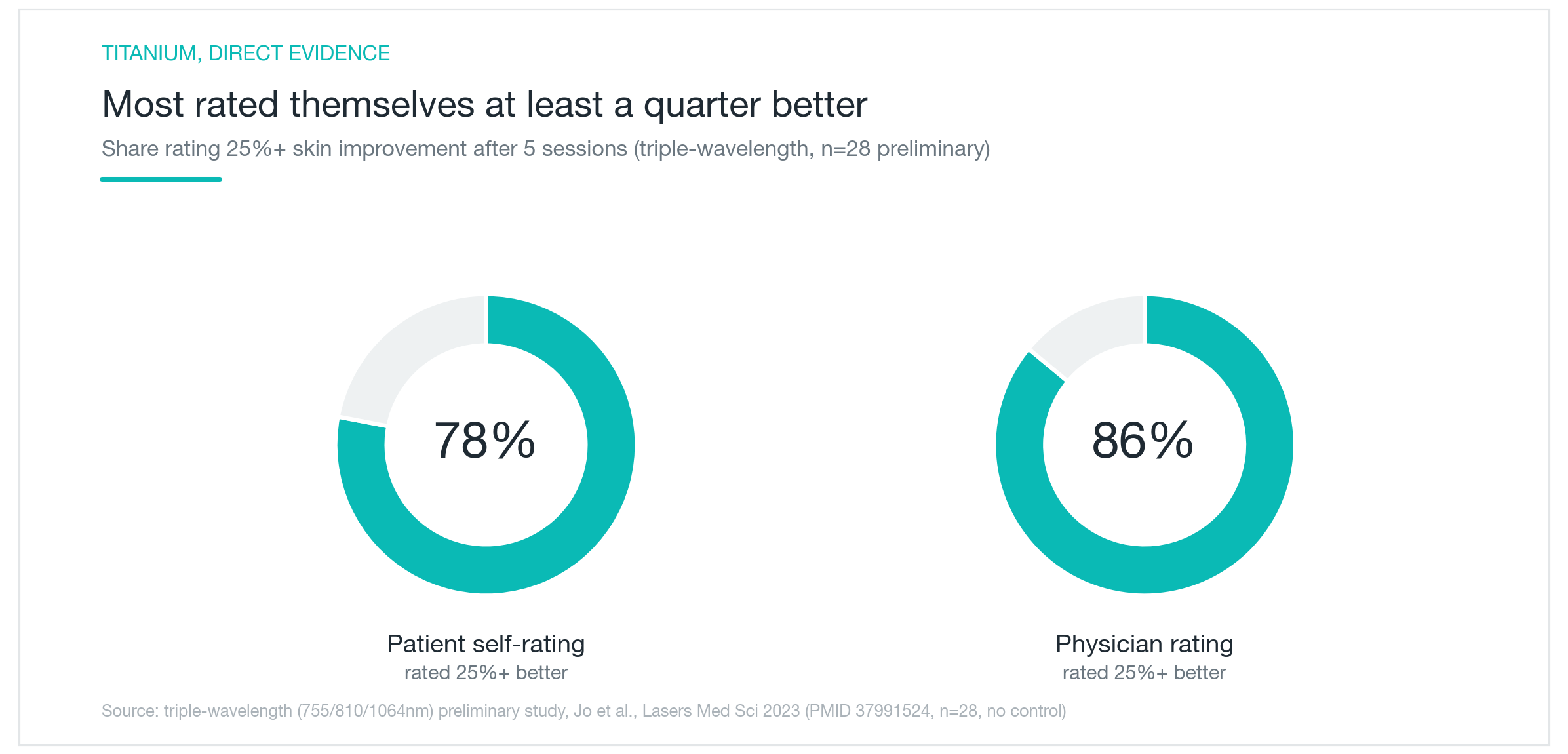
The closest thing to a Soprano Titanium-specific study is a small Korean pilot trial using the same triple-wavelength diode laser. Twenty-eight women completed five treatments two weeks apart. At follow-up, 78% of patients self-reported at least 25% improvement in skin firmness, and 86% of independent dermatologists assessed the same threshold of objective improvement. Skin biopsies confirmed increased collagen and elastin in the dermis, which matters because it shows the mechanism is actually occurring at a tissue level, not just perceived.
The limitation is embedded in the design: 28 participants, no control group, no placebo comparison. Without a randomized controlled trial, it's impossible to fully separate the laser's contribution from natural variation or other factors. By evidence-grading standards, this is a pilot study; it establishes direction and biological plausibility, not definitive efficacy.
Where does that leave things? Somewhere between "doesn't work" and "impressive lifting device." The more accurate framing: evidence is directionally positive and biologically credible, but limited in scale and rigor. For patients hoping for the tissue repositioning that Ultherapy delivers to the SMAS layer, expectations need resetting. For patients seeking a comfortable, gradual approach to improving skin firmness, texture, and overall quality, the data supports that reasonably well.
Before-and-after photos in clinic marketing deserve scrutiny, not dismissal. Lighting, angle, and often concurrent treatments all influence how dramatic a result looks in a photograph. Individual study results in controlled settings are consistently more modest than the best-case images used to promote a device.
Effect on Fine Lines and Pores
The 1064 nm wavelength in Soprano Titanium belongs to a well-characterized class of near-infrared lasers, and this is where the supporting evidence base is more robust, though it applies to the wavelength family, not specifically to Soprano Titanium.
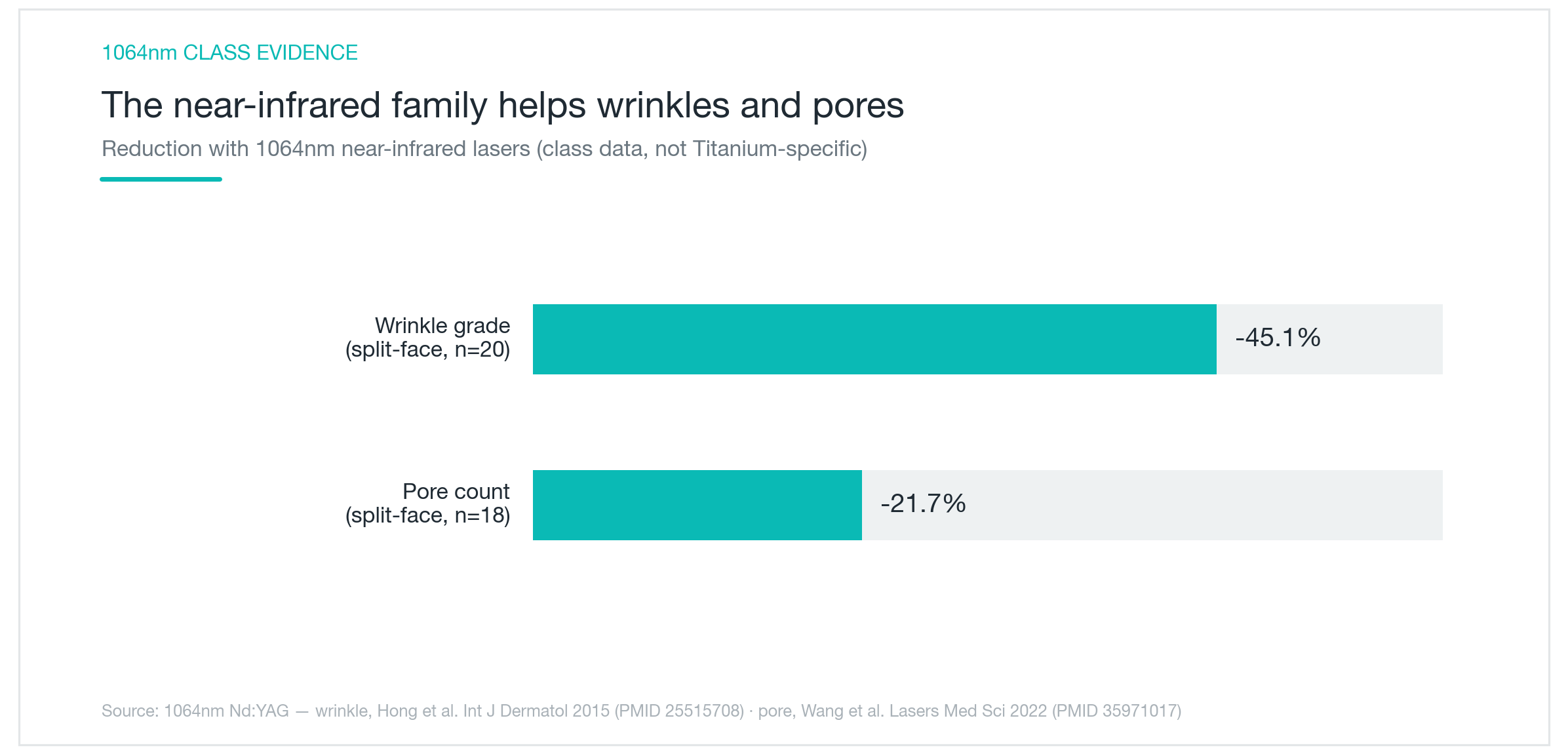
Studies on standalone 1064 nm near-infrared lasers show meaningful improvements in fine lines and pore size. One split-face study measured approximately a 45% reduction in wrinkle grade. A separate study counted actual pores and found roughly a 22% decrease. The chart above shows both figures. The underlying mechanism, heat-stimulated collagen synthesis in the superficial and mid-dermis, is the same one driving Soprano Titanium's effect at this wavelength.
The qualifier remains important: these were standalone 1064 nm devices, not Soprano Titanium's triple-wavelength combination. How the additional 755 nm and 810 nm wavelengths interact with the 1064 nm effect in a combined delivery isn't specifically characterized. The class evidence tells us what one component of the system can do; it doesn't fully describe the combined system.
That said, the pattern in the literature is consistent. Near-infrared wavelengths in this range reliably improve fine lines and minimize pore appearance. In the same studies, other wavelength ranges produced somewhat larger pore reduction at different tissue depths, which illustrates a broader point: wavelength selection and energy depth determine what you're actually targeting.
The 755 nm component often gets cited for skin brightening, specifically improving tone evenness and reducing dullness by acting on superficial melanin. This is subtler than whitening or depigmentation; it's more about clearing mild irregularity and restoring a more uniform surface quality. But the same melanin affinity carries a real clinical caution. In patients with melasma or darker Fitzpatrick skin types (IV to VI), stimulating melanin can worsen pigmentation rather than improve it. This isn't a minor footnote; it's a meaningful contraindication that needs explicit discussion before committing to treatment.
Soprano Titanium fits best in a specific clinical window: skin that's starting to roughen, where pores are enlarging, fine lines are multiplying, and tone is becoming uneven, but where structural laxity hasn't yet become the dominant concern. It's better positioned for refinement and early intervention than for correcting visible sagging.
Satisfaction and Duration of Effect
Satisfaction data for Soprano Titanium class treatments runs notably high, even against modest objective measurements.
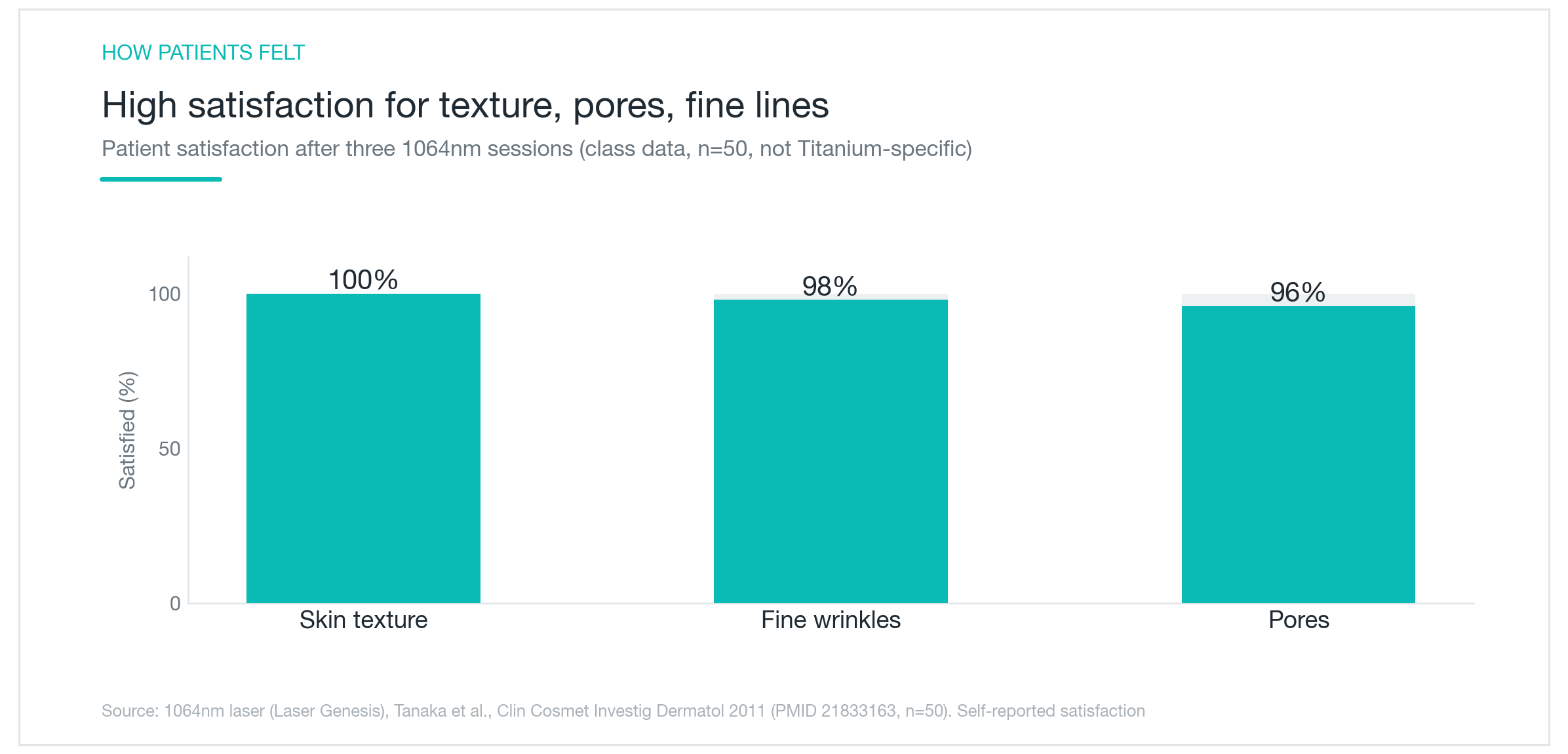
A study of 50 patients treated with a 1064 nm laser across three sessions found satisfaction rates of 100% for skin texture improvement, 98% for fine lines, and 96% for pore appearance. These are unusually high numbers for a non-invasive procedure. Part of it reflects the treatment experience, no downtime, minimal discomfort, subtle but visible improvement that compounds over time. When expectations are calibrated correctly and the experience is comfortable, satisfaction tends to follow even when the objective change is moderate.
It's worth distinguishing patient-reported satisfaction from objective measurement. Subjective ratings are influenced by pre-treatment framing, the clinic environment, and the natural placebo component in any aesthetic treatment. High satisfaction rates are meaningful, but they don't necessarily reflect proportionally large objective improvement. Reading both together gives the more complete picture, which is how this article presents the data throughout.
Durability varies considerably between patients. Collagen-stimulating treatments from energy devices are generally estimated to maintain their effect for six months to a year, with individual variation on both ends. How long results hold depends on baseline skin quality, age, and individual collagen production capacity. A 35-year-old with good baseline skin and a 55-year-old with more significant laxity will not get the same duration from the same protocol.
Because aging continues, a single course of treatment isn't a permanent solution for most patients. Those who respond well often schedule a maintenance session or two annually to preserve what the initial series built. Planning for that upfront, thinking in terms of annual investment rather than a one-time cost, tends to produce more realistic long-term expectations. It also bears saying: consistent SPF and a solid moisturizing routine are unglamorous recommendations, but they genuinely extend how long any energy-based result holds.
How Does It Differ From Ultherapy and Thermage?
Each major non-invasive lifting platform works through different physics.
Ultherapy uses focused ultrasound to deposit precisely targeted thermal injuries at specific depths, including the SMAS fascia, the same anatomical plane addressed in a surgical facelift. Thermage FLX uses monopolar radiofrequency current to heat the deep dermis and subcutaneous tissue over a broad area. Soprano Titanium uses multi-wavelength light to heat dermis across a range of depths simultaneously. Different energy types, different target depths, different intensities of stimulus.
From a published evidence standpoint, Ultherapy and Thermage FLX carry substantially thicker clinical records than Soprano Titanium. That reflects how long each device has been on the market and how much investment went into generating clinical and regulatory data. It's not a statement that Soprano Titanium is ineffective; it's a statement that clinical confidence is narrower when the dataset is smaller.
A few marketing claims circulating about Soprano Titanium deserve close reading. Descriptions of the laser "penetrating 8 to 10 mm" reference the theoretical optical depth of light in tissue, not the depth at which therapeutic heating actually occurs. Those are meaningfully different figures. Claims about lifting without volume loss haven't been tested in head-to-head comparative studies. And the 755 nm wavelength's melanin affinity is a genuine clinical risk in patients with active melasma or darker Fitzpatrick skin tones, not a minor disclaimer buried in the consent form.
Soprano Titanium is well suited for patients who want to improve skin quality, firmness, texture, pore size, fine lines, and tone evenness, without needles, anesthesia, or recovery time, and who understand they're investing in gradual improvement rather than a single dramatic change. It works well as a prevention and maintenance tool for patients in their 30s and 40s who want to stay ahead of laxity before it becomes structural. It's also a reasonable entry point for someone curious about energy-based treatments who isn't ready to commit to the intensity and cost of Ultherapy or Thermage.
For patients whose primary goal is meaningful tissue repositioning, such as visible jowling, significant neck laxity, or deeper facial sagging, Soprano Titanium isn't the right tool. That degree of change requires either more concentrated thermal energy or surgical intervention. Similarly, if the goal is aggressive surface resurfacing for deep wrinkles or acne scarring, a fractional laser like Fraxel addresses that concern differently and more directly.
A good consultation isn't about determining whether Soprano Titanium works in the abstract. It's about determining whether your specific concerns fall within what the device can realistically deliver. When that match is honest, outcomes tend to be good. When it isn't, no amount of comfort and convenience compensates for a result that didn't meet the actual goal.
Was this helpful?
About this article
Written by a practising aesthetic physician and intended for general education — not a substitute for individual medical advice.
Read next

Density Lifting Effects: How Does It Compare With Thermage?
A plain look at what Density RF actually is, how its dual monopolar-bipolar mode differs from single-mode RF like Thermage, what the clinical evidence shows, how much it hurts, what downtime to expect, and who is and isn't a realistic candidate.
By Dr. Kim
10THERMA Lifting: Effect and Pain, and How It Differs From Thermage
A look at what 10THERMA actually is, how it compares to Thermage as a monopolar RF device, what dedicated clinical evidence shows, how much it hurts, and who it suits best.
By Dr. Kim

Apogee Plus Hair Removal: Effects, Sessions and Precautions by Skin Tone
A clear-eyed look at Apogee+ laser hair removal, how the alexandrite 755nm wavelength targets follicles, what clinical studies actually show, how many sessions to expect, whether it treats pigmentation, and who it works best for across all skin types.
By Dr. Lee