Thermage RF Effect and Duration, Including How It Differs From Ultherapy
By Dr. Kim13 min read
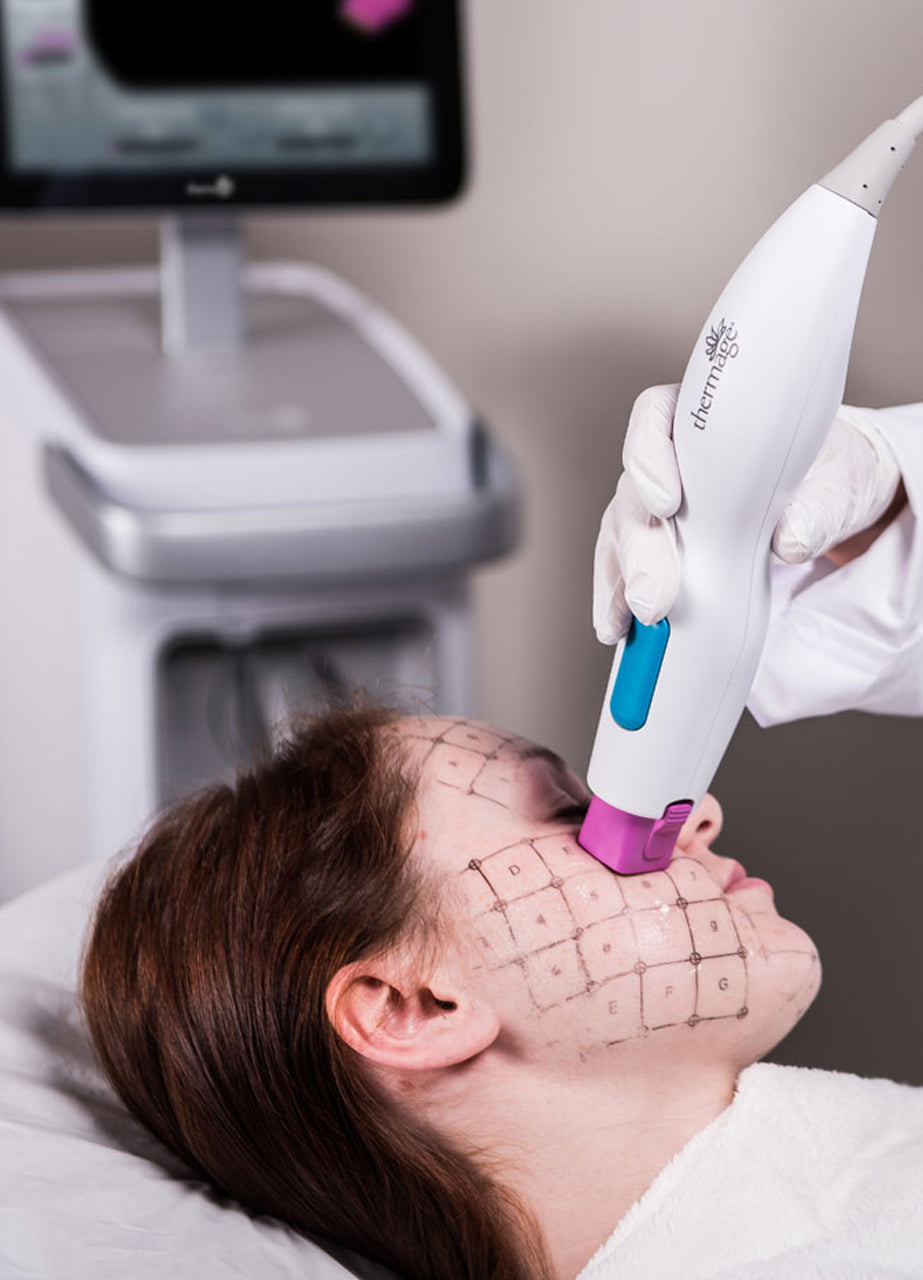
Skin laxity is, at its core, a collagen problem. As dermal collagen thins and loses its architecture with age, the structural support that once kept skin taut gradually gives way. Thermage targets this directly with monopolar radiofrequency (RF) energy, heating deep in the dermis while actively cooling the skin surface, triggering an immediate tightening of existing collagen alongside a slower rebuild of new collagen over the following months. No needles, no incisions, no meaningful recovery.
It's been in clinical use long enough to have accumulated one of the more substantial evidence bases among non-surgical tightening platforms. That counts for something. But results aren't dramatic or immediate, and there's no shortage of confusion, in both directions, about what this treatment actually delivers and where it runs out of steam. What follows is a breakdown of the mechanism, the clinical data, how Thermage compares to Ultherapy, and who's actually a reasonable candidate.
How Does Thermage Cool the Surface and Heat Only Within?
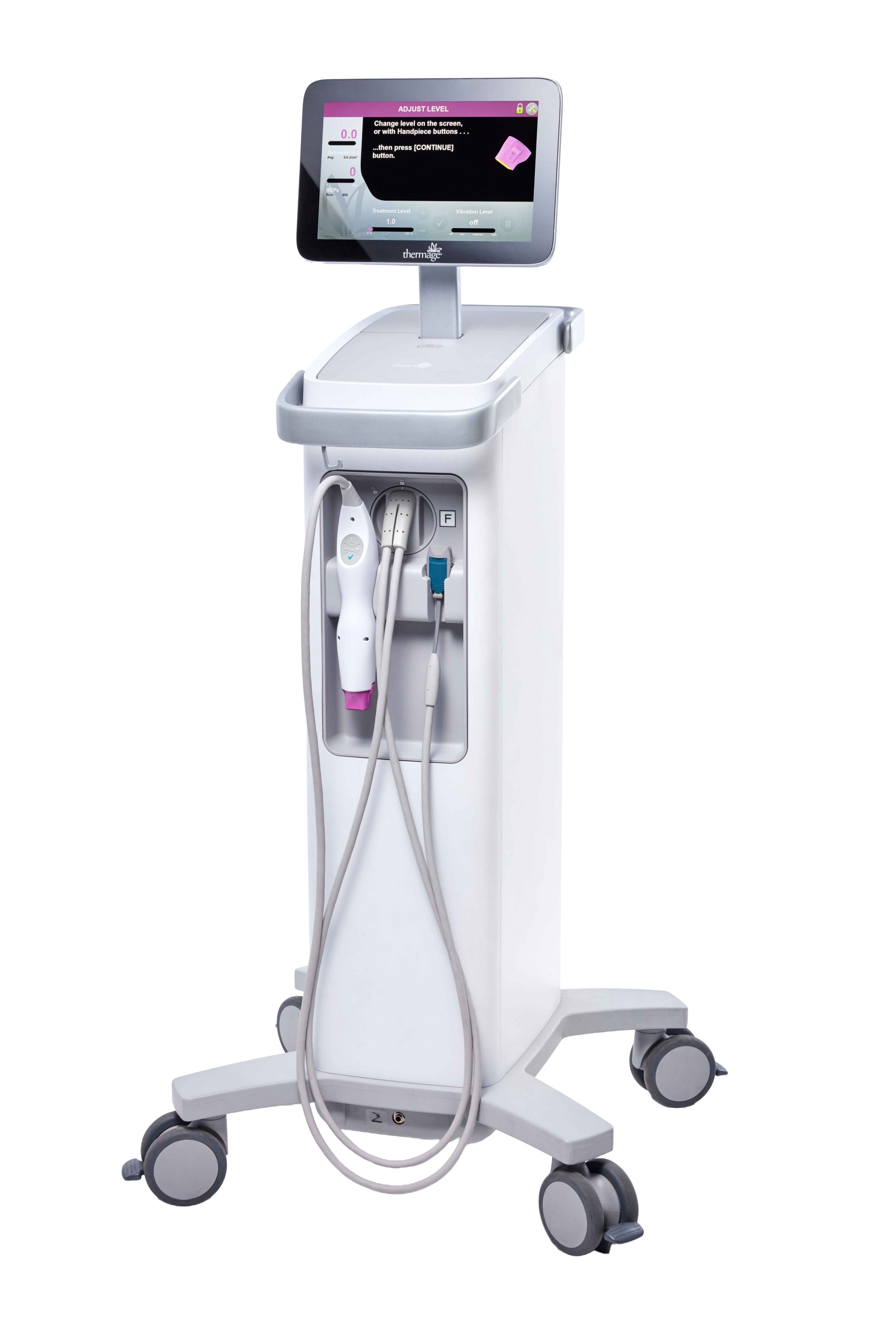
Thermage is a monopolar RF platform. A broad treatment tip is pressed flat against the skin, delivering RF energy that spreads as volumetric heat through the dermis while a built-in cooling system protects the surface. That simultaneous heat-and-cool approach is the core of how it works: by actively shielding the epidermis, the device can deliver therapeutic energy levels to the deep dermis without risking surface burns.
The deep heat accomplishes two things at once. Collagen fibers contract immediately, which is why patients sometimes notice skin looking slightly firmer right after treatment. Then, over the following weeks and months, the mild thermal injury signals fibroblasts to synthesize new collagen, gradually rebuilding some of the structural density that age has eroded. Immediate tightening and slow regeneration are two distinct mechanisms running on completely different timescales, even though both originate from the same single session.
Each treatment tip is single-use, and the protocol is built around a predetermined shot count delivered evenly across the treatment area. Even distribution matters more than most patients realize; the entire rationale is uniform dermal heating, not concentrated focal points. Current Thermage FLX systems pair RF delivery with mechanical vibration that helps distribute the sensation and makes treatment considerably more tolerable than older generations of the device.
The system works across a range of areas. Larger tips cover broad regions like the cheeks and abdomen; smaller, specialized tips handle fine zones around the eyes and mouth. The same monopolar RF physics apply to off-face indications such as loose skin on the abdomen, inner arms, and thighs, though larger surface areas require proportionally more energy and time.
One thing worth saying clearly: home-use RF devices are a different category entirely. They warm the skin surface. Thermage delivers therapeutic energy levels to the deep dermis with active surface cooling, a fundamentally different mechanism at a completely different tissue depth. The fact that both carry the "radiofrequency" label is mostly an accident of nomenclature.
The sensation during treatment is a short heat pulse followed immediately by a cooling flush, repeated in quick succession across the face. Most patients describe it as sharp warmth giving way to a cool sensation, uncomfortable but manageable, especially with the vibration assist. The rhythm becomes predictable after a few passes.
The comparison that comes up constantly is Thermage versus Ultherapy. Ultherapy uses focused ultrasound to target the SMAS layer, the same deep fascial plane a surgeon would work in, at precise focal points. Thermage heats the dermis more broadly and uniformly. Different tissue targets, different mechanisms, different clinical trade-offs. Both are distinct from fillers, which restore volume, and from biostimulatory injectables like Sculptra: Thermage adds nothing, only uses the body's own thermal response to remodel what's already present.
Evidence That Collagen Really Increases
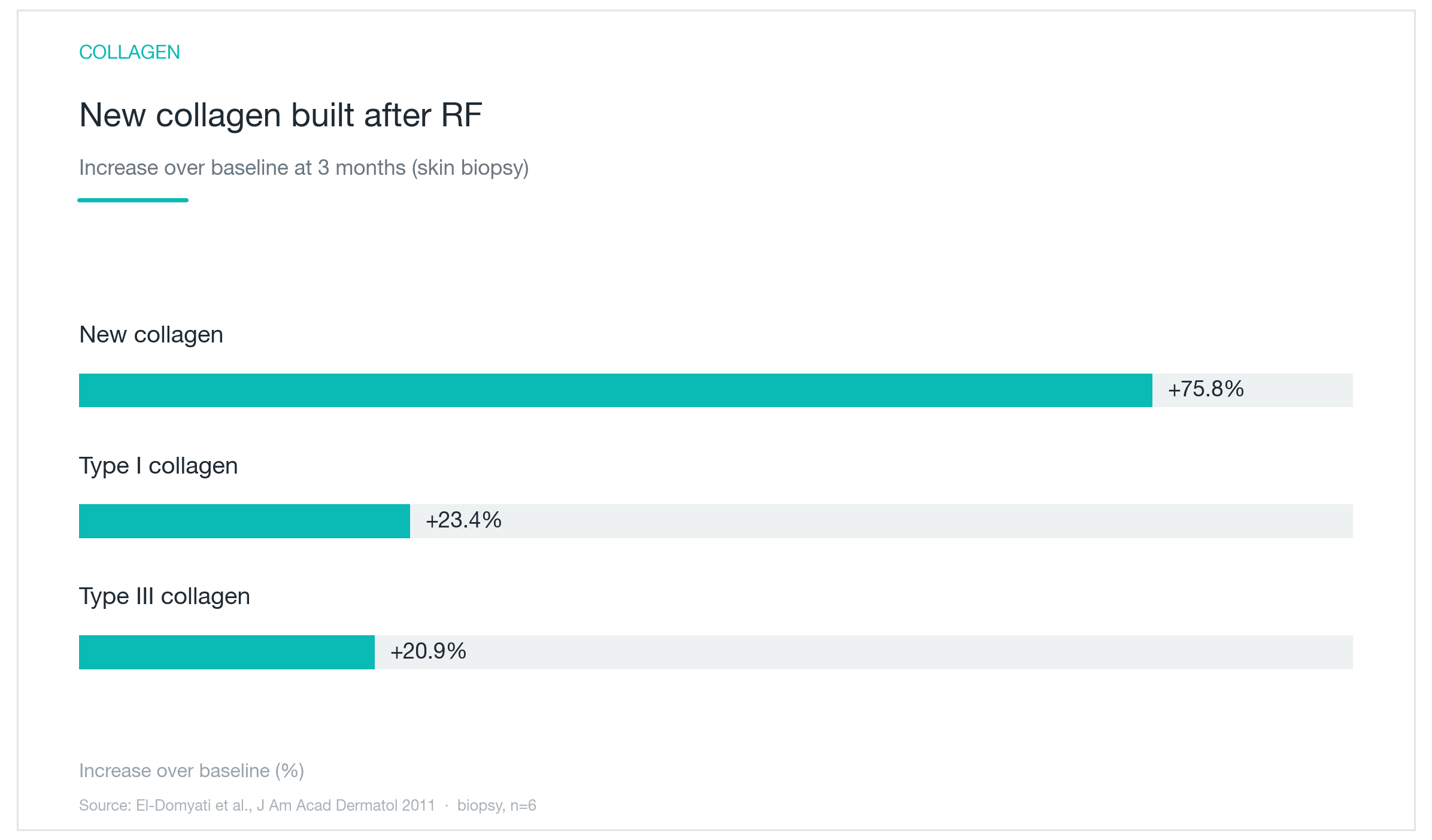
The claim that Thermage stimulates collagen production isn't just marketing; there's biopsy data behind it. The chart above is from a study that biopsied treatment sites three months after a single session. New collagen was up approximately 76% from baseline. Type I collagen, the primary structural type, increased by approximately 23%. Type III collagen, the early-phase repair type, was up approximately 21%. The bars clear the baseline line clearly.
The molecular pathway has also been worked out. Research has demonstrated that RF stimulation activates p38 MAPK signaling in fibroblasts, upregulating expression of collagen synthesis genes. The heat isn't just warming tissue; it's switching on a repair program. The mechanism resembles wound healing in a useful analogy: controlled thermal injury triggers the same collagen-rebuilding cascade that closes a wound, without the actual wound.
The collagen that forms isn't mature from day one. Early in the repair sequence, softer Type III collagen scaffolds the area, then gradually converts to denser, more durable Type I over weeks and months. This is why results continue improving two to three months after treatment; the collagen is still maturing. When patients ask why nothing seems to be happening at two weeks, that's the honest answer.
One caveat the same study found, and honesty here matters: elastin content actually decreased after treatment. Thermage stimulates collagen, not elastin. That's not a reason to avoid the procedure, but it's a reason not to oversell it as full tissue rejuvenation. It does specific things well and doesn't do everything. Worth noting too that this was a biopsy study of six subjects, so the directional findings are credible, but the specific percentages warrant some interpretive humility.
How Long Does New Collagen Last?
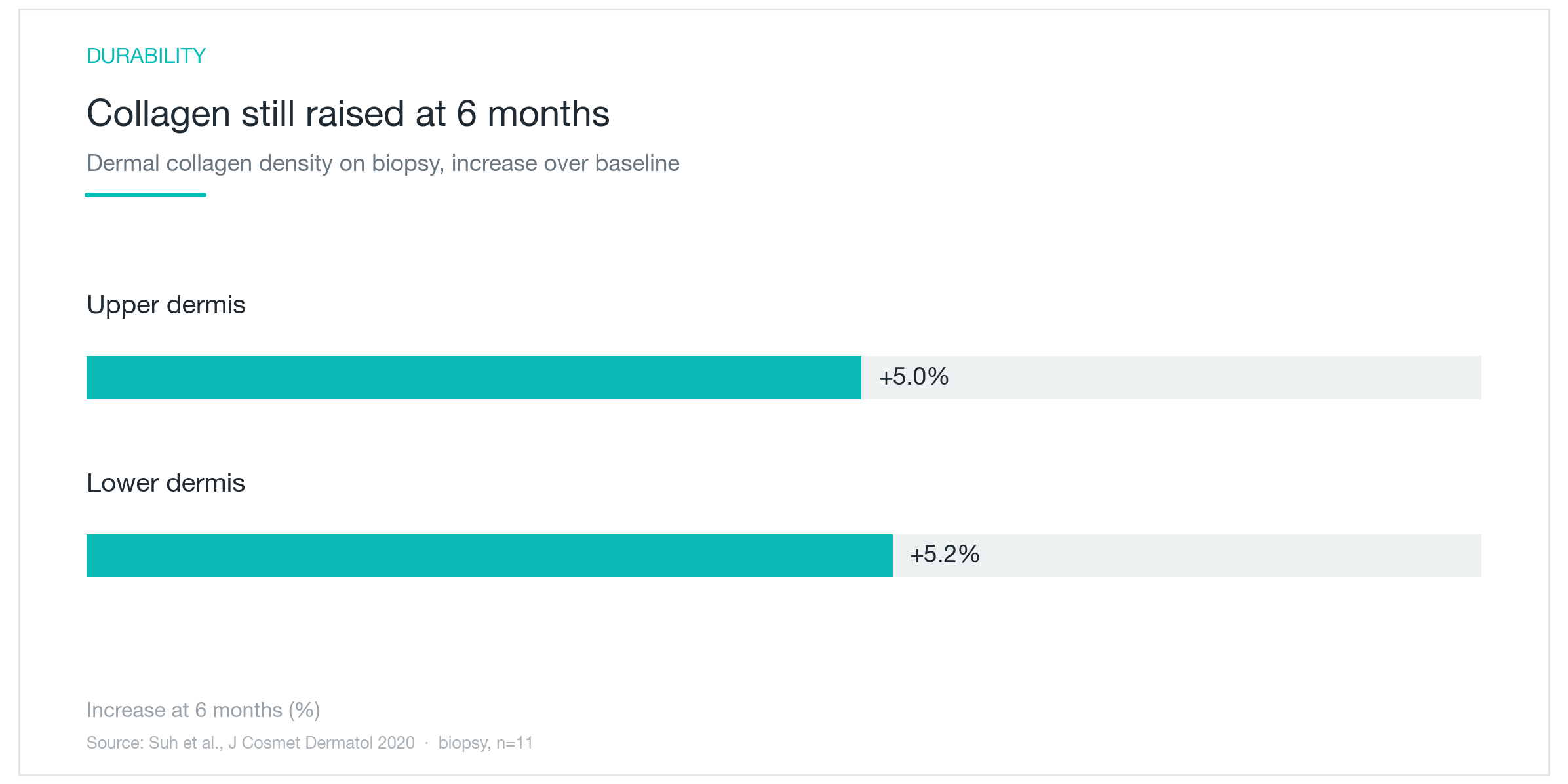
One of Thermage's genuinely useful features is that the collagen it stimulates tends to stick around. The chart above comes from a follow-up study that biopsied treatment sites six months post-treatment: upper dermis collagen density remained approximately 5.0% higher than pre-treatment, lower dermis approximately 5.2% higher. These aren't dramatic numbers. But collagen that was trending downward has turned around and stayed elevated six months out; that's real durability.
Understanding the full result timeline is worth knowing in advance. Immediately after treatment, some patients notice subtle tightening from the instant collagen contraction. Then, for the next one to two weeks, not much seems to happen. This plateau phase is where impatient patients come back convinced the treatment didn't work; the answer is that collagen remodeling takes time, and they're in the quiet build phase. Visible improvement typically starts around the one-month mark and peaks somewhere between two and four months out.
Patients who don't know this timeline will evaluate the treatment during its least impressive phase. Getting this right matters enormously for both expectation management and for giving the treatment a fair assessment window.
Results are commonly cited as lasting one to two years, with the understanding that aging continues throughout and eventually reclaims some of the ground the treatment gained. Most patients who find real value in Thermage treat it as a maintenance platform, periodic sessions at intervals that match their pace of laxity progression, rather than a single definitive fix. Factors that accelerate collagen breakdown, notably unprotected UV exposure and smoking, directly shorten how long gains persist. Sunscreen isn't a generic aftercare disclaimer here; it's an actual variable in outcome duration.
Interval between sessions is individualized. Someone with faster-progressing laxity might return yearly; someone with slower changes may go longer. The principle is the same: wait until the collagen from the previous session has fully matured and stabilized before doing the next round. And because change happens slowly, before-and-after photos taken under the same conditions end up being far more useful than memory for actually seeing what changed.
How Well Does It Work on Eye Wrinkles?
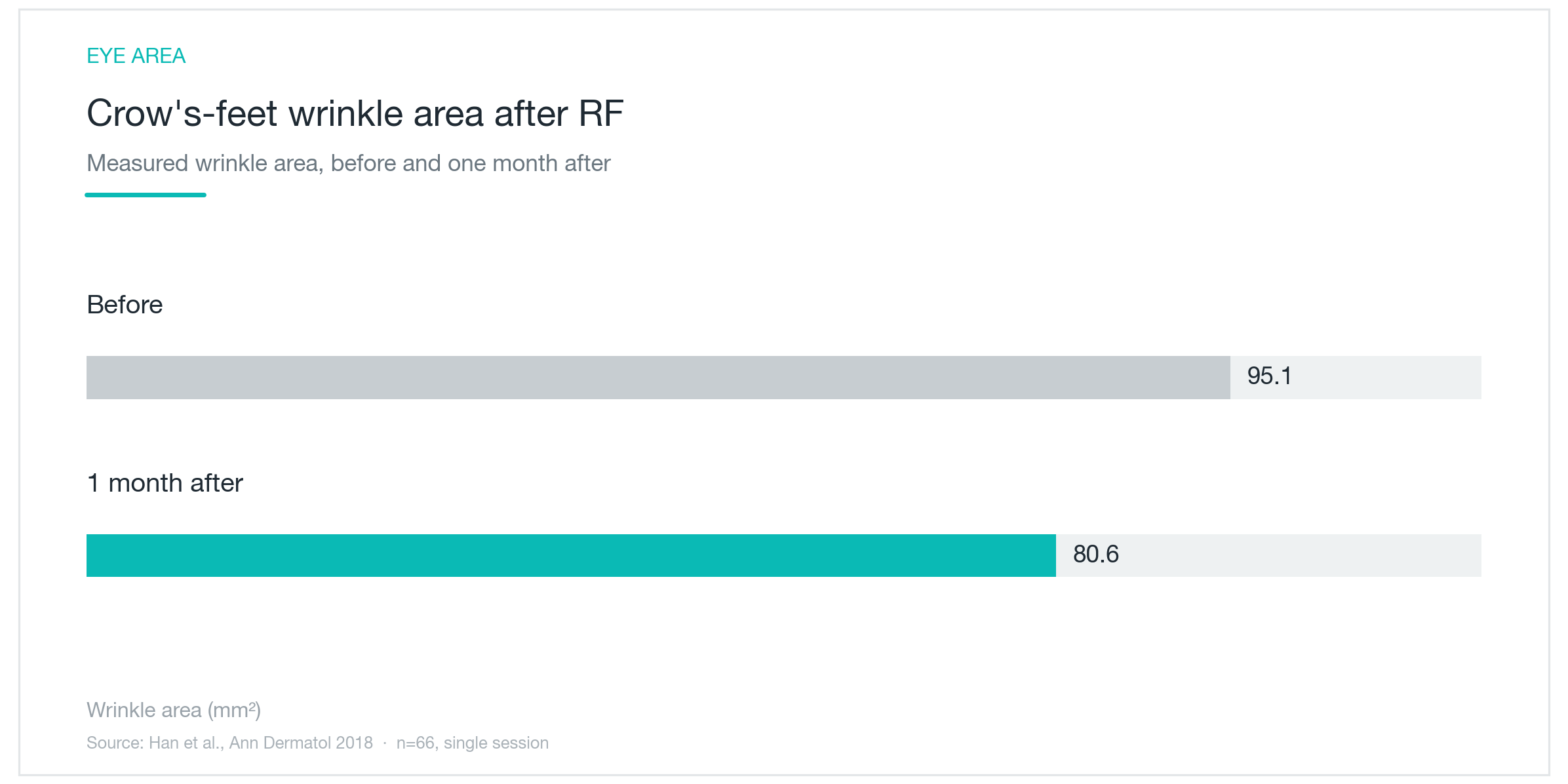
Thermage isn't limited to full-face protocols; it's used for periorbital treatment as well, where smaller specialized tips allow precise work around the eyes. The chart above shows what happened to periorbital wrinkle area one month after a single session: mean wrinkle area dropped from 95.1mm² to 80.6mm², a reduction of approximately 15%, quantified by direct measurement in 66 subjects. One session. One month. A measurable difference.
The same study found greater improvement in patients with more severe baseline wrinkling and in those over 55. Patients with minimal wrinkles and younger patients saw smaller changes. The clinical logic is straightforward: a tightening treatment works best when there's meaningful laxity to tighten. Preventive use on firm, elastic young skin is unlikely to produce noticeable results; there's simply less to contract and remodel.
Most patients tolerated periorbital treatment without anesthesia in this study, and the main side effects were mild erythema lasting one to two days. For patients bothered by early lid heaviness or fine lines at the outer corners of the eyes, even a modest improvement in this area can meaningfully change how rested and alert they appear.
The same principle extends to the forehead, cheeks, jawline, and neck, wherever early laxity is appearing. Each area responds with a somewhat different character. Periorbital: fine lines and mild lid heaviness. Cheeks: skin texture, pore refinement, surface firmness. Jawline: early jowling, definition of the mandibular border. Body areas such as the abdomen and inner arms follow the same physics but require more total energy and longer treatment time given their larger surface area.
For periorbital work specifically, the thin skin near the eye requires both protective eyewear during treatment and careful energy calibration. Patients with ptosis severe enough to impair the visual field have already exceeded what RF-based treatment can address; surgical evaluation is the appropriate conversation there.
How energy is distributed matters throughout, but especially here. Even coverage, neither too sparse for efficacy nor too concentrated for safety, is an operator skill that significantly determines both outcomes and comfort. The margin between effective and uncomfortable is narrower around the eyes than anywhere else on the face.
Skin Types That Do Well With It
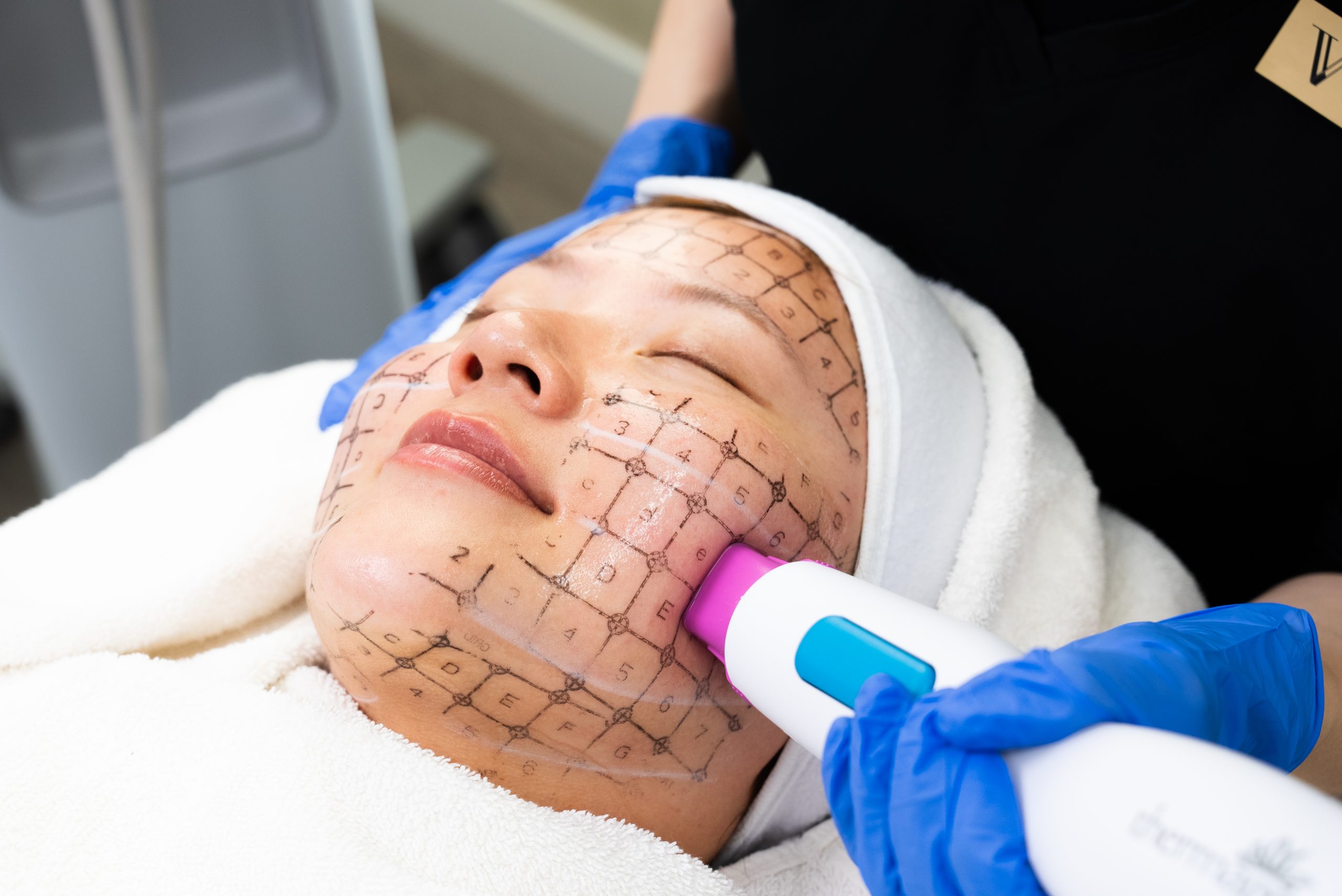
The profile for whom Thermage works well: mild to moderate facial laxity, skin that's starting to soften around the jawline and cheeks but not yet to the point where surgery is the appropriate conversation. Patients who want a natural, progressive improvement without downtime, who understand results build over months, and who accept that the change will be meaningful but not transformative.
The tightening effect is more perceptible in patients with some existing laxity than in those with very tight, elastic skin; there's more to tighten, more collagen scaffolding to wake up. Patients in their late 30s through early 50s tend to represent the sweet spot: enough laxity to see real improvement, enough remaining collagen reserve to respond well.
Where Thermage is the wrong tool: significant ptosis, deep jowling, or structural descent that requires deep fascial lifting. That's Ultherapy territory, with its SMAS-depth focused ultrasound, or it's a surgical consultation. Volume loss, hollow cheeks, deflated temples: that's a filler conversation, not RF. Thermage adds nothing; it only tightens what exists. Getting clear on whether someone's primary concern is laxity, volume, or surface texture is the most important question in any consultation, and trying to solve a volume problem with a tightening treatment consistently leads to dissatisfaction.
Combination approaches come up regularly. A common rationale: Ultherapy for deep structural lift, Thermage for surface-level collagen remodeling and skin quality improvement. Not because either is incomplete alone, but because the tissue targets genuinely complement each other. Whether mono or combination makes sense depends on which tissue layers are contributing most to the patient's concern.
Sequencing questions, like Thermage versus Botox versus filler versus resurfacing, don't have universal answers. They depend on which concern is primary and on the individual's timeline and tolerance. The general structural logic is to address laxity before adding volume, setting the foundation before filling it, but clinical judgment on individual presentations matters more than any rigid algorithm.
From experience, the patients most likely to be disappointed are those expecting a single session to reverse five years of aging. The patients most likely to be satisfied are those who understand this as systematic collagen maintenance, building and sustaining the structural foundation of their skin over time. They're the ones who look at three-month photos and understand what they're seeing.
How It's Done and Aftercare
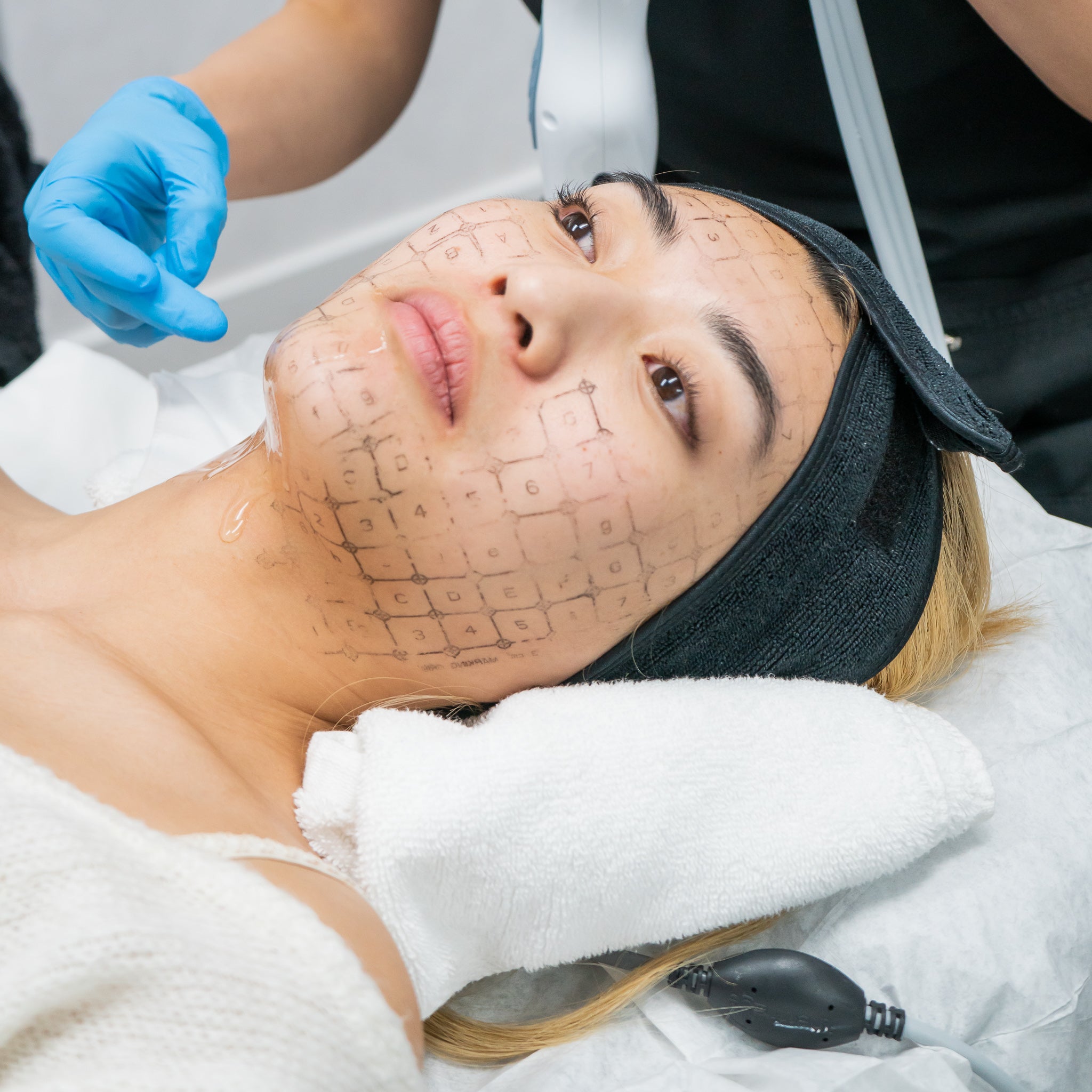
Treatment begins with application of a conductive gel, followed by systematic RF pulse delivery in a grid pattern across each zone. The provider works through a preset shot count, moving the handpiece to ensure even coverage; the goal is uniform dermal heating across the entire treatment area, not concentrated energy in isolated spots. A full-face session typically runs about an hour. No injection, no incision, no downtime: most patients return to normal activities the same day.
The immediate post-treatment experience is often a subtle firmness from the instant collagen contraction, though the primary results take months to fully develop. Post-procedure, mild flushing and mild swelling are common and typically resolve within a few days. Rare complications include small superficial burns and transient pigment changes. Avoiding activities that add significant heat to the skin (sauna, intense exercise) for the first 24 to 48 hours is a reasonable precaution, and consistent sunscreen use supports how long results persist.
Because this is an electrical energy-based treatment, certain contraindications need to be assessed. Active implanted electronic devices, such as pacemakers, cardiac defibrillators, and neurostimulators, are a hard contraindication. Metal implants in the treatment area must be disclosed. Pregnancy and active skin infections in the treatment zone are reasons to defer. Running through these questions in the consultation isn't box-checking formality; it's the practical foundation of a safe treatment.
Thermage is almost always done as a single session per treatment cycle, with the understanding that one appropriately energized session provides the collagen stimulus and the body handles the rest over the following months. Evaluating outcome at one week, as many patients do, tells you almost nothing. Two to three months is the minimum fair assessment window.
In the days before treatment, avoid aggressive exfoliation or active-based peels that might sensitize the skin barrier. After treatment, focus on barrier support: gentle moisturizer, consistent sunscreen, and a break from high-acid actives until any initial flushing settles.
One thing worth being direct about: operator skill matters significantly with Thermage. Too little energy produces minimal results. Energy that's too concentrated in the wrong places increases risk of discomfort and superficial thermal injury. The same device, in different hands, with different settings and coverage discipline, can produce substantially different outcomes. Choosing where to have this done is as important a decision as deciding to have it done.
Was this helpful?
About this article
Written by a practising aesthetic physician and intended for general education — not a substitute for individual medical advice.
Read next

Density Lifting Effects: How Does It Compare With Thermage?
A plain look at what Density RF actually is, how its dual monopolar-bipolar mode differs from single-mode RF like Thermage, what the clinical evidence shows, how much it hurts, what downtime to expect, and who is and isn't a realistic candidate.
By Dr. Kim
Ultracol PDO Effect and Duration, Including Differences From Lifting Threads
Ultracol isn't a thread lift. It's a skin booster made by grinding PDO into microscopic particles, suspending them in liquid, and injecting them to trigger new collagen. Here's how the particles work as they break down, where they're placed, what determines how long results last, and how to care for your skin afterward.
By Dr. Lee

Pebbled Chin Botox: Results, How Long It Lasts, Dosage, and Side Effects
Chin botox (mentalis botox) smooths out the pebbled, orange-peel texture that shows up on an overactive chin. Here's how relaxing the mentalis muscle evens out the skin, the typical dose and injection points, when results appear and how long they last, how this differs from a weak or protruding chin, and the side effects worth knowing about, all backed by real evidence.
By Dr. Kim