Finasteride and Minoxidil: Differences and Combined Effect Compared
By Dr. Kim8 min read

When the hairline starts creeping back or the crown begins to thin, two names come up almost immediately in any search: finasteride (the oral pill) and minoxidil (the topical treatment). Both have been cornerstones of male-pattern hair loss care for decades, yet they work through completely different mechanisms, deliver different kinds of results, and come with their own considerations.
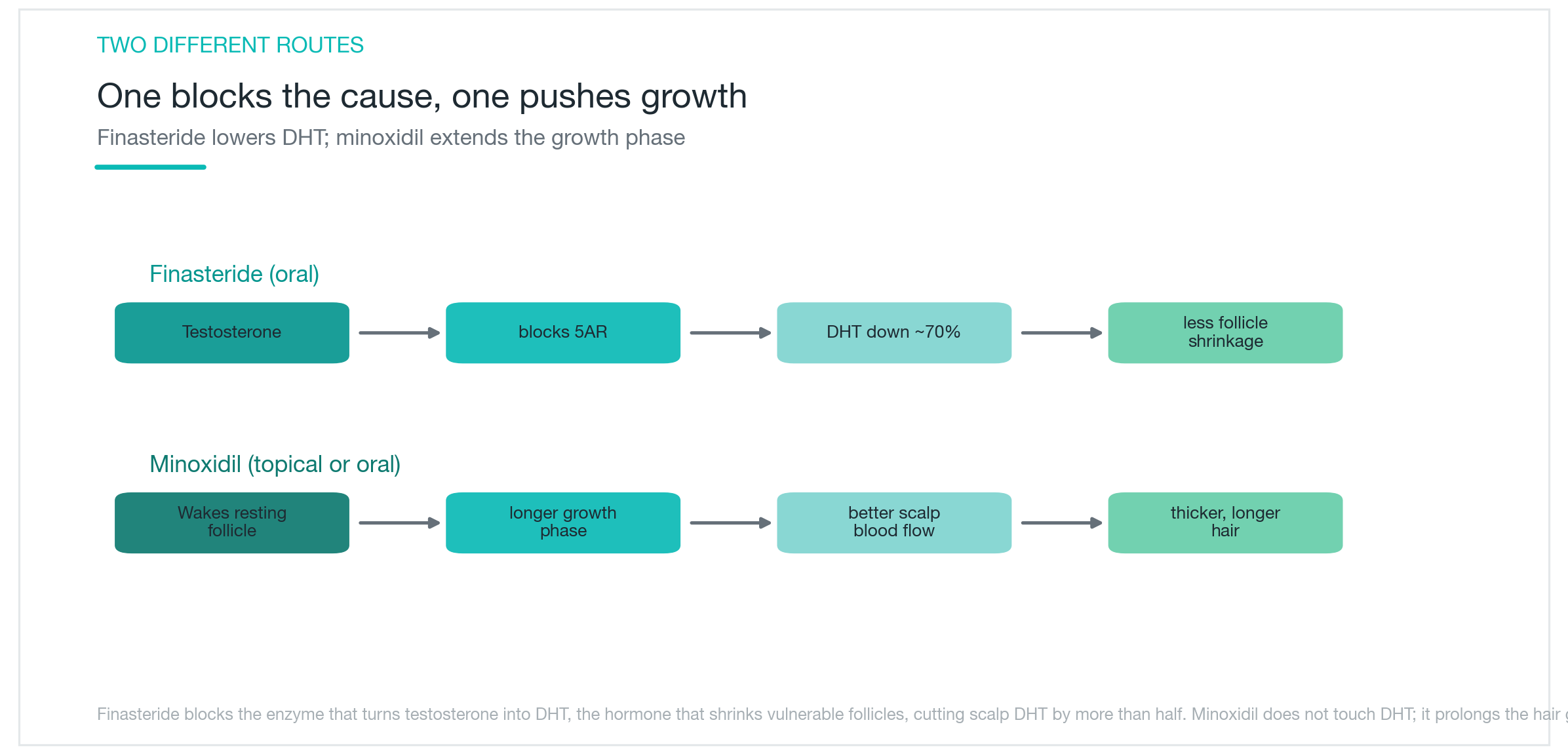
The short version: finasteride lowers the hormone that triggers hair loss, slowing shedding at its root, while minoxidil extends the active growth phase of each follicle, encouraging new hair to come in. One targets the cause; the other powers the growth. Because they aim at different targets, they complement rather than compete with each other, which is exactly why combining them makes clinical sense. Here's how each one works, what the published research shows, and what to keep in mind before starting.
How do finasteride and minoxidil differ?
The mechanisms are almost opposites. Finasteride works by blocking the conversion of testosterone into DHT (dihydrotestosterone), the more potent androgen that gradually miniaturizes follicles that are genetically sensitive to it. DHT is the main driver behind follicle shrinkage and eventual shedding in androgenetic alopecia. Taking finasteride 1mg daily reduces DHT levels in the bloodstream by roughly 70% and in the scalp itself by about 56%, effectively pressing pause on the root cause of the problem.
Minoxidil takes a different approach entirely. It doesn't touch DHT at all. Instead, it prolongs the anagen (active growth) phase and improves microcirculation in the scalp, waking dormant follicles and encouraging them to produce thicker, longer strands. The compound was originally developed as a blood pressure medication, and the unexpected side effect of increased hair growth is what led to its use in hair loss treatment.
Put simply, one blocks the cause and the other fuels the growth. Because the targets are different, neither one cancels the other out, which is the foundation for using them together. It's less a case of one being better than the other and more a matter of two tools doing different jobs. Which one makes sense as a starting point depends on how far along the loss is and what the priority is.
How effective is finasteride?
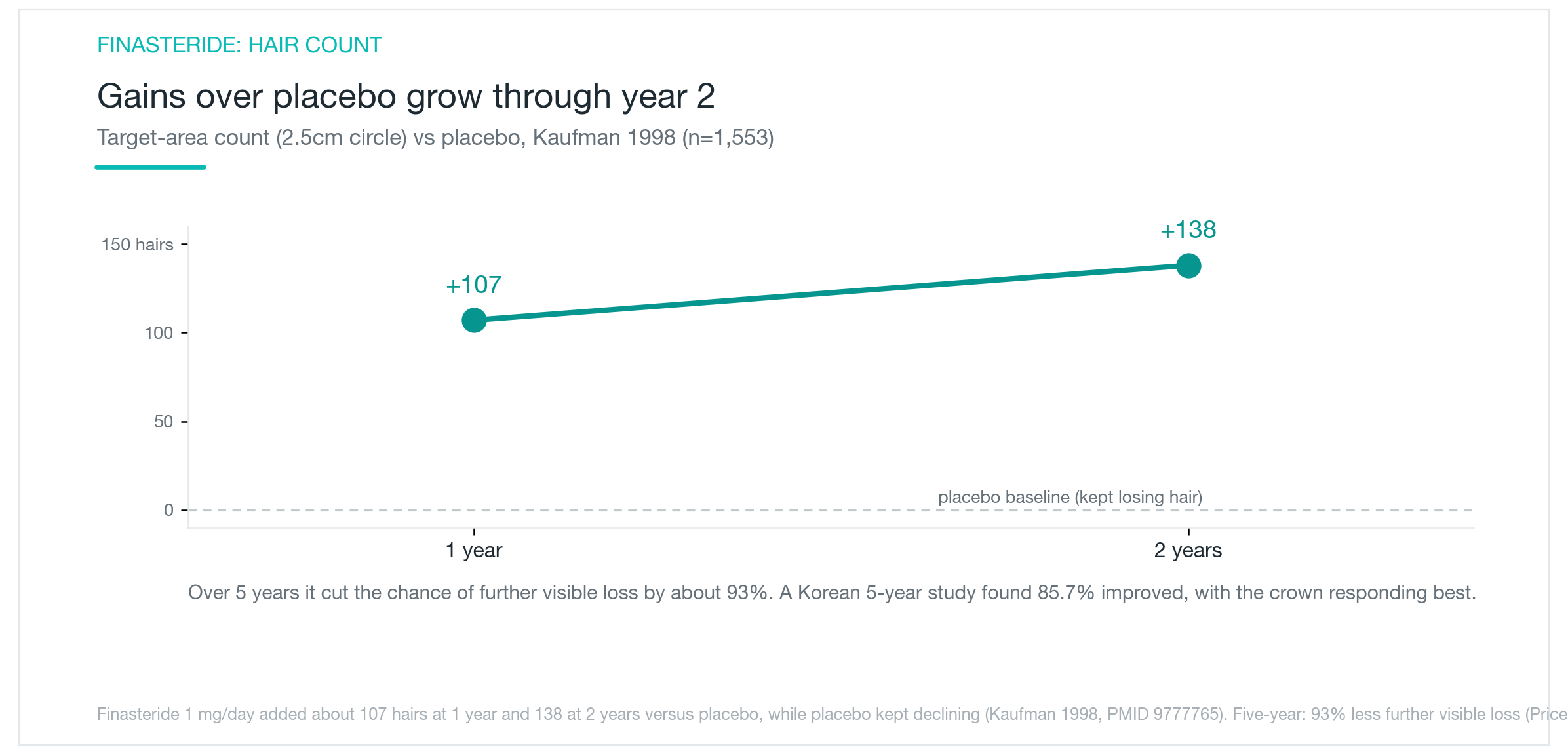
Very solid, as it turns out. In one of the landmark trials involving 1,553 men, those taking finasteride 1mg daily had roughly 107 more hairs per target area (a 2.5cm-diameter circle) compared to placebo after one year, and about 138 more hairs after two years. During the same period, the placebo group continued losing hair steadily, so the real-world gap is even wider than those figures suggest.
Long-term follow-up data is equally encouraging. In a 5-year study, finasteride reduced the risk of further noticeable hair loss by approximately 93% compared to placebo. A Korean study tracking 126 men over five years found that 85.7% showed measurable improvement, and 98.4% maintained their hair count or better. The crown area responded particularly well at 89.7%, compared to 61.2% for the frontal hairline.
Results do take time. Most people begin to notice a change somewhere between 3 and 6 months, with peak results appearing around the 2-year mark. Tracking progress with regular photos taken in consistent lighting is the most reliable way to measure what's happening. And since untreated hair loss tends to progress gradually on its own, holding the line and preventing further loss is itself a meaningful outcome.
Minoxidil regrowth effect and precautions
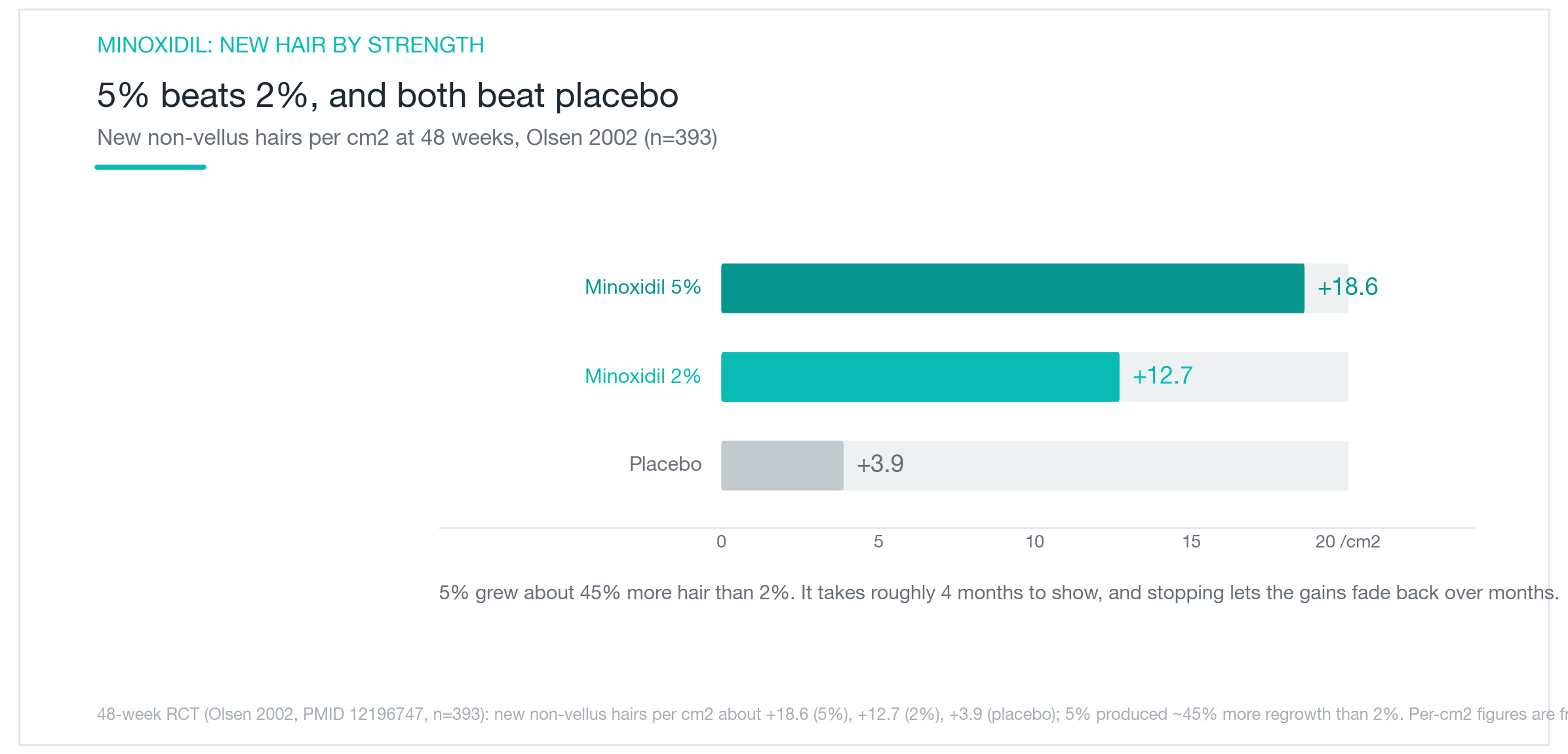
The data holds up well. In a 48-week study of 393 men comparing 5% solution, 2% solution, and placebo, the 5% concentration produced about 45% more hair regrowth than the 2% formula, with a faster onset as well. New hair counts per target area came in at approximately 18.6 hairs for the 5% group, 12.7 for the 2% group, and 3.9 for placebo.
Minoxidil comes in topical form (both solution and foam) and, increasingly, as a low-dose oral tablet. The foam formulation is a good choice for those with a sensitive scalp since it leaves out the propylene glycol that commonly causes irritation. Oral low-dose minoxidil offers the convenience of a once-daily pill with no application routine, and studies show it delivers results comparable to the 5% topical.
Two things are worth knowing upfront. First, visible results typically take around 4 months to appear, and there's often an initial shedding phase between 2 and 8 weeks after starting. This is actually a sign that new follicle cycles are activating, not a reason to stop. Second, minoxidil's benefits are ongoing rather than permanent: if the treatment is discontinued, hair gradually returns to where it would have been without it over the following months. Consistency is the key.
Can you use both drugs together?
Yes, and the research backs it up. Because finasteride and minoxidil act on separate pathways (blocking the cause versus stimulating growth), using them together delivers additive benefits that neither can match alone.
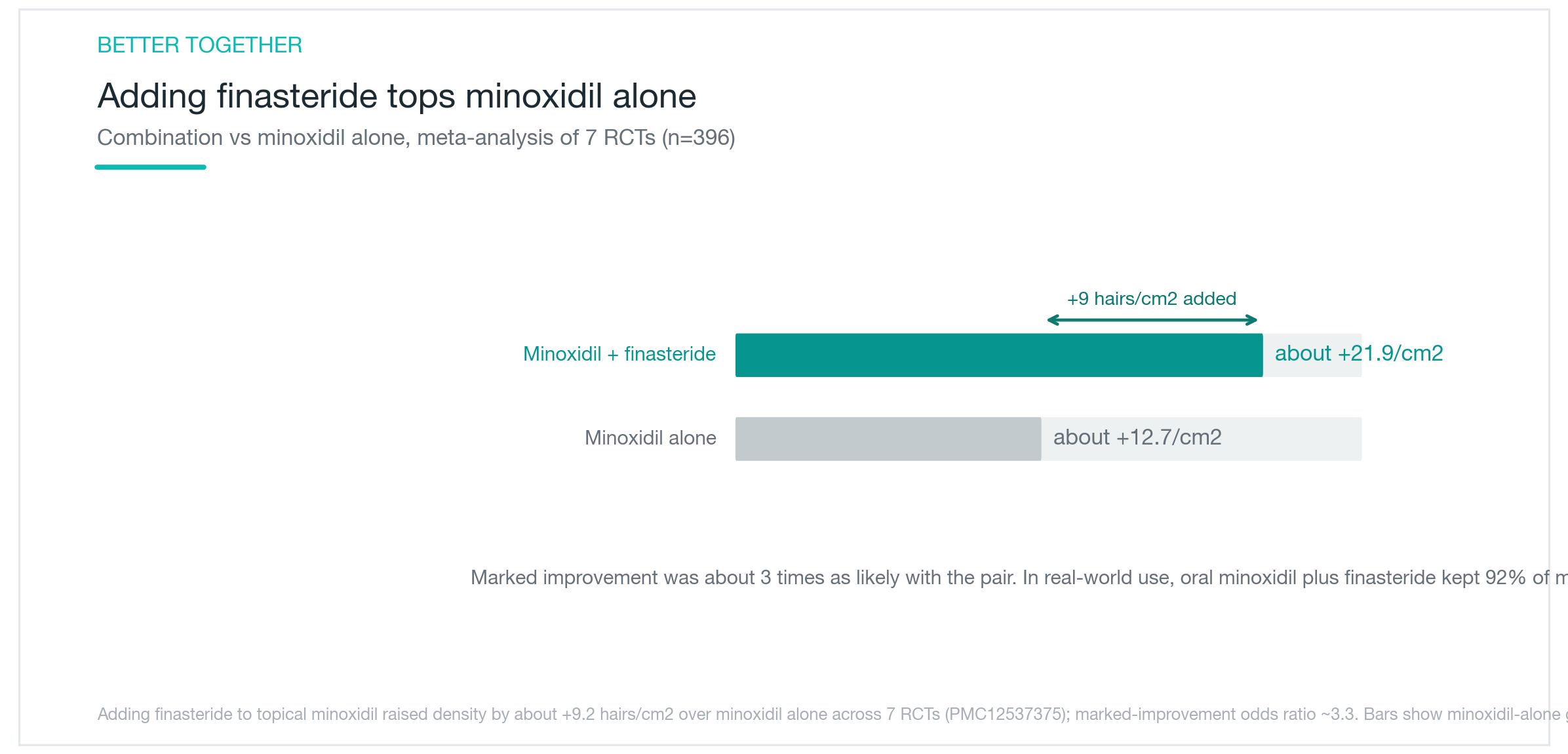
The numbers are telling. A meta-analysis pooling 7 studies found that adding finasteride to topical minoxidil increased hair counts by approximately 9 hairs per target area, with better overall improvement scores and hair caliber ratings compared to minoxidil alone. The rate of marked improvement was roughly 3 times higher in the combination group. A real-world clinical dataset of 502 men using low-dose oral minoxidil plus finasteride found that 92.4% maintained or improved their hair count, with more than half showing marked improvement.
For anyone who wants to take a proactive approach, combination therapy is frequently the first-line recommendation. The main practical consideration is that managing two treatments requires a bit more planning, so having a clear sense of what each one does and what to watch for makes starting out smoother. Some people begin both at once; others start with one and add the second after gauging the response. The right combination depends on how much loss has occurred, lifestyle fit, and individual tolerance.
Finasteride and minoxidil side effects
Both medications have a reassuring long track record, and each has its own set of things to be aware of. Knowing these upfront makes managing either one much more straightforward.
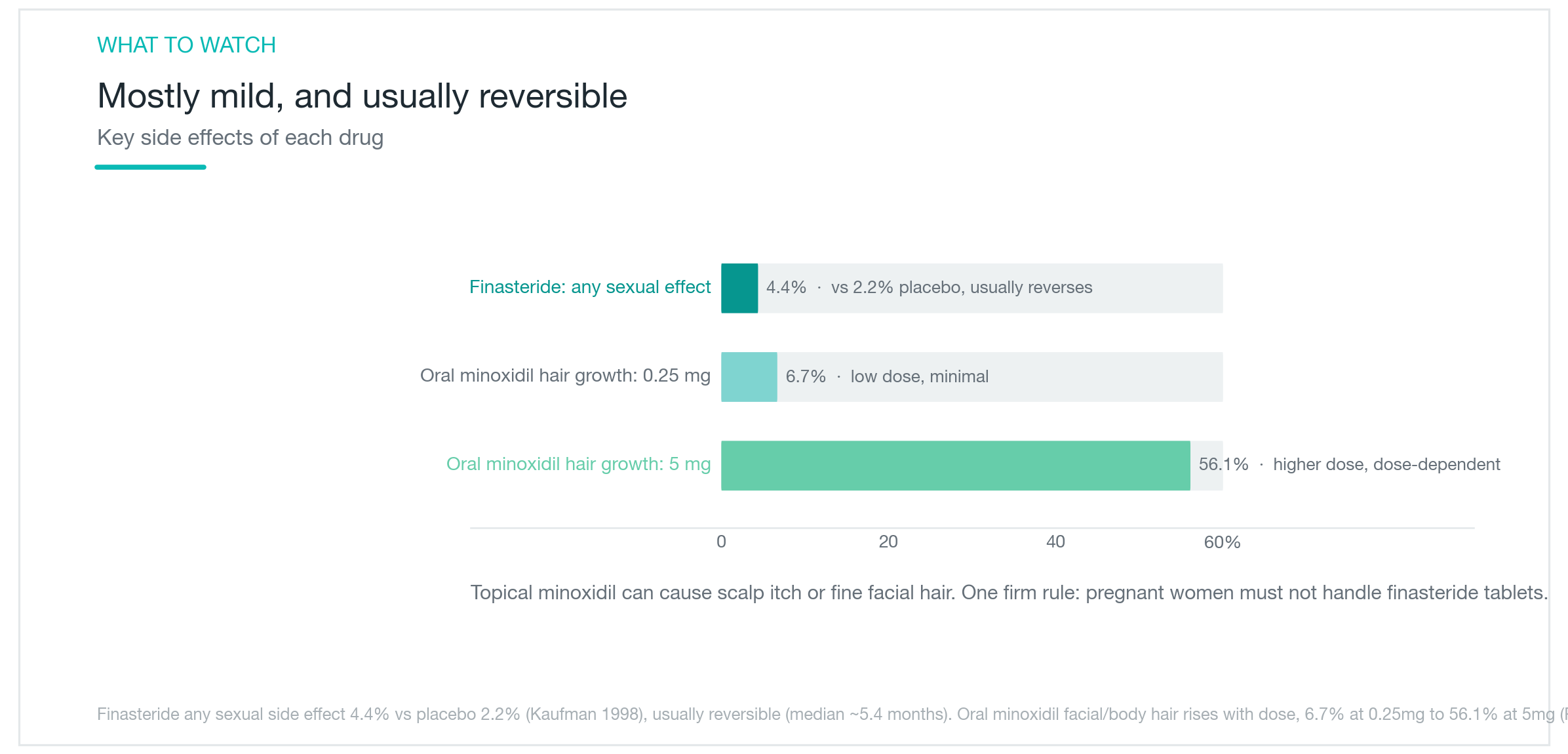
The most discussed concern with finasteride is sexual side effects. In the major clinical trials, the combined incidence of decreased libido and reduced erectile function was approximately 4.4%, compared to 2.2% for placebo. That means the large majority of users don't experience them at all, and in those who do, symptoms typically resolve within a few months of stopping the medication. The concept of post-finasteride syndrome (lasting symptoms after discontinuation) remains a topic of discussion but lacks strong scientific support at this stage. One particularly interesting finding: men who were informed about sexual side effects in advance reported them at more than twice the rate of those who weren't told, suggesting that anxiety around these effects plays a meaningful role. The one rule that applies unconditionally: women who are pregnant or could become pregnant should not handle finasteride at all, including broken tablets, as the compound can affect fetal development.
Minoxidil's most common considerations are scalp irritation, itching, and some fine hair growth in areas near where it's applied. Switching to the foam formulation tends to reduce scalp sensitivity noticeably. Oral minoxidil at higher doses can lead to more pronounced body or facial hair growth; at low doses this is much less of an issue. Dizziness or mild fluid retention occurs rarely, so checking blood pressure and cardiac status before starting the oral form is a sensible step.

How to choose the right hair loss drug for you
Both medications work best when started early. The window before follicles are fully miniaturized is the most productive time to intervene. Noticing thinning and acting on it promptly, rather than waiting to see how things develop, gives the best possible outcome.
As a rough guide: if the priority is stopping ongoing loss and holding the line, finasteride is the backbone treatment. If sexual side effects are a concern or starting an oral medication doesn't feel right yet, topical minoxidil is a solid option to begin with. For anyone who wants to actively regrow and rebuild density, combining both is generally the most effective path.
Realistic expectations help, too. Neither medication cures hair loss outright; the goal is slowing progression and preserving what remains, which means ongoing use to maintain the benefit. Roughly 1 in 3 or 4 people may have a limited response, though most who start early and stay consistent find the results genuinely worthwhile. Pairing treatment with a clinic that can track progress photographically and adjust the plan as needed tends to produce the most satisfying long-term results.
Was this helpful?
About this article
Written by a practising aesthetic physician and intended for general education — not a substitute for individual medical advice.
Read next
Minoxidil and Finasteride: Differences in Action and Combined Effect
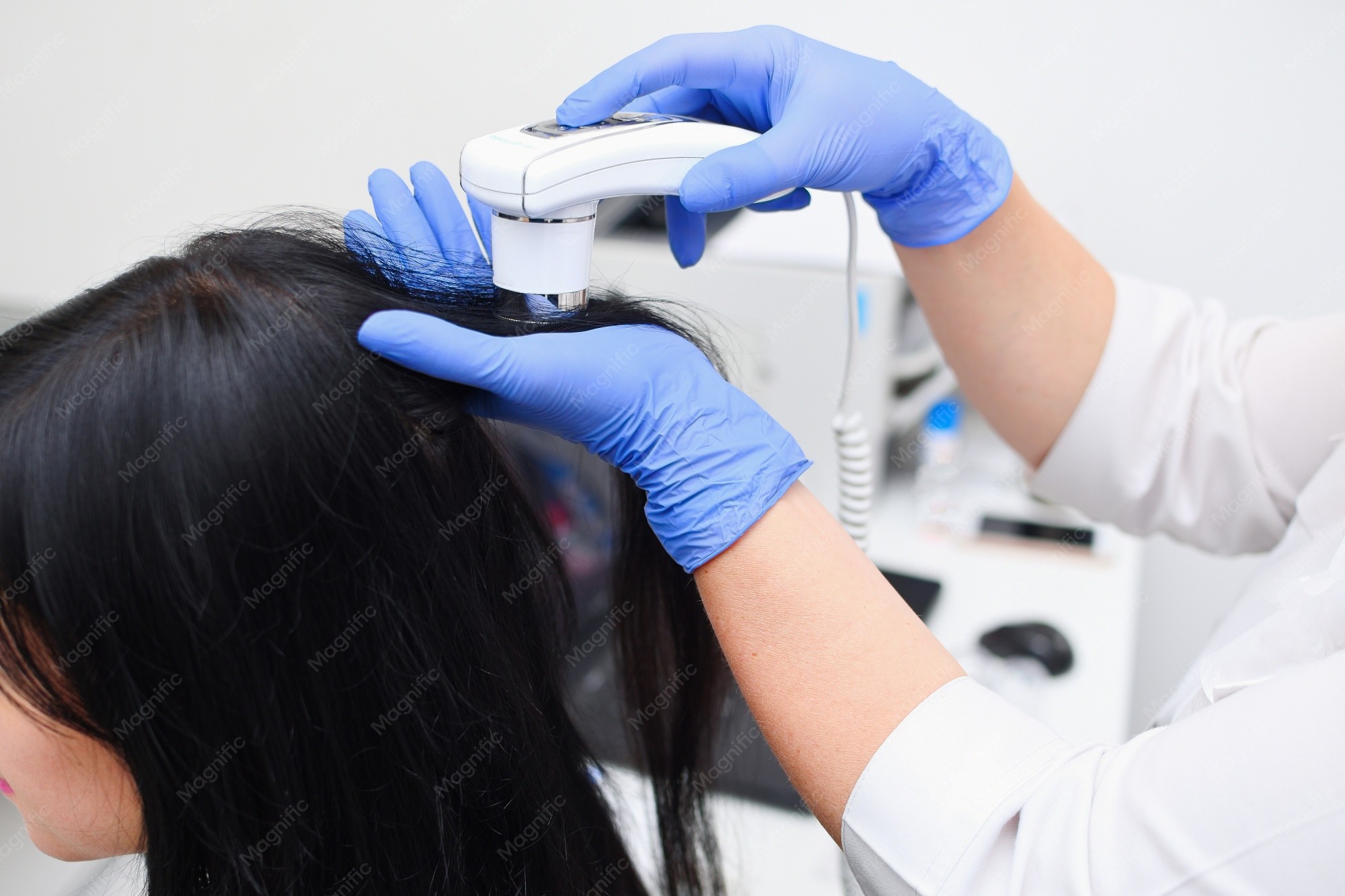
Minoxidil boosts scalp blood flow to wake up hair follicles, while finasteride cuts the hormone signal that drives hair loss in the first place. Because the two drugs work through completely different pathways, this piece walks through why combining them works better and why results take time to show.
By Dr. Lee
Exosome Treatment Effects and Side Effects: Human Study Evidence for Hair Loss and Scars
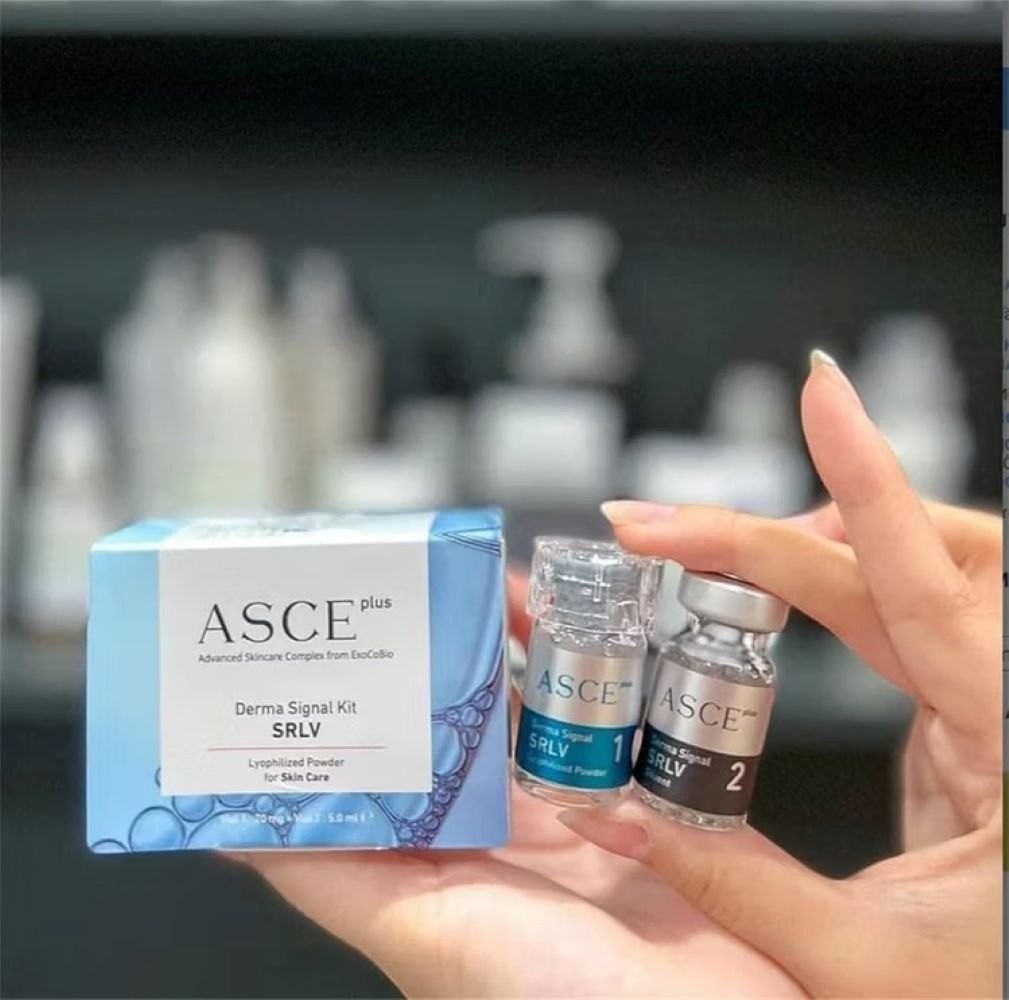
A clear-eyed look at what exosomes are, how far peer-reviewed human evidence actually goes for acne scars, fine lines, and hair thinning, what the real side-effect picture looks like, and why the FDA has never approved a single injectable exosome product.
By Dr. Lee
Oral Acne Medication: Antibiotics and Isotretinoin (Roaccutane) Differences and Side Effects
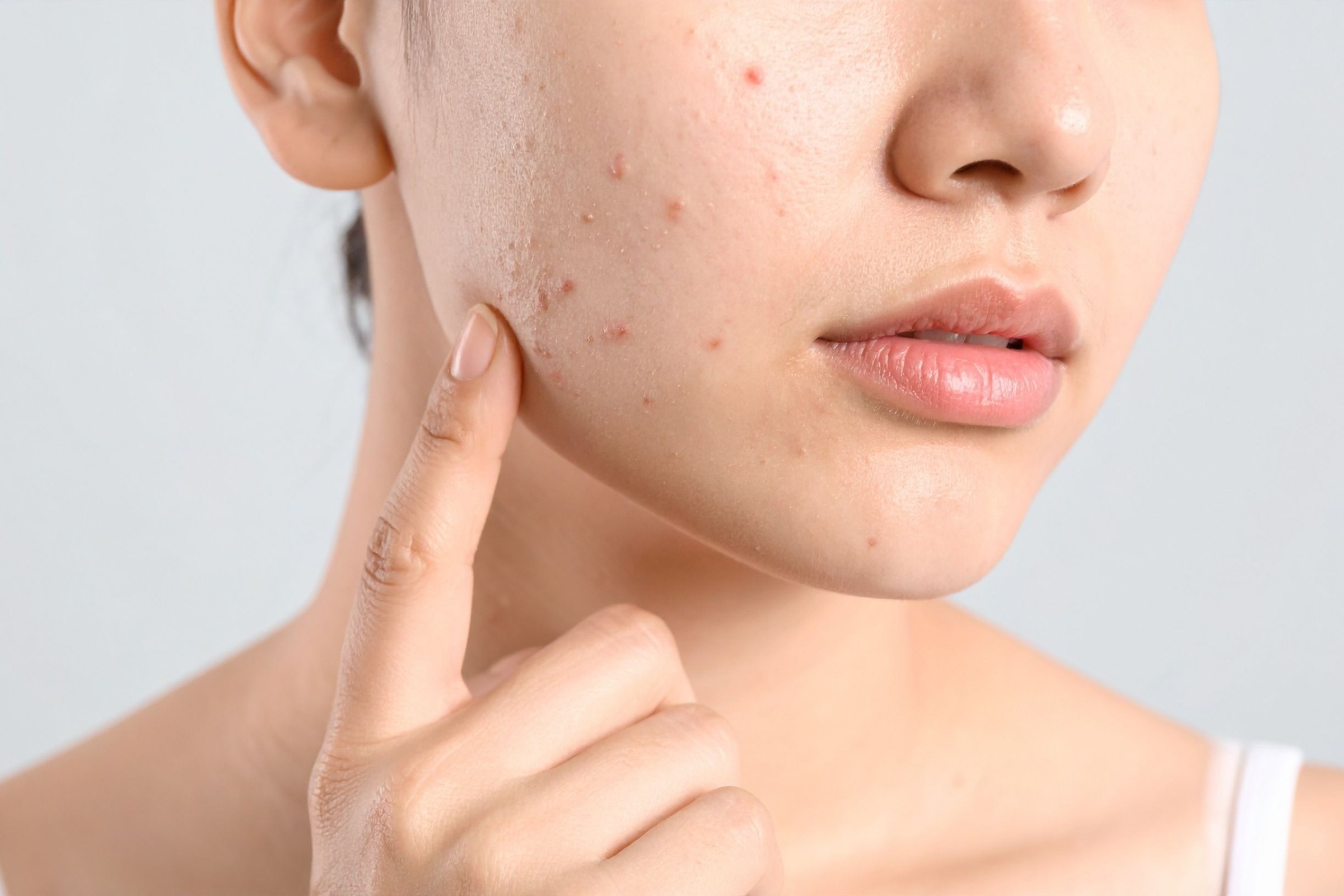
Oral acne medications split into two very different paths: antibiotics and isotretinoin, and they work in completely different ways. Antibiotics go after the bacteria and inflammation driving breakouts, while isotretinoin shrinks the oil glands themselves at the root. Here is a mechanism-focused look at why each gets chosen in different situations.
By Dr. Kim