TCA CROSS Effect: How Many Sessions for Icepick Scars?
By Dr. Kim6 min read
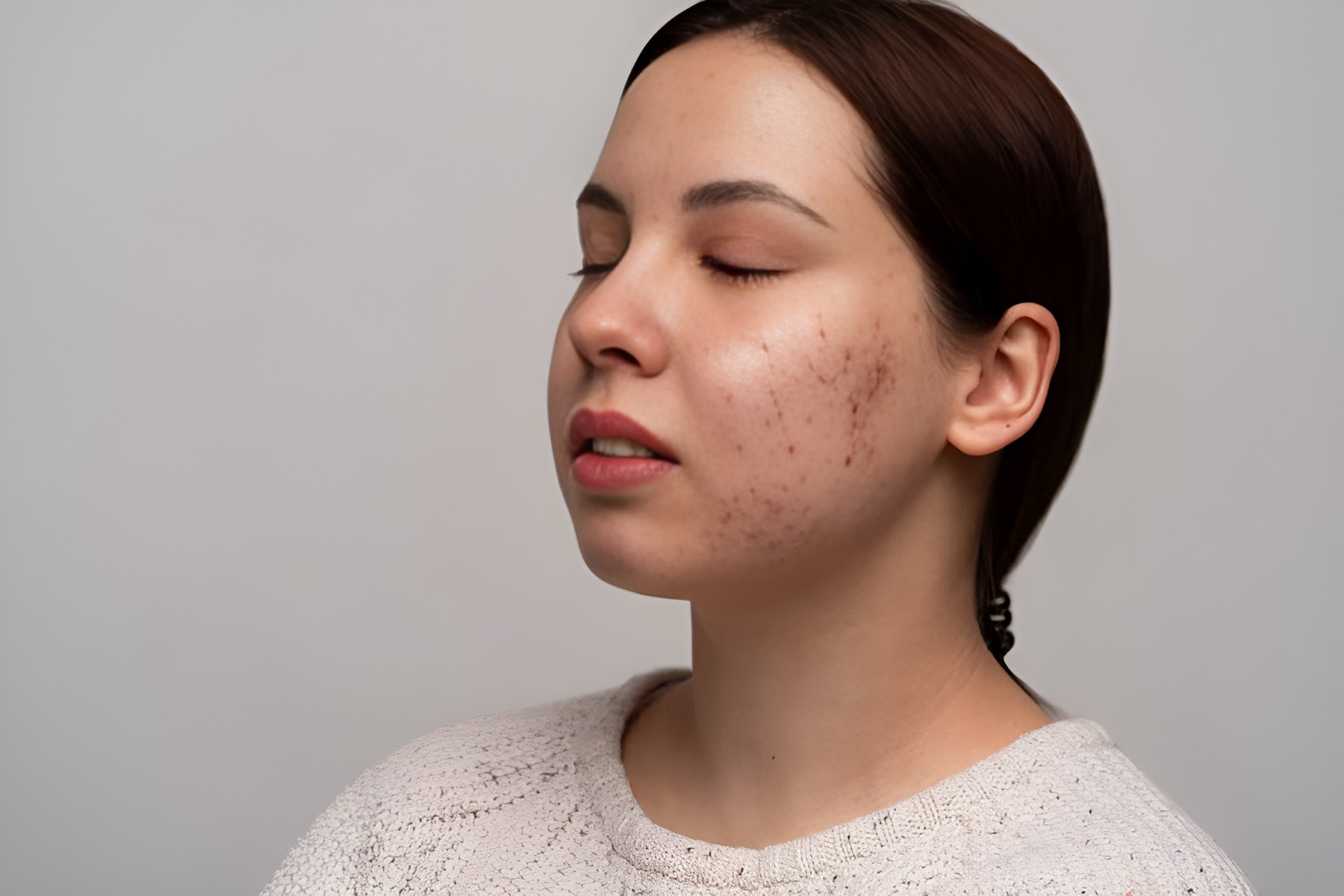
Lean in close to the mirror and you might notice a mark that's unusually narrow and deep. Unlike scars that spread out across the skin, this pinprick-like mark is called an ice pick scar. It can look small at a glance, but the depth is often significant, so standard lasers or peels frequently can't reach all the way to the bottom.
One method built for exactly this situation is TCA CROSS. It drops high-concentration acid precisely into the scar itself, prompting fresh collagen to build up in that narrow spot. Here's a closer look at why dropping acid into a scar helps fill it in, and why this approach happens to suit narrow, deep scars so well.
How Is TCA CROSS Different From a Regular Peel?
TCA is short for trichloroacetic acid, a chemical peeling agent dermatologists have used for a long time. CROSS stands for Chemical Reconstruction Of Skin Scars, which basically means rebuilding the skin's structure at the scar site with a chemical.
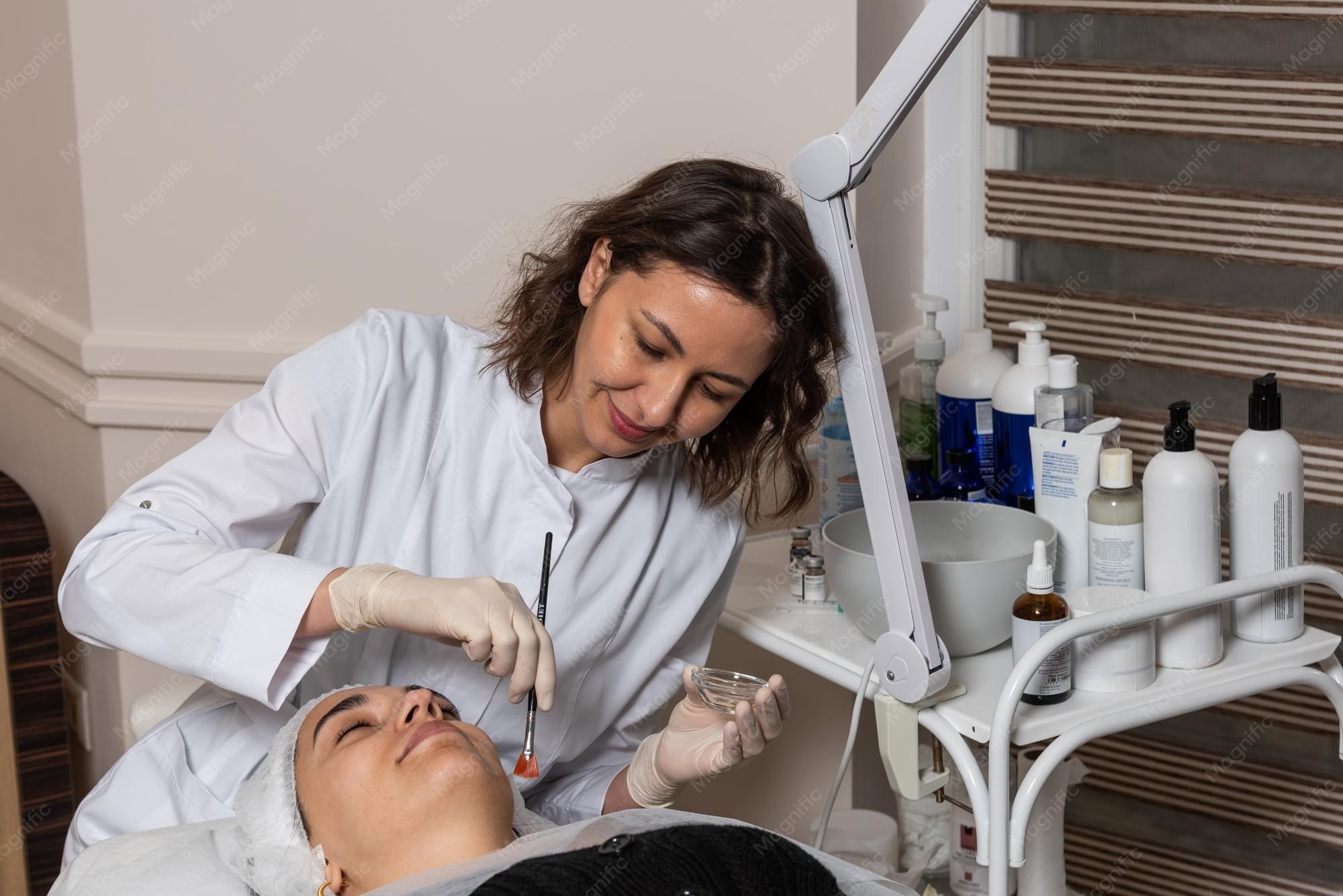
A standard peel spreads a relatively low concentration of acid across the entire face. TCA CROSS works differently: a very high concentration, 65 to 100 percent, is dabbed onto the sharpened tip of a wooden applicator or a fine tool and touched to the base of each individual scar. Think of it as concentrating the acid on one narrow point instead of spreading it wide.
Even though it's the same acid, a full-face peel at low concentration and this method of dropping a very high concentration into a single scar serve completely different goals. A broad peel is focused on evenly refining surface skin cells, while CROSS is focused on rebuilding tissue at one specific spot. That difference is why the two methods, despite using the same acid, produce such different results.
What Happens to Skin When High-Concentration Acid Touches It?
When high-concentration acid touches skin, the proteins at that spot instantly coagulate. It's a similar principle to what happens when you heat egg whites: clear turns white and firm. Dermatologists call this whitening reaction frosting.
The body reads that frosted spot as a small wound. Whenever there's a wound, the body automatically kicks off a repair response, and the cells doing the heavy lifting here are fibroblasts. Fibroblasts are the workhorse cells that produce collagen in the skin, and you can think of collagen as the pillars holding the skin up from underneath. When the pillars collapse and leave a dent, dropping acid in as a trigger draws fibroblasts to that exact spot and gets them started on rebuilding new pillars.
Why Does It Suit Narrow, Deep Scars?
What matters here is how the acid spreads. Drop a single point of acid into a narrow, deep scar and, much like ink dripped into a thin straw, it doesn't spread out sideways. It tends to pool downward along the scar's channel instead. That keeps the effect concentrated inside the scar while the healthy skin around it stays relatively untouched.
For a wide, shallow scar, this same approach is actually inefficient, since there's no narrow channel for the acid to pool in and it can't sink in as deeply as needed. An ice pick scar, on the other hand, with a width of around 2 millimeters and real depth, lets the acid naturally settle all the way to the base. Reports suggest this delivers the stimulus far more efficiently than spreading a low concentration over a wide area.
There's another advantage: less strain on the surrounding skin. Because the acid stays trapped in that narrow channel instead of flowing outward, the normal skin around the scar is less likely to be irritated along with it. Apply the same concentration over a wide area and the normal skin gets stimulated right along with it, but the CROSS approach concentrates all that force on the narrow target of the scar itself, an approach that manages to be both efficient and safer at the same time.
How Long Does Collagen Take to Fill In?
Right after frosting, all you can see on the surface is redness and a scab that sticks around for about 5 to 7 days. But underneath, the real repair work is just getting underway. Once the initial inflammatory stage that clears out damaged tissue passes, fibroblasts settle in and start laying down new collagen fibers, one at a time.
This collagen production is known to build up gradually over 4 to 8 weeks after the procedure, followed by a remodeling phase lasting 3 to 6 months in which the fiber structure organizes and firms up. Much like repaving a pothole from the bottom up, tissue fills in starting from the base of the scar, and the height difference from the surrounding surface gradually shrinks over time.
How Many Sessions Should It Be Split Into?
There's a limit to how much collagen a single session can produce. So the deeper the scar, the more likely it is to be recommended over 3 to 6 sessions of repeated stimulation. There are specific reasons behind spacing it out this way.
- The collagen from one round of stimulation usually isn't enough to fill a deep scar in one go, so it typically takes about 3 to 6 rounds stacked together to build up a sufficient amount.
- Re-stimulating the same spot before it has fully recovered from the last session can damage the tissue too much, so the next session is usually spaced out by about 4 to 8 weeks.
- Since depth and response speed vary from scar to scar, checking on the recovery in between and adding only as many sessions as needed helps avoid over-stimulating the skin.
For these reasons, reports show that treatment is often spread out over roughly 3 to 4 sessions, and as many as 6 to 7 for tougher cases, with the pace adjusted based on how the scar is responding.
Scab and Sun Care After Treatment
It's a normal part of the process for the frosted spot to stay red and swollen for 5 to 7 days while a thin scab forms. That scab covers the wound while healing continues underneath, so it's best to leave it alone and let it fall off naturally rather than picking at it.
Newly regenerated skin is especially sensitive to UV light. Heavy sun exposure during this window is known to raise the odds of noticeable pigment settling in at the site, which is why consistent sunscreen use is emphasized. Keeping the skin well moisturized is recommended too, since it eases irritation while the skin barrier is rebuilding itself.
Does It Work on Shallow, Wide Scars?
TCA CROSS is designed specifically for narrow, deep ice pick scars. For wider scars with a boxy, squared-off base, or scars with gentle, rolling contours, reports suggest this method alone is unlikely to deliver much improvement. These scar types are more often approached with a combination that includes releasing the tethered tissue underneath the scar, fillers, or other laser techniques.
Darker skin tones are also known to be more prone to temporary pigment darkening after this kind of stimulation. That's why assessing the skin beforehand and adjusting the concentration and number of sessions accordingly is treated as an important step. Because it demands precision, placing the exact concentration in the exact spot, it's recommended to have it done somewhere with substantial hands-on experience.
References
Korean Dermatological Association, Ministry of Food and Drug Safety (MFDS), American Academy of Dermatology (AAD), and U.S. Food and Drug Administration (FDA).
Was this helpful?
About this article
Written by a practising aesthetic physician and intended for general education — not a substitute for individual medical advice.
Read next
Ice Pick Scars: TCA CROSS Effect, Session Interval and Recovery Time
Ice pick scars are narrow, deep pockmarks that ordinary lasers and fillers struggle to fill in. Here's why TCA CROSS is uniquely suited to this scar type, along with what the treatment and recovery actually involve.
By Dr. Lee

TCA CROSS for Icepick Acne Scars: Effect and Pigmentation Care
What TCA CROSS is, why it outperforms laser on narrow deep icepick scars, how concentration affects outcomes, how proper prep slashes post-inflammatory hyperpigmentation risk, and how to combine it with other treatments, all backed by clinical study numbers.
By Dr. Lee
Density RF Effects: How Many Sessions and How Long Do Results Last?
Density RF pairs two radiofrequency modes with very different personalities to chase two goals at once: the instant tightening you feel right after treatment, and the collagen renewal that builds slowly over the following 4 to 12 weeks. Here is why two modes are needed, the order in which heat actually works inside the skin, and why the treatment is spread across multiple sessions instead of done all at once.
By Dr. Kim