Sylfirm X Pulse Wave: Effect on Melasma and Redness, and Downtime
By Dr. Lee7 min read

Melasma and persistent facial redness are among the hardest skin concerns to treat. Topicals and conventional lasers often fall short, which is why microneedle RF devices like Sylfirm X have drawn so much attention. It raises a fair question: how does a device that punctures the skin with needles and delivers radiofrequency energy manage to address both pigmentation and redness at the same time, without making the melasma worse?
Sylfirm X is a microneedle RF platform made by VIOL, a Korean medical device company, and its distinguishing feature is a dual wave system that pairs two distinct RF modes. One of those modes, the pulsed wave, operates at a shallow depth to selectively target abnormal blood vessels and overactive melanocytes, the very structures that keep melasma coming back. Rather than burning pigment directly the way lasers do, it works at the vascular and signaling level, which is why it carries a lower risk of worsening pigmentation. Here is a closer look at how it all works, what the evidence shows, and where the real limitations lie.
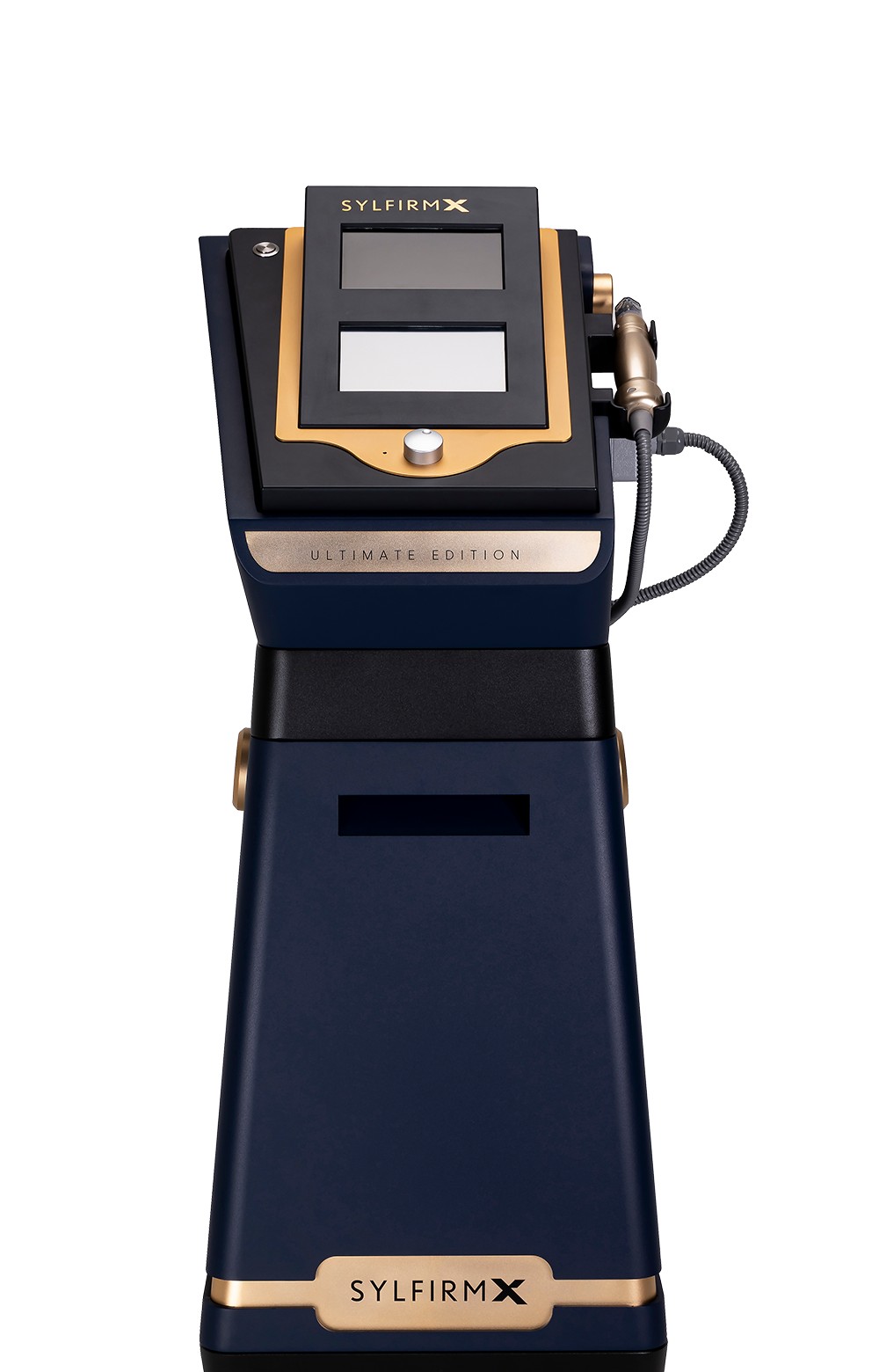
What Kind of Device Is Sylfirm X?
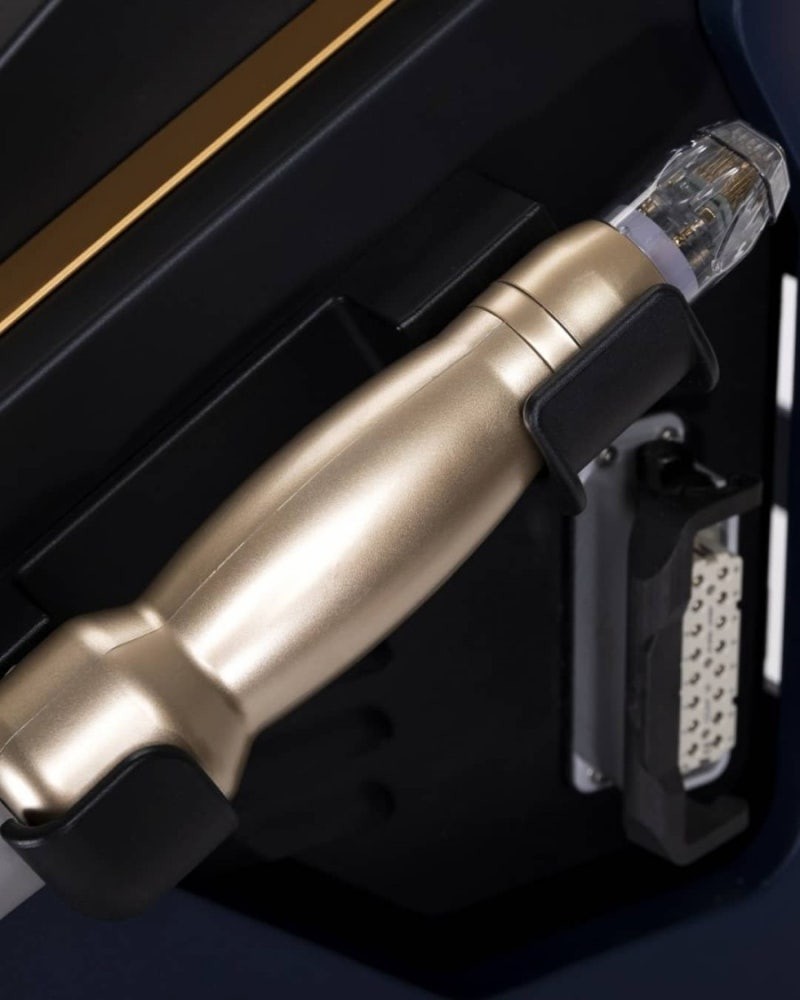
Sylfirm X is a microneedle radiofrequency (RF) device. Fine needles are inserted into the skin and deliver RF energy from their tips, heating the tissue at a precise depth rather than at the surface. This basic mechanism is shared with other microneedle RF platforms.
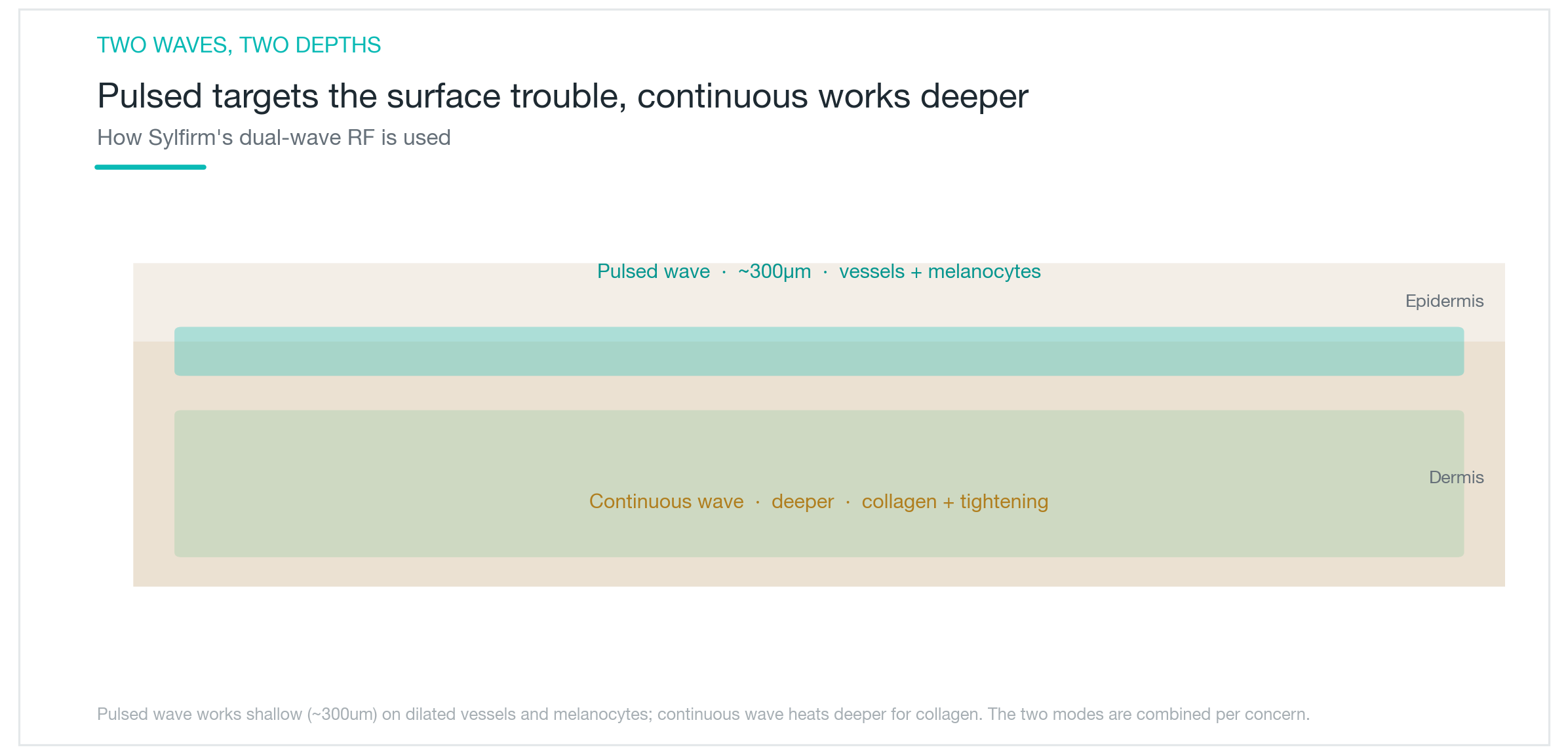
What sets Sylfirm X apart is its dual wave system: two RF modes used for different purposes. A continuous wave mode warms deeper tissue to stimulate collagen production, improving skin firmness and texture. The pulsed wave mode delivers energy in short, controlled bursts at a shallower depth, selectively targeting abnormal blood vessels and melanocytes without broadly heating the surrounding tissue. Matching the right mode to the right depth and treatment goal is the core concept behind the dual wave design.
Sylfirm X is manufactured by VIOL and cleared by the Korean Ministry of Food and Drug Safety (MFDS). It has found wide adoption in dermatology clinics for its ability to address several overlapping concerns (melasma, redness, enlarged pores, and laxity) in a single device. It is particularly valued for its approach to melasma in skin types where standard lasers carry a higher risk of triggering post-inflammatory hyperpigmentation.
How Are Melasma and Vessels Related?
Part of what makes melasma so difficult to treat is that it is not purely a pigment problem. Beneath melasma-prone skin, abnormal microvasculature actively sends stimulating signals to melanocytes. Even if the visible pigment is cleared, those signals persist, and the discoloration returns.
The pulsed wave in Sylfirm X specifically targets that dynamic. At a depth of approximately 300 micrometers, short RF pulses act selectively on the aberrant blood vessels and overactive melanocytes that drive pigment production. The goal is to reduce the vascular signaling that tells melanocytes to produce melanin, and to clear out senescent cells that are no longer functioning normally, allowing the skin to recover from within. This is a fundamentally different mechanism from ablative or pigment-targeting lasers.
The key advantage is a reduced risk of post-inflammatory hyperpigmentation. Conventional laser toning can inadvertently intensify pigmentation or cause patchy depigmentation if not applied carefully. Because Sylfirm X's pulsed wave targets the vasculature and signaling pathways rather than the pigment directly, it offers a real option for melasma that is stubborn and prone to rebound. That said, it is not a single-session fix; it works by gradually remodeling the underlying drivers of pigmentation over multiple treatments.
How Long Does the Melasma Improvement Last?
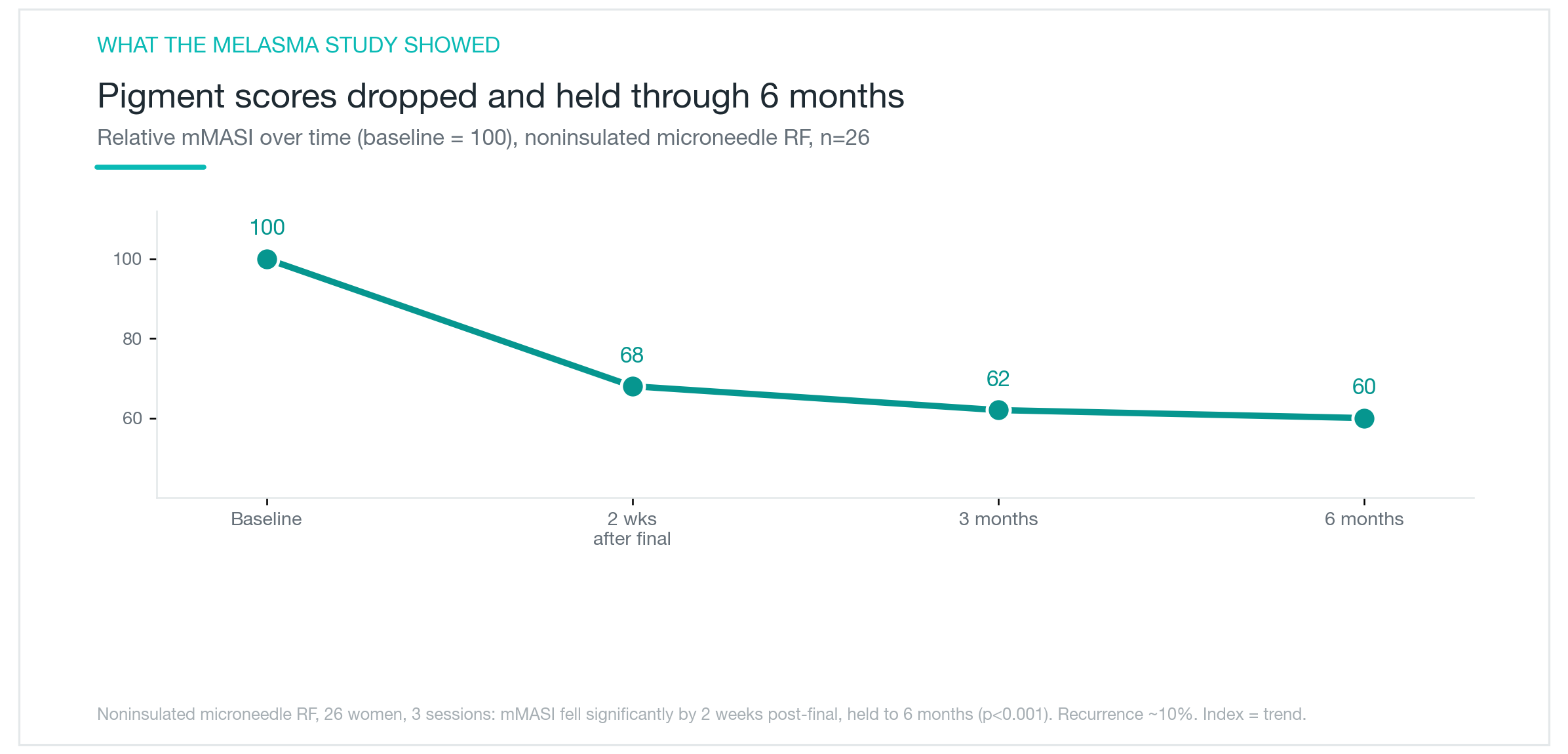
The evidence is building. A study examining non-insulated microneedle RF for melasma treated 26 women in three sessions spaced two weeks apart. The mMASI (modified Melasma Area and Severity Index) score showed a statistically significant reduction starting two weeks after the final treatment, and that improvement held through the six-month follow-up. Melanin index measurements also dropped significantly from the one-month mark onward, remaining meaningfully lower at six months.
The same study found that skin texture improved alongside the pigment response, and the only adverse events reported were mild, transient redness. This suggests that Sylfirm-class microneedle RF can improve melasma without triggering new pigmentation issues while also refining skin quality, a meaningful combination for a condition where many aggressive interventions carry added risk.
There is a real limitation, though. The same study documented a recurrence rate of approximately 10% after treatment was completed. Melasma recurs as long as the underlying triggers remain, and that holds true here as well. Maintenance is part of the treatment plan: ongoing sun protection, possible top-up sessions, and a realistic understanding that "management" is the goal, not a permanent cure.
Does It Work on Redness and Rosacea Too?
Rosacea and persistent facial flushing are the other major indications paired with Sylfirm X. Both conditions involve abnormally dilated vessels near the skin surface that create visible redness, and neither responds reliably to skincare alone.
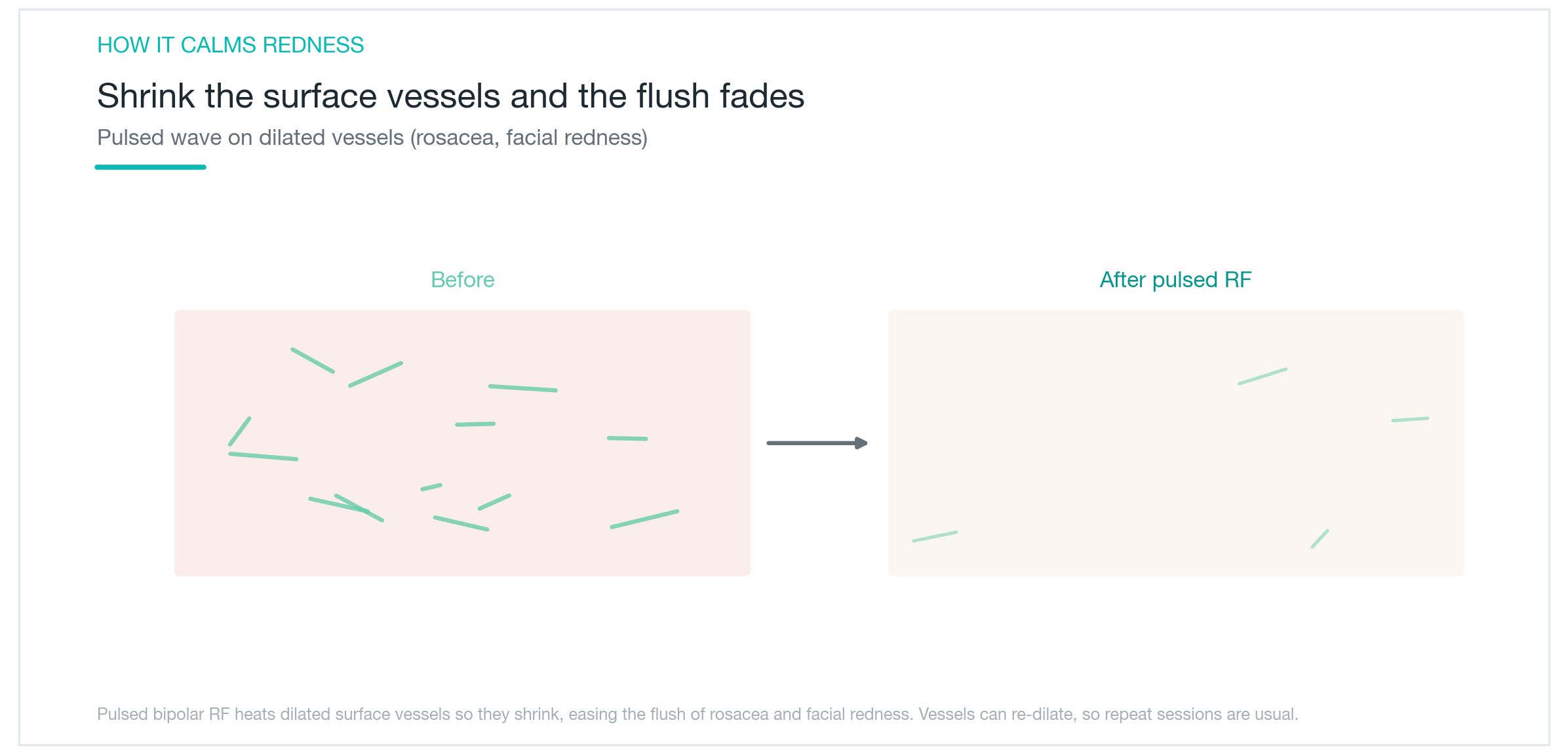
The pulsed wave addresses this by directly targeting the dilated vasculature. Shallow RF pulses heat and reduce those abnormal vessels, which diminishes the redness they cause. Case reports have documented rapid improvement in rosacea-associated redness after pulsed RF treatment. The ability to address both pigmentation and vascular redness with a single device is particularly useful when both concerns are present at the same time.
The same caveats apply here. Vessels can redilate over time, so repeat sessions and ongoing maintenance are typically needed. Not all redness has a vascular origin, so results can vary from patient to patient. A diagnostic evaluation to determine whether redness is truly vascular in nature is an important first step. Vascular redness tends to improve progressively over a series of treatments; if other factors are contributing, the response may be more limited.
Pain, Downtime and Side Effects
Because the procedure involves inserting needles and delivering RF energy, some degree of discomfort is expected. Topical anesthetic cream applied before the session is standard practice, and with appropriate numbing most patients find the procedure tolerable. The pulsed wave mode, operating at a shallow depth with brief bursts of energy, tends to be less intense than deeper or higher-energy RF protocols.
Downtime is generally short. Mild redness and small needle marks are typical immediately after the procedure, but they usually resolve within one to two days. The study cited earlier reported only mild transient redness as an adverse effect. Because the treatment does not significantly damage the epidermis, most people can return to normal activities fairly quickly.
Post-treatment care still matters for a few days. For melasma patients in particular, sun protection after the procedure is essential, as UV exposure can restimulate melanocytes and undo progress. Rare cases of prolonged erythema or hyperpigmentation do occur, but conservative energy settings and appropriate depth selection reduce that risk considerably. For melasma specifically, multiple sessions at lower intensity tend to produce more stable results than a single aggressive treatment.

Skin Concerns It Suits
Sylfirm X tends to be a strong fit for people dealing with treatment-resistant melasma, vascular redness or rosacea, and overlapping concerns such as enlarged pores or mild laxity. Because it works at the vascular and signaling level rather than burning pigment directly, it is particularly worth considering for anyone who has experienced pigmentation worsening after conventional laser toning. That makes it a meaningful option for people with pigmentation-prone skin.
That said, realistic expectations matter. Both melasma and redness require multiple sessions, and results build gradually rather than appearing all at once. Melasma will recur if underlying triggers (UV exposure, hormonal changes) are not managed alongside treatment. Consistent sun protection and periodic maintenance sessions are part of the long-term plan. Results also depend substantially on how the device is used. Depth, mode selection, and energy settings can all significantly affect outcomes, so it is worth choosing a provider experienced with these specific conditions. A proper assessment of whether the primary concern is pigment, vascular, or a mix of both is the best way to make sure you get the most out of treatment.
Was this helpful?
About this article
Written by a practising aesthetic physician and intended for general education — not a substitute for individual medical advice.
Read next

AGNES RF: Effects, How the Insulated Needle Works, Pain and Side Effects
A clear look at what AGNES microneedle RF does, why the insulated needle is the key design feature, how it targets sebaceous glands for acne and reduces under-eye fat, what the clinical evidence shows, what pain and downtime to expect, and who makes a good candidate.
By Dr. Kim

10THERMA Lifting: Effect and Pain, and How It Differs From Thermage
A look at what 10THERMA actually is, how it compares to Thermage as a monopolar RF device, what dedicated clinical evidence shows, how much it hurts, and who it suits best.
By Dr. Kim

Density Lifting Effects: How Does It Compare With Thermage?
A plain look at what Density RF actually is, how its dual monopolar-bipolar mode differs from single-mode RF like Thermage, what the clinical evidence shows, how much it hurts, what downtime to expect, and who is and isn't a realistic candidate.
By Dr. Kim