Density Lifting Effects: How Does It Compare With Thermage?
By Dr. Kim8 min read

When skin starts losing firmness and the jawline softens, RF lifting becomes worth looking into. Density is a Korean device that often comes up as a Thermage alternative. Whether the results are comparable, what dual-mode RF actually means, and why the price tends to be lower: these are fair questions.
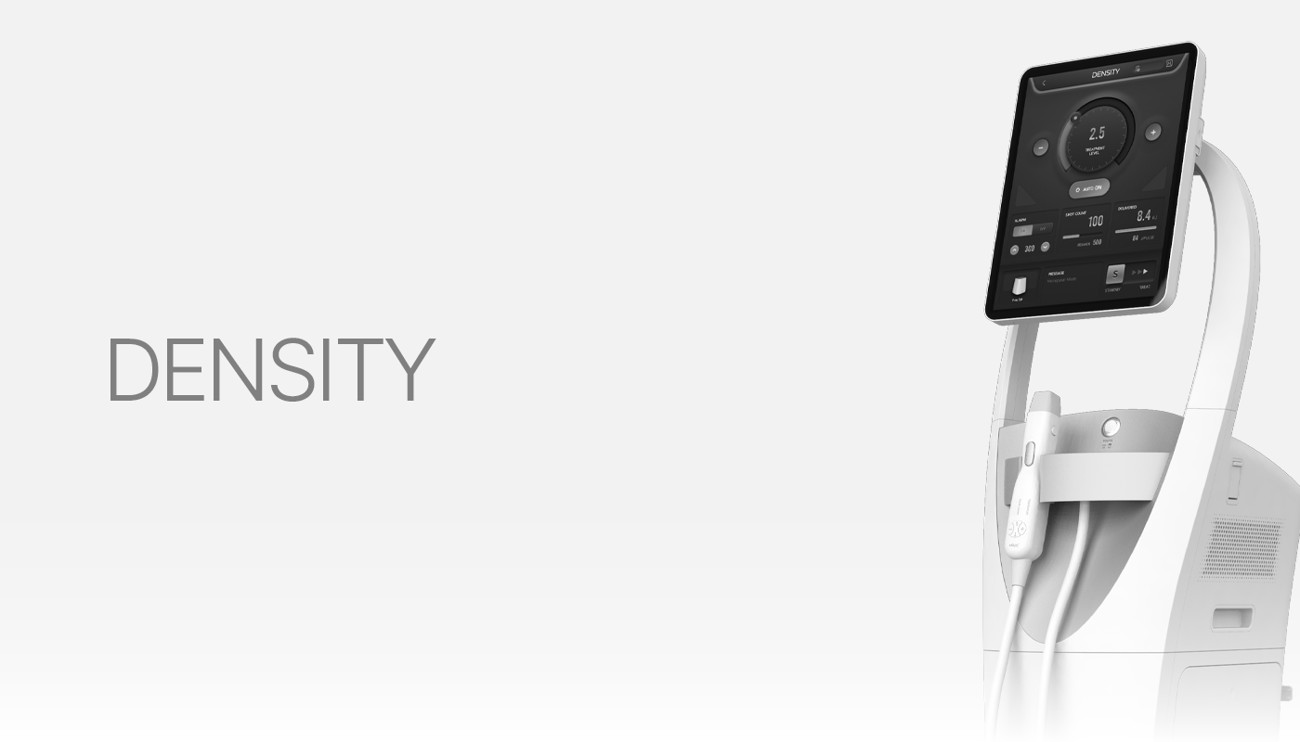
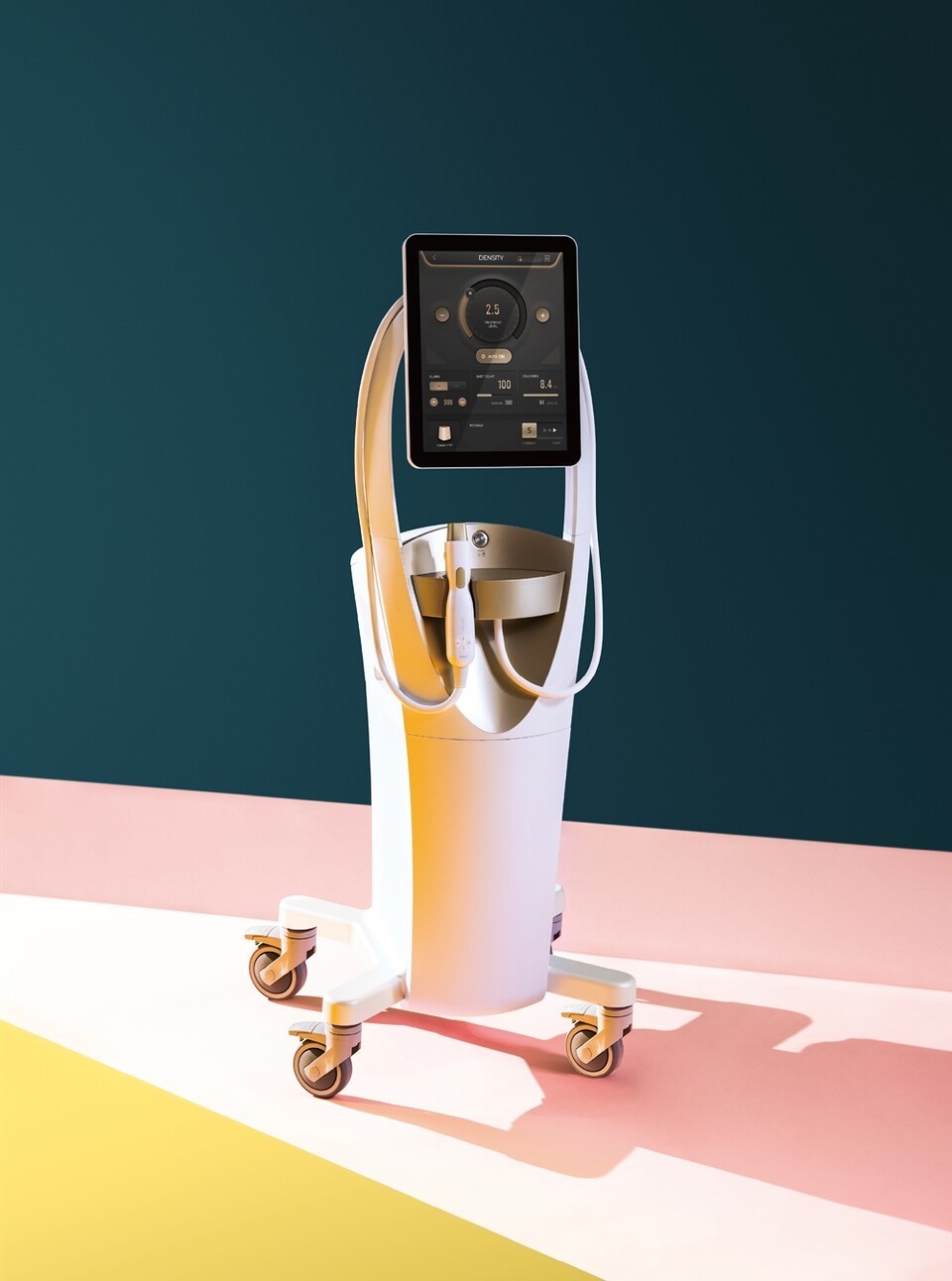
Density is made by Jeisys Medical and is FDA-cleared in the United States under the name Denza. Its defining feature is a dual-mode design that pairs monopolar RF for deep heating with bipolar RF for the shallower layers, both in a single handpiece. That puts it in the same monopolar family as Thermage, with one extra layer added. In practice, it holds its own as a solid Korean alternative that handles depth and surface texture together without falling far behind in efficacy. The mechanism, the evidence, the pain profile, and the real limitations are all worth a closer look.
How is Density different from Thermage?
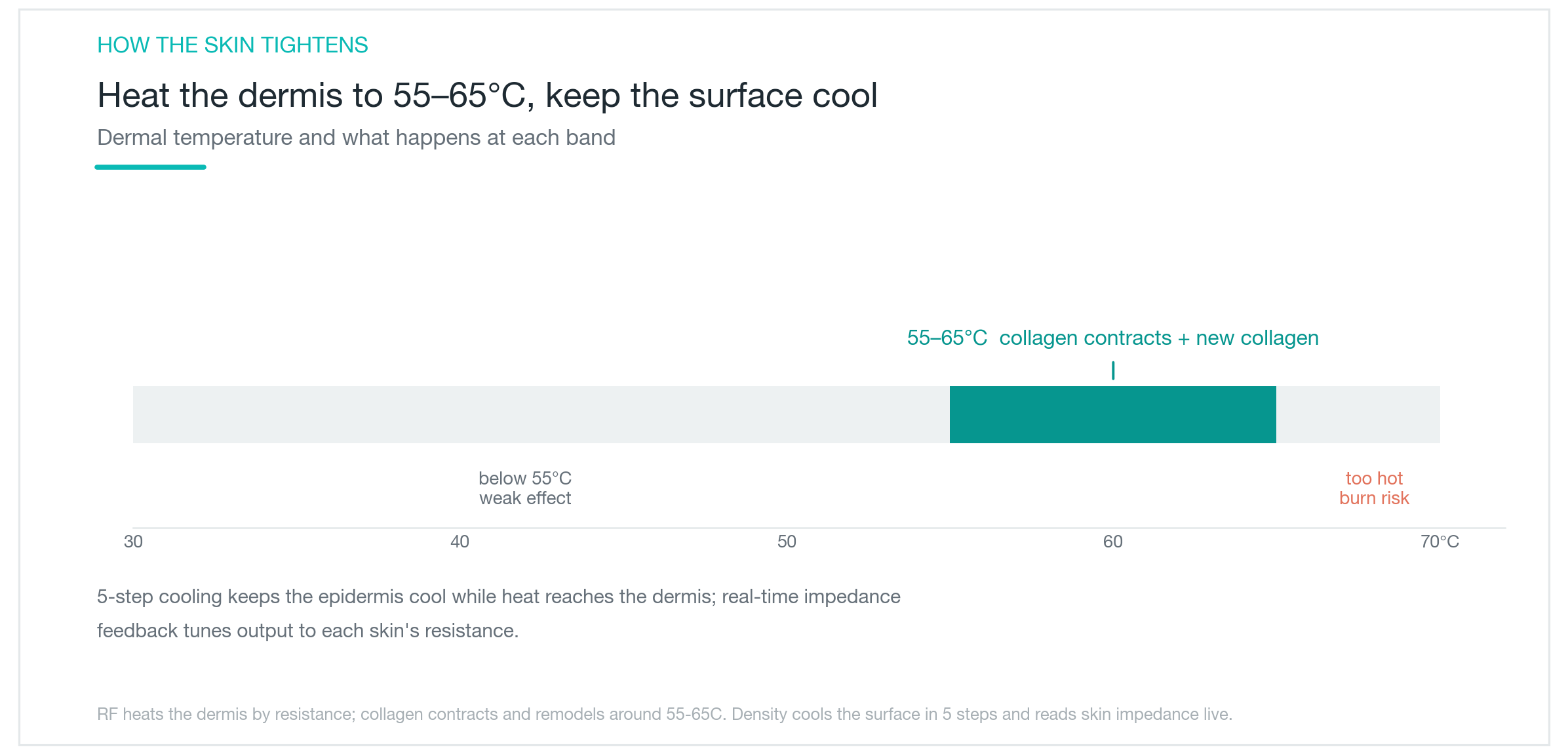
Density RF operates at 6.78 MHz, the same frequency band used by Thermage and Oligio. It is a monopolar device at its core, but adds a bipolar mode on top. Monopolar RF sends energy from a single electrode through to a grounding pad on the body, so the current travels deep and spreads wide. Bipolar RF runs only between two closely spaced electrodes, keeping the energy in the shallower layers.
On the specs side, peak output is 400 W, and it includes 5-step cooling and real-time impedance feedback. The impedance feedback reads the skin's electrical resistance moment to moment and adjusts output accordingly, a practical way to account for differences in skin type and condition across patients. Protecting the surface while heating deep layers is the fundamental challenge of RF lifting, and the 5-step cooling system is how Density handles that.
Jeisys Medical is a Korean aesthetics device company with several products in its lineup; Density is its flagship RF lifting model. Domestic manufacturing keeps acquisition and maintenance costs lower, which usually translates into more accessible treatment pricing compared with Thermage. It carries MFDS clearance.
Monopolar and bipolar dual mode
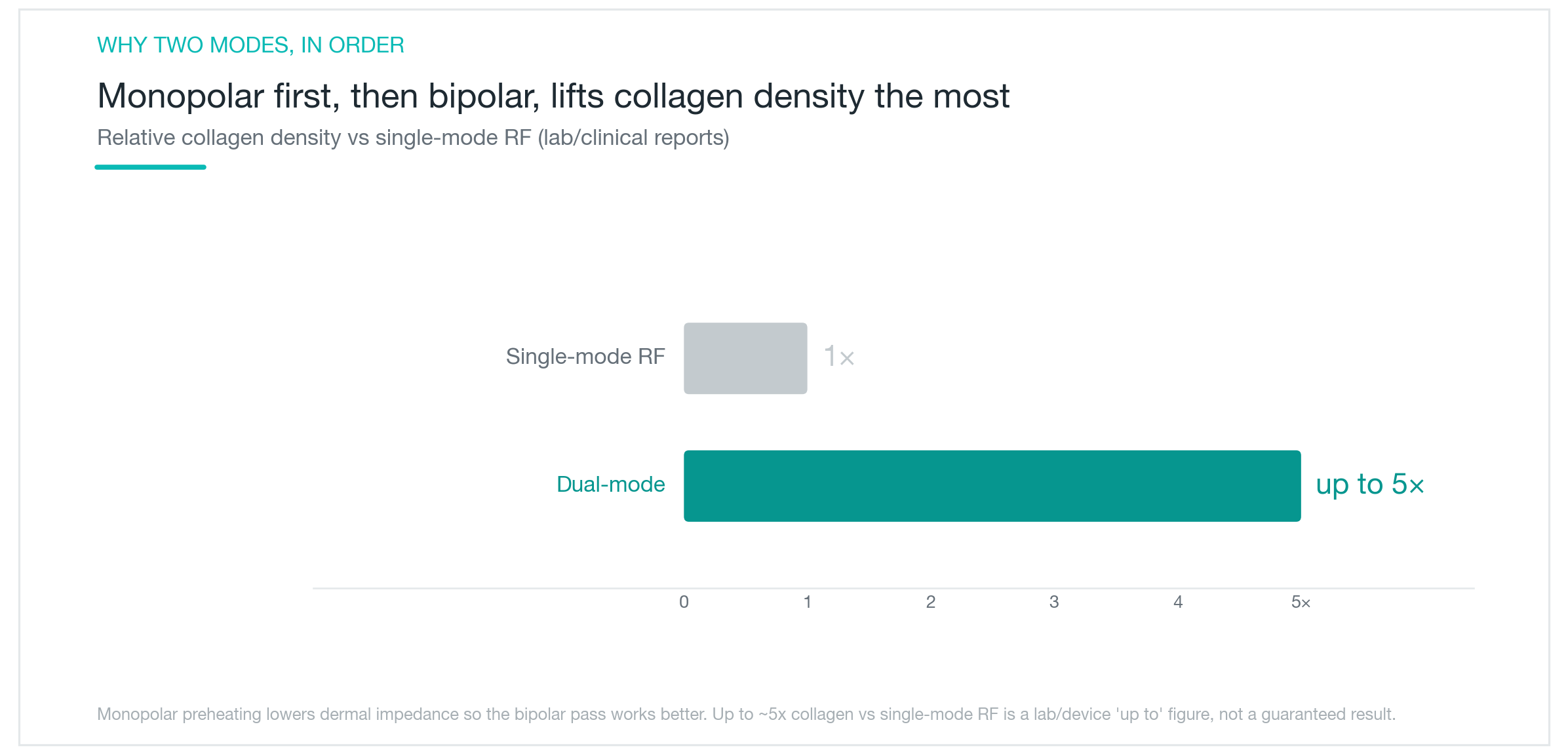
The key difference with Density is that the two RF modes run in sequence rather than in isolation. Monopolar goes first, heating the deep dermis, subcutaneous fat, and SMAS broadly. Bipolar follows, targeting the upper dermis and epidermis with more precision. The idea is that one session addresses deep laxity and surface concerns (fine lines, pores, skin texture) by working the two layers separately.
The order matters for a reason. Monopolar pre-heating lowers tissue impedance, and lower impedance means the subsequent bipolar energy transfers more efficiently. Research supports this sequencing: collagen production was highest when monopolar preceded bipolar. Combining manufacturer data and study findings, this dual sequence reportedly raises collagen density up to 5× compared with single-mode RF.
That 5× figure comes from controlled lab conditions and doesn't map directly to what you'd see in real-world practice. The more meaningful point is that Density can target two depth levels in one treatment. Where Thermage concentrates energy at a single deep level, Density splits the work across two: deep structure and surface texture together. The table below lays out the difference between the two modes.
| Mode | Monopolar | Bipolar |
|---|---|---|
| Depth reached | Deep dermis, subcutaneous fat, SMAS | Epidermis and upper dermis |
| Primary target | Contour laxity, deep firmness | Fine lines, pores, surface texture |
| Role | Deep-layer lifting | Surface refinement |
How does collagen fill in again?
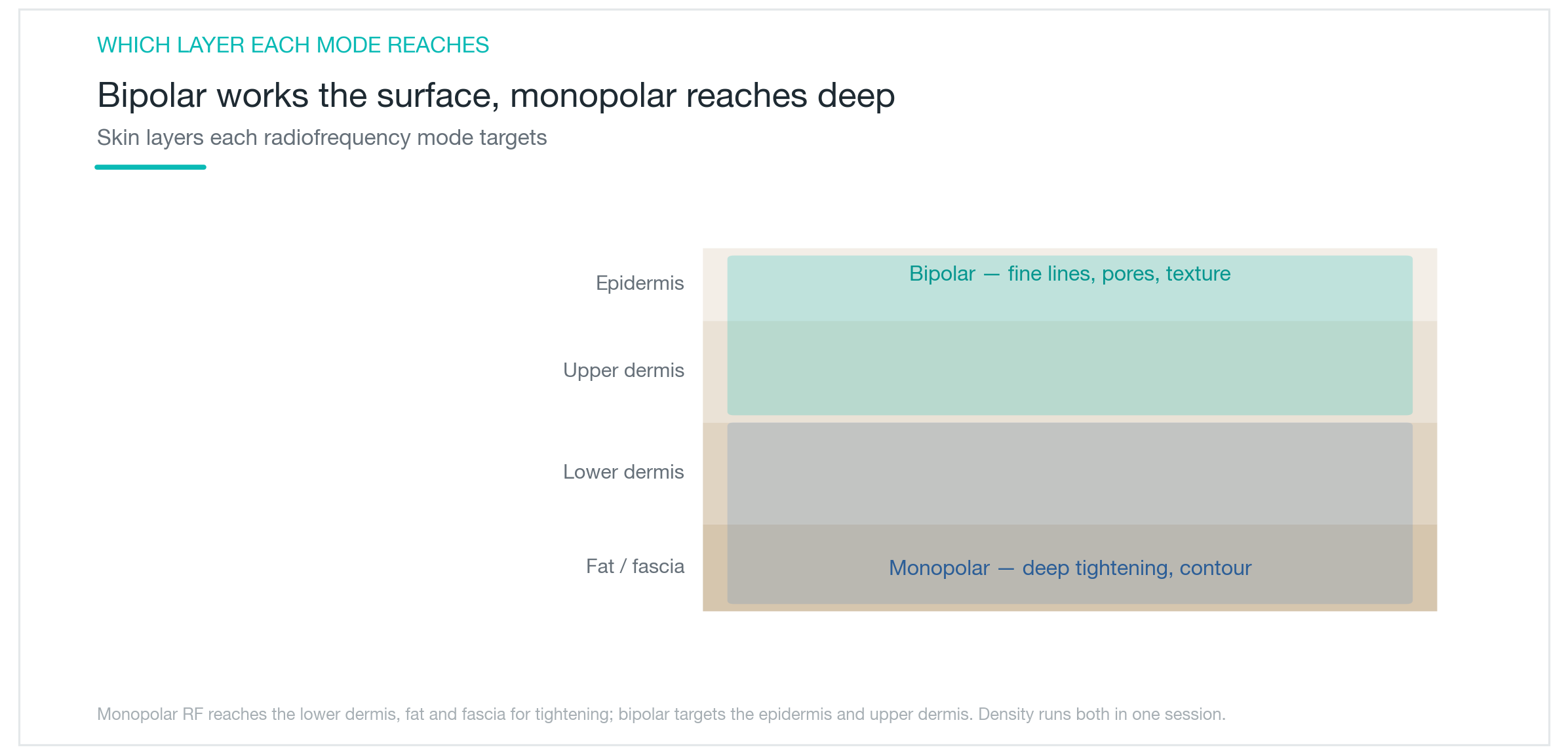
The mechanism follows standard RF lifting biology. RF energy vibrates dermal water molecules rapidly, generating frictional heat. When dermal temperature reaches 55–65°C, existing collagen fibers contract immediately, similar to how fabric shrinks under heat.
That contraction isn't the end of it. Thermally stimulated tissue then triggers a wound-healing-like response, producing new collagen over the weeks and months that follow. So the tightening felt right after a session is a separate event from the real change, which builds gradually over two to three months. That's why Density's monopolar mode reaching deep dermal and subdermal structures matters: collagen synthesis happens in the dermis, and stimulating the tissue beneath it is what drives lasting firmness.
Keeping the surface cool is equally important. The 5-step cooling system protects the epidermis while heat goes deeper, and real-time impedance feedback adjusts energy to that person's skin resistance. Too low, and the effect is marginal; too high, and pain and burn risk climb. Finding that balance is the practitioner's call, which makes technique one of the bigger variables in outcomes. When monopolar pre-heating is followed by bipolar in the shallower layer, the efficiency gain is real, and that sequential design is the whole logic behind Density's dual-mode approach. The same device can produce quite different results depending on how the two modes are combined and at what intensity.
16-person clinical results and how long they last
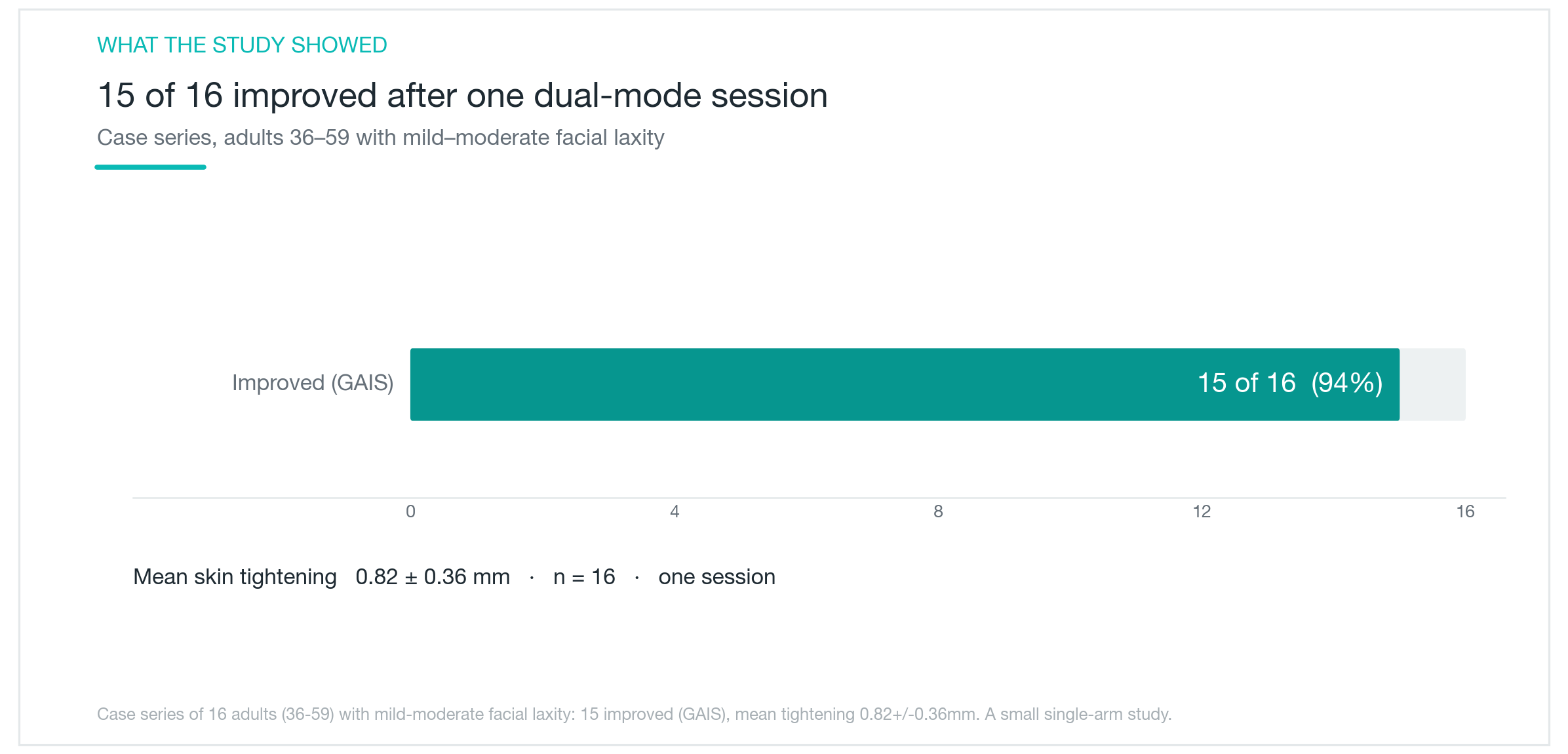
Density has dedicated clinical data, which puts it ahead of many devices in its category. A study enrolled 16 adults aged 36–59 with mild-to-moderate facial laxity and evaluated outcomes after a dual-mode treatment series. 15 of the 16 participants showed meaningful improvement in skin firmness and contour definition. Average skin lift measured 0.82 ± 0.36 mm, with improvement confirmed on both objective physician assessment and patient self-evaluation.
Results don't appear immediately. The tightening sensation right after a session is temporary; the real change (new collagen filling in) typically becomes visible over two to three months. Effects from a single treatment are generally reported to last around 6 months to 1 year.
That said, n=16 is a small, single-arm study, and those limitations are real. The more important context is that Density belongs to the same monopolar RF family as Thermage, which carries a substantial body of evidence behind it. Density builds on that foundation, with its own bipolar-specific data added on top. No large head-to-head comparison between Density and Thermage exists, but given the shared mechanism and frequency, broadly similar efficacy is a reasonable expectation, with the added benefit of bipolar coverage for surface-layer work. Patient accounts tend to reflect this: natural-looking firmness after a session, pain that was more manageable than expected, downtime that didn't get in the way.
How much pain and downtime to expect
RF lifting involves heating the dermis, so warmth and stinging come with the territory. Density's 5-step cooling and real-time impedance feedback are designed to reduce that, cooling the surface while heat travels deeper, and modulating output to each person's skin. It varies, but most reports describe it as a sharp warmth that's uncomfortable rather than severe.
A topical anesthetic can be applied beforehand if pain is a concern. The trade-off: dialing intensity down too far reduces efficacy, so the goal is enough energy to drive a real thermal response without being unbearable. Finding that line is on the practitioner.
Downtime is minimal. Mild redness or swelling right after is common but typically resolves within a day or two, and most people return to normal activities the same day. There's no bruising or crusting involved. In the days following, it's sensible to skip saunas and intense activity, and to keep up with moisturizer and SPF. Real-world feedback reflects this: many people go straight back to wearing makeup the same evening, and lunch-hour appointments are common given the quick recovery. Low pain and low disruption make Density a practical choice for people who can't afford extended downtime.
Who it suits and the limits to expect
Density works well for early-to-moderate laxity (the first or second stage of skin loosening) alongside surface concerns like fine lines, pores, and texture irregularity. Because monopolar handles the deeper structure and bipolar handles the shallower layer, it's particularly useful when both deep and surface complaints are present in the same patient. Low pain and minimal downtime also keep the barrier to entry low, which matters in practice.
Expectations are worth calibrating, though. RF lifting rebuilds collagen to firm the skin; it doesn't remove or reposition excess tissue the way a surgical lift does. For significant, established laxity, the results will be limited regardless of the device. As noted above, no large direct comparison with Thermage exists, but the two share the same monopolar RF mechanism and frequency; the structural differences are in added bipolar coverage and price, not in fundamental technology. That's why Density sits comfortably as a reasonable, more accessible alternative without meaningful sacrifice in efficacy.
A couple of things apply regardless of which device you choose. Outcomes depend heavily on the practitioner's technique and output settings, and the patient's skin condition at the time. The same machine can produce quite different results in different hands. And RF lifting generally works better as a maintenance strategy than a one-time fix; a single session gets you results, but repeating every 6 months to 1 year is how you hold and build on them.
Was this helpful?
About this article
Written by a practising aesthetic physician and intended for general education — not a substitute for individual medical advice.
Read next

10THERMA Lifting: Effect and Pain, and How It Differs From Thermage
A look at what 10THERMA actually is, how it compares to Thermage as a monopolar RF device, what dedicated clinical evidence shows, how much it hurts, and who it suits best.
By Dr. Kim

AGNES RF: Effects, How the Insulated Needle Works, Pain and Side Effects
A clear look at what AGNES microneedle RF does, why the insulated needle is the key design feature, how it targets sebaceous glands for acne and reduces under-eye fat, what the clinical evidence shows, what pain and downtime to expect, and who makes a good candidate.
By Dr. Kim

Sylfirm X Pulse Wave: Effect on Melasma and Redness, and Downtime
A clear-eyed look at how Sylfirm X works as a microneedle RF device, how pulsed wave addresses melasma and facial redness, what the clinical evidence actually shows, what pain and downtime to expect, and who is most likely to benefit.
By Dr. Lee