Botox for Sweaty Palms: How Many Months Does It Last?
By Dr. Lee8 min read
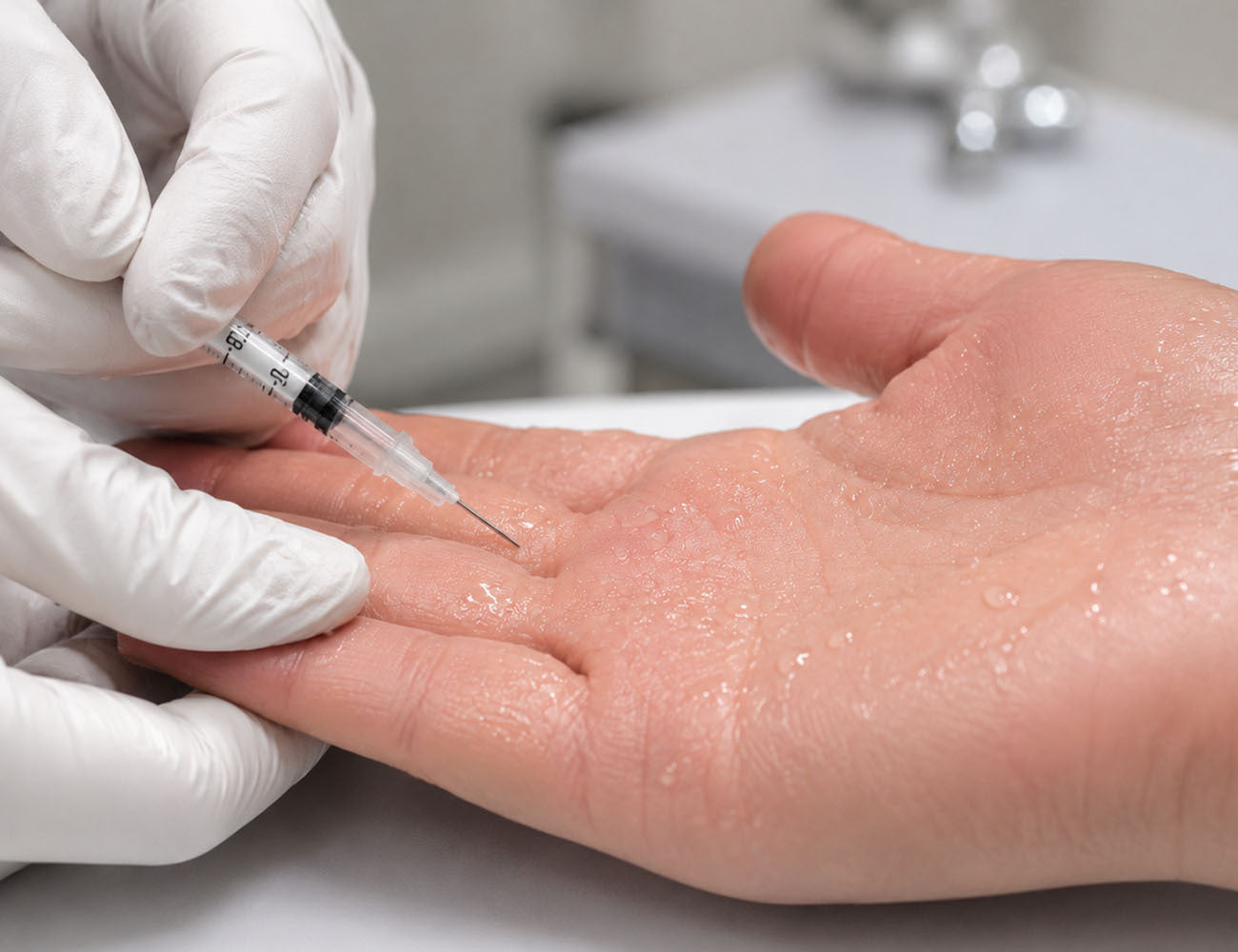
If your palms sweat easily, even a handshake feels stressful. Paperwork gets smudged, your phone screen slips out of your grip, and your hands stay damp no matter the season. Botox injected into sweaty palms noticeably cuts that sweat, but not through the same mechanism people usually associate with Botox. Here is how Botox actually works on the sweat glands themselves, and why the sweat tends to creep back after a while.
Sweating a lot is not, on its own, a medical problem. But when your hands are damp all day, it causes more daily friction than most people expect. That is why palmar hyperhidrosis is usually approached less as a cosmetic issue and more as a way to remove that everyday inconvenience.
Why Do Palms Sweat So Much?
The palms, soles, and armpits are packed unusually densely with eccrine glands, small glands that produce the clear sweat your body uses to regulate temperature. These glands take their orders from the sympathetic nervous system, the branch of your nerves that reflexively adjusts your body when you are tense or hot.
In primary palmar hyperhidrosis, this sympathetic pathway fires off excessive signals to the sweat glands regardless of actual body temperature or emotional state. It is as if the nerve has a switch that is simply too sensitive, so sweat breaks out even when there is no real heat or stress behind it. The exact cause is not fully mapped out yet, but the one thing every case has in common is that the nerve pathway driving the sweat glands is overactive.
In clinic, doctors sometimes use an iodine and starch solution on the palm to visually map where the sweating happens, since the areas that touch sweat turn a dark color. That lets the doctor chart exactly where and how widely to inject, almost like drawing a map.
How Does Botox Reduce Sweating?
Botox's active ingredient, botulinum toxin, blocks the release of acetylcholine, the chemical messenger nerve endings use to pass signals to the next cell. It is the same basic mechanism as facial wrinkle Botox, which relaxes muscles by blocking the signal that tells them to contract. Here, though, the target is not muscle. It is the sweat gland.
When the nerves around a sweat gland can no longer release acetylcholine, the gland never receives the instruction to secrete sweat in the first place. Think of it like a switch and wiring that are both perfectly intact, but pressing the switch no longer sends a signal down the line. The sweat gland itself stays exactly where it was. It simply stops being told to work.
This happens because botulinum toxin cuts a protein complex inside the nerve cell called SNARE, a bundle of proteins that normally acts as the channel through which the cell pushes substances out. It is a bit like a package sitting ready in a warehouse while the conveyor belt that carries it out has stopped moving.
Same mechanism, different outcome depending on the target. Injected into muscle, the muscle loses the signal to contract and relaxes. Injected around a sweat gland's nerve, the gland loses the signal to secrete and the sweat stops. So it is more accurate to describe palm Botox as a treatment that switches off the sweat signal, not one that stiffens the hand.
Injection Sites and Method
Palm Botox is injected in many small points, close to the skin surface, in a shallow layer. A single palm typically receives several dozen injection points spaced about 1 to 2 cm apart, because sweat glands are spread evenly across the whole palm, so any area left out simply keeps sweating on its own. Picture it as stamping a tight grid pattern across the palm.
The palm is one of the most nerve-dense areas of the body, so the injections tend to hurt more here than elsewhere. That is why clinics often combine ice packs, topical numbing cream, and in some cases a nerve block before starting. It helps to discuss pain management options with your doctor beforehand.
It is also worth knowing that Botox dosing for palmar hyperhidrosis has not been standardized as thoroughly as it has for underarm hyperhidrosis. Because of that, clinics often adjust the number of injection points and total dose based on the size of your hand and how widely the sweating extends.
When Does It Start to Work, and How Long Does It Last?
Results usually start appearing within a few days and become most noticeable somewhere between week 1 and week 2. Because it takes time for the nerve endings to lose their ability to release acetylcholine, sweat production stays visibly reduced through that window.
Duration is generally reported at around 4 to 6 months, though it varies from person to person, sometimes shorter and sometimes longer. Facial wrinkle Botox typically lasts 3 to 4 months, with 6 months on the longer end, so palms fall into a similar range and in some cases even last a bit longer.
The effect also does not disappear all at once. Sweat does not suddenly return to baseline overnight. Instead, it creeps back gradually over several weeks as you notice it. That happens because the nerve endings rebuild their signaling pathways in stages, not all at once.
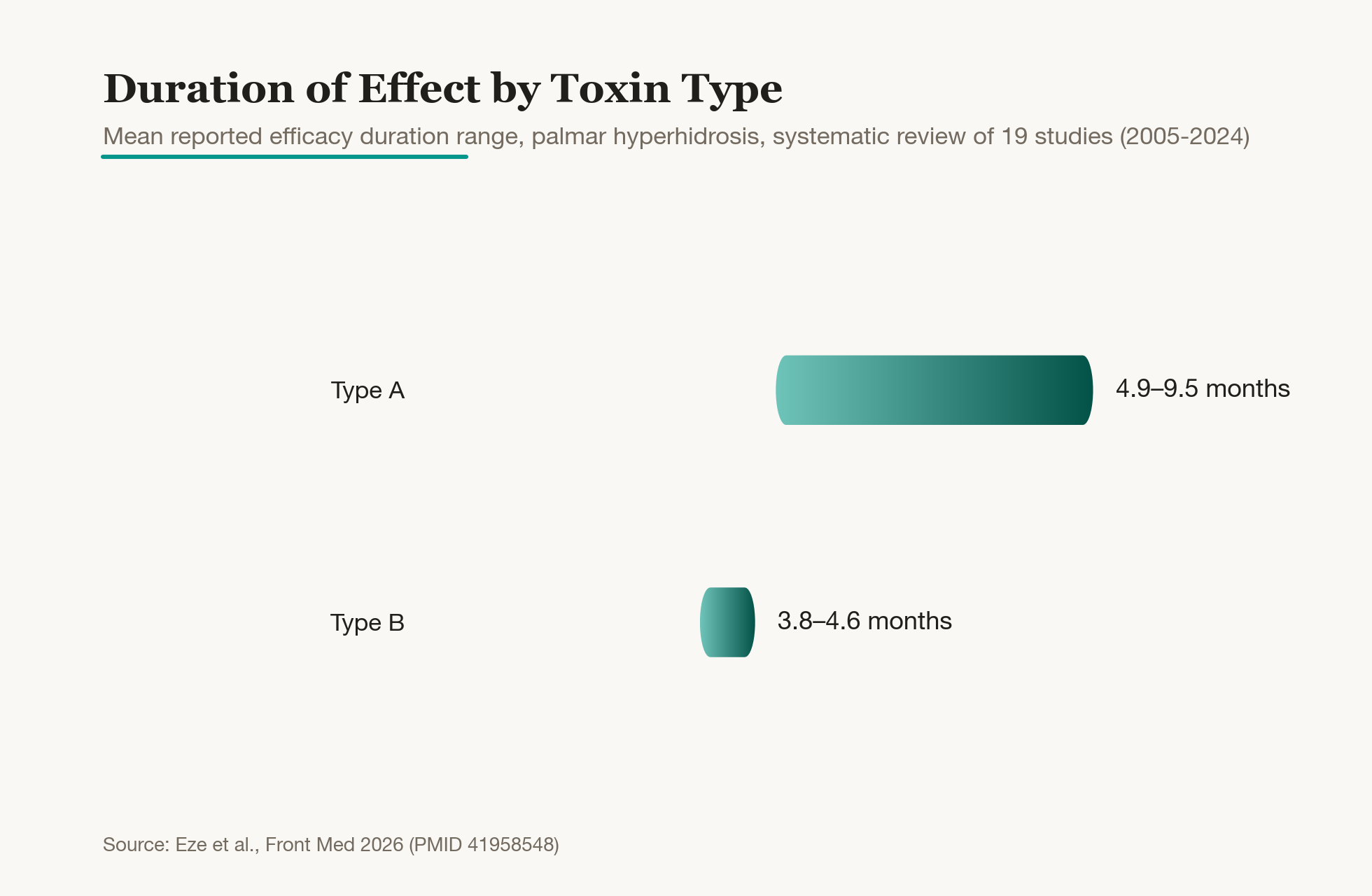
How Long Does Palm Botox Last?
Palm Botox actually lasts longer than most people expect. A systematic review pooling 19 studies found that type A botulinum toxin kept working for an average of 4.9 to 9.5 months, with the full range spanning 3 to 12 months. Set beside a large underarm trial where 82% of patients were still responding at week 16, the palm is not especially short on duration.
Still, the same length of time can feel very different on the hands. A few things are going on at once.
- Hands are used all day: You grip, press, and rub things constantly, so the moment even a little sweat returns, you notice it right away.
- Sweat glands are unusually dense here: Even a partial return of signal shows up fast as noticeable dampness.
- Hands are always exposed and touching other people: Unlike the underarms, hands shake other hands and handle paper, so the same amount of sweat bothers you more.
So the sense that the effect is fading often arrives before the actual duration runs out, and the real duration lines up with other treatment areas. Higher doses or repeated sessions are also reported to extend how long symptoms stay under control.
Are There Side Effects After Treatment?
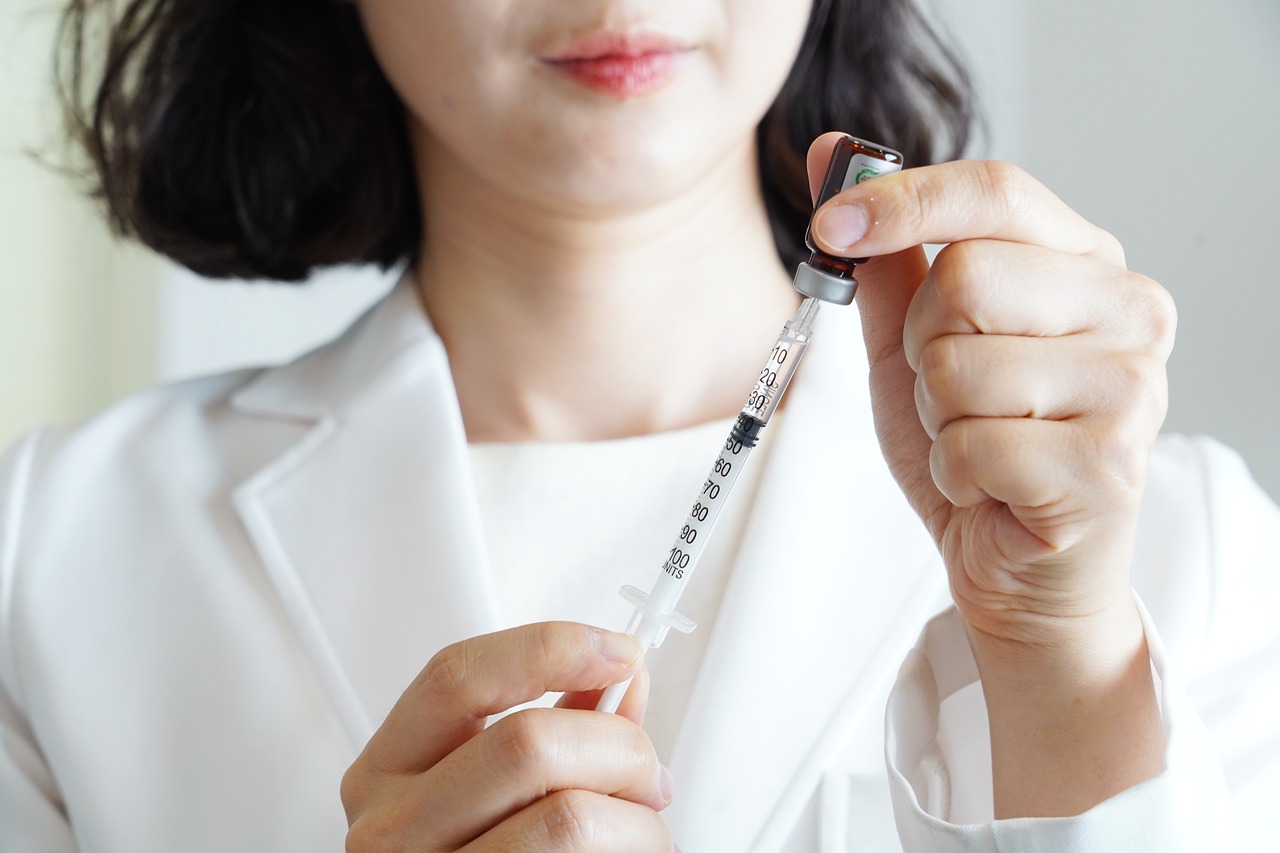
Right after the procedure, the palm may feel numb or slightly swollen for a few days. This is a temporary reaction to the medication being introduced near the nerve endings, and it usually settles within a few days on its own.
A small number of people report a feeling of weakness in the hand. Small muscles that move the fingers sit just beneath the injection sites, so if the toxin spreads a little into that area, it can create a temporary sensation of reduced strength. Still, multiple studies report that actual grip strength is mostly preserved, and injector skill at placing the toxin precisely in the shallow layer is considered key to minimizing this sensation.
- On the day of the procedure, it is best to avoid pressing or rubbing the palm firmly, since the injected medication can disperse before it settles into place.
- Swelling or numbness generally resolves naturally within a few days.
- If your grip feels weaker than usual, give it some time to recover, and see a doctor if the feeling lingers longer than expected.
When Should You Get Re-Injected?
Since the effect fades gradually over 4 to 6 months, most people time their next session around when the sweating starts becoming noticeably inconvenient again, rather than sticking to a fixed calendar date. It tends to work better to go by how much the sweat has returned than by a strict schedule.
There is not yet solid evidence that repeated treatments permanently reduce the palm's sweat glands over time, even with cumulative sessions. A more realistic way to think about it is ongoing, seasonal maintenance, timed to whichever periods or situations make the hyperhidrosis most bothersome.
References
Eze C, et al. Sustained efficacy of botulinum toxin in primary palmar hyperhidrosis: a systematic review of duration, quality of life, and satisfaction. Front Med (Lausanne). 2026 (PMID 41958548). Naumann M, Lowe NJ. Botulinum toxin type A in treatment of bilateral primary axillary hyperhidrosis: randomised, parallel group, double blind, placebo controlled trial. BMJ. 2001 (PMID 11557704). Korean Dermatological Association, American Academy of Dermatology (AAD), and Ministry of Food and Drug Safety (MFDS).
Was this helpful?
About this article
Written by a practising aesthetic physician and intended for general education — not a substitute for individual medical advice.
Read next
How Long Botox Lasts and Why It Varies: Dose and Antibodies Included
Botox works by blocking the signal pathway between nerves and muscles, temporarily stopping muscle movement. How long the effect lasts depends on the dose, the size of the muscle, and how quickly the nerve recovers, so results vary from person to person. Here is how repeat treatments, antibody formation, and aftercare all affect how long Botox lasts.
By Dr. Kim
Forehead Botox: When It Starts Working, How Long It Lasts, and Aftercare
Forehead lines form when the frontalis muscle contracts over and over with everyday expressions. Botox works by blocking the nerve signal that tells this muscle to move, not by dissolving the wrinkle itself. Here is how the muscle gets quieted down and why the effect eventually wears off.
By Dr. Kim
Why Sculptra Takes 4 Weeks to Show, and How Long It Lasts
Sculptra volume does not appear right after injection. It builds gradually over 4 to 12 weeks because the ingredient itself does not fill space instantly, it works by stimulating collagen production in the skin. Here is a close look at how PLLA triggers that collagen response and why treatment is spread across 2 to 4 sessions.
By Dr. Lee