Sunscreen SPF and PA Differences: How Much Should You Apply?
By Dr. Kim8 min read
Every summer, the advice is the same: wear sunscreen. What often gets skipped is what UV rays are actually doing to your skin. If the reasoning stops at "I'll burn if I don't," the routine ends up only half built.
UV radiation splits mainly into UVA and UVB, and the two work on skin in very different ways. One scorches the surface. The other quietly reshapes what's underneath, over months and years. So summer sun protection isn't just about avoiding a burn, it's about protecting the structure sitting deep in your skin. Here's how each type works, and what that means for how you should actually be caring for your skin this summer.
How Do UVA and UVB Affect Skin Differently?
UVB has a shorter wavelength, so it gets absorbed mostly by the epidermis, the skin's outer layer. It damages the DNA of epidermal cells directly, and the result is the redness and stinging you know as sunburn. A day at the beach turning your shoulders lobster red is UVB at work.
UVA has a longer wavelength, so it travels past the epidermis and reaches the dermis underneath. That's where collagen and elastin live, the structural fibers that hold skin's shape and bounce. UVA doesn't break collagen apart directly. Instead, it ramps up the activity of enzymes called MMPs (matrix metalloproteinases), which are what actually chew through collagen over time.
That's why UVB shows up the same day, while UVA builds silently over months and years. A few beach days in July won't hand you new wrinkles overnight, but repeated UVA exposure summer after summer gradually thins collagen, and skin loses firmness and starts holding fine lines. Think of it like a brick wall's support beams slowly eroding under years of wind and rain, the change is happening at that pace even if you can't see it day to day.
How Do Melasma and Spots Get Darker?
When skin absorbs UV light, it signals melanocytes (the cells that produce your skin's pigment) to make more melanin. Melanin's job is to absorb UV radiation before it reaches the cells underneath, so this is your skin's own defense response, not unlike opening an umbrella before the rain starts.
The problem is that this defense doesn't fire evenly across your whole face. Spots that already had melasma, sunspots, or old acne marks have melanocytes that are already primed to overreact, so they produce more pigment from the same amount of sun exposure. That's why melasma and old spots so often look darker by the end of summer.
UV light also oxidizes melanin that's already there, deepening its color. It's a similar reaction to what happens when you cut an apple and leave it out, the flesh browns as it hits the air. That oxidative effect is exactly why sun protection matters even more for anyone actively managing pigmentation.
What Does the SPF Number Tell You?
SPF stands for Sun Protection Factor, and it measures how well a product blocks UVB, the wavelength responsible for sunburn. Labeling conventions vary by country, but generally products are rated up to SPF 50, with anything above that marked SPF 50+.
A higher number isn't automatically better. SPF only reflects protection against UVB-driven sunburn, it says nothing about how well a product blocks UVA. That means a sunscreen with a sky-high SPF can still let UVA-driven collagen damage happen right underneath it.
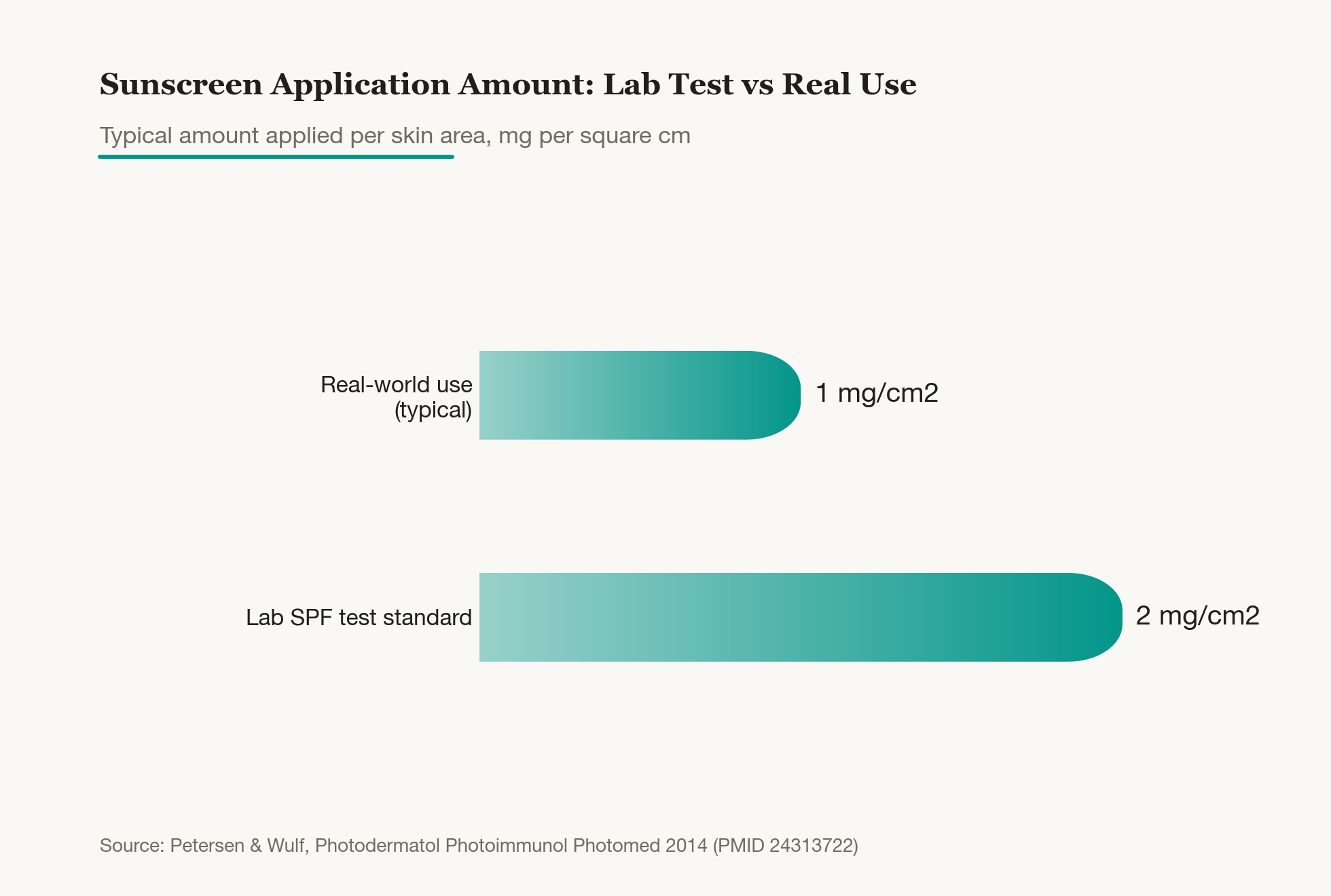
SPF numbers are also highly dependent on how much product you actually apply. Spread it too thin and the real-world protection drops well below the labeled number, because the protective film itself becomes thinner than it should be. That's part of why applying enough product matters more than chasing a higher SPF number on the label.
The PA Grade Is a Dermis-Side Gauge
PA stands for Protection Grade of UVA, and it measures how well a product blocks UVA. Ratings range from PA+ to PA++++, and more plus signs mean stronger UVA protection.
If SPF is the number that protects your epidermis from burning, PA is closer to the number protecting the collagen sitting in your dermis. That's why it's worth checking both SPF and PA when picking a summer sunscreen. If one is high and the other isn't, whichever type of damage the weaker rating leaves uncovered keeps happening regardless.
For anyone spending real time outdoors this summer, SPF 50 or higher with PA+++ or above is a common recommendation. Even if you're mostly indoors, UVA passes straight through window glass, so keeping a UVA-protective sunscreen in your routine indoors is still worth doing.
How Much Sunscreen Should You Apply and Reapply?
Sunscreens work through one of two mechanisms depending on their ingredients. Mineral filters like zinc oxide and titanium dioxide sit on the skin's surface and reflect or scatter UV rays, while chemical filters like avobenzone absorb UV radiation and release it as heat. Different mechanism, same end goal: keeping UV rays from reaching deeper into skin.
Neither mechanism works properly if you're not applying enough. The clinically recommended amount is roughly two finger-lengths of product for the entire face. Anything thinner leaves gaps in the protective film, and UV rays pass straight through those gaps.
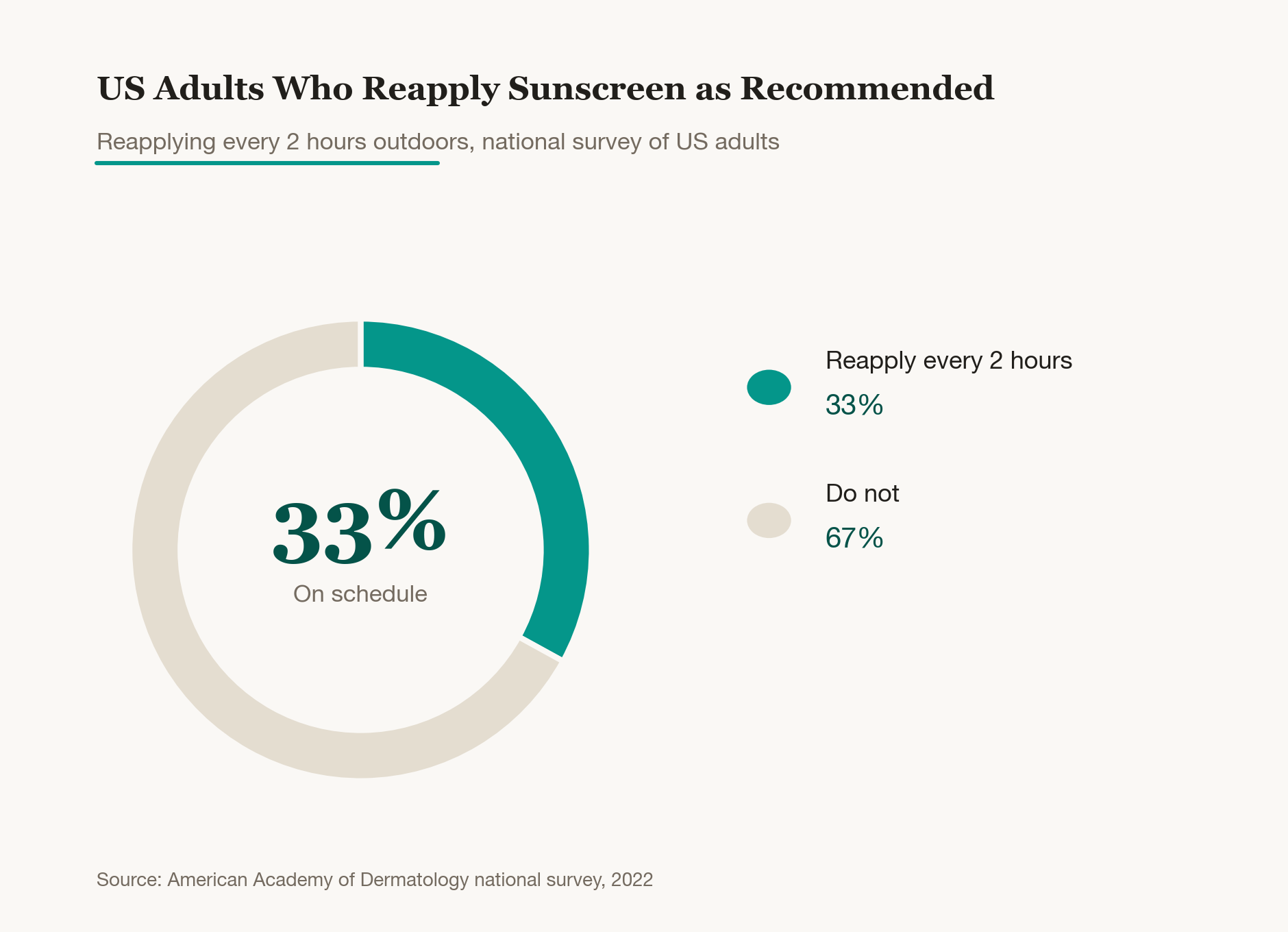
Reapplication matters just as much. Sweat, oil, and friction wear down that protective film over the course of a day, so reapplying every two hours is the standard advice for time spent outdoors. Even water-resistant formulas lose effectiveness after repeated cycles of getting wet and drying out, so if you're swimming, the same two-hour reapplication window applies.
Is It Good to Use Antioxidants Too?
UV exposure generates free radicals inside the skin, unstable molecules that attack surrounding cell membranes and collagen. That means the damage isn't limited to what UV rays do directly, free radicals add a second wave on top of it, similar to how rusted metal corrodes faster and faster the longer it's left exposed.
Antioxidants like vitamin C and vitamin E work by neutralizing those free radicals before they can do more damage. That's why pairing sunscreen with antioxidants is generally considered more protective than sunscreen alone, it addresses damage sunscreen alone can't fully prevent. Antioxidants don't block UV rays themselves, think of them as cleanup crew for whatever UV manages to get through.
Niacinamide is another ingredient that gets heavy use in summer. It helps reinforce the skin barrier (the protective layer covering the skin's surface) and helps calm redness and inflammation from UV exposure. A stronger barrier means outside irritants have a harder time getting in, so pairing niacinamide with sunscreen is a combination where each ingredient supports the other.
Four Things to Do Outside the Sunscreen
Sunscreen alone doesn't complete the picture. These additional habits are what actually turn sun protection into results.
- Avoid peak UV hours: UV intensity peaks between 10am and 2pm. Adding shade, a hat, or a parasol during that window works as a second layer of defense on top of sunscreen.
- Use hats and sunglasses: A wide-brimmed hat reduces the amount of direct light that ever reaches your face. Sunscreen blocks UV chemically or physically, while a hat simply reduces how much reaches your skin in the first place, so the two complement rather than overlap.
- Pair it with calming skincare: Skin stays sensitized after a day of heavy sun exposure. Rather than introducing a new active ingredient right after, giving skin time to recover with hydrating, calming care is the better call.
- Check your sunscreen's expiration date: The active ingredients in sunscreen degrade gradually over time. Once they degrade, their reflective or absorptive function drops, so it's safer to check the expiration date and replace last year's leftover bottle rather than reaching for it again.
These four habits work best together, not in isolation. Avoiding peak hours and wearing a hat cut down how much UV actually reaches your skin, while sunscreen and antioxidants handle the damage from whatever gets through anyway. Covering both layers is what keeps collagen and pigmentation from taking a real hit by the end of summer.
Summer sun protection isn't a one-day fix, it's an outcome that compounds year over year, so the small habits you keep up day to day are what end up separating your skin's condition years down the line. Sticking with these fundamentals consistently through the season tends to matter more than any single dramatic step.
References
Korean Dermatological Association, American Academy of Dermatology (AAD), and Ministry of Food and Drug Safety (MFDS).
Was this helpful?
About this article
Written by a practising aesthetic physician and intended for general education — not a substitute for individual medical advice.
Read next

AHA and BHA Differences: Choosing by Skin Type and Comparing Effects
AHA and BHA are both acids that clear away dead skin cells, but where they actually work depends on one simple thing, whether they dissolve in water or in oil. AHA breaks down the bonds holding surface buildup together, while BHA rides through oil to reach the sebum sitting deep inside your pores. Here is how each one works, and which fits which skin type.
By Dr. Kim

How Does Fine Dust Affect the Skin Barrier and Collagen?
Fine dust particles are so small they slip past the pores and into the gaps of your stratum corneum, unsettling the skin barrier from the inside. Along the way, free radicals surge and enzymes that break down collagen switch on, leaving skin more reactive and less firm. Here is how fine dust actually affects skin, and what genuinely helps.
By Dr. Kim
Density RF Effects: How Many Sessions and How Long Do Results Last?
Density RF pairs two radiofrequency modes with very different personalities to chase two goals at once: the instant tightening you feel right after treatment, and the collagen renewal that builds slowly over the following 4 to 12 weeks. Here is why two modes are needed, the order in which heat actually works inside the skin, and why the treatment is spread across multiple sessions instead of done all at once.
By Dr. Kim