Subcision for Sunken Scars: How Many Sessions Until They Lift?
By Dr. Lee8 min read
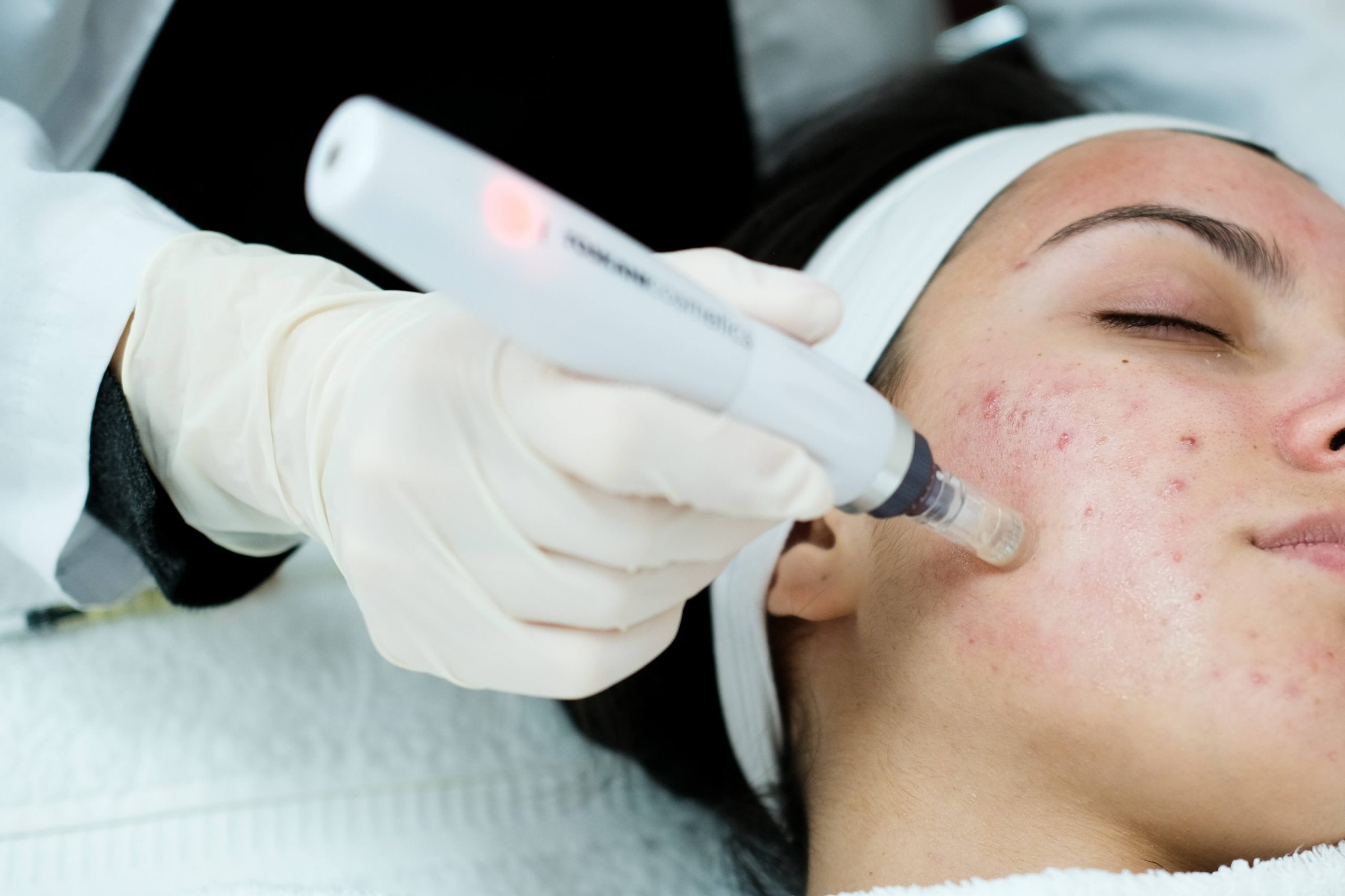
Look closely in the mirror and some people notice a spot on the cheek or temple that sits noticeably lower than the skin around it. The acne healed, the redness faded, but that one spot still looks like it was stamped in. Sometimes you can feel it under your fingertip when you apply lotion, like the skin catches on something.
Scars like this often come from something pulling underneath the surface, not from anything happening on top of the skin. Subcision is a procedure built to release exactly that hidden pulling force. Instead of shaving or burning the surface, it uses a needle to cut the cord-like tissue that is holding the scar down from below. Here is why that approach works, step by step.
Why Do Sunken Acne Scars Form?
When acne inflammation goes deep, it can reach the dermis, the layer just under the skin's surface where collagen forms a mesh-like network. As the body repairs that damage, it often builds a fibrous band, a tough thread-like tissue meant to hold the wound together while it heals.
The trouble is that this band ends up stitching the skin's surface to the deeper layer underneath. Picture a tent sheet tied down tightly to a stake with a rope. Because the rope is pulled taut, the fabric dips inward at that exact point. Skin behaves the same way. The band tugs the outer layer toward the tissue below it, so that one spot looks like it caved in.
These are usually called boxcar or rolling scars, and in both types this kind of tethering is considered one of the main causes. Surface treatments alone have real limits here, so cutting the cord itself is what actually gets at the root of the problem.
You can often tell whether this tethering is present with a simple touch test. Stretch the skin around the scar tightly to both sides. A tethered scar resists that stretch and stays pressed in at the same spot, while a scar without tethering usually flattens out smoothly along with the surrounding skin. That simple pinch test is often the first clue as to whether subcision is likely to help.
How Does Subcision Lift a Scar?
Subcision uses a specially shaped needle, often blunt-tipped or hook-shaped, inserted just beside the scar and swept back and forth underneath it in a fan pattern. That motion physically severs the fibrous bands described above.
The moment a band is cut, the downward pull on the scar disappears. Back to the tent: it is like taking scissors to that taut rope. Once the rope is gone, the fabric that had been pressed down springs back closer to its original position. With skin, you can often feel the scarred area lift slightly the instant the band gives way.
There is a second mechanism at work too. As the needle passes through, it creates tiny new areas of controlled injury, and the body responds by producing fresh collagen to repair them. Collagen is the pillar-like protein that props skin up from underneath. As those new pillars form, the floor of the scar tends to fill in a little more over time.
Why Does It Lift Right After, Then Sink Again?
Right after the procedure, the scar often looks noticeably lifted, which is the immediate result of the band being cut. But after 1 to 2 weeks, it can look somewhat sunken again. That happens because the body may lay down another round of fibrous tissue while healing the fresh wound.
That is why subcision is not a one-and-done procedure. It is usually repeated 3 to 6 times, spaced 4 to 6 weeks apart, giving collagen enough time to build up between sessions. Each round re-firms the ground a little more. With every session, the newly formed collagen adds up, and the floor of the scar rises more steadily.
Think of it like climbing a staircase. Each single step looks small on its own, but climb enough of them and you end up much higher than where you started. Subcision works the same way: every session is one small step, and the steps accumulate until the scar floor has risen substantially.
Combination Treatment With Laser
Subcision is good at releasing the pulling force and filling in the floor of a scar, but it has real limits when it comes to smoothing out the sharp, angular edges around a scar's rim. That is where fractional laser comes in, a treatment that creates a dense pattern of microscopic channels in the skin to stimulate collagen renewal around them.
The two methods work on different layers and solve different problems.
- Subcision releases the deep tethering and lifts the floor of the scar. It does relatively little for surface texture.
- Laser smooths the scar's edges and surface texture, but it cannot touch the deep tethering itself.
- Some reports suggest that combining the two, releasing the internal pull while also refining the surface, produces a more natural result than either one delivers alone.
For that reason, clinics often plan subcision alongside laser or filler rather than using it as a standalone treatment.
Are There Scars Subcision Doesn't Work On?
Subcision works best on scars with a clear band pulling at one specific point. But some scars form without any band at all, simply because the collagen and fat under the skin have thinned out broadly. Without a cord to cut, sweeping a needle back and forth underneath does not have much to release.
This tends to show up in some broad, gently sloped rolling scars, and in the gradual, overall cheek volume loss that comes with age. For these areas, filler or fat grafting, which directly restore lost volume, is usually the more direct approach.
That is why it matters to figure out, before treatment, whether a scar is sunken because something is pulling it down or simply because the volume underneath is gone. If the touch test described earlier reveals tethering, subcision becomes the priority. If the area is thin and broadly sunken without tethering, a volumizing treatment is usually considered first. Scars with both issues mixed together are common too, and in those cases subcision and filler are often planned together.
Bruising and Swelling After Treatment
As the needle sweeps back and forth under the skin, small blood vessels along its path can get compressed or nicked. That is why bruising at the treatment site is a common reaction with subcision. It can look alarming on the surface, but it is sometimes taken as a sign that the band was actually cut.
Bruising typically fades and clears within 1 to 2 weeks. Swelling can come along with it too, and that usually settles within 3 to 7 days. Recovery speed varies from person to person, so it helps to talk with your provider beforehand about your skin condition and expected healing time.
Some providers use a cannula instead of a needle, a tube-shaped instrument with a blunter tip. Because a cannula tends to push blood vessels aside as it moves rather than cutting through them, it causes relatively less bruising, though its cutting power against a tough band can be weaker than a sharp needle's. For that reason, a needle is often chosen for firm, dense tethering while a cannula is used in areas with more blood vessels. If pain is a concern, thorough local anesthesia beforehand makes it possible to sweep the fan pattern more broadly with less discomfort.
How Many Sessions, and By What Standard?
As explained earlier, because collagen takes time to build up, subcision is usually done in 3 to 6 sessions, spaced 4 to 6 weeks apart. The exact number needed can vary depending on how deep the scar is, how much tethering is present, and how quickly the individual heals.
- Rolling scars with shallow, widespread tethering sometimes respond after as few as 2 to 3 sessions, since the bands themselves tend not to be very thick.
- Boxcar scars or older scars with deep, firm tethering tend to have tougher, more established bands, often requiring 5 to 8 sessions or more.
- When laser or filler is combined with subcision, the overall schedule and spacing are coordinated together, so the session plan can look different from doing subcision alone.
Rather than committing to a fixed number of sessions in advance, it is more common to check how much lift the scar has gained at each visit and adjust the next appointment from there.
That same touch test comes back into play here. If pressing or stretching the scar area shows it moving as smoothly as the surrounding skin, that is usually taken as a sign the tethering has released enough, and wrapping up treatment is considered. If that one spot still feels stiff and pulled in, it usually means a band remains uncut, and the next session follows.
References
Korean Dermatological Association, Ministry of Food and Drug Safety (MFDS), American Academy of Dermatology (AAD), and U.S. Food and Drug Administration (FDA).
Was this helpful?
About this article
Written by a practising aesthetic physician and intended for general education — not a substitute for individual medical advice.
Read next

Potenza Needle RF: How It Improves Acne Scars and Pores
Potenza needle RF uses fine needles to bypass the skin surface and deliver heat directly into the dermis. Here is a plain walk through why that heat improves scars and pores, how many sessions it usually takes, and what the downtime looks like.
By Dr. Lee
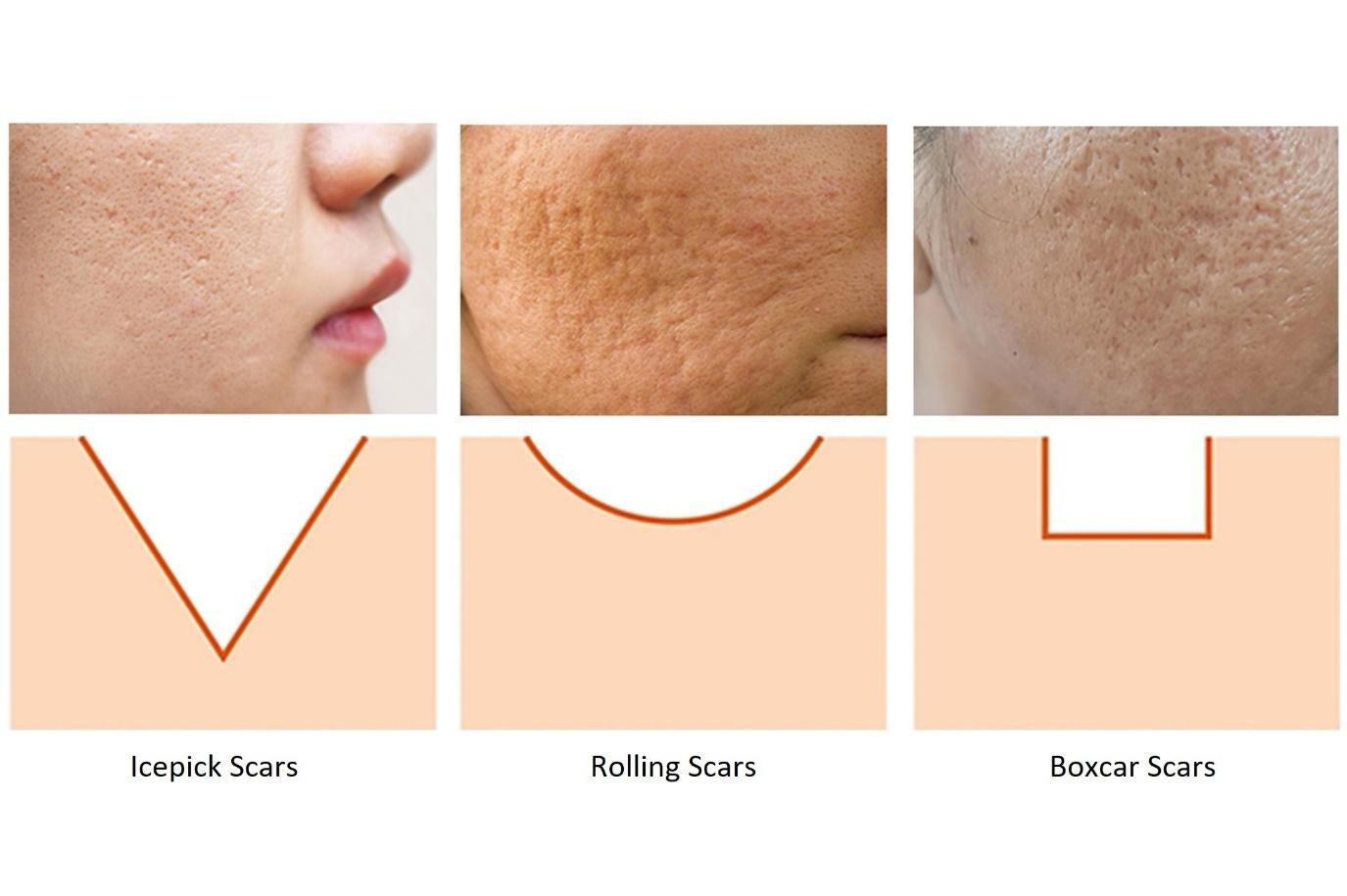
Air Subcision and Needle Subcision: Differences and Pain Compared
Air subcision uses compressed air to push a cannula through skin and release the fibrous bands tethered beneath a scar. Needle subcision aims for the same goal by hand, but the way force is delivered, and how it feels against the tissue, is different. Here is how the two methods actually compare, principle by principle.
By Dr. Kim

Body Onda: Effects, Approach by Area, Number of Sessions and How Long It Lasts
Body Onda is a non-surgical body contouring treatment that uses microwave energy to selectively heat the fat layer beneath the skin, shrinking fat cells while tightening the skin above them. Here is why the heat targets fat rather than skin, why fat reduction and tightening happen together, how the approach differs for the abdomen, arms, and flanks, and how many sessions it takes to see lasting results.
By Dr. Kim