Potenza Needle RF: How It Improves Acne Scars and Pores
By Dr. Lee8 min read
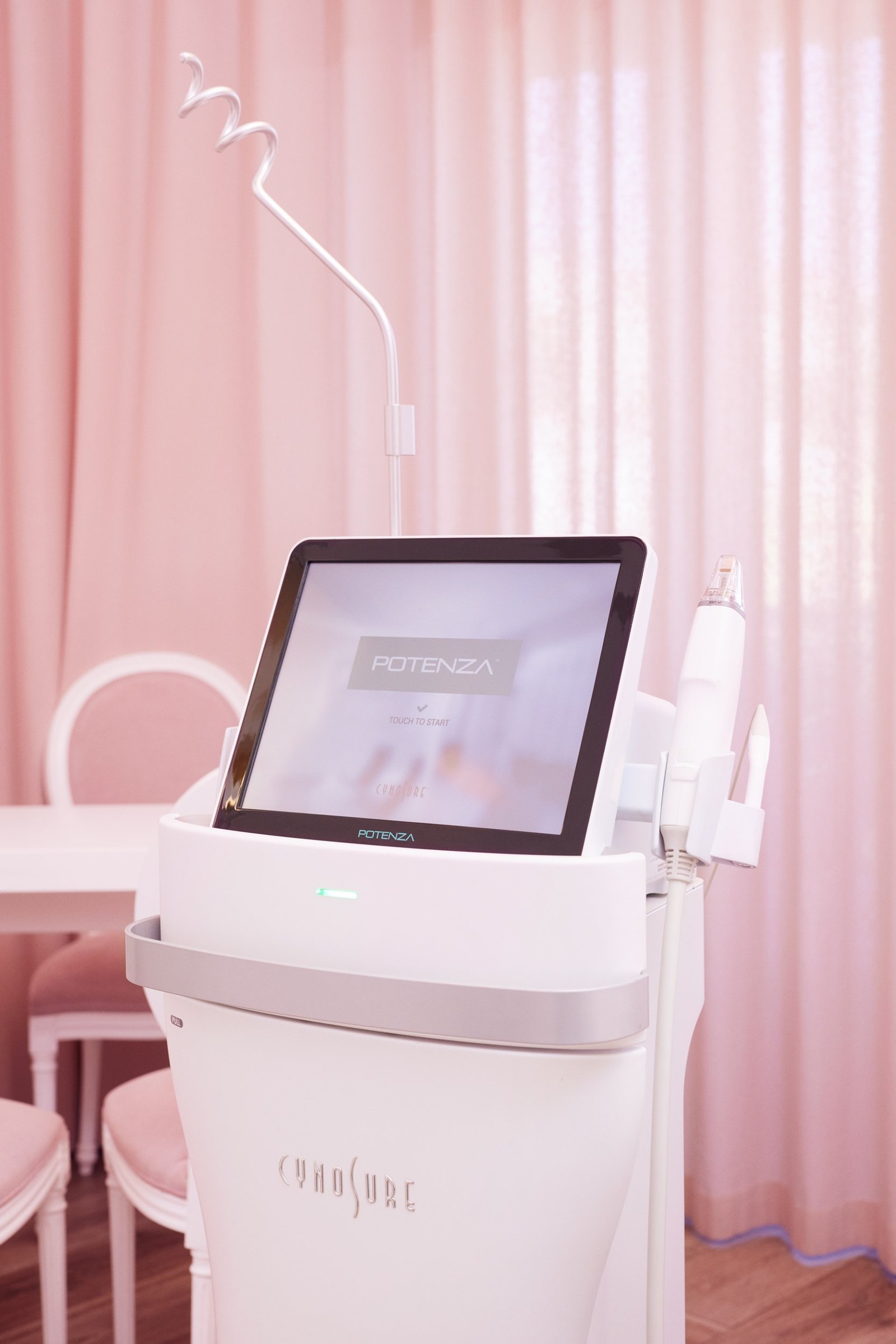
Some spots left behind by acne sit visibly lower than the surrounding skin, and in other areas the pores just look wider than they should. One of the treatments dermatologists often bring up for this is Potenza needle RF.
The name alone can sound unfamiliar. "Needle" is exactly what it sounds like, and RF stands for radiofrequency, a form of radio wave energy. In short, a fine needle goes deep into the skin and generates heat right at its tip. Understanding this treatment really comes down to two questions: why does the heat need to be delivered through a needle in the first place, and what path does that heat take to actually improve scars and pores?
What kind of treatment is Potenza Needle RF?
Potenza is a device with a tip carrying several microneedles that tap into the skin and pull back out. The instant a needle goes in, radiofrequency energy is released at its tip and generates heat in the surrounding tissue.
Radiofrequency here is not energy that cuts or burns the skin. Think of how water heats up inside a rice cooker because of electrical resistance. RF works on a similar principle, tissue heats up from its own resistance as the current passes through it. That is a fundamentally different path to generating heat than a laser, which works by firing light.
The key to this treatment is delivering that heat precisely into the dermis, the inner layer that supports the skin, rather than into the surface. The dermis holds a mesh of collagen, a protein that is easiest to picture as the support pillars holding the skin taut. When those pillars shrink or break down from scarring or aging, the skin above sinks or sags, and Potenza works by stimulating that pillar layer directly.
It is a bit like an old house whose sagging frame drags the wallpaper down with it. Once the collagen pillars weaken, the skin sitting on top sinks or sags along with them. Surface care alone has its limits here, and real change requires rebuilding the frame underneath.
How heat is delivered to the dermis
If radiofrequency energy is simply applied to the surface, the epidermis, most of that heat scatters there and never reaches the dermis in a meaningful amount. The epidermis acts as a kind of shield.
Potenza gets around this with the needle itself. A fine needle passes through the epidermis and travels straight into the dermis, and only then does heat come out of its tip. It is similar to the difference between dropping a letter into a mailbox slot and having a courier walk it right up to the door. Because of that, the device can place a precise amount of heat at exactly the depth intended.
Needle length and heat intensity are both adjustable on the device, so the depth the heat reaches can be set differently depending on whether the concern is a shallow acne mark or a deep scar. That range of adjustment is why Potenza gets used across such a wide set of concerns, from scars to pores to skin firmness.
For a shallow acne mark, the needle is set short. For an area with sagging firmness, such as the cheeks, it goes in deeper. Even with the same device, the settings shift depending on the area and the concern being treated.
How tiny heat injuries trigger regeneration
Wherever a needle goes in, a tiny dot of heat damage forms. Rather than treating a wide area all at once, this method stimulates the skin in a grid of individual points, which is why it is called fractional treatment.
The body reads each of these tiny injuries as a wound, which sets off the wound healing response. First an inflammatory phase clears out the damaged tissue, then new cells and collagen are produced to fill the gap, and finally that tissue is remodeled into something firmer. The entire process unfolds over roughly four weeks to six months after treatment.
What matters most is that new collagen is produced during this repair process. As the collagen pillars that were previously lacking get rebuilt, the skin becomes denser and firmer than before. Because the damage is limited to small dots, recovery tends to be relatively fast, and the strategy is to repeat this process every four weeks for three to five sessions, generating new collagen with each round.
It is a bit like planting seeds in scattered holes across a field instead of tilling the whole thing over, which actually lets the roots take hold more firmly. Each dot sends a small regeneration signal, and together those signals reshape the texture of the entire treated area.
How does it work on sunken acne scars?
Acne scars, especially the depressed, atrophic type, form when inflammation eats away at the collagen pillars in the dermis. The skin looks sunken exactly where those pillars have collapsed.
The heat from Potenza sends a signal into the dermis right beneath that sunken spot to build new collagen. Tissue that receives the heat activates the cells that produce collagen, called fibroblasts, and those cells go on to synthesize new collagen over time. New pillars are gradually rebuilt where the old ones collapsed.
A single session will not fully rebuild the pillars. That is why the stimulation is repeated three to five times at roughly four week intervals, letting collagen accumulate gradually, and reports indicate this leads to a progressive shallowing of scar depth.
The time it takes also depends on scar shape. Icepick scars, which are narrow and deep, have lost more of their pillar structure and take longer. Broad, shallow scars tend to fill in comparatively faster.
Why do enlarged pores get narrower?
One reason pores look wide is that the collagen and elastic fibers that once supported the pore wall have weakened, leaving the opening stretched out and locked in that position.
When Potenza delivers heat into the dermis around a pore, collagen is rebuilt through the same process seen with scars, and the tissue around the pore wall firms up. As that surrounding tissue becomes denser, the stretched-out pore opening is reported to narrow naturally.
In other words, the treatment does not physically punch out or eliminate the pore itself. It rebuilds the support structure around it so the opening looks tighter. That is also why pore improvement tends to build up over three to four sessions rather than showing up after just one.
Holding a stretched rubber band with your hand makes it look tighter for that moment, but it snaps back the second you let go. Pores work the same way. Lasting improvement depends on rebuilding the actual support structure, collagen, rather than a temporary effect.
The limits of improvement for red marks
The red marks left behind after acne heals come from the tiny blood vessels in that area being dilated and showing through the skin. Since this is a vascular issue rather than a pigment issue, brightening ingredients tend not to fade it very effectively.
There are reports that heat stimulation, by affecting vascular response and tissue remodeling in the area, can improve redness. That said, this effect is not as consistent as the improvement seen with scars or pores, and depending on the cause and severity of the redness, a different approach may be needed. If redness is the main concern, it is worth having the underlying cause checked during a consultation.
If an area turns white when pressed and quickly flushes red again, that can be a sign of dilated blood vessels. For this kind of vascular redness, treatments that target the dilated vessels themselves rather than pigment, such as IPL or vascular-specific lasers, are sometimes considered alongside or instead.
Number of sessions and spacing
Since building new collagen takes time, Potenza is not a one-and-done treatment. It generally follows a pattern like this.
- A set typically runs three to four sessions. Stimulation needs to be repeated in step with the collagen remodeling cycle for the effect to build up.
- Sessions are usually spaced around four weeks apart, giving the collagen synthesis triggered by the previous session time to progress before the next round of stimulation goes in.
- For deep or long-standing scars, the number of sessions may be increased, since more damaged tissue means more collagen needs to be rebuilt.
Change tends to show up gradually over four weeks to six months rather than right after treatment. Because collagen genuinely needs time to synthesize and settle in, it helps to stay patient while waiting between sessions.
When do redness and scabs settle after treatment?
Since each spot is where a needle went in and came back out, the skin is left with overall redness and very small pinpoint marks right after treatment. These are simply traces of where the needle passed through, and they fade naturally over time.
Redness typically settles within a day or two in most cases, and mild flaking or light scabbing can linger for around three to seven days. During this window, thorough sun protection and avoiding harsh or irritating skincare products are known to support recovery.
Downtime tends to be short enough that this is generally classified as a treatment people can get while continuing daily life, though recovery time can vary depending on individual skin condition and treatment intensity.
References
Korean Dermatological Association, Ministry of Food and Drug Safety (MFDS), American Academy of Dermatology (AAD), and U.S. Food and Drug Administration (FDA).
Was this helpful?
About this article
Written by a practising aesthetic physician and intended for general education — not a substitute for individual medical advice.
Read next
Subcision for Sunken Scars: How Many Sessions Until They Lift?
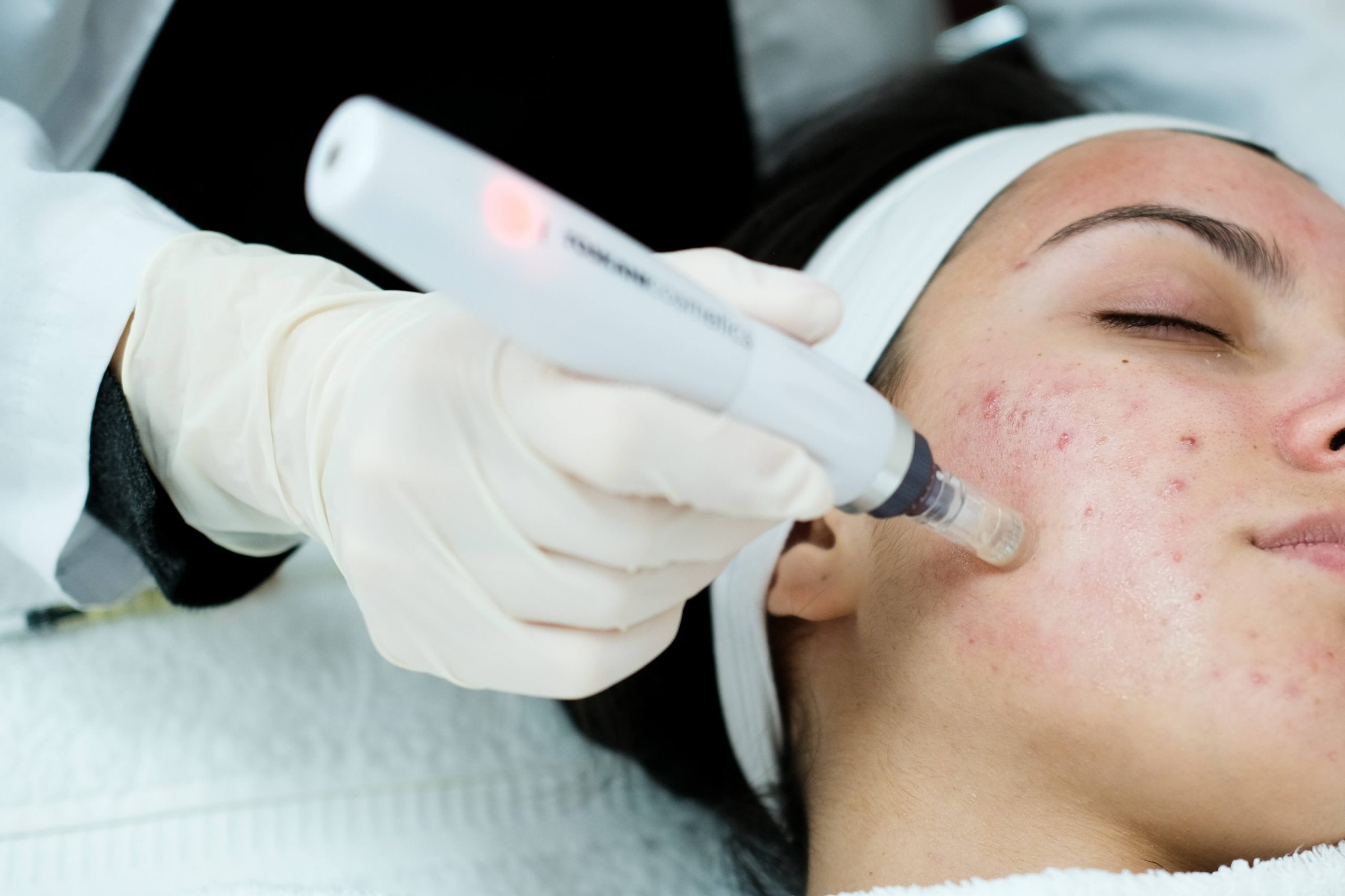
Subcision is a procedure that uses a needle to cut the fibrous tissue under the skin that is pulling a scar downward. Here is why scars sink in, how the needle releases that pull, and why treatment usually takes 3 to 6 sessions.
By Dr. Lee
Morpheus8: How It Works, Results, Recovery, and Aftercare
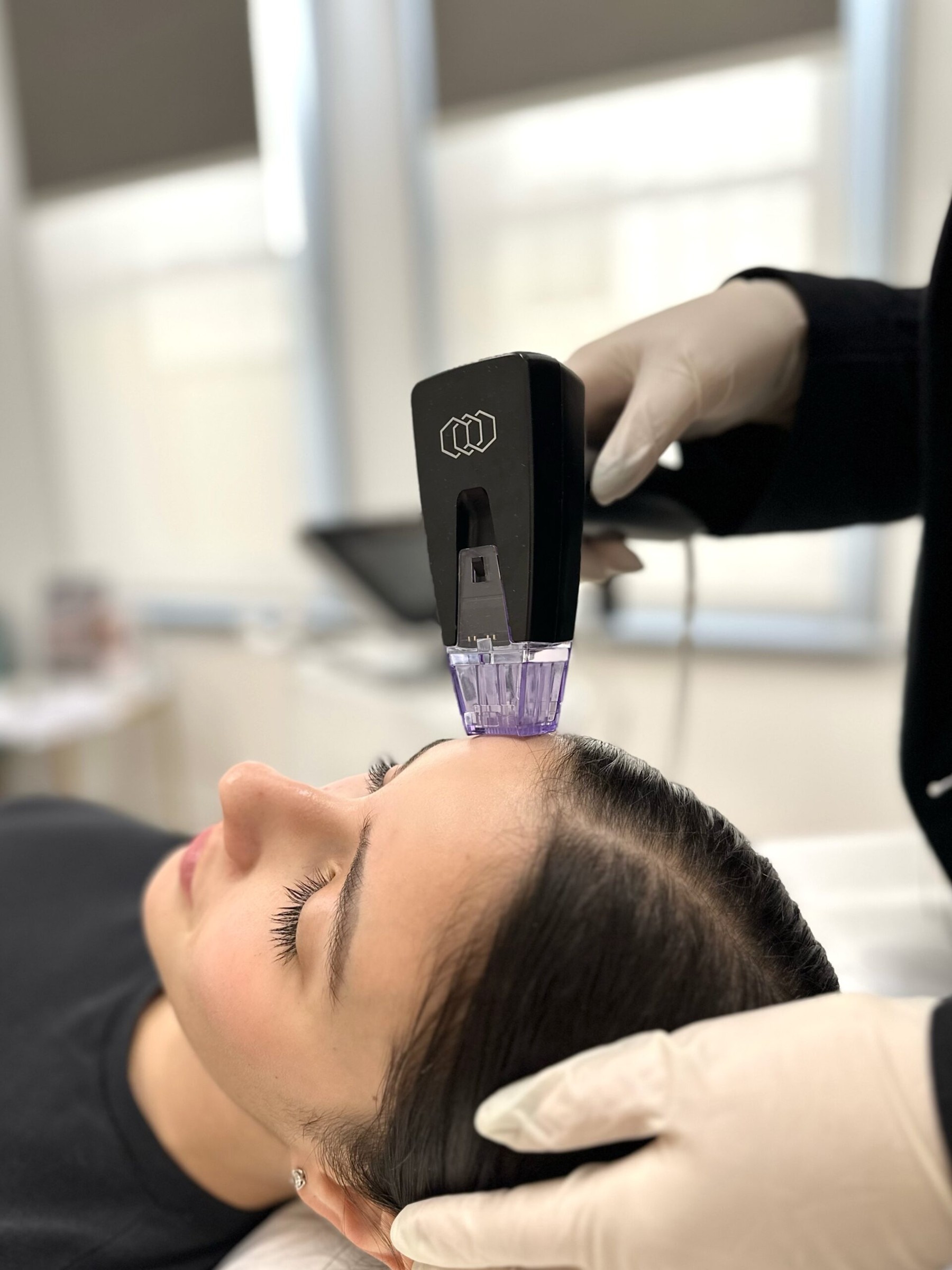
Morpheus8 is a microneedle RF device that delivers radiofrequency heat through coated needles down into the deeper layers of the skin. Heat at the needle tip stimulates fat and connective tissue, producing an immediate tightening effect alongside long-term collagen renewal. Here is how the depth control works and why recovery tends to be faster.
By Dr. Kim

Body Onda: Effects, Approach by Area, Number of Sessions and How Long It Lasts
Body Onda is a non-surgical body contouring treatment that uses microwave energy to selectively heat the fat layer beneath the skin, shrinking fat cells while tightening the skin above them. Here is why the heat targets fat rather than skin, why fat reduction and tightening happen together, how the approach differs for the abdomen, arms, and flanks, and how many sessions it takes to see lasting results.
By Dr. Kim