Age Spot Laser Treatment Effect: Are One or Two Sessions Really Enough?
By Dr. Kim9 min read
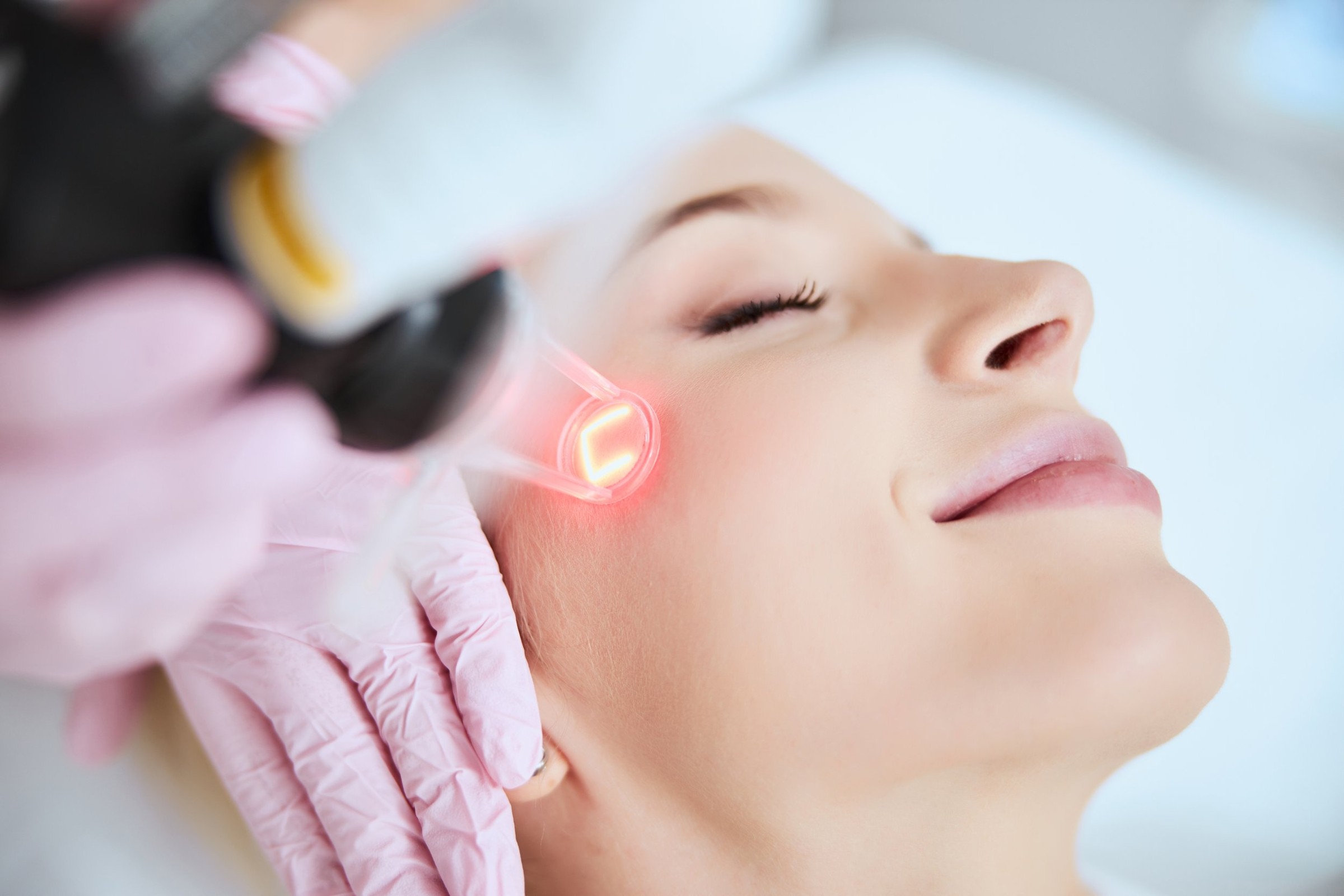
Catch a dark brown spot on your cheekbone or forehead in the mirror, and most people assume it is melasma and reach for whitening cream or laser toning. But some spots refuse to budge even after 3 to 6 months of consistent treatment. Chances are that spot is not melasma at all. It is a solar lentigo, a sun spot that sits differently in the skin.
Solar lentigines and melasma both look brown, but the pigment is arranged in completely different ways. That is why the gentle settings that work on melasma barely touch a lentigo, while a stronger laser can fade one noticeably in just one or two sessions. Below, we walk through why that gap exists, exactly how a laser breaks down the pigment, and what to watch for once the treatment is done.
How Are Age Spots Different From Melasma?
A solar lentigo is a brown patch that forms after years of cumulative sun exposure, known medically as a lentigo solaris or actinic lentigo. Unlike melasma, its border tends to be fairly crisp, and it usually shows up as a single spot no bigger than a fingernail, often smaller.
The pigment also forms differently. In melasma, melanin builds up gradually and evenly across the whole epidermis, so it reads as a broad, blurred stain. A solar lentigo, on the other hand, comes from a local cluster of melanin-producing cells (melanocytes) that multiply in one spot, packing the pigment tightly into a small area. Think of the difference between pressing a stamp firmly onto one spot versus brushing paint thinly across a wide surface.
Pigment clusters like this because skin cells that have absorbed sun exposure repeatedly, year after year, are the ones most likely to see melanocytes multiply. That is why lentigines tend to appear first on the face, the backs of the hands, and the shoulders, areas that have taken decades of direct sun, rather than on the arms or back, which clothing usually covers. Most people start noticing their first few in their 40s, with the count creeping up gradually from there.
Why Doesn't Toning Remove Age Spots?
Laser toning delivers low energy across the whole face in shallow passes, typically 5 to 10 sessions spaced 1 to 2 weeks apart, gradually thinning out pigment that is spread evenly through the epidermis. It suits melasma well, where the pigment is faint and diffuse with soft edges.
The problem is that a lentigo's pigment is far denser and packed into one tight spot. Even 5 to 10 low-energy passes only graze the surface. They do not have the force to break up a pigment cluster that solid. It is a bit like the difference between misting a whole lawn with a sprinkler and blasting a single spot with a hose. A sprinkler is the right tool to wet an entire yard, but clearing one stubborn, dried-in stain takes a much stronger stream. Repeat toning on a lentigo often does little more than fade it slightly, without ever clearing it.
There is also a design limit here. Toning was built to gently manage melasma-type pigment, which carries a risk of relapse, so its energy cannot simply be cranked up. Push the intensity too high and it irritates the whole epidermis, which can trigger fresh, blotchy pigmentation instead of removing the old spot. That is why a sharply bordered lentigo needs a different kind of laser altogether, one built to target that pigment directly from the start, rather than 5 to 10 rounds of a weaker approach.
How Does a Laser Break Up Pigment?
Treating a solar lentigo calls for devices like Q-switched or picosecond lasers, which fire an intense burst of energy in an extremely short window. These lasers concentrate energy onto the pigment in nanoseconds to picoseconds, far shorter than the blink of an eye.
When a melanin granule absorbs that short, intense pulse, it expands almost instantly and generates a tiny shockwave. That shockwave shatters the pigment cluster, a process called the photoacoustic effect. It is similar to pouring hot water over a block of ice and watching it crack apart on the spot: a sudden jolt of force breaks down what was solid a moment before. Over the following 1 to 4 weeks, the immune system's own cleanup cells clear away these fragmented pieces of melanin, and the color fades gradually.
Surrounding skin stays largely untouched for a specific reason. Laser light is not designed to burn just any color. It is tuned to target pigments like melanin that absorb its particular wavelength especially well. Skin without melanin barely reacts to the same light, while the pigment cluster takes the full brunt of the heat and shock. This principle is called selective photothermolysis, which simply means the laser recognizes one specific color and puts all its force into that spot alone.
Why Are One or Two Age Spot Laser Sessions Enough?
A solar lentigo responds fast to a strong laser because its pigment is concentrated in one tight spot. Because the target is clear and narrow, the laser can deliver strong energy precisely there while leaving the surrounding normal skin relatively undisturbed.
Melasma, by contrast, has blurry edges and spreads over a wide area, so high energy there would irritate healthy skin around the lesion too, raising the risk of side effects like new pigmentation. That is why melasma gets weaker energy split across many sessions, while a well-defined lentigo can take a strong setting locally from the very first treatment. This is reportedly why one or two strong laser sessions, at most two to three, are often enough to significantly fade or clear the surface pigment of a solar lentigo.
That said, how many sessions you need depends on how deep the pigment sits. A lentigo confined to the shallow epidermis often fades visibly after a single treatment. But older spots where the pigment has spread deeper, or larger lesions, are usually safer to clear over two to three sessions. Fading the surface gradually rather than pushing too hard for depth in one go lowers the risk of scarring or pigmentation afterward.
Other Spots Often Mistaken for Age Spots
Before assuming every brown spot is a solar lentigo, it is worth checking whether it might be something else that looks similar. The classic mix-up is seborrheic keratosis. A solar lentigo has a smooth surface sitting nearly flush with the skin, while seborrheic keratosis is raised, almost like a dab of wax stuck on top, with a rough texture you can feel under your fingers. The two need different treatments, so telling them apart actually changes the treatment plan.
- If the spot is raised enough to feel with your fingers, seborrheic keratosis should be on the list of possibilities. In that case, a surface-shaving approach may suit it better than a pigment-shattering laser.
- If the size or shape changes noticeably over 1 to 3 months, or the color looks mixed with several tones, it is worth having a dermatologist take a look. It is rare, but some cases need to be distinguished from other pigmented lesions.
If it is hard to tell just by looking, getting a proper diagnosis with dermoscopy first, before moving to treatment, is the safer order.
How to Care for the Scab After Treatment
When strong energy breaks down the pigment, the epidermal cells covering it get some collateral stimulation too. That is why the treated spot is usually covered by a thin brown or black crust right after the procedure. This is simply the wound protecting itself, and the crust typically falls off on its own after about 5 to 7 days.
How you handle this period matters a lot for the final outcome.
- Do not pick at the crust. Forcing it off irritates the still-healing new skin underneath and raises the risk of pigmentation.
- Keep the area moist with ointment or a moisturizer. New skin cells grow in more smoothly in a properly moist environment than on a dry wound.
- Apply sunscreen more diligently than usual. The fresh skin forming under the crust is thin and delicate, so it reacts to UV exposure far more sensitively.
- If the crust itches, do not scratch it. Cool compresses instead. Scratching reopens the spot and slows down recovery.
Keeping a wound moist like this is called moist wound healing. Left dry, a crust hardens and cracks easily, but kept properly moist, the new skin underneath forms thinner and smoother.
Pigmentation That Can Follow the Scab
Right after the crust falls off, the skin underneath is freshly formed and far more sensitive to UV and irritation than usual. If it is not shielded from the sun enough during this window, melanocytes can kick back into gear and leave a mark darker than the original lentigo. This is called post-inflammatory hyperpigmentation.
This side effect is known to show up more often in people with naturally darker skin tones, in cases where sun protection was skipped right after treatment, or when the crust was picked off too soon. Darker skin tends to have more reactive melanocytes to begin with, so even minor irritation can trigger extra pigment production more easily.
That is why applying sunscreen diligently for at least 4 to 8 weeks after treatment, along with physical coverage like a hat or umbrella, is the safer approach. Sunscreen alone often cannot block UV completely, so during periods of heavy outdoor activity, pairing it with a wide-brimmed hat or umbrella makes a real difference. Even if pigmentation does appear, it usually fades gradually over time, so waiting it out while minimizing further irritation tends to help recovery more than rushing back in for another laser session.
Sun Protection to Prevent Recurrence
A laser breaks down pigment that has already formed. It is not a vaccine that prevents new solar lentigines from appearing down the road. Even on a spot the laser has cleared, continued sun exposure over time can bring a new lentigo back to the same area or somewhere nearby.
That is why keeping sun protection as a daily habit after treatment is the single most reliable way to cut down on recurrence. Applying sunscreen every day, and avoiding outdoor activity during peak sun hours or covering up with a hat and sunglasses, can meaningfully slow down how fast new pigment builds. In the end, managing solar lentigines is not a one-time laser fix. It makes more sense as an ongoing process that includes sun care long after the treatment itself is done.
References
Korean Dermatological Association, Ministry of Food and Drug Safety (MFDS), American Academy of Dermatology (AAD), and U.S. Food and Drug Administration (FDA).
Was this helpful?
About this article
Written by a practising aesthetic physician and intended for general education — not a substitute for individual medical advice.
Read next
Cafe-au-Lait Spots Returning After Laser: Causes, Number of Sessions and Expectations
A café au lait spot forms because the pigment-making cells in that one patch of skin are locally overactive. Laser treatment breaks up the pigment that has already built up, but it doesn't switch off those cells, which is why the color so often returns. Here's the biology behind it, why results differ so much from person to person, and what a realistic treatment timeline actually looks like.
By Dr. Kim

Freckles Versus Melasma: How Do Their Laser Treatments Differ?
At a glance, freckles and melasma both look like brown spots, which makes them easy to mix up. But where the pigment actually sits in the skin, and why it shows up in the first place, are completely different. That difference decides whether you need a strong laser or a gentle toning session, and why one of the two keeps coming back.
By Dr. Lee

Why a Jawline Blurs: Telling Fat From Sagging, and Comparing Treatments
A blurred jawline usually comes down to one of two things: extra fat, or sagging skin and fascia. The two causes feel different to the touch, and that difference determines whether fat-dissolving injections, radiofrequency, or thread lifting is the better fit. Here is how to tell them apart and how each treatment actually works.
By Dr. Kim