Why a Jawline Blurs: Telling Fat From Sagging, and Comparing Treatments
By Dr. Kim6 min read
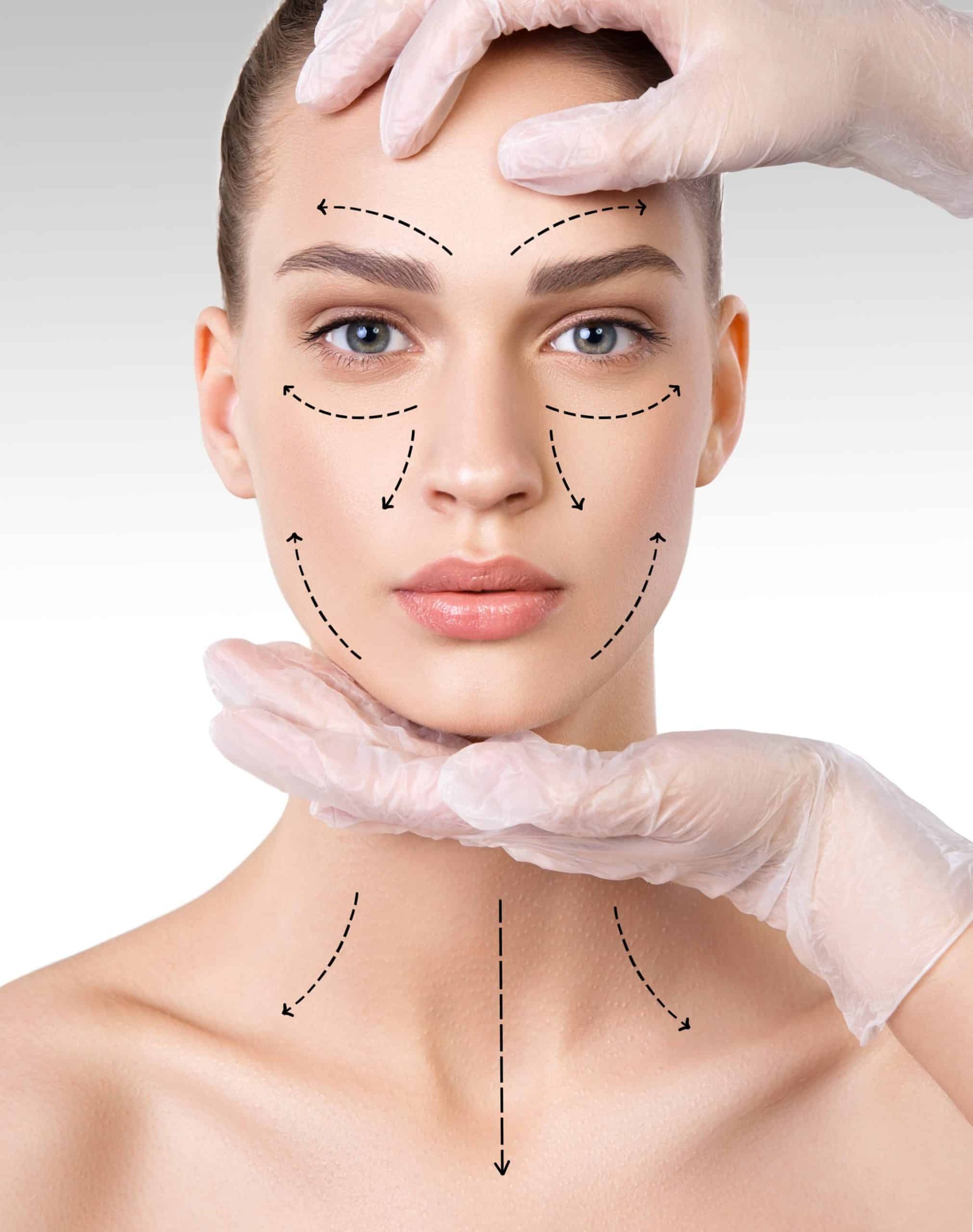
When the jawline starts looking blurry, most people jump straight to the same treatment. But there is more than one reason a jawline breaks down. Sometimes it is extra fat building up under the chin. Other times the fat is unchanged, but the skin and the fascia underneath it (the thin layer wrapping the muscle) have sagged. The two can look similar from the outside, but they feel clearly different when you touch the area, which means the right treatment differs too. Picking a procedure before figuring out the actual cause can leave you disappointed with the results.
Is a blurred jawline caused by fat or sagging?
Visually, the two causes can look almost identical. Seen from the side, a jawline that has softened into a rounded blur at the neck can come from fat buildup or from sagging skin, and both produce the same rough outline.
The tissue behind it, though, is completely different. Fat is a soft, storage-type tissue that sits in a shallow layer under the skin, while sagging is the support structure itself, the skin and fascia, settling downward. It is a bit like the difference between a storage room stacked full of boxes and one where the shelves themselves have collapsed. Both look cluttered from the doorway, but the underlying problem is not the same at all.
Is soft, pinchable flesh fat?
With a fat-driven jawline, pinching gently under the chin usually turns up soft, pliable tissue. The skin itself still has decent elasticity, it is the fat layer underneath that has simply thickened.
This pattern often shows up even in younger people. Some people are simply built to store fat under the chin, and it is common for that area to be the first place weight gain shows. If pulling the skin upward noticeably tightens and defines the jawline, that is a good sign fat plays a bigger role than sagging.
Blurred with nothing to pinch: suspect sagging
With a sagging jawline, there is little or no tissue to pinch, yet the jawline still looks blurred. It is not extra fat, it is the fascia and skin that used to hold the face up settling downward.
This pattern tends to develop slowly with age. Collagen and elastic fibers in the skin gradually decline over time, and the fascia holding the whole face together stretches little by little under gravity. It is similar to how an aging curtain rod bends slightly and the whole curtain droops as a result. Pulling the skin up does not tighten things as dramatically as it does with a fat-driven jawline, and instead the entire facial contour tends to sag together.
How to reduce it when fat is the cause
When fat is the main driver, it makes sense to target the fat directly. A few common approaches:
- Fat-dissolving injections: Deoxycholic acid (a substance the body already produces naturally that breaks down fat cell membranes) is injected directly into the fat layer. Because it dissolves the fat cell membrane and eliminates the cell itself, the fat cells that are lost are not thought to come back.
- Liposuction: A thin cannula physically suctions out the fat. It can remove more volume in a single session than injections can, but recovery time and swelling tend to be greater as well.
- RF or ultrasound fat stimulation: Heat energy stresses fat cells so their volume shrinks gradually over time. It is less direct than fat-dissolving injections, but it also tends to bring some skin tightening along with it.
All of these methods are built around reducing fat, so if you apply them to a face where sagging is the real issue, you can end up losing fat while the sagging stays exactly the same, sometimes making the area look even more hollow. Removing fat from a face that already has little to spare takes away the volume that was helping to fill things out. That is why it helps, during a consultation, to describe not just that your jawline looks blurred, but whether there is actually tissue you can pinch there.
Which treatment suits sagging?
When sagging is the main driver, the support structure itself needs to be rebuilt. RF and HIFU devices deliver heat to the deep layers of skin and fascia, which stimulates collagen fibers. That heat triggers a response similar to wound healing, and in the process new collagen forms while existing tissue firms up. It is a bit like how a wrinkled shirt tightens up under a hot iron.
Thread lifting adds physical pulling force on top of that. Tiny barbs on the surface of the threads grip the tissue and lift it, and once the threads dissolve, collagen fills in around where they were, a two-stage process combining an immediate change with a slower one that builds over time. The more pronounced the sagging, the more physical lift is needed, which is why thread lifting or thread-based techniques get chosen more often for it. On the other hand, for mild, early-stage sagging, RF or ultrasound alone can stimulate enough collagen without needing that extra pulling force, so threads are not always necessary.
What order works when fat and sagging are mixed?
In practice, the two causes rarely split cleanly, most faces have some of both mixed together. It is common to see both some fat and some sagging of the skin and fascia at once, partly because fat distribution itself shifts with age. Fat in the upper face tends to shrink while fat in the lower face tends to sag and accumulate, so fat and sagging often progress together.
In cases like this, a single method may not be enough. It usually makes more sense to combine fat-reduction with skin- and fascia-tightening treatments, but in a deliberate order. If the amount of fat is not too significant, addressing the sagging first and adjusting any remaining fat later tends to go more smoothly. If there is a noticeably larger amount of fat, reducing that first and then reassessing the degree of sagging afterward is the more sensible order. Rather than doing both in one session, spacing them out so the recovery responses do not overlap makes swelling and irritation easier to manage.
What to check yourself before a consultation
Getting a rough sense of the cause yourself can also help. Checking the points below makes for a much more precise conversation during a consultation.
- Pinch under the chin and check whether there is a noticeable amount of soft tissue, or almost none. More pinchable tissue points to fat, less points to sagging.
- Stand in front of a mirror and gently pull the skin up toward your ears. If the jawline sharpens noticeably, sagging is the bigger factor. If little changes, fat is more likely the bigger factor.
- Think back on whether your jawline has tracked with your weight over time. If it has shifted along with weight gain and loss, fat plays a bigger role. If it has blurred gradually regardless of weight, sagging plays a bigger role.
- Age and how quickly the change happened are also worth considering. A sudden change at a relatively young age points toward fat, while a gradual change over several years points toward sagging.
None of this adds up to an exact diagnosis on its own, but it is more than enough to help you figure out which direction to focus the conversation in during a consultation. In the end, the least disruptive approach to jawline care is to first get a sense of whether fat or sagging plays the bigger role, and then choose the method that matches.
References
Korean Dermatological Association, American Academy of Dermatology (AAD), and Ministry of Food and Drug Safety (MFDS).
Was this helpful?
About this article
Written by a practising aesthetic physician and intended for general education — not a substitute for individual medical advice.
Read next

Double Chin Treatment: Which Method Fits Fat or Sagging?
Whether your double chin comes from excess fat or from sagging skin and fascia determines which treatment should come first: deoxycholic acid injections, RF devices like INMODE, thread lifting, or HIFU. We break down what real studies show and why diagnosing the cause matters most.
By Dr. Kim

VRO Lifting: Ultrasound and Radiofrequency Differences, and Aftercare
VRO lifting combines two different energy types, ultrasound and radiofrequency, in a single session. The key idea is that each energy reaches a different depth in the skin, so together they can address both a shallow layer and a deep layer that neither one covers alone. This article breaks down how each energy works and why using them together actually makes sense.
By Dr. Lee

Can Thin People Get a Double Chin? How to Tell Fat From Sagging
A double chin can come from fat buildup or from sagging skin and muscle, and the treatments that actually work depend entirely on which one it is. Here is why that difference matters and how to tell the two apart.
By Dr. Kim