Double Chin Treatment: Which Method Fits Fat or Sagging?
By Dr. Kim7 min read

If you start looking into double chin treatments hoping for a sharper jawline profile, you'll run into a flood of names: deoxycholic acid injections, INMODE, thread lifting, HIFU. But these four target completely different layers and work through completely different mechanisms. A double chin that looks thick because of excess fat and one caused by sagging skin and muscle can look similar on the surface, yet call for very different treatments.
There are broadly two reasons a chin can look thick: a thicker fat layer, or sagging skin and fascia. Figuring out which one applies to you comes first, since that's what determines whether deoxycholic acid injections, RF or thread lifting to tighten the skin, or HIFU for deeper stimulation makes the most sense. Here's a rundown of what to consider for each cause, based on figures from real studies.

Why does a double chin form, and how do you tell the types apart?
We lump it all together under one word, double chin, but the reason the area under the chin looks thick in profile varies from person to person. The first cause is simply a thicker fat layer. Some people just tend to carry fat specifically under the chin, regardless of their overall weight.
The second is sagging skin and the platysma, the thin muscle sheet underneath it. The platysma is like a curtain of muscle covering the front of the neck. As it loses elasticity with age, it droops downward and blurs the jawline.
It's more common for these two causes to overlap than to appear on their own. If your chin has looked thick since you were young, the fat component is likely dominant. If it's sagged noticeably over just the last few years, the skin and fascia component may play the bigger role. Before deciding on a treatment, the first step is figuring out which of these two is closer to your own situation.
| Cause | When You Pinch It | Good Fit |
|---|---|---|
| Fat type | Soft and full | Deoxycholic acid injections |
| Sagging type | Thin, loose, no firmness | RF, thread lifting |

Fat-dissolving injections for a fat-type double chin
The easiest way to check whether you're dealing with the fat type is to pinch the area with your thumb and index finger. If there's a good amount of soft tissue you can grab under the chin, a thicker fat layer is likely the cause. This applies to people whose chin looks noticeably thick even though their overall weight hasn't changed.
For this fat type, deoxycholic acid injections are worth considering first. In large clinical trials, both physicians and patients rated the results as improved at a clearly higher rate than placebo, with satisfaction coming in at 79%. Because it actually destroys fat cells, the results tend to be long lasting, which is this approach's biggest strength.
If your skin is already sagging, though, reducing fat alone may not sharpen your jawline as much as you'd like. We cover the detailed mechanism and side effects of deoxycholic acid injections in a separate article, so here we've focused only on why it suits the fat type.

Does RF work if the skin is sagging?
With the sagging type, where the skin and fascia have loosened, pinching the area doesn't feel full the way it does with the fat type. Instead, thin skin just drapes loosely between your fingers. This is where RF, which heats and tightens the dermis and shallow fat layer, tends to work well.
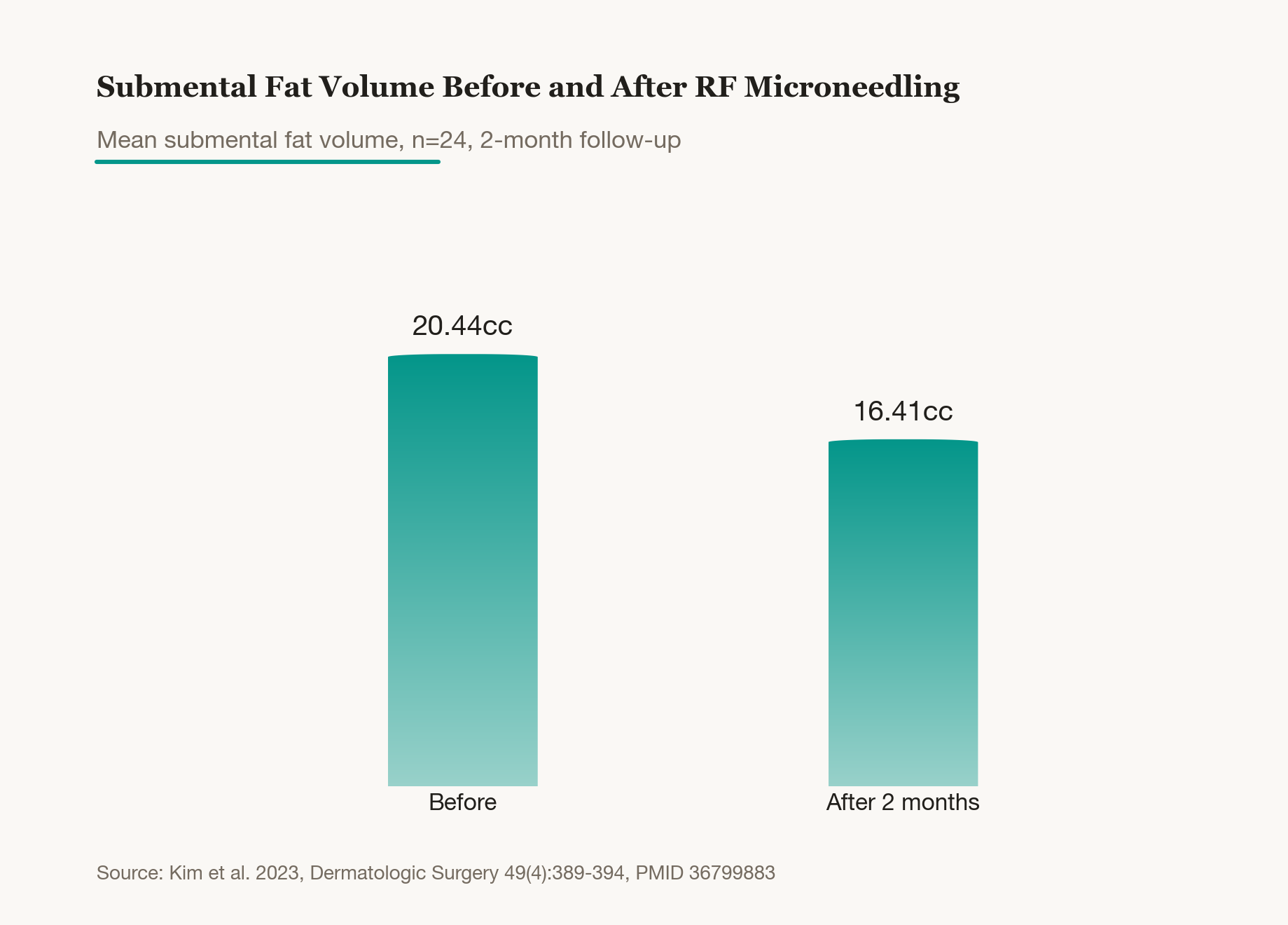
Devices like INMODE fall into this category, and in particular, the approach that delivers RF energy deep into the dermis through fine needles addresses both chin fat and skin elasticity in a single treatment. In one clinical study, chin fat volume dropped from an average of 20.44cc to 16.41cc, about 20%, just two months after this RF microneedling treatment. Other studies have also reported a clear reduction in treated-area volume, with both physicians and patients rating the improvement highly.
Needle-free, non-invasive modes like Forma or FX are gentler and more gradual, which makes them a good fit for mild sagging treated over multiple sessions. In the early stages, when sagging is still mild, non-invasive RF alone is often enough.
Thread lifting for a severe sagging double chin
RF alone can be enough for mild sagging, but if the sagging is noticeably more advanced, you need actual lifting force applied to the tissue. Thread lifting uses barbs on dissolvable threads to physically hook and pull sagging tissue, giving a more immediate lifting effect than RF.
In a study focused on the jawline, the distance between the area just in front of the ear and the jawline shortened by 5.54mm right after thread placement, and 4.18mm of that was still holding at 8 months. Another study found that 82% of people who had thread lifting still reported being satisfied or seeing improvement at 24 months, suggesting the results hold up fairly well over time.
That said, threads are a foreign material placed in the body, so swelling and bruising during recovery tend to last longer than with RF. Looking at pain, recovery time, and the level of sagging each option suits, as shown in the table below, makes it easier to pick the one that fits your situation.
| Category | RF (INMODE) | Thread Lifting | HIFU |
|---|---|---|---|
| Main effect | Dermis, shallow fat | Pulls up sagging tissue | Dermis to SMAS layer |
| Pain | Low | Moderate | Moderate to high |
| Recovery | Almost none | 1 to 2 weeks swelling | A few days redness |
| When results show | Gradual | Fairly immediate | Slow, over time |
| Best for | Mild sagging | Moderate sagging | Combined fat and sagging |
Is HIFU the answer if fat and sagging are mixed?
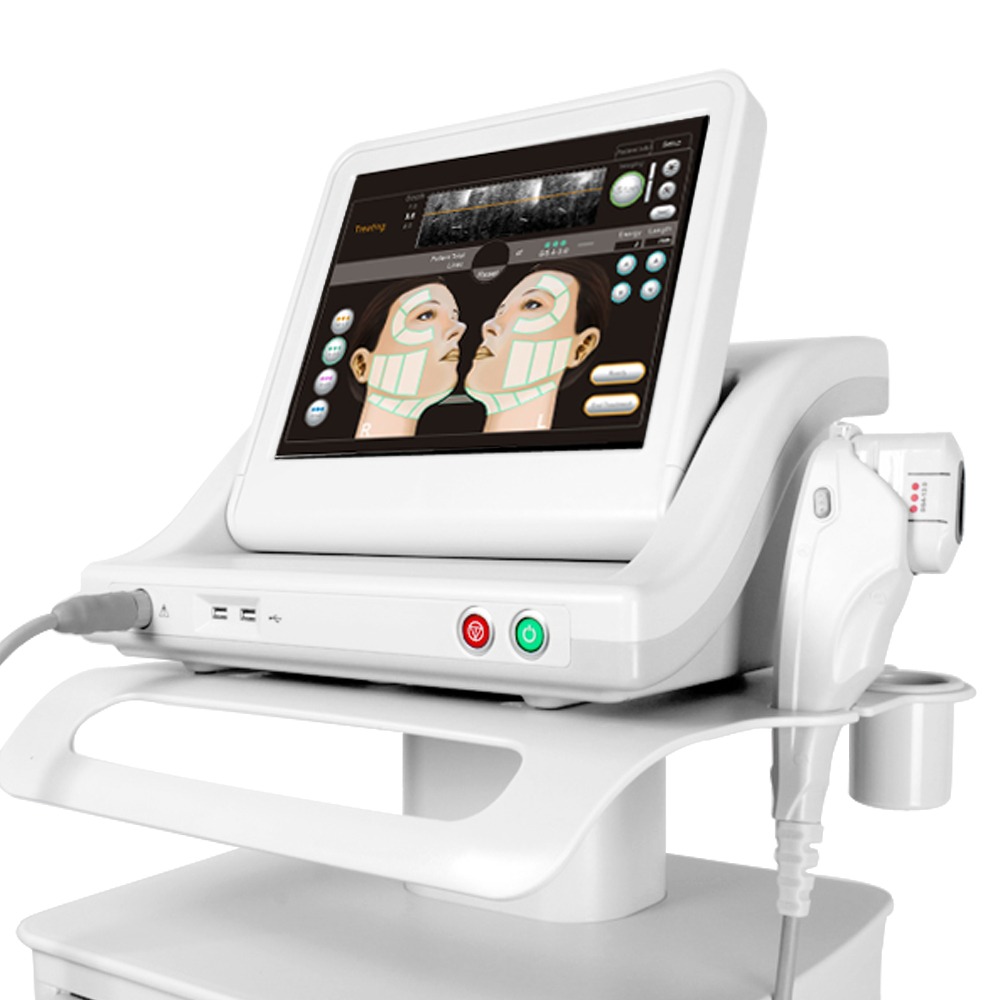
If your case is a combined type, with fat, sagging, and fascia changes all playing a role, HIFU, which reaches deeper layers, is worth considering. HIFU focuses ultrasound energy at a single point beneath the skin, delivering heat from the dermis all the way to the SMAS, the fascia layer, so it reaches further than surface-level treatments.
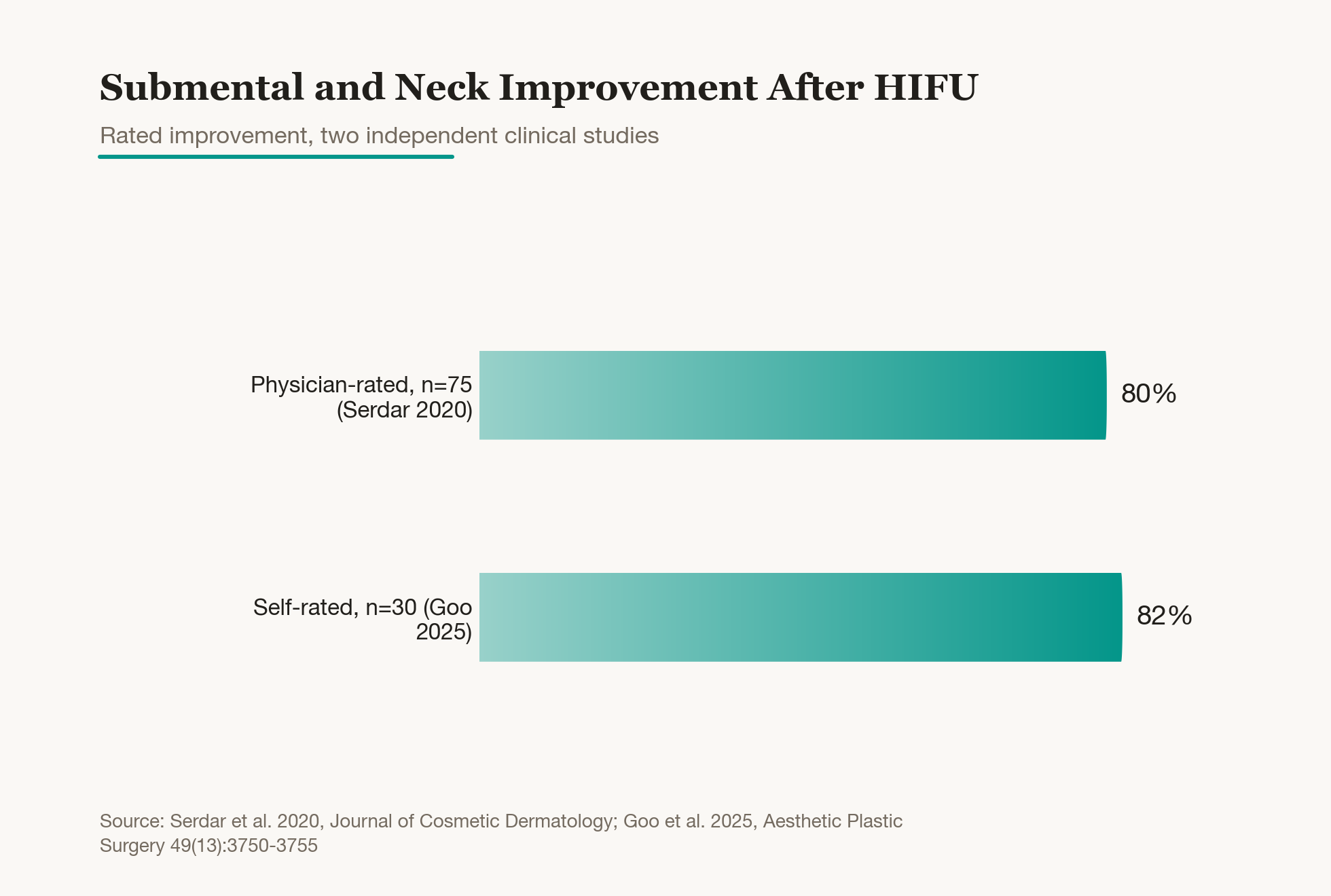
In a clinical study focused on the chin and neck, physician ratings showed improvement in over 80% of participants, and in another study, 82% of participants rated themselves as improved. Being able to address fat, skin, and fascia all in one treatment is exactly why HIFU suits the combined type so well.
Start by figuring out whether fat or sagging plays the bigger role for you. If both factors are clearly mixed, the best path is confirming that balance with your provider and setting realistic expectations for a combined approach that may include HIFU.
Was this helpful?
About this article
Written by a practising aesthetic physician and intended for general education — not a substitute for individual medical advice.
Read next
Why a Jawline Blurs: Telling Fat From Sagging, and Comparing Treatments
A blurred jawline usually comes down to one of two things: extra fat, or sagging skin and fascia. The two causes feel different to the touch, and that difference determines whether fat-dissolving injections, radiofrequency, or thread lifting is the better fit. Here is how to tell them apart and how each treatment actually works.
By Dr. Kim

Nasolabial Fold Treatment: Which Is Right for You, Filler or Thread Lift?
Whether your nasolabial folds come from sagging, lost volume, or aging skin decides whether filler, thread lifting, or a collagen stimulator is the right call. Here is what actually works for each cause, how long the results hold, and how to stay safe around the vessels beside the nose, all explained simply with real study numbers.
By Dr. Lee

Can Thin People Get a Double Chin? How to Tell Fat From Sagging
A double chin can come from fat buildup or from sagging skin and muscle, and the treatments that actually work depend entirely on which one it is. Here is why that difference matters and how to tell the two apart.
By Dr. Kim