Can Thin People Get a Double Chin? How to Tell Fat From Sagging
By Dr. Kim8 min read

Some people notice a pocket of fullness under the chin even though they have never gained weight. It catches your eye every time you glance in a side mirror, and no matter how much weight comes off elsewhere, that spot under the jaw barely budges.
The truth is, a double chin does not have just one cause. Sometimes it comes from fat that has built up under the chin, and sometimes it comes from skin or muscle that has lost its grip and sagged. The two can look almost identical from the outside, but what is actually happening underneath is completely different, so the treatments that work well are different too. Get a procedure without figuring out which type you have, and you can end up spending time and money for barely any change.
How does a fat-type double chin form?
There is a natural pocket of fat under the chin to begin with. This area is called submental fat, and when the fat cells there multiply or grow larger, you get a soft bulge sitting just below the jawline.
Genetics plays a big role here. If your parents tend to carry fat under the chin, you are likely to carry it there too, even if you stay lean everywhere else. That is why some people with low overall body fat still have a chin that looks noticeably fuller than the rest of their face.
A fat-driven double chin has a distinctive feel when you touch it. Pull the chin down or tilt the head up and the bulge stays exactly where it is, and pressing on it feels soft and cushiony. Since the problem here is an actual increase in fat cells, getting rid of it requires directly shrinking or removing those cells rather than tightening the skin around them.
Why does a sagging-type double chin form?
Sagging has less to do with fat and more to do with weakened support for the skin and tissue underneath it. Collagen, a protein fiber that forms a mesh under the skin, is what holds everything taut, and it helps to picture that collagen as a set of support beams. Strong beams keep skin lifted; worn-out, weakened beams let it droop.
Collagen naturally declines with age, and at the same time the body ramps up an enzyme called MMP (matrix metalloproteinase), which works like a pair of scissors that snips collagen apart. Once the scissors start cutting faster than new beams can go up, skin steadily loses its firmness.
The muscle that supports the area under the chin matters too. A thin sheet of muscle called the platysma runs down the front of the neck, and when it loses tone, it can no longer hold the tissue underneath the chin up as well as it used to. That is why lifting the chin tends to smooth out a sagging double chin noticeably, and why it usually feels thinner and looser to the touch than the fat type does.
Does a different cause mean different treatment?
Fat and sagging start from completely different root problems, so the same procedure can give very different results depending on which one you actually have. Tighten the skin over an area where the real problem is fat, and the fat stays put with little visible change. Do the opposite, breaking down fat where the real problem is sagging skin, and the fat shrinks while the loose skin stays loose, sometimes looking even more deflated afterward.
- If fat is the cause: you need to reduce the number of fat cells or dissolve and clear them out. Since the fat cells themselves have multiplied, tightening the skin alone will not shrink the actual bulge.
- If sagging is the cause: you need to stimulate new collagen or physically lift the skin and the fascia beneath it. Since the core issue is weakened support, removing fat alone will not make loose skin snap back.
- If it is a mix of both: having some fat and some sagging together is actually the most common pattern in real life, and in that case a single procedure rarely delivers enough change on its own.
That is why the first step in any double-chin consultation is figuring out how much of the problem comes from fat and how much from sagging. Pressing on and pulling at the skin lets a provider gauge fat thickness and skin elasticity together, and everything after that follows from what that check shows.
Treatment for a fat-type double chin
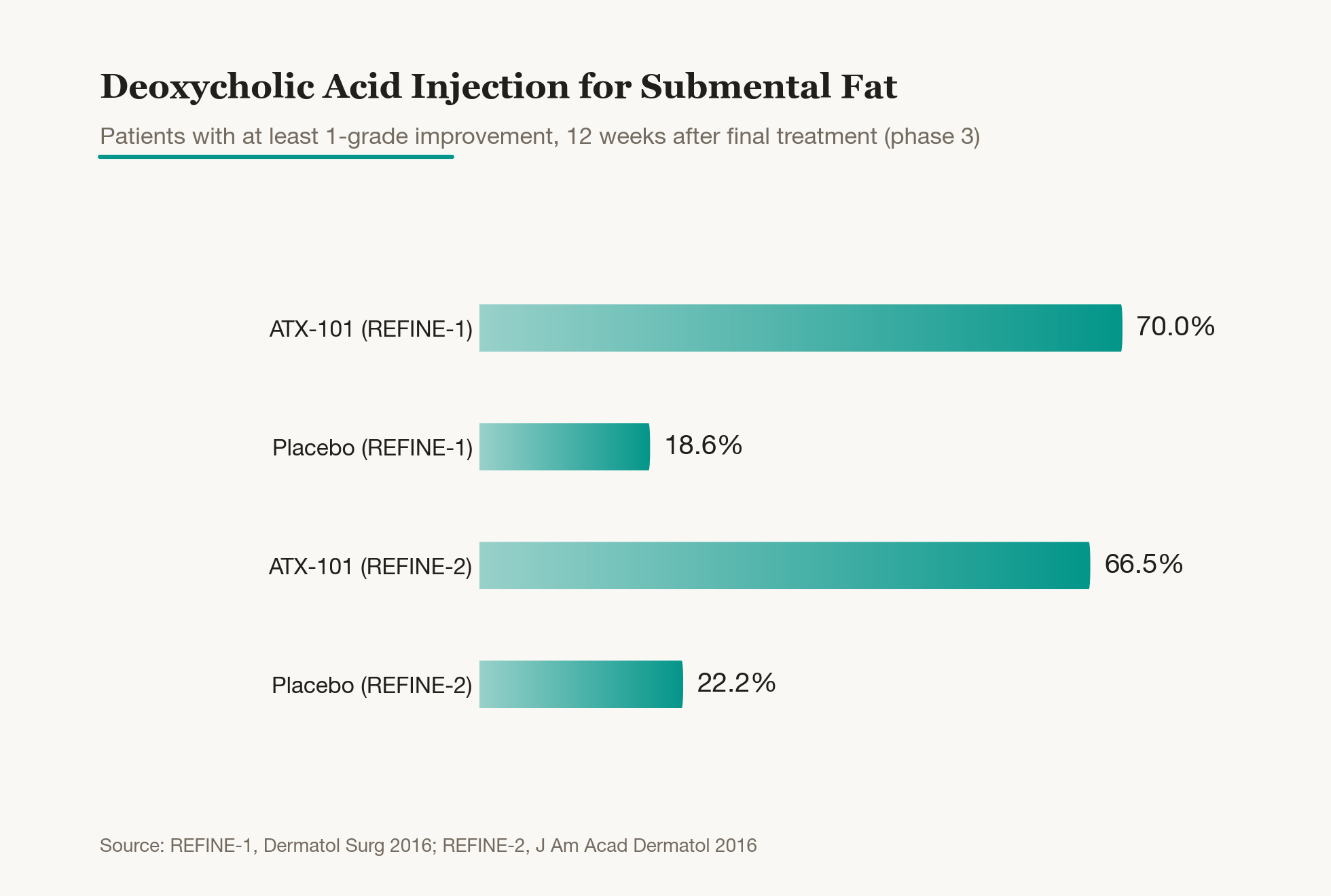
Treatments aimed at a fat-driven double chin focus on shrinking the fat cells directly.
- Fat-dissolving injections: an ingredient that breaks down the membrane of fat cells is injected under the chin, actually reducing the number of fat cells. The body then gradually absorbs and clears the broken-down cells over time.
- Liposuction: a thin cannula physically removes fat cells, and it tends to deliver reliable results when there is a large volume of fat to remove.
- Radiofrequency or ultrasound fat treatments: heat or ultrasound energy damages fat cells to gradually shrink their volume, and these are usually used as a supporting option when the amount of fat is relatively small.
All of these approaches share the same goal, reducing the number or size of fat cells, so they cannot do much for skin that has already sagged. If only the fat comes off and the skin cannot keep up, wrinkles can actually become more noticeable, which is why it matters to check for sagging beforehand.
Treatment for a sagging-type double chin
For a sagging-driven double chin, the approach is to rebuild the collagen framework or physically lift the tissue that has drooped.
- Radiofrequency (RF) lifting: heat delivered deep into the skin contracts existing collagen and stimulates new collagen production. The heat signals the body that damage has occurred, and that response triggers the rebuilding of the collagen framework.
- Ultrasound lifting (HIFU, high-intensity focused ultrasound): ultrasound energy is focused down to the fascia layer beneath the skin, contracting tissue there and lifting it up. Because the fascia sits deeper than the skin and acts as its own support layer, stimulating it pulls the sagging tissue upward as a whole.
- Collagen-stimulating threads or fillers: dissolvable threads are placed within the tissue to lift it physically while also prompting new collagen to form around the thread.
These procedures do not do much to reduce fat, but they focus on rebuilding the collagen framework and lifting sagging tissue to redefine the jawline. So if there is a noticeable amount of fat present, these treatments alone may not shrink that volume as much as expected.
What is the order if fat and sagging are mixed?
In real consultations, it is far more common to see fat and sagging together than to see one in isolation. When there is some fat and some loss of skin elasticity at the same time, a single procedure that only targets one or the other rarely produces a satisfying result.
For cases like this, sequencing fat reduction and lifting together has been reported to work well. The usual order is to shrink the fat volume first, then address the remaining sagging with a lifting procedure. Once the fat is reduced, there is simply less volume for the skin to wrap around, which tends to make the lifting step that follows more visibly effective.
Reverse the order and pull hard on the sagging first, and the fat still sitting underneath can leave the jawline looking blunt regardless. That is why, during a consultation, weighing how much of the problem is fat versus sagging and planning which to address first is really the core of combination treatment. Rather than trying to fix everything in one shot, breaking the process into stages that match how much each cause contributes tends to give more stable, lasting results.
How to tell which type your double chin is
You can get a rough sense at home. Lift your chin slightly upward, and if the bulge noticeably shrinks, sagging is likely the bigger factor; if it stays about the same, fat is probably the bigger factor. Pinch the area under your chin, and if it feels soft and thick, that points to fat; if it feels thin and loose, that points more toward sagging.
That said, this kind of self-check is only a rough guide. To know the actual balance between fat thickness and skin elasticity, both need to be checked properly with ultrasound or physical examination, and that is what determines which procedure should come first and which should follow. Age, skin thickness, and bone structure can all shift the right approach even for what looks like the same double chin, so getting an accurate read on the cause through an in-person consultation is really the most reliable first step.
References
Korean Dermatological Association, Ministry of Food and Drug Safety (MFDS), American Academy of Dermatology (AAD), and U.S. Food and Drug Administration (FDA).
Was this helpful?
About this article
Written by a practising aesthetic physician and intended for general education — not a substitute for individual medical advice.
Read next
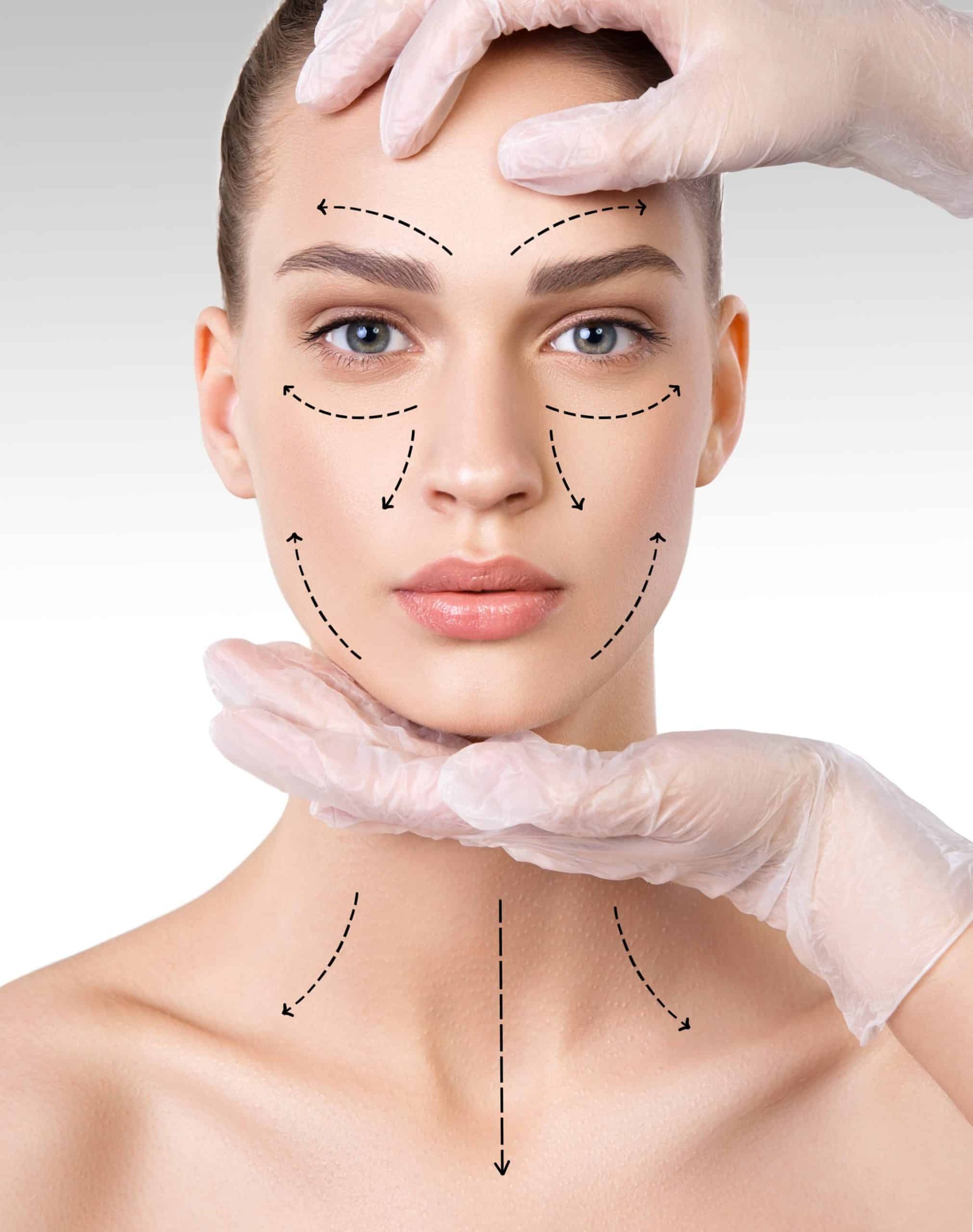
Why a Jawline Blurs: Telling Fat From Sagging, and Comparing Treatments
A blurred jawline usually comes down to one of two things: extra fat, or sagging skin and fascia. The two causes feel different to the touch, and that difference determines whether fat-dissolving injections, radiofrequency, or thread lifting is the better fit. Here is how to tell them apart and how each treatment actually works.
By Dr. Kim
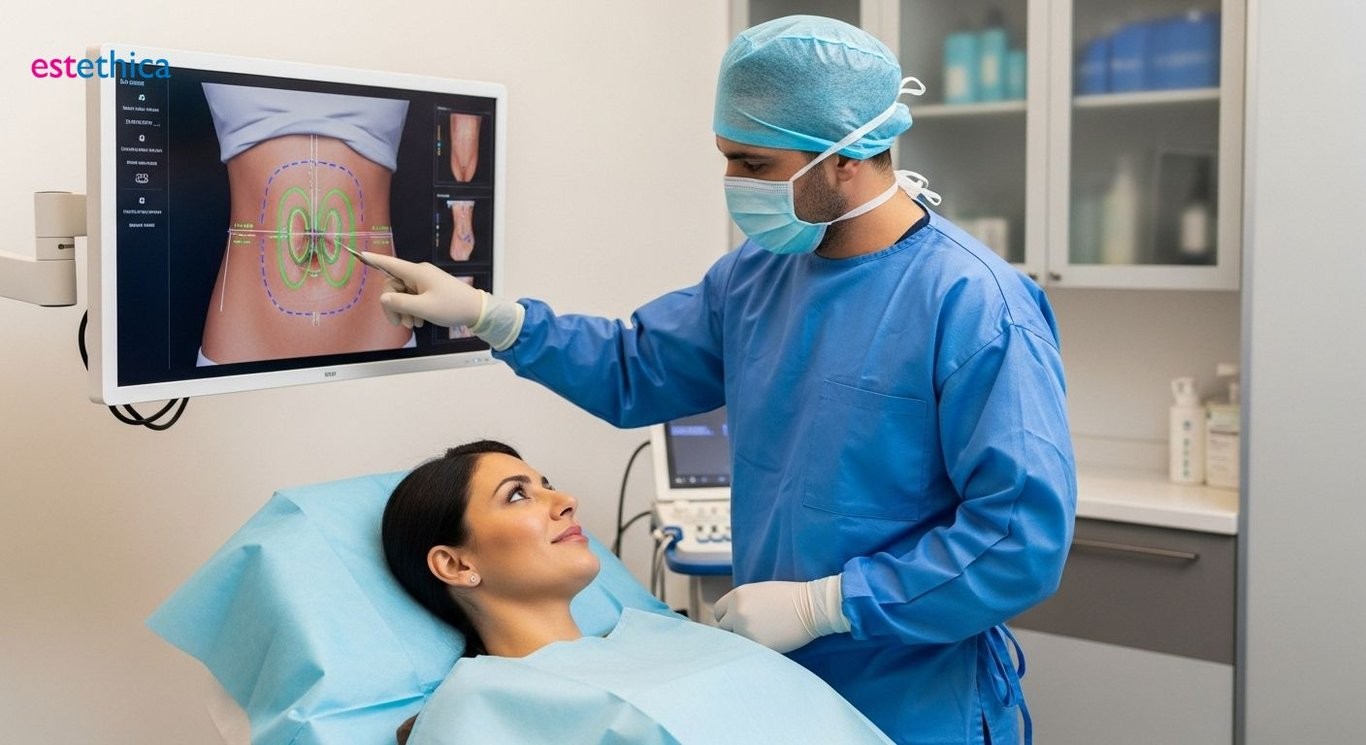
Fat-Dissolving Injection Effects and Swelling, Dose by Area and Number of Sessions
Why is a fat-dissolving injection said to work on stubborn areas like a double chin or upper arms that diet alone won't touch? Here's an easy breakdown of how the drug breaks down fat cell membranes, how the dissolved fat actually leaves the body, how dosing and sessions differ by area, and why swelling happens along the way.
By Dr. Lee

Loss of Skin Elasticity and Volume in Your 40s: Sagging Versus Hollowing
The way your face changes in your 40s comes from two problems layering on top of each other: sagging skin and lost volume. Here is why skin elasticity and the volume beneath it fade on different tracks, and what home care and in-office treatments can each actually restore.
By Dr. Kim