Loss of Skin Elasticity and Volume in Your 40s: Sagging Versus Hollowing
By Dr. Kim8 min read

Once you hit your 40s, it is common to look in the mirror and sense that something about your face has shifted. Ask most people to pinpoint exactly what changed, though, and they struggle to put it into words. The nasolabial folds seem deeper. The cheeks look a little hollow. The jawline feels less defined than it used to.
In reality, this is not one change but two separate problems showing up around the same time. One is a drop in the skin's own elasticity. The other is a loss of the volume that used to support it from underneath. The causes are different, and so is how you reverse each one, but because they look similar on the surface, people tend to lump them together as a single issue.
Why Does Skin Elasticity Fall in Your 40s?
The skin's ability to bounce back comes from two proteins in the dermis, the layer beneath the surface: collagen and elastin. Think of collagen as the pillars holding the skin up and elastin as the rubber bands connecting those pillars. When the pillars are sturdy and the rubber bands still have their stretch, skin springs back into shape after being pressed or pulled.
The problem is that both proteins start declining gradually once you pass your 20s, and that decline noticeably speeds up somewhere between your mid-30s and 40s. In women, estrogen drops during this window, and since estrogen had been supporting collagen production, less of the hormone means collagen synthesis slows down too.
Years of accumulated UV exposure pile onto that. Sunlight gradually breaks down elastin fibers, and while the body keeps repairing that damage when you are young, repair eventually falls behind the pace of the damage as you age. It is a bit like a rubber band that stays stretched out and never quite snaps back, so the skin's own recoil weakens over time.
Why Does Facial Volume Sink?
Separate from that drop in elasticity, there is also the issue of shrinking facial volume, and this one is not really about the skin at all. It comes down to the fat layers and bone underneath.
Facial fat is not one continuous layer but a series of small, distinct compartments. The deep fat pads sitting under the cheekbones, around the eyes, and near the temples tend to lose volume as we age. Meanwhile, the shallower fat pads along the jawline and outer cheeks often do the opposite, sagging and pooling lower on the face. So you end up with hollowing up top and sagging down below, an outcome that sounds contradictory but shows up on the same face at the same time.
Bone is not exempt either. Facial bone, particularly around the eye sockets and jaw, is reported to gradually resorb and lose volume with age. Since the skeletal framework holding up the whole face shrinks slightly, the fat and skin resting on top of it naturally lose their footing and start to droop. It is similar to a house whose foundation slowly settles: the walls and roof above it tilt along with it.
How Are Sagging and Hollowing Different?
The important thing here is that these are two entirely separate changes happening in different layers. Elasticity is a dermal issue near the surface of the skin. Volume is a much deeper issue, playing out in the fat and bone.
A useful way to picture it: elasticity is the stretch of the fabric covering a tent, and volume is the height of the poles holding that fabric up. Fabric sagging because it has worn out and poles sinking because they have gotten shorter are two different problems with two different fixes. Pulling the fabric taut will not do anything about poles that have dropped.
That is why elasticity care in your 40s rarely comes down to just one method. You need to understand both the approach that improves surface elasticity and the approach that fills in the volume lost underneath to see the full picture.
How Far Do Topical Products Reach?
Products you apply at home mostly work on the upper dermis, the layer responsible for elasticity. Retinol is the classic example: it signals fibroblasts, the cells that produce collagen, to ramp up their activity. Think of it as revving up an underperforming factory back to full output.
Niacinamide strengthens the skin barrier so it loses less moisture. A stronger barrier makes it easier for skin to stay hydrated and hold onto its elasticity. Peptides are small signaling molecules that resemble collagen fragments; they are thought to work by tricking the skin into believing collagen is being broken down, which prompts it to produce more.
That said, topical ingredients only penetrate so deep. They reach the epidermis and upper dermis but never make it down to the deep fat layers or bone where volume has actually been lost. So home care can gradually improve elasticity, but it cannot refill volume that is already gone.
Can Hollow Areas Be Filled With Filler?
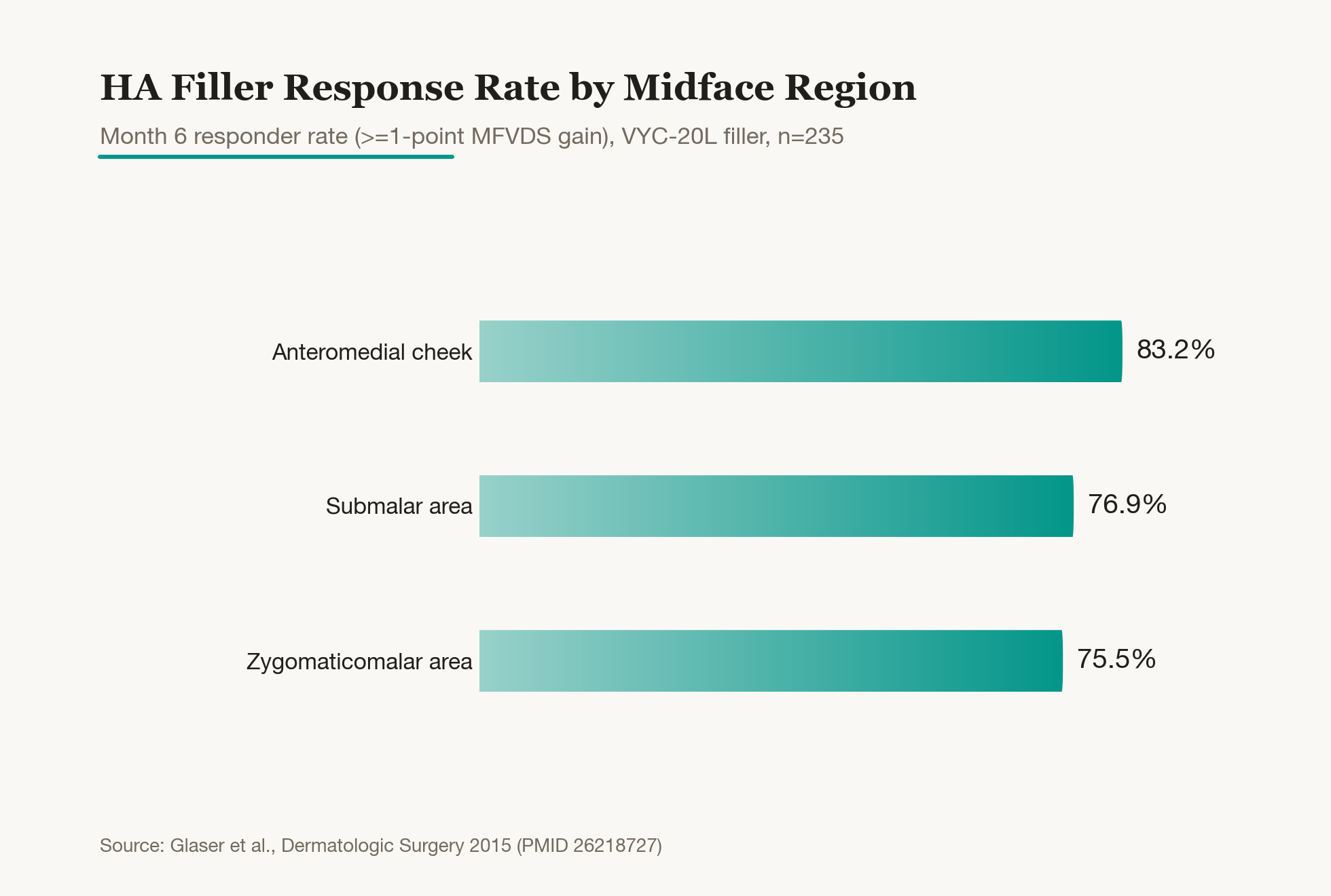
Fillers are the go-to method for directly refilling areas that have lost volume. Hyaluronic acid, the most widely used ingredient, is a substance the body already produces naturally, and it has the ability to bind many times its own weight in water. It essentially builds volume the way a water-soaked sponge does.
Injecting filler into the space once occupied by lost fat uses that same property to physically fill the gap and restore volume. At the same time, the surrounding tissue tends to mount some kind of healing response around the filler, which is reported to stimulate a degree of collagen production as well, though how much varies enough from person to person that it is hard to put a firm number on it.
Any swelling or bruising after treatment typically settles within a few days to a week. How long results last depends on the area and the specific product, but most reports put it somewhere in the six to twelve month range. After that, the hyaluronic acid slowly breaks down and is absorbed naturally.
Improving Loss of Elasticity With Heat Energy
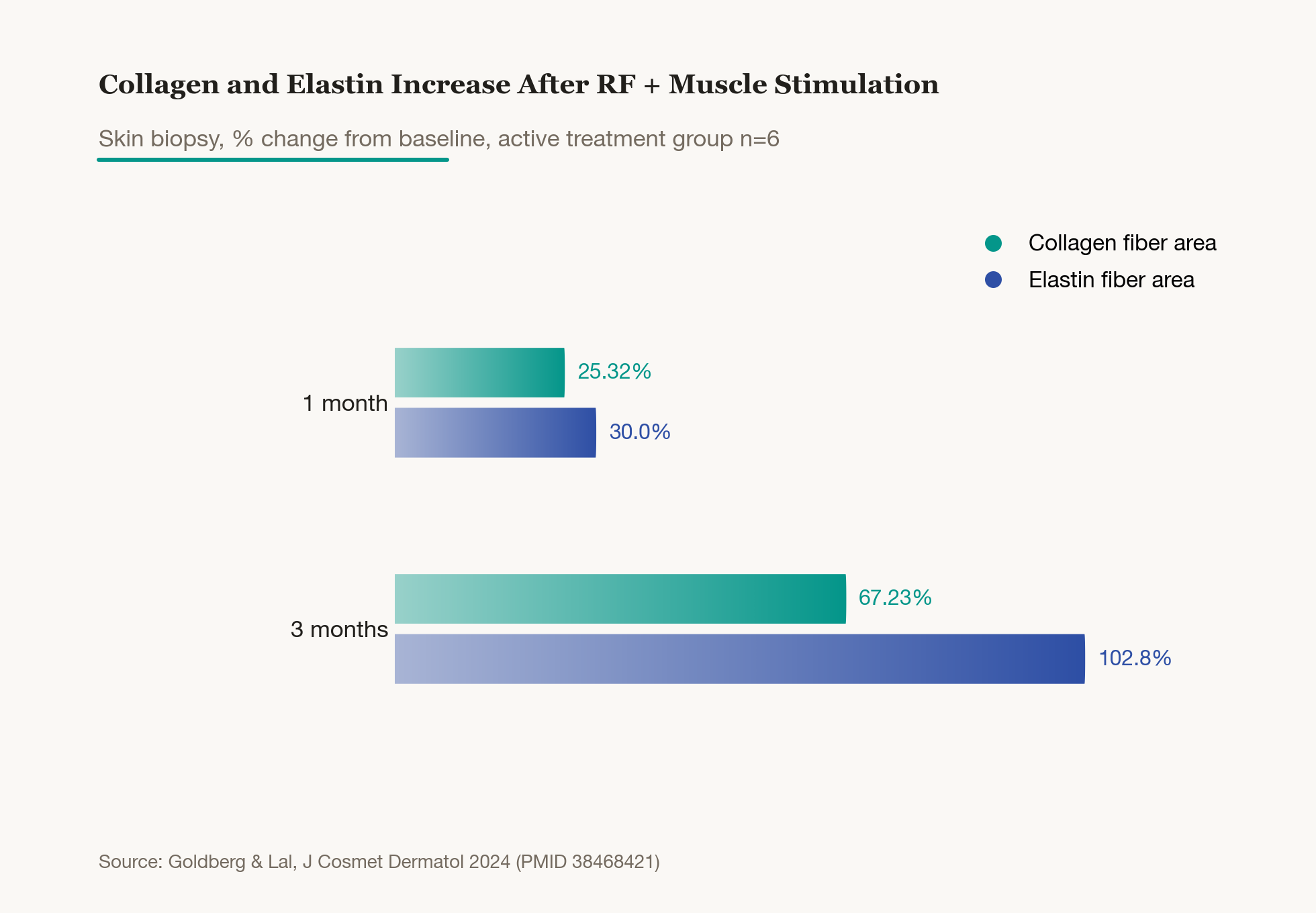
If fillers are the volume side of the equation, lifting treatments work more on the elasticity side. Devices using radiofrequency or ultrasound energy deliver heat into the deep dermis or the fascial layer beneath it. The body reads this as minor damage and kicks off a healing response.
During that healing process, fibroblasts activate and start producing new collagen and elastin. Much like how new tissue forms over a wound, the same kind of protein rebuilding happens wherever the heat energy reached. This takes time, though. Results tend to show up gradually rather than right after treatment, often becoming noticeable somewhere between eight and twelve weeks as the new collagen settles in.
How long the effect lasts also varies by person, but it is generally reported in the six to twelve month range. After that, collagen naturally declines again along with the normal aging process, so repeat sessions are often needed to maintain results.
Home Care, Filler and Lifting: Duration Compared
Home care, fillers, and lifting treatments each differ in how long they take to show results and how long those results stick around. Home care is the lowest-commitment option, but changes appear very gradually and only hold up with consistent use. Fillers fill volume instantly, though it takes a few days to a week for swelling to settle before the shape looks natural. Lifting treatments need eight to twelve weeks for new collagen to settle in, but once that collagen forms, it tends to stay in the skin longer than filler does.
Which one to try first really depends on whether elasticity or volume is the bigger issue on your face right now. Since both problems often show up together, it is common in practice to consider combining the two approaches.
Lifestyle Care to Slow Loss of Elasticity
A few habits that consistently help are worth building into your daily routine.
- Sun protection: since UV exposure is one of the main drivers behind elastin breakdown, applying sunscreen every day can prevent further damage from piling on.
- Active ingredients like retinol: these stimulate fibroblasts and help nudge collagen production back up, even if only modestly. Since irritation is possible, starting with a small amount is the safer approach.
- Enough sleep: several of the physiological processes tied to skin repair are known to become more active during sleep, so ongoing sleep deprivation can slow down the recovery process itself.
- Avoiding excessive massage or pressure: repeated harsh rubbing is known to place extra strain on elastin fibers that are already weakened, so a gentler touch tends to work better.
These habits help slow the pace at which elasticity declines, but they cannot refill volume that has already been lost. Understanding elasticity care and volume care as two distinct roles, and combining them as needed, is the most realistic way to approach the changes your face goes through in your 40s.
References
Korean Dermatological Association, American Academy of Dermatology (AAD), and Ministry of Food and Drug Safety (MFDS).
Was this helpful?
About this article
Written by a practising aesthetic physician and intended for general education — not a substitute for individual medical advice.
Read next

Tiny Facial Bumps: How to Tell Flat Warts, Milia and Skin Tags Apart, and How to Treat Them
The small bumps that show up on the face can look alike, but flat warts, milia, and skin tags have different causes and different treatments. Here is how to tell the three apart at a glance, the right CO2 and Er:YAG laser or electrocautery approach for each, how common they are, how they tend to recur, and real evidence on why removing them at home is risky.
By Dr. Lee

Can Thin People Get a Double Chin? How to Tell Fat From Sagging
A double chin can come from fat buildup or from sagging skin and muscle, and the treatments that actually work depend entirely on which one it is. Here is why that difference matters and how to tell the two apart.
By Dr. Kim
Eye Area Lifting: Why Is It Done Much Shallower Than Face Lifting?
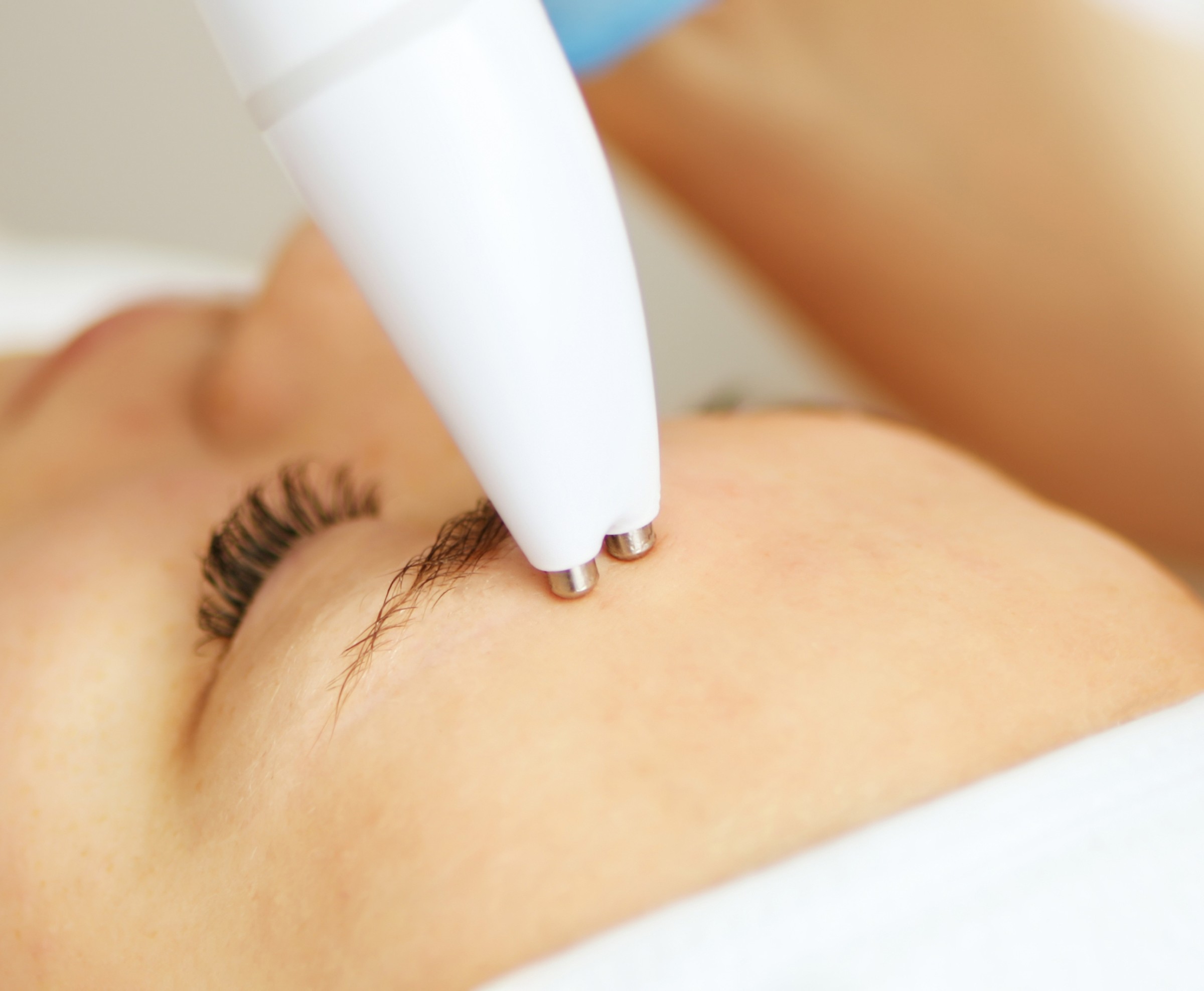
Eyelid skin is a completely different thickness than the skin on your cheeks or jaw. Here's why the same lifting device has to be dialed down and kept shallow around the eyes, and how sagging eyelids actually tighten back up, explained from the ground up.
By Dr. Kim