Sofwave Lifting Effect: How Is It Different From HIFU?
By Dr. Lee8 min read
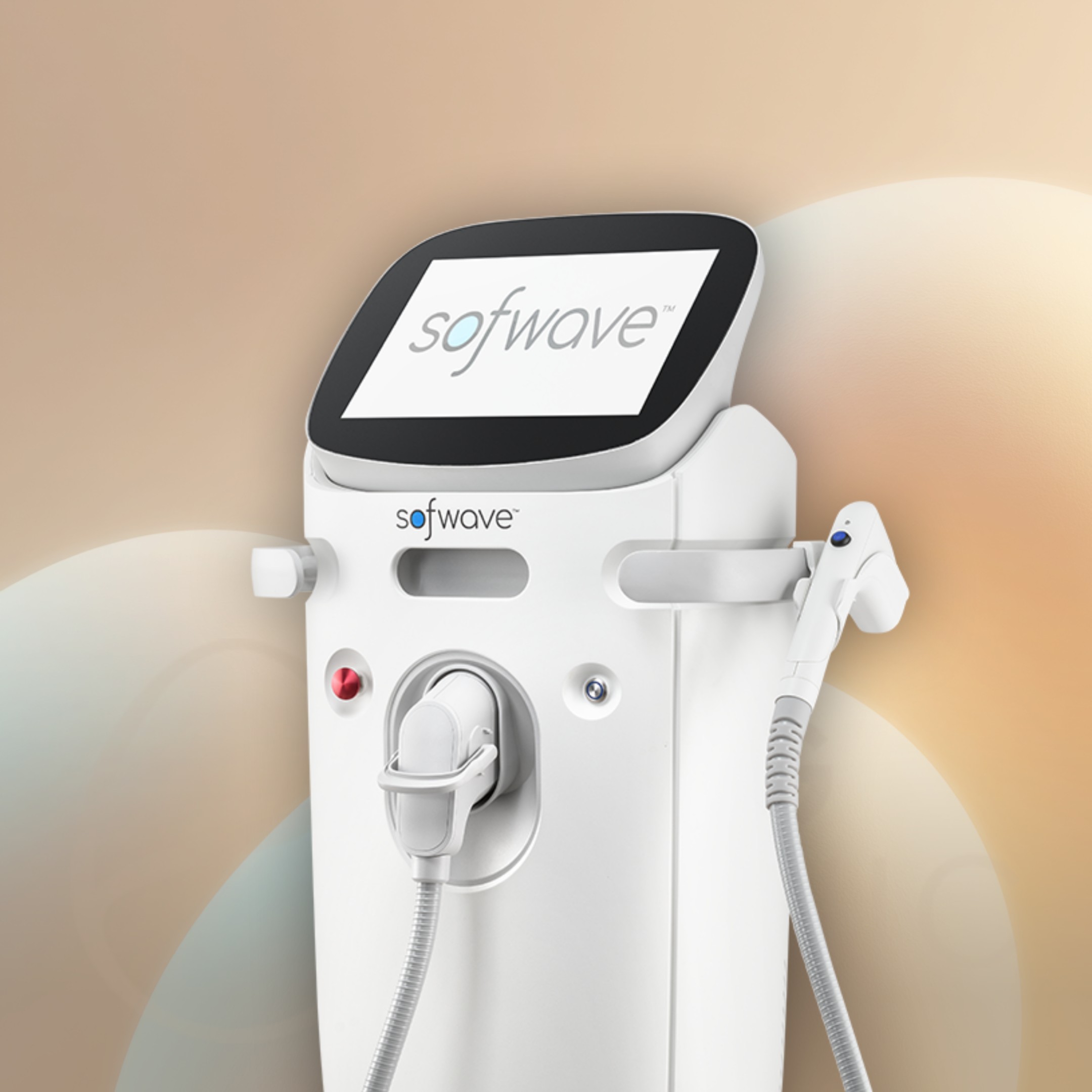
There are several types of ultrasound devices used for skin lifting. Sofwave is known for being able to heat the mid-dermis with precision while keeping the risk of burns low.
At first, that sounds like a contradiction. It's a heat-based treatment, so how can the burn risk stay low? And out of all the layers inside the skin, how does it manage to pick out just one? The answer to both questions lies in the way Sofwave delivers its ultrasound energy in the first place.
How Do Seven Beams Enter the Skin?
Sofwave uses its own proprietary technology called SUPERB. SUPERB works through seven small ultrasound transducers (devices that generate sound waves) arranged side by side, each firing a beam at the same time.
The key detail is that these beams don't converge on one point and overlap. Each transducer fires its own beam independently, and the beams travel into the skin side by side without ever crossing paths. Think of it like lining up several flashlights next to each other, with each one lighting up only the patch of ground directly in front of it.
Why Does Each Beam Have a Fixed Depth?
Having multiple beams doesn't mean their energy adds up together. Each beam is designed from the start to generate heat at a fixed depth in the mid-dermis. The frequency and focal distance of each transducer are locked in to match that depth.
So as each beam passes through the epidermis and the upper dermis, it stays weak, and only when it reaches the target depth of around 1.5 millimeters does it create a small, cylinder-shaped zone of heat coagulation. With seven beams lined up side by side, the result is seven tight little heat zones forming at once across the mid-dermis.
This is different from HIFU (high-intensity focused ultrasound), which concentrates multiple beams into a single focal point to amplify the energy. Sofwave doesn't converge its beams, so pressing harder during treatment doesn't push the focus deeper or make the heat stronger. The depth and size of each heat zone are already fixed at the design stage of the device.
If the intensity of a single beam were simply cranked up, the shallow layers it passes through on the way would heat up too, raising the burn risk. Instead, by fixing each beam's focal distance precisely at the mid-dermis, the pathway stays untouched while only the target spot heats up. That's why the precise engineering of each transducer's frequency and focal distance is directly tied to how safe the treatment is.
Two Devices That Protect the Epidermis From Burns
The epidermis, the outermost layer of skin, is the part you can see and touch, so if it heats up too much, it can lead to burns or pigmentation. Sofwave protects this layer with two safeguards working together.
- The beams are designed to pass through the epidermis at low intensity. Since each beam only generates heat once it reaches the deeper mid-dermis rather than the epidermis, there isn't enough energy left at the surface to cause a burn.
- A cooling device (SofCool) stays in contact with the skin's surface throughout the treatment, continuously keeping the temperature down. Cooling the epidermis, the pathway the beams travel through, means any residual heat disperses quickly instead of building up.
The cooling works a bit like wrapping a wet towel around a hot pot handle. The outside of the handle stays cool while the pot itself keeps boiling inside. In the same way, the epidermis stays protected by the cooling while the mid-dermis beneath it climbs to its target temperature.
Why Target the Mid-Dermis?
The dermis, the layer beneath the epidermis that supports the skin, is woven through with a protein fiber network called collagen. Collagen acts like the pillars holding the skin up, and as we age, those pillars gradually thin out and loosen.
The depth Sofwave targets, roughly 1.5 millimeters, is exactly where fibroblasts, the cells that produce collagen, are most concentrated in the mid-dermis. Too shallow, and there aren't enough collagen cells to get a meaningful response. Too deep, and there's a risk of reaching layers with nerves or blood vessels. That middle depth is set as the balance point between effectiveness and safety.
For example, if the energy strays too close to the epidermis, the risk of pigmentation rises. If it drops down as far as the subcutaneous fat, fat cells respond before collagen does, and the firming effect you actually want ends up diluted. That's why Sofwave concentrates its energy in that narrow band where collagen cells are densest.
How Does Collagen Form After the Heat Passes?
The temperature inside each heat coagulation zone rises momentarily to a point that denatures the collagen fibers. This slight shrinking of the collagen fibers registers in the body as a kind of injury, which is understood to set off the following recovery process.
- Fibroblasts in the heated area become activated. This is the stage where cells that have received a damage signal begin repair work.
- Over roughly 4 to 12 weeks after treatment, new collagen and elastin (the protein that lets skin stretch and bounce back) are produced. Think of it as building new pillars next to the existing ones.
- As the newly formed fibers settle into place, skin texture gradually becomes firmer. Reports indicate this remodeling process typically unfolds gradually over about 3 to 6 months after treatment.
Why Is the Temperature Window So Narrow?
Collagen protein only starts to lose its structure above a certain temperature. It's a bit like egg whites: they stay the same at lower temperatures, but past a certain point, they suddenly firm up and turn white.
The temperature Sofwave targets sits in a narrow window, above the point where collagen starts to respond, but below the point where tissue burns. If the temperature falls below that window, collagen isn't stimulated enough. If it goes above it, tissue damage follows. That's why each beam's intensity and frequency are calculated precisely so the outcome lands inside that window.
It's similar to grilling meat: on low heat, only the surface warms up, and on too high a heat, the surface burns. The reason Sofwave sticks so closely to this narrow temperature range is the same. Straying even slightly outside it means either not enough stimulation or tissue damage, so the margin is kept intentionally tight.
How Does It Differ From HIFU?
Among ultrasound lifting devices, there's also HIFU (high-intensity focused ultrasound), a method that concentrates a single beam into a very narrow, deep focal point. HIFU is mainly aimed at reaching the SMAS layer (the thin fascia wrapping the facial muscles), targeting sagging tissue to pull it upward.
Sofwave, by contrast, is a non-focused method that fires several parallel beams side by side into the shallower mid-dermis, stimulating a broad area evenly. Because of this, it's known for leaning less toward strongly lifting sagging tissue and more toward densely filling in skin texture and firmness. Both methods share the same underlying principle of stimulating collagen, but they differ in the depth and tissue they're aimed at.
To put it another way, HIFU is a bit like using a magnifying glass to focus sunlight into a single point and burn a spot on paper, while Sofwave is more like lining up several small lamps to warm a wide area gently and evenly. So if you're looking to lift a clearly sagging area, HIFU is the closer fit, and if you want to fill in texture and firmness across the board, Sofwave is closer to the purpose.
When Do Results Appear, and How Long Do They Last?
Since it takes time for new collagen to form, many reports suggest the results show up gradually rather than all at once.
- Treatment is usually done in a single session. Because multiple beams sweep across a broad area all at once, one session is reported to provide enough stimulation without needing repeat visits.
- Results tend to become noticeable between 4 and 12 weeks after treatment rather than right away, and are said to continue developing up to around the 6-month mark, since that's roughly how long it takes for new collagen to settle in.
- How long the results last varies depending on individual skin condition and the pace of aging, so it's often reported that people pair it with regular maintenance treatments.
Reactions Right After Treatment and Concerns It Suits
While the epidermis itself isn't described as retaining enough heat to cause a burn as the beams pass through, since the temperature does rise briefly inside the dermis, a mild reaction can also show up on the skin's surface. Some redness or a subtle warm, tingling feeling right after treatment can last anywhere from 1 to 6 hours. This isn't a sign that the surface has been damaged, but rather a sign that collagen regeneration is just starting in the layer beneath it, which is why most people are reported to go straight back to their normal routine without any dedicated downtime.
The mid-dermis Sofwave targets is spread evenly across the whole face. So rather than pulling hard on any single spot, it's focused on gently filling in texture and firmness across the face as a whole. Because of this, it's often described as better suited to early signs of aging, like rougher texture or gradually fading firmness, rather than cases where sagging is already visible and pronounced. When sagging is already noticeable, it's said to help to consider pairing it with another lifting method that reaches the fascia layer. Which approach fits best really comes down to which stage of aging your skin is currently at.
References
Korean Dermatological Association, Ministry of Food and Drug Safety (MFDS), American Academy of Dermatology (AAD), and U.S. Food and Drug Administration (FDA).
Was this helpful?
About this article
Written by a practising aesthetic physician and intended for general education — not a substitute for individual medical advice.
Read next
Xerf Radiofrequency Effect: What's Different About Using Two Frequencies Together?
Xerf is a radiofrequency lifting device that uses two different frequencies at once to stimulate both the shallow dermis and the deeper fascia layer. This article walks through the mechanism, from why heat reaches different depths depending on frequency, to collagen's immediate contraction and its longer remodeling process, plus the recommended number of sessions and how long results tend to last.
By Dr. Kim
VRO Lifting: Ultrasound and Radiofrequency Differences, and Aftercare
VRO lifting combines two different energy types, ultrasound and radiofrequency, in a single session. The key idea is that each energy reaches a different depth in the skin, so together they can address both a shallow layer and a deep layer that neither one covers alone. This article breaks down how each energy works and why using them together actually makes sense.
By Dr. Lee
HILO WAVE Skin Booster: How It Works, When Results Appear, and Aftercare
HILO WAVE is a skin booster that fuses two hyaluronic acids of different molecular sizes into a single structure. The low and high molecular weight forms are said to act at different depths and speeds, stimulating collagen and elastin production together inside the skin. This article breaks down how that dual hyaluronic acid structure actually works, focusing on the underlying mechanism.
By Dr. Kim