Xerf Radiofrequency Effect: What's Different About Using Two Frequencies Together?
By Dr. Kim9 min read

Most people notice it at some point, that subtle feeling of your face losing its bounce. You catch it in the mirror and wonder why, but pinning down the actual cause isn't always easy. Look a little deeper into the skin, though, and the answer turns out to be fairly simple: collagen, the structural scaffolding that holds skin up, gradually declines with age.
Xerf is a radiofrequency (RF) lifting device that targets this collagen with heat energy. What sets it apart from other RF devices is that it runs two frequencies at once instead of one, and the reason is straightforward: sagging doesn't come from a single depth in the skin, so different layers call for different kinds of stimulation. So let's look closely at exactly how this device works to lift the face.
How Does Radiofrequency Turn Into Heat Inside Skin?
RF is a form of electrical energy. As it passes through skin tissue, the water molecules and ions inside line up with the electric field and reverse direction millions of times per second, colliding with each other along the way.
It's similar to what happens when current runs through a wire and the wire itself heats up. The tissue generates friction against its own resistance, which is a completely different route to heat than a laser, which beams light energy onto the surface. Once this heat reaches the collagen fibers in the dermis, the lifting response begins.
Rub your palms together quickly and they warm up, for the same reason. The faster and more often you rub, the more heat builds up, and RF works the same way: the more often the direction flips in a short span, the more heat gets generated. Delivering energy densely enough to reach deep into the tissue is really the core of what this device does.
The advantage of this approach is that it warms from the inside rather than the surface. It's similar to how a microwave heats food evenly through the middle rather than just browning the outside, which means the epidermis takes relatively little stimulation while heat builds up more in the dermis beneath it.
How Frequency Changes the Depth Reached
Even within RF, the depth reached in the skin changes depending on the frequency value. Lower frequencies tend to meet less resistance from tissue and travel to deeper layers, while higher frequencies tend to lose their energy in the shallower layers.
Think of radio broadcasting. Lower frequencies travel farther and pass over obstacles more easily, while higher frequencies stay concentrated closer to their source. Xerf uses this exact property to target different depths on purpose.
On top of that, how well each tissue conducts electricity, meaning its resistance value (impedance), also affects depth. Fat has less water and higher resistance, while the dermis has more water and lower resistance. The device factors in these differences in resistance across tissue types to concentrate heat at the intended depth.
Passing through a high-resistance tissue is a bit like walking across sand: every step takes more effort, and a lot of that energy gets used up right there and converted to heat. Low-resistance tissue, by contrast, is more like walking on pavement, where energy passes through easily and travels further. That's why heat tends to build up near fat layers, while energy moves through the water-rich dermis relatively easily.
Why Use Two Frequencies Together?
Facial sagging doesn't come from just one layer. In the shallow dermis, declining collagen shows up as fine lines and surface-level sagging, while deeper down, the fascia (SMAS, a thin sheet that wraps the whole face, a bit like a lining sewn inside a jacket) loosens and lets overall volume drop.
Xerf fires a shallow-targeting frequency and a deep-targeting frequency at the same time, stimulating both layers in one pass. That's considered its main advantage over devices that only heat a single layer: it addresses multiple causes of sagging at once.
There's another reason for splitting the stimulation by layer. If you use energy strong enough to warm the shallow layer but concentrate it only on the deep layer, the epidermis ends up under-stimulated while the deep layer can overheat. Do the opposite, calibrating intensity for the shallow layer, and heat never fully reaches the deep layer. That's why each layer needs its own calibrated intensity delivered at the same time.
Think of it like covering yourself with two blankets of different thickness instead of one thin one: the whole body warms evenly. Sending calibrated intensity to the shallow and deep layers at the same time means you're less likely to focus on one side and miss the other. In practice, areas like the forehead and cheeks, where fat and fascia sit together, often don't respond well to stimulating just one layer, which is why using both frequencies together tends to be preferred in clinical practice.
Why Does Skin Feel Tight Right After Treatment?
Collagen has a triple helix structure, three strands twisted together. Once that helix is heated past a certain temperature, the structure unwinds and instantly shortens, much like a spring curling up when it gets hot.
That's why you may feel a slight tightening in the skin right after treatment: collagen is contracting immediately in response to heat. But this instant reaction is only the starting point; the real change unfolds slowly afterward.
The same thing happens when you cook meat. Before cooking, the muscle fibers are spread out, but once heat hits them, they contract slightly and the meat plumps up, and what's contracting is the collagen inside it. Skin collagen is the same protein, so it reacts in a similar way to heat.
Human skin, of course, isn't heated continuously the way meat on a grill is; it's warmed only briefly, up to a temperature the tissue can handle without damage. Achieving contraction while keeping the tissue itself intact is really the core technical challenge of this treatment. Contracted collagen does pull the skin slightly on its own, but some of that also relaxes back over time, so it's too early to judge the overall result from the immediate tightening alone.
How Does New Collagen Build Up Over Months?
Tissue that's been heated starts a recovery response, much like it would after a minor injury. Fibroblasts in the dermis (think of them as the cellular factories that manufacture collagen) get activated and begin producing new collagen and elastin.
This process doesn't wrap up in a day or two; it's generally understood to unfold gradually over four weeks to six months after treatment. That's part of why Xerf's results are often reported to become more noticeable well after treatment day rather than immediately.
It's a bit like demolishing an old wall and rebuilding it brick by brick, a project that naturally takes time. Cells similarly need time to manufacture new protein strands and arrange them tightly. Rushing this process can actually leave the tissue poorly organized, so a gradual build-up over four to twelve weeks is understood to produce a sturdier result.
The collagen produced early in this window leans toward type III collagen. Much like how a wound first fills in with makeshift new tissue, tissue recovering from heat stimulation initially lays down thinner, more flexible type III collagen. In a healthy adult dermis, roughly 80% to 90% is normally the sturdier type I collagen, but with age or long-term sun exposure, type I declines and type III makes up a relatively larger share. So a rise in type III isn't actually a youthful sign, it's closer to a pattern seen in aging skin.
Over time, this early type III collagen gradually gets remodeled into denser, more organized type I collagen, similar to how a construction site first puts up temporary scaffolding before gradually replacing it with sturdy steel framing. So the real transformation that unfolds over the weeks and months after Xerf treatment is really two things happening together: collagen volume increasing, and the looser type III structure being rebuilt into a firmer, type I dominant composition.
How Many Sessions, and How Long Does It Last?
Since new collagen takes time to form, Xerf is generally recommended not as a single session but as a series, often three to four sessions spaced three to four weeks apart. There are a few reasons sessions are spread out this way:
- A single session usually isn't enough to fully stimulate fibroblasts, so repeated stimulation is commonly used to build up collagen production over time.
- New collagen needs time to form and reorganize, which is why the next session is typically scheduled three to four weeks later.
- Because collagen naturally declines again over time, many people return for maintenance sessions every six to twelve months to hold onto results.
Just as one gym session won't dramatically change your body, a single round of stimulation is unlikely to produce a dramatic change in collagen either. The number of responsive fibroblasts is understood to increase with repeated stimulation, so spacing sessions three to four weeks apart tends to build results more effectively. Too short an interval risks re-stimulating tissue before it's had time to recover, while too long a gap can mean the next session starts after earlier gains have already faded, leading to a less satisfying outcome.
How long results last varies quite a bit depending on individual skin condition and the pace of aging, but it's generally reported to be around six to twelve months. Separately from new collagen formation, natural aging continues in the background, so this isn't a treatment that holds its effect permanently after a single course, which is worth keeping in mind when setting expectations.
Who It Suits and What to Know
Xerf is generally considered for people with mild to moderate sagging. Much like a rubber band that's been stretched out too far and won't spring back no matter how hard you pull it, skin with significant sagging has real limits to what heat stimulation alone can reverse. This is part of why results can differ meaningfully from surgical lifting once tissue has already loosened considerably.
Treatment is generally advised against for anyone with a pacemaker, anyone who is pregnant, or anyone with active inflammation or open wounds on the skin. If you have metal implants in your body, it's worth mentioning beforehand, since current can concentrate around them.
Temporary redness or swelling right after treatment is considered a normal response to heat stimulation. Most devices also measure tissue temperature in real time at the tip and adjust to stay within a set range, which helps prevent the tissue from overheating. It works a bit like a car's speedometer keeping a driver from speeding, giving an early signal before temperatures climb to a risky level. It's safest to discuss your skin condition, degree of sagging, and medical history thoroughly with a specialist before deciding if this treatment is right for you.
References
Korean Dermatological Association, Ministry of Food and Drug Safety (MFDS), American Academy of Dermatology (AAD), and U.S. Food and Drug Administration (FDA).
Was this helpful?
About this article
Written by a practising aesthetic physician and intended for general education — not a substitute for individual medical advice.
Read next
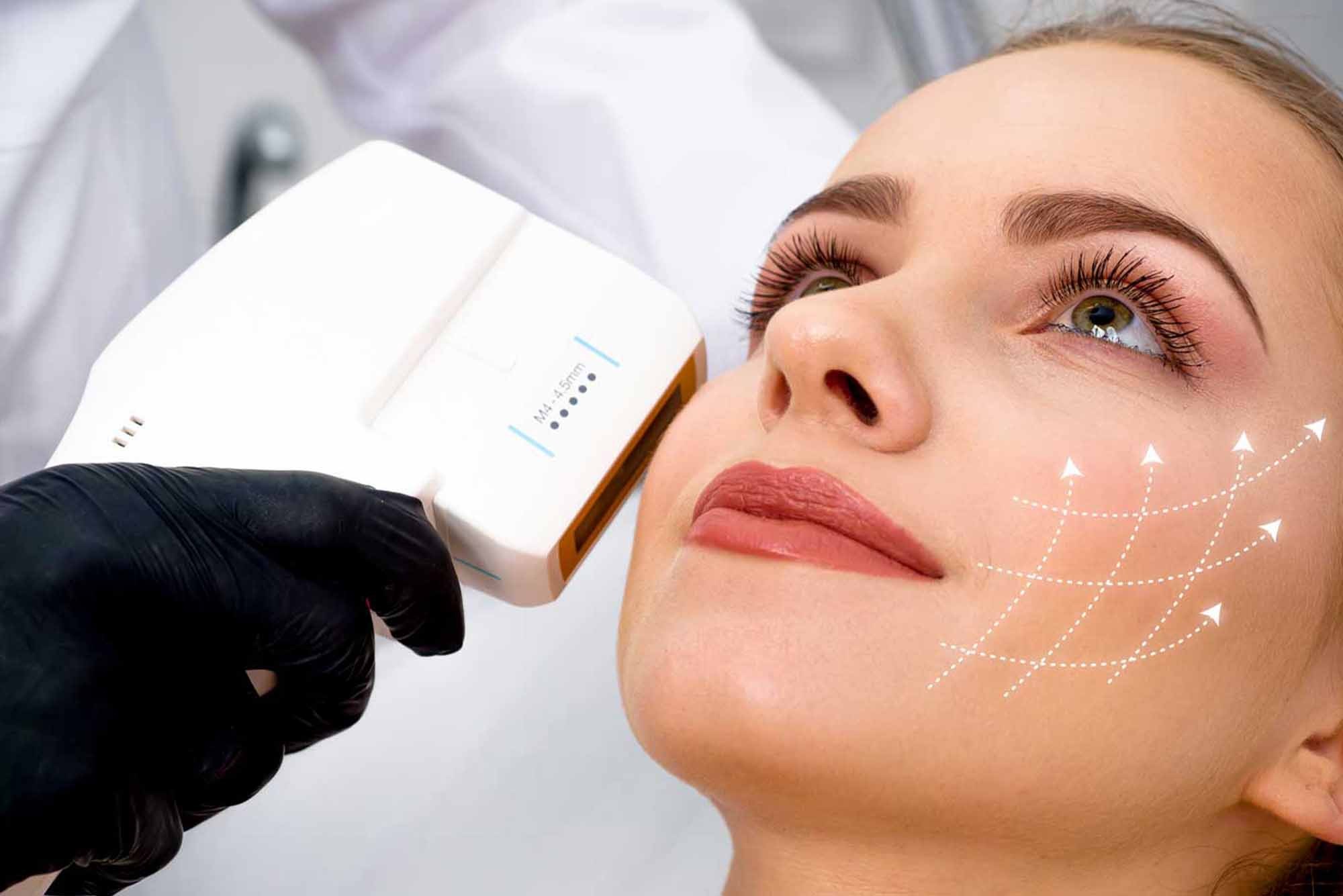
Radiofrequency and Ultrasound Lifting: Differences, Results, and How Long They Last
Radiofrequency uses resistive heat from electrical current to warm the dermis and stimulate collagen, while ultrasound focuses energy into a single point that reaches the deeper SMAS layer. Here's why these two devices target different depths, and what that means for how long results last.
By Dr. Lee
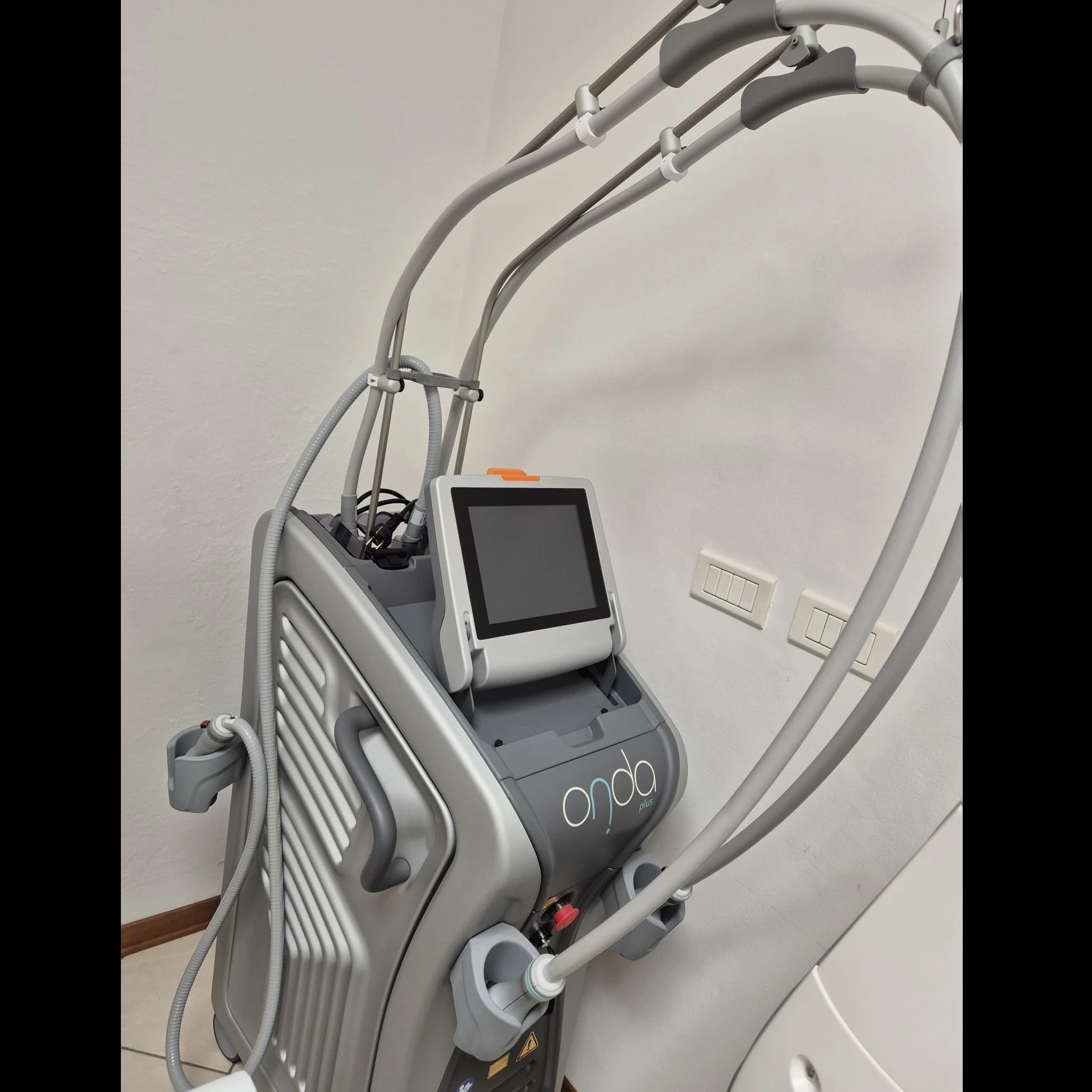
Onda Microwave Treatment: How Many Sessions, and How Long Do Results Last?
Onda uses microwave energy, the same technology behind a microwave oven, to heat the skin from within and act on fat cells and collagen at once. This article breaks down why microwaves reach deep into the fat layer, and why fat reduction and skin tightening happen together in a single session.
By Dr. Kim
HILO WAVE Skin Booster: How It Works, When Results Appear, and Aftercare
HILO WAVE is a skin booster that fuses two hyaluronic acids of different molecular sizes into a single structure. The low and high molecular weight forms are said to act at different depths and speeds, stimulating collagen and elastin production together inside the skin. This article breaks down how that dual hyaluronic acid structure actually works, focusing on the underlying mechanism.
By Dr. Kim