HILO WAVE Skin Booster: How It Works, When Results Appear, and Aftercare
By Dr. Kim7 min read
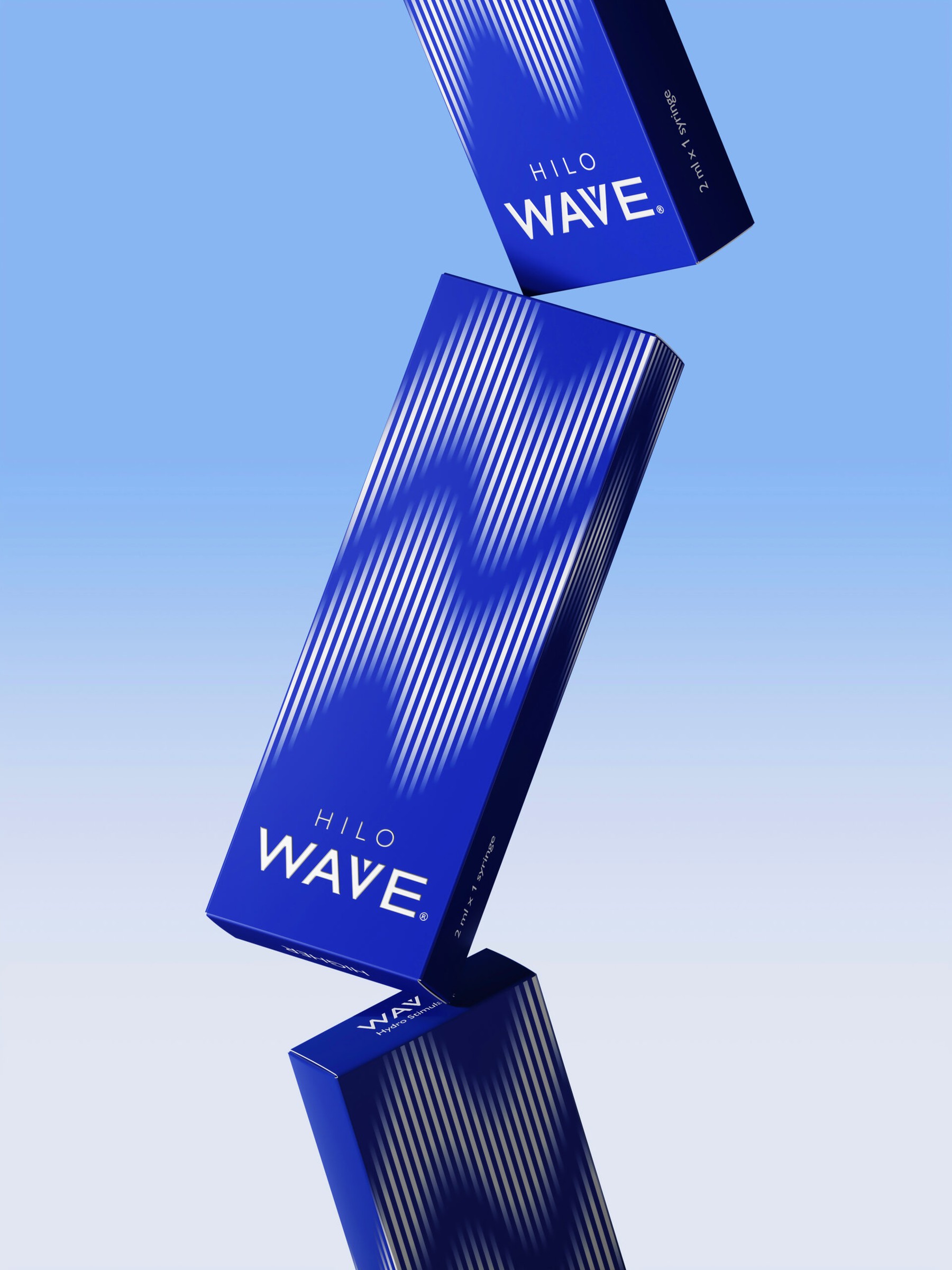
The list of products marketed as skin boosters keeps growing in dermatology clinics. Among them, HILO WAVE uses hyaluronic acid as its base material too, but it makes a point of standing apart from earlier products. Its claim is that it combines two hyaluronic acids of different sizes in a single product.
Hyaluronic acid is usually manufactured at one molecular size. HILO WAVE, however, combines a low molecular weight and a high molecular weight form at the same time. Why bother mixing two sizes, and how does that structure actually behave in the skin? Here is the mechanism, laid out step by step.
What kind of hyaluronic acid is HILO WAVE?
HILO WAVE is a skin booster built mainly from hyaluronic acid. A skin booster is a category of product injected into the dermis to fill the skin with moisture and lift elasticity. So rather than adding large volume the way a filler does, it focuses on improving the skin's own texture and firmness.
What sets HILO WAVE apart is the way its hyaluronic acid is made. It binds a low molecular weight and a high molecular weight hyaluronic acid into one structure, a method the manufacturer calls DHC (Dual Hyaluronic Acid Compound). It also uses high purity hyaluronic acid made through fermentation rather than from animal sources, which is described as improving biocompatibility, meaning it reduces the chance the body reads it as a foreign substance. The higher the purity, the lower the odds of swelling or irritation triggered by impurities, according to the reported explanation.
How do low and high molecular weights differ in role?
Hyaluronic acid plays a different role in the skin depending on its molecular size. Low molecular weight hyaluronic acid is small, so it can travel far and deep between tissues. It works much like a small grain slipping easily through a tight mesh net. As it spreads, low molecular weight hyaluronic acid is said to directly stimulate fibroblasts, the cells in the skin that produce collagen.
High molecular weight hyaluronic acid, by contrast, is too large to move around much once it settles in place. What it does well instead is hold onto water. It works the same way a sponge holds far more water than a small grain and keeps it in place for a long time. That makes high molecular weight hyaluronic acid a reservoir that retains moisture over the long term.
Put the two sizes together and the low molecular weight form spreads wide to stimulate cells, while the high molecular weight form stays put and fills in moisture. It is a structure that works at two different depths and two different timeframes at once.
What changes when the cross-linker is reduced?
Left untouched, hyaluronic acid breaks down quickly under enzymes in the body. That is why fillers and skin boosters use a small amount of BDDE (butanediol diglycidyl ether, a cross-linking agent that binds hyaluronic acid chains together) to slow the breakdown. It works on the same principle as tying several strands of thread into a knot, which holds together longer than a single strand unraveling on its own.
The problem is that using more cross-linker reduces the naturally soft quality of hyaluronic acid, and at the same time raises the odds that the body reads it as a foreign substance. HILO WAVE is described as keeping the amount of cross-linker to a minimum and instead relying on the dual molecular size structure to make up for durability. Rather than leaning on the cross-linker, it takes the route of lasting through the molecular structure itself.
How fibroblasts produce collagen
When hyaluronic acid enters the skin, the body reads it as an unfamiliar substance and switches on a repair response. It works the same way healing cells gather at a wound, just at a much milder intensity. During that response, fibroblasts activate and produce collagen and elastin.
Collagen is a protein that acts like a pillar, supporting the skin from below, while elastin is a protein that works like a rubber band, snapping the skin back to shape after it is pressed. Low molecular weight hyaluronic acid, as it spreads through the tissue, is said to trigger this response over a wider area. So HILO WAVE is described as aiming for two things together, the immediate effect of filling in moisture and, over time, the effect of the tissue itself becoming firmer.
That said, how much of this response actually occurs varies from person to person. Age, skin condition, and injection depth and volume can all make a difference, so it is hard to pin the effect down to a fixed number.
A structure that acts on deep and shallow layers at once
Most skin boosters are injected at a set depth, so the effect often shows up mainly around that depth. HILO WAVE is designed to widen that range by using two hyaluronic acids of different molecular sizes together.
Low molecular weight hyaluronic acid is small enough to travel up toward the shallower layers, while high molecular weight hyaluronic acid settles into the deeper layer where it was injected. As a result, the manufacturer explains, a single treatment produces a response in the deep and shallow layers at the same time. That also means fewer separate sessions are needed to treat each layer on its own.
That said, how much this full-layer response actually shows up can vary by product and by practitioner. So before treatment, it is worth having a thorough consultation with a clinician about your own skin condition and the areas you want treated. Since skin thickness and fat layer depth differ from one part of the face to another, injection depth and volume for the same product are said to be decided differently for each area.
Why is "Wave" in the product name?
The name HILO WAVE appears to come from the fused structure formed when the two sizes of hyaluronic acid are combined. As the low and high molecular weight forms link together in alternation, the resulting shape is said to resemble a wave.
Think of it the way a wave forms when large and small ripples overlap. HILO WAVE, too, is built from hyaluronic acid of different sizes layering together into one structure. And because of that structure, the way it spreads through the skin is not confined to one direction but is said to carry through multiple layers like a wave.
In the end, what the name emphasizes is not a single size but a dual structure. That is the biggest difference compared with products that rely on just one hyaluronic acid size.
Aftercare and when results appear
Aftercare focuses on helping the hyaluronic acid settle into place and letting the recovery response run its natural course.
- In the first few days after treatment, strong massage or pressure is best avoided. If the injected hyaluronic acid is pressed before it settles, it can shift position or spread unevenly.
- It is best to skip saunas or steam rooms for a while. Heat can cause the tissue to swell and loosen, which can disrupt the recovery process.
- Keeping up with sun protection helps. UV exposure speeds up the breakdown of newly formed collagen, so it is an essential habit for holding onto results longer.
- Early swelling or faint bruising usually settles down over time, according to the guidance. Recovery speed varies from person to person, so there is no need to rush it.
Results also show up in two stages. The moisture-filling effect tends to be felt fairly early, while the firmness that builds up as collagen and elastin accumulate shows up later and more gradually. That is why HILO WAVE is often approached as a regular maintenance routine rather than a single treatment.
References
Korean Dermatological Association, American Academy of Dermatology (AAD), and Ministry of Food and Drug Safety (MFDS).
Was this helpful?
About this article
Written by a practising aesthetic physician and intended for general education — not a substitute for individual medical advice.
Read next
Filorga NCTF 135 Ingredients and the Difference From Water-Glow Injections, Including Sessions and Interval
Filorga NCTF 135 is a mesotherapy treatment that delivers vitamins, amino acids, minerals, and hyaluronic acid, dozens of ingredients in a single syringe, straight into the dermis. Here's a principle-first look at why so many ingredients are mixed together, what each one actually does in the skin, and how this differs from a classic skin booster.
By Dr. Kim

Pink Peel: Results, How It Works, Aftercare, and Number of Sessions
Pink Peel is a low-irritation peel that uses isoflavones from fermented kudzu extract to refine texture while encouraging collagen renewal deep in the skin. Because it relies on mild plant-based compounds rather than harsh acids, even sensitive skin can generally tolerate it. Here is how the ingredient actually works, how it differs from a typical peel, and how to care for skin afterward.
By Dr. Kim

VRO Lifting: Ultrasound and Radiofrequency Differences, and Aftercare
VRO lifting combines two different energy types, ultrasound and radiofrequency, in a single session. The key idea is that each energy reaches a different depth in the skin, so together they can address both a shallow layer and a deep layer that neither one covers alone. This article breaks down how each energy works and why using them together actually makes sense.
By Dr. Lee