Onda Microwave Treatment: How Many Sessions, and How Long Do Results Last?
By Dr. Kim9 min read
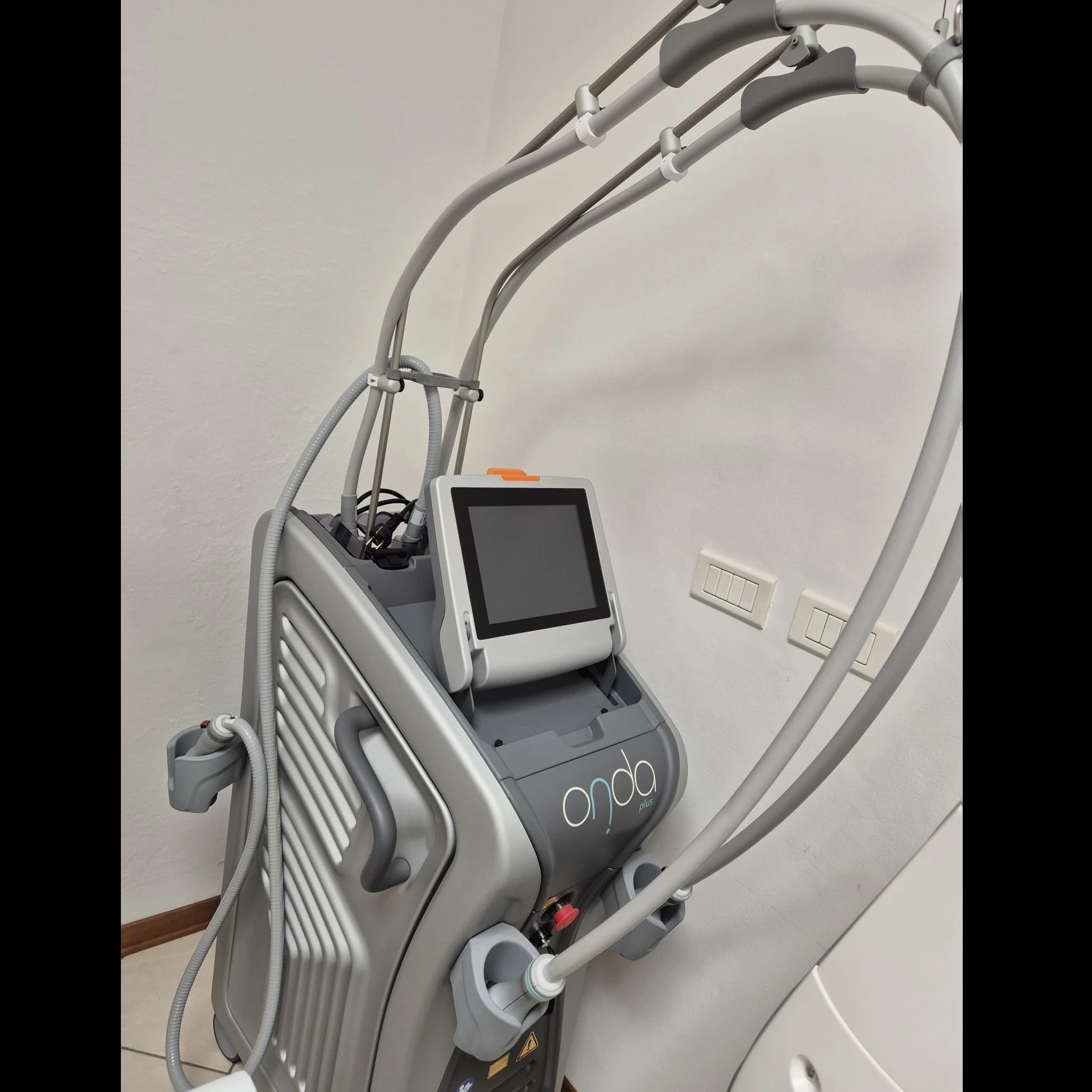
If you have ever sat down for a consultation about a double chin, heavy upper arms, or love handles, chances are the device name Onda has come up. Patients are usually told it reduces fat and tightens skin at the same time, which naturally raises the question of whether one device can really deliver two different results.
Onda works by sending microwaves, the same type of electromagnetic wave used inside a microwave oven, into the skin. Why microwaves specifically, and why fat reduction and skin tightening are both said to come from a single round of heat, comes down to how differently each tissue responds to that heat. Once you see the mechanics behind it, it becomes much easier to understand why one treatment can produce two separate outcomes.
How does Onda microwave produce heat?
Put a bowl of water in a microwave oven and the food inside gets hot because the microwaves shake the water molecules. Each water molecule is a little like a tiny magnet, positively charged on one end and negatively charged on the other. As the microwaves flip direction billions of times per second, the water molecules keep twisting back and forth to keep up, and all that motion turns into friction, which shows up as heat. A dry piece of paper left in the microwave for the same amount of time barely warms up, simply because there are not enough water molecules inside it to vibrate. That is why, inside the body too, tissue with a higher water content responds more strongly to microwaves.
Onda uses the same underlying principle, but instead of heating an entire dish the way a microwave oven does, it is engineered to target tissue at a specific depth beneath the skin. Because different tissues hold different amounts of water, adjusting the microwave frequency and penetration depth lets the device favor one layer over another. The dermis, which is fairly water-rich, heats up at relatively low energy levels, while the fat layer underneath, which holds comparatively less water, needs stronger or longer exposure to reach a similar temperature. That difference is what allows the treatment time and intensity to be tuned separately for each layer.
Compared with devices that rely on light or sound waves, such as lasers or ultrasound, microwaves have a longer wavelength, so they warm a broad area evenly rather than concentrating on a single point. That is why a single pass is said to bring a fairly wide area up to a uniform temperature.
Cooling the skin surface while heating the inside
The tip of the handpiece has a cooling plate built in, which presses against the skin and keeps it cool throughout the treatment. That keeps the outermost layer of skin at a low, safe temperature even while microwaves are passing through it.
At the same time, thanks to its set frequency, the microwave energy travels past the skin's surface and reaches the dermis (the layer that supports the skin) and the subcutaneous fat beneath it. Cooling the surface while heating the tissue underneath is a combination that lowers the risk of burns while still delivering enough heat to the deeper layers. Think of holding an ice pack against a frying pan's handle while the food inside keeps cooking, the handle, standing in for the skin's surface, stays cool, while the fat layer underneath heats up.
Why do fat cells give way to heat first?
Fat cells have an unusual structure: each one is essentially a cell packed with a droplet of oil. Because of this, their membranes are known to respond to heat far more sensitively than other cell types. Unlike muscle or skin cells, which hold a lot of water, fat cells are filled almost entirely with oil, which leaves their membranes comparatively thin and fragile. That is why, at the very same temperature, a fat cell's membrane is often the first to break down.
Once a certain temperature is sustained for a certain length of time, the fat cell membrane sustains damage and the cell begins a process of programmed self-destruction, known as apoptosis. Dead fat cells do not simply vanish on the spot; they are gradually cleared out over 6 to 12 weeks through the body's waste-removal pathway, the lymphatic system. That is why fat reduction is described as something that unfolds gradually over the following 6 to 12 weeks rather than showing up on the day of treatment. Much like a stick of butter taken straight from the freezer slowly melting at room temperature, fat cells do not disappear all at once, but shrink in volume gradually over time.
How does heated collagen change?
Collagen is a protein fiber that acts like the scaffolding holding up the skin. When these fibers reach a certain temperature range, they physically contract, not unlike a strand of cooked noodle curling up. That immediate contraction is why the skin can feel slightly tighter right after treatment. It is a similar effect to dunking a rubber band in hot water and watching it shrink instantly.
The heat's effect does not stop there. The dermal tissue that has been heated is recognized as damaged, which activates fibroblasts (the cells responsible for producing collagen) to start repairing it. Over the course of 4 to 12 weeks, fibroblasts generate new collagen, a process known as collagen remodeling. The immediate physical contraction and the slower collagen remodeling overlap, and together they carry the skin-tightening effect forward. Much like a wound healing over with fresh tissue, dermal tissue that has been heated goes through a recovery process and comes out sturdier than before.
Why fat reduction and firming happen together
The two responses described above, fat cells dying off and collagen contracting and then regrowing, actually begin from the exact same round of heat. When microwaves warm the area around the subcutaneous fat layer, that heat reaches both the fat cells and the dermal collagen surrounding them at the same time. Much like a bungeoppang mold that bakes the batter and the red bean filling together in one go, the fat layer and the collagen layer sit close enough beneath the skin that a single dose of heat sets off a reaction in both tissues at once.
- Fat cells have fragile membranes, so their reaction threshold tends to be lower, meaning apoptosis can start even after a relatively brief exposure to heat.
- Collagen fibers are said to need a slightly higher temperature before contraction and regeneration kick in together.
- Because the two tissues sit so close to one another beneath the skin, a single dose of heat delivered to one area ends up stimulating fat and collagen at the same time.
That is why Onda is not marketed as separate fat-reduction and tightening devices, but as a single treatment designed to pursue both reactions at once.
How do face and body settings differ?
Because the face and the body differ in skin thickness and fat layer depth, the same underlying principle is applied differently to each.
- On the face, where nerves and blood vessels run close together and the skin is relatively thin, penetration depth and energy are set lower, keeping the focus on smaller, more delicate areas like the double chin or nasolabial folds.
- On the body, where the fat layer is thicker and the treatment area larger, penetration depth and energy are raised beyond facial settings so the heat can reach deeper layers across broader areas like the abdomen, flanks, or thighs.
- The handpiece size differs as well, a smaller, more precise tip for the face and a wider one built to cover larger areas of the body more quickly.
Using the wide body handpiece on a small area like the chin would spread heat further than necessary into surrounding tissue, while using the narrow facial handpiece on a large area like the abdomen would take far longer and make it harder to heat evenly. That is exactly why the settings are adjusted by treatment area even though the underlying microwave principle stays the same.
How many sessions, and how many weeks apart?
Because fat cells take time to break down and clear out, and collagen takes its own separate stretch of time to regenerate, a single treatment cannot complete every change on its own. Instead, treatment is spread across 4 to 5 sessions spaced 4 weeks apart, giving the body time to respond before the next round of stimulation. Much like muscles do not grow stronger the day after a workout but instead recover and strengthen over 2 to 3 days, collagen in the skin thickens gradually through repeated cycles of stimulation and recovery.
Repeating sessions every 4 weeks is said to let each new round of stimulation build on collagen that has already partially regenerated from the previous one, so the effects accumulate over time. Sessions scheduled too close together can add fresh stimulation to tissue that is still recovering, which may lead to more swelling or irritation, so an interval of at least 4 weeks is recommended.
How long results last and how to maintain them
Newly formed collagen also gradually declines over time as part of the natural aging process. Factors like UV exposure, smoking, and repeated weight fluctuations are known to speed up that decline. Just as a houseplant needs regular watering to keep its leaves looking fresh, collagen needs ongoing care, such as sun protection and avoiding smoking, for the gains from treatment to last as long as possible.
Realistically, results from an initial treatment do not stay exactly as they were, they gradually settle back toward the skin's natural baseline over time. For that reason, many people are advised to schedule additional sessions every 6 to 12 months to restimulate collagen regeneration as part of ongoing maintenance.
Wearing sunscreen consistently and avoiding sudden weight swings are also said to help extend how long results last. In the end, Onda is best understood not as a one-and-done treatment, but as one built around the different response speeds of fat and collagen, calling for 4 to 5 sessions spaced 4 weeks apart followed by maintenance every 6 to 12 months.
References
Korean Dermatological Association, Ministry of Food and Drug Safety (MFDS), American Academy of Dermatology (AAD), and U.S. Food and Drug Administration (FDA).
Was this helpful?
About this article
Written by a practising aesthetic physician and intended for general education — not a substitute for individual medical advice.
Read next

Body Onda: Effects, Approach by Area, Number of Sessions and How Long It Lasts
Body Onda is a non-surgical body contouring treatment that uses microwave energy to selectively heat the fat layer beneath the skin, shrinking fat cells while tightening the skin above them. Here is why the heat targets fat rather than skin, why fat reduction and tightening happen together, how the approach differs for the abdomen, arms, and flanks, and how many sessions it takes to see lasting results.
By Dr. Kim
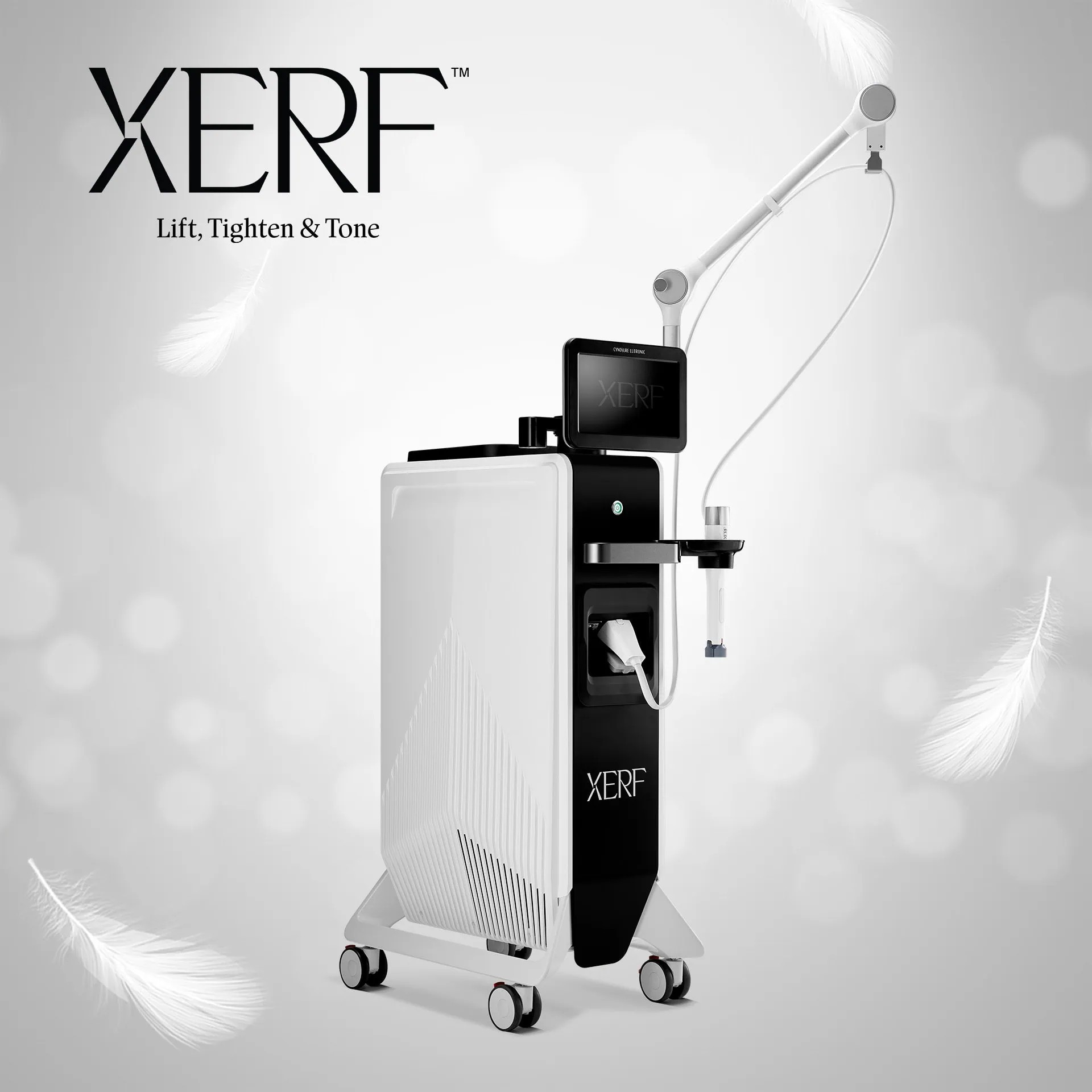
Xerf Radiofrequency Effect: What's Different About Using Two Frequencies Together?
Xerf is a radiofrequency lifting device that uses two different frequencies at once to stimulate both the shallow dermis and the deeper fascia layer. This article walks through the mechanism, from why heat reaches different depths depending on frequency, to collagen's immediate contraction and its longer remodeling process, plus the recommended number of sessions and how long results tend to last.
By Dr. Kim
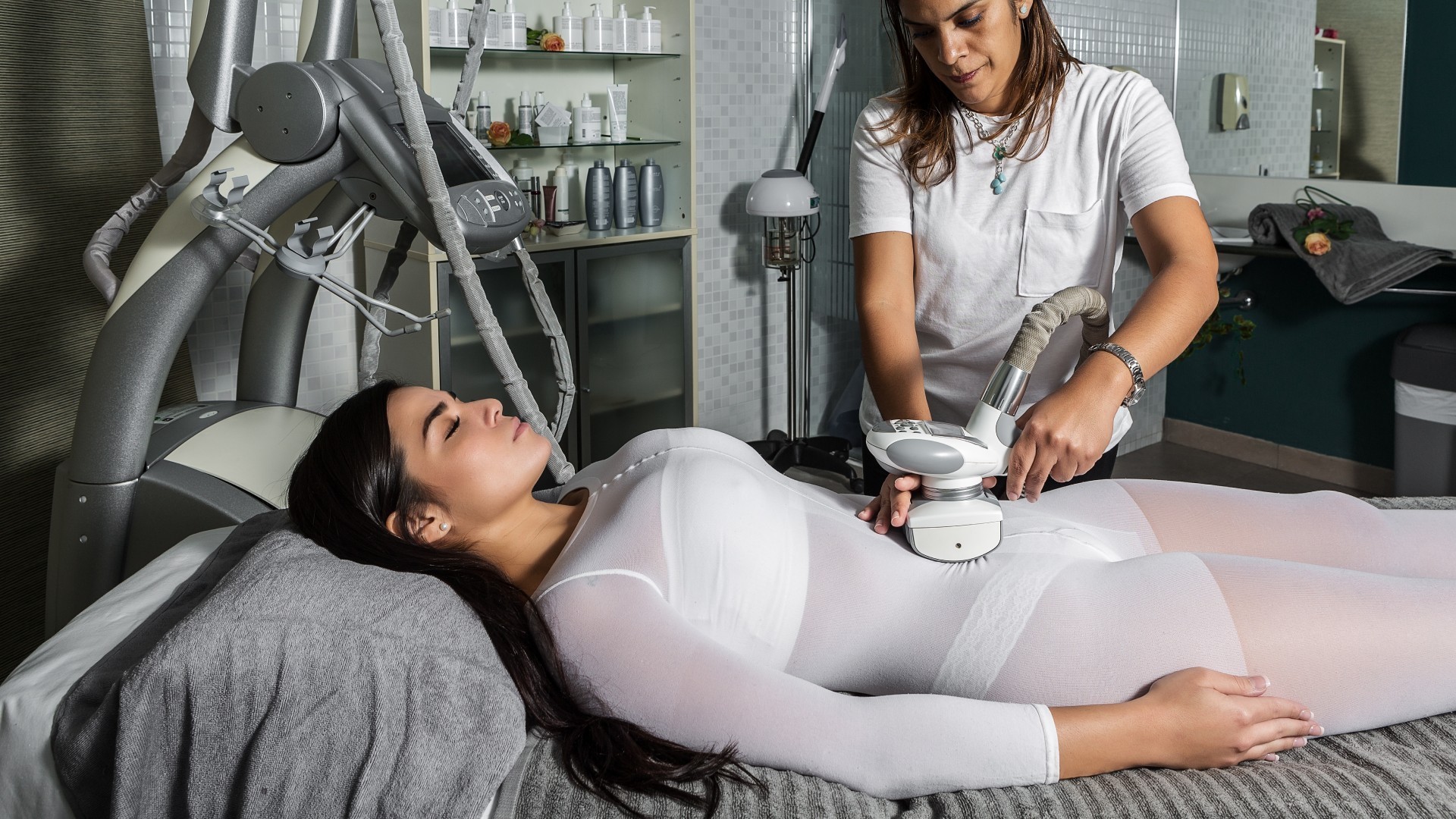
BodyONDA for Postpartum Belly: Fat Reduction and Skin Tightening Order
BodyONDA uses microwave energy to selectively heat the subcutaneous fat layer, breaking down fat cells while contracting dermal collagen fibers to firm the skin at the same time. Here is how these two responses unfold, step by step, in a postpartum belly where fat and sagging show up together.
By Dr. Lee