Sofwave Effect and Pain, Including How It Differs From Ultherapy
By Dr. Lee10 min read
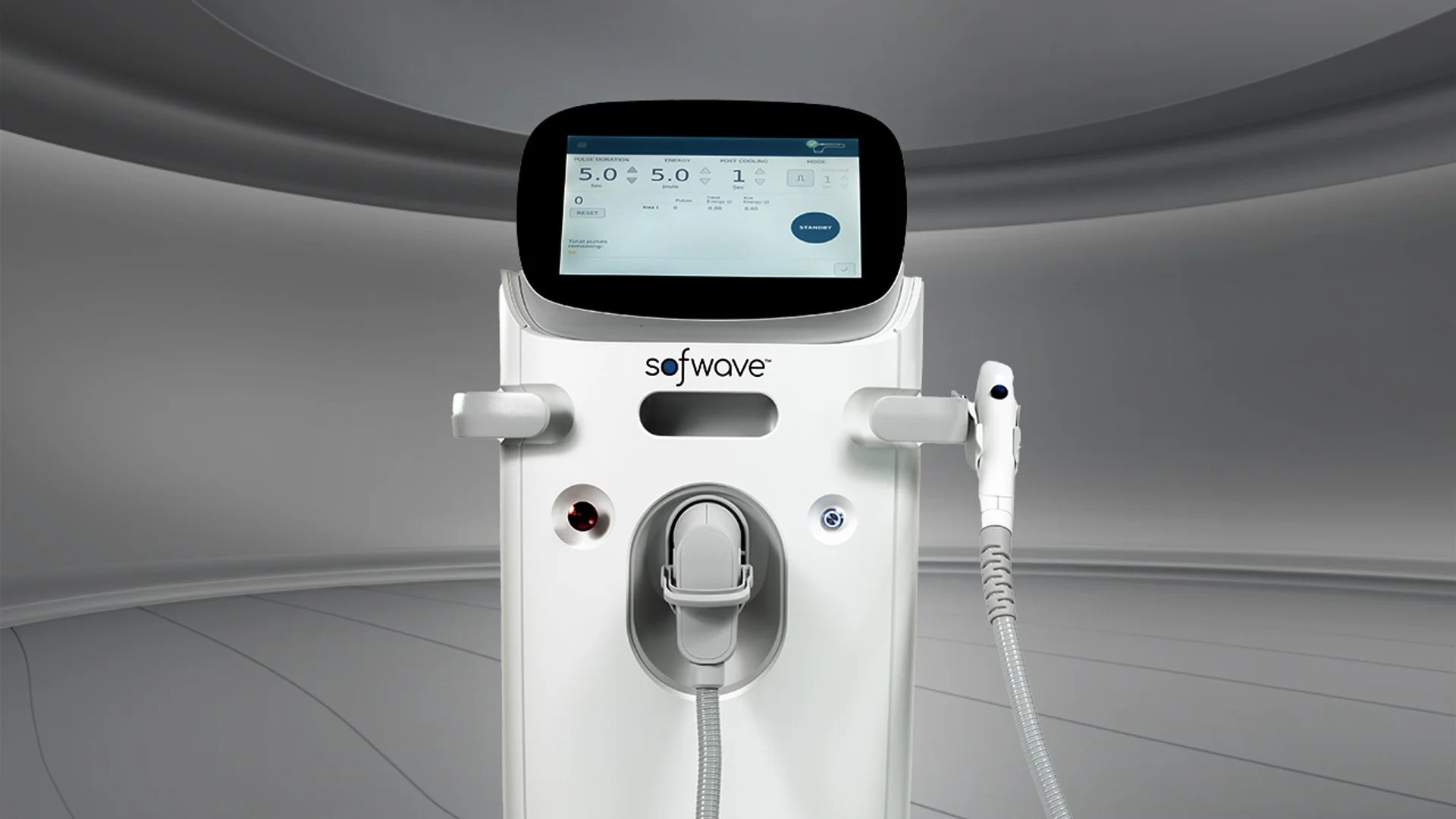
If you've been researching non-surgical skin tightening, Sofwave keeps coming up alongside Ultherapy. Both use ultrasound energy, both stimulate collagen, but Sofwave gets positioned differently: one session is typically all that's recommended, and it's consistently marketed as more comfortable than Ultherapy. That combination is appealing enough that it's worth looking closely at what the clinical data actually supports.
Sofwave is a device made by Sofwave Medical, an Israeli company. Its core technology is called SUPERB, Synchronous Ultrasound Parallel Beam, and the name is descriptive: multiple ultrasound beams fire simultaneously in parallel, focusing thermal energy into a single layer of the mid-dermis. That's a different approach than HIFU-based devices like Ultherapy, which deliver focused energy to discrete points at multiple tissue depths. Once you understand that distinction, what Sofwave does well, and where it has real limits, becomes much clearer.
How Deep Does Sofwave Work?
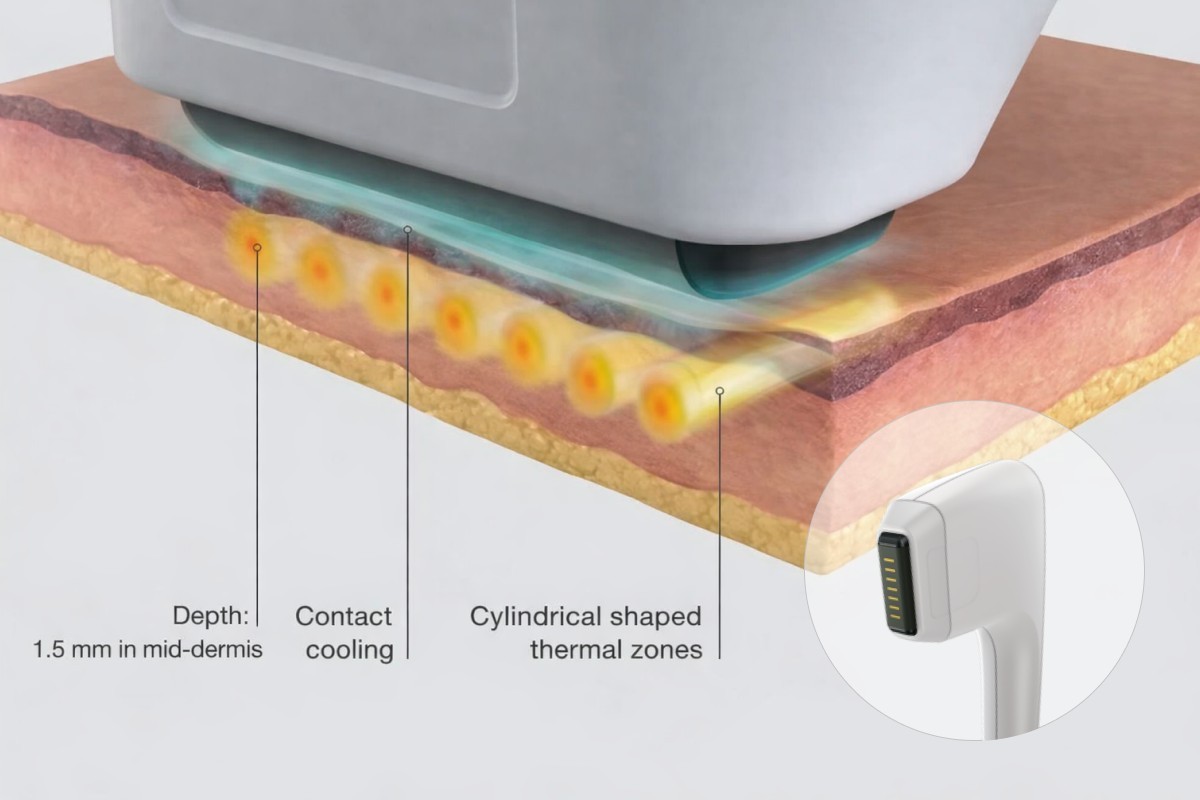
The defining characteristic is depth of action. Those parallel beams converge at approximately 1.5mm below the skin surface, in the mid-dermis, the zone where fibroblasts that produce collagen and elastin are concentrated. Sufficient controlled heat in that layer triggers a remodeling response: the body lays down new structural proteins, and the skin tightens.
That's where the fundamental difference from Ultherapy comes in. Ultherapy can reach 4.5mm, into the SMAS, the fibromuscular layer that surgeons physically tighten during a facelift. Sofwave doesn't come close to that depth. Rather than creating a structural lift effect in deeper facial architecture, Sofwave works on the dermis itself: improving skin quality, texture, and recoil from within. If you go in expecting facelift-level repositioning, you'll be disappointed. That's not what this device does.
The shallower working depth comes with real advantages, though. An integrated contact cooling system protects the epidermis in real time, keeping burn risk low, a genuine concern with some ablative laser treatments. And because ultrasound energy doesn't interact with melanin, Sofwave is safe across all Fitzpatrick skin types. For patients with medium to deep skin tones who've been cautioned away from aggressive laser resurfacing due to post-inflammatory hyperpigmentation risk, that's a meaningful distinction.
The FDA first cleared Sofwave in 2019 for improvement of fine lines and wrinkles, and has since granted clearance for eyebrow and submental lifting, neck laxity, cellulite, and acne scars. Each indication required its own clinical data submission, so there's an actual evidence trail, not just manufacturer claims.
How Parallel Ultrasound Beams Stimulate Collagen
The mechanism is heat, delivered precisely. Seven ultrasound transducers fire at once, and where those parallel beams converge in the mid-dermis, tissue temperature reaches 60 to 70°C. At that range, collagen fibers denature and contract immediately. That's the slight tightening sensation you notice during treatment. The diagram above illustrates it: the blue zone near the surface is the epidermis being actively cooled by contact; the red columns below are the cylindrical thermal coagulation zones where structural change begins.
Immediate contraction is just the first event. Over the following four to six weeks, the body's repair process takes over: fibroblasts migrate to the thermal injury sites and begin synthesizing new collagen and elastin. Most patients notice changes accumulating over the first two to three months, with the clearest results typically visible around the 12-week mark. The real outcome is in your three-month photos, not what you see leaving the office.
Because no skin surface is disrupted, this is non-ablative; there's no wound-healing recovery. No crusting, no weeping, no week of hiding. The integrated cooling keeps the epidermis fully intact throughout.
One thing worth understanding about the single-session protocol: Sofwave's parallel-beam design is calibrated to deliver the full therapeutic dose to that one dermal layer in a single pass. That's why one session is the standard recommendation, not the serial sessions common with some other energy devices. But single session doesn't mean more powerful; it means the technology is built to hit its target efficiently. For patients with more significant laxity, some clinicians do recommend a second treatment, and that's a reasonable discussion to have based on your starting point.
Has Sofwave's Effect Been Confirmed in Clinical Studies?
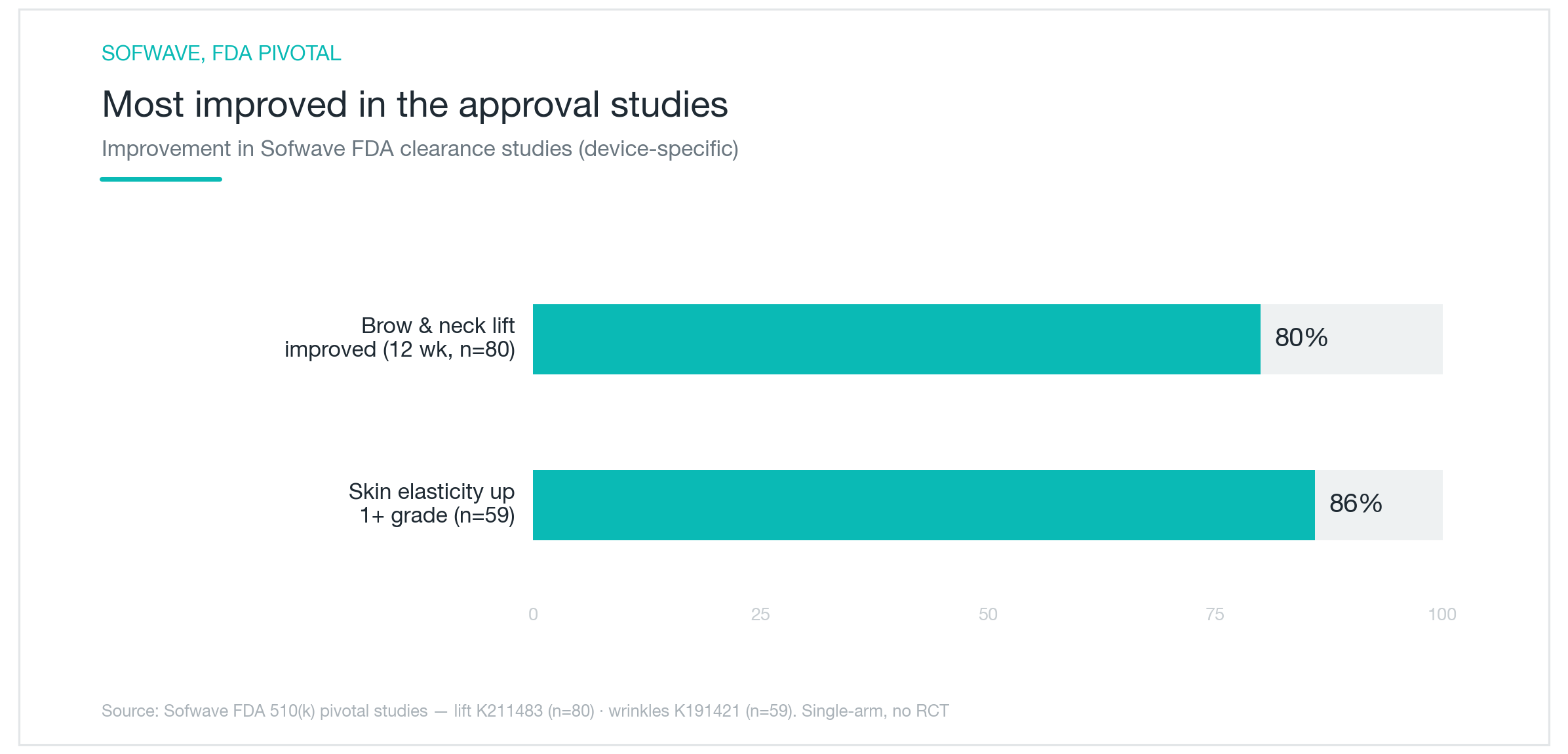
Sofwave has more published data behind it than many newer energy devices, and credit is due for that. The FDA-cleared studies for the brow and neck lifting indication enrolled 80 patients, and approximately 80% showed measurable improvement at 12 weeks; those are the figures in the chart above. A separate wrinkle indication study of 59 patients found that 86% improved by at least one grade on a validated skin quality assessment. Blinded evaluators, clinicians reviewing before-and-after photos without knowing which was which, identified the post-treatment photos at above-chance rates, suggesting the changes were visible enough to be detected independently.
The directional evidence is clearly positive. But precision matters when it comes to what kind of evidence this actually is. These are single-arm observational trials: one group of patients treated, no randomized control group, no sham treatment comparison. There are currently no published randomized controlled trials for Sofwave. For a device that's been FDA-cleared since 2019, that's worth noting.
Still, consistent findings across multiple independent research groups carry real weight. Other published data from separate cohorts show similar improvement rates at three and six months. In a group of 36 patients, measurable improvement was documented in over 60% of treated areas. When different investigators independently arrive at the same general conclusion, it's difficult to attribute that to coincidence.
The accurate summary: multiple small studies consistently show meaningful improvement; the signals are real and reproducible across investigators; but the highest tier of clinical evidence, a well-powered randomized controlled trial, doesn't yet exist. That's a statement about what we can say with certainty, not a dismissal of the technology.
Elastin Increased in Biopsies
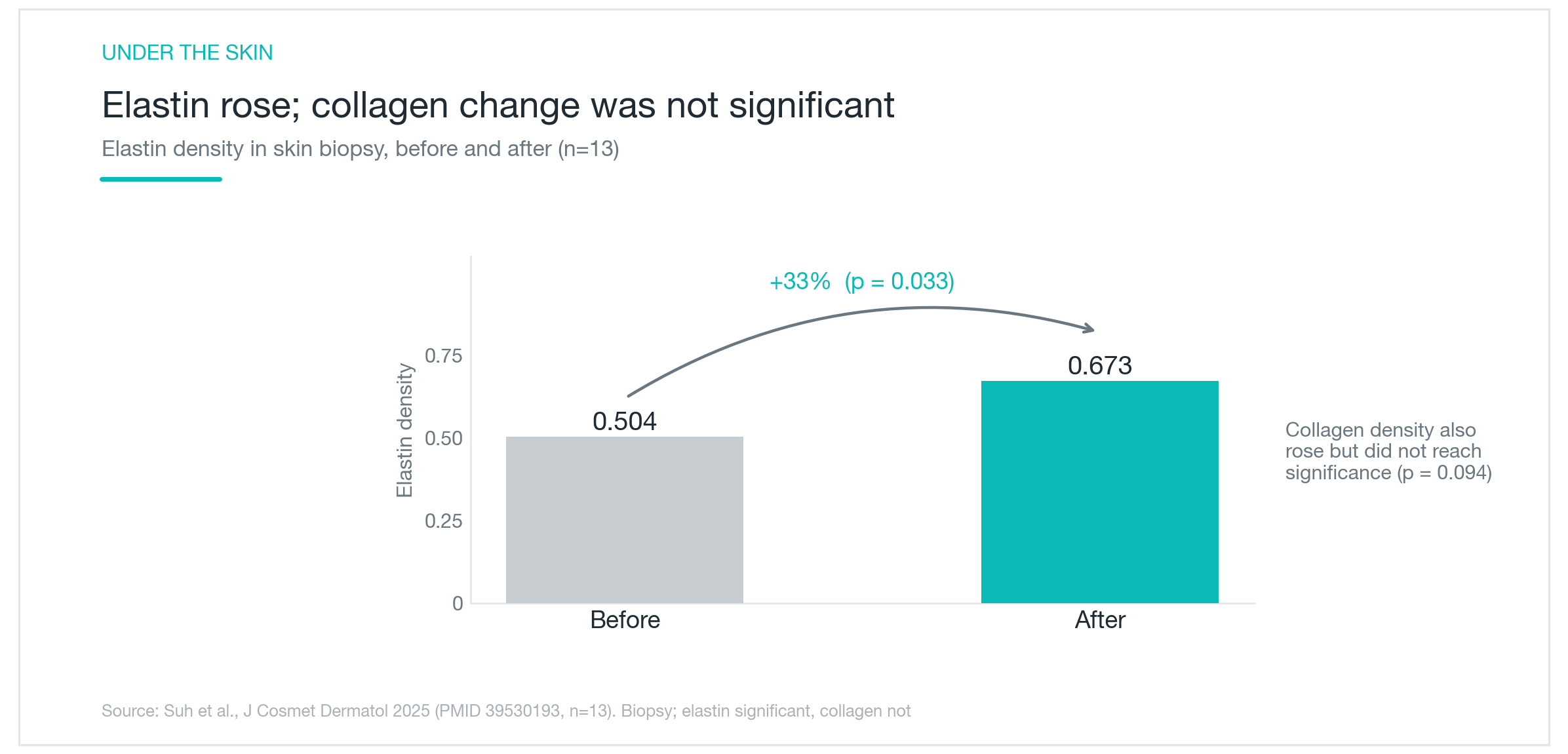
Photo ratings and satisfaction scores tell you something, but the more mechanistically interesting data comes from a biopsy study. Thirteen patients had small punch biopsies taken before and after treatment. Elastin density, the protein responsible for skin's recoil and snap-back quality, increased by approximately 33%, and that increase was statistically significant. That's the split shown in the chart above.
Collagen density trended upward in the same biopsy samples. It did not reach statistical significance.
That distinction matters, because "collagen regeneration" is the phrase used most heavily in Sofwave's marketing. Based on the available biopsy data, what's been demonstrated with statistical confidence is elastin regeneration. The collagen signal is present but hasn't cleared the bar. These proteins have different jobs: elastin is what gives skin its recoil, its ability to spring back after being stretched; collagen provides thickness and structural firmness. Knowing which one has stronger evidentiary support tells you something about what kind of improvement is most reliably documented.
A separate measurement study tracked actual skin displacement with calipers and found approximately 2mm of tightening at 24 weeks, a small number, but a measurable one captured with objective instrumentation rather than subjective rating.
The biopsy study followed 13 patients for two months. The signal is encouraging and aligns with what we'd expect physiologically, but the sample size is modest and the follow-up is short. More data would be valuable. What I can say is that something real is happening at the tissue level: the elastin findings are consistent enough across methods to be credible.
How Much Pain and Downtime, and How Long Does It Last?
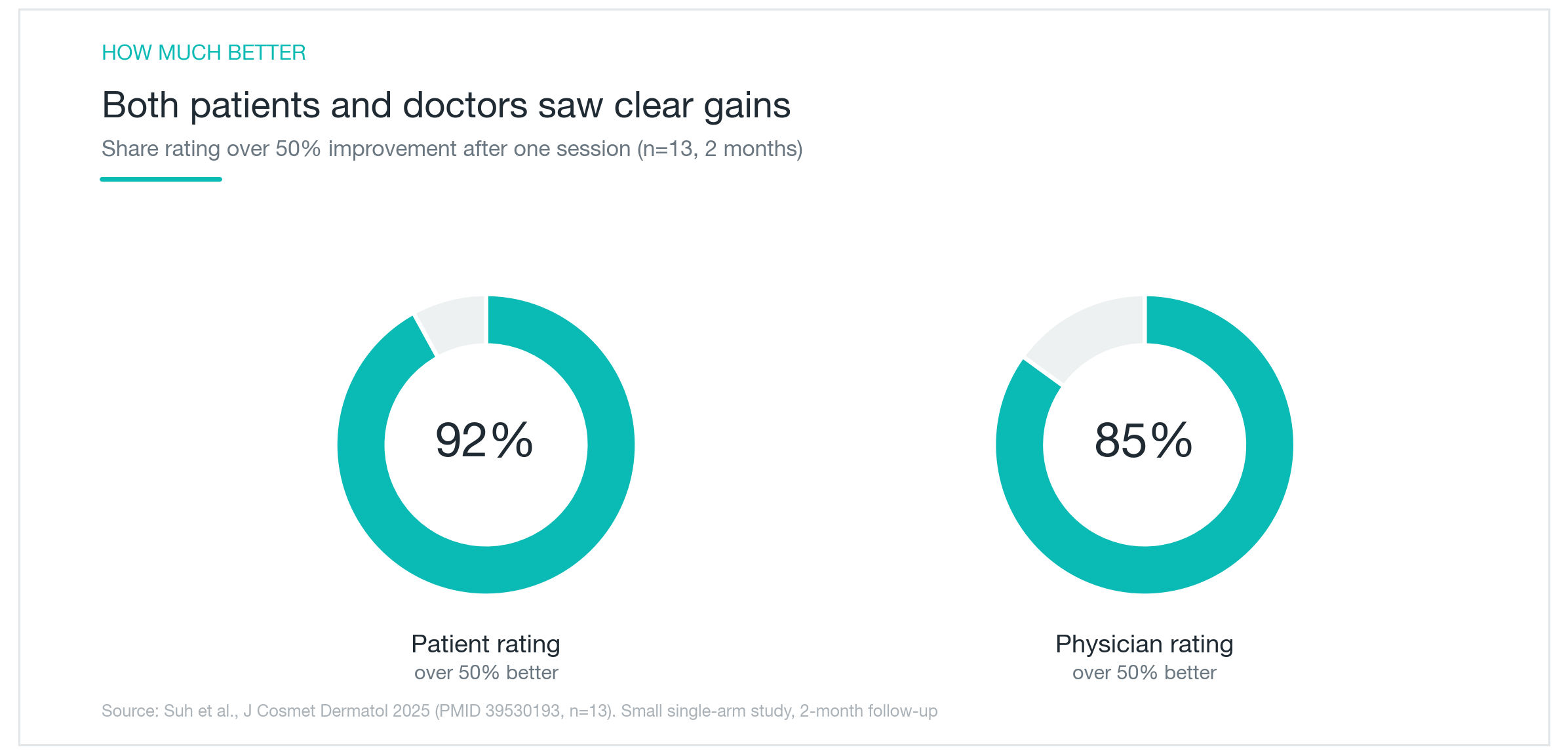
In the same 13-patient biopsy cohort, 92% of patients reported more than 50% improvement after a single session. Treating physicians independently rated 85% of patients as having achieved meaningful improvement; those numbers are shown in the chart above. They're high for a single-treatment protocol and represent one of the more compelling arguments in Sofwave's favor.
Pain is more nuanced than the marketing typically suggests. Sofwave is genuinely more comfortable for most patients than Ultherapy. But "more comfortable" isn't "painless." Most treatments use topical anesthetic only, and published pain scores in the research sit at 5 to 6 out of 10. Areas close to bone, such as the jawline, cheekbones, and around the eye orbit, tend to run higher. Patients with low pain tolerance should discuss this with their provider before committing, not discover it mid-treatment. Downtime is minimal in a practical sense: redness and mild swelling for a few hours to a day, with most patients back to normal by the following morning.
Longevity is where caution is most warranted. The marketing figure you'll see most often is 12 to 18 months of maintained results. Peer-reviewed published research has followed patients out to a maximum of six months. The 12-to-18-month claim comes primarily from manufacturer-provided data and anecdotal clinical experience, not from independently reviewed, published trials with long-term follow-up. It may be accurate. It isn't verified the way the 12-week improvement data is.
Skin aging continues after treatment, and collagen production capacity declines with age and cumulative UV exposure. How long results hold varies meaningfully between patients depending on age, baseline skin quality, and how consistently they protect their investment afterward. Rigorous daily sun protection and moisturization aren't platitudes in this context; they genuinely extend the effective window.
Who Does It Suit Compared With Ultherapy?
The comparison with Ultherapy comes up in almost every Sofwave consultation. Both use ultrasound, both are non-ablative. The difference is in how energy is delivered and where it acts.
Ultherapy delivers focused ultrasound to three depth settings: 1.5mm, 3.0mm, and 4.5mm, and that deepest transducer reaches the SMAS, the same fibromuscular layer a surgeon tightens during a facelift. Ultherapy also incorporates real-time ultrasound imaging to visualize tissue planes before energy delivery, giving the clinician confirmation of transducer position. Sofwave fires in parallel to a single mid-dermal depth and has no imaging component. The depth difference is the operative variable: for structural laxity requiring meaningful repositioning of facial soft tissue in deeper planes, SMAS-depth energy delivery has a clear mechanistic rationale. For improving skin quality, fine-line texture, and superficial elasticity, with less discomfort and no recovery, Sofwave is operating in the right tissue zone for those goals.
There is no published randomized head-to-head trial comparing the two devices on clinical outcomes. Declaring one superior to the other isn't something the evidence currently supports. Clinicians make individual judgment calls based on patient presentation, and those recommendations can be clinically sound without being proven by comparative trial data.
A few marketing claims deserve direct skepticism. "One treatment, lasting results": broadly plausible, but peer-reviewed durability data only extends to six months. "More powerful than Ultherapy": no published evidence supports this. "Significant collagen regeneration": the biopsy study didn't find a statistically significant collagen increase; elastin is the better-supported mechanism. What is well-established: elastin density improvement, consistent short-term tightening across multiple studies, high single-session patient satisfaction, and a safety profile that holds across all skin phototypes.
Sofwave is a strong fit for patients experiencing early skin laxity, fine lines, and loss of skin firmness, people who aren't yet candidates for surgical correction but want results beyond what topical skincare can deliver. It's also a practical option for anyone who can't accommodate recovery time. For patients with more advanced sagging, pronounced jowling, significant neck laxity, or substantial skin descent, Sofwave alone is unlikely to deliver the degree of correction they're looking for. In those cases, Ultherapy, a combination energy-device protocol, or a surgical consultation is probably a better starting conversation.
The most useful thing a pre-treatment consultation does is match the treatment to the problem. Sofwave may be exactly what you need. For some presentations, it's one piece of a larger strategy.
Was this helpful?
About this article
Written by a practising aesthetic physician and intended for general education — not a substitute for individual medical advice.
Read next
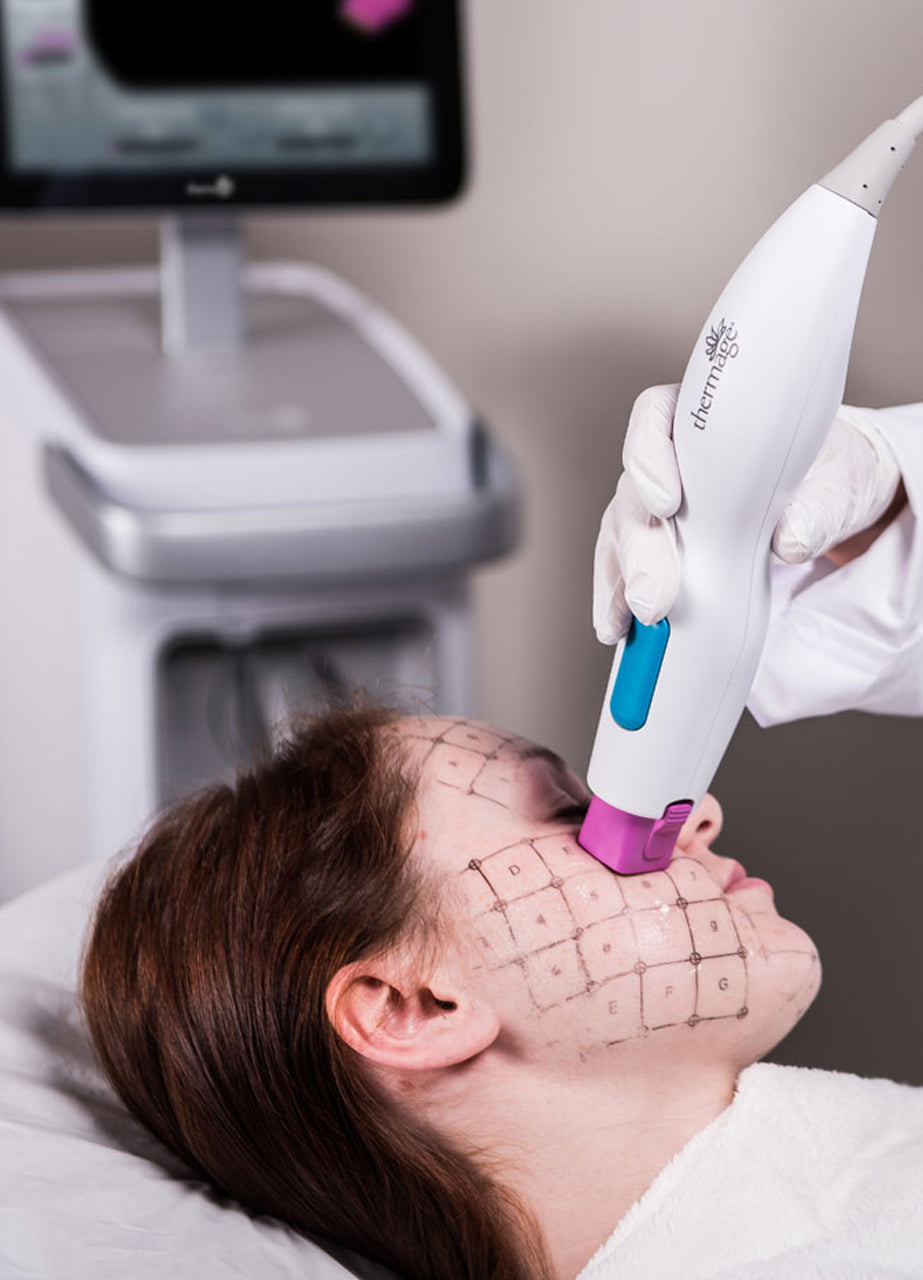
Thermage RF Effect and Duration, Including How It Differs From Ultherapy
A clinical look at how Thermage's monopolar RF energy triggers collagen contraction and neocollagenesis to tighten skin, what biopsy studies confirm, how results compare to Ultherapy, how long they realistically last, and the side effects worth knowing about.
By Dr. Kim
Shurink Universe: Effect and Duration, and How It Differs From Ultherapy
An evidence-based breakdown of Ultraformer MPT HIFU lifting, how focused ultrasound targets the SMAS layer, what a 50-patient study measures in real millimeters of lift, and where class-level HIFU evidence stands. Device-specific and class-level data are clearly distinguished throughout.
By Dr. Kim

Rejuran PDRN Injection: Evidence for Scars and How Long Results Last
PDRN, the salmon-derived DNA fragment at the heart of Rejuran injections, has more published clinical evidence behind it than most injectable skin treatments. A clinician's breakdown of how it activates collagen production and microvasculature, what the research actually demonstrates, where the evidence runs thin, and which patients genuinely benefit.
By Dr. Kim