Snail Mucin Cream Ingredients: Effects of Glycolic Acid and Glycoproteins
By Dr. Kim6 min read
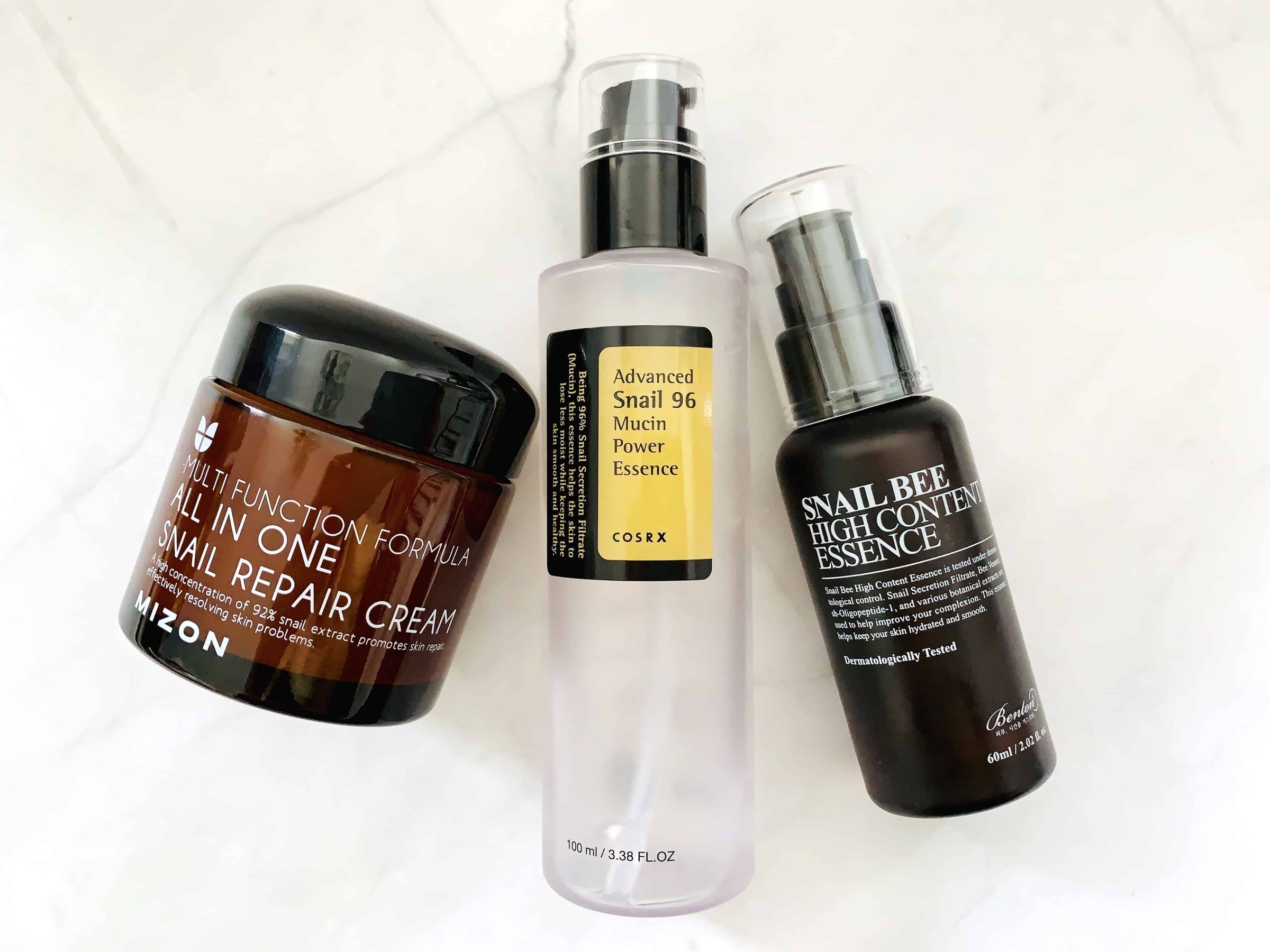
Snail mucin has become common enough that you can find it at a convenience store skincare rack these days. What is less well known is why this ingredient earned its reputation in the first place, and what is actually inside it that lets one product claim to hydrate and repair skin at the same time. A single drop of mucin is really a mix of several ingredients with very different jobs, and that is exactly where the confusion comes from. Here is what each ingredient does and how it works.
What Ingredients Are in Snail Mucin?
A snail has a soft body with no shell covering its flesh, so it constantly produces a sticky mucus to keep from getting scraped raw as it crawls over rough surfaces, and to keep its body from drying out. In other words, the mucin itself evolved to protect wounds and hold onto moisture.
Inside that mucus you will find glycolic acid (an acidic ingredient that loosens the "glue" holding dead skin cells together), allantoin (known for helping new tissue form over old wounds), hyaluronic acid (which pulls in and holds onto water molecules), glycosaminoglycans (a group of molecules that store moisture in a similar way to hyaluronic acid), and glycoproteins (large molecules reported to stimulate fibroblasts in the dermis). It is less like a single active and more like a bundle of ingredients, each doing its own thing.
How Does Glycolic Acid Act on Dead Skin Cells?
Glycolic acid has a small molecular size, so it slips through the surface of skin easily. It works by loosening the bonds that hold dead skin cells to each other, which lets old, hardened skin flake off on its own.
Think of peeling paper off after lightly dampening the glue underneath, rather than tearing it off by force. It weakens the bond itself so the cells let go naturally, which is a very different kind of stimulation than a physical scrub that rubs cells away.
Used consistently at a low concentration, glycolic acid does more than clear dead skin. It is also reported to boost glycosaminoglycan production in the dermis and stimulate collagen, the structural protein that holds skin up from underneath. So the same ingredient is working on the surface and rebuilding from below at the same time.
How Allantoin and Hyaluronic Acid Protect Moisture
Allantoin is known for speeding up how quickly new cells are produced, which is why it shows up in products meant to help wounds heal faster. It is described as especially useful on skin that is thin, sensitized, or easily irritated.
Hyaluronic acid and glycosaminoglycans share the ability to pull in far more water than their own weight and hold onto it, similar to how a sponge swells up once it soaks up water. When these ingredients sit on the skin's surface as a thin film, the moisture underneath has nowhere to escape.
Working together, the wound-repairing side and the moisture-locking side operate in the exact same spot at the same time, which is why this combination is described as particularly suited to dry, sensitized skin with a compromised barrier.
Dryness and sensitivity might look like separate problems, but they often trace back to the same root cause. Once the outer skin layer thins out, moisture escapes more easily and the skin is left more exposed to outside irritants at the same time. That is why a single ingredient can address both at once.
How Do Glycoproteins Affect Collagen?
Glycoproteins in snail mucin, along with some of the peptides (short chains of linked amino acids) it contains, are reported to directly stimulate fibroblasts in the dermis. Fibroblasts are the cells responsible for producing both collagen and elastin, the protein that gives skin its bounce.
In cell studies, these ingredients have been shown to increase fibroblast proliferation and migration, and to support new blood vessel growth at wound sites. Healing a wound is not just about growing new tissue. That tissue also needs a blood supply to feed it, and this is the part of the process these ingredients appear to support.
It is a bit like planting a seed that needs its roots and its stem to grow together for the tree to actually stand. Collagen alone is not enough. The tissue only becomes genuinely strong once the blood vessels feeding it grow alongside it.
Evidence for the Effect: From Cell Studies to Clinical Trials
Most of what has been described so far comes from cell and animal studies. There is a steady stream of reports showing faster wound recovery, along with new collagen and blood vessel growth, on skin treated with snail mucin or its individual components.
Human clinical data has been building up gradually as well, with reports of improved hydration and skin texture, and reports that redness from irritation calmed down faster. That said, how much any individual notices depends heavily on their baseline skin barrier, the concentration used, and whatever else is mixed into the product.
Generally, hydration and calming effects tend to show up within a few weeks of use, while changes tied to skin renewal, like smoother texture or finer lines, are described as taking about 4 to 12 weeks of consistent use to become noticeable. Renewal takes longer to show because it depends on new cells actually forming and settling in, which is a slower process than simple hydration.
Precautions Before Use
The ingredients themselves are considered gentle, but a few habits can help avoid irritation depending on how the product is used.
- Start with a small amount: while glycolic acid clears away dead skin, people with sensitive skin may notice redness or stinging. Testing a small amount for a few days before working up to regular use is the safer approach.
- Avoid layering with other exfoliants: using it alongside retinol or other acid-based exfoliants at the same time can thin the outer skin layer too quickly and increase irritation. Splitting them across different times of day or alternating days is a better approach.
- Keep up with sunscreen: while cell turnover is sped up, the fresh skin underneath can be more vulnerable to UV exposure, so daytime sunscreen is recommended alongside it.
- Stick with it consistently: the renewal response, new collagen and blood vessels forming, does not happen in a few days. It builds gradually as the ingredients accumulate over time. Stopping after a few days makes it hard to notice any renewal-related change at all.
What makes snail mucin distinctive is that one ingredient source is handling two very different jobs, hydration and repair, at once. The most reliable approach is to adjust the concentration and frequency to your own skin and keep observing how it responds over time.
It also helps to check where mucin sits on a product's ingredient list, since concentrations and the other ingredients mixed in vary from product to product. The closer it appears to the top of the list, the larger a share it makes up of that particular product.
References
Korean Dermatological Association, American Academy of Dermatology (AAD), and Ministry of Food and Drug Safety (MFDS).
Was this helpful?
About this article
Written by a practising aesthetic physician and intended for general education — not a substitute for individual medical advice.
Read next

Exfoliation Methods: Physical Versus Chemical Exfoliation Compared
Exfoliation falls into two broad camps: physically buffing away dead skin and chemically dissolving it. Scrubs and brushes lift flakes off through friction, while acid ingredients loosen the bonds between skin cells so they release on their own. Here is how each method actually works on the skin, and which one fits which skin type.
By Dr. Kim

Water Glow Injection and Skin Booster: Differences and Purpose by Ingredient
A water glow injection is one type of skin booster that uses hyaluronic acid to add hydration, while skin boosters are a broader category that also includes ingredients supporting tissue regeneration. Here is a look at what each treatment actually contains and what it is designed to achieve.
By Dr. Lee
Cafe-au-Lait Spots Returning After Laser: Causes, Number of Sessions and Expectations
A café au lait spot forms because the pigment-making cells in that one patch of skin are locally overactive. Laser treatment breaks up the pigment that has already built up, but it doesn't switch off those cells, which is why the color so often returns. Here's the biology behind it, why results differ so much from person to person, and what a realistic treatment timeline actually looks like.
By Dr. Kim