Skin Booster Frequency and Number of Sessions: From Loading to Maintenance Intervals
By Dr. Kim7 min read
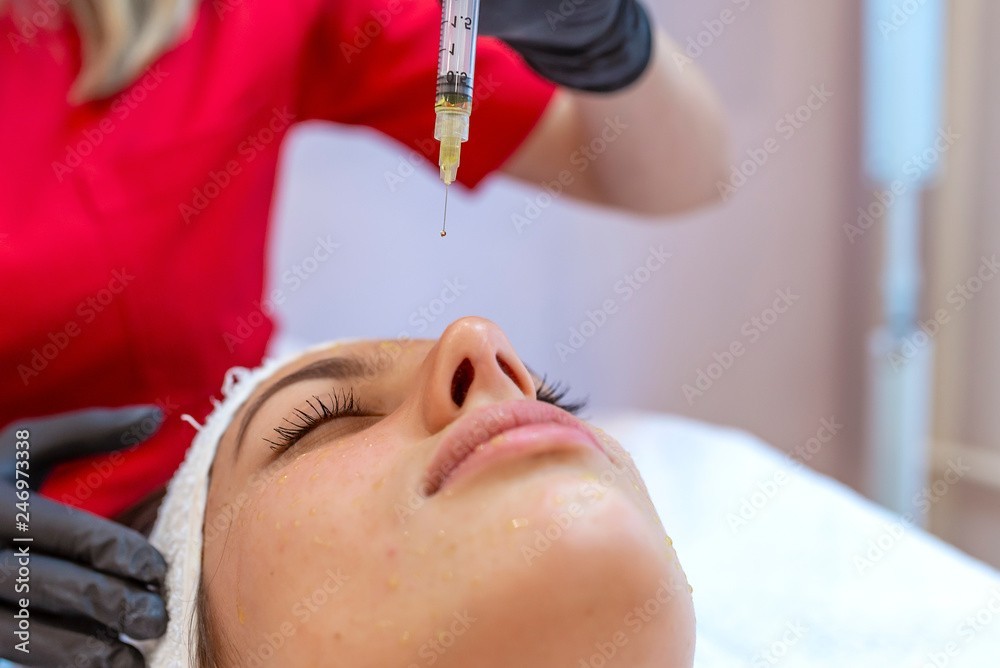
One of the most common questions from first-time skin booster patients is "how long will one session last." The question itself is slightly off target. Skin boosters were never meant to be a single treatment. The plan is a short burst of closely spaced sessions at the start, followed by longer, spaced-out sessions to hold the result.
To understand why the treatment is split up this way, you first need to know how the injected ingredient behaves once it is inside the skin, and how it eventually clears. The number of sessions and the gap between them are not arbitrary numbers. They follow the pace at which the ingredient is absorbed and broken down.
Is One Skin Booster Session Enough?
The two ingredients most commonly used in skin boosters are hyaluronic acid and PN (polynucleotide, a repair-promoting ingredient extracted from salmon or trout DNA). Neither one is meant to stay in the skin permanently. Both are gradually absorbed by the body over time.
From the body's point of view, these are not native tissue but newly introduced material. The hyaluronic acid that was holding onto water and the PN that was driving the repair response both get broken down bit by bit by enzymes and eventually cleared out. As the ingredient disappears, the hydration it was holding and the repair activity it triggered fade along with it.
That is why the plumpness and firmness from a single session eventually settle back to baseline. It is a bit like watering a potted plant generously once, only to find the soil dry again a few days later. The effect of the water did not vanish. It simply evaporated over time, the same way the ingredient does in the skin.
How Long Does the Ingredient Stay in the Skin?
Not every ingredient survives the same length of time in the body. Non-crosslinked hyaluronic acid, meaning HA that is not chemically linked to itself, has a simple structure that enzymes can break down easily, so it clears relatively fast. Crosslinked HA, the kind used in fillers where the molecules are woven into a mesh, is harder for enzymes to penetrate and lasts much longer.
The hyaluronic acid used in skin boosters is usually lightly crosslinked or not crosslinked at all. Because it needs to spread through the shallow layers of skin rather than sit deep and hold water broadly, it is deliberately made soft and easily absorbed rather than tightly bound. That means it clears faster than filler HA, but in exchange it tends to blend in more naturally.
PN follows a similar pattern. It works as a signal that kicks off a repair response in the skin, and once that signal has done its job, it breaks down and disappears on its own. If the signal molecule stuck around indefinitely, it would end up as an unnecessary irritant, so it is built to clear within a set window instead.
Why Are the First Sessions Packed Close Together?
When patients first start skin boosters, they usually go through a loading phase of several sessions spaced a few weeks apart. The reason the dose is split into multiple visits rather than given all at once is that skin needs time to take in the stimulus and respond to it.
After the first session, hydration fills the injected area and a mild repair response begins. If the next session adds another round of stimulation before that response has fully settled, the effects stack, and the fibroblasts that produce collagen keep working more consistently. Because the stimulation does not stop after one round, the body essentially keeps the repair response switched on.
If the gap between sessions is too long, the next stimulus arrives only after the previous one has already faded, so each session ends up starting from scratch instead of building on the last one. If the gap is too short, the skin never gets a chance to recover before the next round of stimulation, which can make swelling and sensitivity worse. The interval used during the loading phase sits between these two extremes, tuned so the response can actually accumulate.
Why Do Gaps Widen in the Maintenance Phase?
Once the loading phase wraps up, the intervals stretch out considerably for maintenance. At this stage the goal is no longer to build the response from zero each time. It is to protect the collagen and firmness that have already been established.
Collagen in the skin is never permanent once it forms. Enzymes that break down old collagen are always active in the background, so the rate of new collagen production and the rate of breakdown eventually converge again. A maintenance session adds another round of stimulation before that balance tips, tilting the scale slightly back toward production.
The reason maintenance sessions are spaced further apart than loading sessions is simple. The stimulation is being added on top of tissue that already has some structure in place, so it takes less to preserve the effect than it did to build it the first time. It is a bit like how a house needs frequent work while it is being built, but far less frequent upkeep once construction is finished.
Why Does the Recommended Interval Differ by Treatment?
Not all skin boosters follow the same schedule. Molecule size, degree of crosslinking, and injection depth all affect how long the ingredient stays in the body, which is why the recommended interval varies by treatment.
- Smaller molecules: These spread through tissue quickly, but that same property exposes them more easily to enzymes, so they break down faster. Maintenance intervals tend to be shorter as a result.
- Crosslinked hyaluronic acid: The mesh structure makes it harder for enzymes to break through, so it lasts relatively longer and can support a wider maintenance interval.
- PN and other repair-signal ingredients: Since these work by triggering a repair response rather than physically filling space, how long the effect lasts varies significantly from person to person, so the interval is often adjusted individually.
- Injection depth: Shallow layers are more exposed to water loss and friction, so they fade relatively fast, while deeper layers are shielded from outside stimulation and tend to hold longer.
That is why it is normal for a provider to fine-tune the interval based on skin condition and treatment type. There is no single fixed answer, only a range that gets adjusted by looking at both the ingredient and how the skin is responding.
What Happens If You Shorten or Delay the Interval?
Patients often wonder what actually goes wrong if the interval is not followed. Once you understand the underlying logic, the reasons follow naturally.
If sessions are scheduled too close together, a new round of stimulation is added before the swelling and repair response from the previous session have settled down. From the skin's perspective, that means constant stimulation with no rest, which can leave sensitivity and redness lingering longer than expected. A proper repair response needs an adequate rest period to wrap up normally.
If the interval is stretched too far, the collagen and hydration built up from earlier sessions have already largely dissipated by the time the next session happens. In that case, the treatment is no longer maintenance. It is closer to starting the loading phase over again, which is less efficient and means waiting for the same level of change to build back up from the start. It is similar to trying to fix a scale that has already tipped far to one side.
Care Between Sessions
How the skin is cared for between sessions matters just as much as the interval itself.
- Extra attention to sun protection is recommended for the first few days after treatment, since UV exposure can work against newly formed collagen by breaking it back down.
- Vigorous massage and exfoliation are best avoided for a few days after each session, since the ingredient has not fully settled and can be displaced by physical pressure.
- Keeping notes on how the skin changes between sessions helps a provider fine-tune the interval, since recovery speed and response vary from person to person and adjustments are often made based on how the skin is actually responding rather than a fixed schedule.
- Maintaining a consistent basic moisturizing routine also helps. A stronger natural moisture barrier is thought to slow how quickly the hydration delivered by a skin booster evaporates.
In the end, understanding how the ingredient behaves in the body is more useful than memorizing a fixed number of weeks. During the loading phase, the goal is to build the response up. During maintenance, the goal is to refresh it before that response has a chance to fade. Keeping that flow in mind is really all that is needed.
References
Korean Dermatological Association, American Academy of Dermatology (AAD), and Ministry of Food and Drug Safety (MFDS).
Was this helpful?
About this article
Written by a practising aesthetic physician and intended for general education — not a substitute for individual medical advice.
Read next
Filorga NCTF 135 Ingredients and the Difference From Water-Glow Injections, Including Sessions and Interval
Filorga NCTF 135 is a mesotherapy treatment that delivers vitamins, amino acids, minerals, and hyaluronic acid, dozens of ingredients in a single syringe, straight into the dermis. Here's a principle-first look at why so many ingredients are mixed together, what each one actually does in the skin, and how this differs from a classic skin booster.
By Dr. Kim

Water Glow Injection and Skin Booster: Differences and Purpose by Ingredient
A water glow injection is one type of skin booster that uses hyaluronic acid to add hydration, while skin boosters are a broader category that also includes ingredients supporting tissue regeneration. Here is a look at what each treatment actually contains and what it is designed to achieve.
By Dr. Lee
Cafe-au-Lait Spots Returning After Laser: Causes, Number of Sessions and Expectations
A café au lait spot forms because the pigment-making cells in that one patch of skin are locally overactive. Laser treatment breaks up the pigment that has already built up, but it doesn't switch off those cells, which is why the color so often returns. Here's the biology behind it, why results differ so much from person to person, and what a realistic treatment timeline actually looks like.
By Dr. Kim