Skin Barrier Damage: Causes, Adding Ceramides and Recovery
By Dr. Kim7 min read
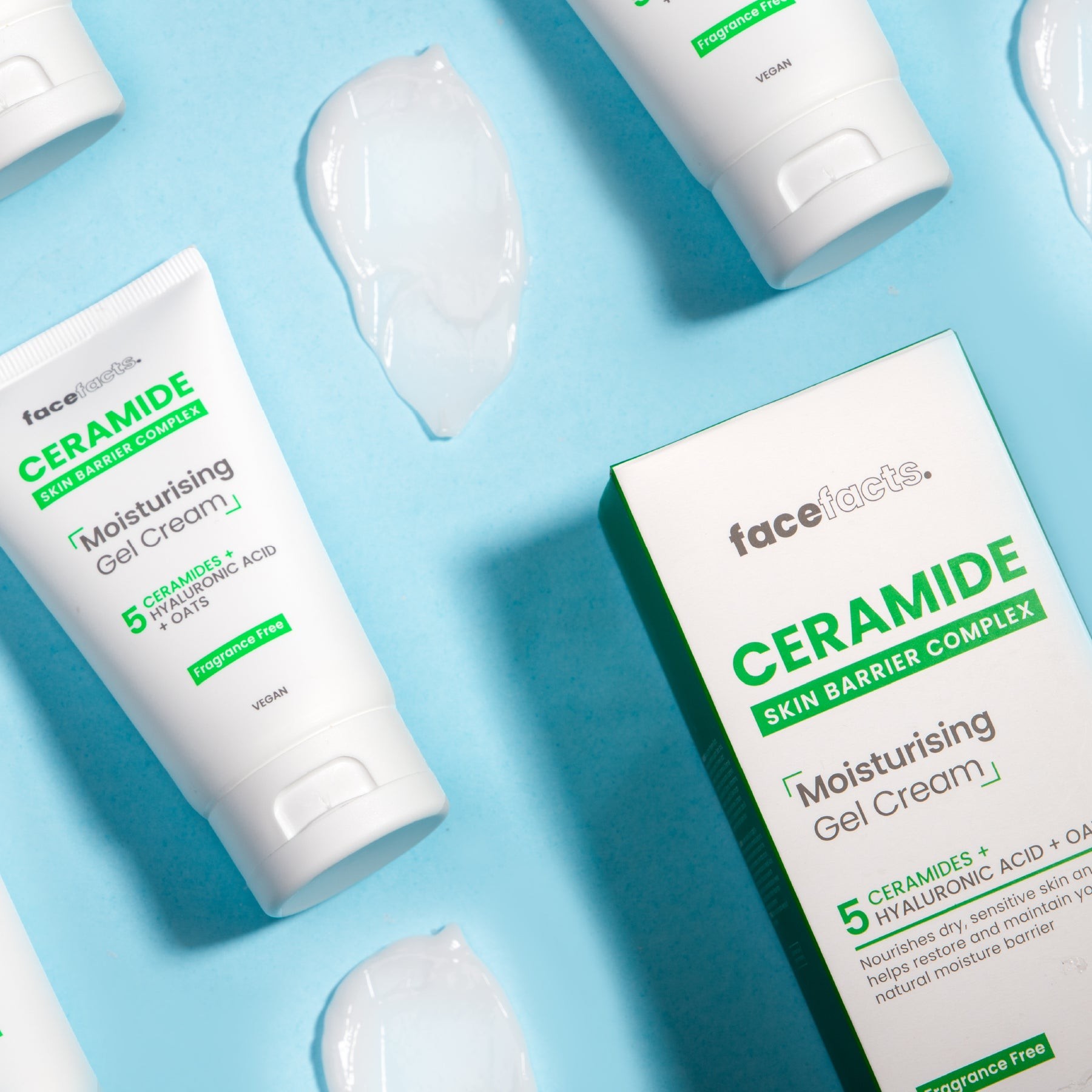
If your face feels tight right after washing, or a product you have used for years suddenly stings, that is a sign something is off with your skin barrier. The barrier is an extremely thin protective film covering the outermost layer of skin. When it thins or cracks, moisture escapes more easily and outside irritants get in more easily too.
One of the key materials that fills this protective film is ceramide. Let's walk through why ceramide matters, how the barrier ends up damaged in the first place, and how a damaged barrier gets refilled.
What Is the Structure of the Skin Barrier?
The skin barrier sits in the stratum corneum, the outermost layer of skin. This layer is made of dead skin cells stacked in many layers, with lipids, or oily substances, filling the spaces between them.
People often compare this structure to bricks and mortar. The skin cells are the bricks, and the lipid filling the gaps between them is the mortar. Bricks alone, without mortar, let water and wind pass straight through the wall. In the same way, skin cells without enough lipid let moisture seep out and let foreign substances push their way in.
So the skin barrier does two jobs at once. One is holding moisture inside the skin so it cannot escape. The other is keeping out things you do not want, like bacteria or allergy triggers. Both functions have to work together for skin to stay hydrated and stay calm under irritation.
Why Does a Weak Barrier Make Skin Sensitive?
When the mortar, meaning the lipid, decreases, gaps open up between skin cells. Think of a wall where the mortar between the bricks has crumbled away. Rain and wind pour straight through those gaps, and in the same way, skin low on lipid cannot hold onto moisture and takes in outside irritation directly.
The rate at which moisture escapes through skin is called transepidermal water loss. When the barrier is healthy, this loss happens slowly. When the barrier is damaged, it speeds up, and skin dries out easily. Dry skin develops a rough surface, and fine lines become more noticeable.
At the same time, those gaps let irritants and microbes in more easily, which puts immune cells in the skin on high alert. That is why skin with a damaged barrier often reacts with stinging or redness to products it never used to react to. The barrier has thinned, so the threshold for irritation has dropped along with it.
What Role Do Ceramides Play in the Barrier?
Ceramide makes up the largest share of the lipid that fills the space between skin cells. Together with cholesterol and fatty acids, it stacks into layer after layer, forming several thin membranes.
This structure is a bit like layering multiple sheets of plastic wrap. One sheet alone is thin and tears easily, but stack several together and they become hard to break through. When ceramide builds up in balance with cholesterol and fatty acids, this kind of layered defense forms, and it is what keeps moisture inside while blocking irritation from outside.
Ceramide levels naturally tend to decline with age, and with certain skin conditions as well. As the material runs short, the membrane thins, and a thinner membrane shows the same kind of gaps described in the brick and mortar comparison above. That is why dermatology treats ceramide as a core material for barrier repair.
Daily Habits That Weaken the Skin Barrier
The barrier rarely breaks down overnight. Small habits repeated every day chip away at its lipid little by little, and it thins gradually. The following habits are common culprits.
- Long, hot showers or face washing: Hot water dissolves and washes away the lipid between skin cells. It works the same way hot water strips grease off a pan, and skin lipid gets carried away in the same process.
- Layering strong cleansers, or double cleansing too aggressively: Cleansing agents strip away not just sebum but the lipid that makes up the barrier itself. The more often and more forcefully you cleanse, the less chance that lipid ever gets to rebuild.
- Overusing exfoliating products: Acids or scrub particles that forcibly slough off skin cells take the lipid between them along for the ride. As the stratum corneum thins, the barrier thins right along with it.
- Constant sun exposure: UV light oxidizes lipid, keeping it from doing its job properly. It is a similar change to oil going rancid after sitting too long, and skin lipid can undergo the same kind of damage.
- Spending long stretches in dry air: Low humidity widens the gap in moisture concentration between the skin surface and the surrounding air, which pulls moisture out of skin faster. That puts more strain on the barrier to keep up.
How Do Topical Ceramides Work on Skin?
When you apply a product containing ceramide, that ceramide finds the gaps in the stratum corneum and moves into them. Since its structure closely resembles the lipid that was originally there, it fits naturally into the spots where the barrier has broken down.
A puzzle piece is a helpful comparison. Fit a similarly shaped piece into a missing spot in a puzzle, and the picture connects again. Ceramide works the same way, settling into the gaps left behind by lost lipid and restoring continuity to the membrane.
That said, ceramide alone rarely builds a complete membrane. Just as the original barrier needs cholesterol and fatty acids stacked together with ceramide to stay strong, a skincare product that contains all three of these lipids is reported to rebuild the membrane more stably than ceramide by itself. Absorption also tends to work better on slightly damp skin, so applying it right after cleansing, while a bit of moisture still remains, is generally recommended.
Ingredients to Use Together With Ceramides
Ceramide alone rarely fills the barrier completely, so pairing it with other ingredients tends to help recovery along.
- Cholesterol and fatty acids: The other two lipids that make up the barrier alongside ceramide. A membrane that comes closer to the original barrier structure forms only when all three are present together, so ceramide is more stable in combination than on its own.
- Niacinamide: Reported to support skin's own ability to produce lipid. Where ceramide supplies material from the outside, niacinamide is thought to boost the skin's internal production capacity itself.
- Panthenol: Known to support the process by which damaged skin tissue recovers. It also carries a calming effect during that healing process, which helps ease the sense of irritation.
- Humectants like glycerin and hyaluronic acid: Draw in moisture and hold onto it. If ceramide is the material that builds the wall, these humectants are what fill that wall with water.
Order of Steps and Care for Barrier Recovery
If the barrier has already thinned, the priority is cutting back on irritation rather than adding more products. Buying the lipid time to rebuild is the first step toward recovery.
Cleanse briefly with lukewarm water, and stick to one mild cleanser instead of a strong one. It is best to pause double cleansing and frequent exfoliation until the barrier recovers. Washing away lipid over and over before it has a chance to rebuild only slows the process down.
After that, apply a generous amount of a ceramide-based moisturizer to refill the thinned membrane. It is safer to hold off on acid exfoliants or strong actives like retinol until the barrier has recovered to some degree. Sun protection still needs to stay in the routine throughout, since ongoing UV exposure keeps oxidizing lipid and can thin out a barrier you just spent time rebuilding.
References
Korean Dermatological Association, American Academy of Dermatology (AAD), and Ministry of Food and Drug Safety (MFDS).
Was this helpful?
About this article
Written by a practising aesthetic physician and intended for general education — not a substitute for individual medical advice.
Read next

How Does Fine Dust Affect the Skin Barrier and Collagen?
Fine dust particles are so small they slip past the pores and into the gaps of your stratum corneum, unsettling the skin barrier from the inside. Along the way, free radicals surge and enzymes that break down collagen switch on, leaving skin more reactive and less firm. Here is how fine dust actually affects skin, and what genuinely helps.
By Dr. Kim
Winter Dry Skin: Causes and Care, Including Ceramides
As temperature and humidity both drop in winter, skin loses moisture much faster than usual. When the ceramide-rich skin barrier weakens, tightness, flaking, and sensitivity tend to show up together. Here's a rundown of the moisturizing ingredients, layering order, and habits that keep the barrier intact.
By Dr. Lee
Cafe-au-Lait Spots Returning After Laser: Causes, Number of Sessions and Expectations
A café au lait spot forms because the pigment-making cells in that one patch of skin are locally overactive. Laser treatment breaks up the pigment that has already built up, but it doesn't switch off those cells, which is why the color so often returns. Here's the biology behind it, why results differ so much from person to person, and what a realistic treatment timeline actually looks like.
By Dr. Kim