Parotid Botox and Masseter Botox: Differences and Effect Compared
By Dr. Kim9 min read

When people look into jawline slimming, the masseter, the chewing muscle, is usually the first suspect. But there is another structure that can widen the lower face: the parotid gland, a salivary gland that runs from just in front of the ear, behind the earlobe, and down toward the back of the jaw. The parotid is the largest salivary gland in the body, and it helps to think of it as a saliva factory stretched across the area in front of and behind the ear. Injecting botulinum toxin into this gland reduces saliva production, and the gland itself shrinks in volume, softening the jawline. That is what parotid gland Botox, often called salivary gland Botox, does. It differs from masseter Botox, which targets muscle, in injection site, depth, and angle, and it causes different side effects too. Here is a rundown, backed by evidence, of how parotid gland Botox works, how it differs from masseter Botox, and what to know about dosing, duration, and side effects like reduced chewing strength or dry mouth.
| Item | Key point |
|---|---|
| How it works | Parotid gland shrinkage slims the jawline |
| Difference | Targets a gland, not muscle |
| Onset | Starts at 2 to 4 weeks, clear by around 1 month |
| Duration | 3 to 6 months |
| Watch for | Dry mouth, reduced chewing strength, asymmetry |
Is Fullness Below the Ear Caused by the Salivary Gland?
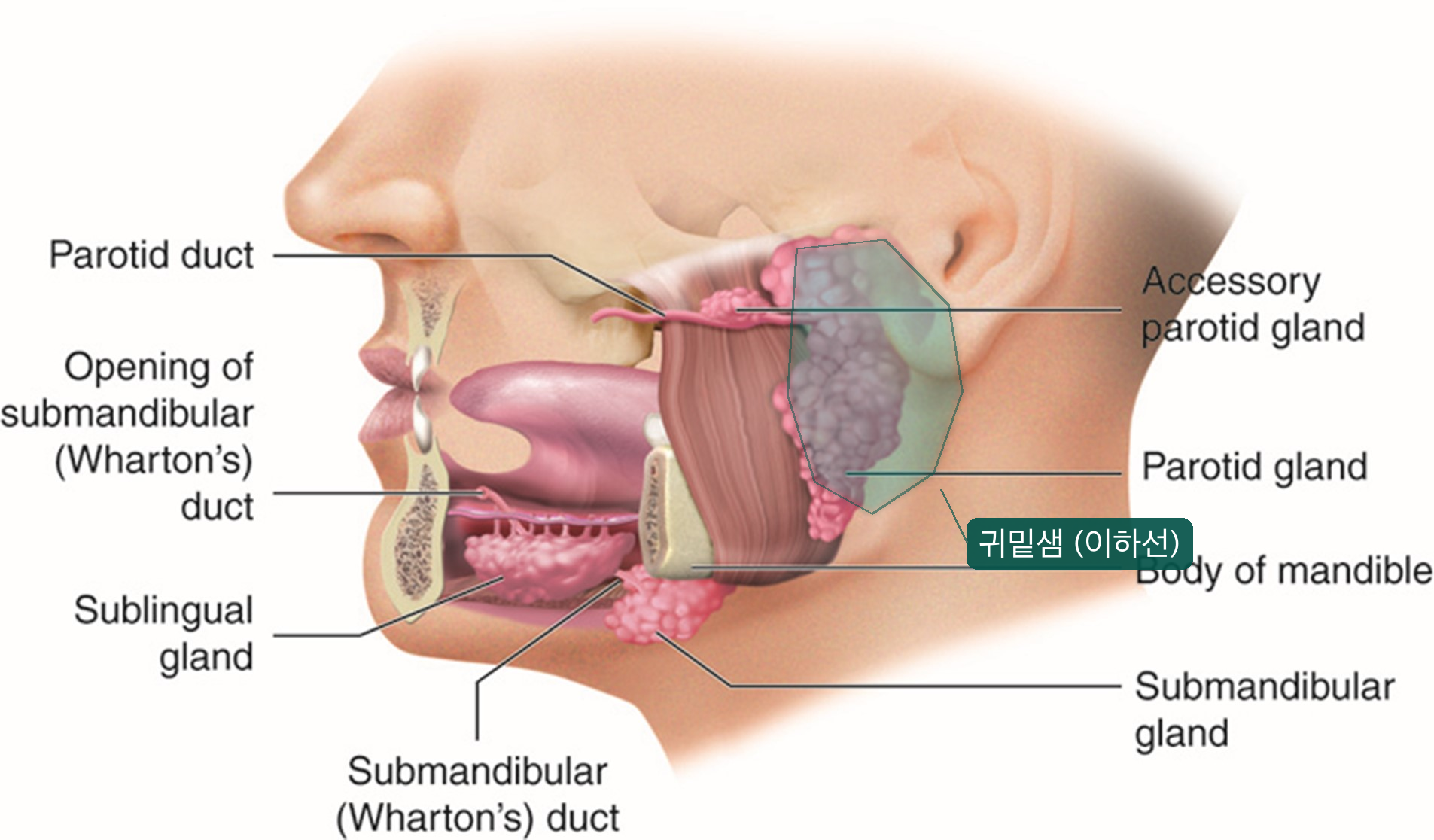
When people try to figure out why their jawline looks wide, the masseter is usually the first thing they suspect. But the parotid gland, which stretches from in front of the ear, past the earlobe, and down to the back of the jaw, is also a common reason the lower face can look wide.
The parotid is the largest salivary gland in the body, producing saliva that travels through a duct into the mouth. Think of it simply as a saliva factory spanning the area in front of and behind the ear. In people who often chew hard foods, or whose glands are simply larger by nature, this factory itself can be enlarged, making the area below the ear look full and square, independent of the masseter.
Botulinum toxin type A blocks the release of acetylcholine, a signaling molecule, from nerve endings. In the parotid gland, acetylcholine is the signal that tells the gland to produce saliva. Once that signal is interrupted, the gland makes less saliva, and over several weeks, the unused tissue gradually shrinks. It is the gland itself, not a muscle, that gets smaller, and that is the real reason the jawline slims down.
Some people notice that the fullness below their left and right ears looks different when they check in the mirror. That is because parotid gland size naturally varies from side to side. If the area below the ear feels full even without moving the jaw, a salivary gland cause is worth considering.
Injection Site, Angle and Dose
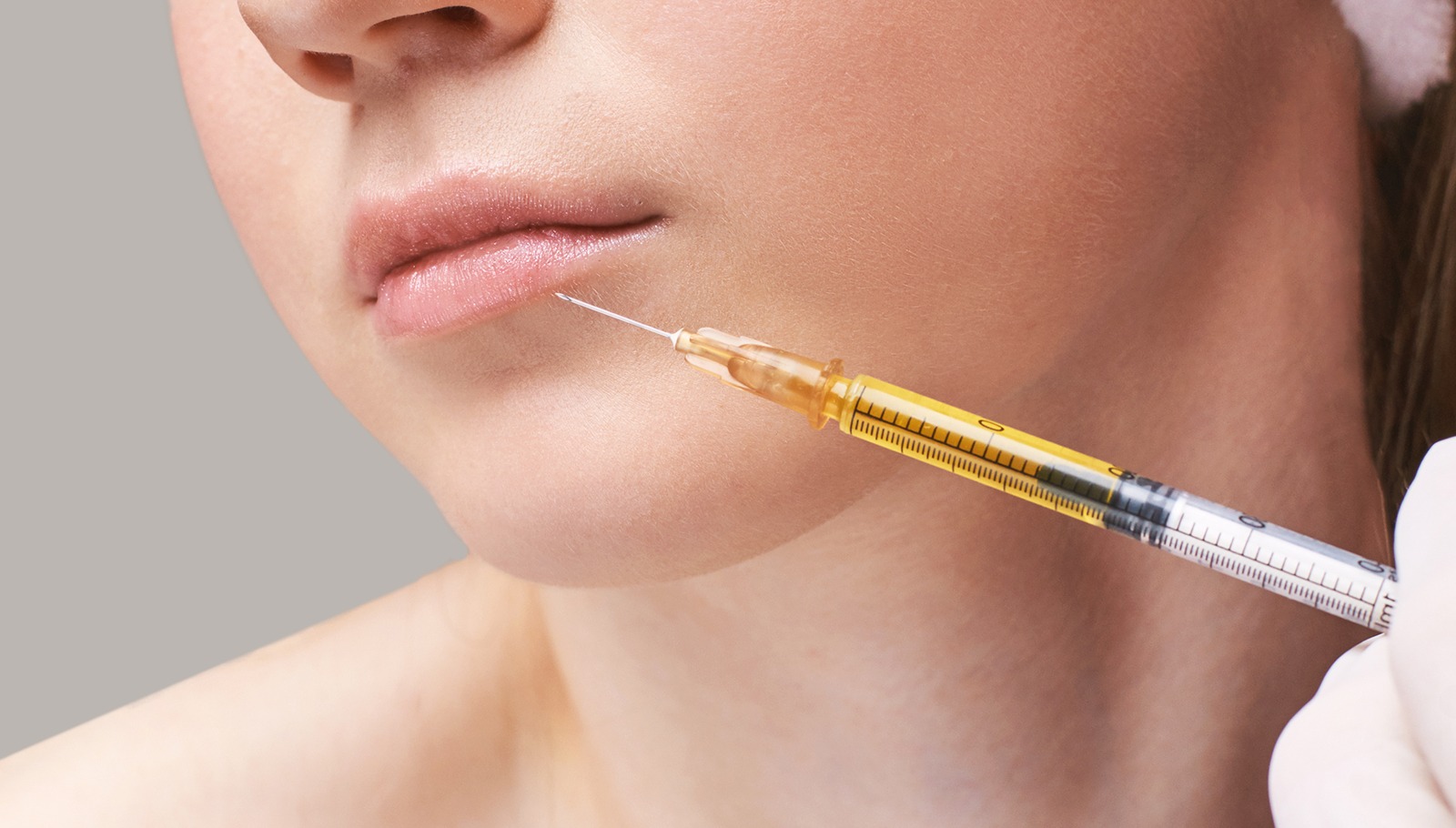
Parotid gland Botox targets a different layer and direction than masseter Botox. Masseter Botox places the needle deep inside the muscle at various points along the jaw, while parotid gland Botox targets a relatively shallow layer covering the gland, which runs from in front of the ear, past the earlobe, and down to the back of the jaw. Because the target is the surface of a gland beneath the skin rather than muscle, the angle and depth are fundamentally different.
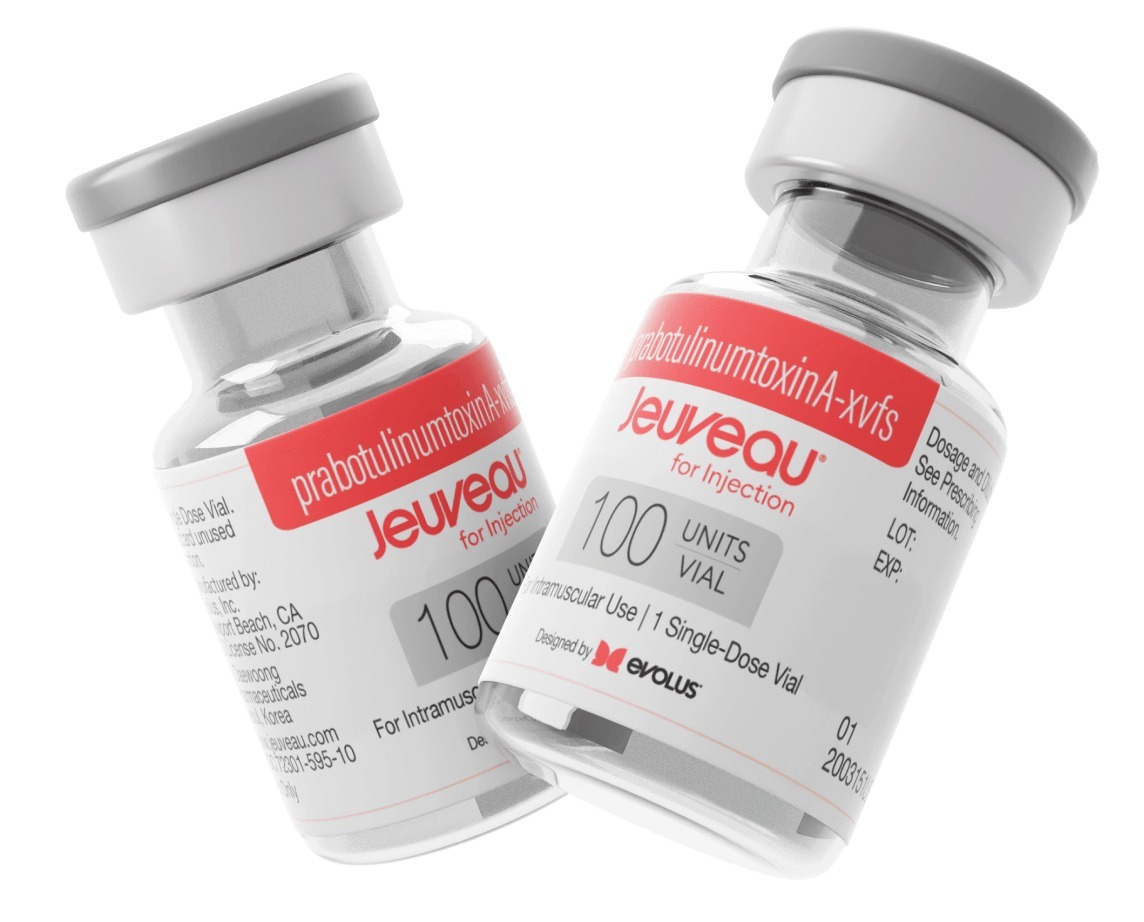
In clinical literature on treating salivary gland disorders, doses of 12.5 to 50 U per parotid gland have been reported under ultrasound guidance, with total doses of 50 to 200 U when the submandibular gland on the other side is included. Safety-focused studies have reported doses as high as 170 U in a single parotid gland, and up to 250 U combined across both sides, tolerated without serious problems.
These figures, though, come from studies aimed at preventing salivary gland disease or radiation-related side effects. There is no standardized dose yet for cosmetic jawline slimming, so clinics adjust the amount based on gland size and the patient's goals. Injecting small amounts across multiple points is similar to the approach used in masseter Botox.
Before injection, the gland's location and size are checked with ultrasound or by palpation, and safe injection points are marked to avoid nearby blood vessels and nerves.
How Is It Different From Masseter Botox?
Parotid gland Botox and masseter Botox both slim the jawline, but they target different tissue. Masseter Botox shrinks the chewing muscle, while parotid gland Botox shrinks the saliva-producing gland itself. Both causes are often present together, so the two treatments are sometimes paired.
| Item | Masseter Botox | Parotid gland Botox |
|---|---|---|
| Target | Chewing muscle | Salivary gland |
| Location | Muscle layer along the jaw | Gland from in front of the ear to the back of the jaw |
| Injection depth | Inside the muscle | Shallow layer near the gland surface |
| How it works | Muscle shrinkage | Reduced saliva production shrinks the gland |
| Shared side effect | Reduced chewing strength | Reduced chewing strength, dry mouth |
If the area feels firm to the touch and becomes more prominent when clenching the teeth, it is more likely a muscle issue. If the area below the ear stays full regardless of clenching, a salivary gland cause may play a bigger role. Ultrasound is the most reliable way to tell the two apart.
In particular, if the area below the ear stays full even at rest, without clenching, a salivary gland cause is more likely. If it only thickens while chewing, a muscle cause is more likely. Because the two tissues overlap in that area, touch alone cannot fully distinguish between them.
When Do Results Show, and How Long Do They Last?
Parotid gland Botox is not an instant treatment either. Reduced saliva flow can be felt within a few days, but visible jawline slimming takes time, since the gland needs time to shrink. Changes typically start around 2 to 4 weeks and become clear by around 1 month.
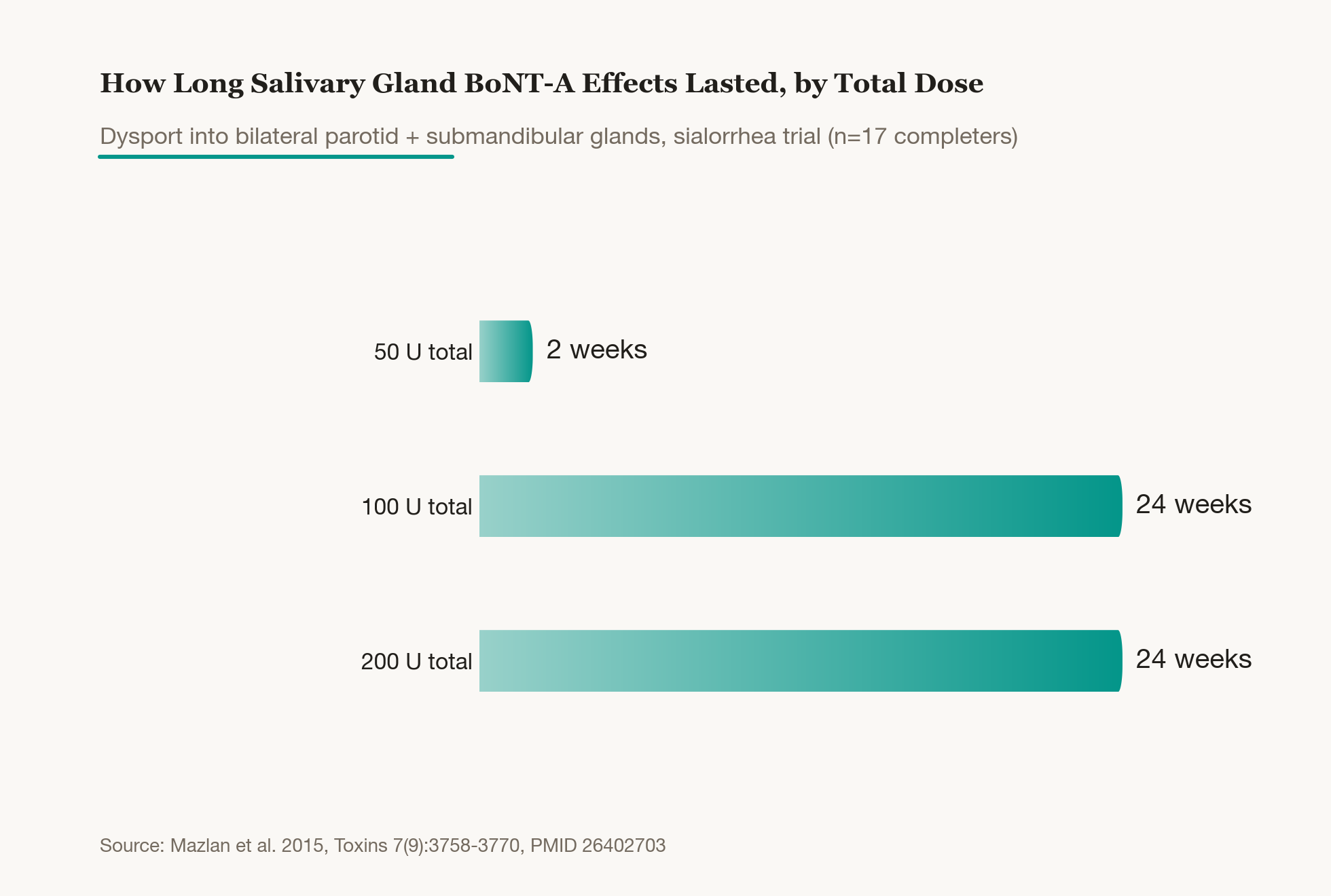
Clinical studies on salivary gland disorders that tracked duration found a big difference based on total dose. In the group given 50 U, the effect began to fade after just 2 weeks. In the groups given 100 U and 200 U, the effect lasted through the full 24-week observation period, about 6 months.
One study directly measured parotid gland volume change in patients who had undergone jaw bone surgery. Even 3 months later, only 7.6% of the volume had returned in the high-dose group and 4.8% in the low-dose group, meaning most of the volume reduction was still holding at the 3-month mark. That said, as nerves regenerate, gland function gradually recovers, so repeat treatment is needed to maintain the effect.
Since gland size and injected dose vary from person to person, the timing of results can vary too. It is best not to judge too quickly and to wait at least a month before evaluating.
Side Effects: Dry Mouth and Chewing Problems
The most commonly reported side effect of parotid gland Botox is dry mouth. Since the treatment reduces the function of the gland that produces saliva, saliva output drops as the jawline-slimming effect sets in. Drinking water often or chewing sugar-free gum can help ease the discomfort.
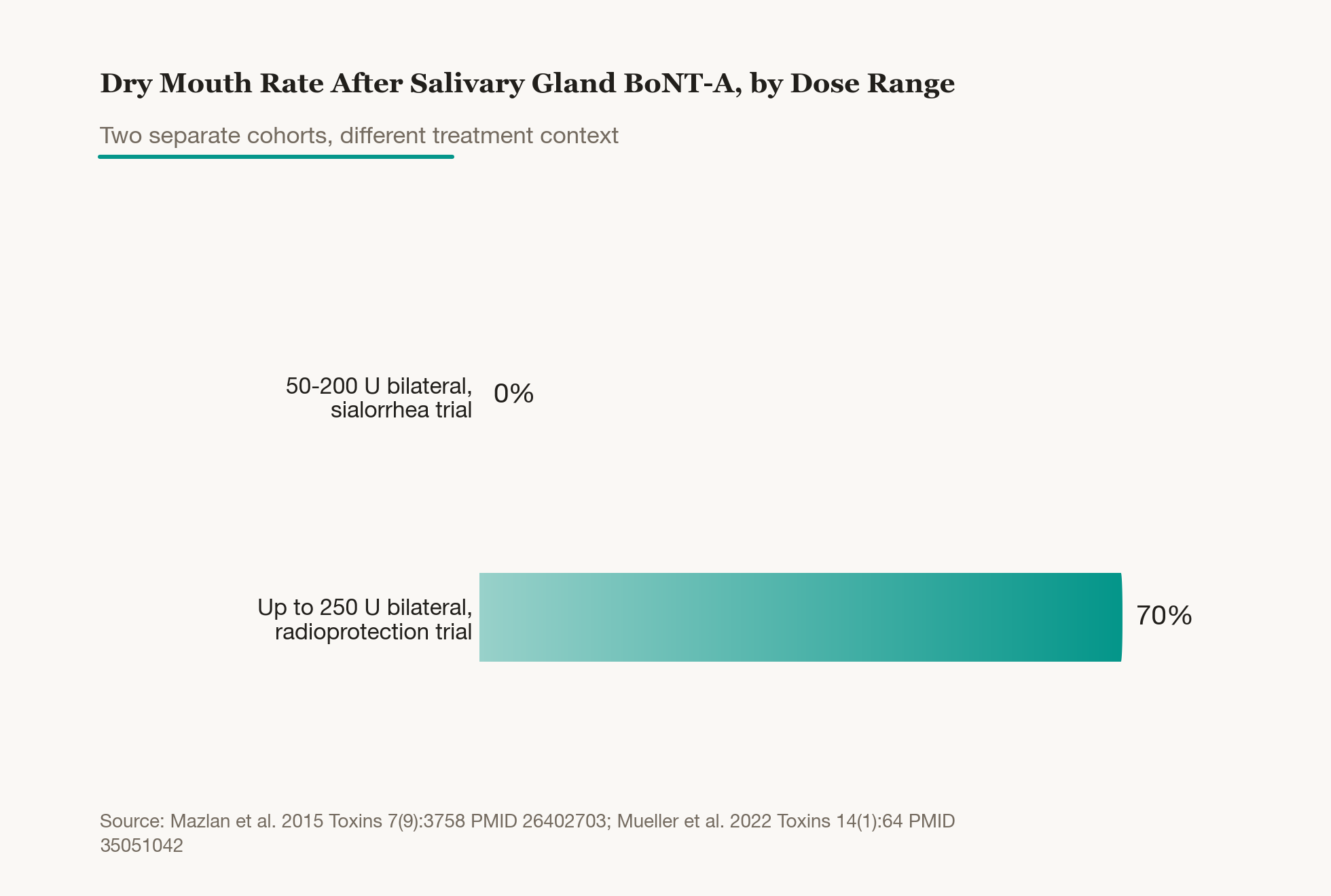
How much dry mouth occurs depends heavily on the dose. Clinical studies on salivary gland disorders using 50 to 200 U, a range similar to cosmetic doses, reported no dry mouth at all. In contrast, a study using much higher doses, up to 170 U per side, aimed at preventing side effects from cancer treatment, found dry mouth in 70% of patients. In general, the risk of dry mouth appears to rise as the dose increases.
Reduced chewing strength is reported relatively rarely. Neither study observed difficulty swallowing or chewing. That said, if the medication spreads sideways within the shallow layer, it can affect the muscles that control facial expression or the corners of the mouth, so having an experienced provider inject under ultrasound guidance is the safer approach.
If dry mouth feels severe, artificial saliva or oral moisturizing products can be used alongside the treatment.
Which Lower Faces Suit Parotid Botox?
There is more than one reason the jawline can look wide. Whether the salivary gland, muscle, or fat plays the bigger role determines which treatment fits best.
| Cause | Feature |
|---|---|
| Gland type | Full below the front and back of the ear, unaffected by clenching |
| Muscle type | Firmer and more prominent when clenching |
| Fat type | Soft and sags downward |
If the area below the ear stays full and clenching does not change much, the salivary gland likely plays the bigger role. If it becomes firm and pronounced when clenching, the masseter likely plays the bigger role, making masseter Botox the priority. In practice, both tissues are often enlarged together, so a consultation and ultrasound exam are used to determine the balance before deciding whether to do parotid gland Botox alone or combine it with masseter Botox.
Many people do not fall clearly into either the gland type or the muscle type and instead show a mix of both. In these cases, rather than doing both treatments at once, some providers take a step-by-step approach: try parotid gland Botox first, watch how it responds, and add masseter Botox later if needed. The most accurate way to decide which combination fits is still a direct exam, checking both gland and muscle size with ultrasound.
Was this helpful?
About this article
Written by a practising aesthetic physician and intended for general education — not a substitute for individual medical advice.
Read next
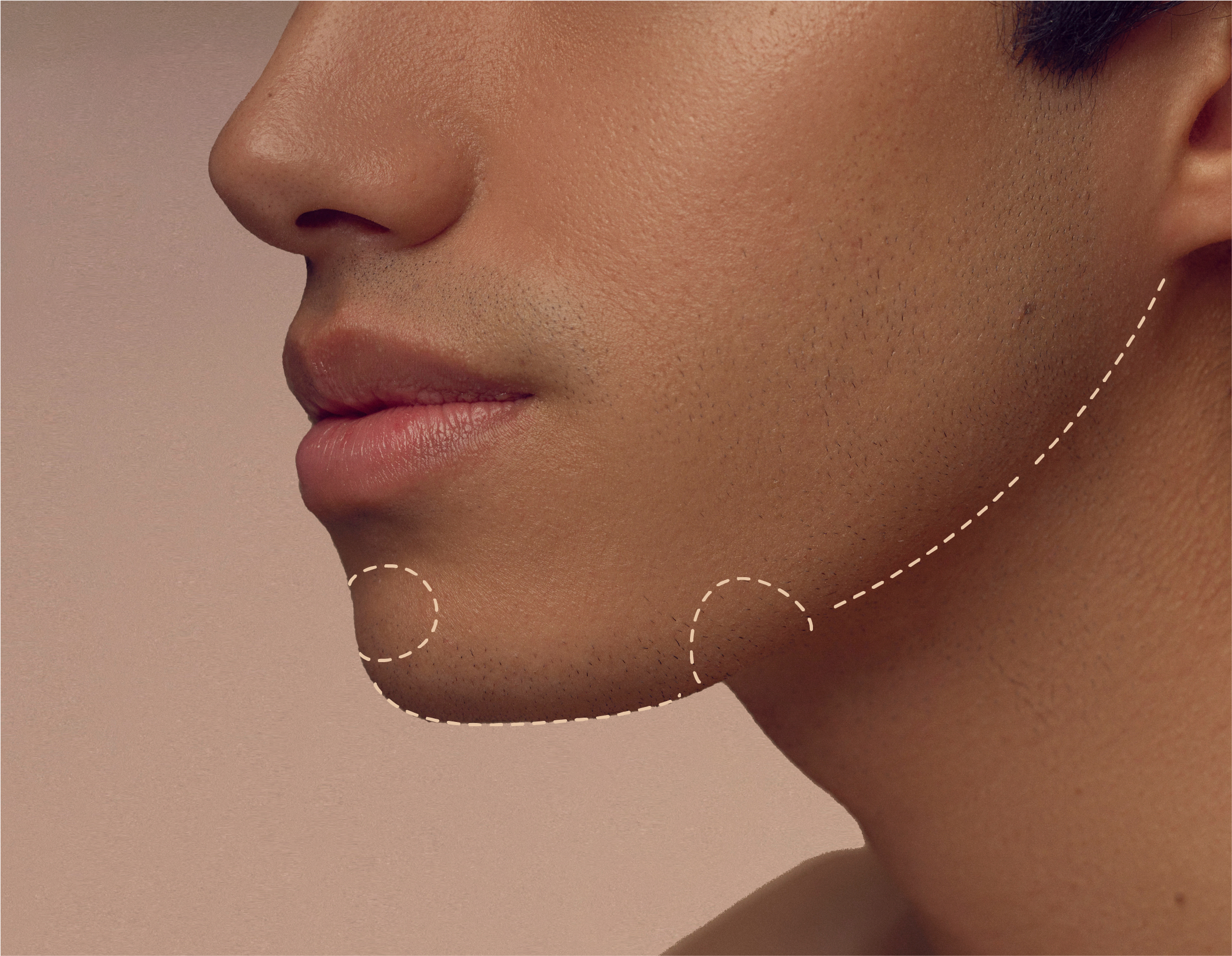
Masseter Botox for a Square Jaw: When Does It Start Working and How Long Does It Last?
Masseter Botox uses botulinum toxin to shrink the chewing muscle and slim a square jawline. Here is what the evidence says about how it works, when results appear, how long they last, side effects, and its effect on teeth clenching.
By Dr. Kim
Calf Botox: Does It Not Work Unless the Cause Is Muscle?
Why injecting Botox into the gastrocnemius, the muscle that creates the calf bulge, softens the leg line, how to tell the muscular type from the fatty type, and what the actual research shows about dosing by area, how much reduction to expect, how long it lasts, and its effect on walking and muscle strength.
By Dr. Lee

Ellanse Filler and HA Filler: Duration and Effects Compared
Ellanse is a filler that combines PCL microspheres with CMC gel to deliver instant volume and ongoing collagen production. Here is what the evidence says about how it works, how long it lasts, and its side effects.
By Dr. Lee