Rosacea Types and Causes: Medication and Laser Treatment
By Dr. Kim8 min read
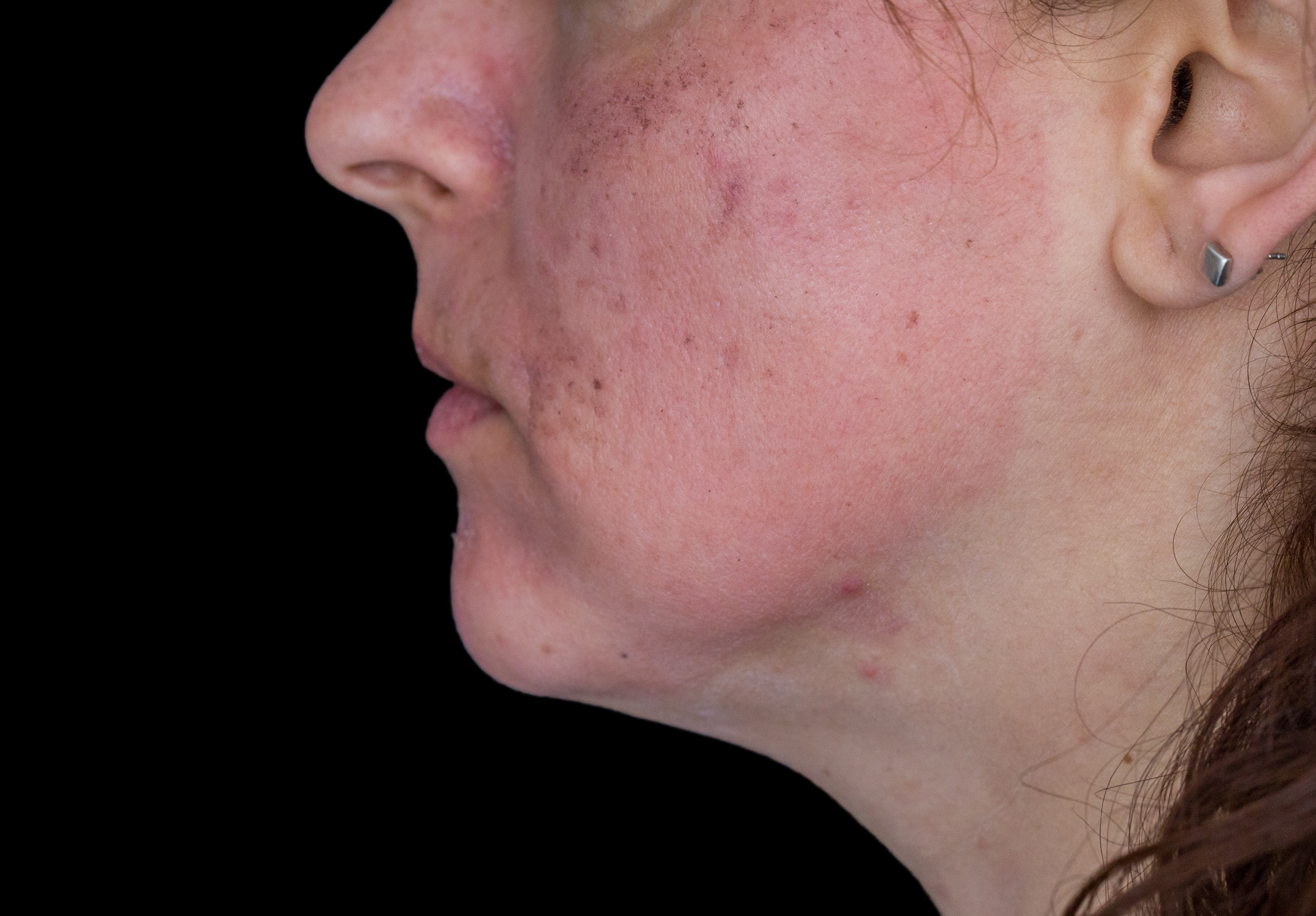
If your cheeks stay flushed most of the time, your face burns after something as small as spicy food or a warm room, and small red bumps keep coming back around your nose, this may not be simple flushing. It could be rosacea. The condition sounds unfamiliar to a lot of people, but it is common enough to affect roughly one in twenty adults.
The tricky part is that rosacea rarely clears up for good after one round of treatment. It calms down, then flares again after sun exposure or a stressful week, and the wrong skincare routine can make it worse. So instead of chasing a cure, the real goal with rosacea is to cut down on triggers and keep the redness under long-term control. Here is a full rundown, backed by real research numbers, on how rosacea differs from ordinary flushing, what the different types look like, why the redness keeps returning, what makes it worse, and which medications and treatments actually help.
How is rosacea different from simple flushing?
Rosacea is a chronic inflammatory skin condition that keeps the center of the face, the cheeks, nose, forehead, and chin, persistently red. Everyone's face flushes when they get hot and then fades back to normal, but that kind of temporary flushing is a different animal from rosacea. Ordinary flushing fades once the trigger is gone, while rosacea redness lingers, visible blood vessels show through the skin, and small inflamed bumps often show up alongside it.
That means makeup alone won't fix it. Underneath the surface, the blood vessels and immune response are on edge, and if the underlying cause isn't addressed, the redness keeps coming back. In other words, the first step in managing it is figuring out whether your redness is a passing reaction or a lasting condition. The table below lays out the difference at a glance.
| Category | Simple flushing | Rosacea |
|---|---|---|
| Nature | Temporary reaction | Chronic skin condition |
| Duration | Fades quickly | Persists, recurs |
| Small bumps | Rarely present | Often present |
| Visible blood vessels | Uncommon | Common |
| Management | Avoid triggers | Treatment plus long-term care |
How common is rosacea?
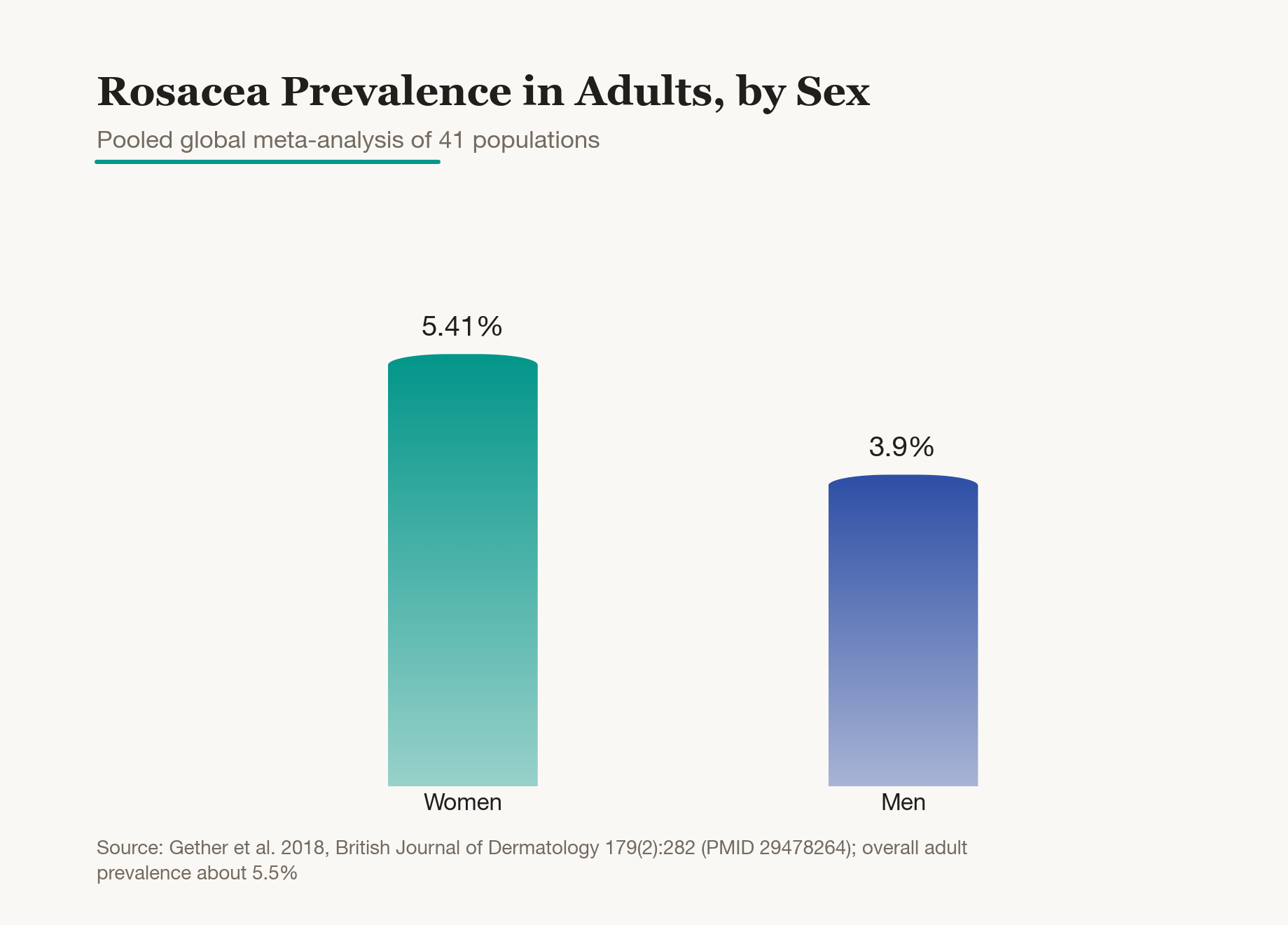
Rosacea isn't some rare, overblown complaint. Pooled data from adults around the world shows that roughly 1 in 20 people, just over 5%, live with it. For dermatologists, this is a condition they see all the time.
By gender, women came in at 5.41%, noticeably higher than men's 3.90%. It shows up most often in people between their 30s and 50s, especially those with fair, thin skin where redness shows through easily. Even though fewer men have it, when they do, it can progress into more severe forms, like the thickened skin seen in phymatous rosacea, so it's not something men should brush off either.
Because it's so common, there's no shortage of information out there, but that also means plenty of people end up making things worse with the wrong self-treatment. Many people assume, at first, that they just have naturally flushable skin and let it go, only seeking care once the bumps and visible vessels have already settled in. Rosacea also gets mistaken for acne, seborrheic dermatitis, or an allergic reaction, which means it's often diagnosed later than it should be.
Since the right approach depends on the type and severity, it's safer to figure out where you fall rather than reaching for strong products on your own. If the redness has lasted more than a few months and comes with bumps or visible vessels, it's worth getting checked.
Causes: vessels, inflammation, and Demodex overlap
The redness of rosacea comes down to three things working together. The first is the blood vessels themselves. In rosacea-prone skin, the vessels near the surface are already dilated and expand easily with even mild stimulation, which keeps the center of the face flushed and makes it flare up fast whenever it's warm or you're tense.
The second is inflammation. In rosacea skin, the body's innate immune system runs in overdrive, producing more of an antimicrobial protein called LL-37 than it needs. That protein widens blood vessels and draws in inflammatory cells, producing red bumps and pustules. In short, the skin's defense system becomes overactive and ends up irritating itself.
The third is Demodex, a tiny mite. Everyone has some Demodex living on their face, but people with rosacea, especially the type marked by bumps and pustules, tend to carry far more of them. These mites, along with the bacteria that travel with them, help trigger the inflammation described above. That's exactly why treatments that reduce Demodex, like the ivermectin cream covered later, work so well against the inflammation.
In the end, the blood vessels, inflammation, and Demodex all feed off each other and keep the redness going. Add a weakened skin barrier that loses moisture easily and becomes more sensitive to outside irritants, and the cycle locks in. That's why rosacea treatment usually targets more than one piece at once: laser for the vessels, and topical or oral medication for the inflammation and Demodex.
What makes the face burn?
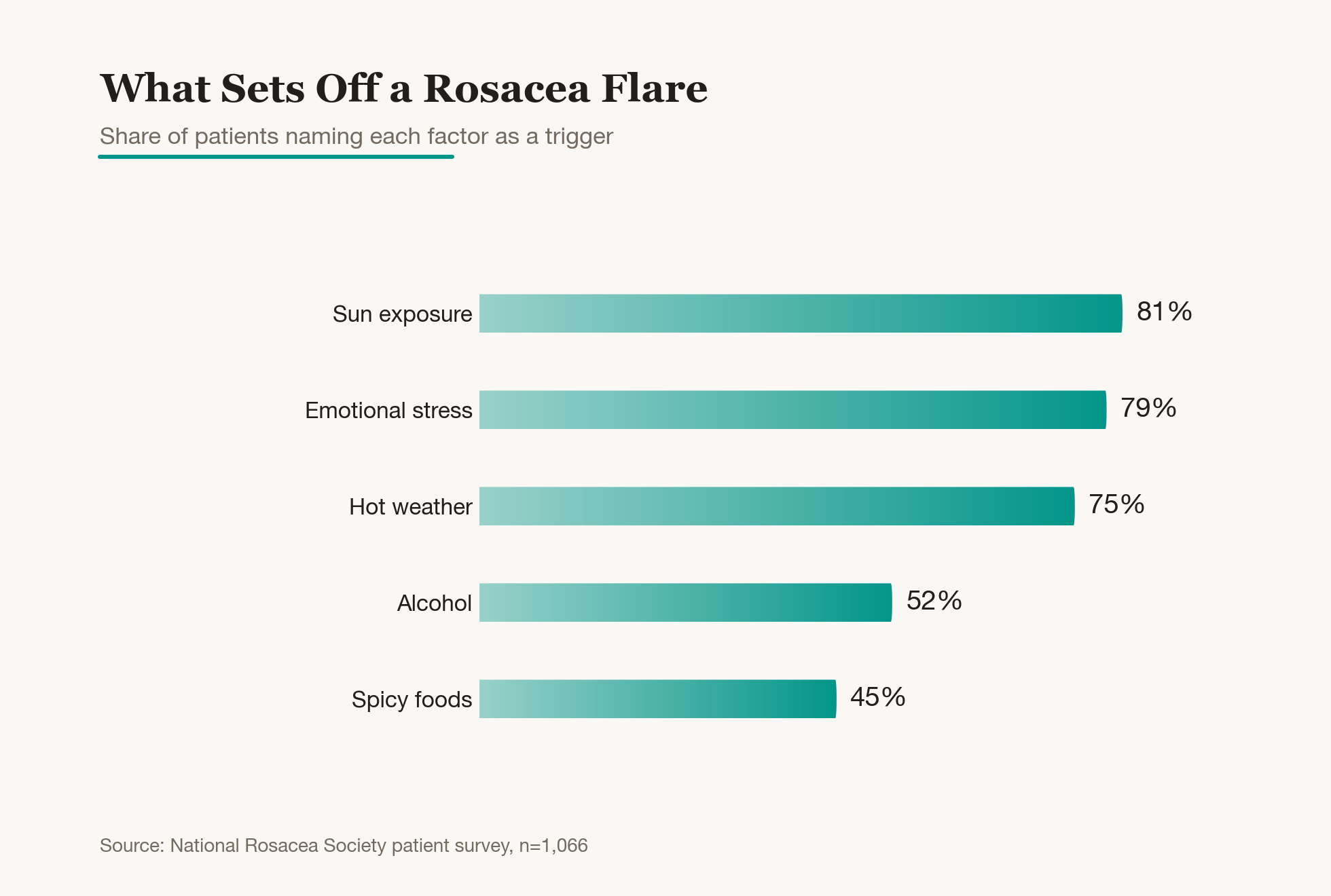
Managing rosacea starts with knowing what sets your face off. In a survey of 1,066 patients, sun exposure topped the list at 81%, followed by stress at 79%, hot weather at 75%, alcohol at 52%, and spicy food at 45%. Most of these are things people run into all the time.
That's why lifestyle habits make up half the treatment. The single most important step is daily sun protection. Applying enough sunscreen and physically shielding your face with a hat or umbrella noticeably cuts down on how often the redness flares. It also helps to cut back on situations that heat up the face, like saunas, hot soup, or sudden temperature swings, and to watch how your skin reacts to alcohol and spicy food and adjust from there.
One thing that genuinely helps is keeping a trigger diary. Jotting down when your face flushes for just a few days reveals your own personal triggers, which are different from anyone else's. Some people react to coffee, others to a specific product. It's also worth avoiding harsh scrubs, alcohol-based toners, and rough cleansing, and switching to gentle, moisturizing products, since protecting the skin barrier is the real path to skin that flushes less easily.
What types of rosacea are there?
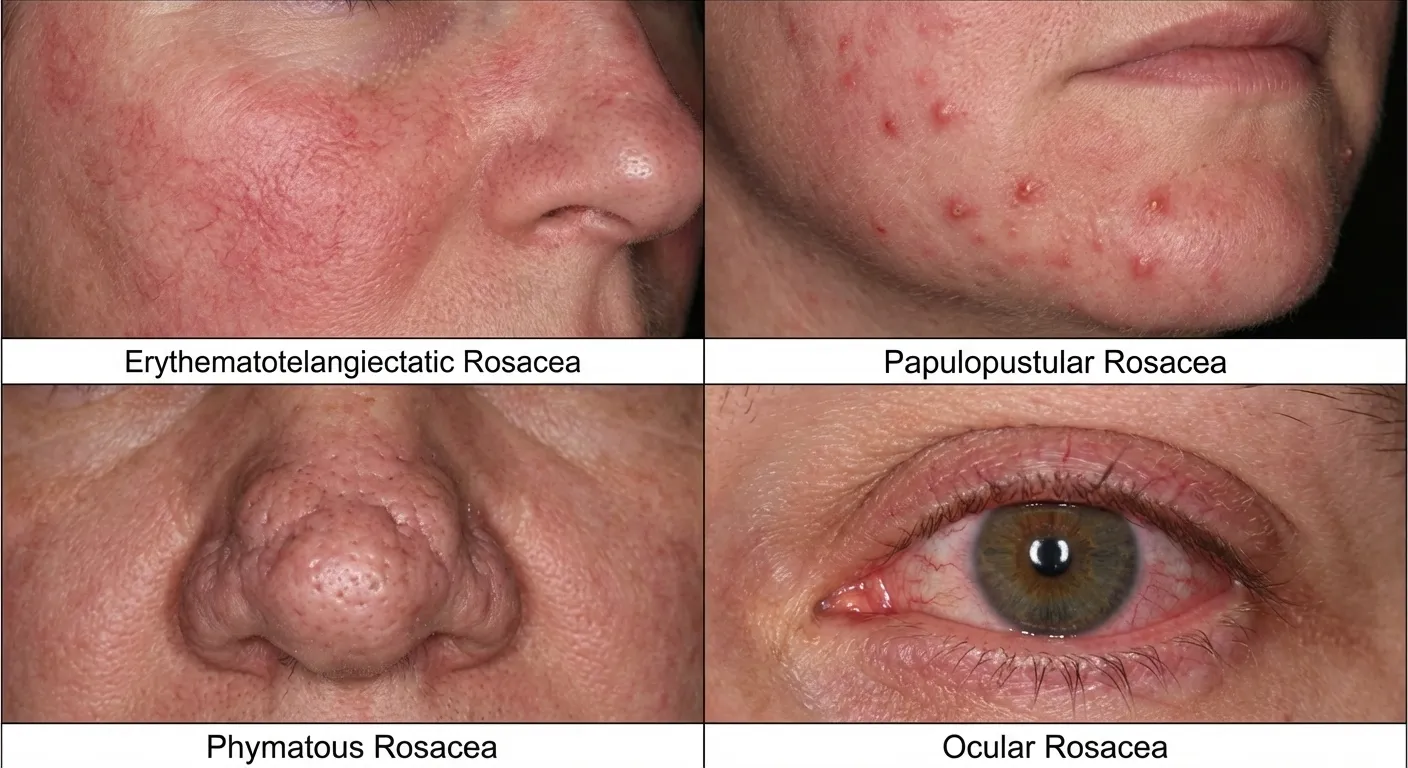
Rosacea isn't a single look, it falls into four main types, and the right treatment depends on which one you have. That makes it worth knowing where you fall. The table below sums up the key features of each.
| Type | Key features |
|---|---|
| Erythematotelangiectatic | Persistent redness and visible blood vessels |
| Papulopustular | Red bumps and pustules |
| Phymatous | Thickened skin on the nose |
| Ocular | Eye stinging, foreign-body sensation, redness |
The most common form is erythematotelangiectatic rosacea, marked by long-lasting redness and visible vessels. When bumps and pustules recur on top of that, it's classified as papulopustular rosacea, which is easy to mistake for acne, but unlike acne it has no whiteheads and sits on a base of persistent redness. Phymatous rosacea, seen mostly in men, involves the nose skin thickening and becoming bumpy, and it usually shows up after the condition has gone untreated for a long time.
The type that's easiest to miss is ocular rosacea. It causes stinging, dryness, a gritty feeling, or recurring redness in the eyes, and it can actually show up before any skin symptoms appear, which means it often gets brushed off as plain dry eye. In practice, it's common for two or three types to overlap in the same person, so it's more useful to think of these categories as a guide to where your symptoms are strongest right now, rather than strict boxes.
Treatment from topical drugs to laser
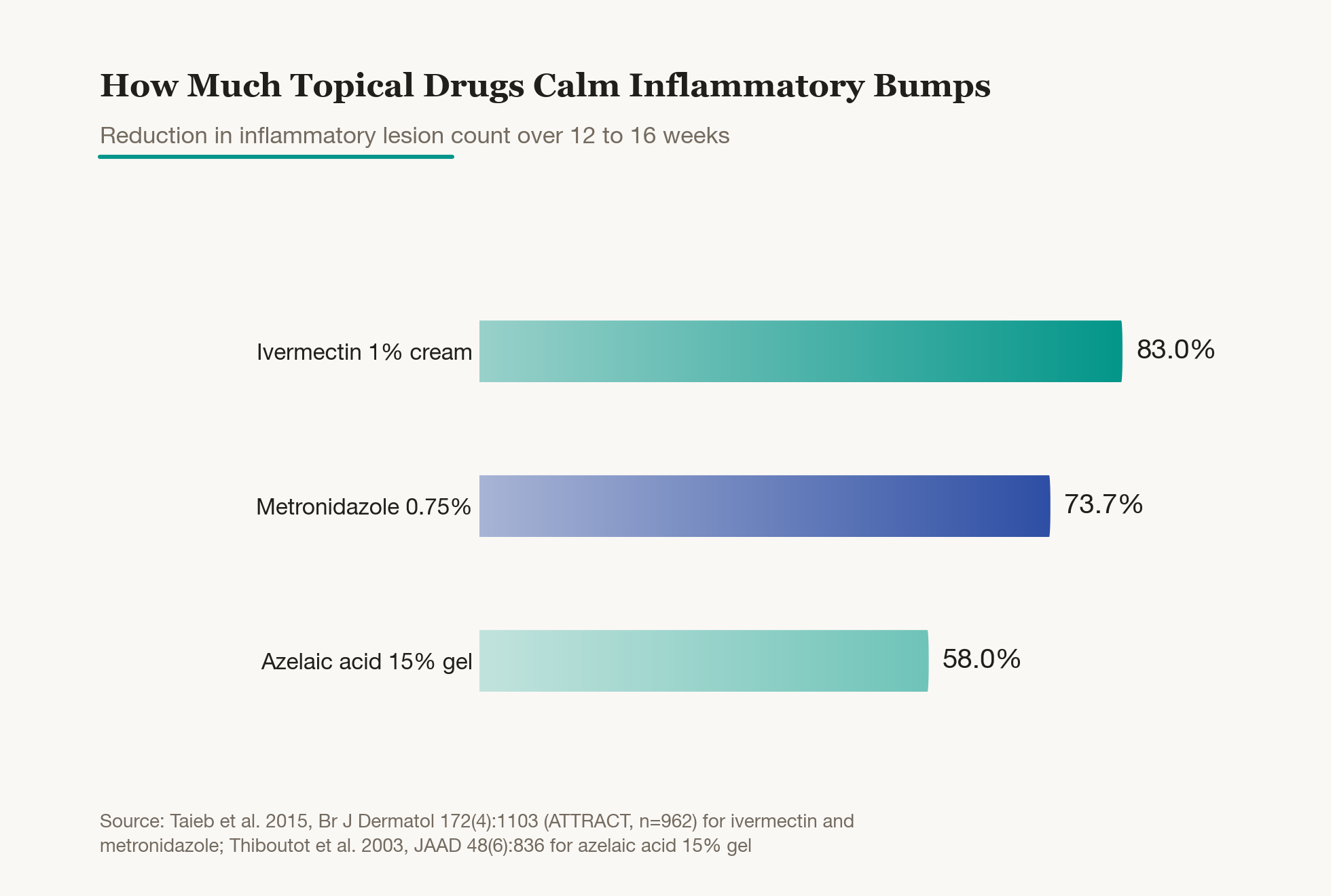
Topical medication is the foundation of rosacea treatment. For the papulopustular type, with its bumps and pustules, metronidazole, azelaic acid, and ivermectin creams are the most widely used. Research shows ivermectin reduced inflammatory lesions by about 83%, metronidazole by about 74%, and azelaic acid by about 58%. Those figures come from separate studies, so they shouldn't be read as a strict ranking, the takeaway is that all three are proven options that cut inflammation by more than half. Ivermectin in particular also reduces Demodex, which gives it an extra edge against inflammation.
When inflammation is more severe or topical treatment alone isn't enough, oral medication is added. Low-dose doxycycline at 40mg is a common choice, dosed not for its antibiotic effect but for its anti-inflammatory one, which calms the red bumps while keeping resistance concerns to a minimum. Persistent redness and visible vessels themselves don't respond well to topical medication, and that's where vascular laser or light-based treatment comes in. These treatments target the dilated vessels specifically, fading the background redness and visible vessels gradually over several sessions.
One thing worth flagging clearly: applying steroid cream to red skin for a long stretch might seem to calm things down at first, but once you stop, it can rebound into a more severe, steroid-induced form of rosacea, so habitual use should be avoided. And rosacea is a condition to manage, not cure outright. Even after medication and treatment bring real improvement, sun exposure and other triggers can bring it back, so the most reliable approach is staying consistent with daily care to hold onto the progress you've made.
Was this helpful?
About this article
Written by a practising aesthetic physician and intended for general education — not a substitute for individual medical advice.
Read next
Seborrheic Dermatitis of the Scalp: Where to Start Treatment and How to Reduce Relapses
Scalp seborrheic dermatitis keeps coming back with flaking, redness, and itching within days of washing. Here is an easy, research backed rundown starting with Malassezia, the yeast behind it, then ranking treatments by evidence strength from antifungal shampoo and topical anti-inflammatories to oral medication and scalp scaling, plus maintenance therapy to prevent relapse and what the evidence actually says about regenerative treatments.
By Dr. Lee

Rosacea and Acne Differences: How to Tell Them Apart by Comedones and Flushing
If your face flushes easily and the redness never quite settles, it might not be acne at all. Here is how to tell rosacea and acne apart by checking for blackheads, where the redness sits on your face, and how your skin reacts to heat and irritation.
By Dr. Kim
Belotero Soft Neck Line Filler: How Long It Lasts and How Many Sessions
When filler is used to fill in horizontal neck lines, here's why the treatment calls for a soft filler like Belotero Soft placed shallow and in small amounts, rather than the firm fillers used on the chin or cheeks, plus how long results last, how many sessions it takes, and what to know about the Tyndall effect and overall safety, based on real clinical research.
By Dr. Kim