Rosacea and Acne Differences: How to Tell Them Apart by Comedones and Flushing
By Dr. Kim6 min read

When your cheeks and the area around your nose look flushed every time you check the mirror, it is easy to assume acne is behind it. But if acne cream and gentle exfoliation do nothing for the redness, and your skin actually feels warmer and more prone to burning, the real cause might not be acne at all. It could be rosacea.
Rosacea is a condition where the blood vessels in the center of the face become overly reactive, producing chronic redness and a warm, flushed feeling. It can look a lot like acne on the surface, but the two conditions start in different places and often need opposite approaches to manage. Treat them as the same problem and the redness can actually get worse. Here is how to tell them apart, step by step.
How Is Rosacea Different From Acne?
Both conditions can bring red, raised bumps to the face, and in more severe cases both can look like they have pus-filled spots. That surface similarity is exactly why people often assume they are dealing with the same thing.
The two conditions actually start from completely different places. Acne begins when oil and dead skin cells clog a pore, letting bacteria multiply inside and trigger inflammation. Rosacea, on the other hand, starts with blood vessels in facial skin that react more sensitively than normal, dilating easily and staying inflamed for long stretches. Because the root cause is different, there are clear clues that separate the two even when they look alike from the outside.
Does Having Comedones Mean It's Acne?
The clearest way to tell them apart is checking for comedones, the blackheads and whiteheads that form when a pore gets blocked. Since acne starts with clogged pores, a closer look almost always reveals tiny black or white bumps mixed in with the redness.
Rosacea is not caused by clogged pores at all. It shows up as red patches from dilated blood vessels, and when inflammation sets in on top of that, you can get bumps or even pus-filled spots, but comedones are rarely part of the picture. So if you look closely at a red patch and spot blackheads mixed in, that points to acne. If the redness is there with no blackheads at all, rosacea is the more likely explanation.
Where Does the Redness Appear?
Location is another important clue. Rosacea tends to show up symmetrically in the center of the face, across the nose, cheeks, forehead, and chin. That is because blood vessels are packed more densely in this central zone and react more sensitively to triggers.
Acne, by contrast, follows the areas where oil glands are most active. That usually means the T-zone connecting the forehead and nose, along the jawline, and sometimes spreading down to the back and chest. The more oil a region produces, the higher the odds a pore gets blocked there. Checking whether the redness stays confined to the center of the face or spreads along oil-heavy areas can help you narrow down which condition you are dealing with.
Flushing: When the Face Heats Up Easily
A hallmark of rosacea is flushing, where the face suddenly turns red in response to a specific trigger. Hot food, spicy food, alcohol, washing with hot water, sudden temperature changes, sun exposure, and stress can all cause blood vessels to dilate instantly, making the face visibly redder and warmer within moments.
Acne does not behave this way. Eating something spicy will not make an acne spot flare up on the spot. Instead, acne responds to hormonal shifts, accumulated stress, or irritation from certain products, and the inflammation builds gradually over days rather than minutes. If your face heats up within minutes of a trigger, that reaction looks much more like rosacea.
Is It Rosacea If You Can See Tiny Vessels?
As rosacea progresses, thin dilated blood vessels near the surface of the skin, known as telangiectasia, start to become visible. This happens because vessels that repeatedly expand and contract gradually lose elasticity in their walls, until they can no longer fully return to their original size and stay permanently dilated.
If you notice fine red lines or spidery vessels showing through around the nose and cheeks, that is a strong signal pointing to rosacea rather than simple redness. Acne itself does not alter blood vessel structure, so this kind of visible vessel dilation rarely accompanies it. There is one exception worth noting: a temporary red mark can linger where a severe acne lesion has healed, but that is different. It comes from pigment and blood flow temporarily concentrating in the area after inflammation, not from stretched vessels, and it fades on its own over time.
Other Signs That Come Along With It
A few accompanying signs are worth checking when you are trying to figure out whether rosacea is the cause. Rather than relying on a single symptom, it helps to see how many of the following apply at once.
- Dry or irritated eyes: Rosacea can affect the blood vessels around the eyelids and eyes as well, sometimes bringing dryness or redness along with it. The vessels around the eyes share the same heightened sensitivity as those in the central face.
- A thickening nose: In long-standing rosacea, the oil glands and connective tissue around the nose can expand, leaving the tip of the nose red and bumpy. This happens because repeated chronic inflammation causes the tissue to gradually build up over time.
- Stinging from skincare or sunscreen: Rosacea-prone skin has a weakened outer barrier, so products you have always used without issue can suddenly start to sting or burn. With the barrier thinner than usual, ingredients penetrate more easily and trigger irritation.
- Family history: Having a parent or sibling who flushes easily is linked to a higher likelihood of developing rosacea. How sensitively blood vessels respond to triggers appears to have a genetic component.
Can Acne Treatment Be Used on Rosacea?
Treating what looks like acne with exfoliation, harsh cleansing, or ingredients like benzoyl peroxide, which is used to clear acne-causing bacteria, can actually harm rosacea-prone skin. Rosacea skin already has a compromised barrier and hypersensitive vessels, so harsh ingredients aggravate that sensitivity and make redness and burning worse.
The reverse is also true: applying a rosacea treatment approach to acne will not deliver much benefit either. Acne needs an approach that clears out the oil and dead skin clogging pores, while rosacea treatment is built around calming vessels and inflammation. The two goals point in different directions, which is exactly why an accurate diagnosis has to come first before any treatment plan makes sense.
Why You Need a Proper Diagnosis
Acne and rosacea may look alike on the surface, but they are separate conditions with different causes, different locations, and different reactions to triggers. Checking for comedones, whether the redness is symmetrical and centered on the face, and whether heat or irritation causes an immediate flush can resolve most of the confusion.
That said, it is not unusual for both conditions to appear in the same person. Rosacea's characteristic flushing and visible vessels can show up later on skin that carries old acne scarring, so the picture can look mixed depending on the timing. If redness lingers and does not respond to your usual routine, seeing a dermatologist for an accurate diagnosis is the most reliable path forward. Identifying the real cause is what makes it possible to actually bring the redness down.
References
Korean Dermatological Association, American Academy of Dermatology (AAD), and Ministry of Food and Drug Safety (MFDS).
Was this helpful?
About this article
Written by a practising aesthetic physician and intended for general education — not a substitute for individual medical advice.
Read next
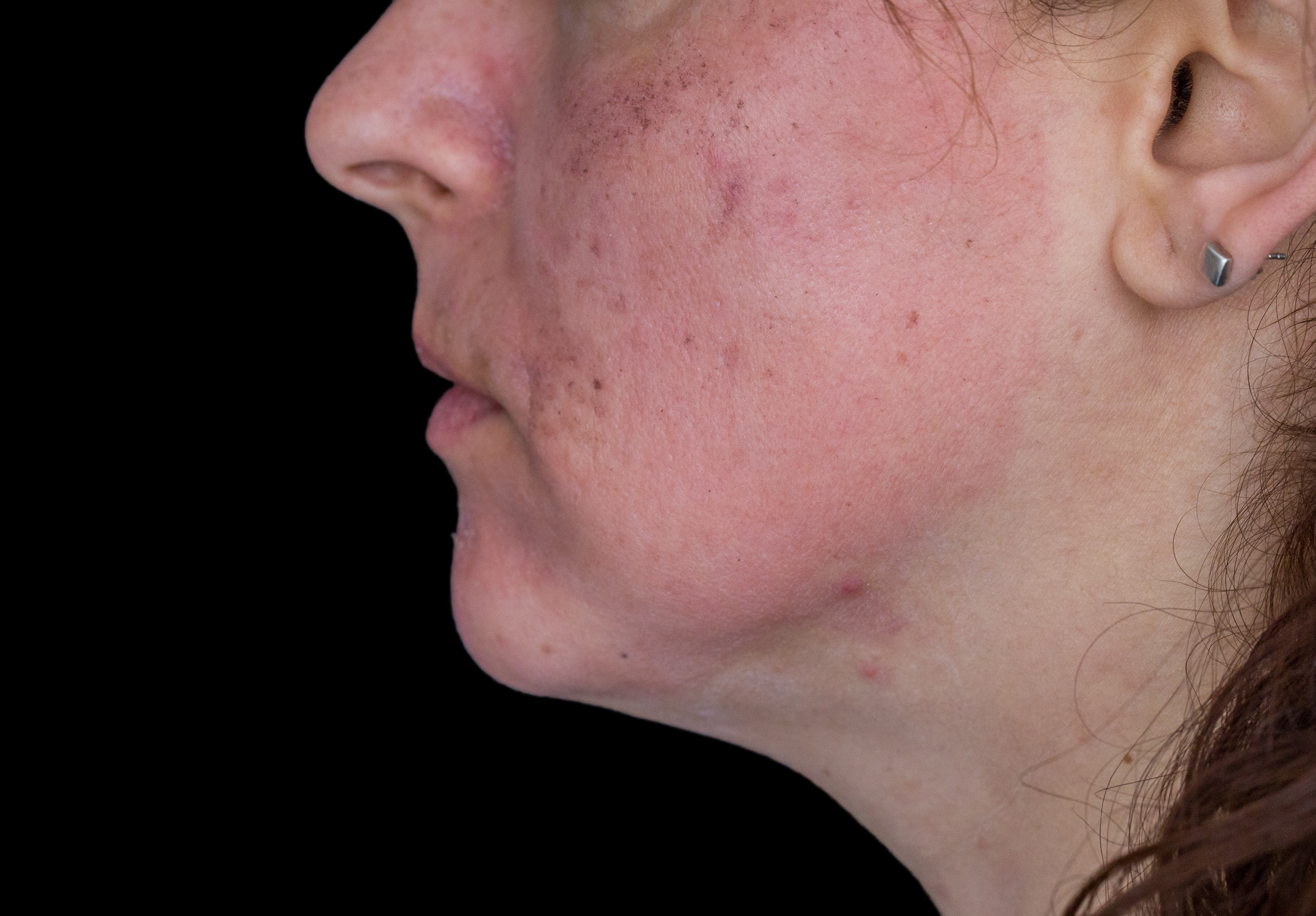
Rosacea Types and Causes: Medication and Laser Treatment
Persistent redness on the cheeks with recurring small bumps is often more than simple flushing, it can be rosacea. Here's how erythematotelangiectatic, papulopustular, phymatous, and ocular rosacea differ, what triggers flares like sun, stress, and alcohol, and how metronidazole, azelaic acid, ivermectin, oral medication, and vascular laser treatment work, all backed by real research numbers.
By Dr. Kim
Epidermal Cyst and Lipoma Difference: Can You Tell Them Apart by Touch?
A lump you can feel under your skin usually turns out to be either an epidermal cyst or a lipoma, and while they look similar on the surface, they form differently and feel different under your fingers. Here is how each one develops, how to tell them apart, and what tests doctors use to confirm which is which.
By Dr. Kim
Sebaceous Hyperplasia: Causes, How to Tell It From Acne, Removal and Recurrence
If you have a yellowish bump on your forehead or cheek that won't go away no matter how much you squeeze it, it might not be acne at all, but sebaceous hyperplasia. Here's an easy breakdown of why enlarged glands form a dimpled bump, how it differs from acne, how electrocautery clears it, and why it tends to come back.
By Dr. Kim