Retinol Side Effects and Adjustment Period: Is Peeling Okay?
By Dr. Kim7 min read
Of all the topical anti-aging ingredients with solid evidence behind them, retinol stands out. Backed by over 40 years of research, it addresses wrinkles, firmness, pores, pigmentation, and breakouts in a single step, which is why it has earned its reputation as the cornerstone of any anti-aging routine.
A lot of people put it off because it sounds intimidating. The first few days can bring some flaking or mild redness as skin adjusts, but that is a normal response for most people, and a slow start makes it very manageable. Once you know the approach, anyone can work retinol into their routine comfortably. Here is a practical look at how it works, how it compares to retinaldehyde and tretinoin, what the research shows, and how to ease in without irritation.
How does retinol work in the skin?
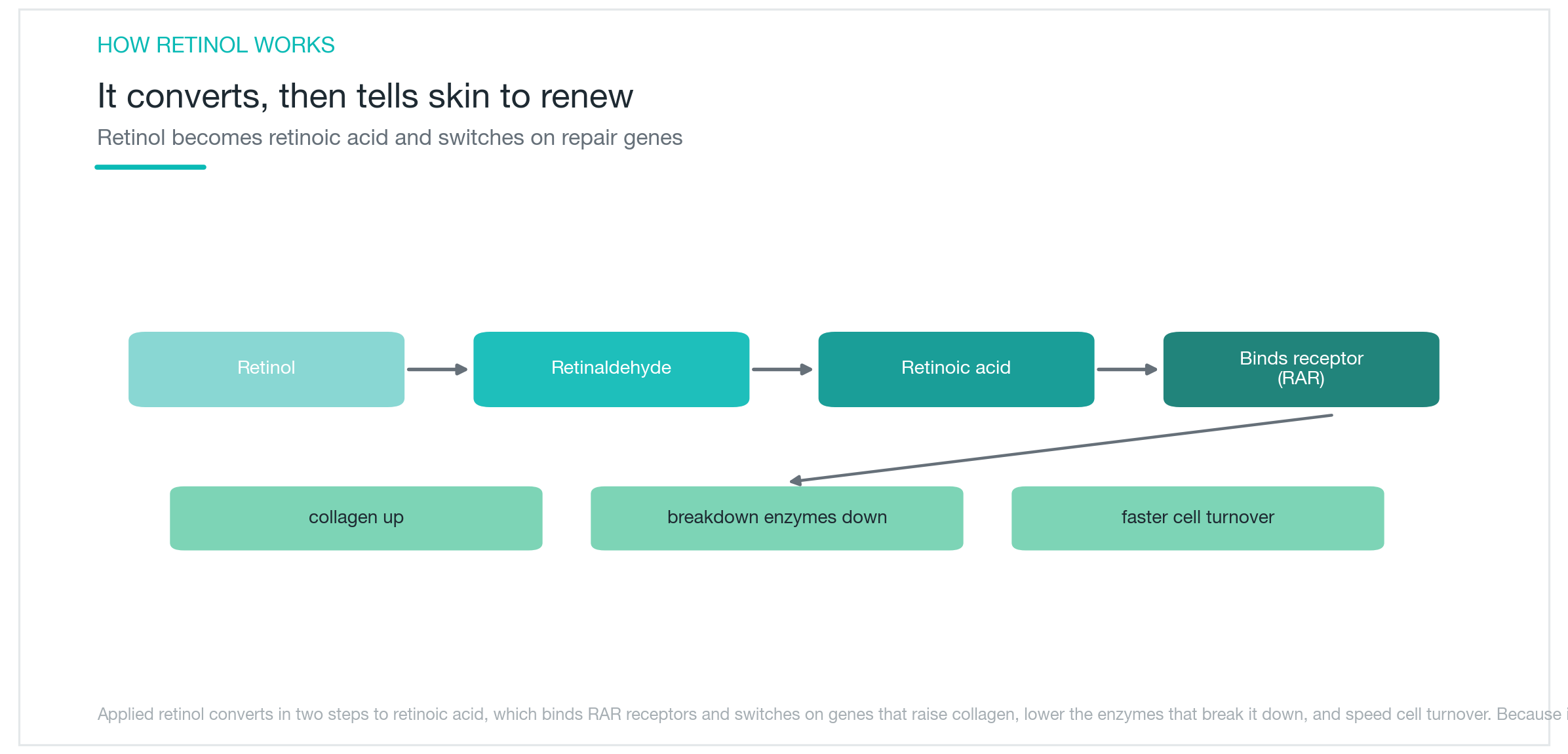
Retinol is a form of vitamin A. When applied to skin, it goes through two conversion steps before becoming retinoic acid, the active form: retinol converts to retinaldehyde, which then converts to retinoic acid. That retinoic acid binds to receptors in skin cells and activates a series of changes at the gene level, almost like flipping a switch.
In practice, it does three things. First, it upregulates the genes responsible for collagen synthesis while suppressing the enzymes that break collagen down, which helps maintain firmness over time. Second, it accelerates cell turnover, clearing out dull surface cells and smoothing texture. Third, it gently thickens the epidermis and disperses pigment clustering, which evens out skin tone.
This two-step conversion also explains why retinol is gentler than prescription tretinoin. Tretinoin is already the active form, so it acts immediately and strongly. Retinol builds up gradually through conversion, which means lower irritation but a slower timeline. Think of it as a slow-building ingredient, one that rewards consistency over speed. That gentleness is actually what makes it easy to use long-term.
How much stronger are retinaldehyde and tretinoin?
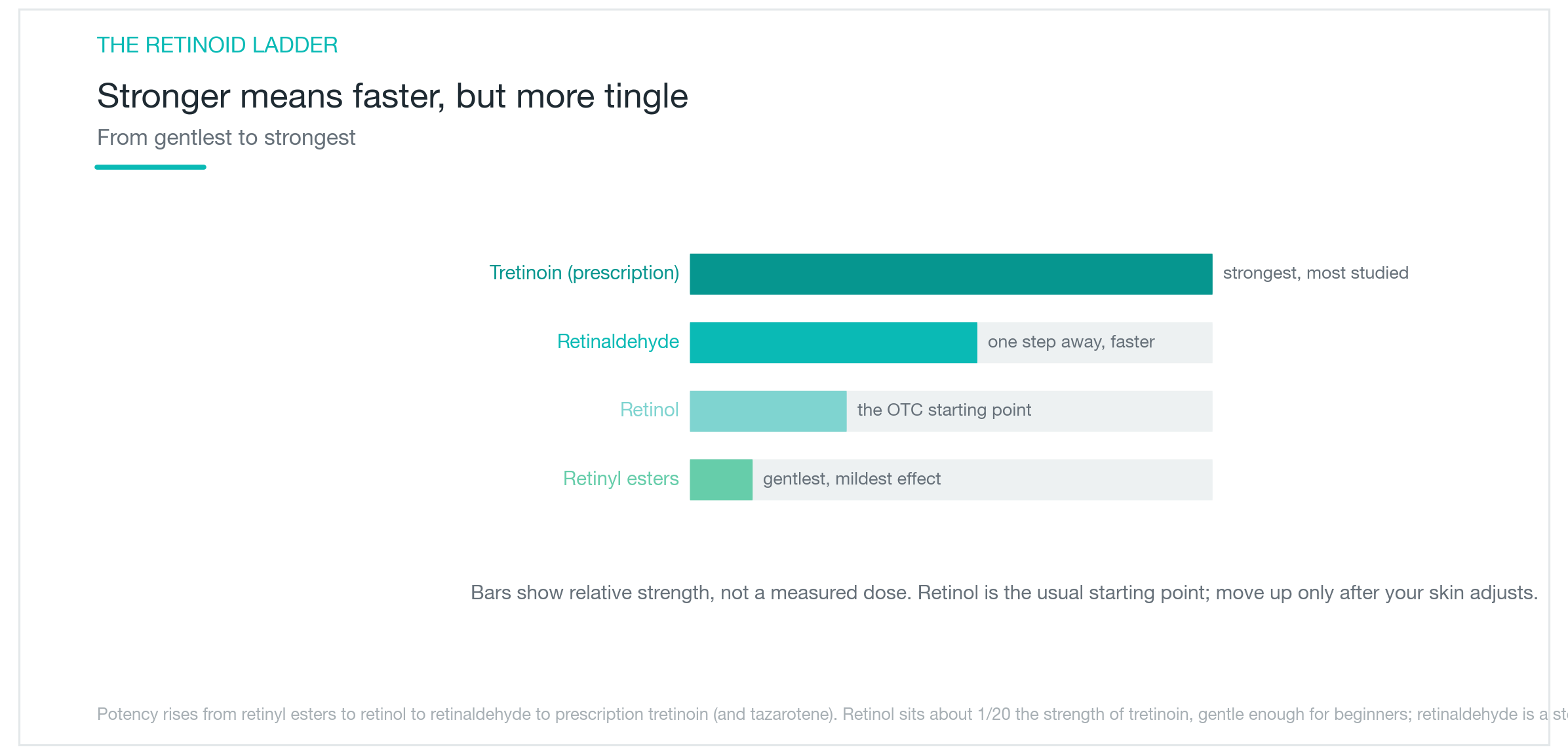
Retinoids fall along a ladder of potency. The closer a form is to the active end, the faster and stronger it works, but the more irritating it tends to be. Starting from the mildest: retinyl ester, then retinol, then retinaldehyde (retinal), and finally prescription tretinoin.
Retinol is two conversion steps away from tretinoin, putting its effective potency at roughly 1/20th, but that also makes it the natural entry point for beginners. Retinaldehyde is just one step from the active form, so it delivers results a little faster than retinol while still being relatively tolerable. Tretinoin is the most clinically established option, though its stronger action means it requires a prescription and careful management.
For anyone starting out, beginning at the mild end and building up as skin adapts is the smarter approach. A higher concentration is not automatically a better result. One study actually found that 0.3% retinol performed comparably to 1% in terms of outcomes. What determines results is consistency, not concentration. Quitting halfway through because of irritation gets you nowhere, so finding the strength your skin genuinely tolerates and sticking with it is the best long-term strategy.
Changes confirmed from wrinkles to acne
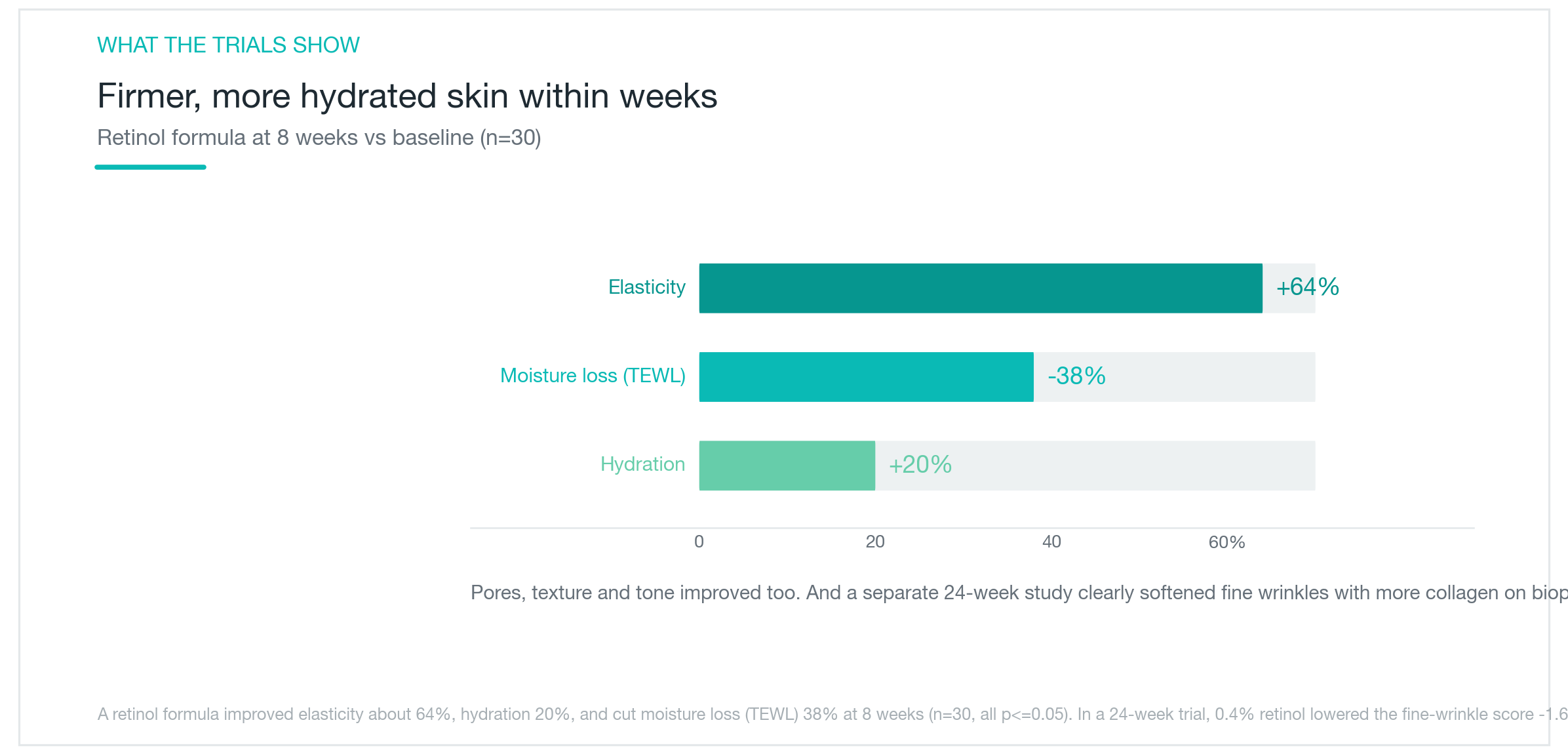
The data is encouraging. A double-blind study using 0.4% retinol on aging skin over 24 weeks showed clear improvement in fine line scores, with biopsy results confirming measurable increases in collagen. This was a placebo-controlled study, not marketing copy, which gives the findings real weight.
Some changes come earlier than you might expect. In one study on a retinol-complex formula used over 8 weeks, skin elasticity improved by approximately 64%, hydration rose by about 20%, and transepidermal water loss dropped by around 38%. Multiple measures, including pores, texture, and tone evenness, all moved in the right direction, with some changes visible from week one.
Beyond wrinkles and firmness, retinol also helps fade hyperpigmentation and reduce breakouts by clearing pore blockages and inhibiting new acne formation. Being able to address wrinkles, firmness, pores, pigmentation, and acne with a single ingredient is genuinely practical. It also simplifies your routine rather than adding layers. Results typically unfold over 12 weeks to 6 months, so patience is part of the deal.
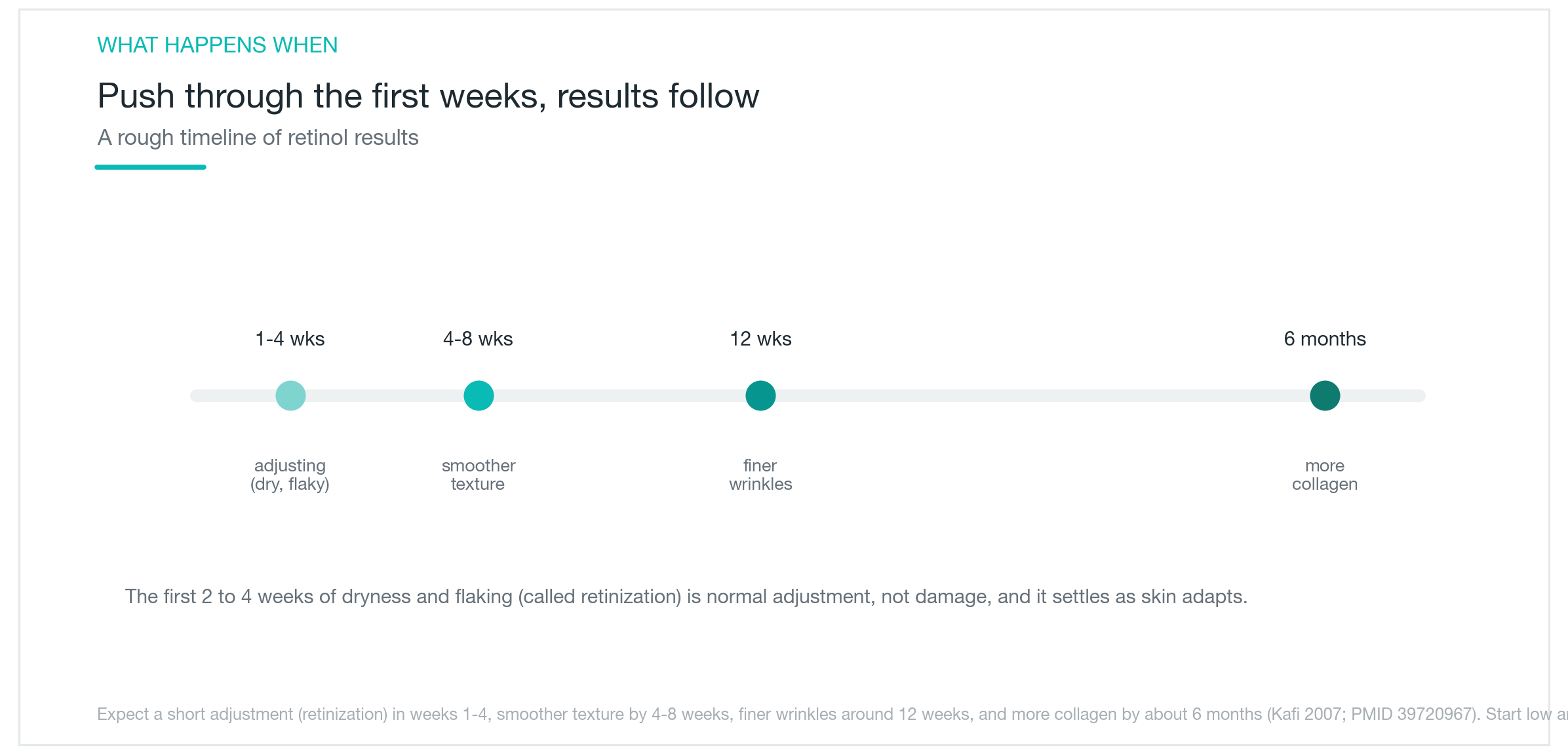
How long does the initial adjustment period last?
When you first use retinol, you may experience a few days of flaking, mild redness, or tightness. This adjustment phase, often called retinization, is not a side effect but a normal response to accelerated cell turnover. It typically resolves within 2 to 4 weeks. If you experience significant burning, swelling, or irritation that keeps getting worse after several weeks, that is too much too fast, and it makes sense to pause and check in with a dermatologist.
The key to getting through it comfortably is starting slow. Begin with a low concentration (0.025 to 0.1%), and for the first 2 to 4 weeks, apply in the evening just 2 to 3 times per week. Once your skin has adjusted, you can gradually build to 4 nights a week, then nightly. Apply to fully dry skin after cleansing, use a pea-sized amount spread thin, and give the eye area a little extra space at first.
If irritation is a concern, moisturizer is your buffer. You can apply moisturizer before and after retinol to cushion the effect, or blend a small amount of retinol into your moisturizer for a diluted application. Retinol should always be used in the evening since light exposure affects its stability, and sunscreen in the morning is non-negotiable. Follow this sequence and most people adapt without much trouble.
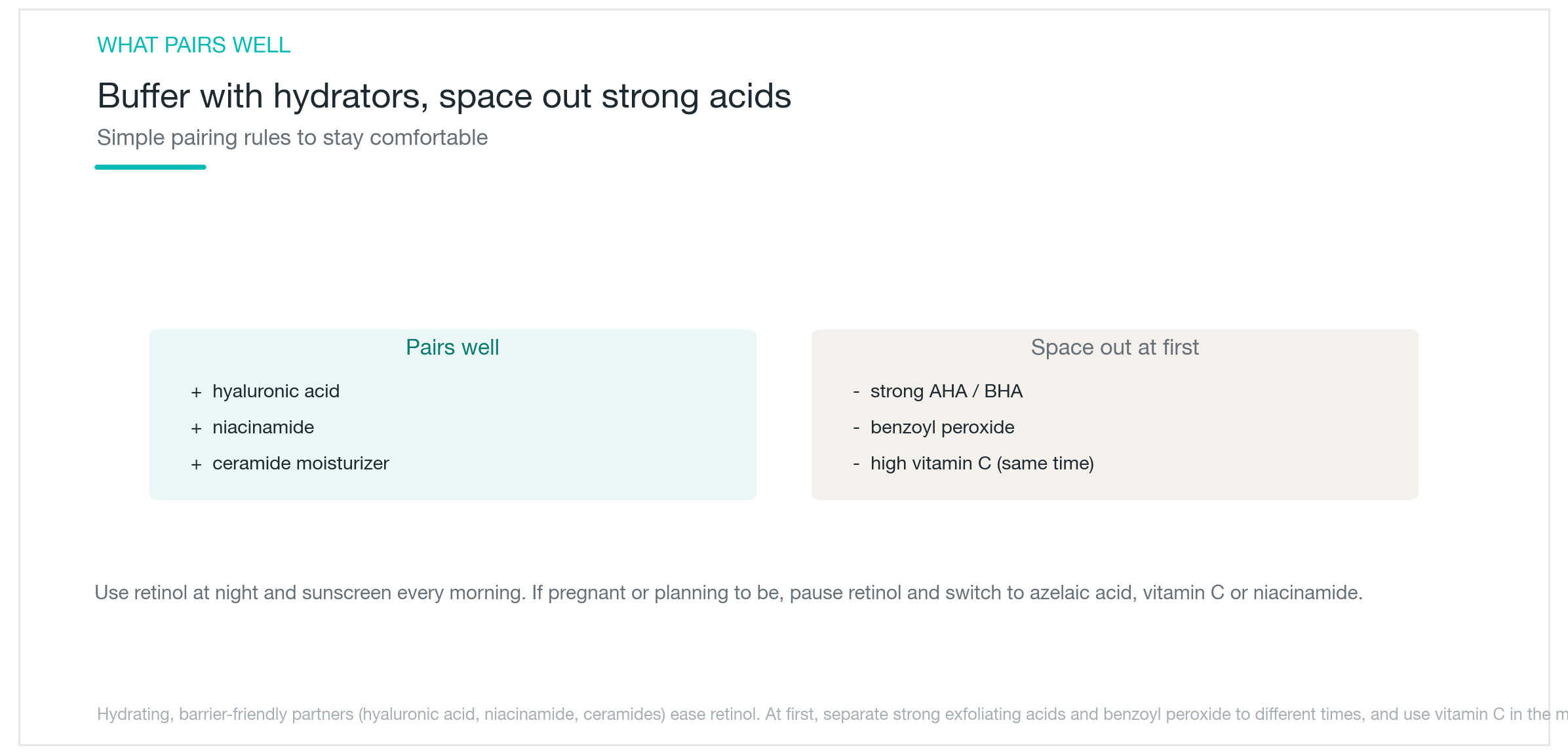
What to use together and what to use separately
Knowing how to combine retinol can cut irritation down significantly. Hyaluronic acid, niacinamide, and ceramides all work well alongside retinol. They support the skin barrier and add hydration, which takes the edge off retinol's potential to irritate. A well-moisturized routine is genuinely a better base for retinol.
A few combinations are better used at separate times, at least in the beginning. Strong AHA or BHA exfoliants and benzoyl peroxide can stack irritation when used at the same time as retinol. Vitamin C pairs naturally with retinol: use it in the morning and retinol at night, so each ingredient gets to work without competing. As your skin becomes more accustomed to retinol, some overlap becomes less of an issue, but keeping them separate early on is the safer call.
One thing worth noting: if you are pregnant or planning to become pregnant, the standard recommendation is to pause retinol as a precaution. Topical absorption is minimal, but avoiding it during this period is the accepted practice. Azelaic acid, vitamin C, and niacinamide are all well-established alternatives to lean on in the meantime. Outside of this, retinol is an ingredient you can use with confidence for the long term.

Who retinol suits and what to expect
Retinol is a natural fit for anyone looking to address wrinkles, firmness, pores, and tone in a single step. Starting before visible aging becomes a concern is a smart move, and it is equally useful if enlarged pores or breakouts are your main issue. The ability to simplify a routine while covering multiple concerns is one of retinol's most practical qualities.
Two things drive results: patience and consistency. That means getting through the first few weeks at a low concentration, applying every evening, and not skipping morning sunscreen. That is genuinely the whole formula, and most people who stick with it adapt well and see real changes.
Keep expectations realistic, but there is room for optimism. Skin will not transform in a month, but over a few months of steady use, texture gets smoother, fine lines soften, and firmness improves in ways you can feel and see. Tracking progress with photos makes the changes easier to notice. No ingredient has more evidence behind it in this category. Starting low, staying consistent, and giving it time is the most reliable investment in long-term skin health. A small amount tonight is a perfectly good place to begin.
Was this helpful?
About this article
Written by a practising aesthetic physician and intended for general education — not a substitute for individual medical advice.
Read next
Pico Toning: Results, Side Effects, Melasma Recurrence, and How Spots Differ
What pico toning is, why wavelength determines whether it works on freckles versus melasma, what the research actually shows about results, and the honest case for managing recurrence expectations, plus the hypopigmentation risk no one talks about enough.
By Dr. Lee
Lara Peel Effects and Irritation, Including Treatment Interval and Suitable Skin
Lara Peel was developed for sensitive skin that finds stinging, peeling treatments too harsh. It combines LHA with an alkaline ingredient to gently smooth away dead skin cells. Using real research on LHA and other gentle peel ingredients, here is a look at how it works on texture and pores.
By Dr. Lee

REVINAS Shockwave Effects and Side Effects: Can It Lift Without Heat?
A clear-eyed look at what REVINAS is, how shockwave energy stimulates tissue, what the collagen and cellulite research actually shows, and where the 'deep SMAS lifting' claim crosses from mechanism into marketing, including the fact that no REVINAS-specific clinical trials exist.
By Dr. Kim