Retinol Adjustment Period: Why Does Skin Flip When You First Start?
By Dr. Kim7 min read
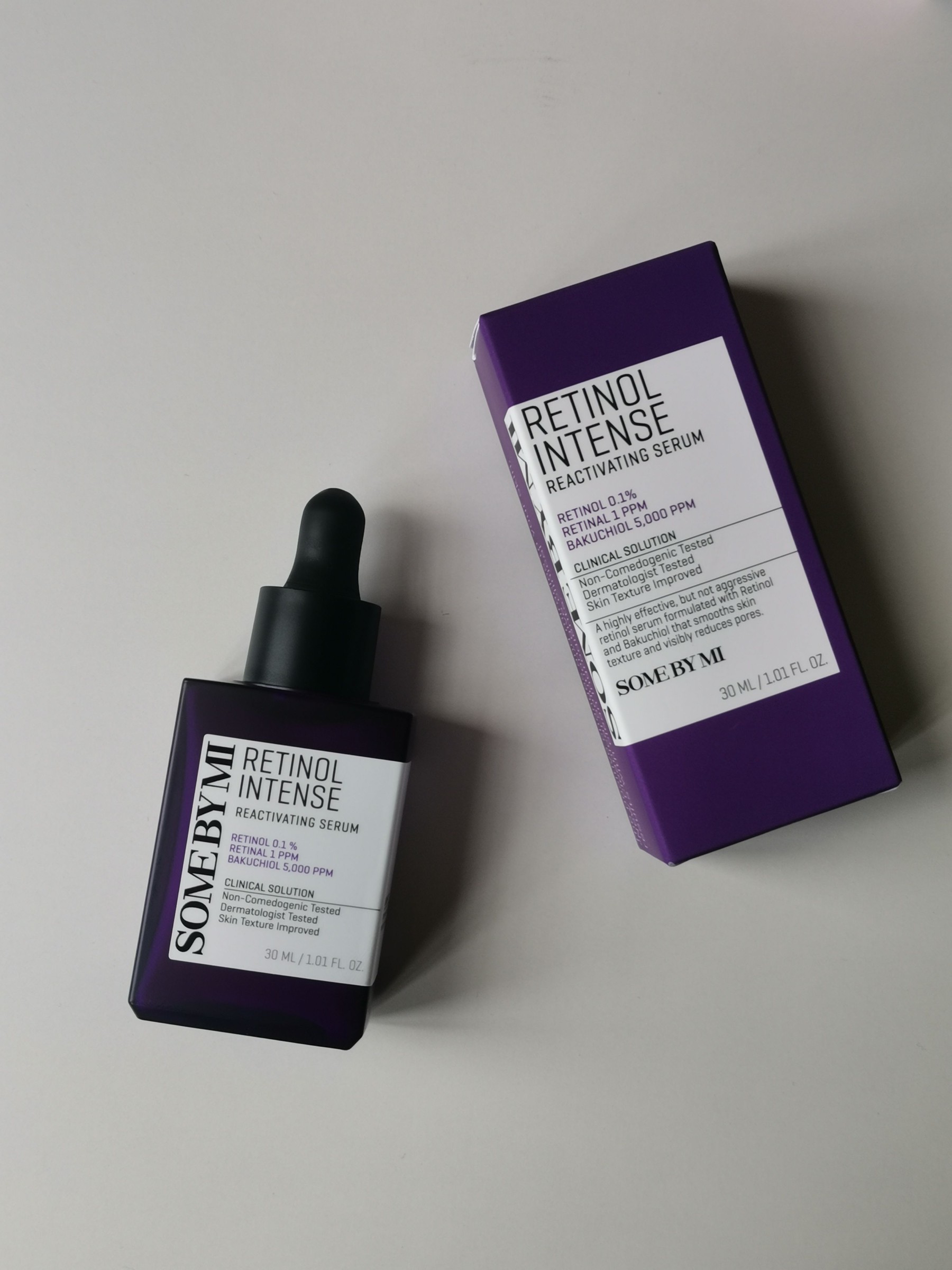
You have probably seen retinol listed on an ingredient panel at some point. It shows up in wrinkle creams and it shows up in acne treatments. It can feel strange that one ingredient gets used for two completely different concerns.
Then, once you actually start using it, the first three to seven days often bring redness and visible white flaking, the opposite of what you signed up for. Here is what is actually happening under the surface during that period, step by step.
What does retinol do in the skin?
Vitamin A derivatives as a group are called retinoids, and retinol is one member of that family. Retinol, retinal (retinaldehyde), and tretinoin (retinoic acid) all belong to it, and every one of them has to be converted into retinoic acid once it is absorbed into the skin before it can actually do anything.
Retinol needs two conversion steps inside the cell to become retinoic acid, retinal needs just one, and tretinoin arrives already in its final, active form. Fewer steps means faster, stronger results, but also sharper irritation. That is exactly why tretinoin is a prescription drug while retinol is sold as a gentle cosmetic ingredient. If you started applying tretinoin daily right out of the gate, it would irritate far more than retinol does, and that gap comes straight from the number of conversion steps involved.
How does cell turnover speed up?
Once retinoic acid enters a skin cell, it binds to a protein inside the nucleus called the retinoic acid receptor, or RAR. Think of this receptor as a switch. When retinoic acid attaches to it, genes related to cell division get turned on.
The result is that new cells are produced faster in the basal layer at the bottom of the epidermis, while old, worn out cells at the surface shed away sooner. Picture a conveyor belt running faster: old parts get cleared out quicker and new ones fill in behind them faster too. Normal skin cell turnover takes close to a month, and retinoids visibly speed that process up.
This is what lets old, pigment-laden cells and the compacted debris clogging pores get replaced faster than usual. It is also the reason retinoids are used for acne. Acne starts when dead skin cells narrow the pore opening and trap oil underneath, and faster turnover simply reduces how quickly pores clog in the first place.
How does collagen increase?
The wrinkle benefit comes from a completely different pathway than the cell turnover story. Retinoic acid does two things at once in the dermis, the deeper layer of skin.
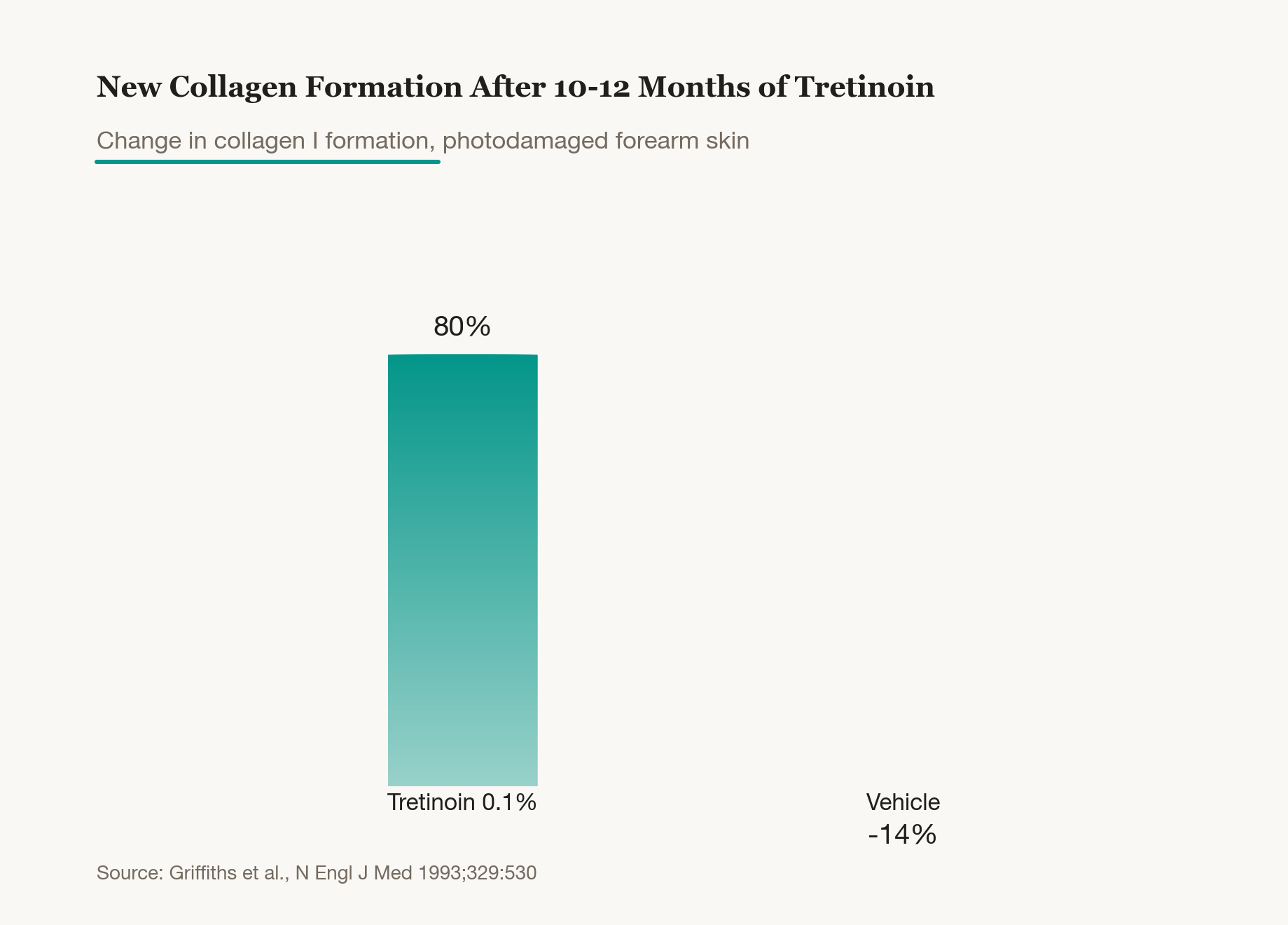
First, it suppresses production of MMPs, enzymes that break down collagen (think of them as tiny scissors for collagen). UV exposure and aging both ramp up activity of these scissors, cutting collagen into fragments, but retinoic acid reduces how many of these enzymes get made in the first place, so less collagen gets destroyed. Skin with a long history of sun exposure tends to have more scissor activity and ongoing collagen breakdown, and consistent retinoid use lowers that activity enough that collagen production starts outpacing collagen loss.
Second, retinoic acid directly stimulates fibroblasts, the cells in the dermis responsible for building collagen, to produce more new collagen (the protein fibers that act like pillars supporting your skin). Cutting back the scissors while building more pillars at the same time is what drives the changes seen over twelve to twenty-four weeks of use, as the dermis thickens and fine lines soften.
Why does skin turn red at first?
This is the single biggest reason people give up on retinoids. And it traces directly back to the cell turnover speed described above.
When turnover suddenly accelerates, the stratum corneum, the outermost barrier that blocks external irritants and prevents water loss, starts shedding faster than it can be rebuilt. That barrier thins out temporarily, so moisture escapes more easily and irritants get in more easily too. That combination shows up as redness, stinging, and visible white flaking, a stretch commonly called the retinization or purging period. Think of it like stripping old wallpaper before putting up new paper. For that brief window between stripping and re-papering, bare wall is exposed, and skin is essentially in the same state, without its usual protective covering.
Acne-prone skin has one more thing layered on top. Tiny, not-yet-visible microcomedones that were already forming beneath the surface get pushed up all at once as turnover speeds up. These breakouts were on their way regardless, just arriving ahead of schedule, so it is often less a sign of things getting worse and more a normal, temporary phase.
How long does the adjustment period last?
It usually takes about two to four weeks for skin to rebuild the stratum corneum at the new, faster turnover rate. Once that window passes, the surface catches up and irritation settles down, while the underlying benefits, cell renewal and collagen production, keep going uninterrupted. Building a fresh layer of stratum corneum simply takes that much time no matter how much you rush, so there is no real way to shortcut this window.
The problem is that a lot of people stop before making it through this adjustment period. That is why the better approach is not to start strong, but to ease in gradually while keeping irritation in check.
An order of use that reduces irritation
Every tip below comes back to the same principle: keeping the rate the barrier sheds and the rate it rebuilds as close together as possible.
- Start at a low concentration. Jumping straight to a high concentration lets shedding outpace regeneration by a wide margin, and that mismatch is usually what causes the whole adjustment process to fail.
- Apply every two to three nights instead of nightly, giving skin time to adjust. When turnover speeds up gradually rather than spiking, the stratum corneum has a real chance to keep pace.
- Buffering, applying moisturizer first and layering retinoid on top, slows absorption down. That moisturizer layer acts like a buffer, keeping retinoic acid from penetrating too deeply all at once, which noticeably reduces irritation.
- Use it at night only, and pair it with daily sunscreen. A thinner stratum corneum from retinoid use is more sensitive to UV, so daytime sun exposure is more likely to trigger irritation and pigmentation.
Following these four together is known to keep irritation to a minimum while still delivering the core benefits, faster cell turnover and more collagen. During the first two weeks, some redness or flaking is a normal part of the process, and resisting the urge to push through with nightly use actually gets you to your target concentration and frequency faster in the long run.
When it is time to raise the concentration, do not jump too far at once. Let skin fully adjust to the current level without irritation, then move up one step at a time. Keeping turnover speed from shifting too abruptly is what lets the stratum corneum keep up with regeneration at every stage.
What to combine and what to avoid
Layering retinoids in the same routine as AHA or BHA (acidic exfoliants) or benzoyl peroxide, ingredients that are irritating on their own, can thin the stratum corneum twice over and sharply increase irritation. During the adjustment period, it is safer to separate these ingredients by time of day or cut back how often you use them. Applying retinoid at night and then a high-strength exfoliating toner the next morning effectively thins the barrier twice in one day, so irritation tends to stack.
Niacinamide, on the other hand, strengthens the skin barrier and is reported to help reduce irritation when paired with retinoids. A stronger barrier means less water loss and less exposure to outside irritants, even during the phase when the stratum corneum is thinner than usual. Once skin gets past the adjustment period and settles down, the range of active ingredients you can safely combine naturally expands.
Retinoid irritation can also run higher than usual under strong summer sun, so it can help to temporarily lower the concentration or frequency depending on the season. During pregnancy or breastfeeding, it is considered safer to avoid prescription retinoids like tretinoin and consult a doctor instead.
References
Korean Dermatological Association, Ministry of Food and Drug Safety (MFDS), American Academy of Dermatology (AAD), and U.S. Food and Drug Administration (FDA).
Was this helpful?
About this article
Written by a practising aesthetic physician and intended for general education — not a substitute for individual medical advice.
Read next
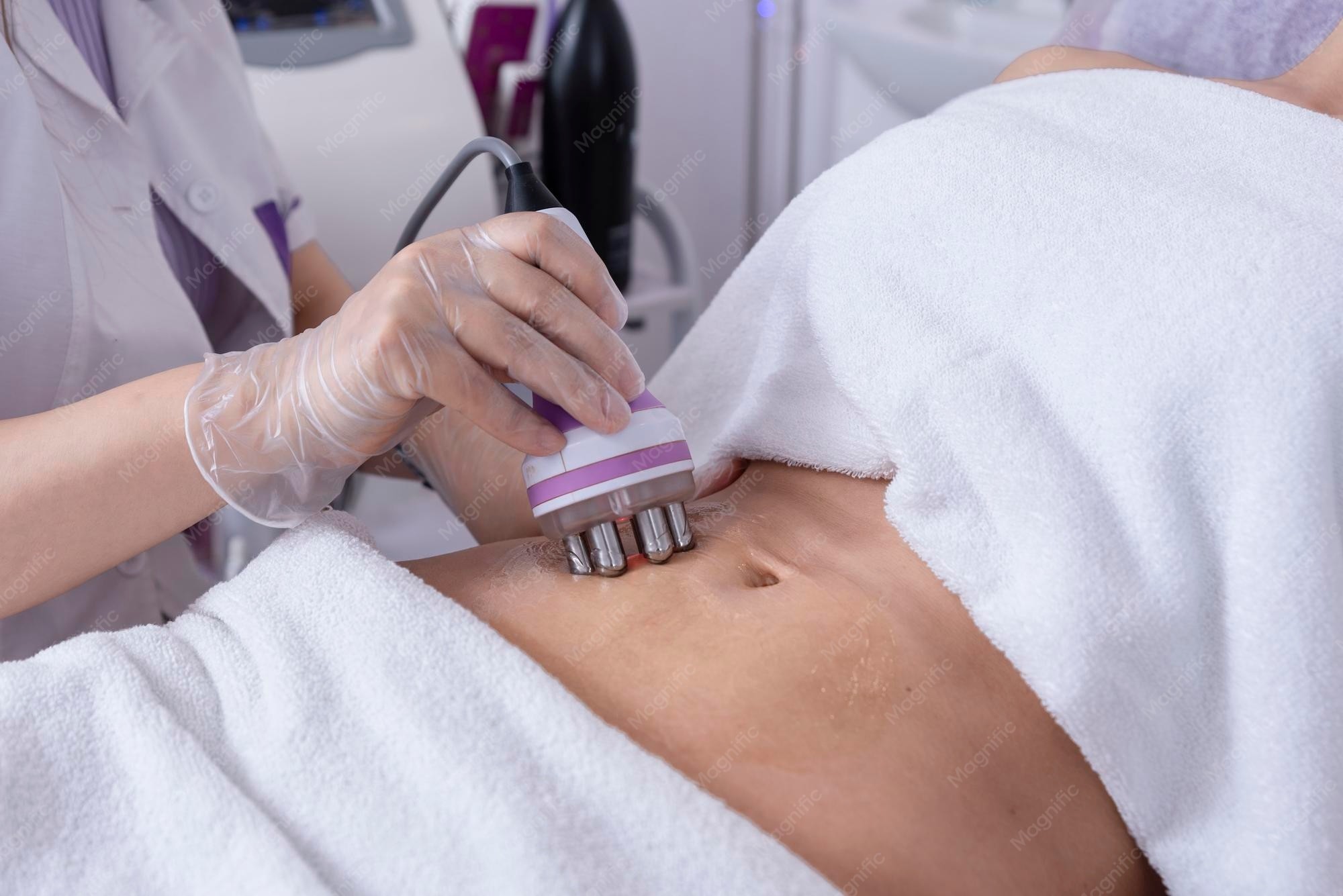
Stretch Mark Treatment: Does Starting While They're Red Work Better?
Stretch marks form when skin stretches too fast for the collagen pillars in the dermis to keep up, and they tear. Here is why red marks fade into white ones over time, and why treatment response changes depending on when you start.
By Dr. Kim
Rejuran Results: When Do They Appear, and How Many Sessions and Intervals?
Rejuran places DNA fragments extracted from salmon into the skin, targeting the skin's own regeneration signals rather than adding volume. Here's a principle-first look at why this ingredient triggers fresh collagen production, how its purpose differs from a filler's, and why the treatment schedule and intervals are set the way they are.
By Dr. Kim
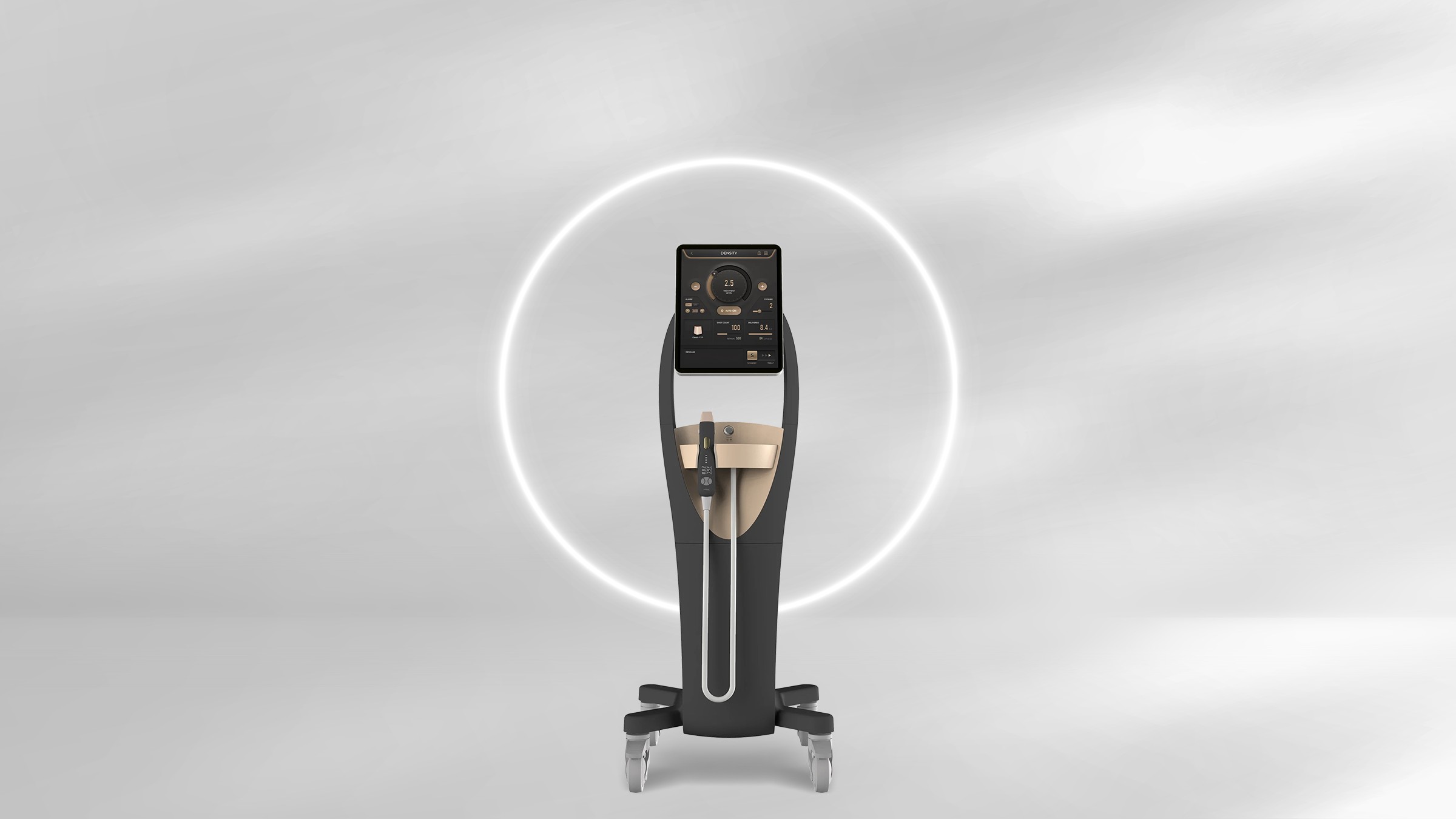
Density RF Effects: How Many Sessions and How Long Do Results Last?
Density RF pairs two radiofrequency modes with very different personalities to chase two goals at once: the instant tightening you feel right after treatment, and the collagen renewal that builds slowly over the following 4 to 12 weeks. Here is why two modes are needed, the order in which heat actually works inside the skin, and why the treatment is spread across multiple sessions instead of done all at once.
By Dr. Kim